Hand Tools
Crescent vs Channellock 8" Long Needle-Nose Pliers: Two Long-Reach Pliers Compared
A side-by-side look at two 8-inch long needle-nose pliers covering reach, cutting, handle comfort, build origin, and which one to pick.
Introduction
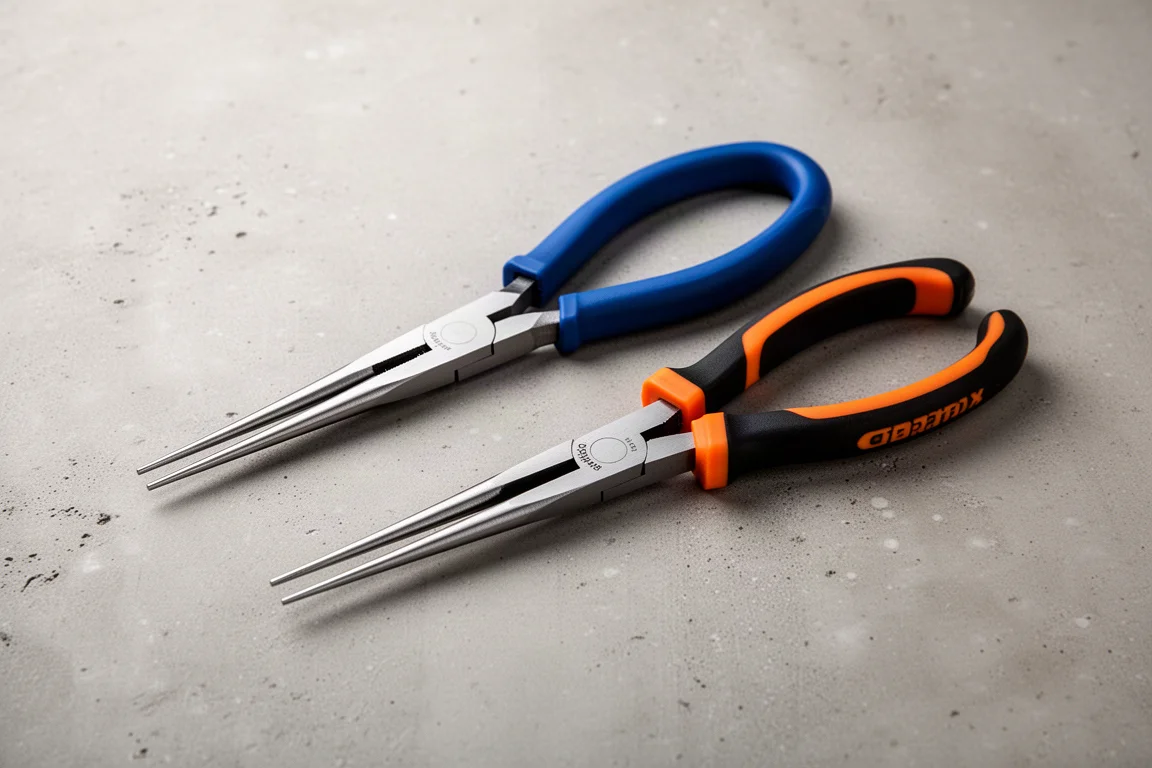
Long needle-nose pliers occupy a small but useful niche: when a fastener, wire, or clip sits well beyond where a standard needle-nose can reach, the extra jaw length is what saves the job. Two widely available options in this category are the Crescent 8” long needle-nose pliers and the Channellock E381 long needle-nose pliers. Both claim to be 8 inches, both carry a lifetime warranty, and both cost far less than premium-brand equivalents. This comparison looks at where they differ so you can pick the right pair for your toolbox.
What Long Needle-Nose Actually Means
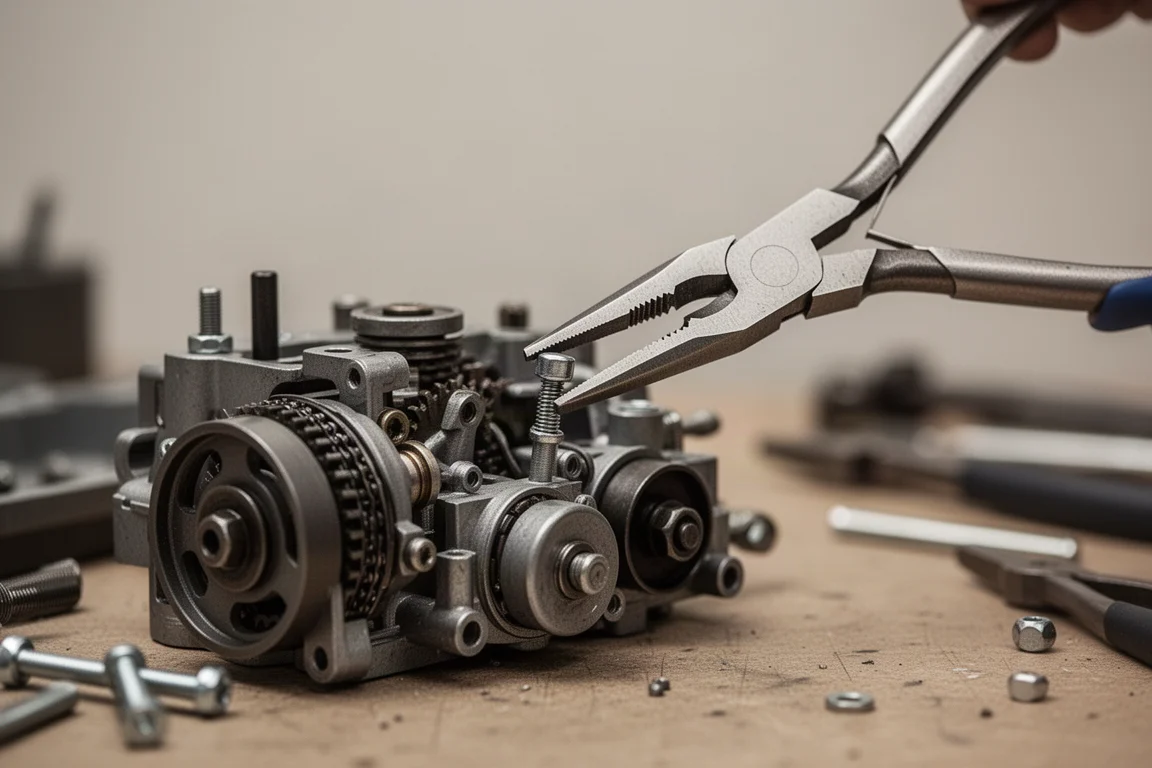
The defining trait of these pliers is the amount of “beak” beyond the pivot. Compared with a conventional same-size needle-nose, both of these offer substantially more reach in front of the pivot, which is exactly what you want for deep access work. Both also include a fastener or nut-grabbing section and cutting knives near the pivot.
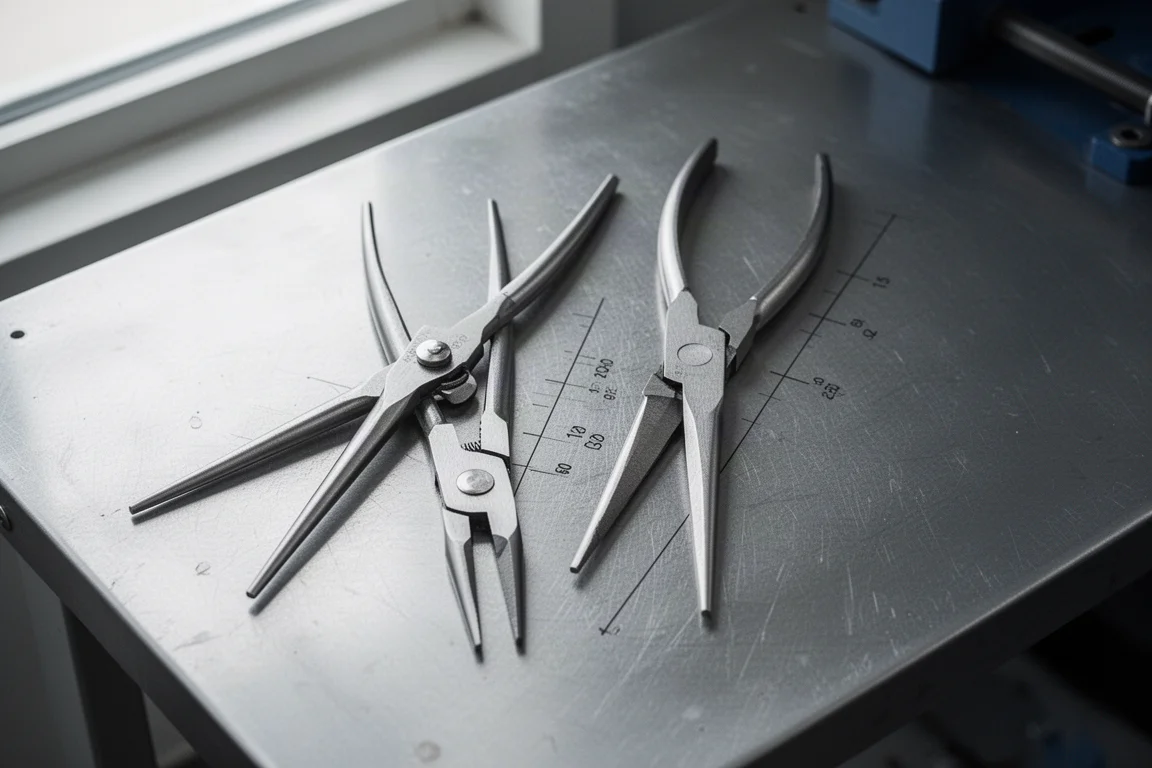
The labeling, however, deserves scrutiny. Both are sold as 8-inch pliers, but measuring them tells a different story. The Channellock measures roughly 7 3/4 to 7 7/8 inches, while the Crescent comes in at nearly 8 1/2 inches overall. If actual length matters to you, the Crescent simply gives you more metal for the money.
Build Origin and Price
The Channellock E381 is 100% made in America, a point the company emphasizes openly. The Crescent is designed, engineered, and tested in the US, but it is a product of Vietnam with finishing done in mainland China. On price, the Crescent sells for about $25 (available at Home Depot, with this nut-grabbing variant also listed at Lowe’s), while the Channellock runs about $30.
Both brands lean hard on warranty language: Crescent advertises a “No BS” lifetime warranty, and Channellock’s packaging reads “Built Strong” with a limited lifetime warranty buried in fine print, where the word “limited” is genuinely hard to spot. In practice, both offer strong warranty backing, but read the details before assuming anything unlimited.
Cutting Performance and the Notch Problem
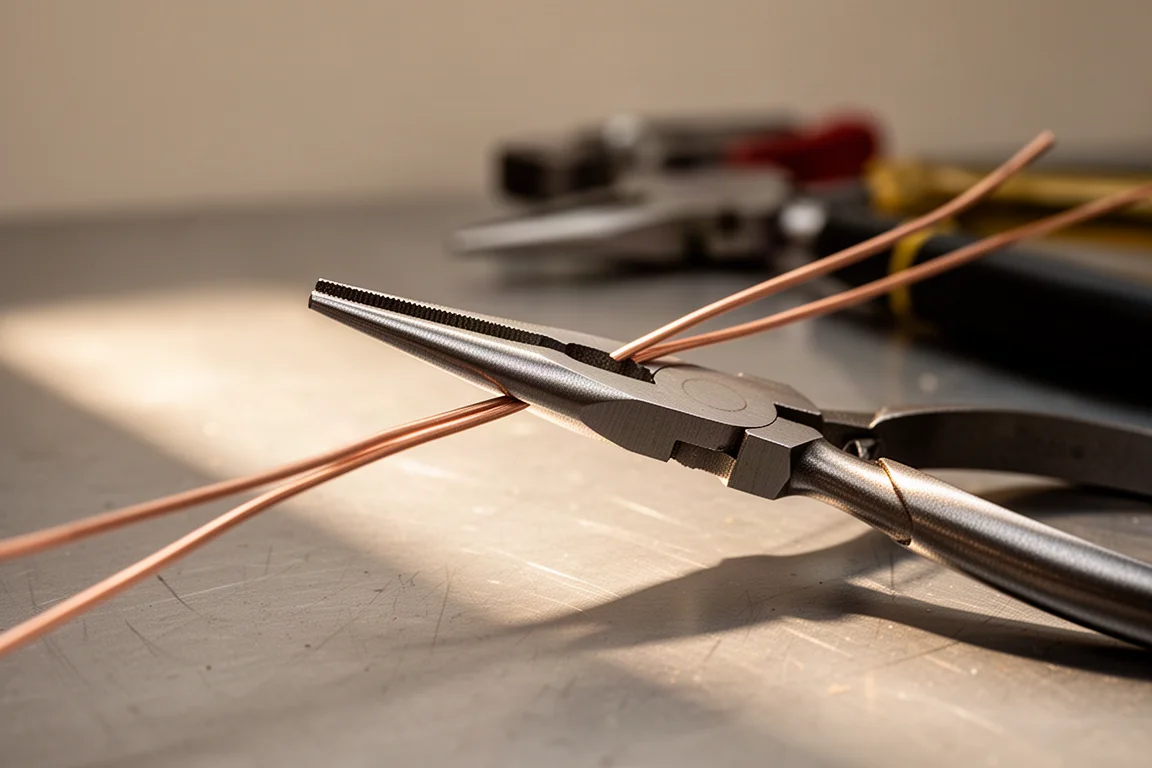
Cutting is where the two diverge most. The Crescent has a notch cut into the knives right at the pivot, the high-leverage spot. At that position, it will not make a complete cut on bare wire. Move the wire anywhere else along the knives and it cuts fine. Two small arrows on the tool hint that this may be an intentional feature, possibly aimed at electricians, but nothing on the packaging explains it.
The Channellock also has a notch, and it is large enough to make a significant cut into the size of its knives, which can be irritating when you are trying to snip low near the pivot. Outside that notch, though, the Channellock cuts completely along the entire blade. Right at the pivot it snips cleanly with no problem.
Jaw Design and Strength
The two brands approach tip geometry differently. The Crescent is thicker at the tip but stays narrower longer, while the Channellock tapers to a smaller tip quite rapidly near the end. Sliding the Crescent down to match the Channellock’s tip width shows the trade-off: the Channellock gains precision but gives up some strength near the tip.
In real use, both hold up impressively. Grabbing items out near the tips and twisting produced almost no play on either pair, and twisting both against each other showed both are quite strong for long needle-nose designs. On joint quality, the Channellock is silky smooth through its entire range with just a touch of resistance, while the Crescent has a hint of wobble at the midpoint of the opening.
Handles, Comfort, and Tether Points
The Crescent uses a dual-material, grippier handle that sits comfortably in the hand. The Channellock carries its signature blue-dipped handle, which the company markets as its comfort grip. A lightly dipped handle like this works well as long as there is some traction, it is smooth, and it fits the hand without creating hot spots, which padding-heavy handles often do.
Both pliers are tether ready on both sides, and the Channellock’s tether point in particular is very nicely finished. If you work at height or on ladders, that matters more than it sounds.
Grabbing and Nuts
Neither is really a nut tool first, but both include a fastener-grabbing section near the pivot with slightly different teeth and oval radii. On the Crescent there is also a small hole near the tip intended for wire bending, wire pulling, or similar tasks. One quirk: on the Crescent, the fastener area does not sink in very far because you immediately hit the edge of the tapered knives, so grabbing works, but not for anything deep or small.
Which One Should You Buy?
If American-made construction is a priority, the Channellock E381 is the clear pick, and its smooth action, complete cutting along the blades, and blue-dipped comfort grip make it easy to live with. The smaller, more precise tip also suits fine electronics work, which fits the E381 designation.
If you want more actual length for your money, the Crescent delivers nearly 8 1/2 inches against the Channellock’s just-under-8, costs about $5 less, and offers a grippier dual-material handle. The trade-offs are the incomplete cut at the pivot notch, the unexplained notch feature, and a slight mid-range wobble in the joint.
Conclusion
Both of these long needle-nose pliers are good tools, and both are dramatically cheaper than premium-brand equivalents that can run over $70. The long-jaw design itself is genuinely handy for deep-reach work, and either pair gets you there. For most buyers, the choice comes down to origin and feel: Channellock for the all-American build and silky-smooth joint, Crescent for extra length and a lower price.
Product link
View more details for Crescent 8" Long Needle-Nose Pliers
This product is mentioned in the review. Check the specifications, options, and compatibility before buying.
View more details for Crescent 8" Long Needle-Nose PliersFurther reading
Related Reviews
Hand Tools
Best Diagonal Cutters 2026: 16 Pliers Tested for Cutting Power and Durability
We put 16 diagonal cutters through nail, screw, drill bit, and hex key tests to find the best value picks for your toolbox.
Hand Tools
Best Hex L Key Sets 2026: Nine Sets Tested for Real-World Torque
Nine hex L key sets from budget to premium, tested for torque, fit, and durability. See which sets deliver real performance and which ones to skip.
Hand Tools
Best Locking Pliers 2026: Top Picks Tested for Grip and Durability
We tested 18 brands of 10-inch locking pliers for grip strength, jaw bite, build quality, and ease of release to find the best options for tough jobs.