Power Tools
Craftsman V20 RP Hammer Drill Review: A Strong DIY Pick Missing One Safety Feature
Craftsman's brushless RP hammer drill delivers surprising power for the price, but the lack of an auxiliary handle is a trade-off worth understanding before you buy.
Introduction
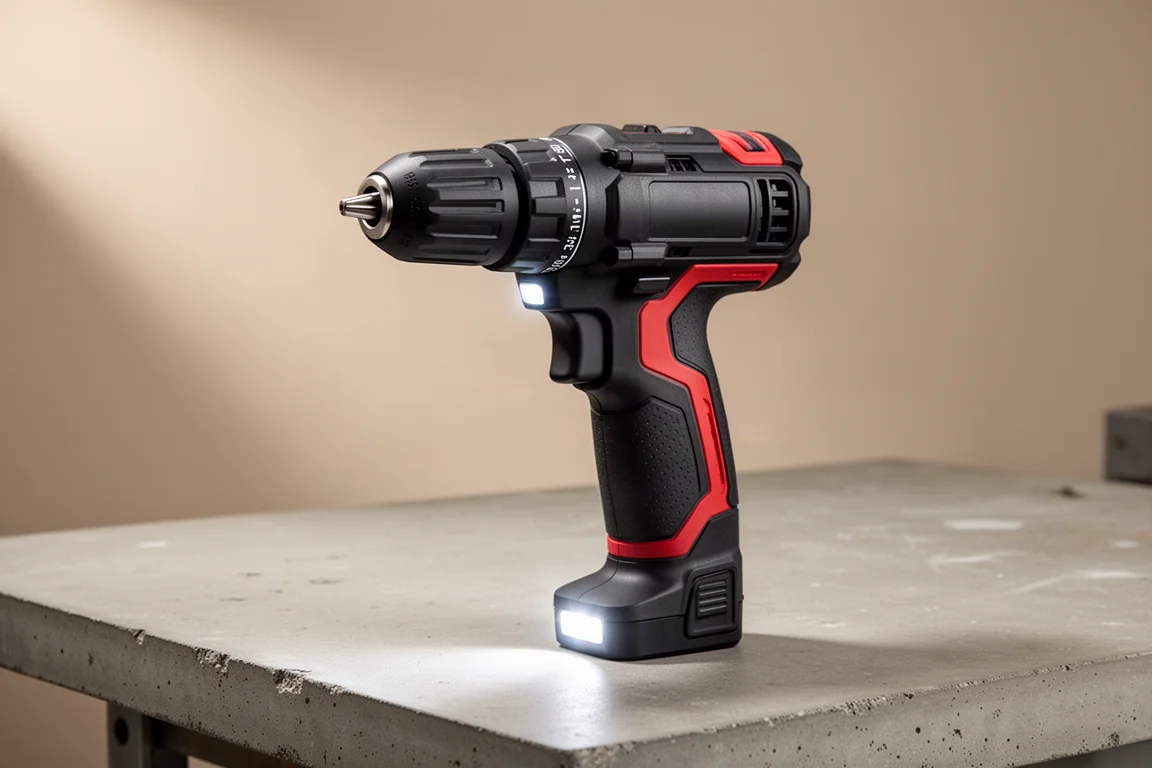
Craftsman’s V20 RP line, short for runtime and performance, is the brand’s brushless top tier, and this hammer drill is its flagship drill in that range. It is a full-size drill positioned at $99, which makes it one of the more affordable brushless options in its class. The big question is whether it lives up to the RP branding or sits in the mediocre part of the lineup.
After extended use in the shop, our take is that it is a genuinely good DIY drill with real power on tap, held back mainly by one missing accessory that serious users will notice immediately.
First Impressions and Build Quality
The first thing to know is that Craftsman is owned and manufactured by Stanley Black & Decker, so comparisons with DeWalt drills are natural. Surprisingly, chuck runout on this drill is excellent. While the plastic around the chuck flexes quite a bit during use, a straight rod test showed very little actual runout, which is better than some DeWalt drills that show noticeable lateral runout.
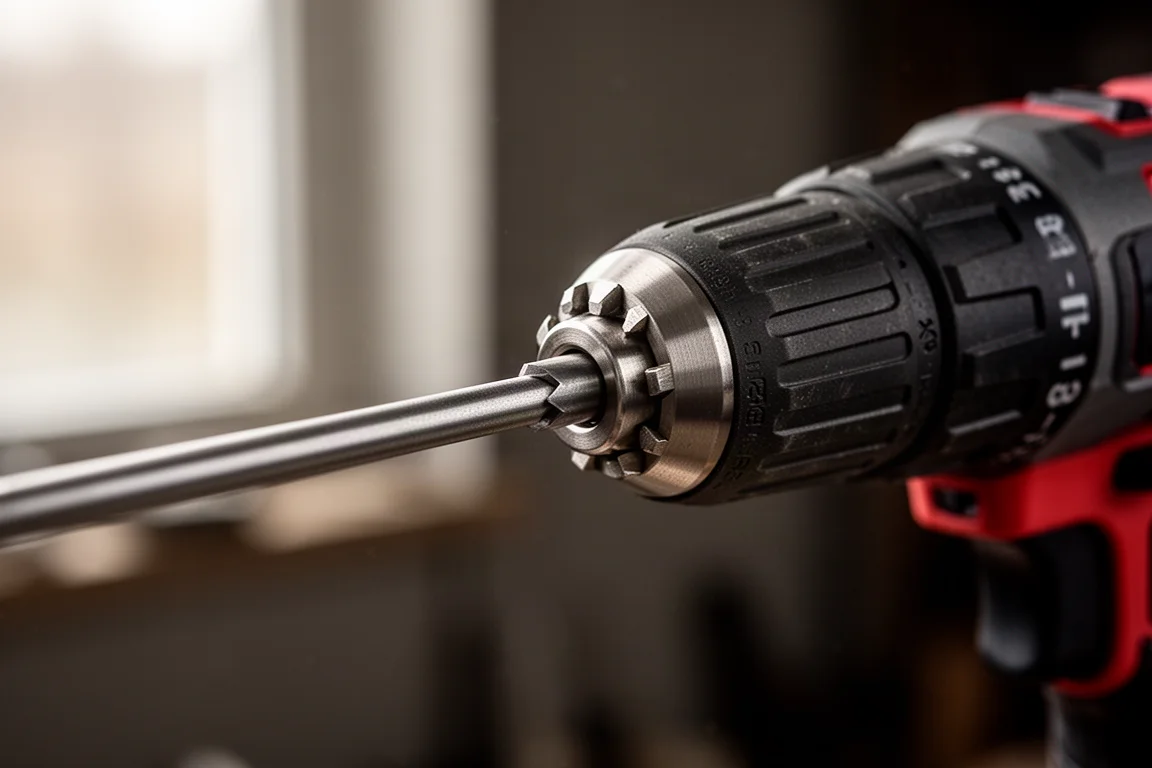
The chuck itself is plastic with a slight deformity, but the metal front section works well and the chuck has performed reliably over time. The rubber over-mold on the grip is excellent and comfortable to hold, though the grip is fairly fat, consistent with what has become the standard Craftsman grip profile.
The LED light sits at the base of the handle and is somewhat overshadowed. It does not reach as far toward the drilling point as some designs, but it is still a useful feature in dim work areas.
Modes, Clutch, and Speed
The drill offers three modes: hammer mode, drill mode, and a mechanical clutch with 15 settings. A mechanical clutch is a nice touch that many buyers prefer over electronic setups. The two-speed gearbox runs 0 to 1,900 RPM in high and 0 to 600 RPM in low, which is about average, maybe just a touch fast on both settings.
The claimed output is 330 unit watts out, which is respectable for a drill of this size. Because there is no auxiliary handle, the relatively higher low speed is arguably intentional: you want the clutch to kick out before you get into kickback trouble.
The Missing Auxiliary Handle
This is the drill’s most significant compromise. A full-size drill in this class would normally ship with an auxiliary handle for safety, and its absence lowers expectations from the start. Without one, large bits and stubborn materials can generate serious kickback, and less experienced users are the ones most at risk of a sprained wrist or worse.
The logic behind omitting it is unclear. It could be cost, or it could be that manufacturers assume DIY buyers do not push drills hard enough to need one. In practice, the people who push a drill hardest are exactly the people who benefit from an auxiliary handle, and beginners benefit just as much from having a second place to grip if the drill catches.
With a handle, this drill would be outstanding. Without one, it is still a very good drill, but you need to respect its limits with large bits.
Power Testing With Spade Bits
Testing started with a 1-inch spade bit on the small 2Ah kit battery. The drill audibly slowed and never broke through the bottom of the hole. Swapping to a 4Ah battery made a dramatic difference: the same hole cut all the way through. The 6Ah battery showed little improvement over the 4Ah, while the 9Ah chewed through with authority.
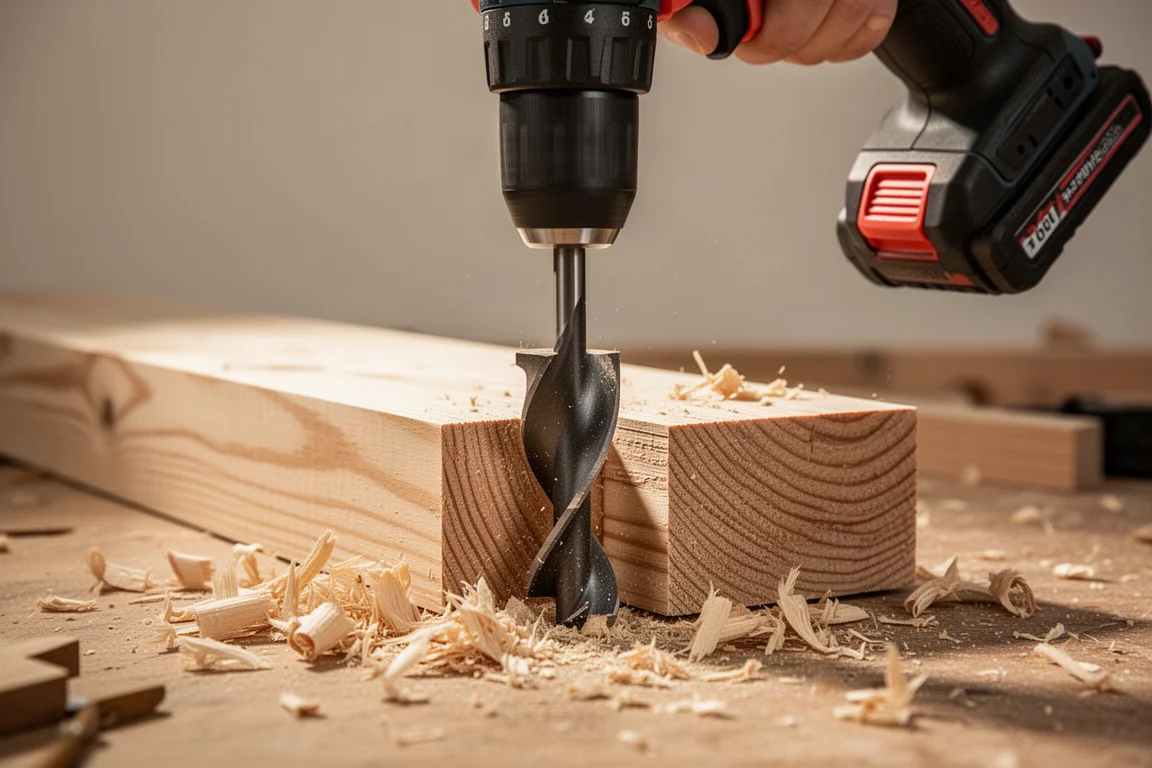
With a 1-1/4 inch spade bit, the 2Ah battery slowed significantly near the end of the hole, the 4Ah showed a major speed difference, the 6Ah cut out unexpectedly, and the 9Ah kept cutting despite a stall. Moving to a 1-1/2 inch spade bit, the 2Ah battery would not even start the cut, the 4Ah got the deepest, and both the 6Ah and 9Ah cut out near the end. Still, getting most of the way through a 1-1/2 inch hole with a drill this size is a solid result.
Why Battery Size Matters More Than You Think
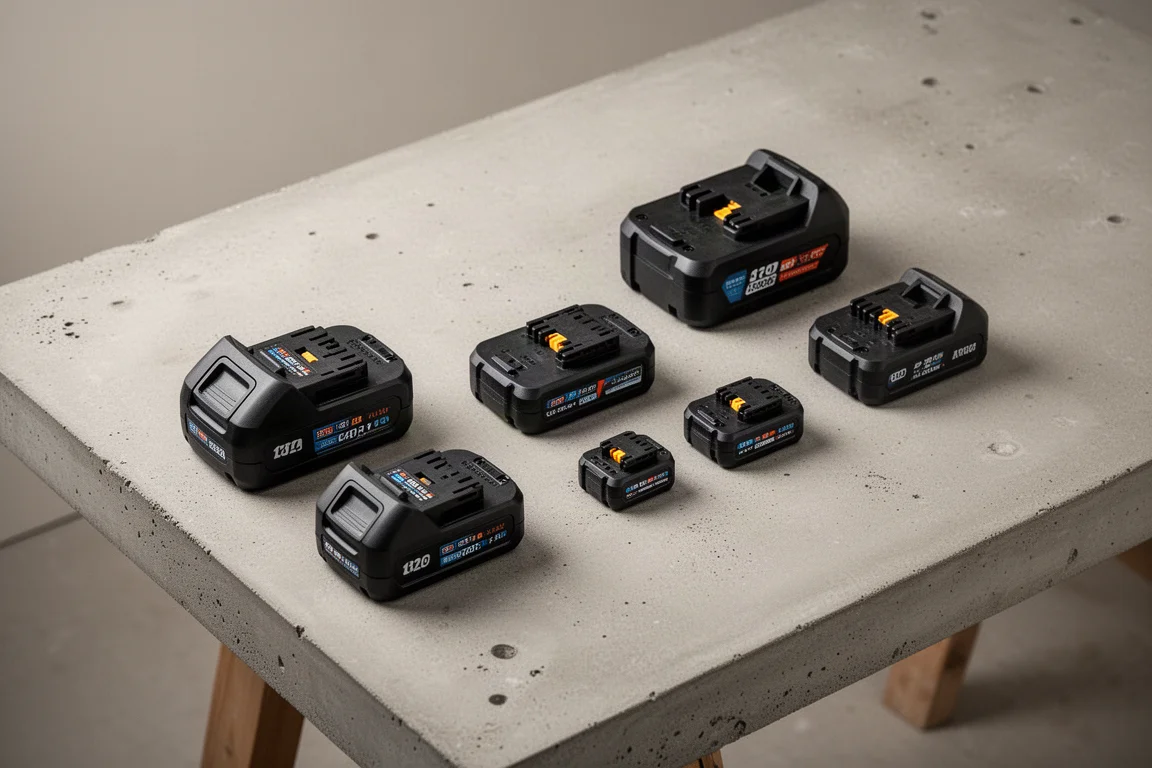
The pattern in testing is not about amp hours meaning power. Higher capacity packs simply have more cells, so the load is spread across them and voltage sags less under demand. A 2Ah pack has five cells, a 5-cell count difference that shows up immediately in heavy cuts, and the 9Ah pack with 15 cells delivered the strongest performance across the board.
If you buy this drill as a kit, it most likely comes with the small 2Ah battery. That is fine for small projects, but for anything larger it is not up to the task. Pairing this drill with at least a 4Ah battery, and ideally a 9Ah for the heaviest work, transforms what it can do.
A 1-inch auger bit in high gear also told a consistent story: the 2Ah battery made it through, the 4Ah was significantly faster, and the 9Ah rocks through with ease.
Large Boring and the Limits of This Drill
In low range, a 2-9/16 inch bore bit is where an auxiliary handle would be most welcome. The 2Ah battery gave up quickly, the 4Ah showed a very noticeable improvement, and the 6Ah left chips as it cut. The 9Ah, with its three sets of five cells, produced an enormous amount of power, to the point where an auxiliary handle really should be in hand for this kind of work.
With a 3-5/8 inch bore bit, there is no doubt an auxiliary handle is required. Going straight to the 9Ah battery and carefully working around a knot, the drill stalled out, which is unsurprising for a drill of this class. Plenty of larger drills will complete that cut, but the effort this one put in was genuinely impressive.
Hammer Mode and Heat Management
A 1/2 inch masonry bit is roughly the top end for this drill, but it made for a good test of both drilling speed and noise in hammer mode. It performed quite well for a bit of that size in a drill this class, and it was not as loud as expected.
Heat was also handled better than anticipated when the drill was pushed well beyond its specs. Peak temperature measured 119 degrees with typical readings just over 100, measured at the vents where a hand would naturally rest. The battery stayed cool, though batteries were rotated frequently during testing. Considering the conditions, the lack of heat buildup was impressive.
Who This Drill Is For
This is a great DIY drill for a homeowner doing tasks around the house, working on cars, and handling general projects. The power it delivers for the price is genuinely strong, and it exceeded lowered expectations caused by the missing handle.
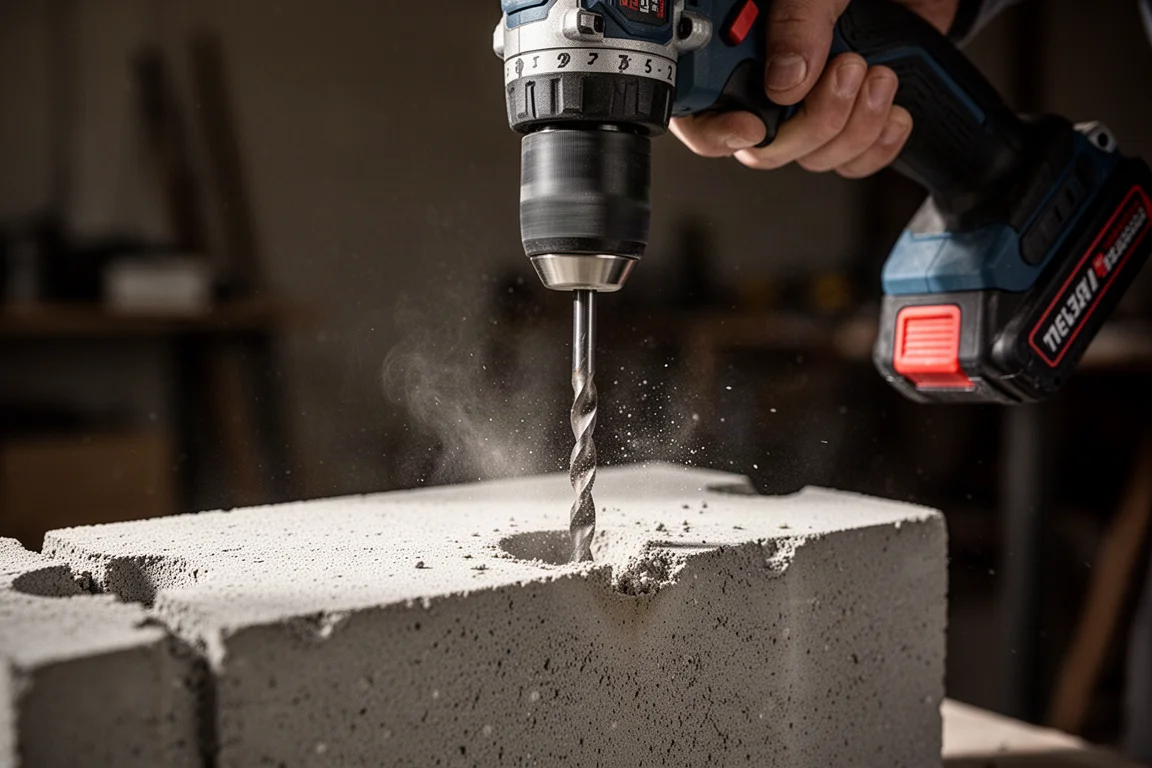
Be cautious when using large bits without an auxiliary handle. If you have limited experience with drills, that missing handle matters even more, since a kickback event can cause a real injury. If Craftsman included one, this would be an easy recommendation across the board.
Buying Advice
At $99, this drill is not expensive, and it performed well throughout testing. If you are already in the Craftsman V20 ecosystem and wondering whether the RP runtime and performance line is worth it, this drill makes a good case, especially if you budget for a higher capacity battery than the kit provides. Watch how the RP line develops in circular saws and impact wrenches to see whether this drill is representative of the line or one of its shining stars.
Conclusion
The Craftsman V20 RP hammer drill is a strong value for DIY and home use, with excellent runout, a mechanical 15-position clutch, respectable 330 UWO output, and better heat management than expected. Its weaknesses are a plastic chuck housing that flexes, an overshadowed LED, and above all the absence of an auxiliary handle. Buy it with a 4Ah or larger battery, respect its limits with big bits, and it is a very good drill for the money.
Product link
View more details for Craftsman V20 RP Hammer Drill
This product is mentioned in the review. Check the specifications, options, and compatibility before buying.
View more details for Craftsman V20 RP Hammer DrillFurther reading
Related Reviews
Power Tools
Best 1-Inch Pistol Impact Wrenches: Three Heavy-Duty Options Compared
We compare three 1-inch pistol impact wrenches, from a budget-friendly Harbor Freight model to a premium Caterpillar unit, to help you choose the right one.
Power Tools
Best 3/4-Inch Impact Wrenches 2026: Five Contenders Compared
We compare five 3/4-inch impact wrenches across price and performance, from a budget Amazon option to Snap-on's most powerful model yet.
Power Tools
Best Budget Cordless Tools 2026: Walmart Finds That Punch Above Their Price
We tested five cordless tools from Walmart, including a high-torque impact wrench that trades blows with Milwaukee and a $35 duster that outperforms its price class.