Power Tools
Craftsman V20 Belt Sander Review: Unusual Design, Solid Results
A 3x18-inch cordless belt sander with variable speed dial, quick-release belt change, and decent dust collection that proves first impressions can be misleading.
Introduction
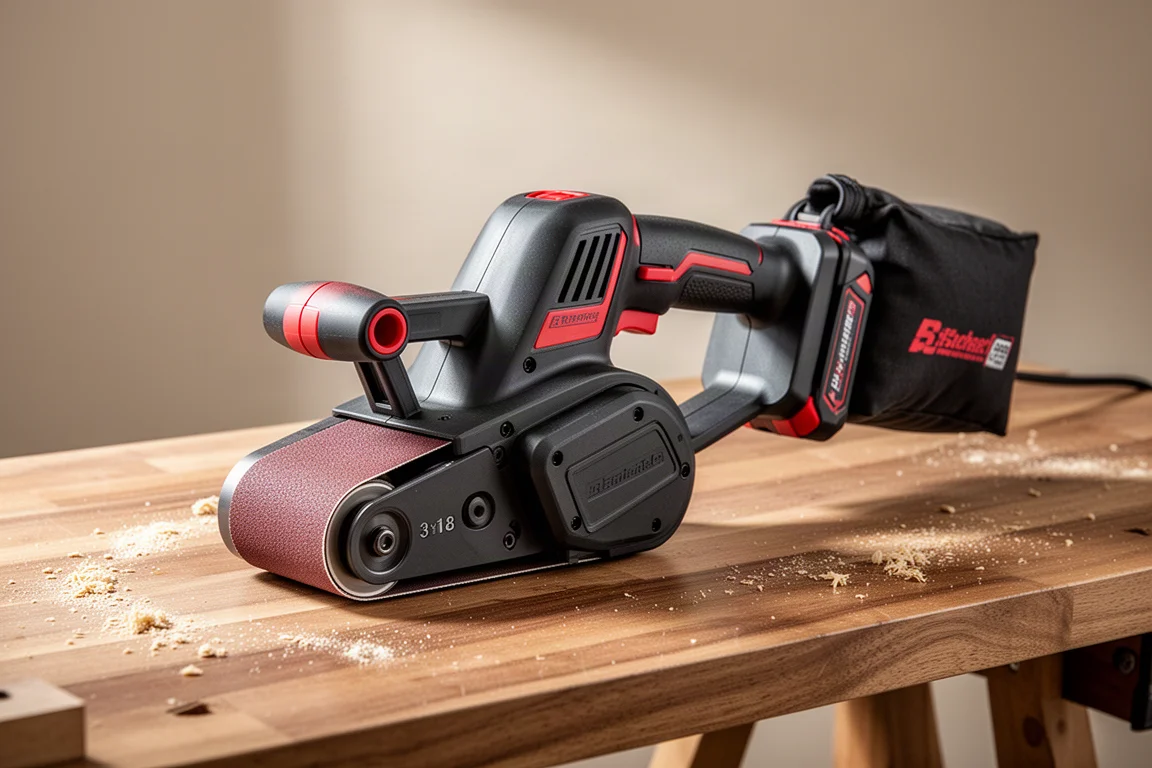
First impressions can be misleading, and the Craftsman V20 belt sander is a good example of that. At first glance, this 3x18-inch cordless model looks and feels different from most belt sanders on the market, and that initial sense of unfamiliarity can work against it. After putting it through a proper testing session, though, most of those early doubts turned out not to matter in actual use.
First Impressions: More Plastic Than Expected
The first thing that stands out is the amount of plastic on the body. Many belt sanders show a lot of metal up front, and this Craftsman does not immediately fit the mental image of the brand’s older metal-heavy lineage. The quick-release section for the belt is metal and works smoothly, and there is metal inside the housing, so the plastic presence is less of a concern than it first appears.
Underneath the front plate there is a corkboard layer beneath the metal plate, which helps keep the work surface flat and lets material pass through cleanly. That is a nice touch, as some models only offer a smooth metal plate. The front wheel is plastic rather than aluminum and slightly smaller in feel, while the rear drive wheel is rubber-covered, which is fairly standard.
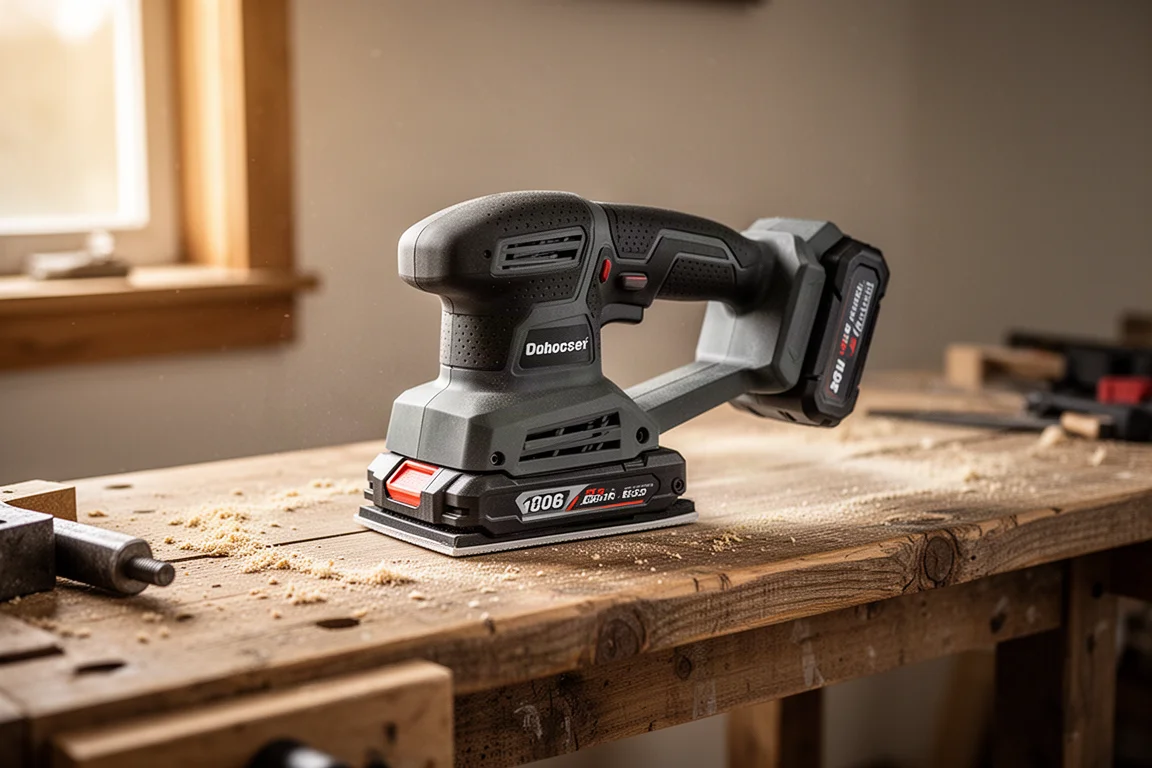
The sander runs a 3 by 18-inch belt at 600 to 950 surface feet per minute, adjusted through a dial on the body. The trigger feels like it might be variable speed, but it is not; speed control comes from the dial only. It ships with an 80-grit belt, and the supplied belts are taped together, with the included one feeling somewhat fragile at the tape seam.
The Adjustable Front Handle
The adjustable front handle is one of the more unusual design choices. Out of the box it sits in a far-back position, which makes sense for getting flush against surfaces, and it moves through three positions with detents: far back, middle, and far forward. The far-forward position is where most users will keep it, the middle position helps in tighter spots, and the rear position is genuinely useful when working upside down or flush against an edge.
One quirk worth knowing: when you tighten the handle’s screw, it reaches a point where it still feels slightly loose. Keep going past that gap and it suddenly locks down tight. Once you learn that the handle simply needs an extra turn, the adjustment is comfortable and reliable.
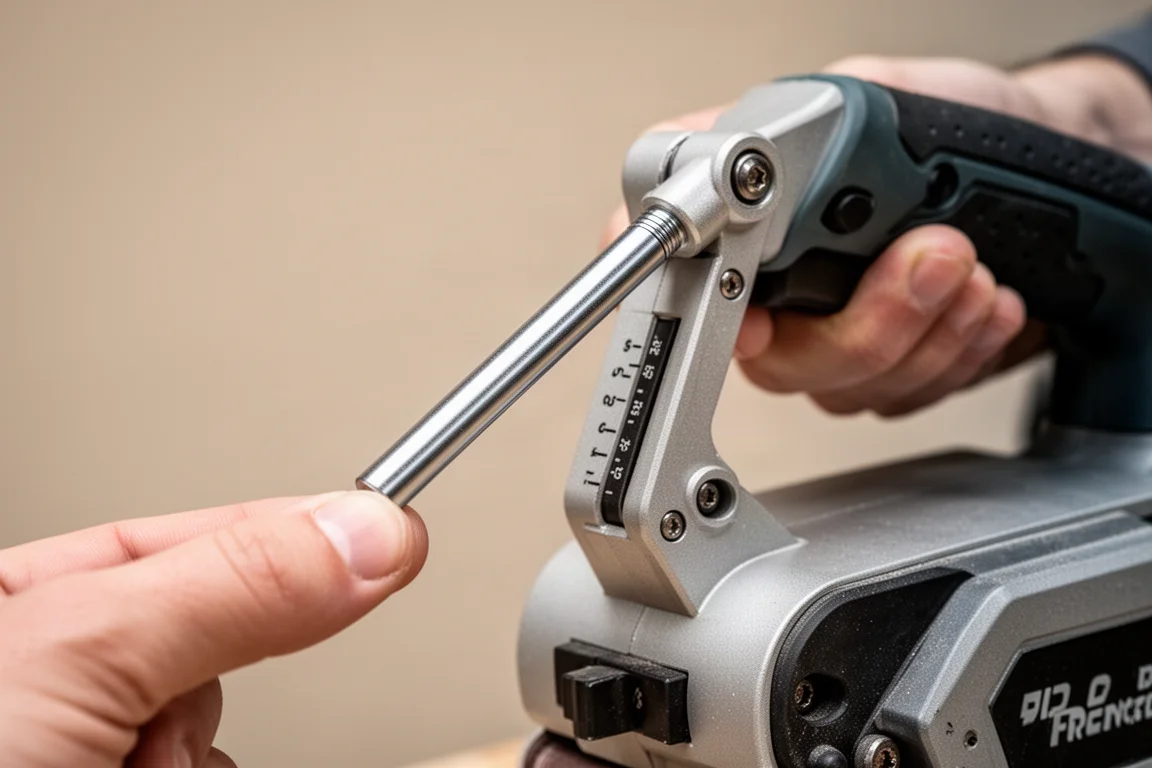
The lock-on button sits right next to your thumb, which makes it easy to engage but also easy to hit by accident. Tracking adjustment is conventional, a screw-style lever on the side, and the belt tracked well in testing.
Power and Real-World Sanding Performance
On the power side, the sander holds up well. Pressing down harder than any normal sanding session would justify, the motor slows audibly but never cuts out, even at the slowest dial speed. That reserve matters if you ever need to lean into a cut, and it is reassuring that the tool does not stall under pressure.
Belt retention, a common complaint with belt sanders in general, was tested deliberately, including using the sander sideways at an angle no one should use it at. The belt stayed centered and in place throughout. Tracking held where it was set, which addresses one of the most frequent complaints people have about this tool category.
Dust Collection and Battery Life
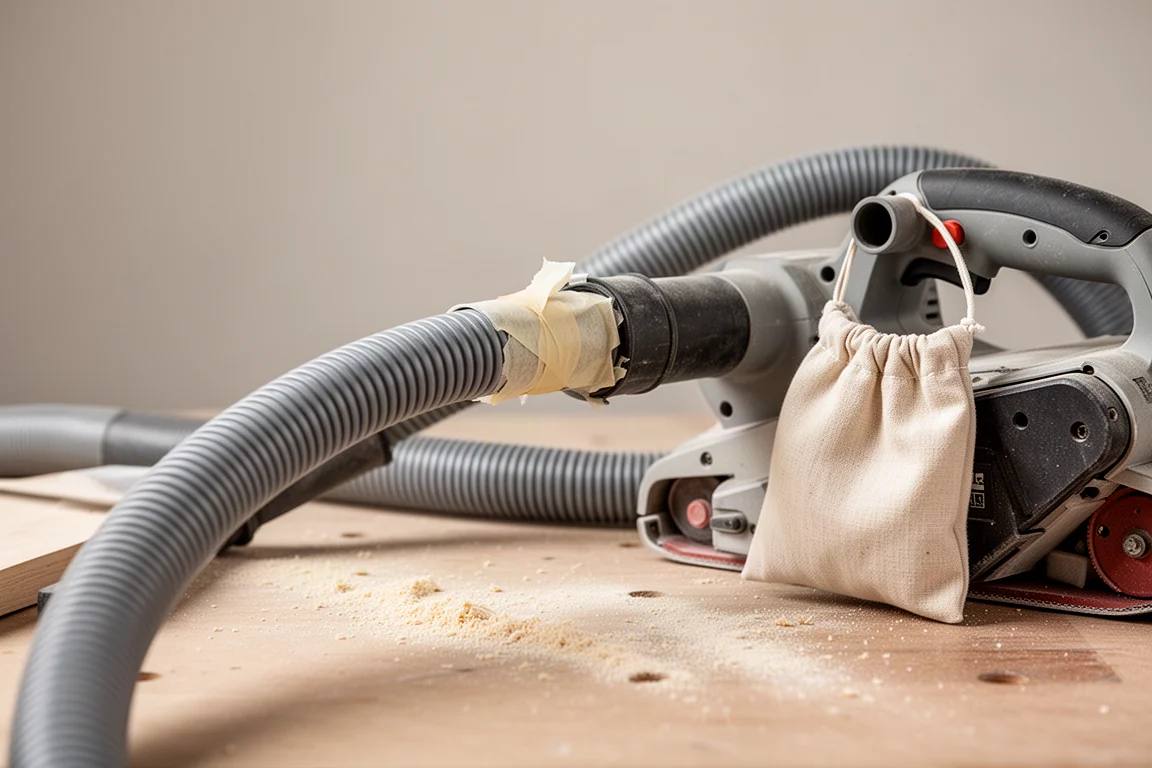
Dust collection placement is conventional and works well, with a side port suited to a vacuum hose. The included fabric bag, however, is on the small side. It fills up quickly when sanding soft woods like pine, where a lot of material comes off with 80-grit paper. That matters because as fibers pack in, less air moves through and less dust gets caught, so plan on emptying the bag more often on softer material.
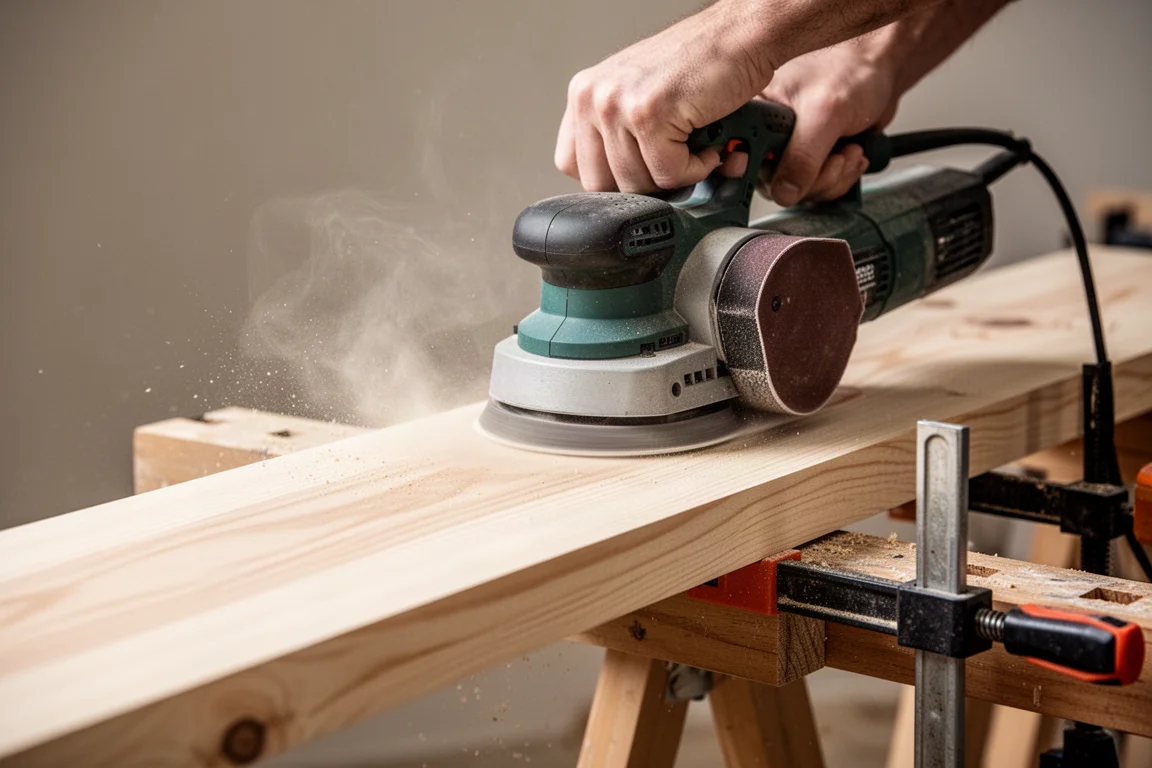
Attaching a shop vacuum takes some improvisation. The instructions do not identify a dedicated vacuum adapter, and a common premium vacuum hose does not fit directly. A simple taped connection worked fine in testing and improved pickup noticeably, with far less dust reaching the floor. For occasional indoor or shop work, a one-time taped setup is a reasonable trade-off.
Battery draw is light. Testing on a fully charged 5Ah battery still showed a full charge after a solid sanding session, with only slight warmth. Runtime should be comfortable with any battery in the platform.
Who Should Buy It
This is a capable DIY-oriented sander that could also serve in a professional setting, though contractors may prefer larger wheels, a longer belt, and a boxier form factor for different work. If you specifically want heavy metal construction, this is not the model for that. If the price is right, you already own Craftsman V20 batteries, and you want a cordless belt sander with good power, stable belt tracking, and workable dust collection, it is a solid pick.
For sanding softwoods, a lighter grit than the included 80 will make the work easier and leave more room to use the tool across different situations; 80-grit is better matched to hardwoods like oak or maple, or to removing paint.
Conclusion
The Craftsman V20 belt sander looks and feels unusual at first, with its plastic-heavy exterior, narrow front handle, and small dust bag. In practice, it delivers strong, stall-resistant power, dependable belt tracking, light battery draw, and dust collection that performs well once a vacuum is connected. Its main drawbacks are the small dust bag, the lack of a documented vacuum adapter, and a design that will not appeal to anyone set on an all-metal build. For DIY users already in the Craftsman V20 battery system, it is easy to recommend.
Product link
View more details for Craftsman V20 Belt Sander
This product is mentioned in the review. Check the specifications, options, and compatibility before buying.
View more details for Craftsman V20 Belt SanderFurther reading
Related Reviews
Power Tools
Best 1-Inch Pistol Impact Wrenches: Three Heavy-Duty Options Compared
We compare three 1-inch pistol impact wrenches, from a budget-friendly Harbor Freight model to a premium Caterpillar unit, to help you choose the right one.
Power Tools
Best 3/4-Inch Impact Wrenches 2026: Five Contenders Compared
We compare five 3/4-inch impact wrenches across price and performance, from a budget Amazon option to Snap-on's most powerful model yet.
Power Tools
Best Budget Cordless Tools 2026: Walmart Finds That Punch Above Their Price
We tested five cordless tools from Walmart, including a high-torque impact wrench that trades blows with Milwaukee and a $35 duster that outperforms its price class.