Power Tools
Craftsman CMCD721 vs CMCD732 Brushless Hammer Drill: Which One Deserves Your Money?
A side-by-side look at Craftsman's made-in-USA CMCD721 and the newer CMCD732 brushless hammer drill drivers, covering power, build quality, and the $20 question.
Introduction
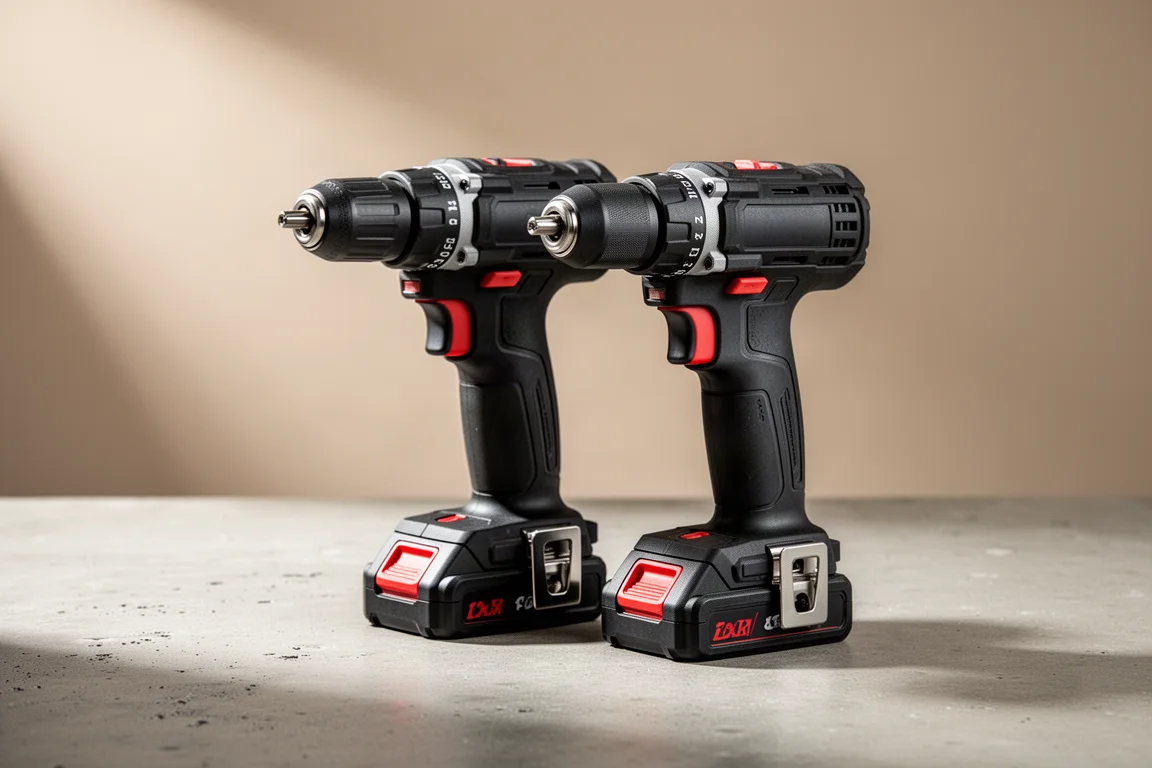
Craftsman currently sells two brushless hammer drill drivers that sit at nearly the same price point: the CMCD721, made in the USA with global materials, and the newer CMCD732, part of the brushless R&P line. One leans on build quality and refinement, the other on raw power and newer design. This comparison looks at how they differ and where each one makes sense.
The $20 Question: USA-Made vs Newer Design
The CMCD721 sells for $119 at Lowe’s and brings a few things you will not find on other drills in its class, including a full metal chuck and metal around the body of the tool. The CMCD732, released in 2022, drops the metal chuck and body metal but costs $99. That $20 gap is about 20 percent more money, which is the real decision point here.
Visually the two are easy to tell apart: the USA version has more black up front, while the newer model can be marked apart for testing. Both are brushless, so both deliver good runtime in theory, but the newer R&P model uses a larger and longer motor.
Drilling Performance in Real Wood
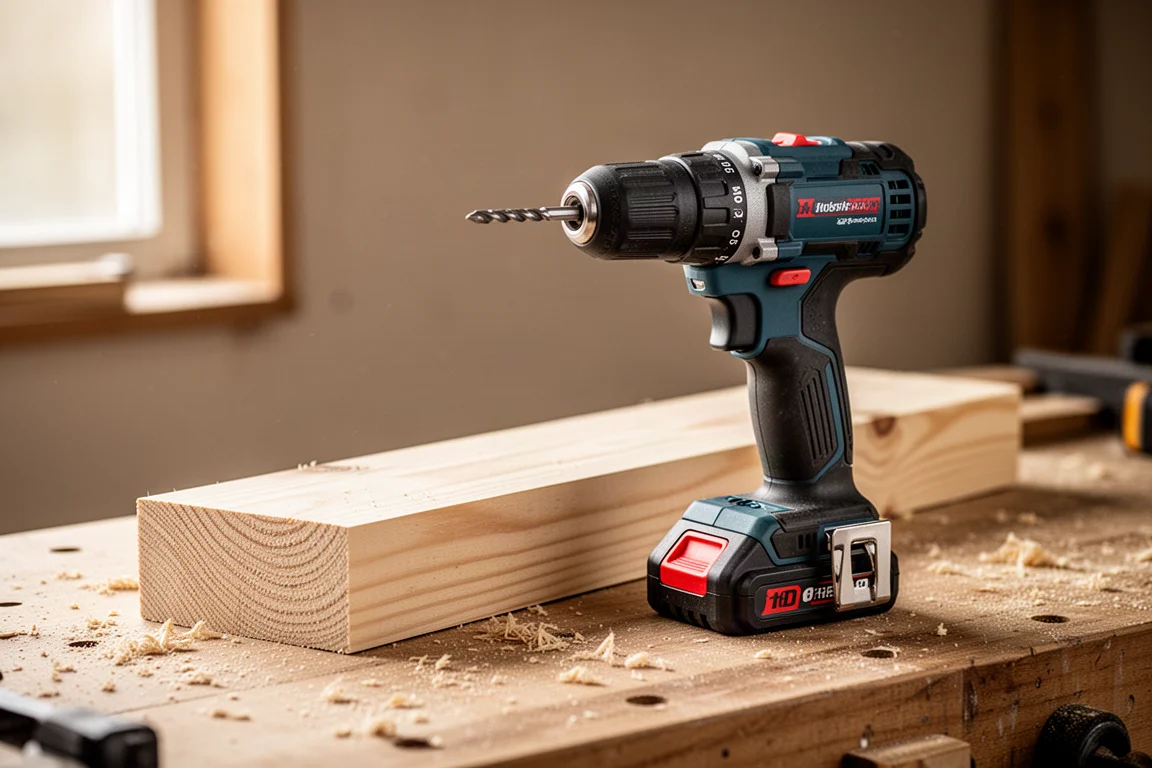
Testing was deliberately brutal: extremely wet, sappy wood that had sat out in the rain, which produces a worst-case scenario rather than typical dimensional lumber results.
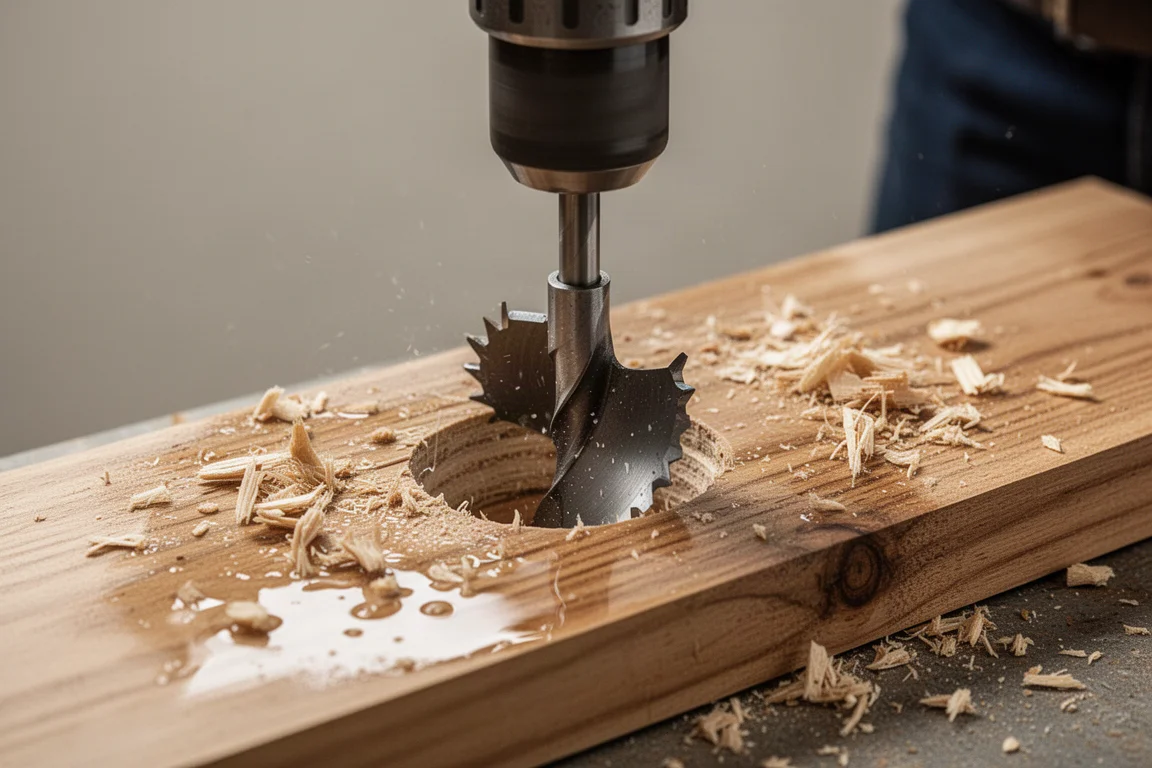
With a 1 1/4-inch spade bit, neither drill sank it through the wood at any battery size, which is telling. On a 1 3/4-inch bore bit, the CMCD721 only made it through on a 6Ah battery, and even then it hit a cutout at the end of the hole. The CMCD732 performed better here: the 2Ah battery already drilled deeper, and the 4Ah and 6Ah attempts ended in cutouts right at the finish line.
With a 1-inch auger bit, the story flipped again. The CMCD721 only cleared it on the 6Ah battery, while the CMCD732 got through on the 4Ah with no problem and went further than the USA model on the 2Ah. The takeaway from these runs is that the CMCD732 has more power, which is not surprising given its larger motor.
Speed and Hammer Numbers
On paper the two look close, but the differences show up in use. The CMCD721 runs 0 to 2,100 RPM in high speed, a full 200 RPM more than the CMCD732’s 1,900. Both run 0 to 600 RPM in low. In hammer mode, the CMCD721 delivers 35,700 BPM against the CMCD732’s 32,300 BPM.
Those numbers are audible. With a 9Ah battery and a 1-inch spade bit, the CMCD721 sounded more consistent and seemed to bog less, while the CMCD732’s slower RPM felt smooth but noticeably slower. In hammer mode with a half-inch masonry bit, both drilled at about the same speed, and the CMCD732 was not much quieter despite expectations. The CMCD721’s hammer noise resembles the high-pitched squeal of a DeWalt DCD996.
One more practical note: neither drill includes an auxiliary side handle, which matters when pushing large bits through tough material.
Build Quality and Feel
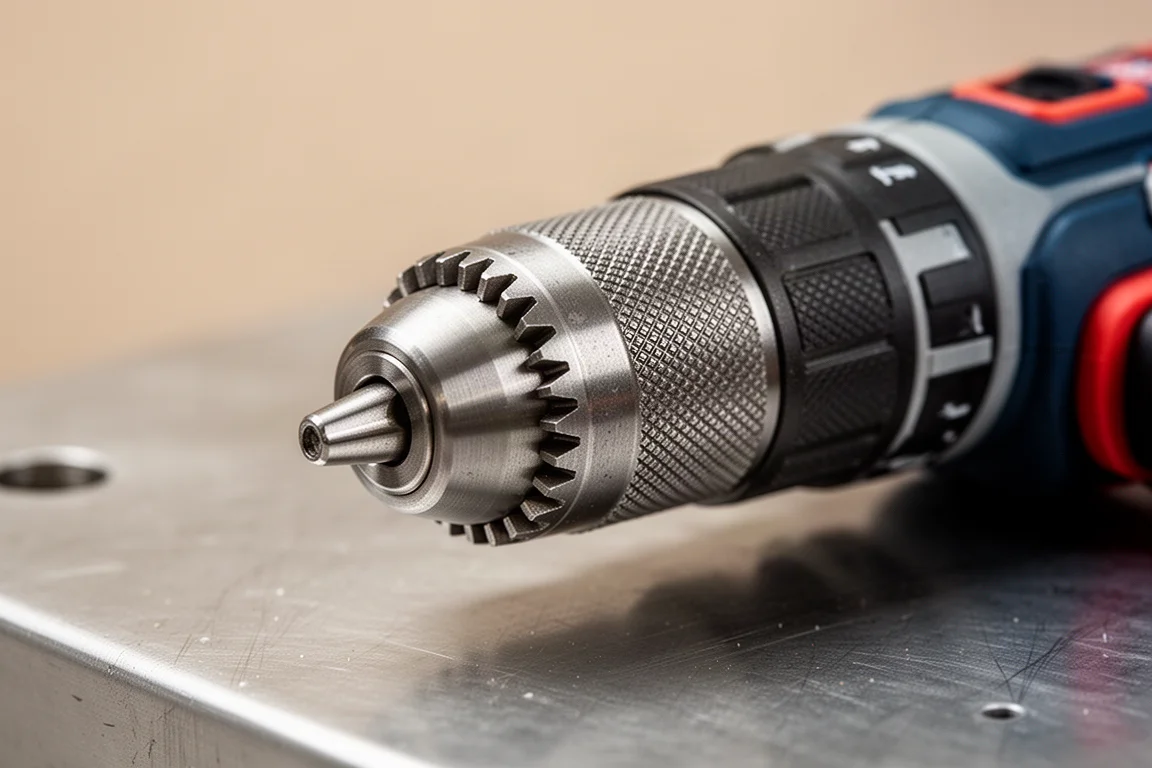
This is where the CMCD721 pulls away. The metal chuck is a genuine pleasure to use compared to the plastic chuck on the CMCD732, which does not feel like it tightens as well. The trigger on the USA model is smooth, while the newer model’s is a little clicky. Switching from forward to reverse comes together nicely on the CMCD721 and feels less polished on the CMCD732, though with both units essentially brand new this could partly come down to unit-to-unit variation.
The overall verdict on feel favors the USA model: there is a definite difference in quality coming from the metal chuck, the trigger, and how everything fits together.
Battery Matters More Than the Drill
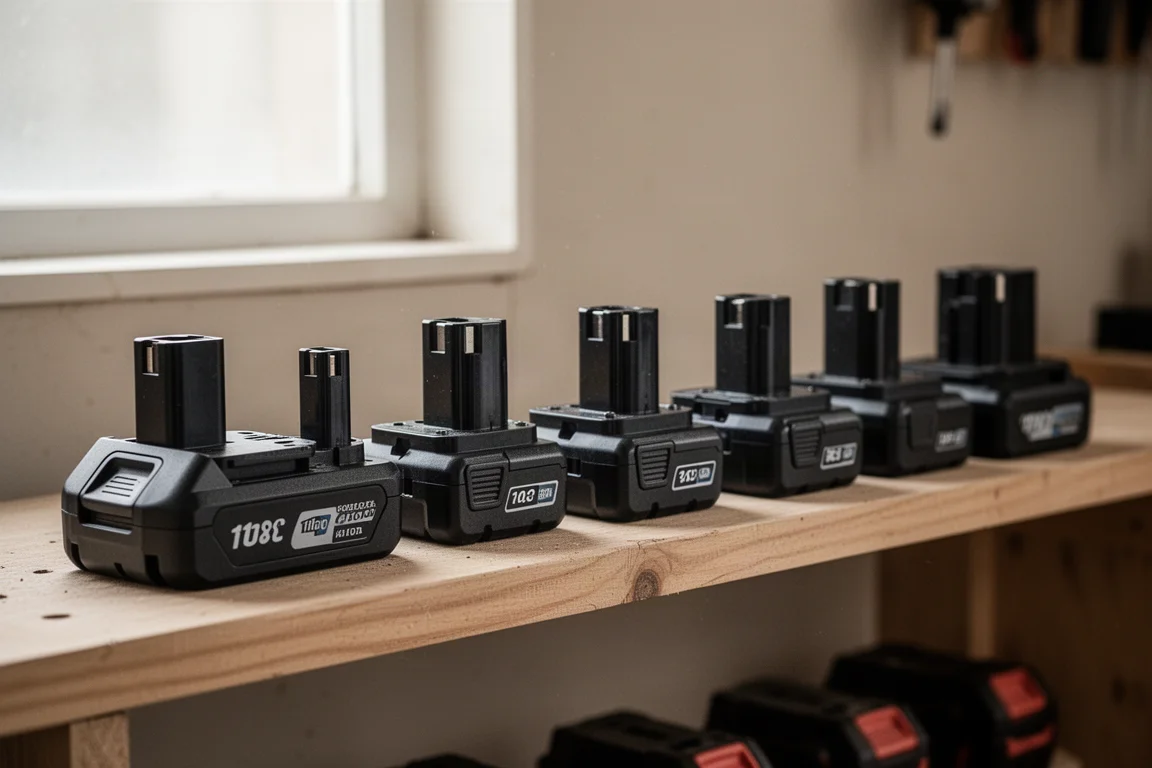
Both drills will leave you satisfied in the field, and no difference between them is likely to make you wish you had bought the other one. The bigger variable is the battery. If you consistently run small 2Ah batteries, you will leave power on the table with either drill. Spending money on larger batteries delivers more power, more runtime, and more satisfaction from the tool you just bought. On the low-speed hole saw test with sappy wood, both drills bogged down once the bit filled up, reinforcing that the wood, the bit, and the battery shape results as much as the drill itself.
Which One Should You Buy?
The power advantage goes to the CMCD732, which is also the newer design. The smoother specs, better feel, and clear build-quality edge go to the CMCD721. If you can stretch the extra $20, the metal chuck alone makes a strong case, before even factoring in the USA assembly. For most buyers, the CMCD721 is the slightly safer pick for feel and finish, while the CMCD732 makes sense if you want maximum power per dollar.
Conclusion
Both of these brushless hammer drills are capable tools, and in normal use the differences will not jump out at you. Choose the CMCD721 if build quality, the metal chuck, and smoother operation matter most, and the CMCD732 if you want the newer, more powerful option at a lower price. Either way, pair your drill with a larger battery and you will get better results than any spec-sheet difference suggests.
Product link
View more details for Craftsman CMCD721 Brushless Hammer Drill Driver
This product is mentioned in the review. Check the specifications, options, and compatibility before buying.
View more details for Craftsman CMCD721 Brushless Hammer Drill DriverFurther reading
Related Reviews

Power Tools
Best 1-Inch Pistol Impact Wrenches: Three Heavy-Duty Options Compared
We compare three 1-inch pistol impact wrenches, from a budget-friendly Harbor Freight model to a premium Caterpillar unit, to help you choose the right one.

Power Tools
Best 3/4-Inch Impact Wrenches 2026: Five Contenders Compared
We compare five 3/4-inch impact wrenches across price and performance, from a budget Amazon option to Snap-on's most powerful model yet.

Power Tools
Best Budget Cordless Tools 2026: Walmart Finds That Punch Above Their Price
We tested five cordless tools from Walmart, including a high-torque impact wrench that trades blows with Milwaukee and a $35 duster that outperforms its price class.