Power Tools
Cordless Plunge Router Showdown: Makita XGT 40V vs Milwaukee vs Hikoki 36V
Three cordless plunge routers tested side by side for power, weight, depth control, and everyday handling to help you pick the right one.
Introduction
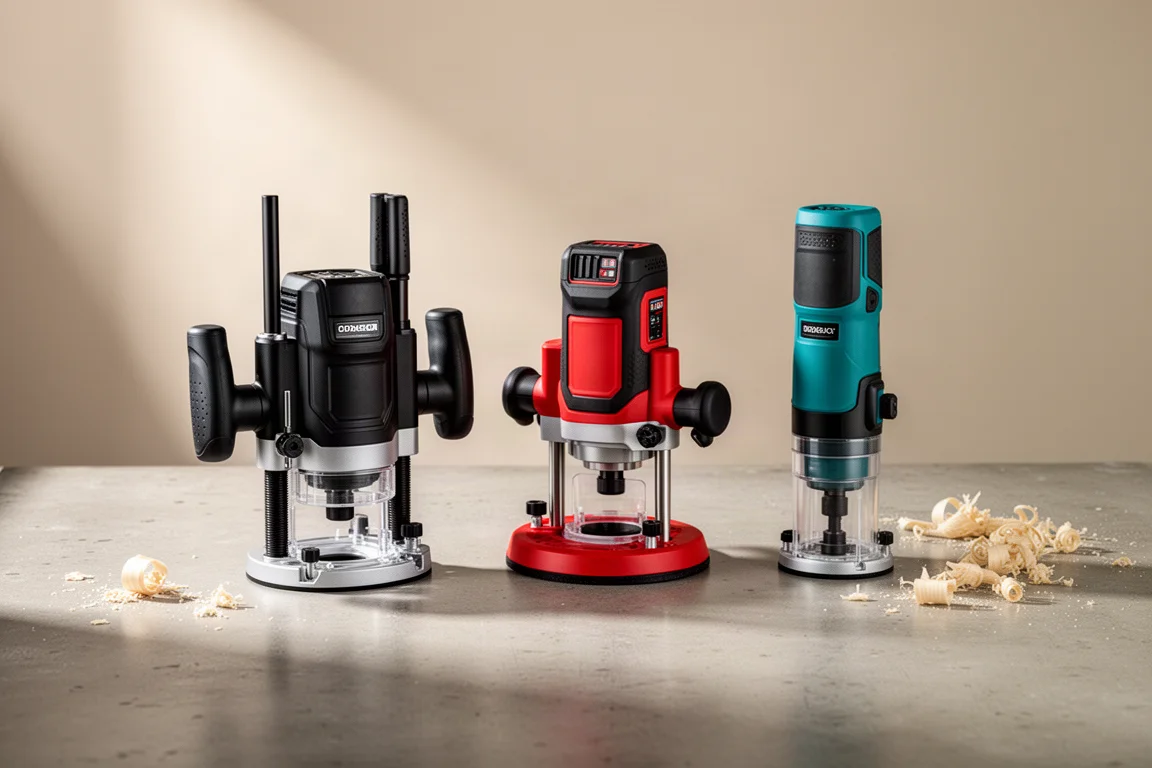
Cordless plunge routers have finally matured. Three of the biggest names in the game now offer serious machines in this space: the Makita XGT 40V, the Milwaukee cordless plunge router, and the Hikoki 36V. We put all three through the same cuts, the same bits, and the same heavy battery loads to see which one deserves a place on your bench.
Evaluation Criteria
Each router was compared on weight, speed range, depth adjustment, plunge feel, dust extraction, run time, and raw cutting power. Tests included long groove passes in 9 mm particle board with a 2.5 Ah battery, straight passes in treated pine, and a torture test with a massive 340 g tongue and groove bit at full speed. Batteries were kept as similar as possible across platforms: a 4 Ah Hikoki 36V pack, a 4 Ah Makita pack, and a 6 Ah Milwaukee forge pack.
Makita XGT 40V Plunge Router
The Makita weighs 3.27 kg without a battery and offers variable speed from 8,000 to 25,000 RPM, with AWS hidden behind the handle. It is the widest speed range of the three, starting noticeably lower, which makes it the better option if you run bits that need slower speeds. Depending on the configuration, bare tool or kit, it may or may not include the AWS chip, so check the listing before buying.
In the box you get a front guard, dust deflector, dust port, fence, rip guide with micro adjustment, wrench, template guide, and collet inserts. The plunge action is the smoothest and easiest of the three, with fine depth adjustment in 0.1 mm increments plus a top depth stop for dialing in exact depth. The 0.1 mm fine adjustment and extra plunge depth make it easy to get precise results.
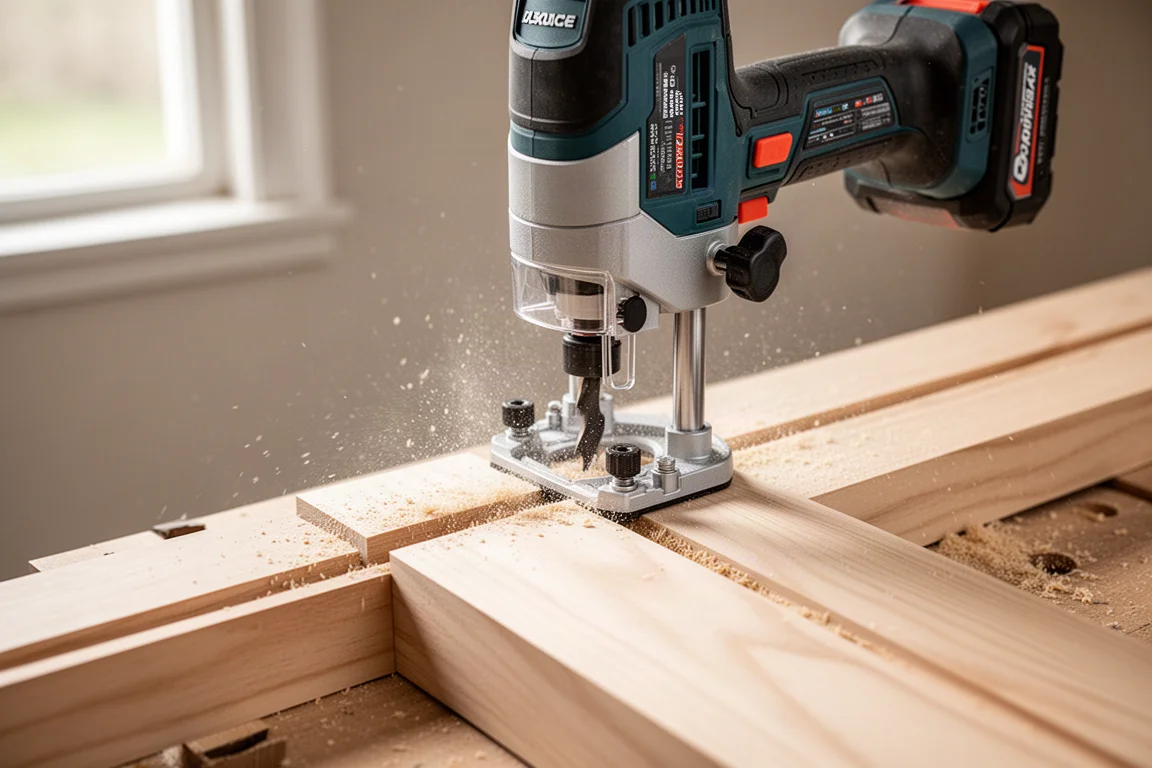
One quirk: the plunge lock lever sits too far from the hand in normal use, so you need to rotate your grip to reach it. The collet insert system is also a little fiddly compared to a proper collet nut, with two tightening surfaces instead of one. And, like all routers, dust extraction barely collects half the dust.
Where it counts, though, the Makita grew on us fast. In the torture test it was clearly the strongest performer, cutting smoothly at a faster feed rate than the Hikoki and never suffering the battery overload the Milwaukee did. Battery heat stayed around 35 to 41 degrees on the outside, far cooler than the competition. Makita’s battery options also go beyond the 4 Ah pack used in testing, up to 5 Ah and 8 Ah if you need more run time, though heavier packs cost you maneuverability.
A claimed 32 meters of cut in 9 mm particle board translates to roughly 18 passes in real use with a larger 3/4 inch bit, which lines up well once you account for the extra material removal. If you buy one router out of this trio, the Makita is the pick.
Milwaukee Cordless Plunge Router
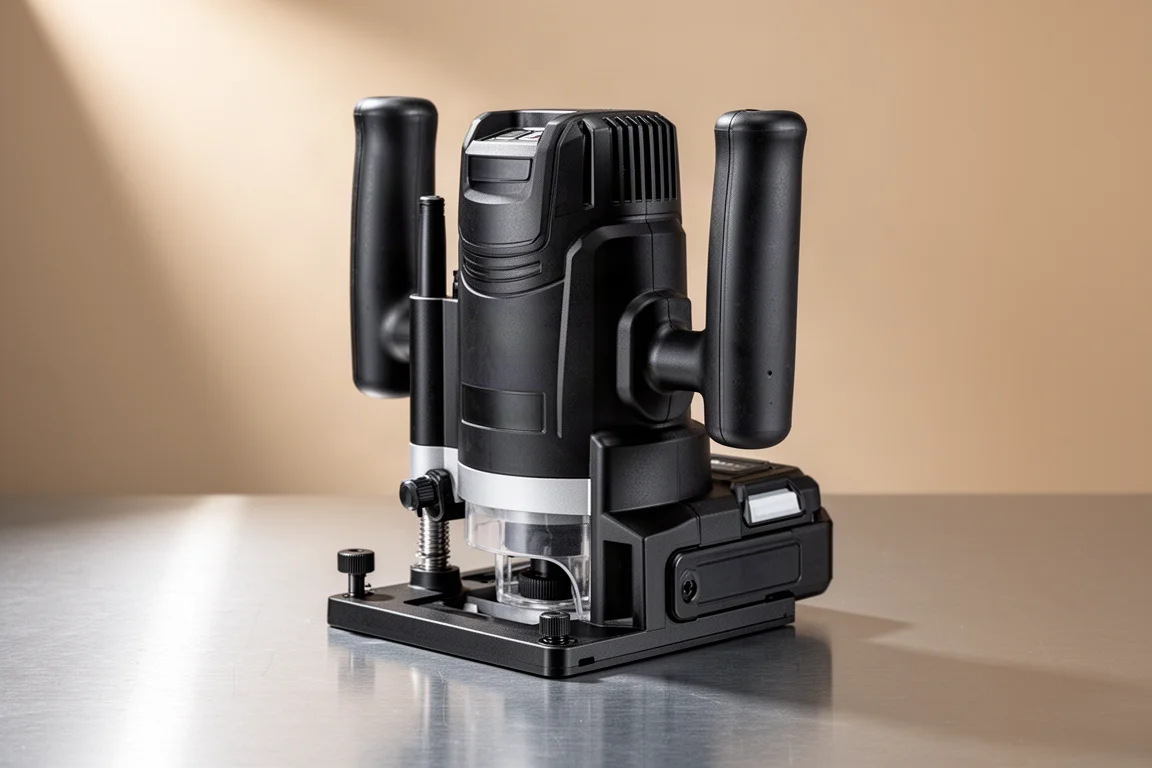
The Milwaukee is the heaviest of the three at 4.14 kg without battery or dust shoot, and it is a completely different form factor: the motor unit pops out of the base, so it works as a fixed-base or plunge-base router, while the other two are plunge-only. The round base is taller, wider, and an entire handle wider than the Hikoki.
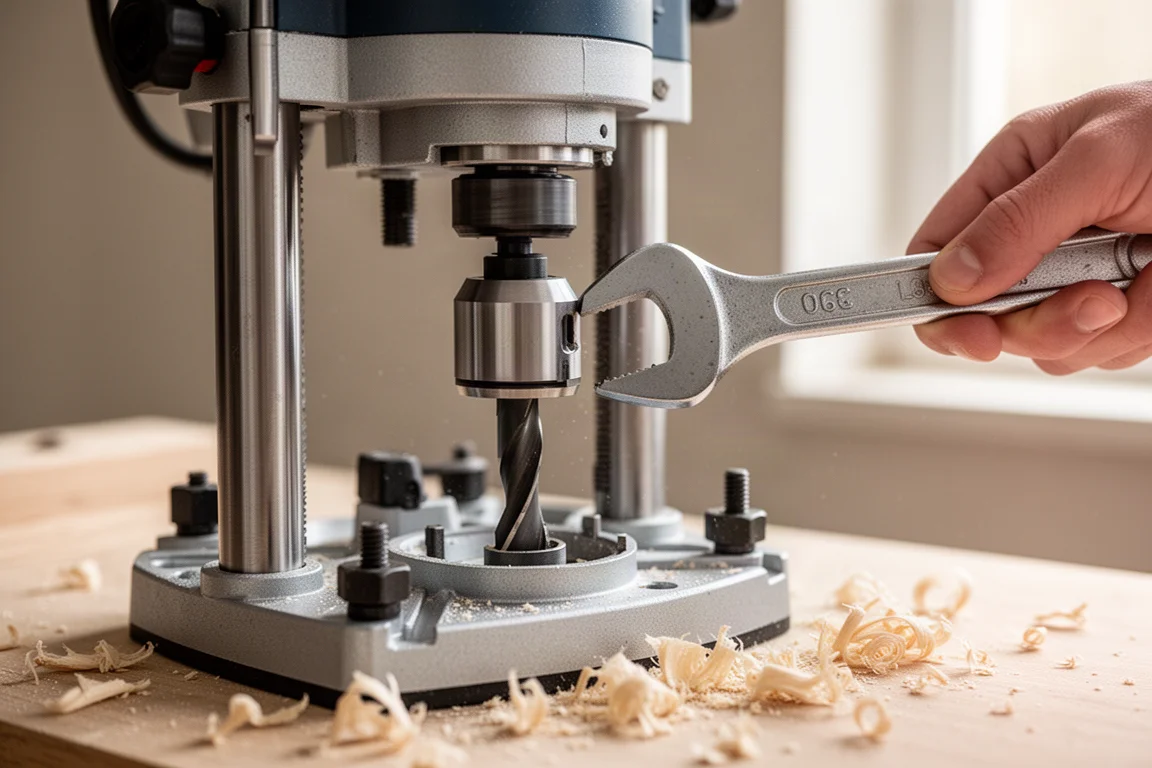
Bit changes are the best here because the whole unit lifts out of the base with nothing in your way, so you can really get a wrench on it. It also comes with five or six template guide inserts in metric and imperial. Dust extraction mounting is the best-designed system of the three, slotting in and tightening cleanly, though actual dust collection is still poor like every router.
The switch is an old-fashioned slide on and off with no safety sequence, which some will love and others will find too easy to bump. Speed tops out at 25,000 RPM but starts at a high 12,000, so there is no slow-speed option for delicate bits. Depth fine adjustment reads in 1/16 inch steps, and plunge levels sit at six fixed steps, though they are close enough together that it rarely matters.
In cutting tests it held its own but felt wild and clunky compared to the other two, and the handle orientation differs from the Hikoki and Makita, which felt awkward to control. Its 18V battery had to work hardest, draining fastest and hitting 50 to 53 degrees on the outside. In the torture test it repeatedly overloaded: the battery overheated, cut out, and needed recovery breaks, eventually running out with a short section still to go. Base screws for the guides and dust port have no springs and vibrate loose during use, so you will lose them eventually.

It still finishes most jobs without complaint, and the swappable battery approach means you can keep spare packs cycling if you do hit an overload. Just do not expect it to match the 36V-class machines on grunt.
Hikoki 36V Plunge Router
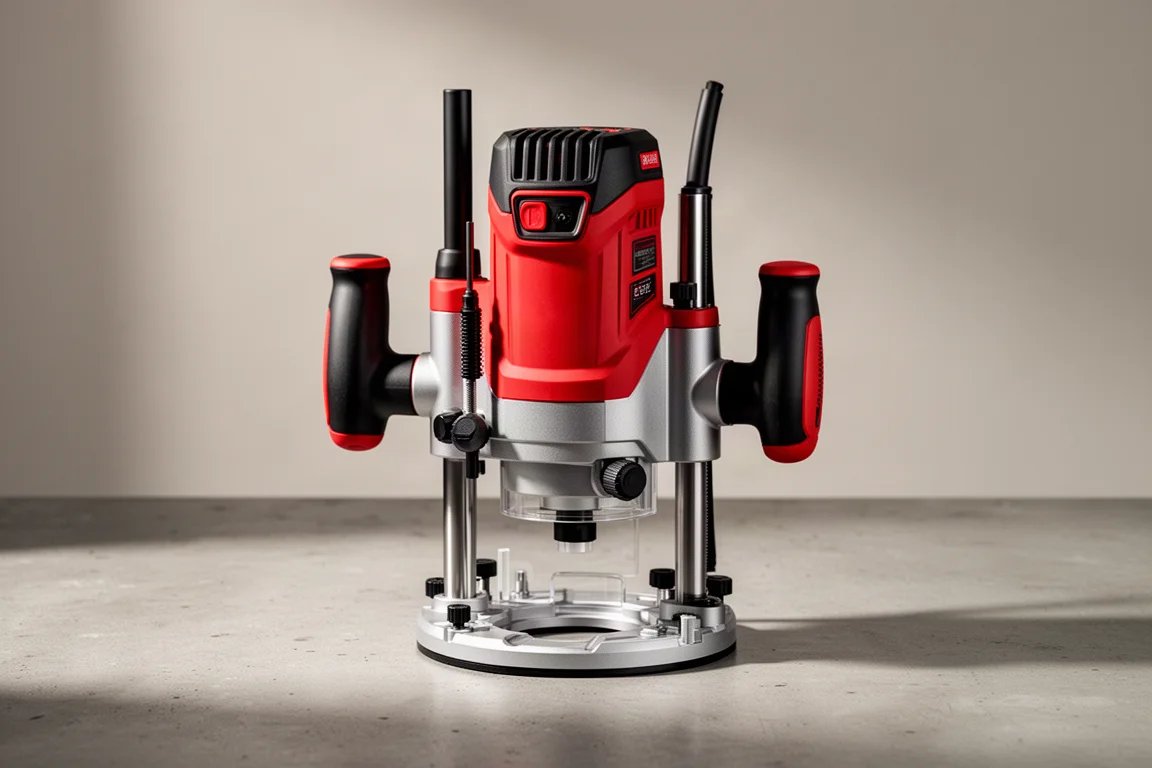
The Hikoki is the lightest of the three at just over 3 kg without battery, significantly narrower than the Makita, and roughly the same height. That narrower body makes it the nicest to hold of the group, and it was initially the favorite before the Makita’s power advantage became obvious.
Speed runs 11,000 to 25,000 RPM across six dial steps, again with no genuinely slow starting point. Depth setting is the easiest of the three: just slide it down and lock, similar to the Milwaukee. But there is no fine adjustment at all, which is genuinely disappointing, and the depth scale is harder to read than it should be.
The plunge lock lever is one of the best designs here, a double-edged boomerang-style switch you press down to lock and flick up with a finger while working. Plunge feel is good, though slightly tighter than the Makita. Trigger operation uses a safety unlock plus trigger, with a further push to lock it on.
In the torture test, the tool itself overloaded rather than the battery, which at least means a quick trigger reset gets you going again. It struggled with the huge tongue and groove bit, cutting out when pushed and requiring a backed-off speed toward the end. Battery temperatures reached the 50 to 55 degree range on the outside. On the plus side, in the straight pass test it left only a little dust behind in the track compared to the Milwaukee, and it ran comfortably with a 4 Ah pack.
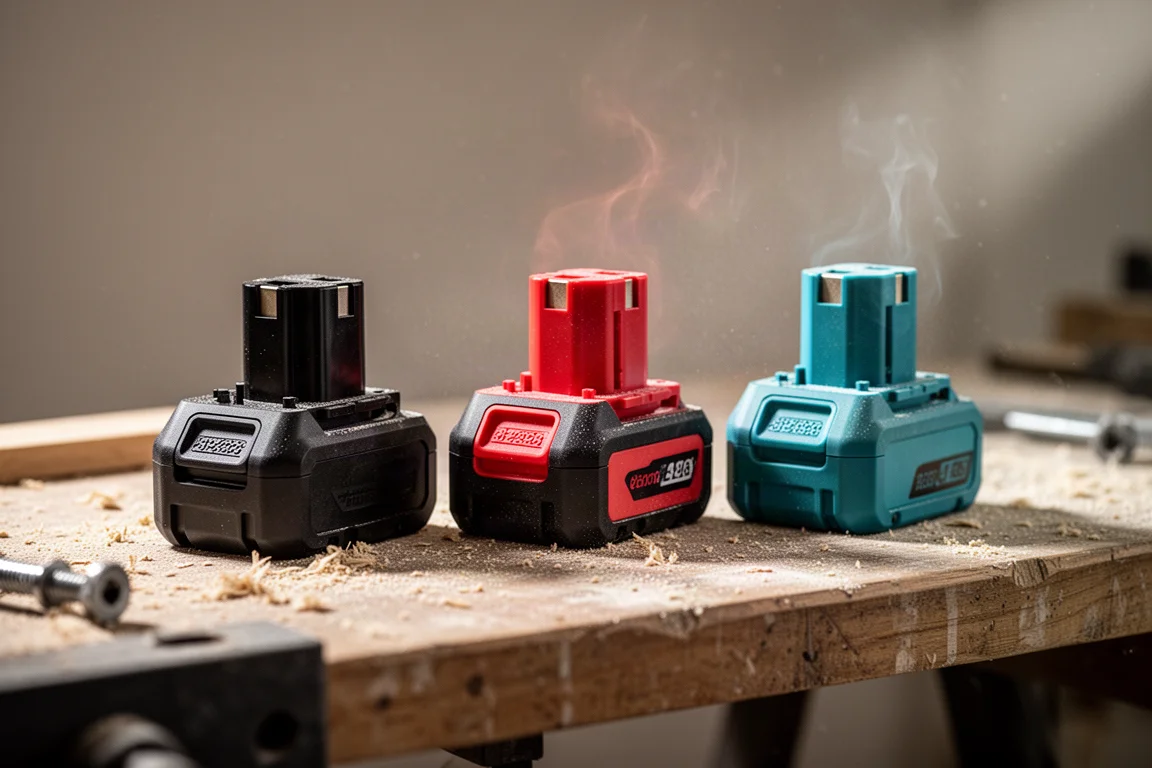
One limitation: Hikoki’s 36V battery lineup is limited to 2.5 Ah and 4 Ah packs, with no tablet-cell options and no higher-capacity route if you need more run time. For lighter and narrower cutting work, though, it remains a genuinely pleasant, well-balanced tool.
Depth Control and Speed Range
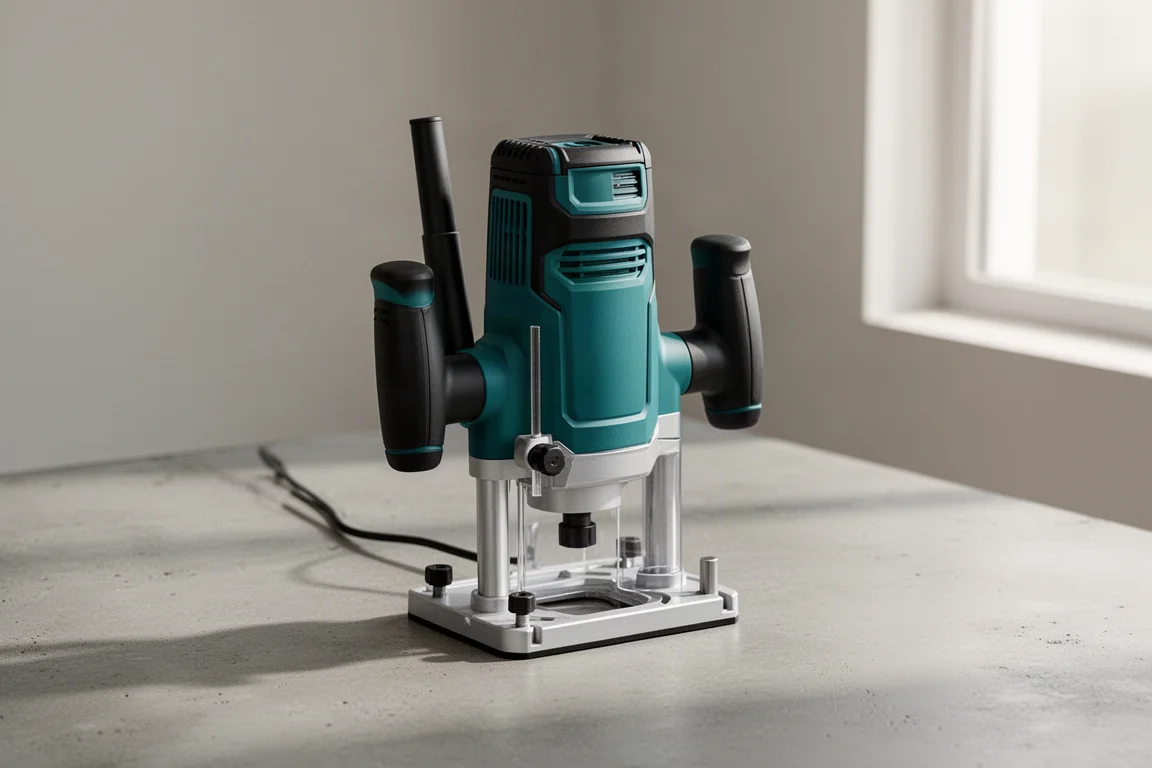
The Makita takes depth control seriously: a three-point adjustable stop system, quick release, 0.1 mm fine adjustment, and an upper-limit tweak for dialing in the top of the travel. The Milwaukee offers fine adjustment and six fixed plunge steps; the Hikoki is quick to set but has no fine adjustment at all. If precision depth matters to your work, the Makita is the clear winner.
On speed, the Makita’s 8,000 to 25,000 RPM range is far bigger than the Hikoki’s 11,000 or Milwaukee’s 12,000 starting points. If you use large bits that demand low speeds, only the Makita gives you real headroom.
Power and Torture Test
With all three at full speed in treated pine using the same large tongue and groove bit, a clear step of improvement showed from Milwaukee to Hikoki to Makita. The Milwaukee’s battery repeatedly overheated and overloaded, the Hikoki’s tool cut out under load, and the Makita handled the cut comfortably with the coolest battery temperatures and the fastest sustainable feed rate. The 36V-class Makita and Hikoki packs simply have an easier job delivering the same motor output than the Milwaukee’s 18V pack.
Everyday Handling and Final Verdict
All three are good tools, and much of the choice comes down to hand size and preference. Bit changes favor the Milwaukee, plunge smoothness and power favor the Makita, and narrow body comfort favors the Hikoki. Dust extraction is poor on all of them, as it is with routers generally, so plan your workflow around that reality.
If we had to pick one, the Makita XGT 40V is the choice. It started as the chunkier option but grew on us once the power difference became obvious: smoother plunging, cooler batteries, better speed range, and the ability to push bigger bits harder than either competitor. The Hikoki is the lighter, narrower alternative if comfort matters more than grunt, and the Milwaukee suits anyone who values the fixed-and-plunge base flexibility and easy bit changes. Skip the DeWalt for now; it has not been released in this market at the time of writing.
Conclusion
The Makita XGT 40V plunge router is the strongest all-round pick, combining the widest speed range, the best depth precision, and the most consistent power under load. The Hikoki 36V trades some grunt for a lighter, narrower body, and the Milwaukee adds base flexibility and easy bit changes at the cost of weight and battery heat. Match the tool to how you actually route, and any of the three will get the job done.
Further reading
Related Reviews
Power Tools
Best 1-Inch Pistol Impact Wrenches: Three Heavy-Duty Options Compared
We compare three 1-inch pistol impact wrenches, from a budget-friendly Harbor Freight model to a premium Caterpillar unit, to help you choose the right one.
Power Tools
Best 3/4-Inch Impact Wrenches 2026: Five Contenders Compared
We compare five 3/4-inch impact wrenches across price and performance, from a budget Amazon option to Snap-on's most powerful model yet.
Power Tools
Best Budget Cordless Tools 2026: Walmart Finds That Punch Above Their Price
We tested five cordless tools from Walmart, including a high-torque impact wrench that trades blows with Milwaukee and a $35 duster that outperforms its price class.