Power Tools
Budget Cordless HVLP Paint Sprayer vs Wagner Flexio: Is the Cheap One Worth It?
A £34 unbranded cordless HVLP sprayer takes on a Wagner Flexio for woodwork, doors, and fences. Here is where the budget option wins, and where it falls apart.
Introduction
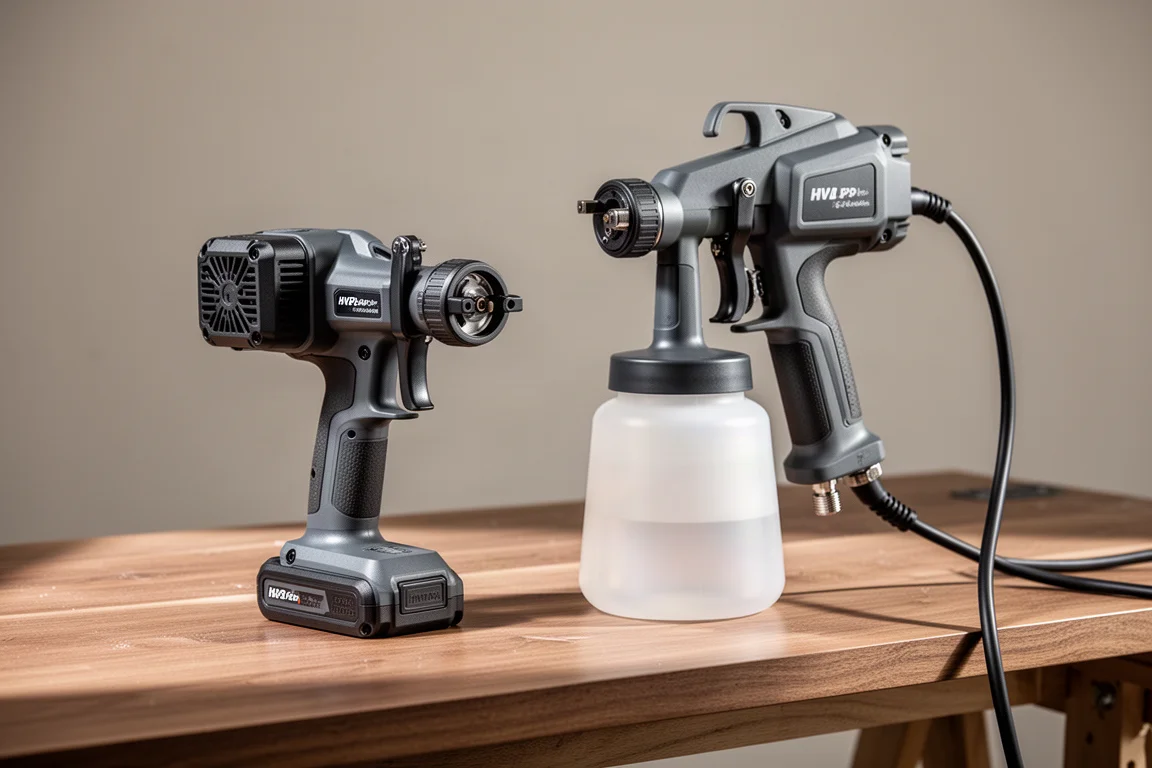
Cordless HVLP paint sprayers have become genuinely convenient tools: no cables, no hoses, and the freedom to work anywhere. The catch is that the main manufacturers know how to charge for them. That is what makes an unbranded cordless sprayer costing £34, roughly a third of the price of established brands, worth a serious look.
To find out whether the cheap option is a bargain or a false economy, we put it side by side with a Wagner Flexio, a corded HVLP sprayer that has handled years of fence and timber work.
How HVLP Sprayers Work
HVLP stands for high velocity low pressure. The motor unit is essentially a powerful fan, something like a cold hair dryer, pushing a large volume of air through the gun. As that air rushes past a tube dipping into the paint reservoir below, it draws paint up by the Venturi principle and carries it out of the nozzle as spray.
The trade-off is that HVLP sprayers produce a lot of air and a lot of airborne overspray. For interior walls and ceilings, an airless sprayer is generally the better choice because it is more controlled, uses far less air, and delivers more paint. HVLP systems shine on outdoor and workshop tasks like fences, posts, doors, and timber work.

The Budget Contender: Unbranded Cordless HVLP Sprayer
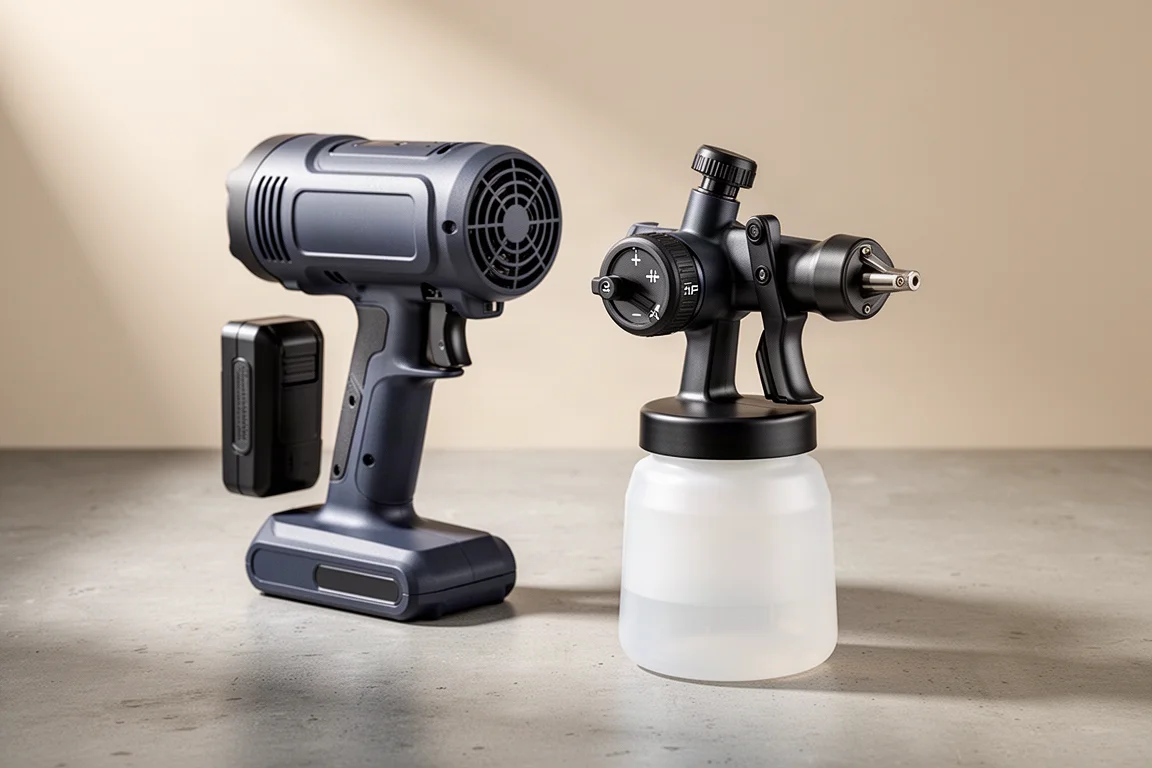
The unbranded sprayer comes in two parts that disconnect. The rear section houses the fan and pump, powered by a Makita-compatible battery that slides on, although the fit is admittedly tight. At 200 watts with a brushed motor, the immediate question was whether such a small unit could match a large 230-volt corded machine.
Getting the paint consistency right turned out to be the decisive factor. On the first try, even slightly diluted water-based paint came out patchy and globular. The included viscosity cup gives the answer: according to the manual, anything between 25 and 40 seconds of run-out time means the paint is ready. At around 25 seconds, the difference was chalk and cheese. Paint flowed fast and evenly, and the small fan proved more than powerful enough to do the job.

Spray Pattern Control and Nozzles
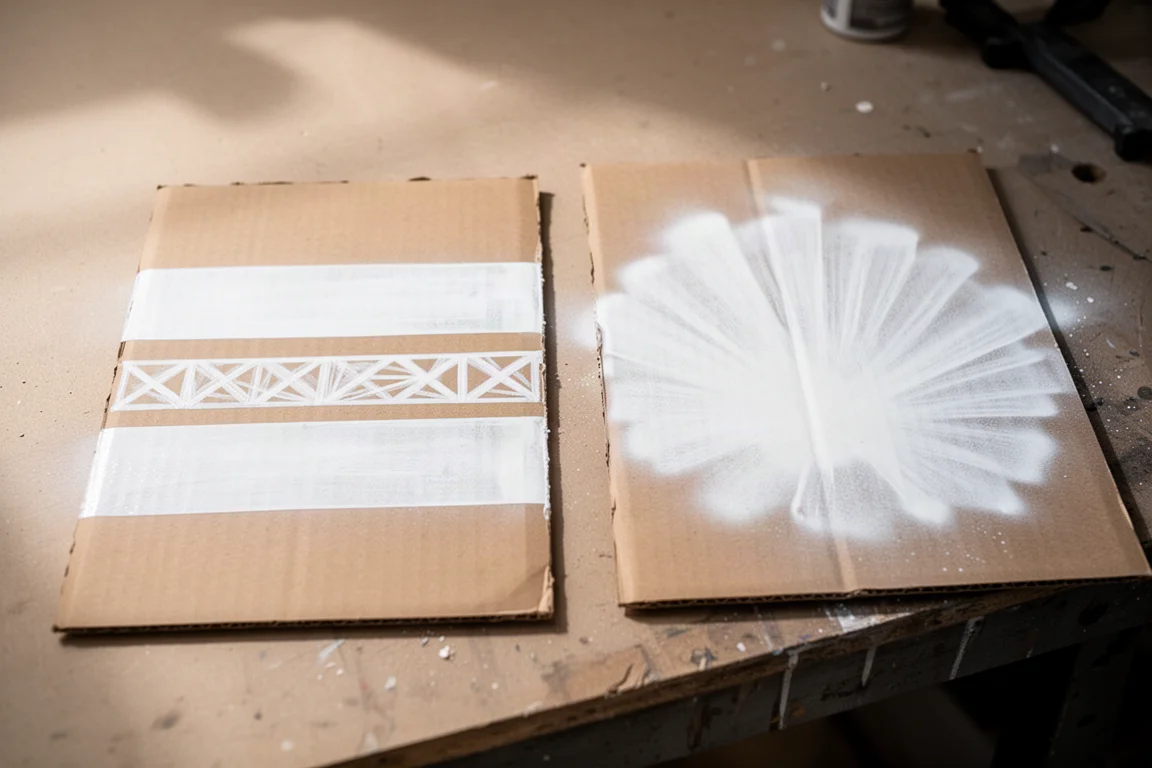
One feature sets the budget sprayer apart from its pricier rival: a plus/minus adjustment on the front that regulates air coming from the side nozzles. In practice this changes the spray width noticeably. With identical settings otherwise, one stripe measured around 2 to 3 inches wide while the other spread to 5 or 6 inches, so you can match the pattern to the job.
The three included nozzles matter too. Swapping to the smallest nozzle produced an even finer spray with far less blotchy output, which improved the finish considerably. The box also includes a paint straining filter, the viscosity cup, a cleaning tool, and a pair of gloves most people will never use.
The Established Choice: Wagner Flexio
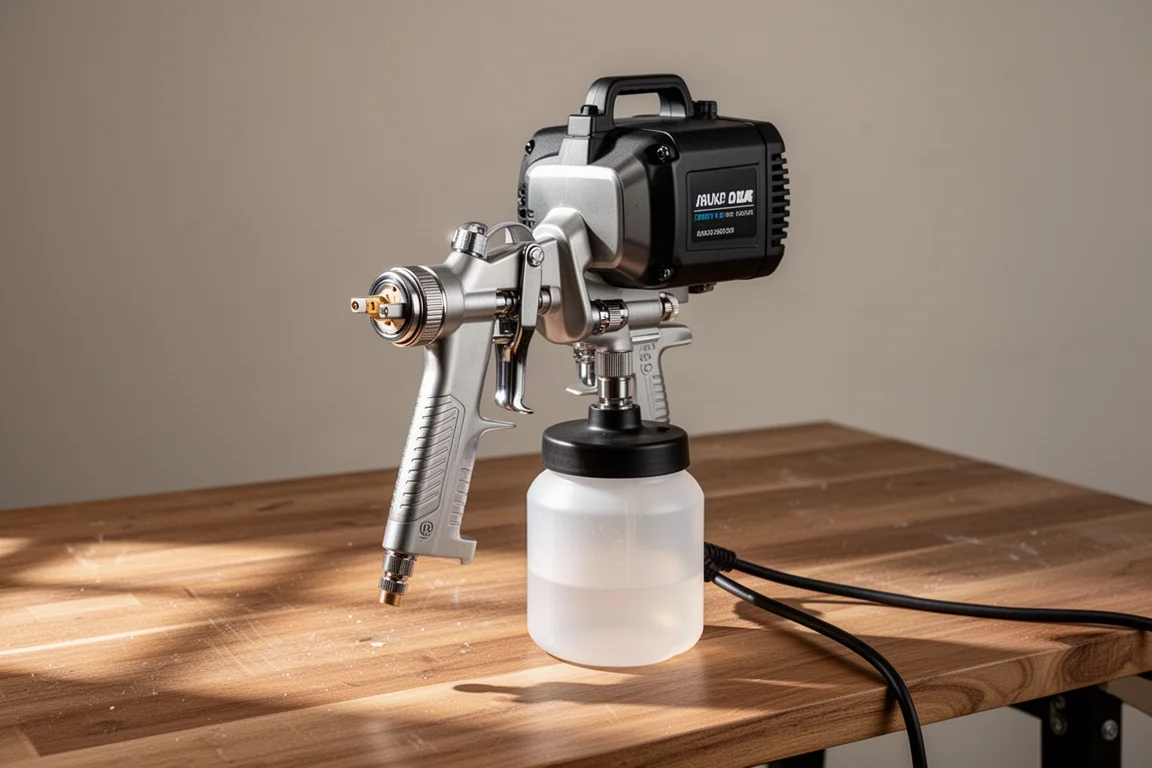
The Wagner Flexio is the machine that has handled garden fences and posts for years. It is corded at 230 volts, with a substantial motor unit and a straightforward gun design. The front section, nozzle arrangement, and general system are nearly identical to the budget sprayer, which is telling: the unbranded version copies a proven layout rather than reinventing it.
What the Wagner lacks is the budget unit’s spray width adjustment, and it lacks cordless freedom entirely. What it offers instead is consistent mains power for long sessions and a track record on outdoor timber work.
Where the Budget Sprayer Falls Short
The fence test exposed the limits. Fence stain is far too viscous for this machine, and even with the largest nozzle the material came out slowly and struggled to flow properly. Watering it down to a workable consistency is possible, but that likely means four or five coats, turning a fence job into an endless project.
Three problems stack up for fence work. First, a single 5Ah battery lasted only around 5 to 10 minutes of continuous use in testing, so any substantial fence would go through batteries constantly. Second, the viscosity issue forces dilution and extra coats. Third, and most importantly, the weight: motor, large battery, and paint all sit in one handheld unit. A door or door frame is fine, but after the first five minutes on a 10-metre fence your arm is done. For fencing, a split design where the motor is separate from the gun is the better approach.
Buying Advice: Where Each Sprayer Makes Sense
For woodwork, the budget sprayer genuinely holds its own. Doors, door frames, and general timber work came out just as well as they would with more expensive machines, because the nozzle, materials, and overall system are the same. A test panel of plywood took two coats of watered-down Dulux quick-dry gloss and dried to a finish that, with another couple of coats, would look very good. Getting the viscosity right with the included cup is the single most important step.

At £34, the cordless sprayer does 99% of what most people need for timber work around the house or workshop, and it is a third of the price of the competition. The Wagner remains the sensible pick if you want mains power for extended sessions and a proven outdoor workhorse.
Conclusion
For doors, frames, and timber work, the £34 unbranded cordless HVLP sprayer paints just as well as pricier alternatives, provided you dilute paint to the right viscosity. For fences, skip it: battery life, stain viscosity, and all-in-one weight make it the wrong tool for the job. Buy it for woodwork and it is a genuine bargain.
Further reading
Related Reviews
Power Tools
Best 1-Inch Pistol Impact Wrenches: Three Heavy-Duty Options Compared
We compare three 1-inch pistol impact wrenches, from a budget-friendly Harbor Freight model to a premium Caterpillar unit, to help you choose the right one.
Power Tools
Best 3/4-Inch Impact Wrenches 2026: Five Contenders Compared
We compare five 3/4-inch impact wrenches across price and performance, from a budget Amazon option to Snap-on's most powerful model yet.
Power Tools
Best Budget Cordless Tools 2026: Walmart Finds That Punch Above Their Price
We tested five cordless tools from Walmart, including a high-torque impact wrench that trades blows with Milwaukee and a $35 duster that outperforms its price class.