Tool Kits
Building a Compact Overlanding Screwdriver Kit: Three Drivers That Earn Their Space
A weight-conscious screwdriver kit for overlanding, built around three drivers with clear roles and no redundant bulk.
Introduction
When you are building a tool kit for an overlanding trip, every ounce has to justify itself. Screwdrivers are a classic example of how easy it is to overload: ratcheting drivers, full bit sets, stubby backups, precision kits. All useful at home, all hard to defend when space and weight are the constraints.
This kit takes a different approach. Instead of one do-everything driver, it uses a small number of dedicated drivers, each chosen for a specific job, with the acceptance that on the road you have time but not carrying capacity.
How This Kit Was Chosen
The logic starts with what gets left behind. A heavy, large screwdriver that will rarely see use does not make the cut, no matter how much you enjoy using it. Ratcheting screwdrivers are the same story: genuinely great tools, but there has never been a moment where one was the only possible solution. On a trip, time is the resource you have. If a screw has to be turned the slow, old-fashioned way, that is fine.
Full bit sets are the other trap. Four diamond-coated number two Phillips bits for one trip is overkill. If you are burning through that many bits, you have bigger problems than your screwdriver selection.
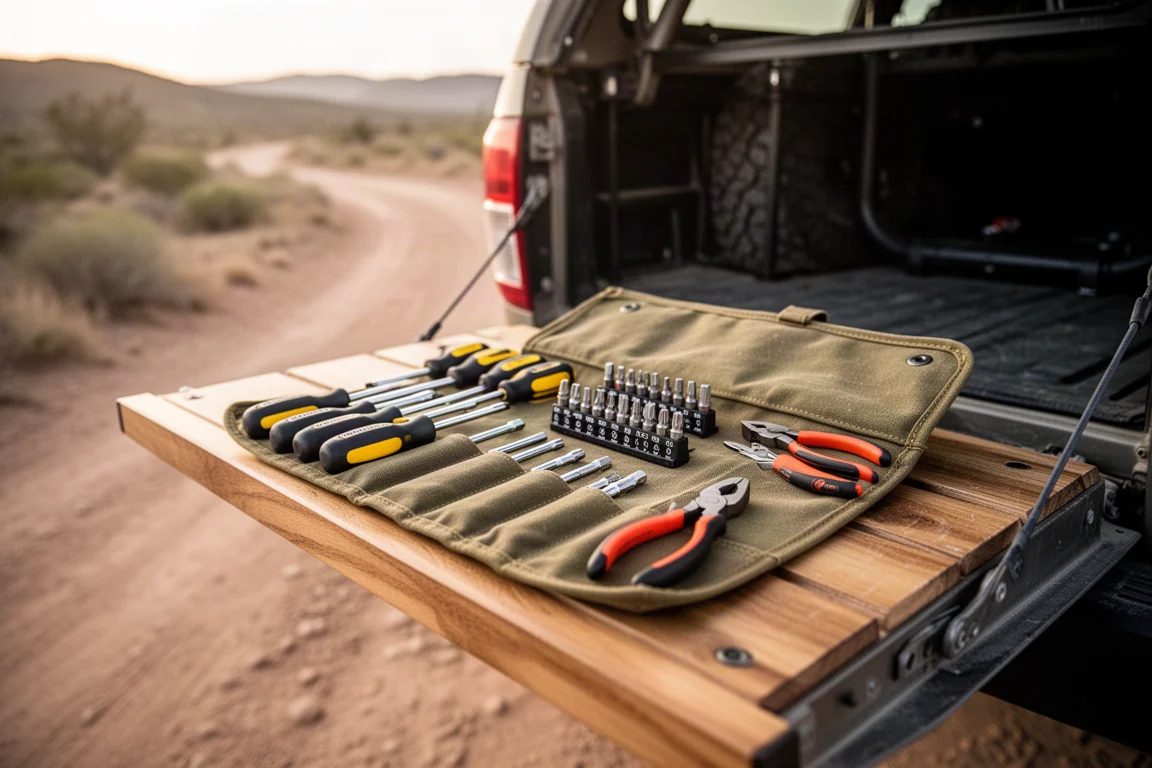
What remains is a lean set: one beefy driver for hard work, one light and comfortable driver for the most common fasteners, one small double-ended driver for tiny screws, and one large traditional driver that lives in the truck permanently.
The Main Workhorse: Wera Impact Screwdriver
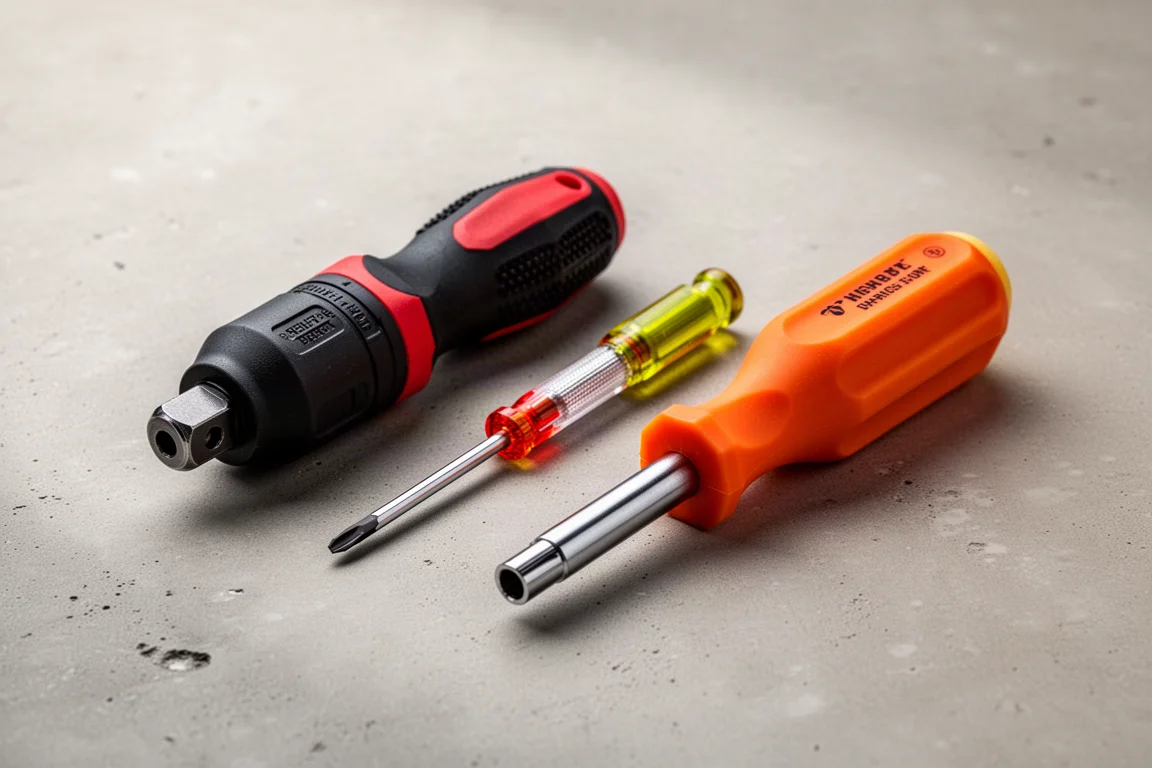
The Wera impact screwdriver is the primary bit-driving tool in this kit. It is a little stronger and beefier than a standard driver, and a wrench can be added to it for extra leverage when a fastener really does not want to move.
The reasoning here is practical: screws sometimes get used as pry bars during off-road repairs, and it is not worth skimping on a repair just to protect a budget screwdriver. This driver is chosen to take that abuse, while the backup drivers in the kit are reserved for jobs where they will not be pounded on or levered against.
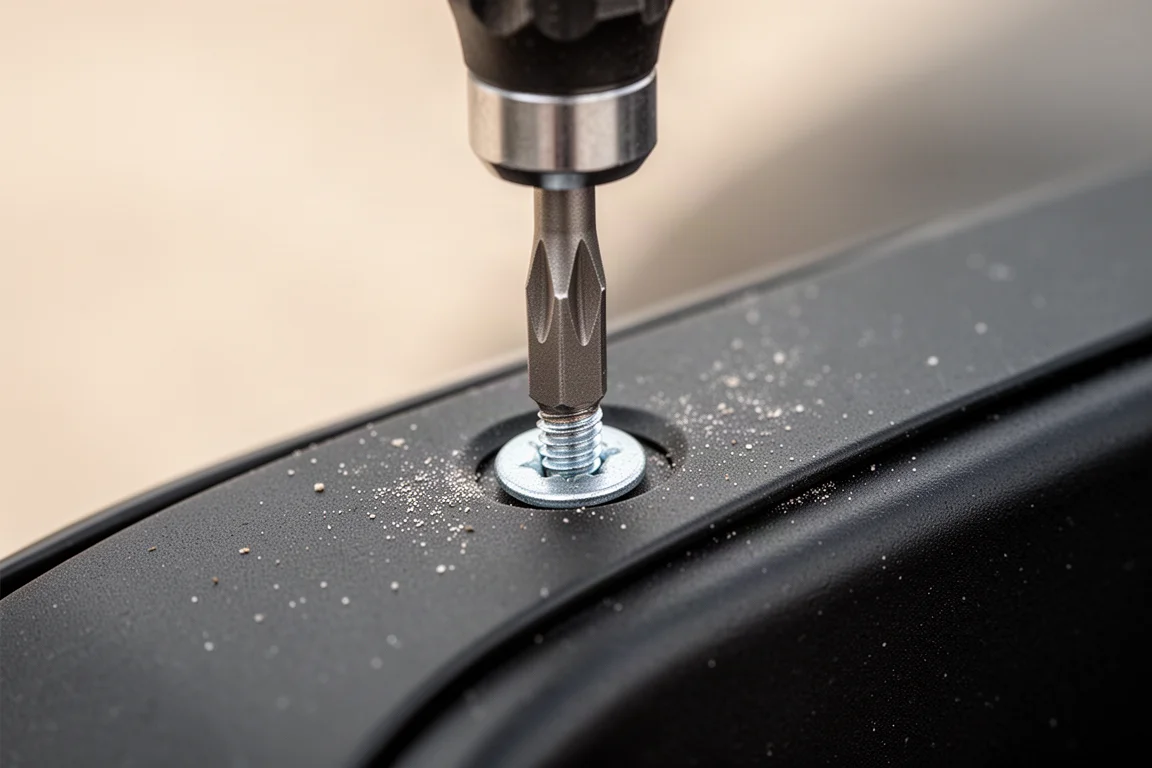
It is also the designated number two Phillips driver, which is likely the most used screwdriver in the entire kit. For the primary fasteners you expect to encounter, this is the tool that goes within reach of the driver’s seat.
Light, Comfortable, and Strong: PB Swiss Screwdriver
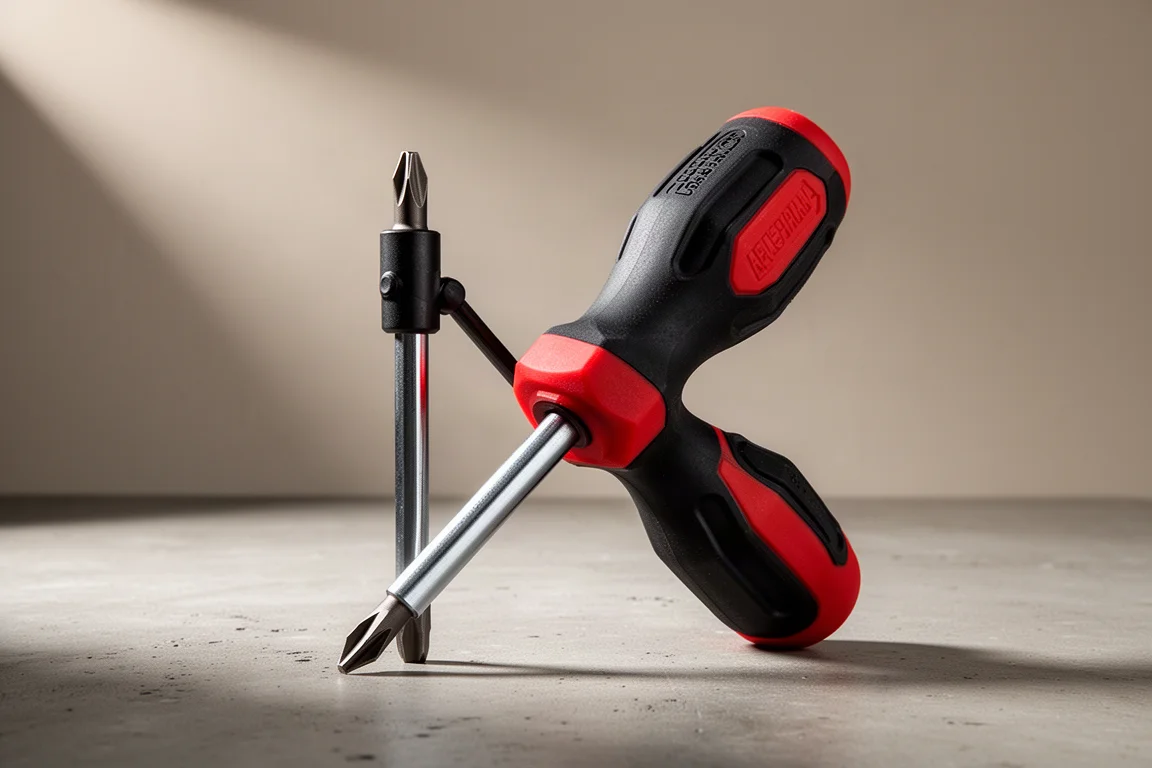
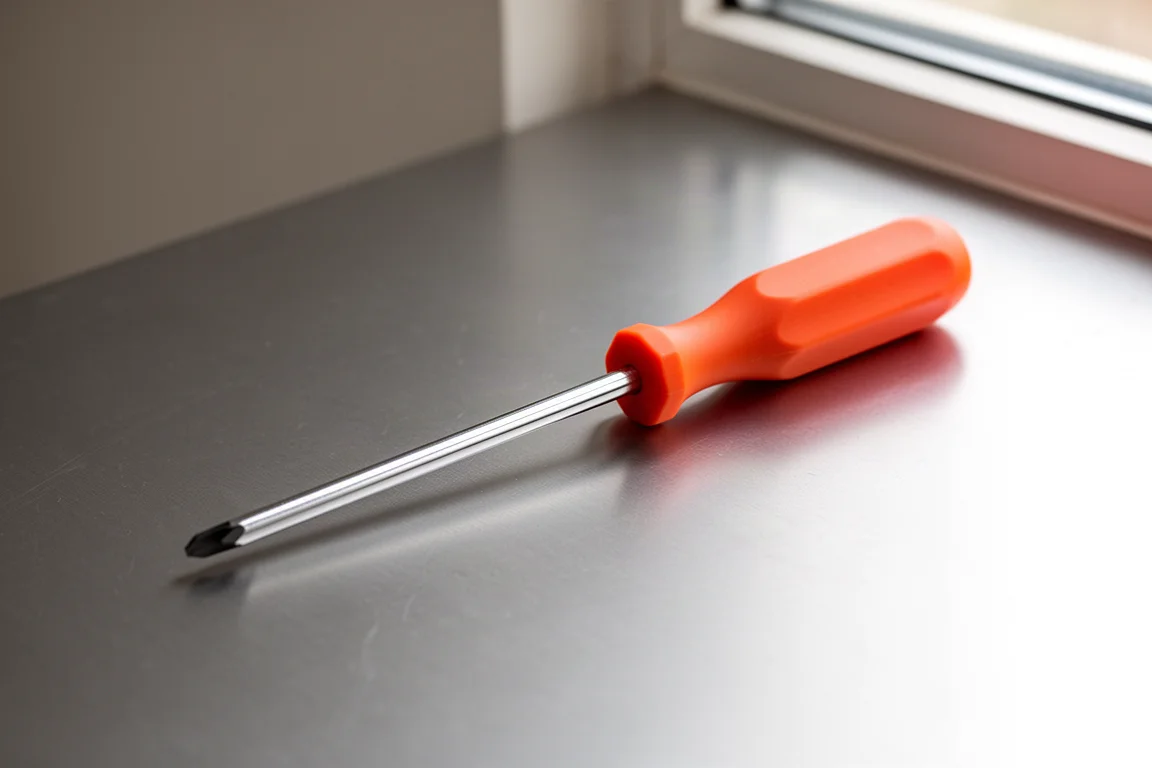
For slotted screws and general use, the kit calls for something beefy, and for the primary number two Phillips work, a very light, comfortable, solid-performing, super strong PB Swiss driver takes the role.
This pairing covers most of what a roadside repair will actually ask of you: a strong driver for stubborn work, and a comfortable one for everything else. It is the kind of division of labor that makes a minimal kit workable instead of frustrating.
Small Screws and Precision Work
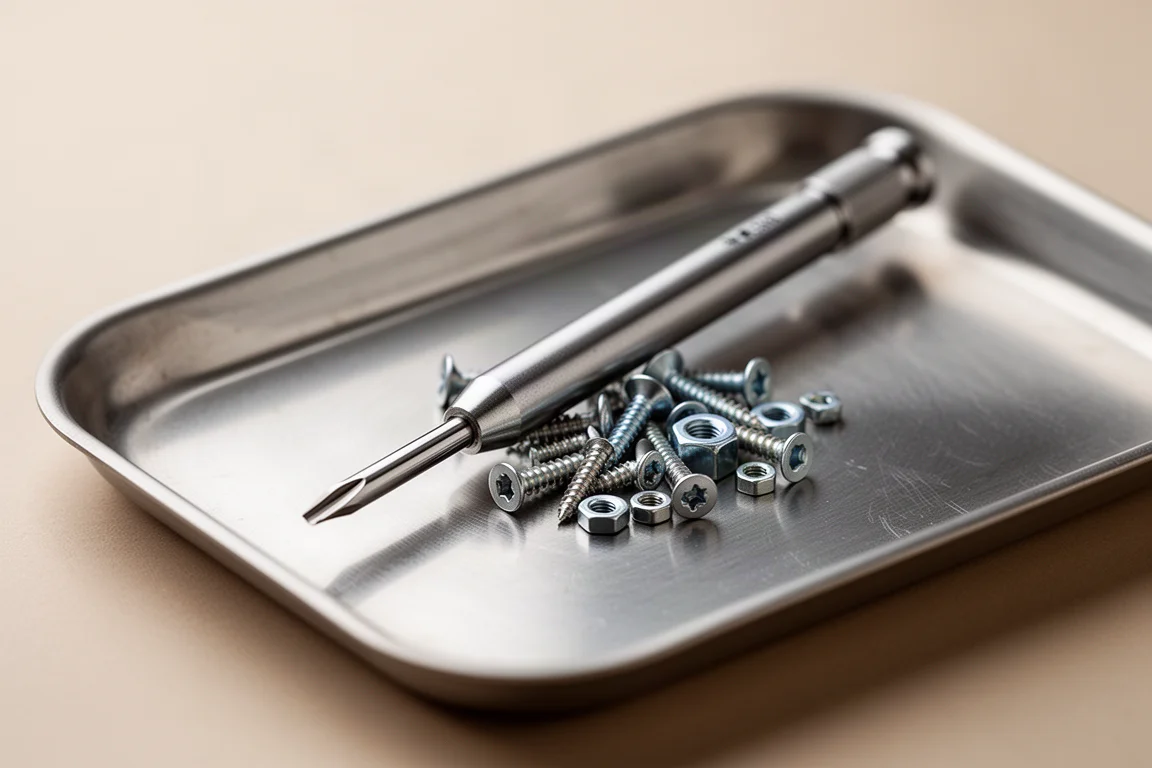
Vehicles are full of little screws: small electronics fasteners, tiny bits and pieces here and there. The choice came down to two double-ended drivers, one with small slotted and small Phillips ends, and a slightly larger one that adds Torx and offers a bit more reach.
The larger double-ended driver won out. It covers more fastener types, and it can double as a small nut driver for some small appliances. As a bonus, its hex shank means it could be gripped in pliers and used as a micro driver in a pinch, awkward but effective when time is on your side.
The screen of a smartphone will not be getting replaced mid-trip, and the kit makes peace with that. Small fasteners get tightened, not dismantled.
Adapters, Extenders, and What Stays Home
A quarter-inch square-to-hex adapter was considered and left behind, because the kit is standardized on 3/8-inch drive rather than quarter-inch. Staying on one socket size keeps the kit simple.
One of the two inverted Torx sizes found on a Toyota Tacoma was also debated, and will most likely stay home on the chance that something else can get by in a pinch.
The hex driver that does make the kit earns its weight through versatility: it can serve as a stubby driver, add length with extensions, and combine with a ratchet, opening up a whole range of bit-driving options from a single tool.
The Always-Aboard Driver: Snap-On Hard Handle
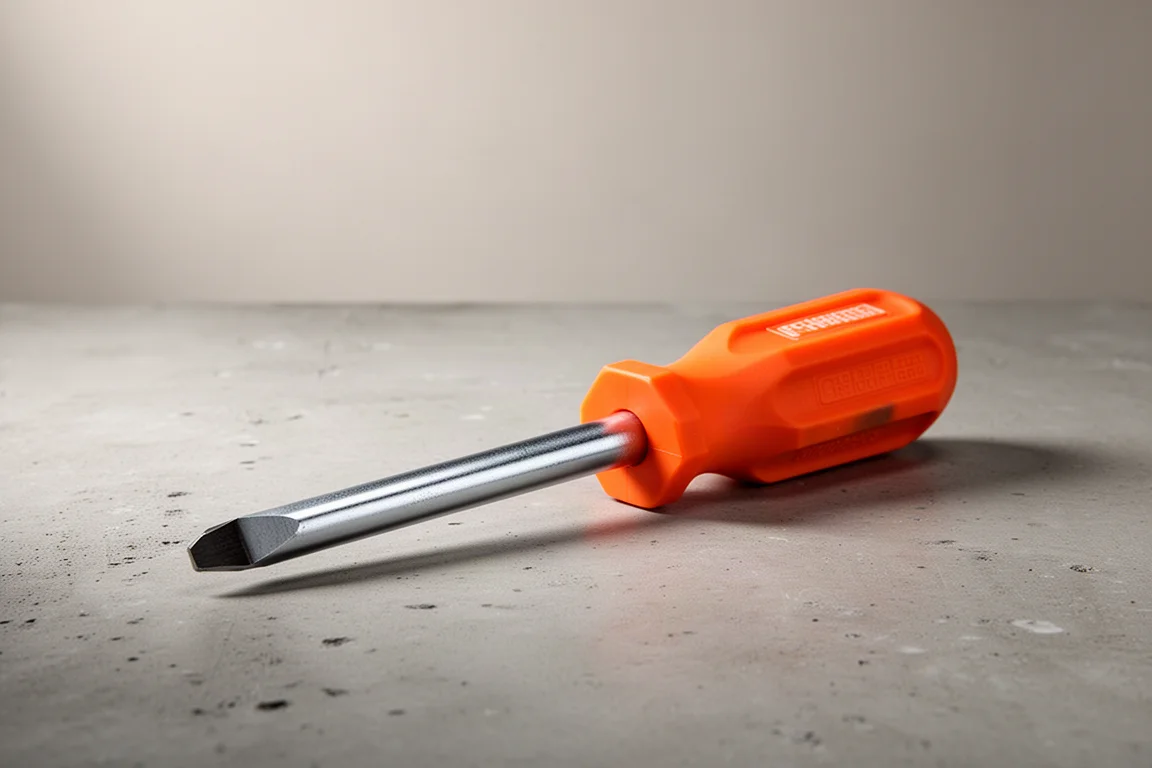
One final driver never leaves the truck: a large, old-school, orange-handled Snap-On hard handle screwdriver that lives in the front of the vehicle at all times.
It does not live in the kit itself, but it is always there, which is exactly the point. A permanent, no-nonsense driver in the truck means the traveling kit can stay minimal without leaving you completely unprepared.
Overall Buying Advice
If you are building a similar kit, start with roles rather than tools. Pick one driver that can survive hard use and leverage, one light driver for your most common fastener, one small double-ended driver for precision work, and one rugged driver that simply stays in the vehicle. Skip the ratcheting driver and the oversized bit set unless you have a specific, repeated need for them.
Conclusion
A minimal overlanding screwdriver kit is not about owning less for its own sake. It is about matching each driver to a real job, standardizing on one drive size, and letting time, not extra gear, solve the rare difficult problem. Three dedicated drivers plus one permanently stationed in the truck cover the vast majority of what the road will throw at you.
Further reading
Related Reviews
Tool Kits
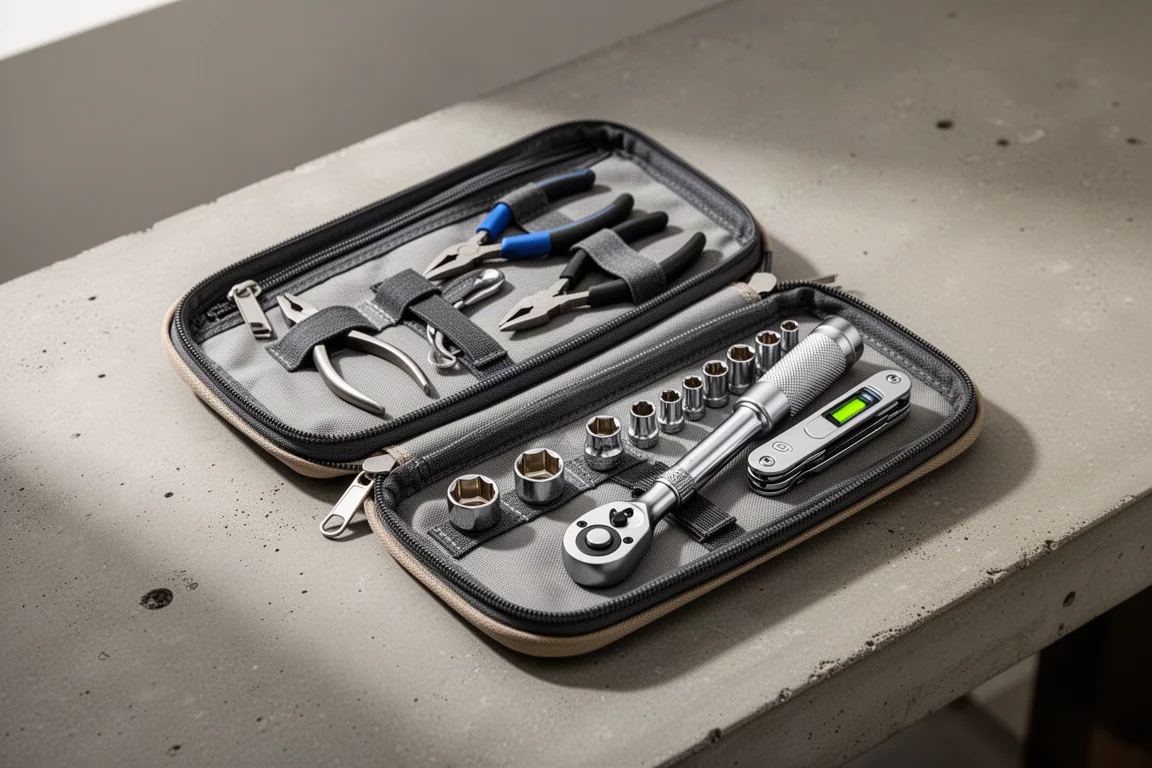
Best Compact Tool Kit Build: 12 Tools for a Smaller, Lighter Carry Kit
A tool-by-tool look at a compact tool kit built around the Maxpedition Double Decker 5x7, focused on small, light, multi-function gear that keeps real capability.
Tool Kits
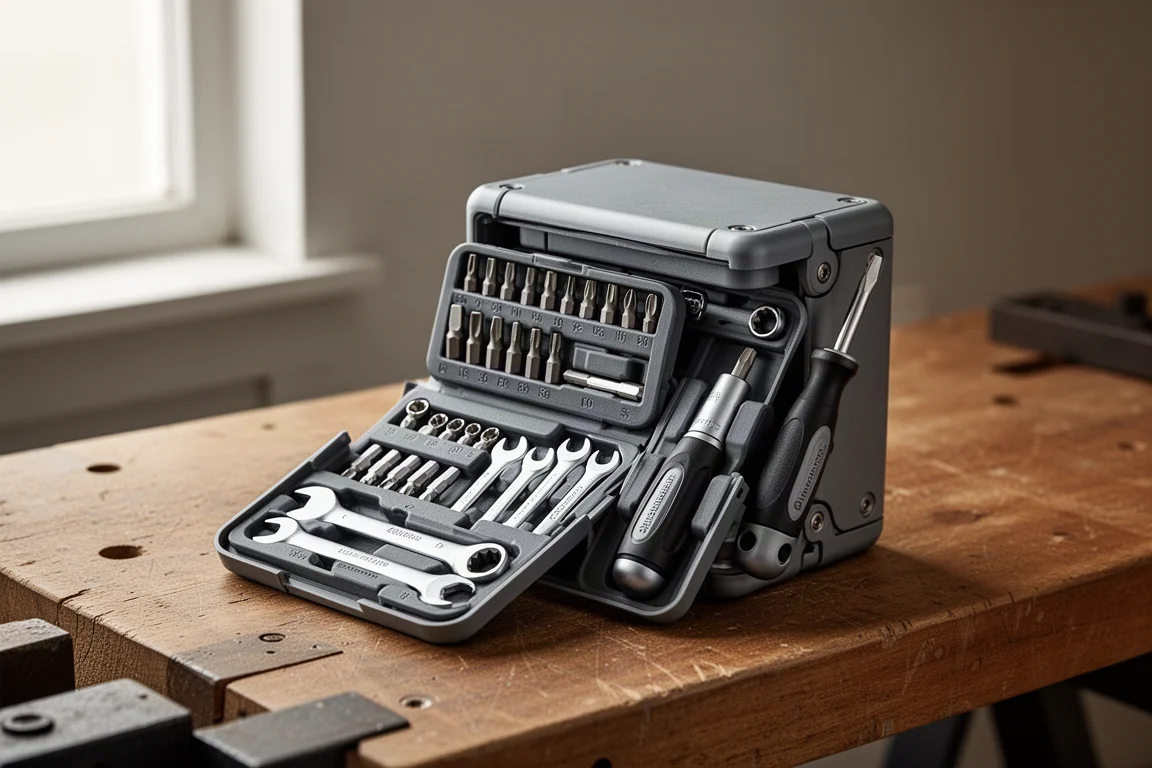
Kuer 55-in-1 Smart Organized Tool Kit Review: Clever Organization, A Few Quirks
A task-based home tool kit with a magnetic folding cube and a two-in-one handle, plus a handful of design quirks to weigh before buying.
Tool Kits
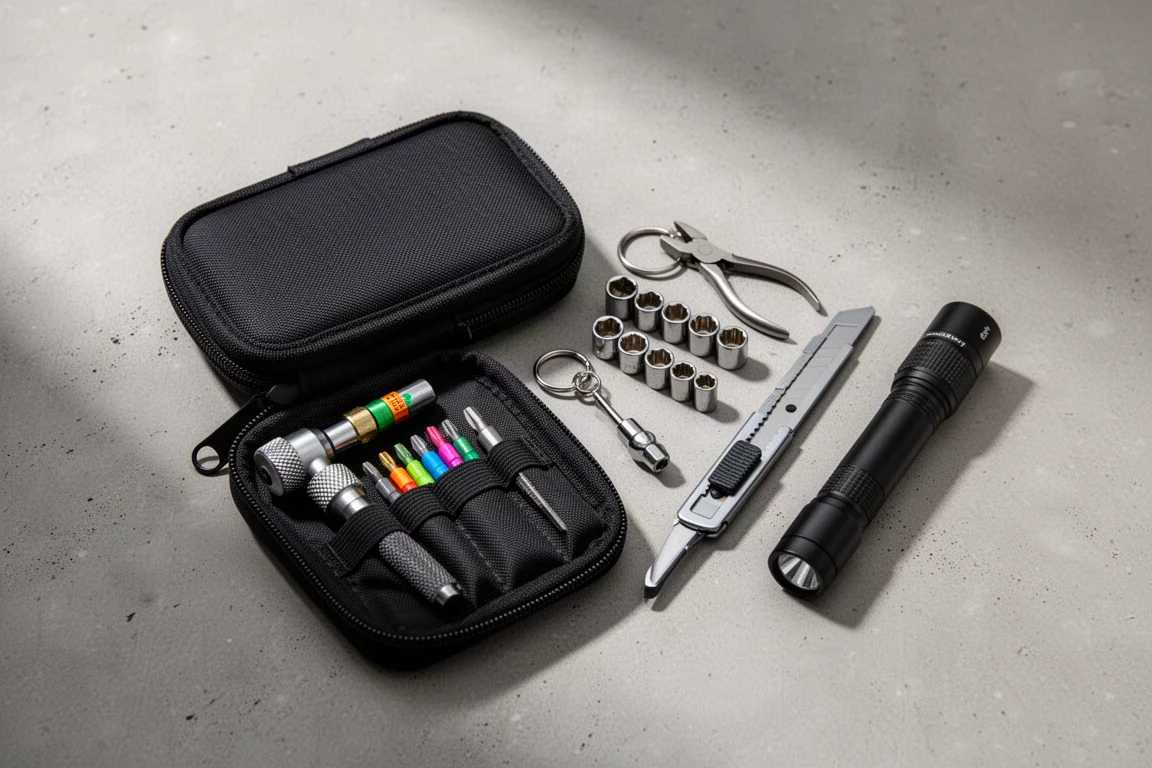
The 4x6 Micro Toolkit: 15 Real Tools Under 2 lb
A compact toolkit built around real, usable tools: German bit drivers, dual-drive sockets, quality pliers, an automatic utility knife, and two compact flashlights.