Running Gear
Cold Weather Running Gear Essentials: Warmth, Wind Protection, and Visibility
A practical guide to running through winter, covering beanies, gloves, socks, base layers, windbreakers, and visibility gear for dark, cold mornings.
Introduction
Running through your first winter can feel intimidating. In many northern regions, daylight can shrink to a narrow window between roughly 8 a.m. and 4 p.m., which means most runners with a normal work schedule end up training in the dark and in serious cold. Two safety considerations dominate: being visible to traffic, and staying warm enough to avoid frostbite, especially in the extremities.
This guide focuses on practical, affordable ways to handle both. It is written with newer winter runners in mind, but experienced cold-weather runners will find a few gear picks here worth trying.
Staying Warm Starts at the Head
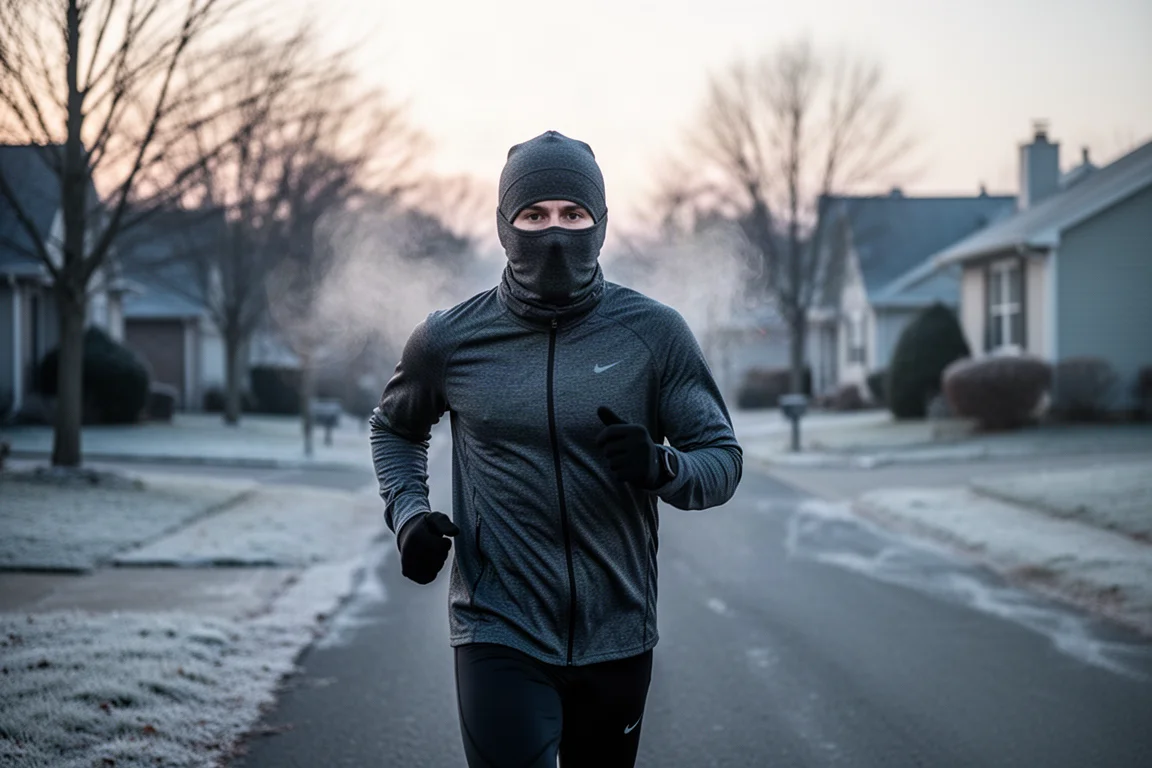
A good head setup comes down to layers. A fitted, skin-tight beanie works as a base that traps warmth close to the skin, and on the coldest days it can be doubled up with a thicker winter hat on top for insulation. A buff or neck gaiter is one of the most versatile accessories for winter: it works as a headband in late fall to keep ears warm, then transitions to covering the nose and face in deep winter, when exposed skin on the face can become painful fast.
For the very coldest days, a full balaclava covers everything but the eyes. Runners who spend long stretches in genuinely frigid air tend to keep one in the drawer for exactly those mornings. One unexpected tip from long-time cold runners: a beard, once it collects a little sweat and freezes, acts as surprisingly effective natural face insulation.
Hand Protection: Gloves and Mittens
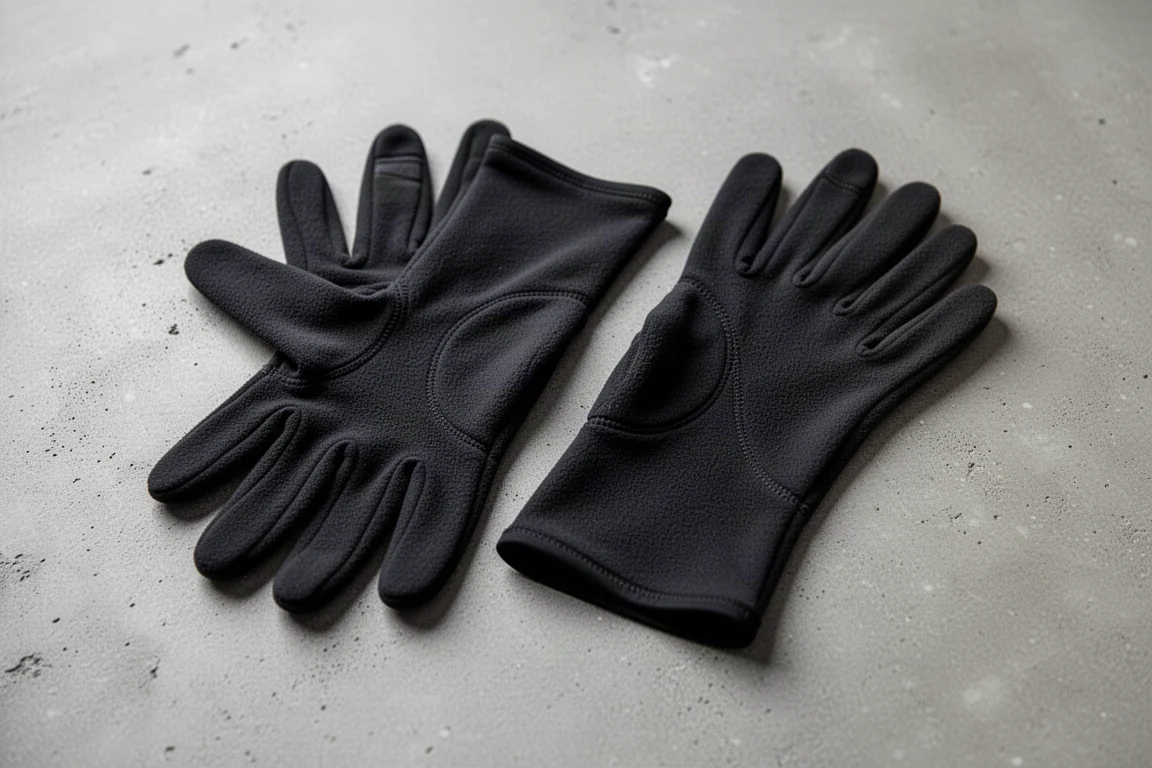
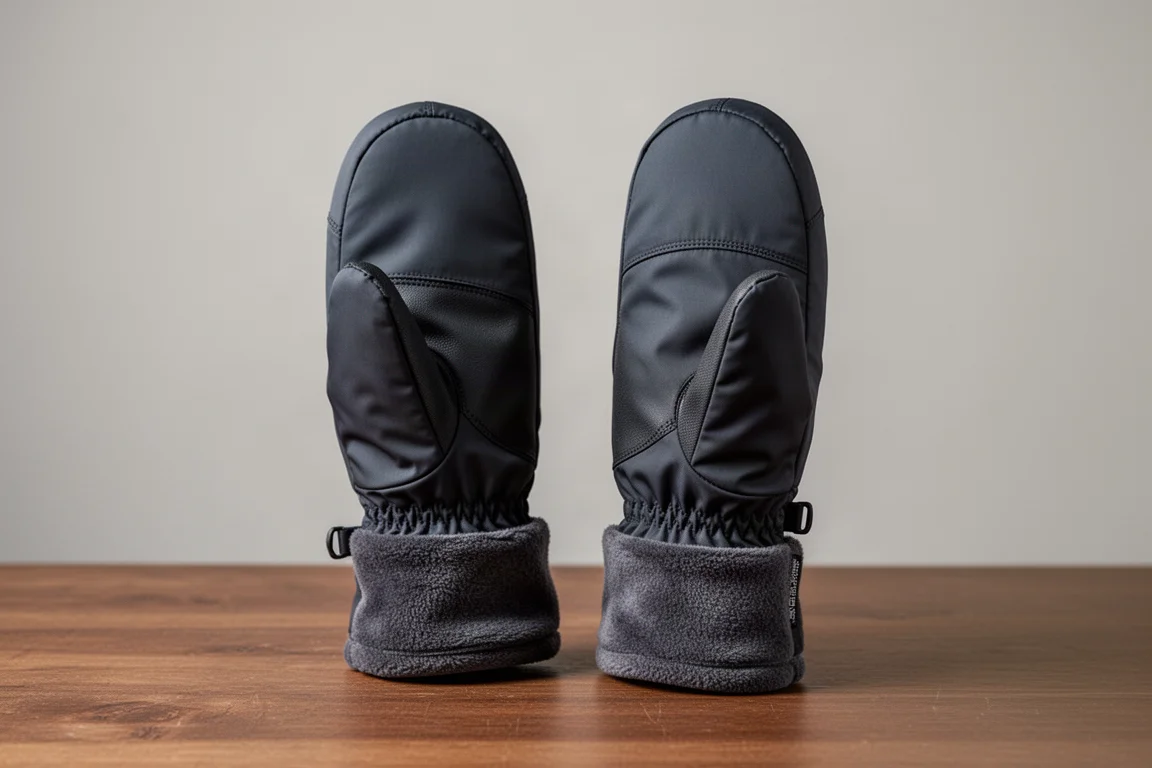
Hands are the body part most runners lose warmth from first, and this is the category worth spending a few extra dollars on. Thin, breathable fleece gloves work well in mild cold without wind, but wind and humidity make conditions feel dramatically colder, sometimes 10 to 20 degrees worse than the thermometer suggests.
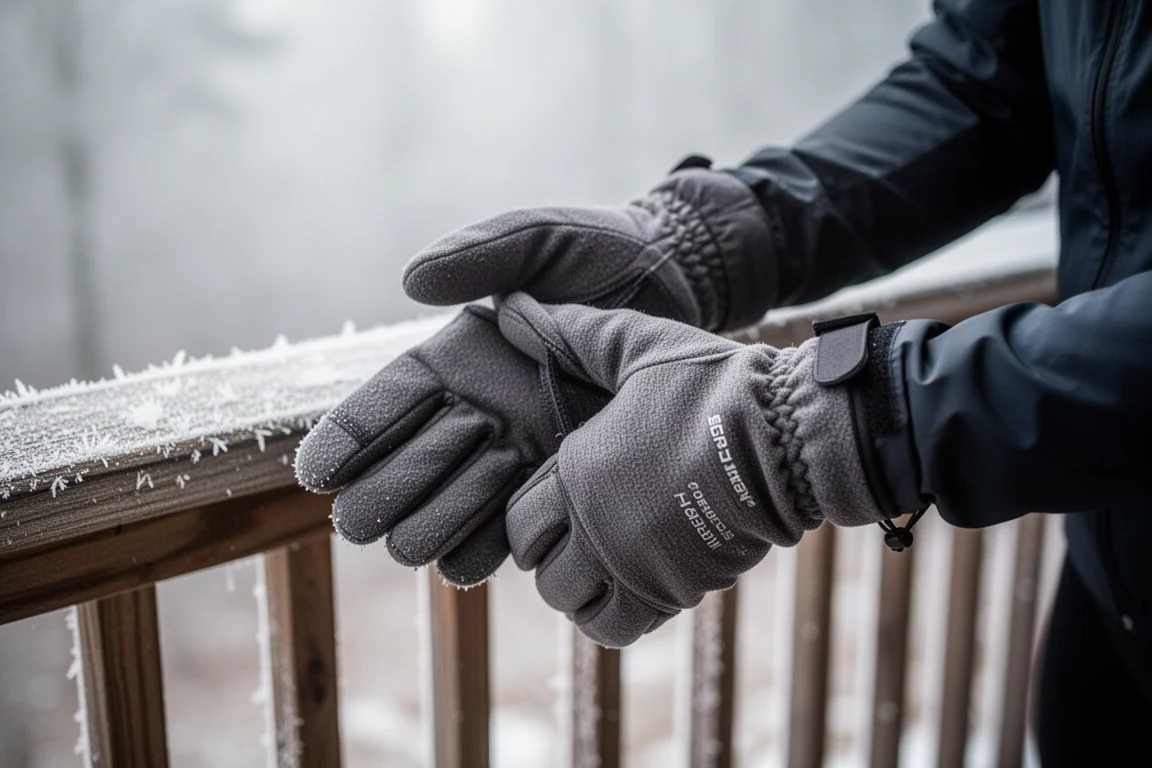
A clever two-layer system pairs thin fleece gloves with a windproof mitten over the top. The mitten lets fingers share warmth as a single unit, which individual windproof gloves cannot match. For runners whose hands are extremely sensitive to cold, err on the side of warmer gloves: hands that go numb on a long run can take a long time to recover.
Keeping Your Feet Warm
Cold feet start with wind. A budget-friendly trick is duct tape over the mesh of your shoe, particularly around the toe box, to block wind and keep slush out. It leaves residue on the shoe, but it is far cheaper than buying windproof footwear just for winter.
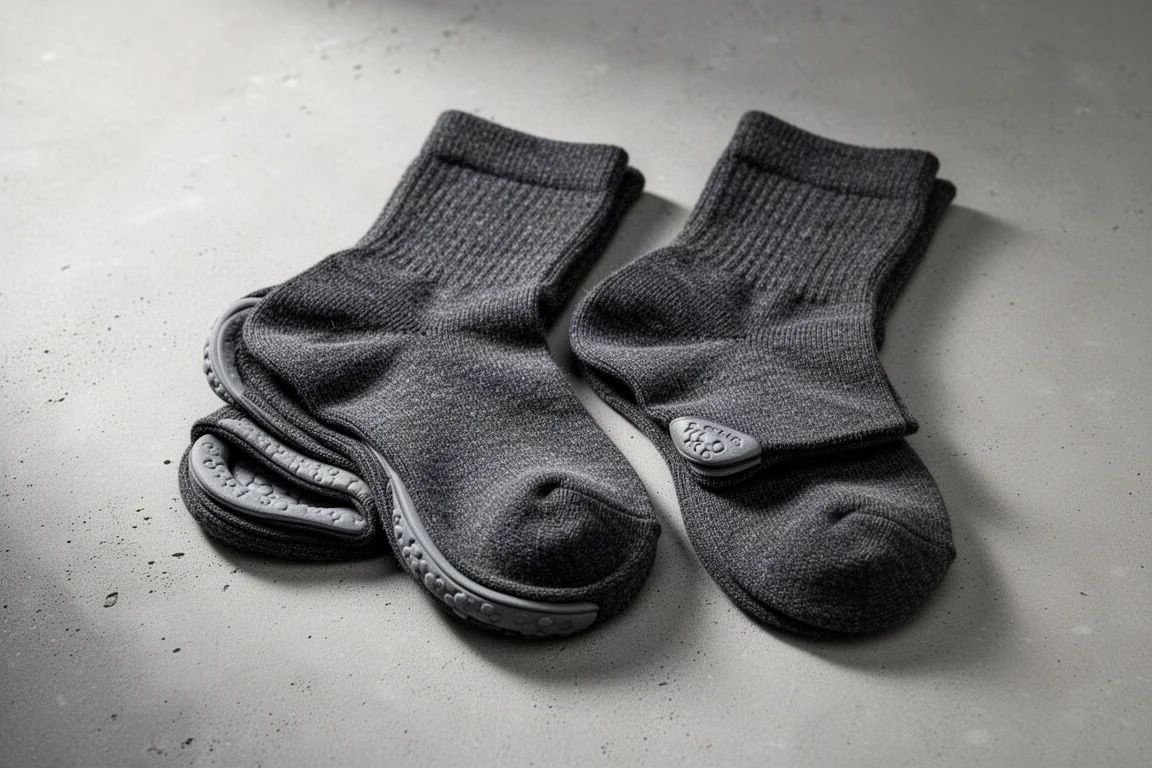
Socks matter just as much. Wool is the go-to material: it insulates even when damp, and most major running sock brands now offer wool versions. Cotton is the one material to avoid entirely, since it holds sweat against the skin and pulls heat away from your feet immediately.
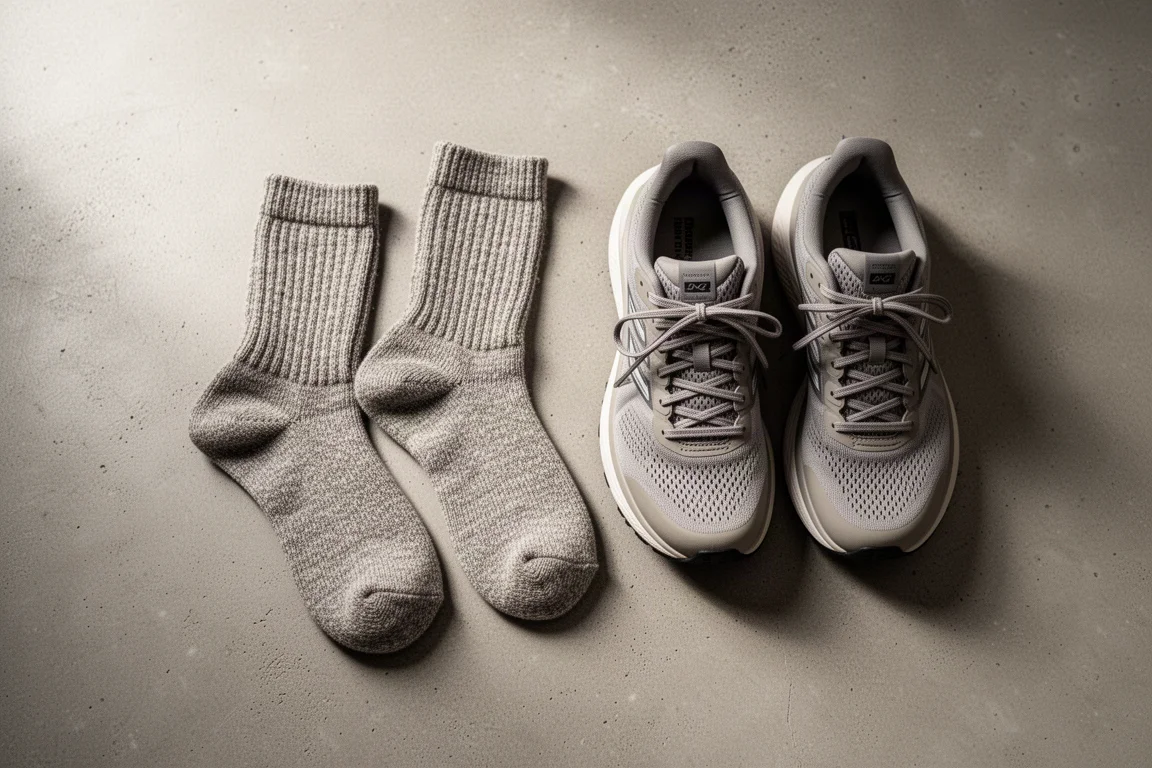
Shoe choice plays a role too. Daily trainers with thicker, more robust uppers hold warmth far better than lightweight trainers or racing shoes with see-through mesh, which let wind pass straight through. If you buy only one or two pairs of shoes a year and live somewhere genuinely cold, choose accordingly.
Layering: Base Layers and Outerwear
A mid-to-thicker tight is the recommendation for real winter; thin tights will not do much once the temperature drops. On the coldest days, runners often layer joggers over tights, and many cold-weather runners add wind briefs underneath for protection from wind chill.
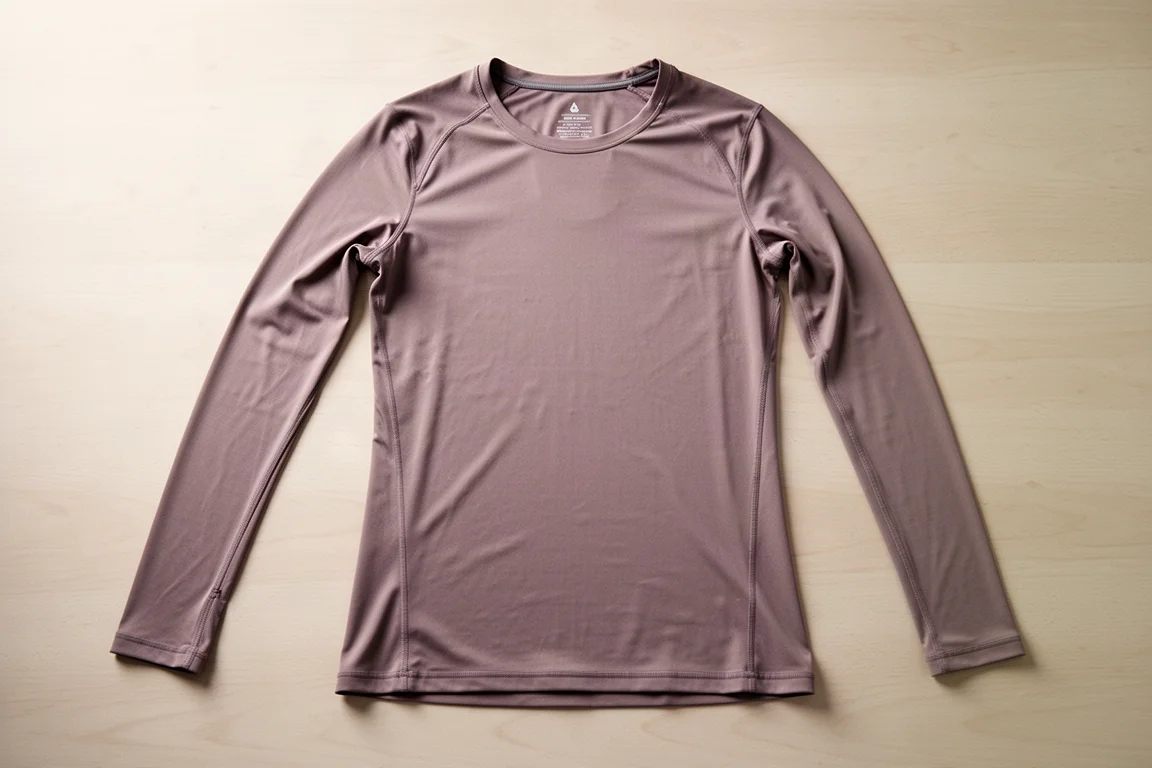
For the torso, a soft, thin base layer worn closest to the skin makes layering comfortable, even when it is not the warmest piece on its own. It is best suited to the 20s and 30s, with heavier layers added on top when it dips lower.
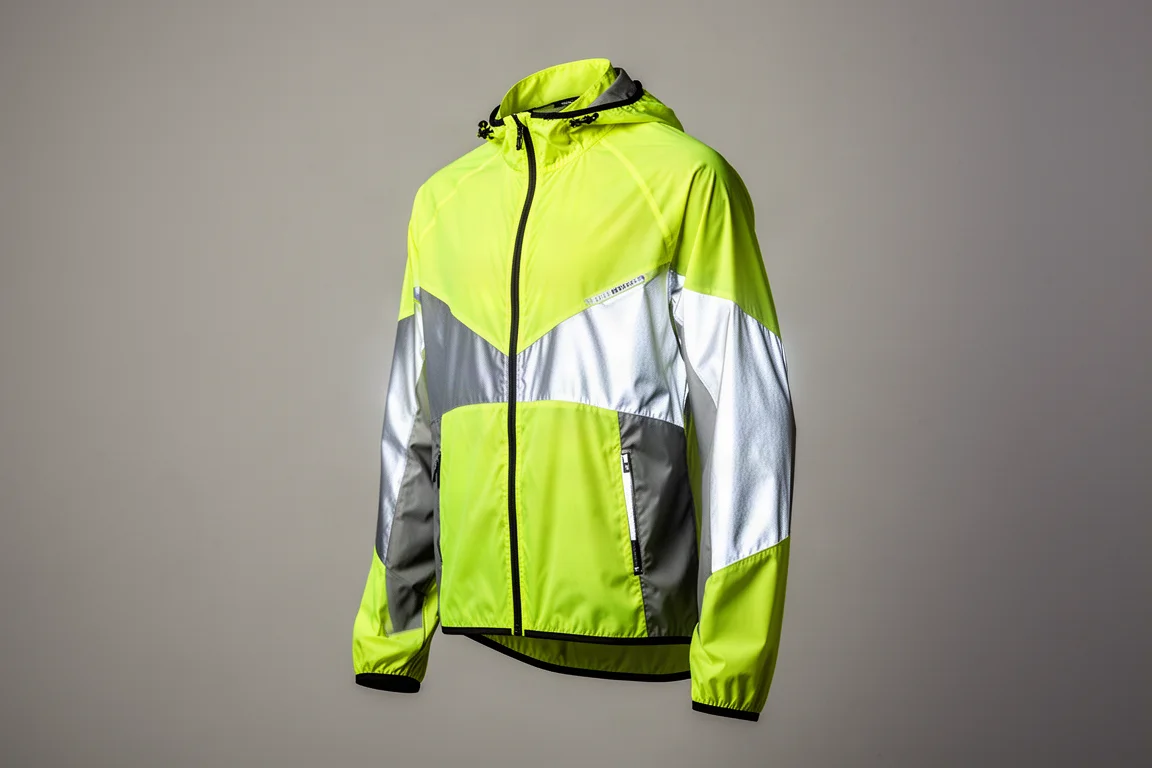
A windproof or wind-resistant jacket is the piece that locks everything in. Wind is the biggest heat thief in winter, and a good windbreaker can make a canyon or open road feel 15 to 20 degrees warmer. In milder climates, a light windbreaker is preferable to a heavy insulated jacket, which can cause overheating.
Visibility on Dark Roads
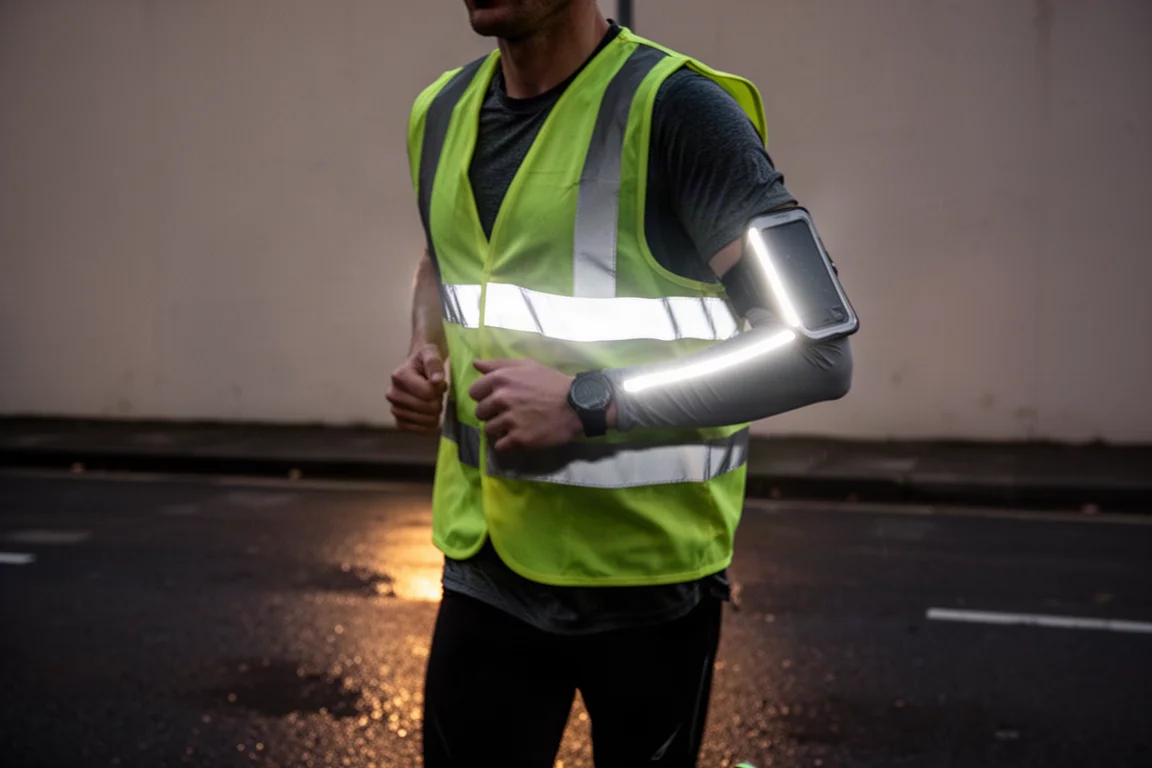
Dark winter mornings make visibility a safety requirement, not a preference. A headlamp of at least 300 lumens is a sensible baseline for being seen and seeing the road. A reflective arm sleeve and a simple vest worn over your layers complete a low-cost setup. None of it has to be fancy; even a cheap reflective vest, used consistently, covers the essentials.
Built-in reflective gear, such as collections with reflectivity embedded directly in the fabric, is a step up in convenience, though it tends to cost more. Bright, high-contrast color patterns also help catch a driver’s eye. Whatever you choose, avoid all-black outfits on dark roads; it is simply not worth the risk.
Buying Advice for Winter Running
Prioritize in this order: visibility, then hands, then feet, then layering. Visibility gear is inexpensive and protects you immediately. Gloves and socks are where quality pays off most, since cheap options tend to fail exactly when you need them. Base layers and wind protection can be added over time as you learn how your body handles the cold.
Do not overbuy for your actual climate. Runners in milder regions often need little more than a windbreaker and a good pair of gloves, while deep-winter runners benefit from the full layered system described above.
Conclusion
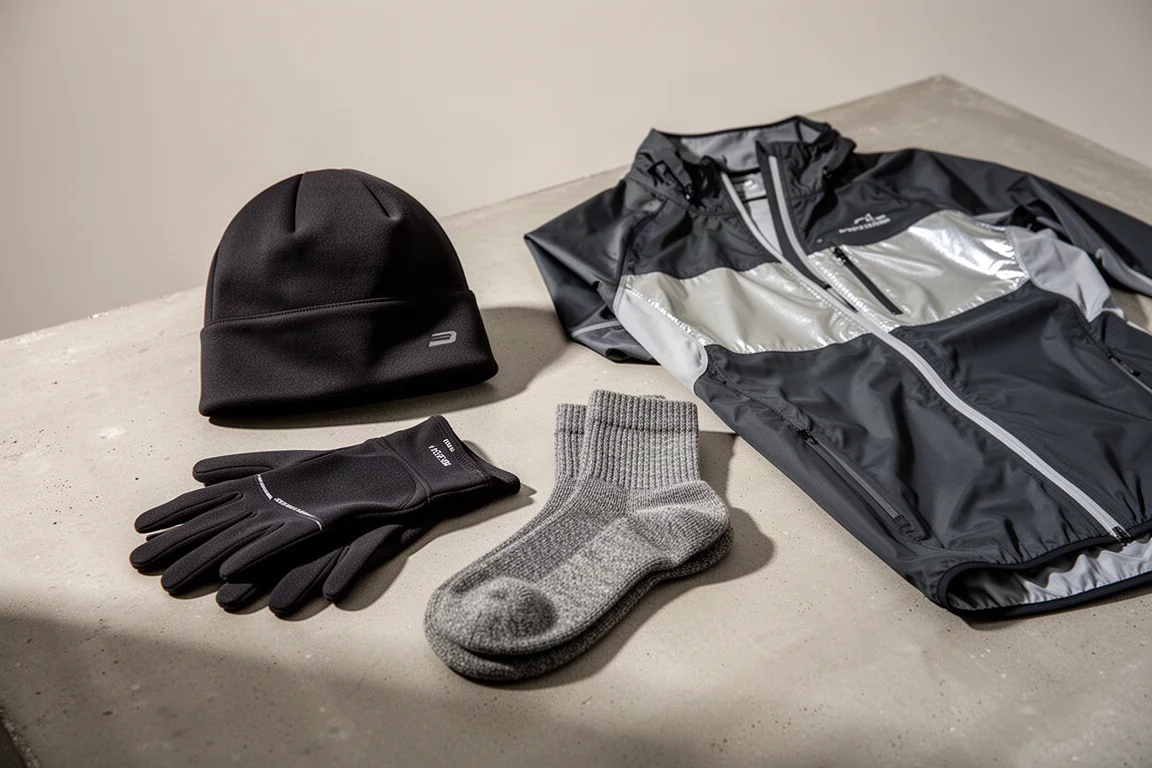
Winter running is very manageable with a small, thoughtful kit: a fitted beanie, layered hand protection, wool socks, a comfortable base layer, a windproof outer shell, and reflective gear for dark roads. Start with the essentials that match your local conditions, and adjust as you learn what the cold does to your body.
Further reading
Related Reviews

Running Gear
Best Running Caps 2026: Nine Tested Options for Summer and Winter
A comprehensive guide to nine running caps tested across different conditions, from lightweight summer options to waterproof winter choices.

Running Gear
Best Running Caps: A Guide to Summer and Winter Options
A comprehensive review of nine running caps for different conditions, styles, and preferences, from lightweight summer options to waterproof winter choices.
Running Gear
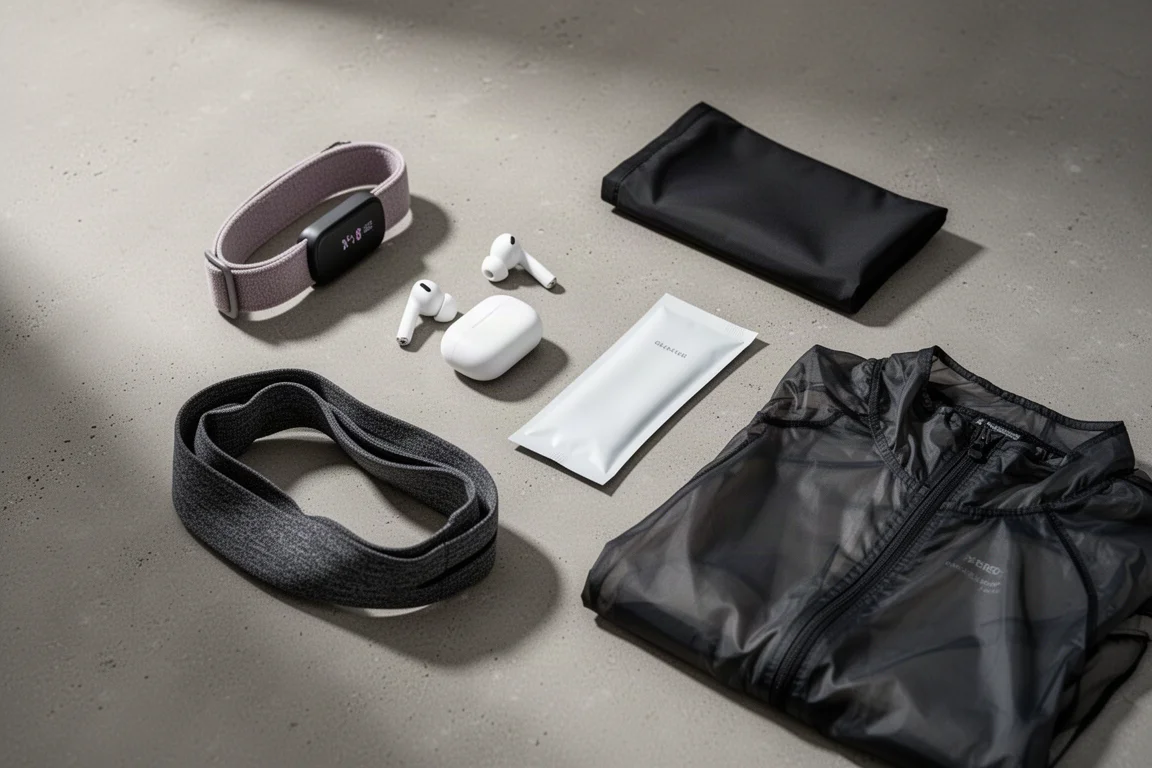
Best Running Gear 2026: Five Picks That Earn Their Place
Five running upgrades covering heart rate, audio, fuelling, carrying and weather protection, with the trade-offs worth knowing before you buy.