Camping Stoves
CLS Three-Headed Dual Fuel Camp Stove Review: Three Burners, Two Fuels, One Small Price
A folding camp stove with three burner heads, dual isobutane and butane support, and a claimed 23,000 BTU output for around $11. Here is what works and what to check first.
Introduction
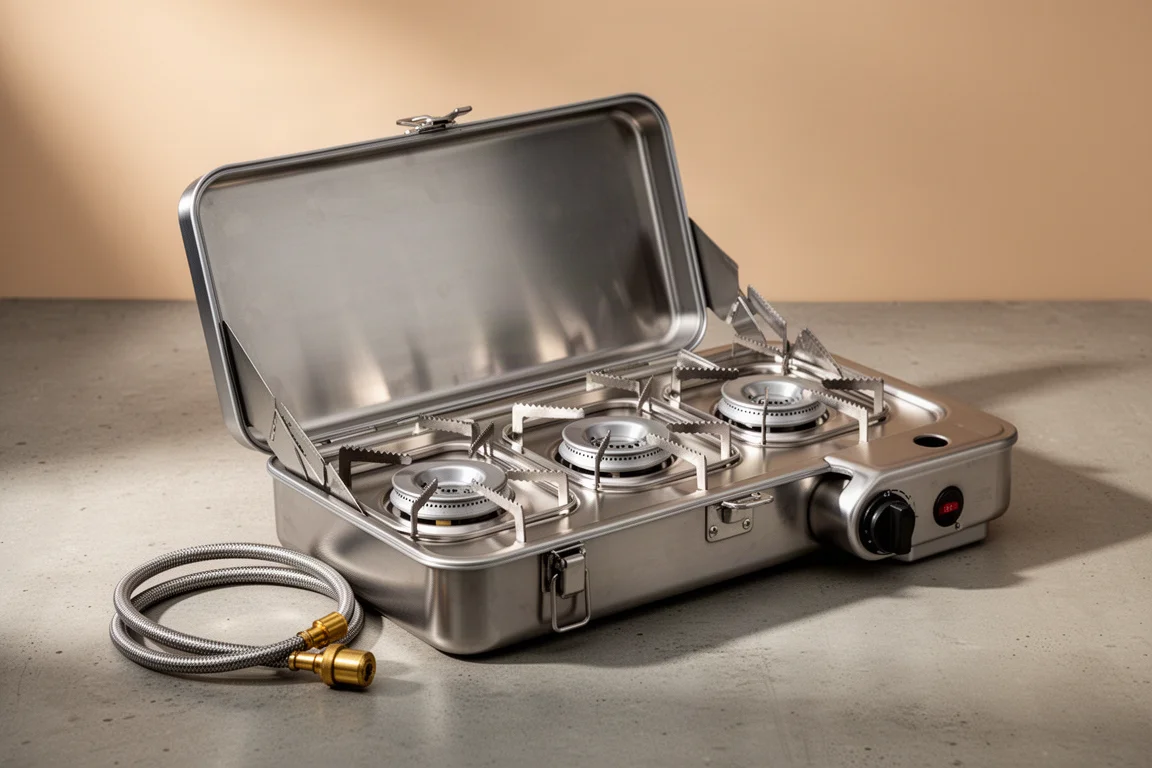
Most compact camp stoves follow the same formula: one burner, one fuel type, one modest flame. The CLS three-headed dual fuel camp stove breaks that pattern in a way that is genuinely unusual. It folds three separate burner heads into a single stainless steel body, feeds them from one canister through a long hose, and accepts either isobutane or butane.
The complete kit, which includes the storage case and a butane canister adapter, was available for around $11 at the time of testing. A stove alone configuration was listed for slightly less. Three burners, dual fuel support and a price that low is a combination worth examining closely.
Who This Stove Is For
This is not an ultralight backpacking stove. It is a larger unit that works best with medium and large cookware, which makes it a natural fit for car camping, group trips, basecamp cooking and long weekends where more than one person is eating. Three burner heads mean you can run a kettle and a pan at the same time instead of shuffling one pot on and off a single flame.
The dual fuel design also suits campers who cook across seasons: inexpensive butane in warm weather, and an isobutane winter mix when temperatures drop. If the smallest possible pack size is your priority, other stoves will serve you better. If cooking capacity for very little money is the priority, this stove is aimed squarely at that.
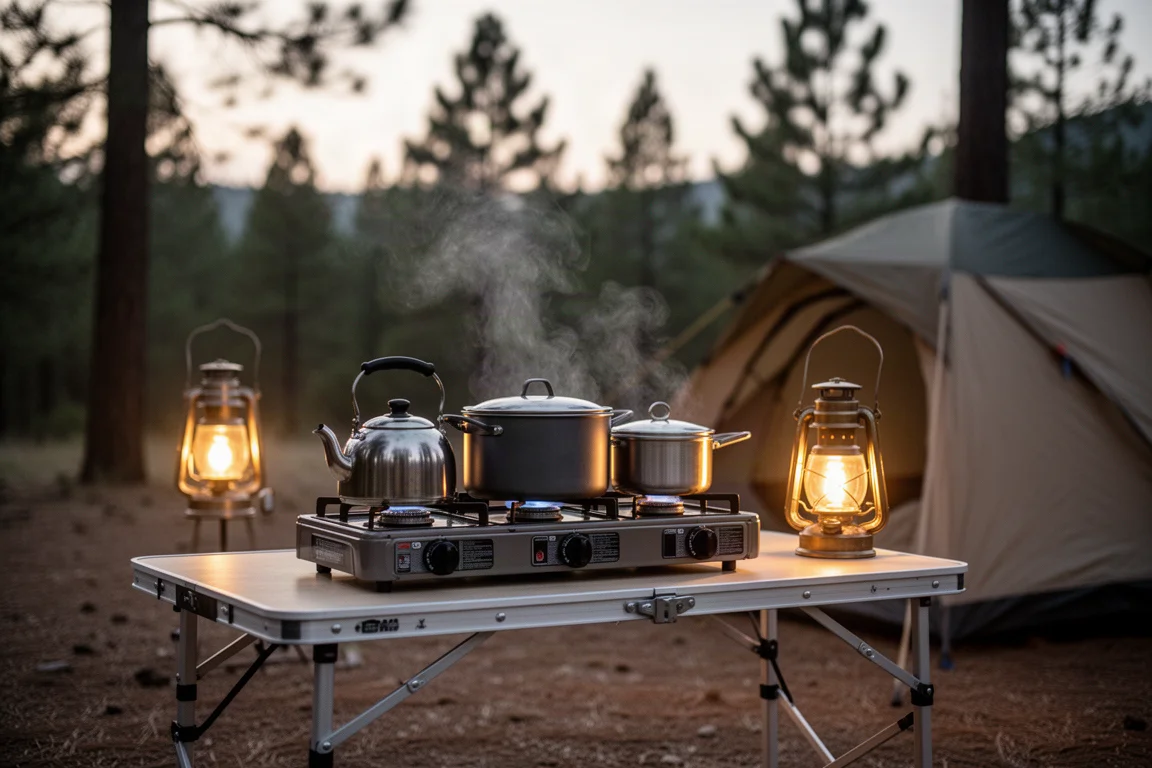
Once the legs are unfolded, the stove sits stable and the pot supports are wide, so it also suits campers who like to set up a proper cooking station rather than balance a single pot on a tiny burner.
Main Strengths
The headline feature is obvious: three burner heads running from one fuel source, with a claimed maximum output of 23,000 BTUs. That is roughly double what most single-burner stoves in this class claim. The electric igniter sits at the front of the body and lights all three heads, and it has worked every time it has been used.
Control is better than the price suggests. The adjuster moves smoothly from full output down to a genuine simmer, and it is easy to find a stable setting between the two extremes. That matters more than raw output for most cooking, whether you are boiling water quickly or keeping a sauce moving without scorching it.
Build quality is a strong point. The stainless steel body has no sharp edges, the pot supports are serrated to grip cookware, and the fold-out legs lock into a stable stance. Each burner head is ringed by its own wind screen, and those screens do real work in exposed conditions. The included hard case is well made and protects the stove in transit.
Dual Fuel Flexibility and Real World Cooking Performance
The stove connects to a fuel canister through a 21-inch hose, which keeps the canister away from the burner heads and gives you room to position the fuel where it is least likely to be knocked. It runs on isobutane canisters directly, and the included adapter screws into the fuel line so butane canisters can be used instead. That adapter also works with other stoves, provided they accept more than one fuel type.
For a boil test, 16 fluid ounces of water came to a rolling boil in 3 minutes 25 seconds. Conditions were not friendly: roughly 55 degrees Fahrenheit and strong wind. The wind carried heat away from the stove and cooled the canister, which limited performance, yet the integrated wind screens kept enough flame on the kettle to deliver a solid result for those conditions.
One honest note about the 23,000 BTU figure. Doubling the output of a typical stove sounds dramatic, but in real world camping it rarely changes much. Few people care whether water takes three minutes or four. What matters is how easy the stove is to use, how well it is designed, and how pleasant it makes cooking outside. On those points this stove holds up well: the igniter is dependable, the flame adjuster is excellent, and the layout is simple to live with.
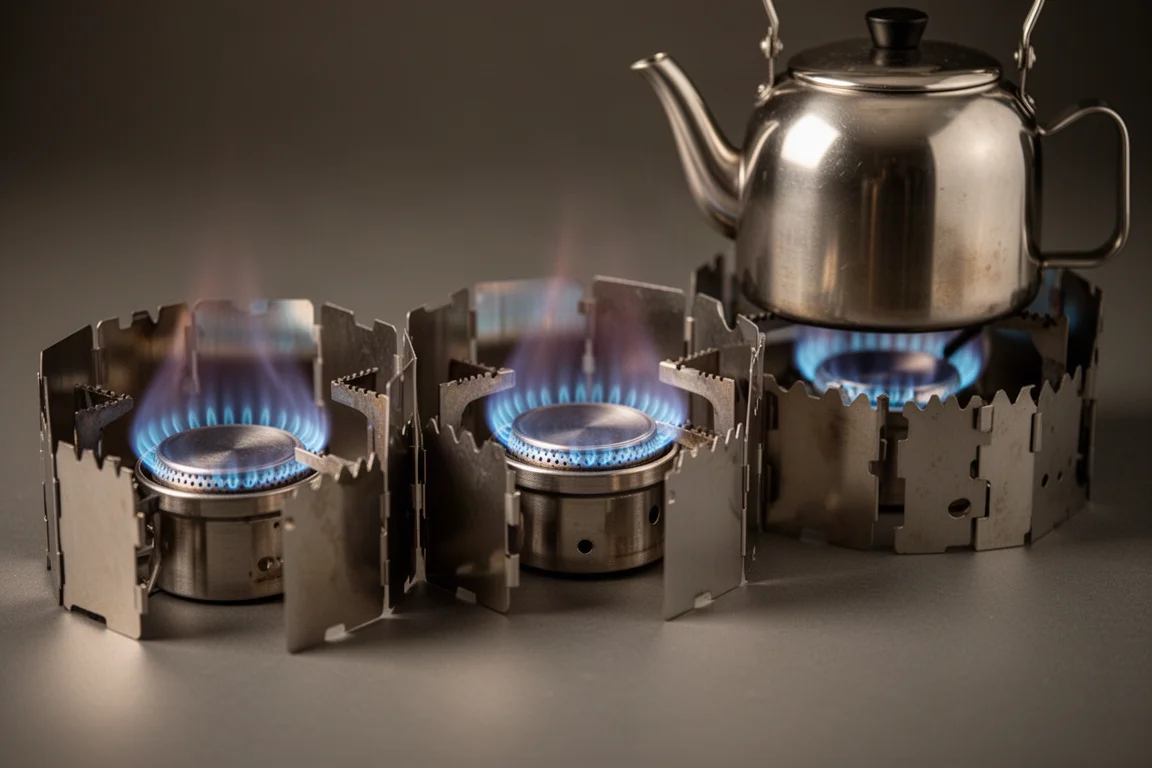
Set the fuel canister somewhere sheltered and warm, and performance improves further, particularly in cold weather when isobutane blends are doing the heavy lifting.
Things to Consider Before Buying
The three burner heads put out a lot of heat and a lot of flame, which rules out very small cookware. A compact titanium cup such as the MSR Titan does not fit on the pot supports, and even if it did, the flames would engulf the cup and run up its sides, making it impossible to grab afterward. Plan on medium and larger pots, pans and kettles.
Size and weight are reasonable rather than remarkable. The stove is larger and heavier than dedicated ultralight options, and anyone counting grams will find better choices elsewhere. It is a little bulky, though not unreasonably so for what it does.
Testing so far has covered a limited number of trips, so long term durability is not yet established. The design also appears to be shared across brands, since the stove body carries no logo and the packaging is the only place the CLS name appears. That means listings from different sellers may look identical while varying in quality.
Size, Weight, and Packability
The storage case measures 5.9 inches by 5.9 inches and stands 3.5 inches tall. Set up, the stove is 5.9 inches wide at its widest point and 3.3 inches tall, with a 21-inch hose reaching to the fuel canister.
For weight, the stove and case together come to 12.1 ounces. Add the butane adapter and the complete kit is 13.8 ounces. The case alone is 2.6 ounces and the adapter 1.7 ounces. None of that is heavy for a three-burner stove, but lighter single-burner options certainly exist. The case is a genuine benefit here, since it keeps the stove, hose and adapter together and protected between trips.
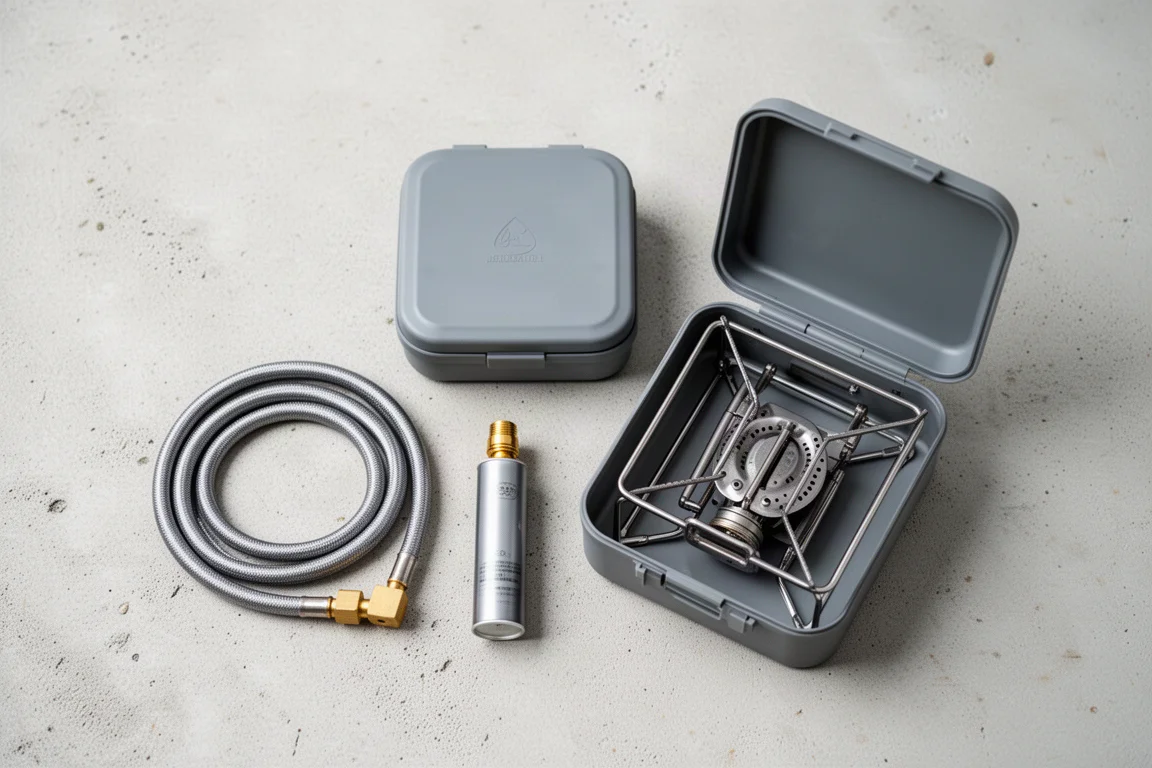
Packed down, the whole kit occupies roughly the footprint of a small hardback book, which makes it easy to slide into a car boot, a storage crate or the bottom of a larger pack.
How It Compares to the One-Burner Version
A second version of the same stove exists with one large burner head in the center. It offers roughly half the BTUs of the three-headed model and costs a few dollars less. For anyone deciding between the two, the three-headed version is the more capable of the pair, since it can run more than one piece of cookware at once and still delivers the same dual fuel flexibility.
Availability and Buying Advice
Price is the reason this stove is interesting. The three-headed model with the butane adapter was available for around $11, and the stove on its own was listed for slightly less. Both were found through marketplace listings rather than a mainstream retailer. A version of the stove sold under a different company name appears on Amazon at roughly $34 and includes some additional items, but that version has not been tested, so whether it matches the quality of this one is unknown.
If you want three burners, dual fuel support and a hard case for very little money, and you are comfortable buying through a marketplace listing, this stove makes a lot of sense. It is well made, stable, easy to control and genuinely different from the single-burner stoves that dominate the category.
If you need something that disappears into a small pack, if you cook mostly in a single titanium cup, or if you would rather buy from a retailer with straightforward returns, look at lighter and more widely available alternatives instead.
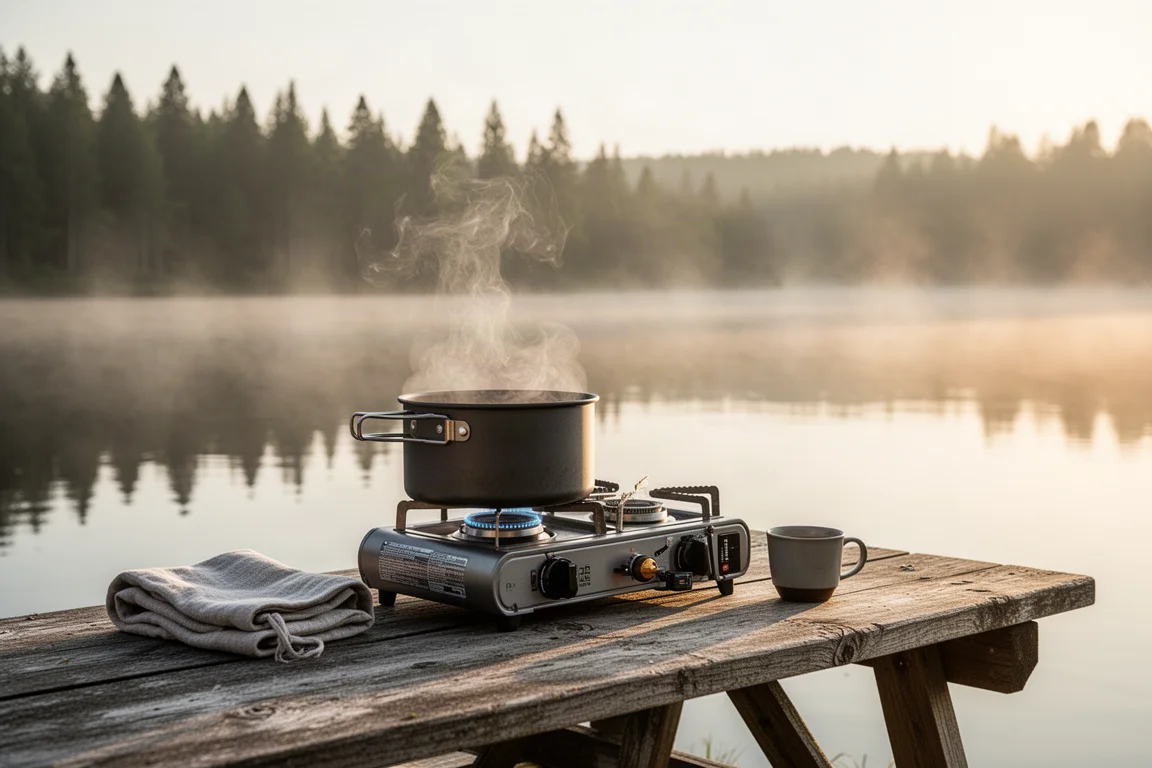
For car campers, paddlers, and anyone cooking for a group on a tight budget, the value on offer here is difficult to argue with.
Conclusion
The CLS three-headed dual fuel camp stove earns attention for reasons beyond novelty. Three burner heads from one canister, a choice of butane or isobutane, a dependable igniter, a usable simmer control and a protective hard case add up to a genuinely practical cooking station. The main compromises are its appetite for medium and large cookware, its larger footprint compared with ultralight stoves, and the fact that it is easiest to find through marketplace listings rather than mainstream retail. For the money, it is a compelling option for campers who value cooking capacity over pack size.
Product link
View more details for CLS Three-Headed Dual Fuel Camp Stove
This product is mentioned in the review. Check the specifications, options, and compatibility before buying.
View more details for CLS Three-Headed Dual Fuel Camp StoveFurther reading
Related Reviews
Camping Stoves
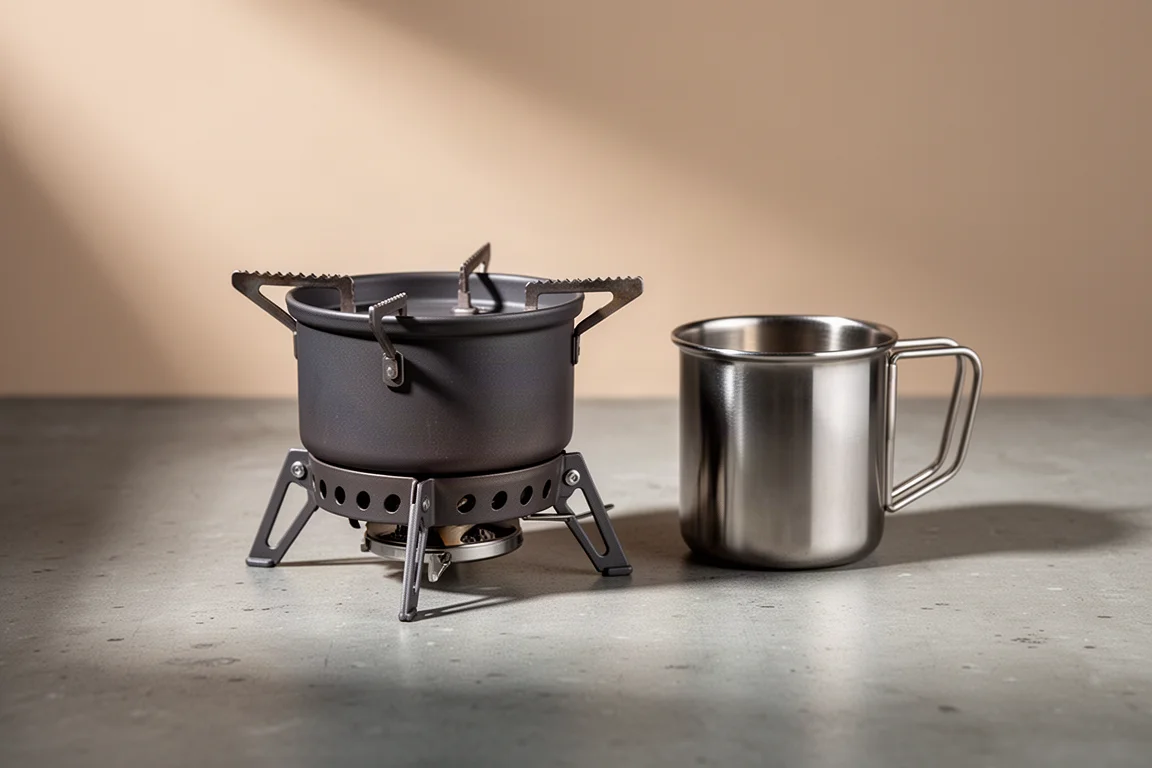
BCB Fire Dragon Mini Cooker Review: A Tiny Folding Stove With Real Trade-Offs
A palm-sized, fuel-flexible folding stove that heats water well enough, but brings flame control, stability, and fuel cost questions worth understanding first.
Camping Stoves
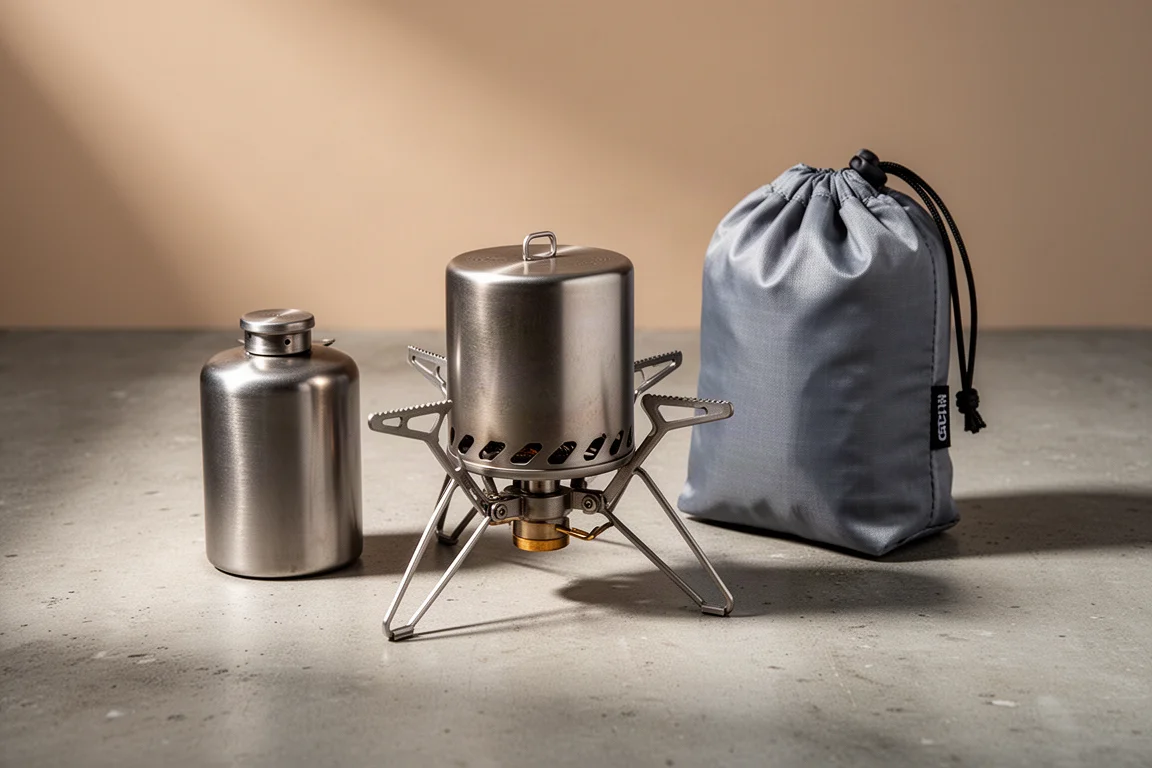
Boundless Voyage Titanium Alcohol and Wood Stove Review: Ultralight Cooking, Two Ways
A titanium alcohol and wood burning stove kit that weighs 4.5 oz complete, boils two cups of water in about 10 minutes, and costs $36.
Camping Stoves
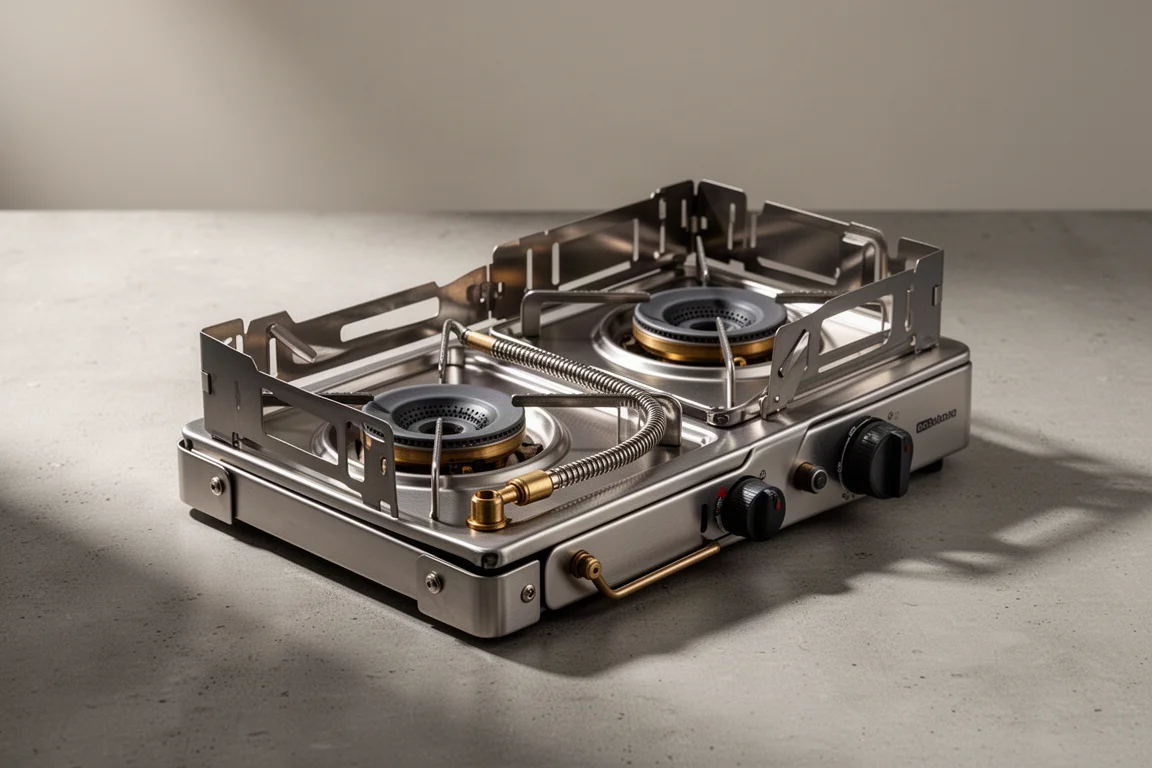
BRS 32 Dual Burner Stove Review: A Folding Two-Burner That Packs Down Flat
A detailed look at the BRS 32, a slim folding dual burner camping stove that expands into a stable cooking platform for around $60.