Guitar Pedals
Claraara Mini Pedals: Five Compact Effects Worth Your Attention
Claraara's mini pedal line packs envelope filtering, rotary, octave, pitch shifting, and animal synth sounds into a tiny footprint.
Introduction
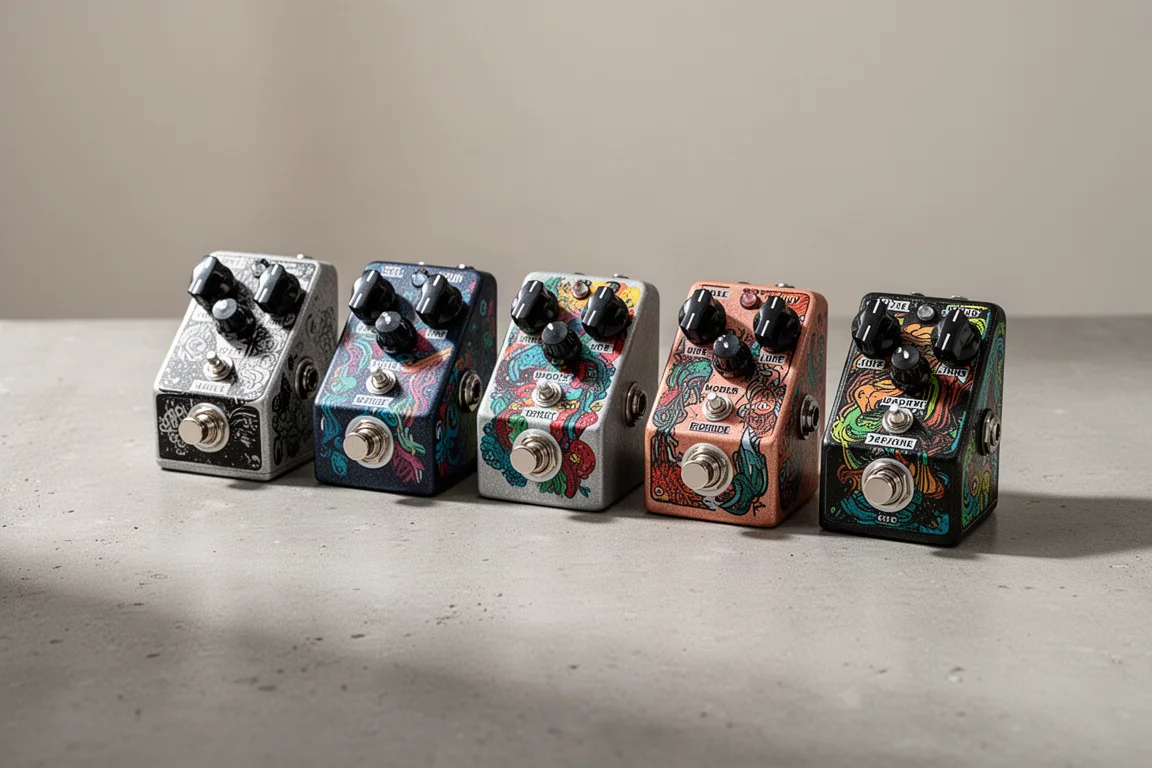
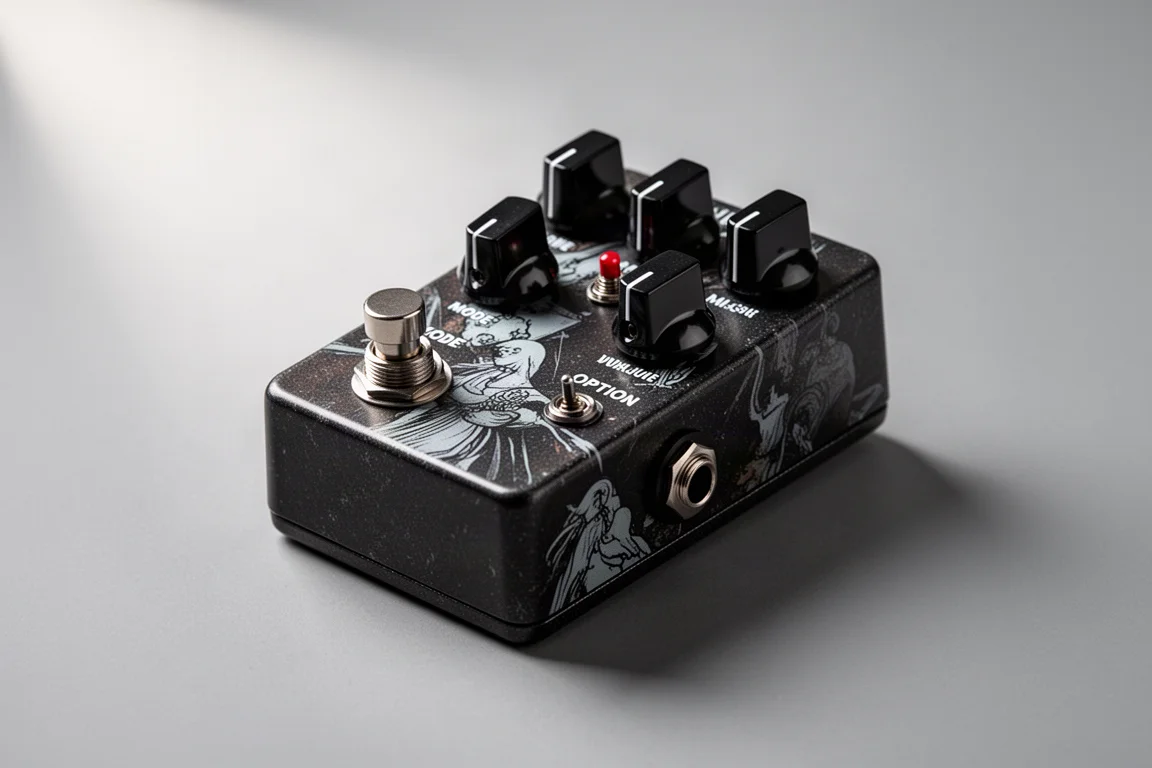
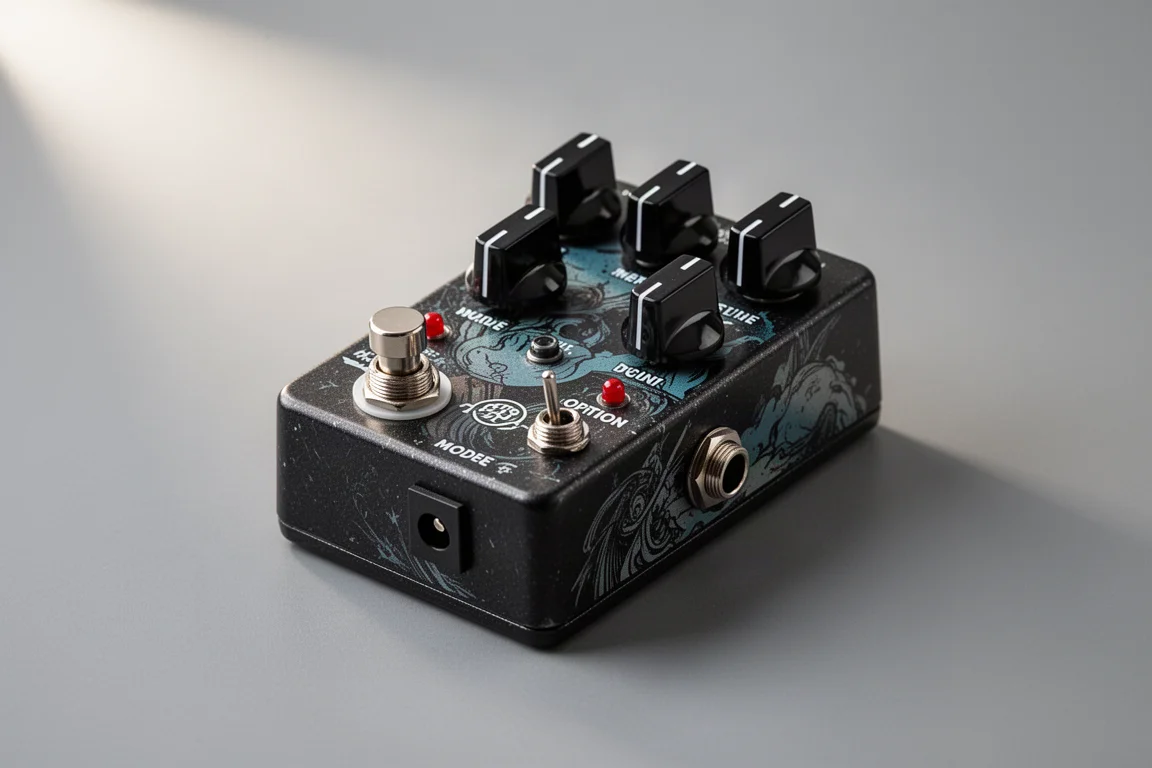
Claraara sent over their entire line of mini pedals, and these are small in size but surprisingly big on features. Each pedal packs four knobs, a mode switch, a small option switch, momentary hold features, and an external control jack in a 3.5 mm format. An adapter is included with each pedal so you can quickly connect it to standard quarter-inch jacks, and the external jack lets you control the hold feature remotely with a foot switch on the floor.
The line includes five distinct effects: the Hayne envelope filter, the HORL rotary pedal, the Leap octave pedal, the Dive pitch shifter, and the South Zoo voice synth. Each one brings a surprising amount of functionality to a tiny footprint.
The Hayne: Envelope Filter
The Hayne is an envelope filter with a frequency knob that controls the center point of the frequency, a drive knob for sensitivity, a knob that controls rate and attack, and a res knob for resonance. The mode switch offers an LFO setting, an envelope setting, and a combined envelope plus LFO mode.
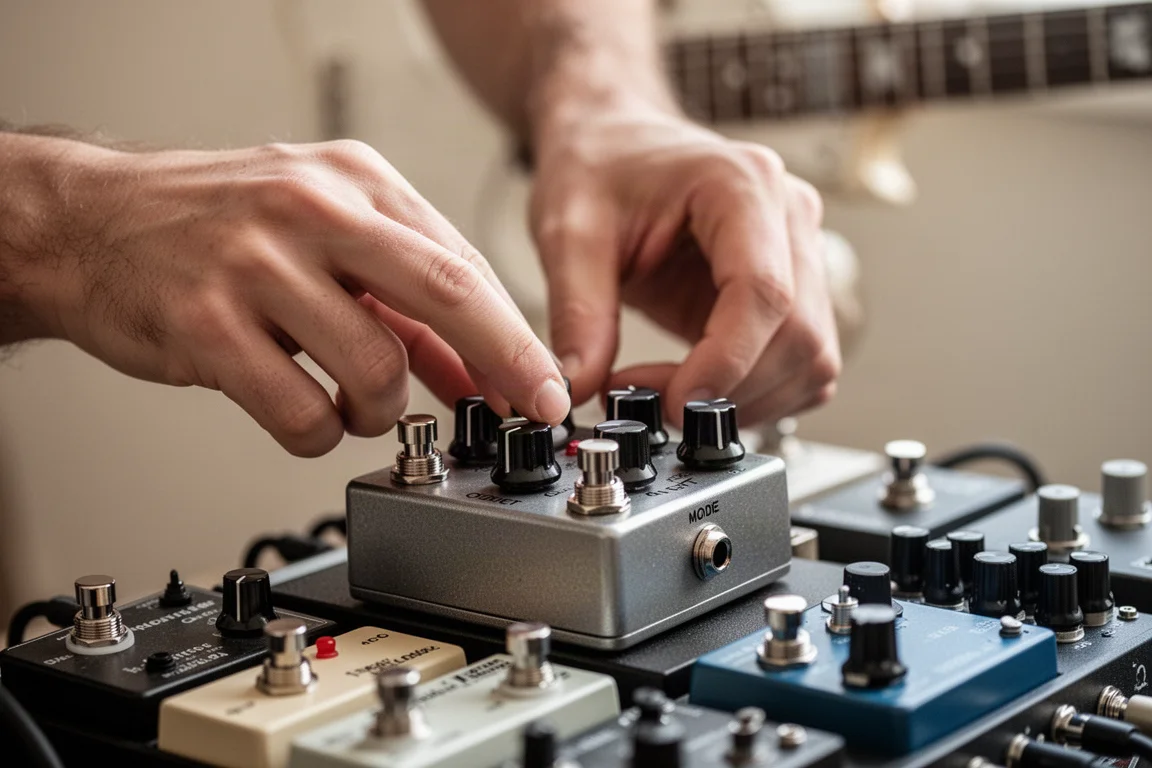
A small switch provides low pass, band pass, and high pass filtering options. The low pass setting is particularly useful because it lets the lows of your signal pass through unaffected by the filter, making it less dramatic than the band pass. The high pass setting does the opposite, allowing high frequencies through while affecting the lows and mids.
The momentary features vary by mode. In the LFO mode, the foot switch controls tap tempo. In the envelope mode, it reverses the direction of the filter source, similar to reversing the toe and heel positions on a wah pedal. The combined mode lets you increase the effect to the current rate value, bypassing the envelope control of the rate.
The HORL: Rotary Pedal
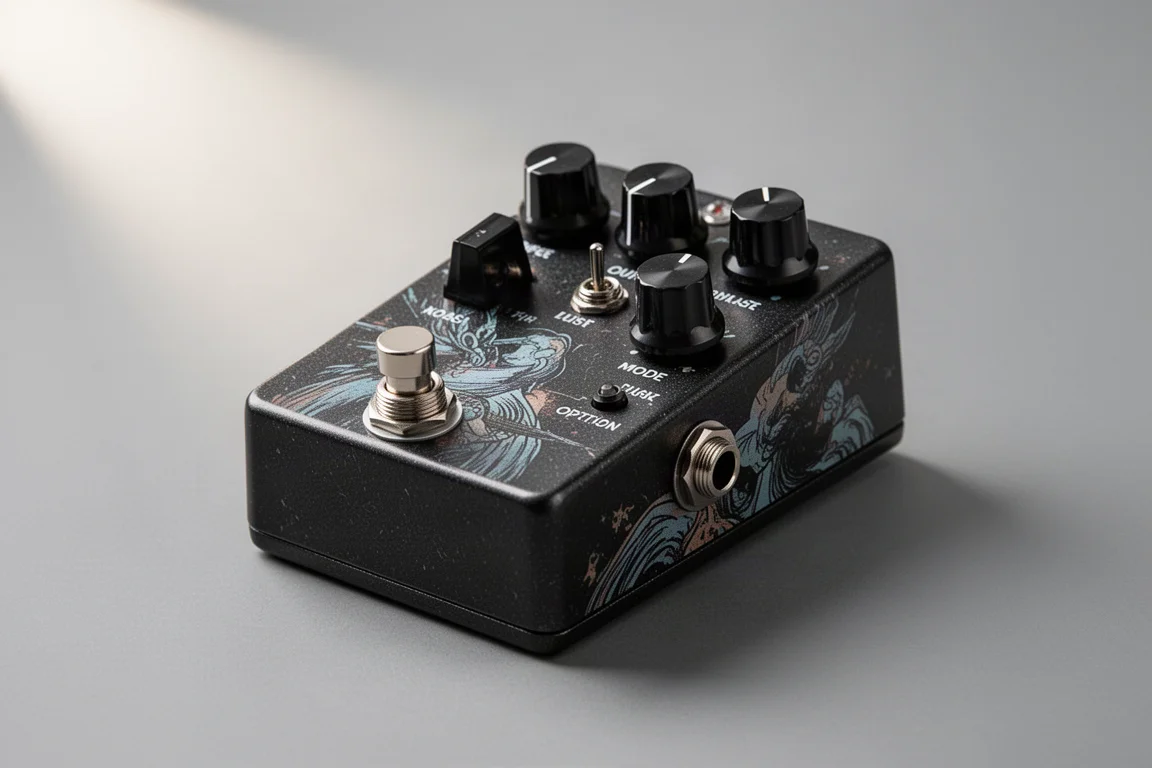
The HORL is a rotary pedal that emulates the sound of a Leslie speaker. It includes a master rate control, an acceleration control for the speed of transitions, and a knob to balance the volume between the horn and the drum. The tweak knob has different functions depending on the mode you are in.
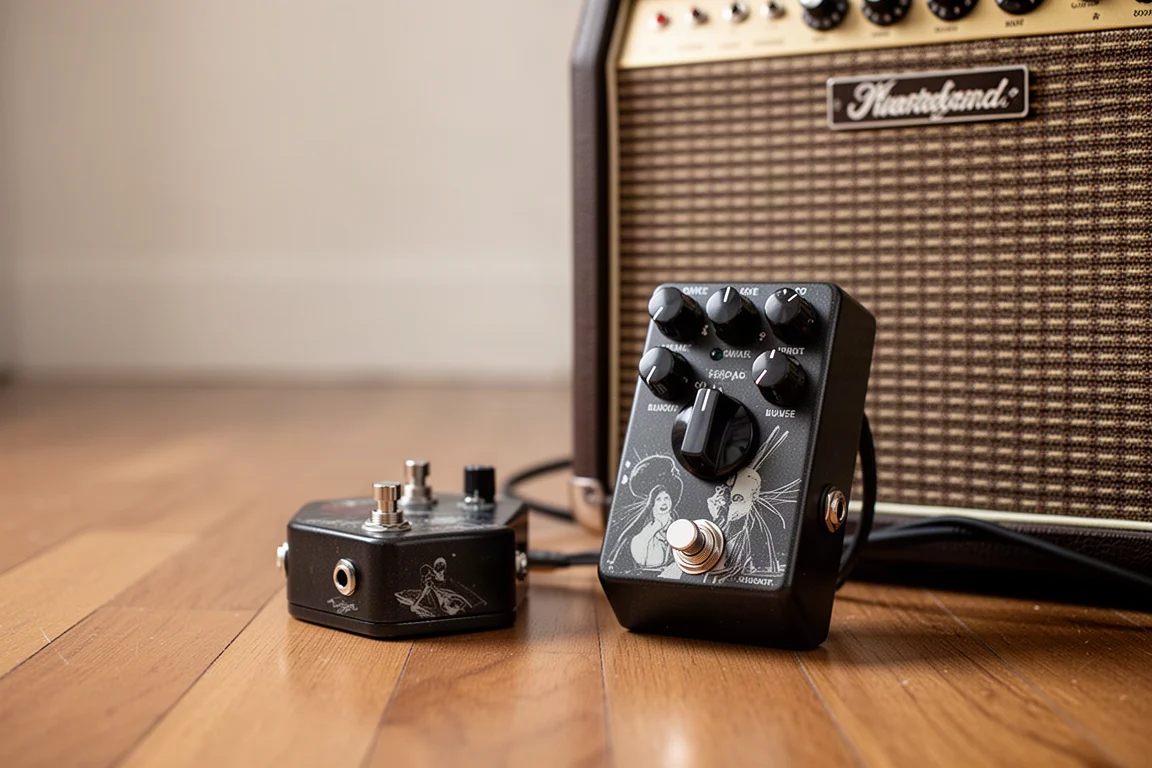
The mode switch offers three settings. The RPM step mode lets you ramp the speed between two values, controlled by the tweak knob. The spin mode holds the spin still and momentarily gets it moving again, with the tweak adjusting the trigger threshold. The brake mode does the opposite, stopping the spin.
A separate switch provides three different flavors of voice: a normal setting, a large cabinet setting, and a far mic distance setting that sounds huge, as if the microphone is far away from the Leslie speaker.
The Leap: Octave Pedal
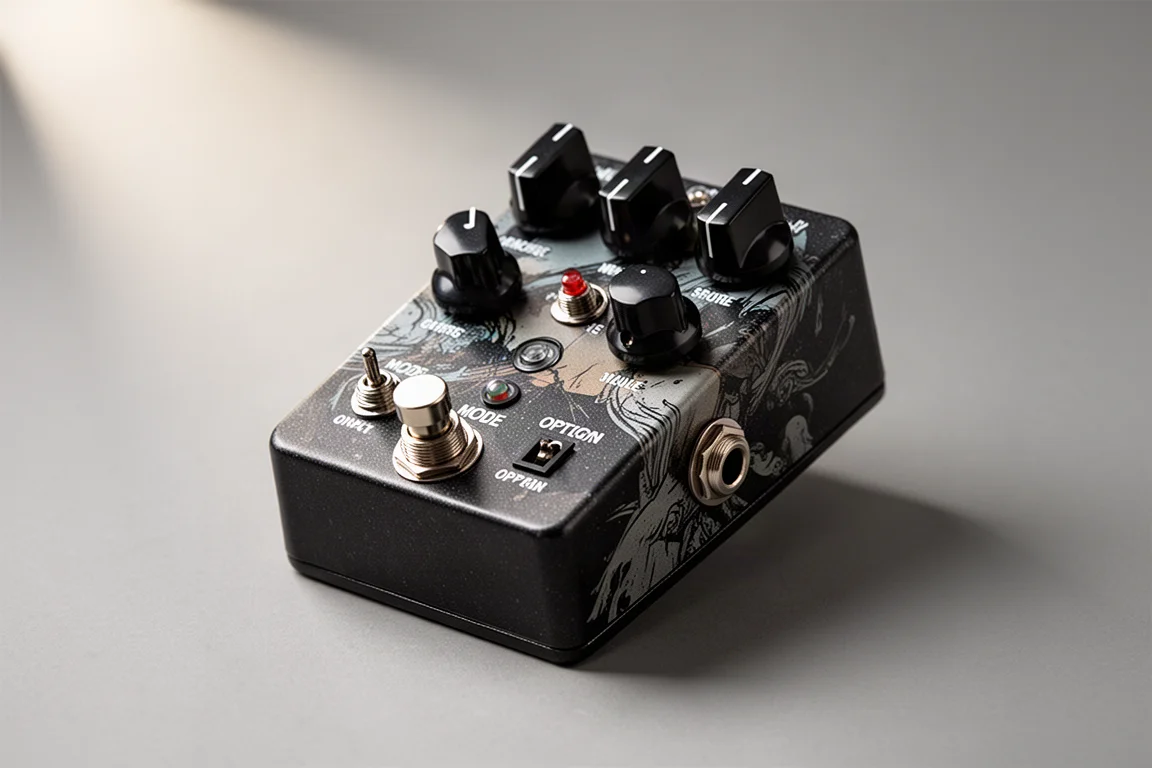
The Leap is an octave pedal with a high octave, a low octave, a dry blend, and a tone control. The mode switch cycles through three levels of detune modulation on your octave sounds. A switch offers low pass, tilt, and high pass filtering options.
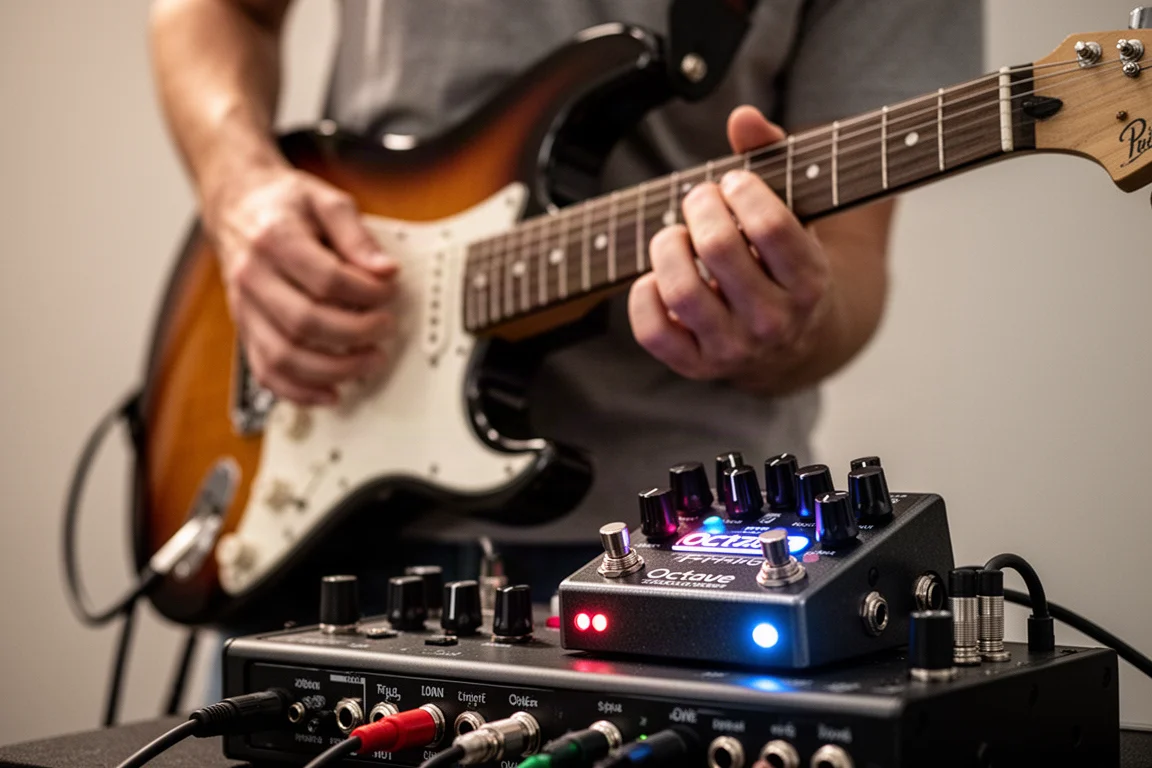
You can dial out the highs, dial out the lows, or remove your dry signal entirely for an instant organ sound. The detune modulation adds a nice texture, and the pedal handles polyphonic playing well, even with multiple notes at once. The momentary feature holds the current pitch, letting you shift between major and minor intervals.
The Dive: Pitch Shifter
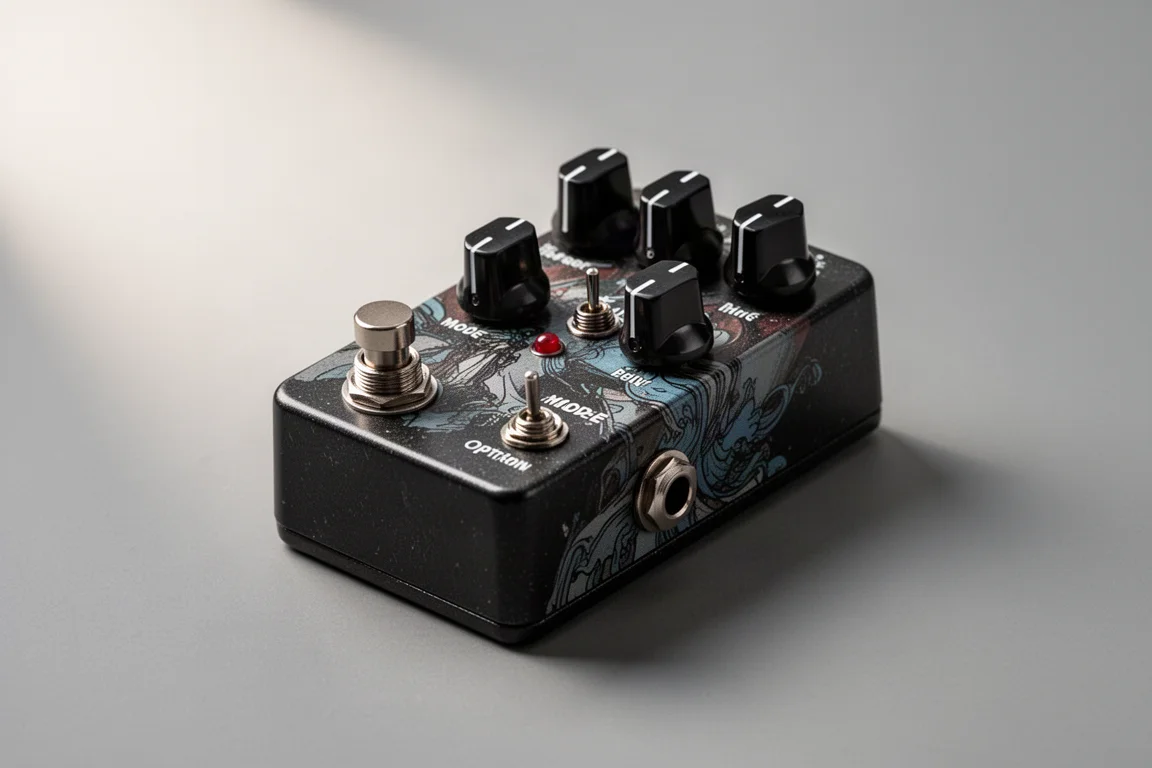
The Dive is a pitch shifter that works like a whammy pedal, letting you ramp between two different pitch settings. It has two knobs, drop A and drop B, that let you set two distinct pitches, including thirds, fifths, and sevenths across the range of each knob. A mix control blends your dry signal with the shifted signal.
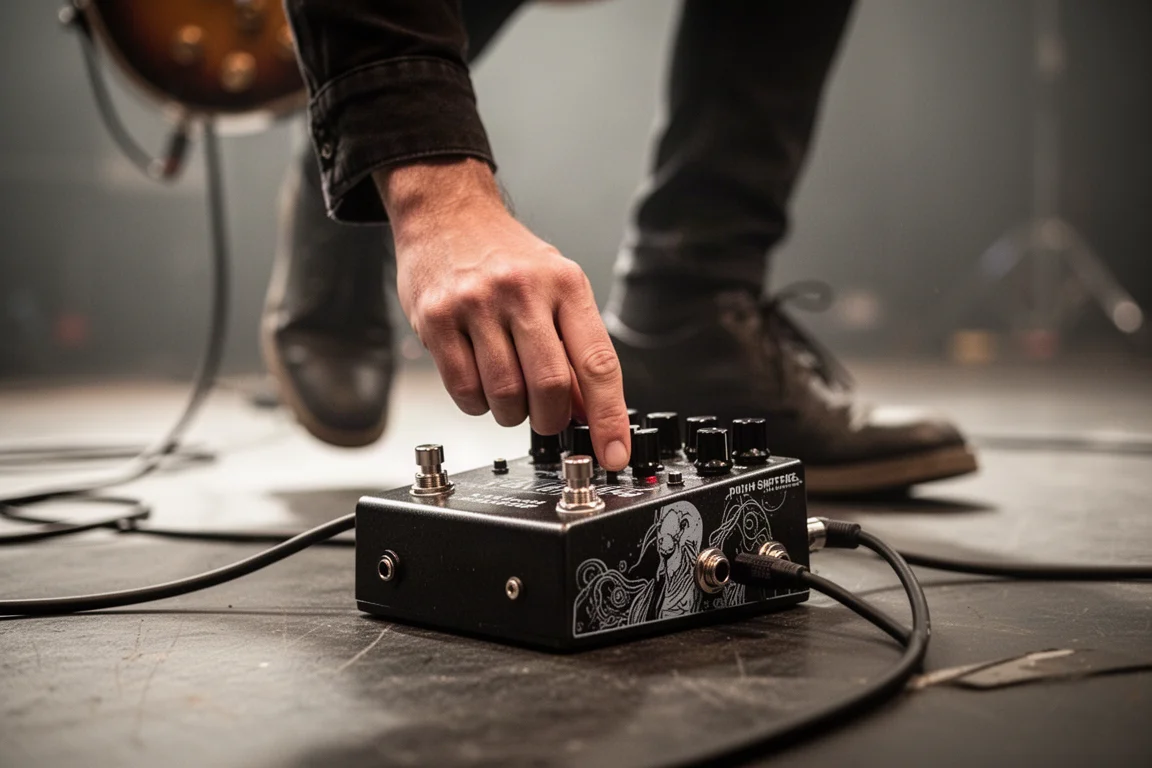
The speed of the transition is controlled by a two-function knob. You hold the switch to adjust the secondary speed. The mode switch offers latch mode, AB mode, and momentary mode. In AB mode, you can use an external foot switch to toggle between the two pitch settings while the pedal’s own switch turns the effect on and off. The momentary mode engages the effect while holding the foot switch and turns it off when the effect is already active.
The South Zoo: Voice Synth
The South Zoo is a voice synth that simulates animal sounds instead of human vocal sounds. The white LED setting produces cat sounds, the blue setting produces frog sounds, and the orange setting produces horse sounds. It is a vowel-simulating synth rather than a triggered library of sound effects.
The controls include a tails knob for the length of the effect, a mix knob for blending your dry signal, a speed control for the vowel sound, and a detail knob that introduces more noise and artifacts with a hollow EQ range. The mode switch offers a freeze control that holds the current animal sound and randomizes the speed parameter, a setting that randomizes the tails parameter, and a setting for inverted pitch follow.
The hold features are particularly fun, creating sounds that could easily fit in a horror movie soundtrack. The cat setting is the most usable of the three sounds, with the frog setting coming in second. The horse setting is more abstract but offers a galloping sound that noise artists could build an entire signal chain around.
Powering the Line
Claraara also offers a power supply that plugs directly into the wall with an IEC connection, avoiding the need for a wall wart or external power brick. It has six outlets, including four at 500 milliamps and 9 volts, and two that can be switched between 12 volts, 9 volts, and 18 volts. A DC 24 volt 1500 milliamp output allows you to connect multiple units together for expansion.
Overall Buying Advice
All five pedals can be run together in a single signal chain, and the external foot switch can control two pedals at the same time. The Hayne envelope filter and the HORL rotary pedal stand out as personal favorites, while the Leap octave pedal excels at organ sounds and the Dive handles whammy-style pitch shifting. The South Zoo is a fun addition for anyone who wants animal sounds in their rig.
Given Claraara’s history of pricing their full-size pedals attractively, this mini line is likely to offer strong value as well. The build quality, feature set, and sound quality are all impressive for such a compact format.
Conclusion
Claraara’s mini pedal line proves that small size does not mean limited functionality. Each pedal packs a surprising amount of control and versatility into a tiny enclosure, from the envelope filtering of the Hayne to the animal sounds of the South Zoo. If you are looking for reasonably priced digital pedals that sound great and offer deep feature sets, this line is worth serious consideration.
Further reading
Related Reviews

Guitar Pedals
Best Fuzz Builder Pedals 2026: Five Versatile Fuzz Pedals Worth Exploring
Five fuzz pedals that go beyond simple gain and tone controls, offering deep EQ, clipping modes, voltage control, and more for building your own sound.

Guitar Pedals
Bi-Tron C B Light Review: A Compact Chorus and Vibrato Pedal with Serious Depth
The Bi-Tron C B Light packs chorus, vibrato, modulation modes, filter modes, expression control, MIDI, and 16 preset banks into a compact pedal.

Guitar Pedals
Catalinbread Proto Club 6 Review: A Unique Chorus and Phaser Combo
The Catalinbread Proto Club 6 blends a low-frequency phaser with a high-frequency chorus, offering a distinctive modulation pedal with powerful EQ shaping.