EDC Knives
Civivi's New Releases: A Utility Knife, a Maze Lockback, and Two Affordable EDC Options
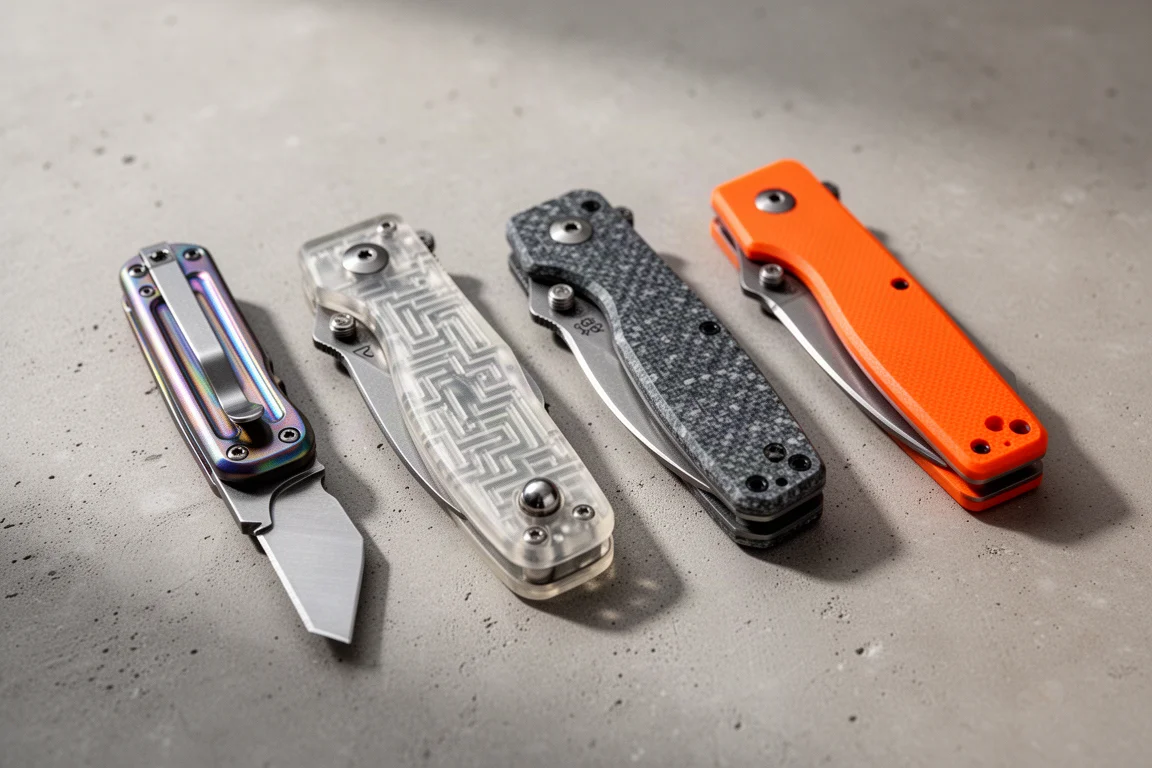
A fresh Civivi utility knife with a spring-loaded blade change, an Elementum with a translucent Lexan maze, the Oknife U1 Ultra, and the $39 Sencut Quark.
Introduction
Civivi keeps surprising with how far it pushes familiar designs, and this batch of releases is a good example. Two new Civivi models, one Oknife, and one Sencut cover very different needs: a purpose-built utility knife, a ceramic-bladed travel option, an artistic take on a proven classic, and a budget flipper that punches well above its price. Here is how they compare.
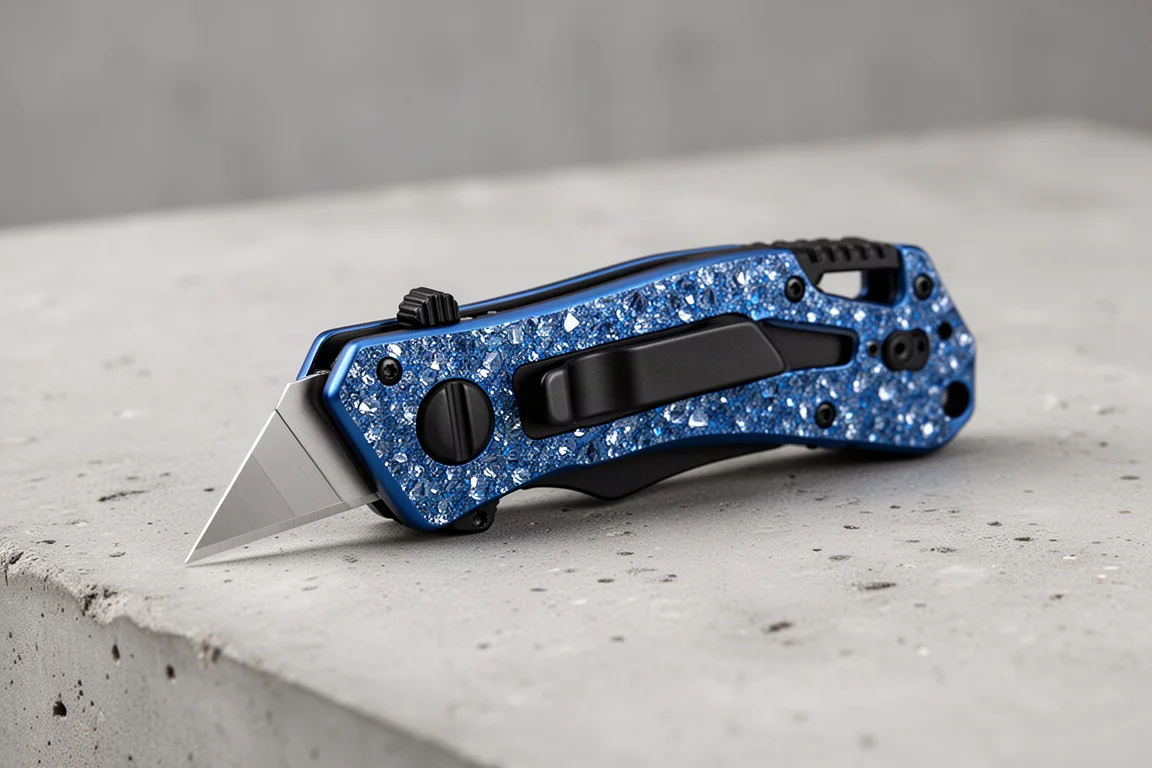
Civivi Pulsara: A Utility Knife That Fixes Blade Changes
The Pulsara is a utility knife with gorgeous anodized aluminum scales, available in a few other flavors as well. Opening is silky smooth, the button lock is nice and handy, and there is jimping across the top of the handle. The reversible pocket clip is heavy-duty stainless steel, among the best seen on a utility knife like this.
The standout feature is the blade retention system. A large spring-loaded lever controls a lock mechanism that holds the blade in place. Sliding the lever up lets the blade pop out, and inserting a new blade locks it right back in. Because the design is fully supported at the bottom and the top, it does not need much clamping force to hold securely. Pushing down on the blade only locks it in tighter, which makes this a genuinely solid design.
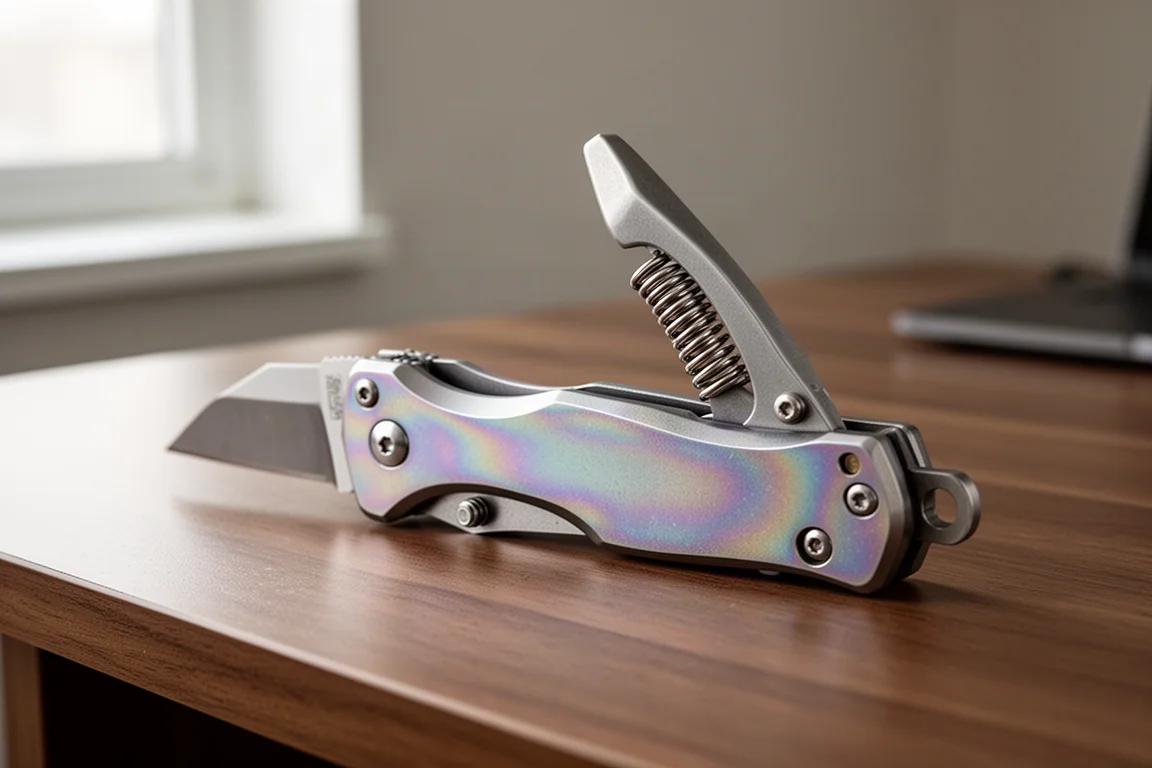
Blade changes being that effortless is the real selling point. Anyone who swaps blades regularly will appreciate not fumbling with tiny screws or tools.
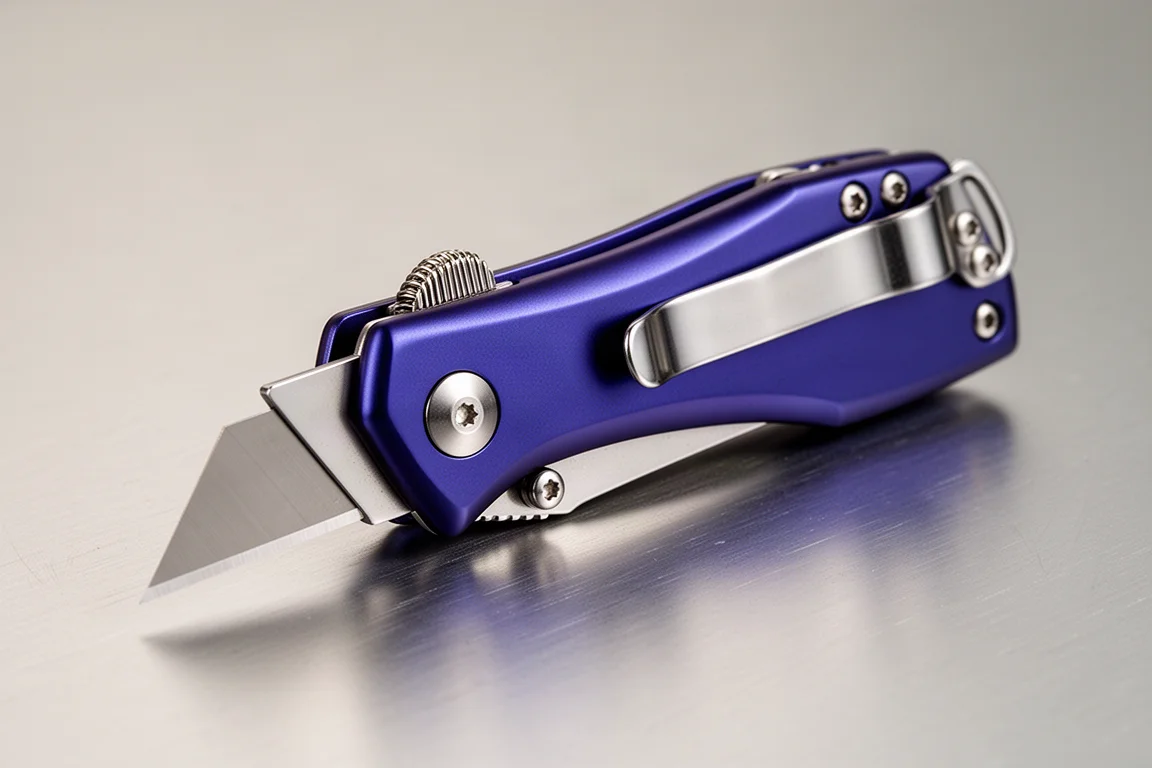
Oknife U1 Ultra: Tool-Free Blade Swaps and Travel Appeal
The U1 Ultra is an outstanding design in its own right, with titanium scales, a flipper, and a push-button lock. Its blade release is mostly tool-free, though if the set screw is really tight you may need something to break it loose the first time. After that, sliding a blade in and out is simple.
This version uses a ceramic blade. The retention mechanism holds it well enough for normal use, though it does not have a lot of purchase, and very rough lateral force could theoretically pop the blade out. Anyone hard on their tools tends to snap off blade segments anyway, so this is a minor concern for most users. One-handed removal is even possible by holding the knife up and flipping the blade out.
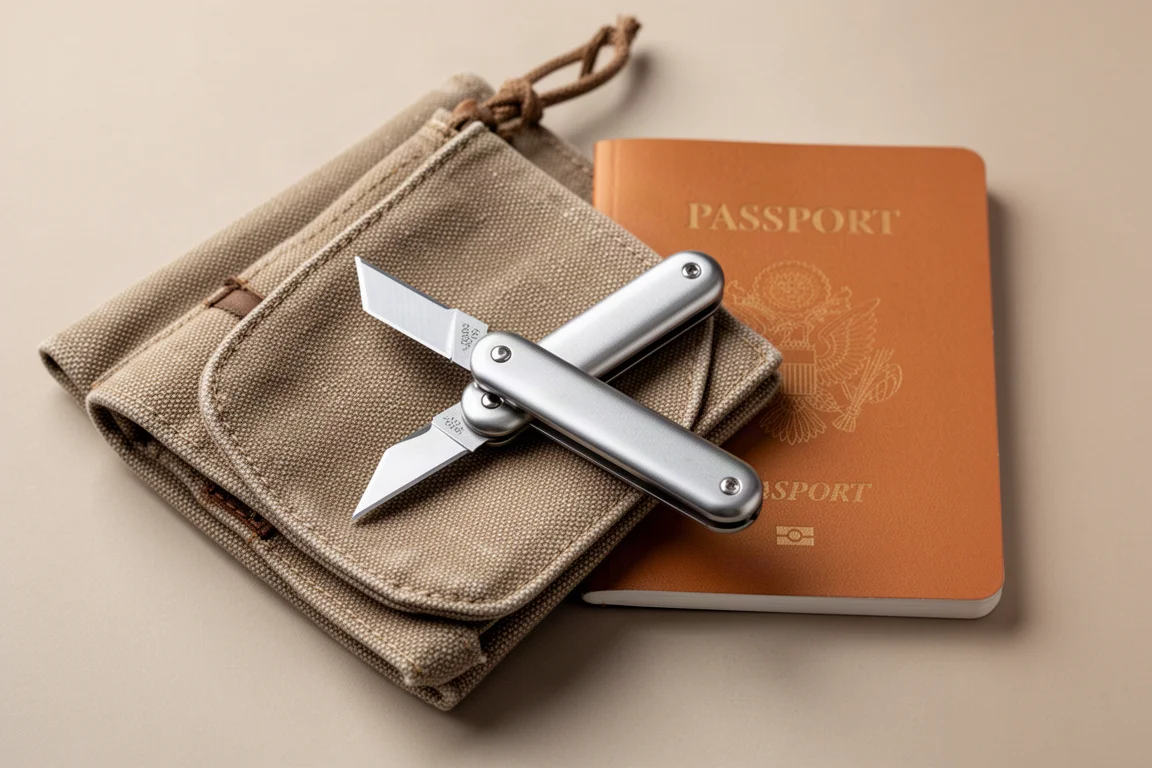
The ceramic blade also makes this a good travel option in places where carrying a blade is restricted but carrying a blade holder may be acceptable. Check your local rules before relying on that.
Civivi Elementum with Rock Grind and Lexan Maze Handle
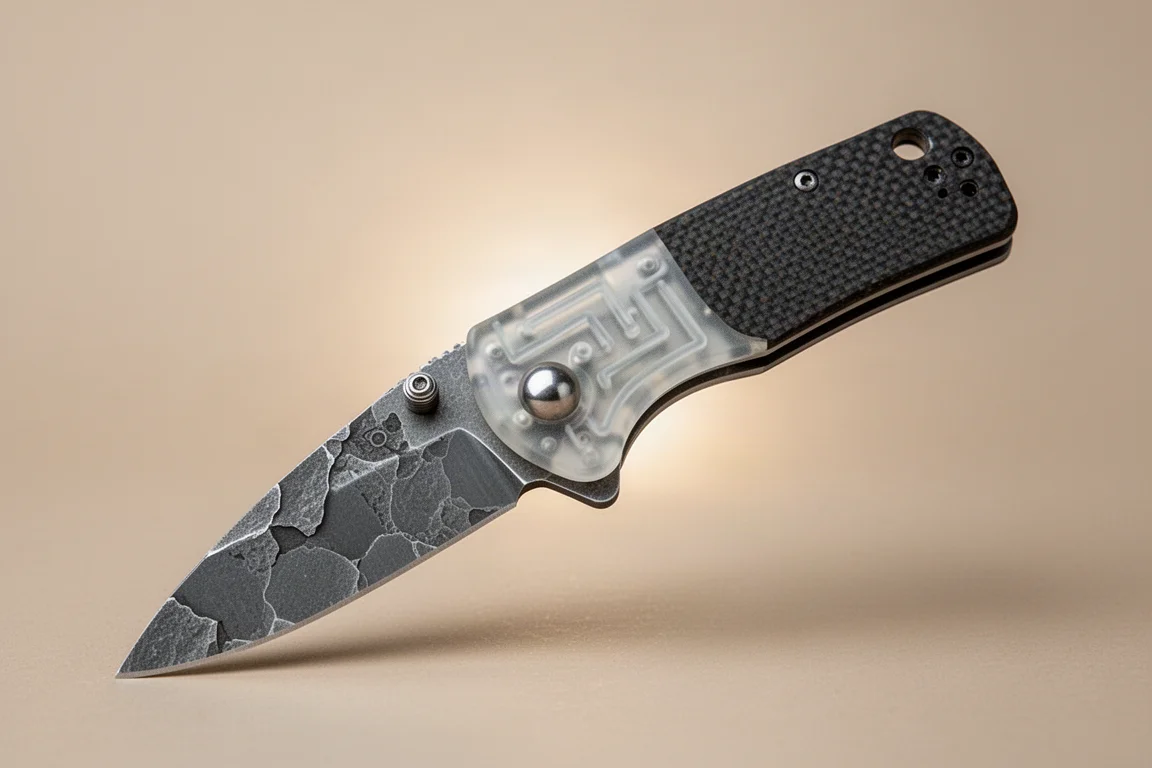
This Elementum keeps the classic shape everyone knows, but it stands out in a couple of ways. The blade is a rock grind in Nitro-V steel with a hollow grind, giving it a Paleolithic, chipped-stone look that is clearly deliberate. That grinding is carried into the G10 scales as well, a nice artistic nod to history in the same spirit as earlier Civivi designs like the Spiny Dogfish.
The other trick is the handle. One side is translucent Lexan with a maze molded inside, and a little ball floats around in there. The ball appears to be one of the ceramic ball bearings used in the pivot, and an extra one is included just in case you lose it. Getting the ball all the way through is a genuine challenge since it must be centered and dropped into specific holes that do not fit everywhere. As a fidget toy built into a knife, it is a lot of fun.
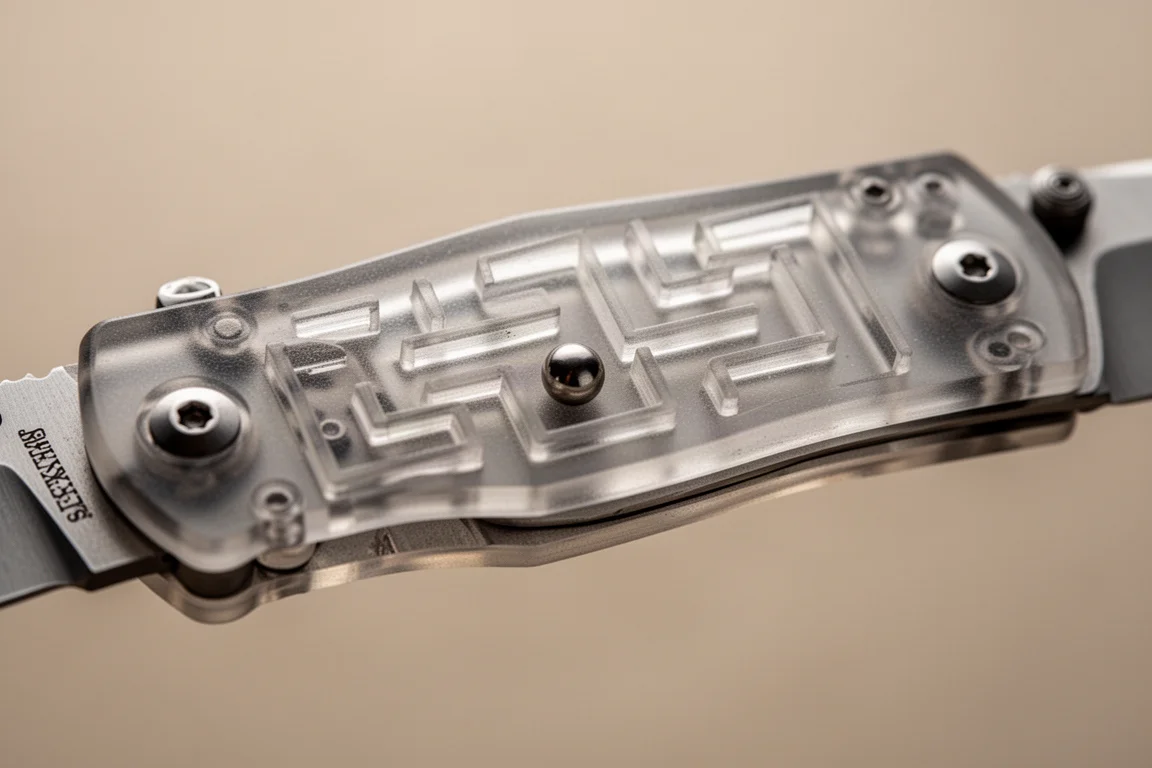
Street price is about $65, which keeps it in classic affordable Elementum territory despite the Lexan and the rock grind. A few other flavors of this version are also available, and the Pulsara utility knife ships with a couple of spare blades as well.
Sencut Quark: Big Value at $39
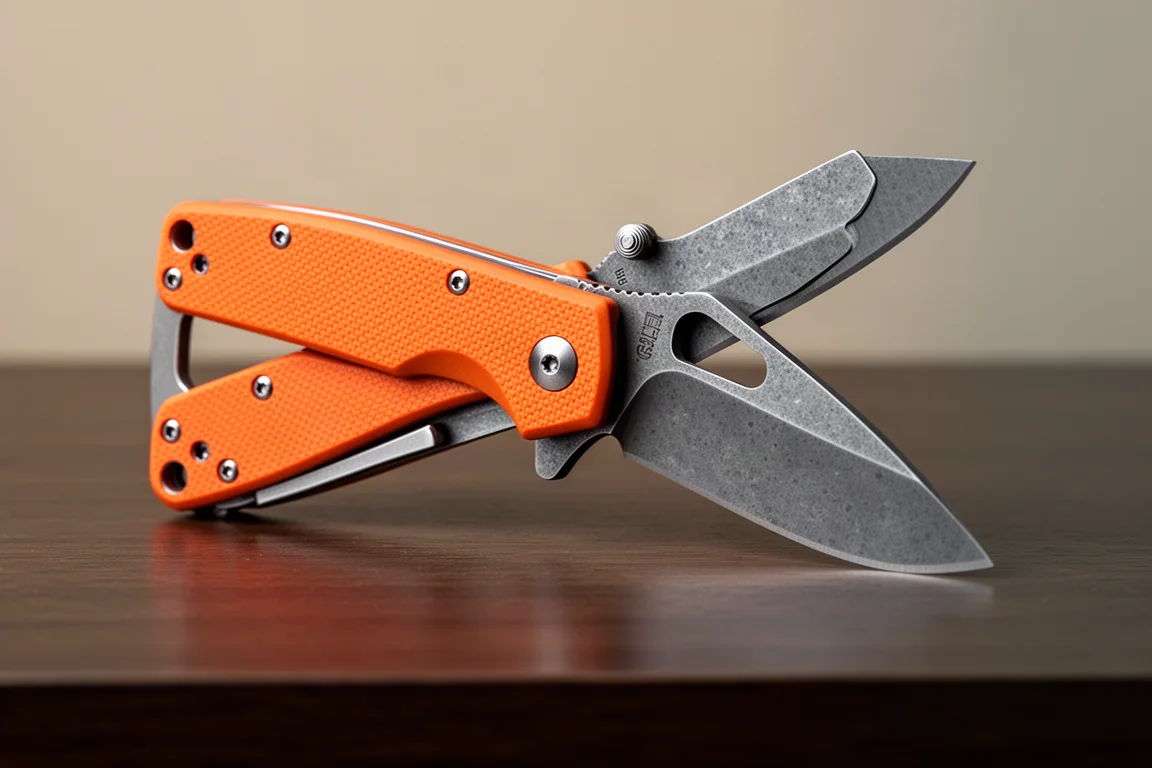
The Sencut Quark hits a $39 street price and delivers a lot for the money: G10 scales, D2 steel in a flat grind, a big old flipper, and a stainless steel liner with a gray stonewash finish that looks wonderful. The whole knife weighs about 4 oz, and the narrow handle gives a lot of control even for larger hands, though some people may prefer a thicker grip. Your choice.
Multiple opening options keep it flexible. The flipper on a heavier blade like this opens very easily once you get momentum going, you can pinch the blade and let it pop open, or you can use the thumb studs. It reads either tactical or elegant depending on the color; the orange version shown here is the fun one, and it comes in a few different flavors.
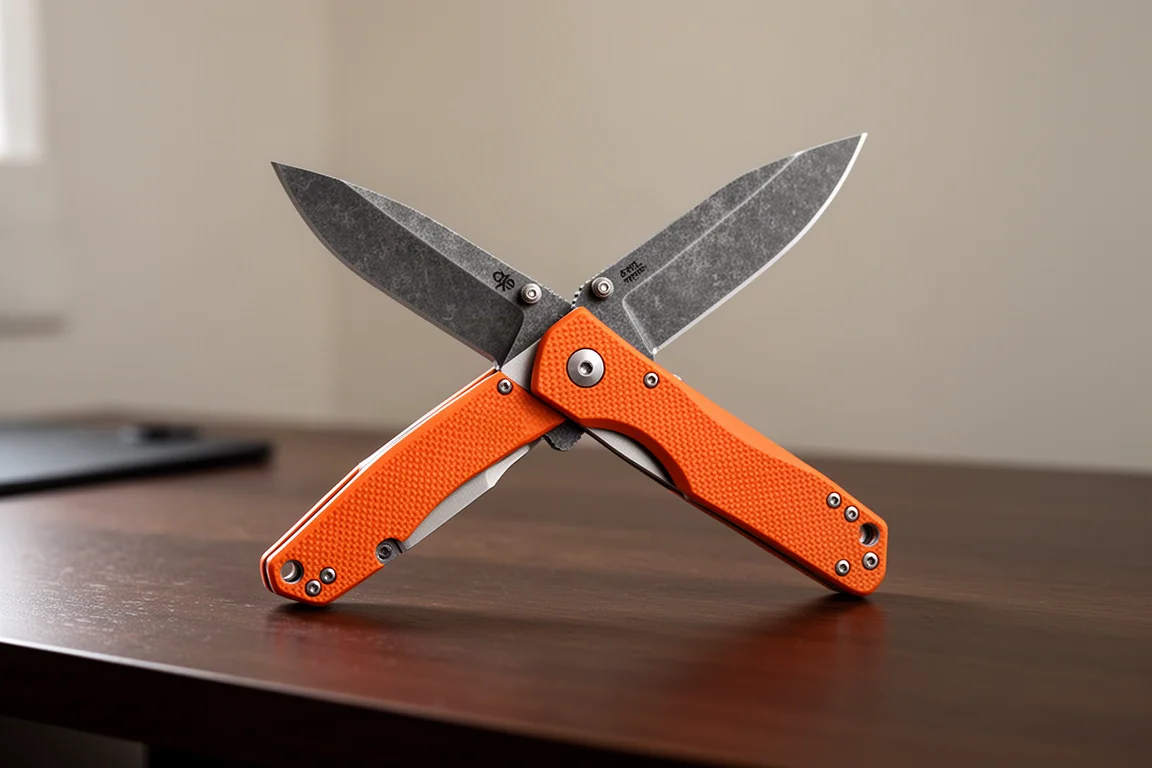
This is also a good example of the We Knife, Civivi, and Sencut vertical integration. The design likely started as a custom We Knife, dropped under $100 when Civivi took it on, and now lands at $39 under Sencut. A solid knife at a great price.
Which One Should You Buy?
If you cut cardboard and packaging all day, the Pulsara’s spring-loaded blade change is the most practical innovation here. If you want something for travel or a rust-free ceramic edge, the U1 Ultra makes sense. If you want an affordable classic with genuine artistic flair and a built-in fidget toy, the Elementum maze version at about $65 is hard to beat. And if you just want a dependable flipper for as little money as possible, the Quark at $39 is the obvious pick.
Conclusion
Credit to Civivi for exploring new directions, reworking older designs, and adding genuinely wild art to the lineup. Whether your priority is utility, travel, artistry, or pure value, one of these four covers it, and none of them asks you to compromise much.
Further reading
Related Reviews
EDC Knives
Spyderco Techno 3 Review: A Beautiful Design Held Back by Factory Issues
The Spyderco Techno 3 is a stunningly designed titanium frame lock knife, but weak detent and quality control issues from the Italian factory make it a hard recommendation.
EDC Knives
Blade Show 2023 Picks: Three EDC Knives That Stood Out
From QSP's button lock Swordfish to Demko's MagnaCut fixed blade, these are the knives that made the strongest impression this year.
EDC Knives
Daily Carry Company Mag Blade Review: A Beautiful Knife I Struggle to Recommend
The Mag Blade pairs polished M390 steel with grade 5 titanium and an innovative magnetic butterfly hinge, but daily practicality falls short of the $199 price.