Power Tools
Best Cheap Corded 4-1/2 Inch Angle Grinders: Four Bargain Grinders Put to the Test
We dyno-tested and tore down four budget corded angle grinders, including an $84 Milwaukee and a $23 WEN that outperformed it.
Introduction
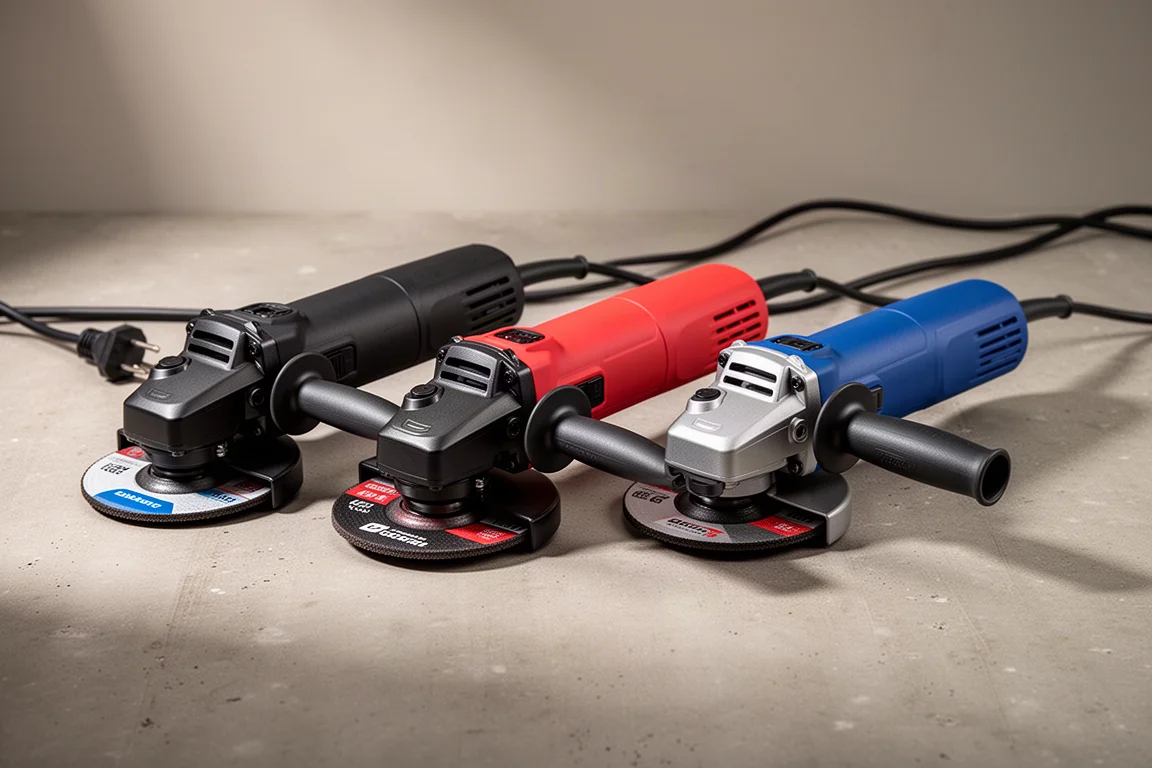
Corded 4-1/2 inch angle grinders are the kind of tool you buy cheap and use hard. Cordless gets the attention, but with a cord there is no battery runtime to worry about, and what you are really paying for is durability: will the tool last for a thousand hours of grinding, or just an afternoon?
To find out, four grinders went through the same two-part treatment. First, a power dyno measured grinding speed under load and maximum output. Then each tool was opened up to see where the money went, or did not. The lineup includes an $84 Milwaukee 7-Amp 4-1/2 in. Corded Angle Grinder, a $15 Harbor Freight Warrior 4.3-Amp (bought on sale for $12), a well-worn Harbor Freight Drill Master bought for $8 nearly twenty years ago, and the WEN 7-Amp 4-1/2 in. Corded Angle Grinder, the cheapest corded 4.5 inch grinder on Amazon at the time of purchase at around $22 to $23, and one of the few that even ships with a disc.
How We Tested
Power matters most in a grinder, but it is hard to judge by feel. Each tool ran a standardized grinding task at a 200 W load to record working speed in RPM, then got taxed to failure, running until it cut out or RPM fell below about 4,000, roughly half of its normal operating speed. That number shows how much real output, in watts, the tool can sustain.
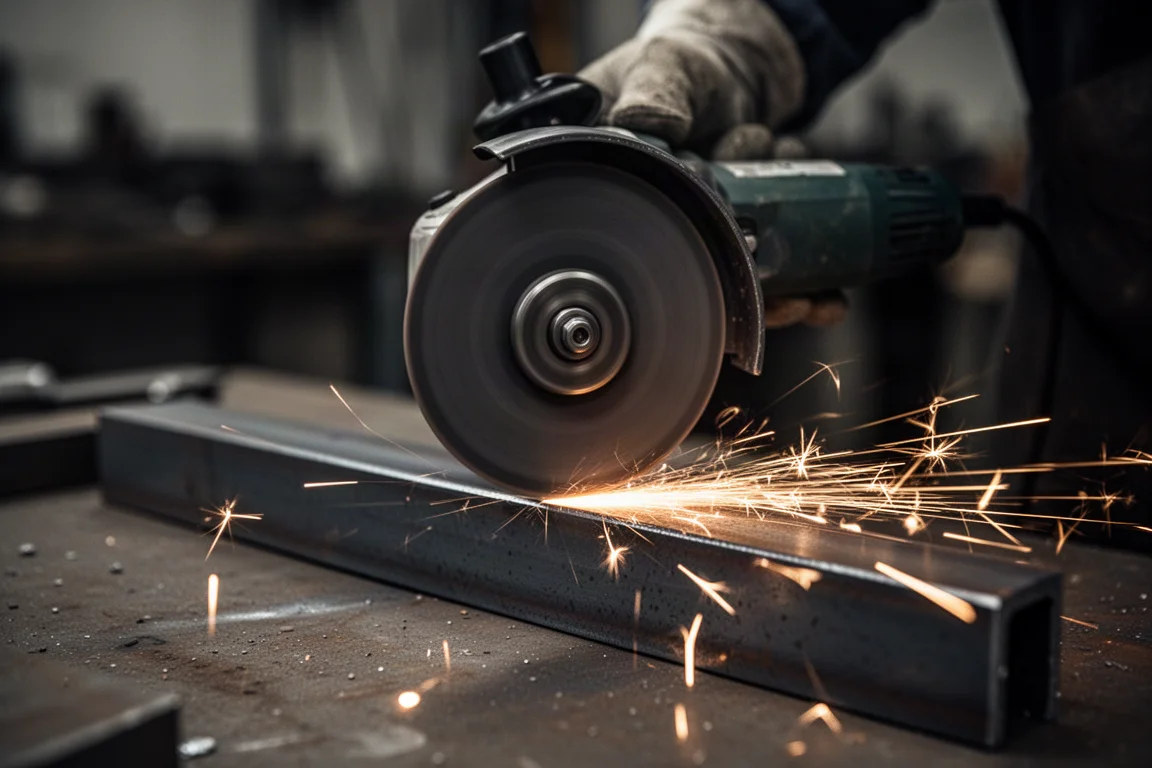
The working-speed test simulates ordinary grinding pressure. The max-output test is more brutal: it reveals whether a grinder has real power reserves or just a big number on the box. Durability, the other half of the story, got judged through a full teardown of gears, bearings, armatures, and switches, since with corded tools that is where cheap grinders earn or lose their keep.
Milwaukee 7-Amp 4-1/2 in. Corded Angle Grinder
The Milwaukee is the most expensive tool here at $84, and it has the reputation to match. Under a 200 W load it turns 5,700 RPM, the fastest working speed of the group, which translates into noticeably brisk grinding in normal tasks.
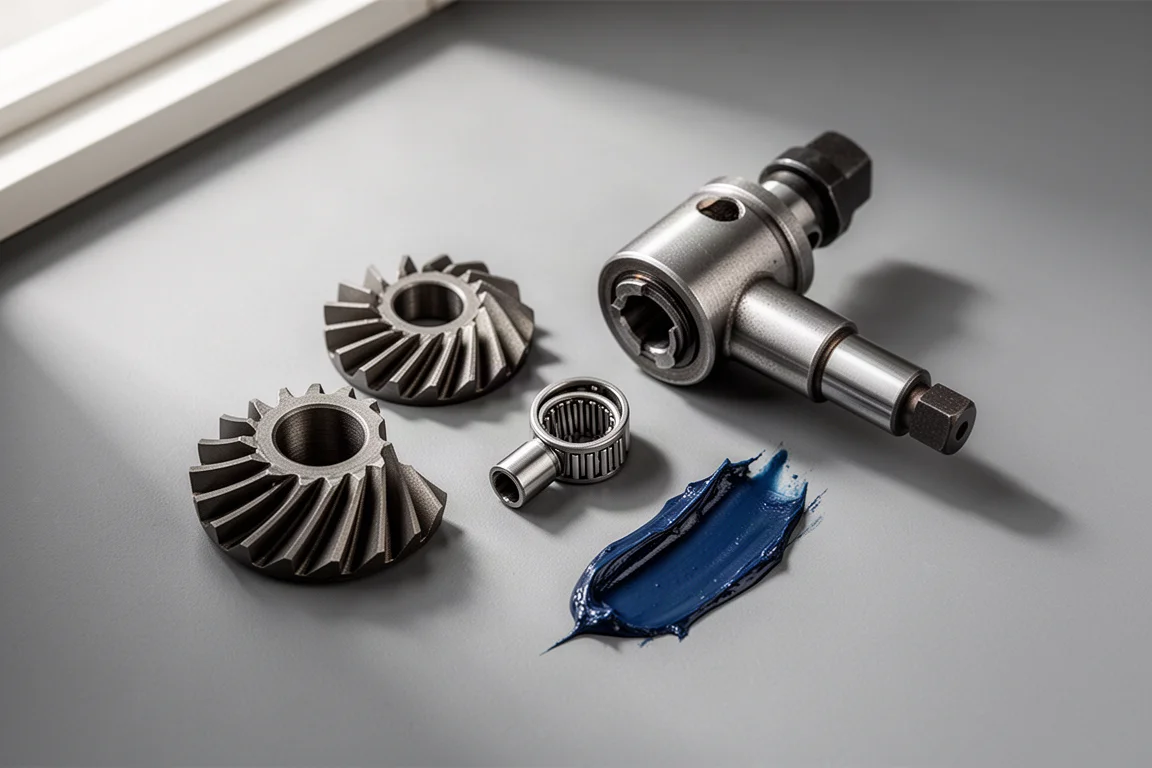
The dyno backed that up with a maximum output of up to 420 W, a solid figure. The teardown is where things get interesting. The gear quality is at least on par with the WEN, and the head is packed generously with a blue high-performance grease. The armature windings are thoroughly and tidily epoxied. The odd detail is a brass bushing in the head instead of the needle bearings the others use, which could explain some of the harsh vibration.
In use it gets hot and vibrates noticeably, a bit like shaking hands with an out-of-balance washing machine. It performs well, but it does not outclass everything below it.
Harbor Freight Warrior 4.3-Amp Angle Grinder
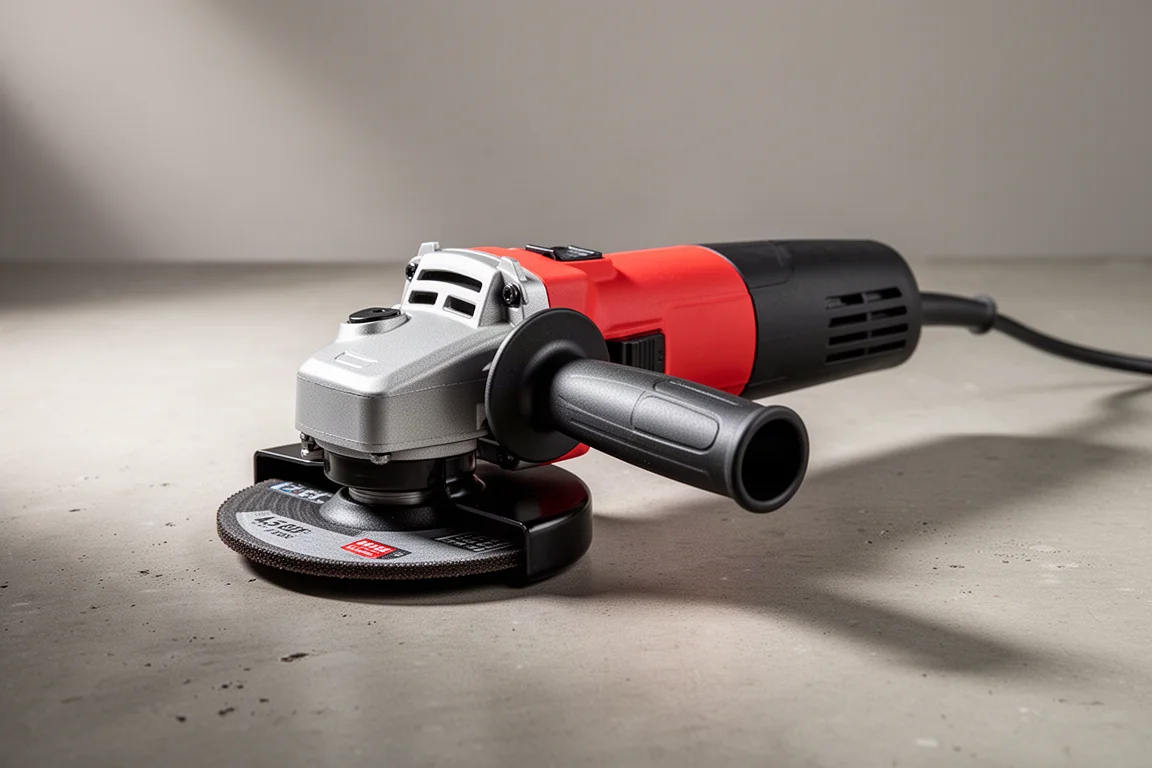
The Warrior is the most entry-level grinder Harbor Freight sells: $15 list, $12 with a coupon, and no grinding disc included. Under the same 200 W load it makes 5,400 RPM, working slightly slower than the Milwaukee in normal to light grinding, with more vibration along for the ride.
On the dyno it managed up to 280 W before stumbling and cutting out, the weakest output figure in the group. The teardown tells a similar story. The gear surface finish is noticeably rougher than the WEN’s, and the front bearing is smaller than the WEN’s sealed unit. The armature has only sparse epoxy on the windings, leaving some spots exposed.
At this price it turns on, spins a disc, and does light jobs. It is a use-it-lightly tool rather than a daily driver.
Harbor Freight Drill Master Angle Grinder
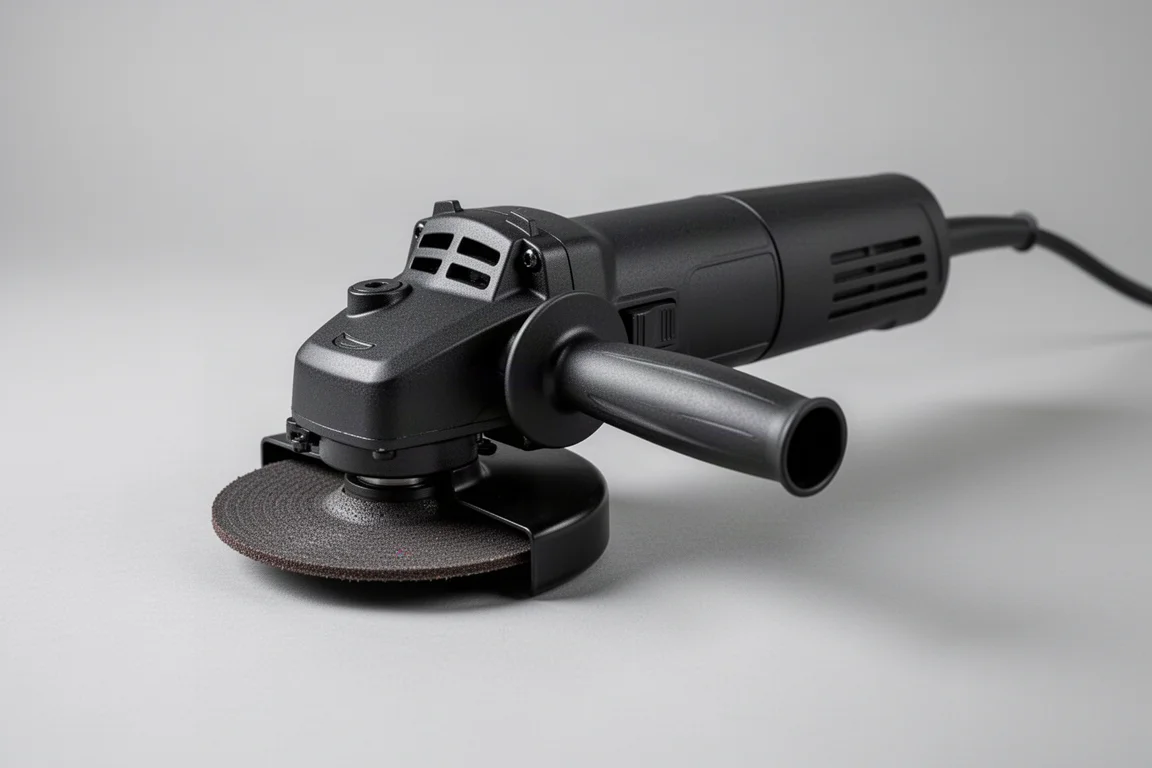
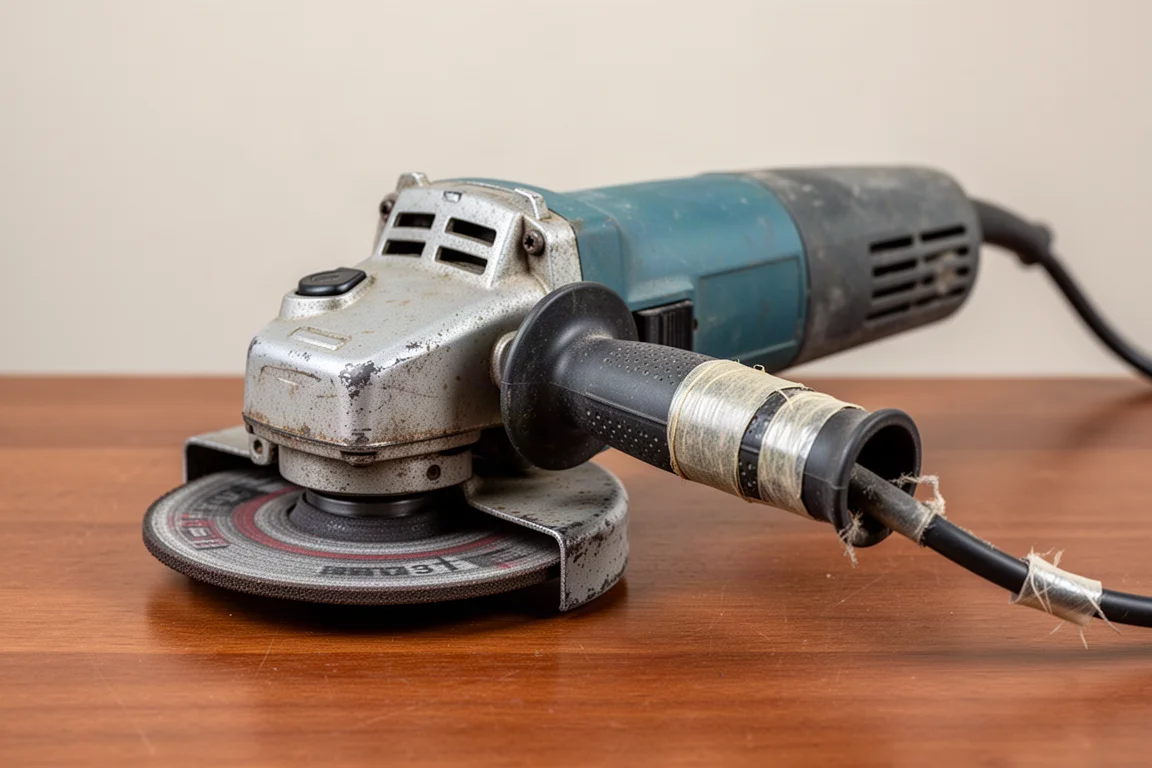
This one is the sentimental pick: an old Drill Master bought for $8 around 2004, still running after nearly twenty years of rough use. The power switch feels cheap and can be sketchy, the cord has been accidentally cut and repaired twice, and the spindle lock has been missing for years, kept functional by a Phillips screwdriver hack.
By the numbers, though, it embarrassed the newer Harbor Freight model. Under a 200 W load it spins a group-best 7,180 RPM, and on the dyno it pushed up to roughly 330 to 340 W before quitting. The gear looks at least a bit better than the Warrior’s, possibly just polished from years of use, and it uses a needle bearing in the head like the WEN. The downsides: too much room in the head for grease, which has mostly been expelled over the years, and the windings are coated in a heavy glob of epoxy rather than something tidy.
It is a vintage collector’s item now, and the lesson it carries is that these tools really were built better back then, at least by the measurements taken here.
WEN 7-Amp 4-1/2 in. Corded Angle Grinder
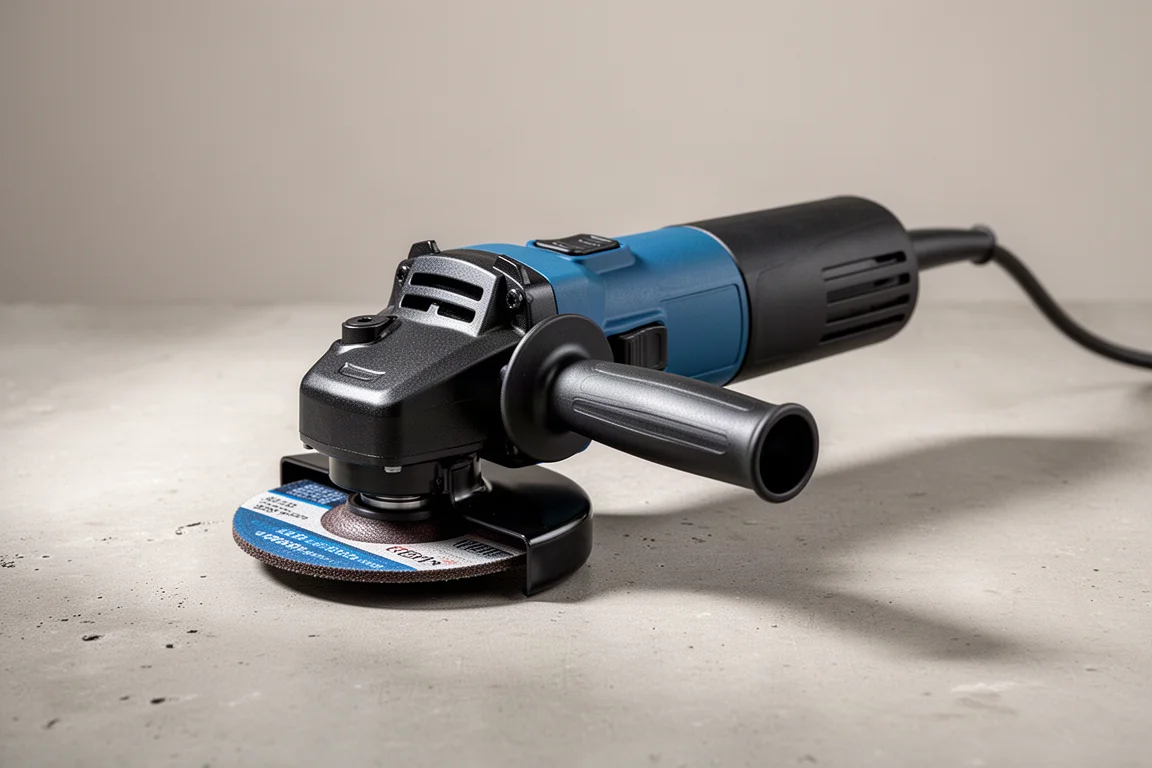
The WEN was the cheapest corded 4.5 inch grinder on Amazon at the time of purchase, at around $22 to $23, and it comes with a disc included. Despite the 7-amp rating matching the Milwaukee, its dyno numbers are anything but bargain-bin: it made up to 520 W of output, dunking on the $84 Milwaukee and everything else in the test.
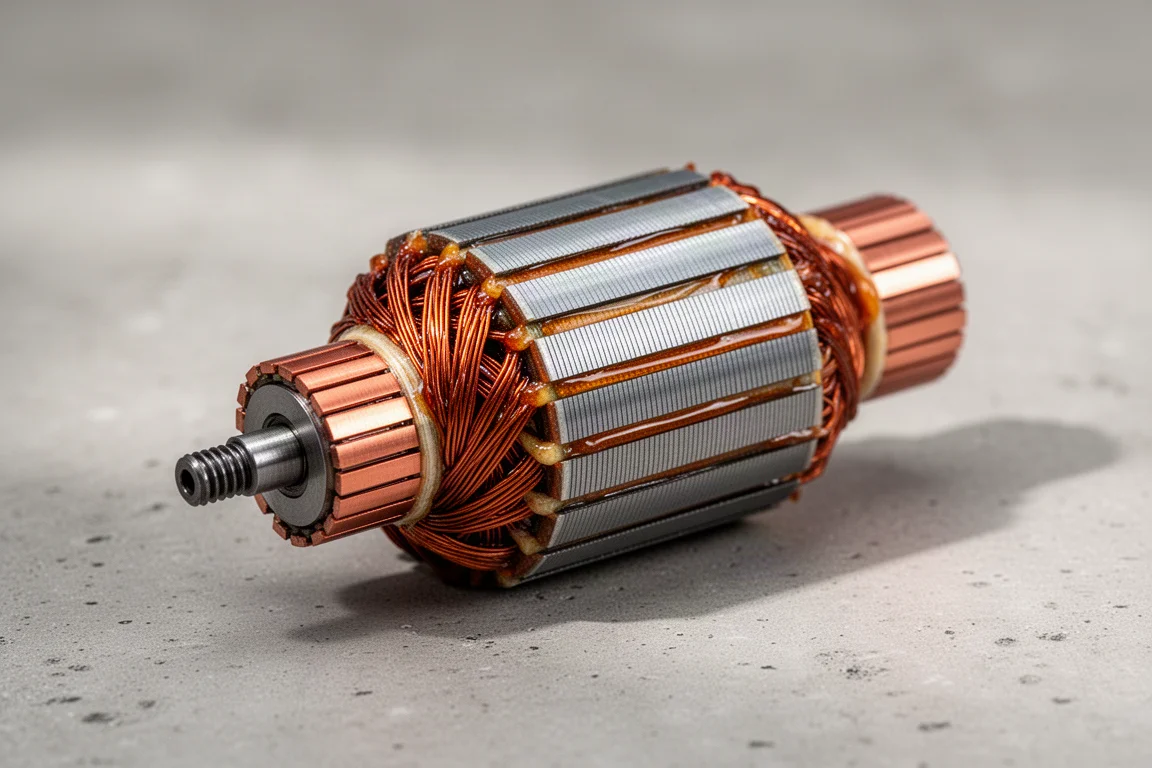
The teardown explains why. The gear finish is cleaner than the Warrior’s, the front sealed bearing is larger, and the armature is not only neatly epoxied but has additional white stringers over the windings. Beyond extra strength, that textured surface shape helps brush away the metal dust that eventually cakes up inside these high-airflow tools. It also uses a sealed bearing at the base of the armature, a step up from the metal-shielded units in the Harbor Freight models.
For under $25, it is the strongest and arguably the best-built grinder in this comparison.
Overall Winner and Buying Advice
Ranking the group by material removal speed under light grinding puts the old Drill Master out front, followed by the WEN. For sheer power and build quality, the WEN edges the Milwaukee by a smidge. Of course, the Drill Master’s win comes with a bias disclaimer: it is not for sale, and the owner knows what they have got.
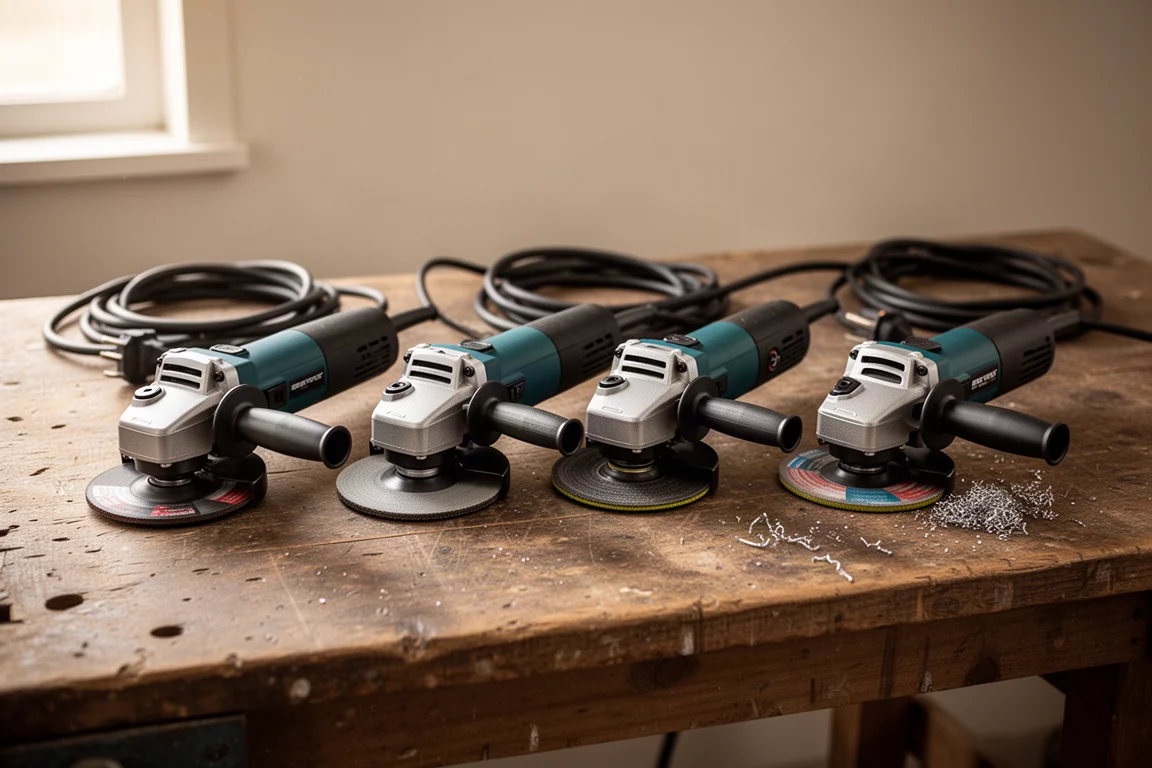
What is not an opinion is the price-to-performance math. The $23 WEN beats the $84 Milwaukee on output, vibration, and teardown quality, making it the realistic overall winner. If you want to spend more, the Milwaukee offers a trusted name and strong working speed, but you are paying a premium for the badge. The Warrior only makes sense for the absolute lowest budget, and the old Drill Master exists now mainly as proof that bargain tools used to be built tougher.
Conclusion
For most people shopping a cheap corded 4-1/2 inch grinder today, the WEN 7-Amp is the clear pick: the most power here, thoughtful build details, and a disc included for around $23. The Milwaukee is a fine tool that simply costs far more without a clear performance return at this level. Whichever you choose, the real question with a corded grinder is not runtime, it is how long the tool will last, and the WEN answered that question best.
Further reading
Related Reviews
Power Tools
Best 1-Inch Pistol Impact Wrenches: Three Heavy-Duty Options Compared
We compare three 1-inch pistol impact wrenches, from a budget-friendly Harbor Freight model to a premium Caterpillar unit, to help you choose the right one.
Power Tools
Best 3/4-Inch Impact Wrenches 2026: Five Contenders Compared
We compare five 3/4-inch impact wrenches across price and performance, from a budget Amazon option to Snap-on's most powerful model yet.
Power Tools
Best Budget Cordless Tools 2026: Walmart Finds That Punch Above Their Price
We tested five cordless tools from Walmart, including a high-torque impact wrench that trades blows with Milwaukee and a $35 duster that outperforms its price class.