Telescopes
Celestron StarSense Explorer 8-inch Dobsonian Review: A Beginner-Friendly Telescope With Smart Guidance
An 8-inch Dobsonian with a clever smartphone-based plate solving system that makes finding night sky objects far easier for beginners.
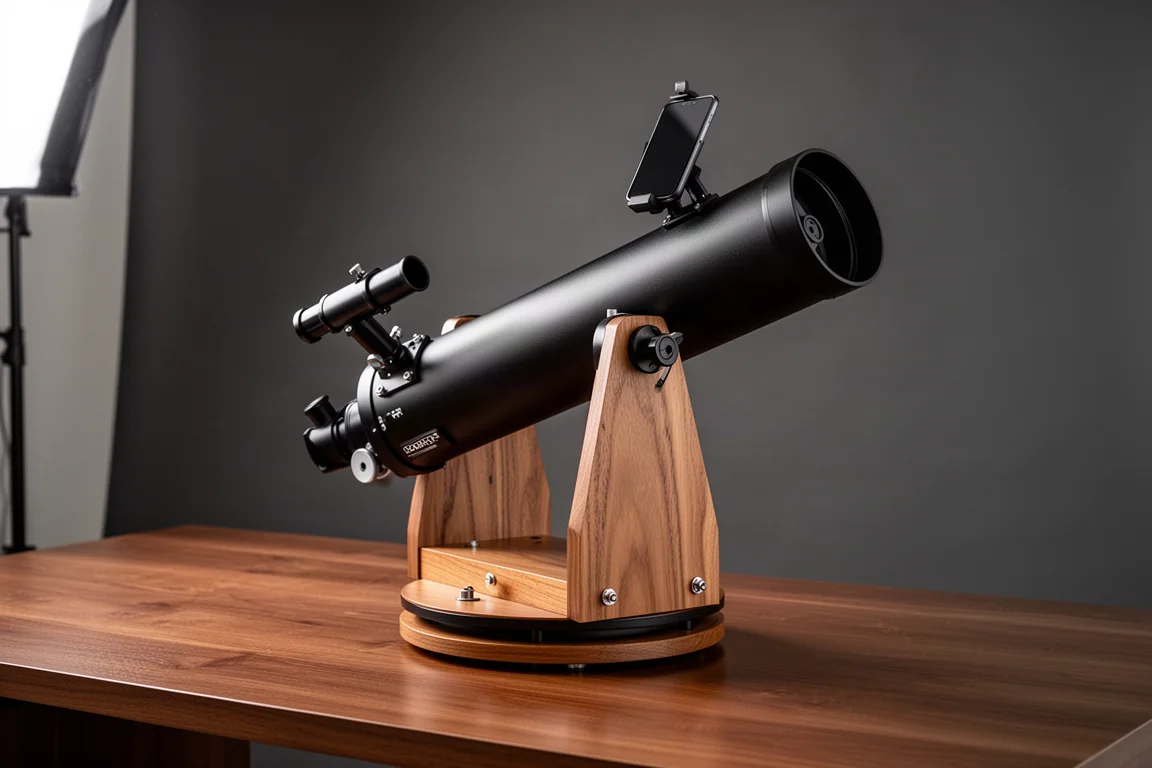
Introduction
An 8-inch Dobsonian is arguably the best first telescope for anyone new to astronomy. It offers enough aperture for genuinely great views, it is easy to use, and it is affordable. The Celestron StarSense Explorer 8-inch Dobsonian takes that proven formula and adds an innovative smartphone app that helps you locate objects in the night sky.
This is a visual telescope with enough power to show the planets up close as well as distant deep-sky objects such as galaxies and nebulae. The StarSense guidance system makes it a strong option for beginners who want a little help finding their targets, and the telescope works perfectly well on its own without the app if you ever want a more traditional experience.
Who This Telescope Is For
The big draw here is aperture. A full eight inches of mirror collects 78 percent more light than a six-inch mirror, which means more deep-sky objects like galaxies and nebulae become available to you, not just the planets and the moon.
The 8-inch version is probably the best fit for most people because it is more manageable than the larger 10-inch model. If you want even more light gathering power, the 10-inch is there, but it is a heavy beast and is reported to have some balancing issues with heavy eyepieces at the front of the scope. On the 8-inch model that is not an issue, especially if you like to stiffen the tension knobs so nothing moves in the wind.
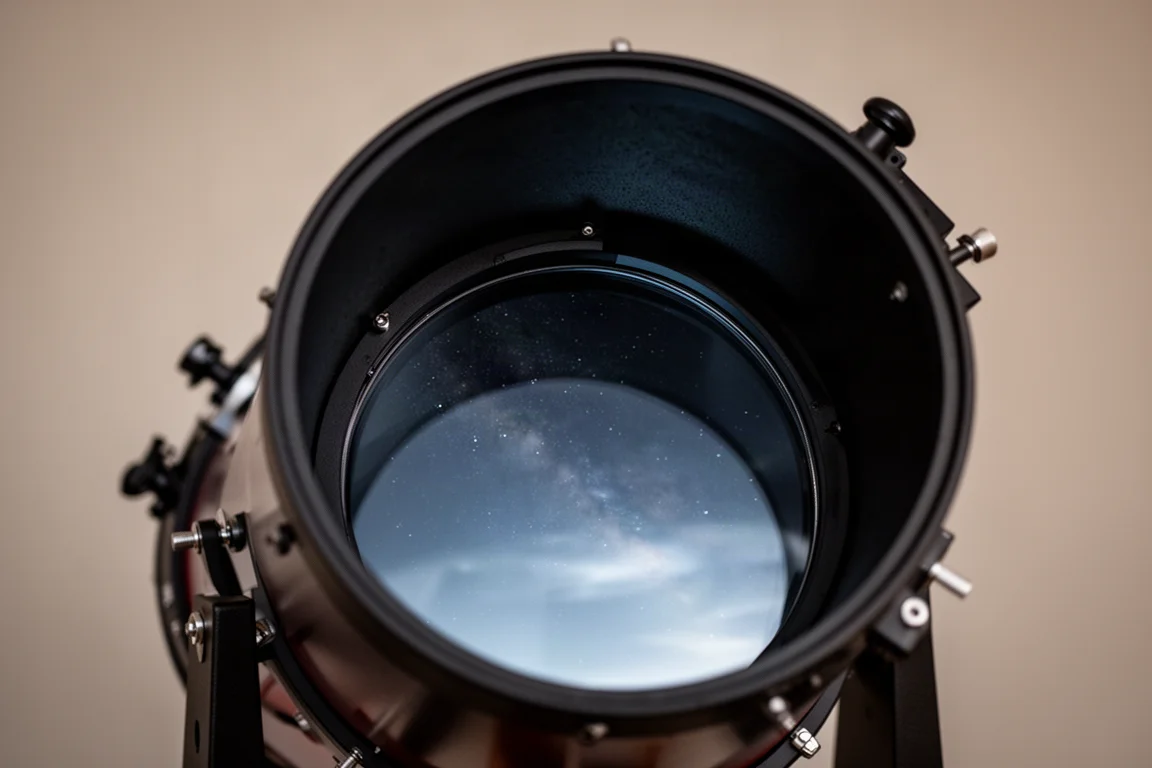
At roughly 50 pounds in total, most people will want to carry it in two parts when transporting it. Big handles on the tube and base make the job easier either way. The optical tube comes fully assembled, but the rocker box base requires self-assembly, which takes about 30 minutes to an hour. All the tools you need are provided, though it is probably the least fun part of the entire experience.
Main Strengths
The telescope itself is an 8-inch Newtonian reflector on a Dobsonian base with a native focal length of 1200mm at f/5.9. That is enough reach to get a good look at Saturn’s rings or Jupiter’s moons using a high powered eyepiece. The package includes a 1.25-inch 25mm Plossl Celestron Omni eyepiece, a perfect mid-range all-purpose eyepiece, and the focuser accepts your existing 1.25-inch or 2-inch eyepieces.
The included red dot finder is simple but effective. It may not be as fun to look through as a quality 8x50 finder scope, but these things do their job, all function with no frills.
How the StarSense Explorer System Works
This is a push-to telescope: everything is done manually and you do all the pointing. What sets it apart is the StarSense plate solving technology, which gives you an advantage over old-school star hoppers.
The system has two main components: the telescope itself, and the StarSense Explorer docking system with its smartphone app. An odd-looking bracket mounts where you would normally see a finderscope, featuring an angled mirror. Your phone sits in the dock looking into that mirror, capturing short exposure pictures of the sky rather than a live view, so there is a short delay before the first image appears.
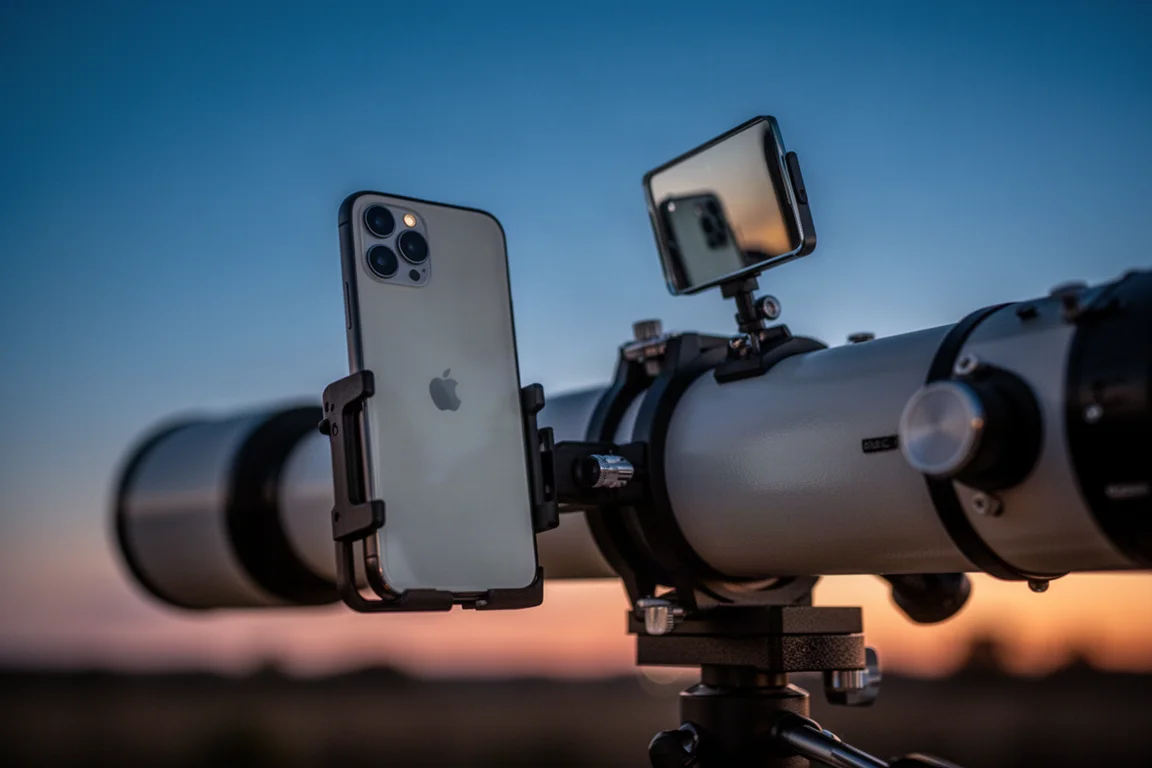
Setup is straightforward if you follow the process in order. Download the Celestron StarSense Explorer app, enter the unique code included with the scope, then point the telescope at a distant object like a telephone pole or a tree and align the crosshairs in the app with the same object in your eyepiece. It feels unusual compared to a traditional finderscope because you only adjust the crosshairs, not the scope itself. Doing this at dusk is the easiest way to go about it.
Once dark, the app plate solves star patterns to determine the telescope’s exact position. The on-screen star map is really slick: arrows tell you which way to move the telescope, and when you reach your target the crosshair turns green. The object you wanted shows up in the eyepiece, first try. Beginners can knock off dozens of objects in a single observing session using a device they already own.
A few practical notes: the app can drain your phone battery with all that plate solving computation, so a portable battery pack is a smart accessory. You can also remove the phone mid-session and carefully replace it in the dock, and it will retain its alignment. Keep the plastic cover on the dock’s mirror when you are done to avoid dust buildup.
Things to Consider Before Buying
Purists who prefer a completely screen-free observing session should think about whether phone-guided observing suits them. The app does include a night mode to preserve night vision, but staring at a screen is a different experience from traditional stargazing.
There is also a quirk worth understanding: the docked phone is not looking through the eyepiece. If you want to take pictures through the eyepiece while the StarSense app is running, you will need a second smartphone adapter and a second phone.
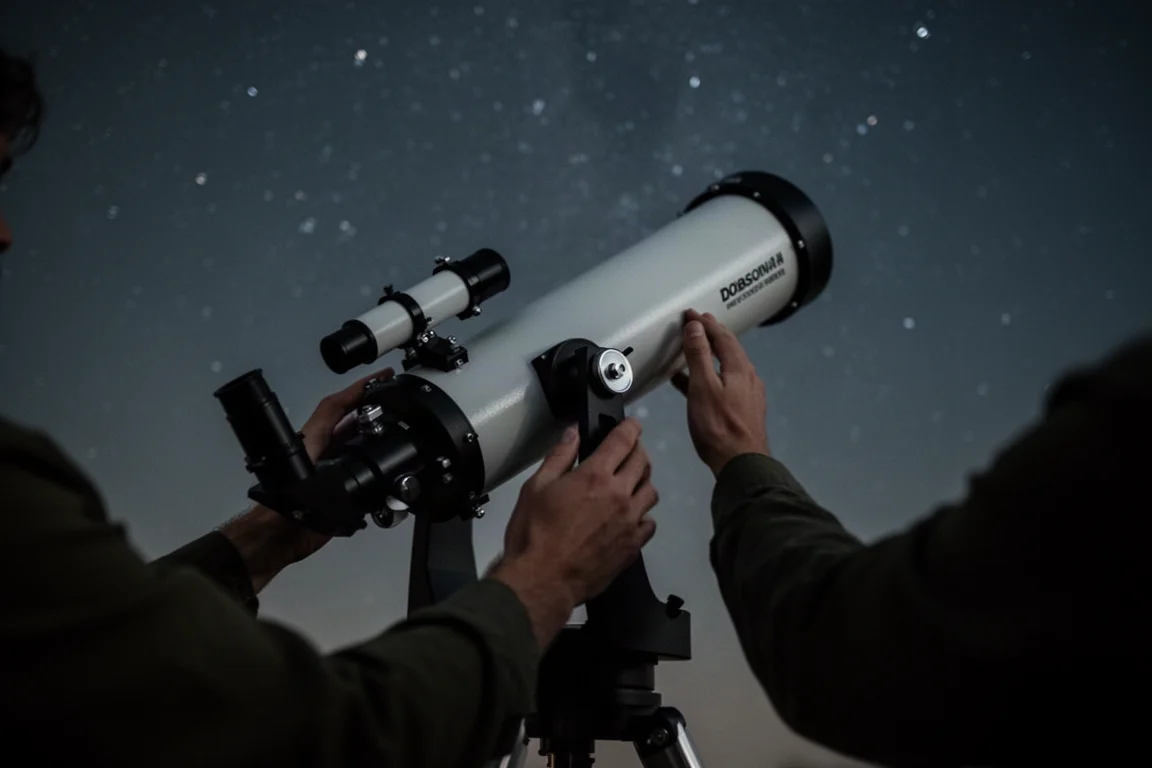
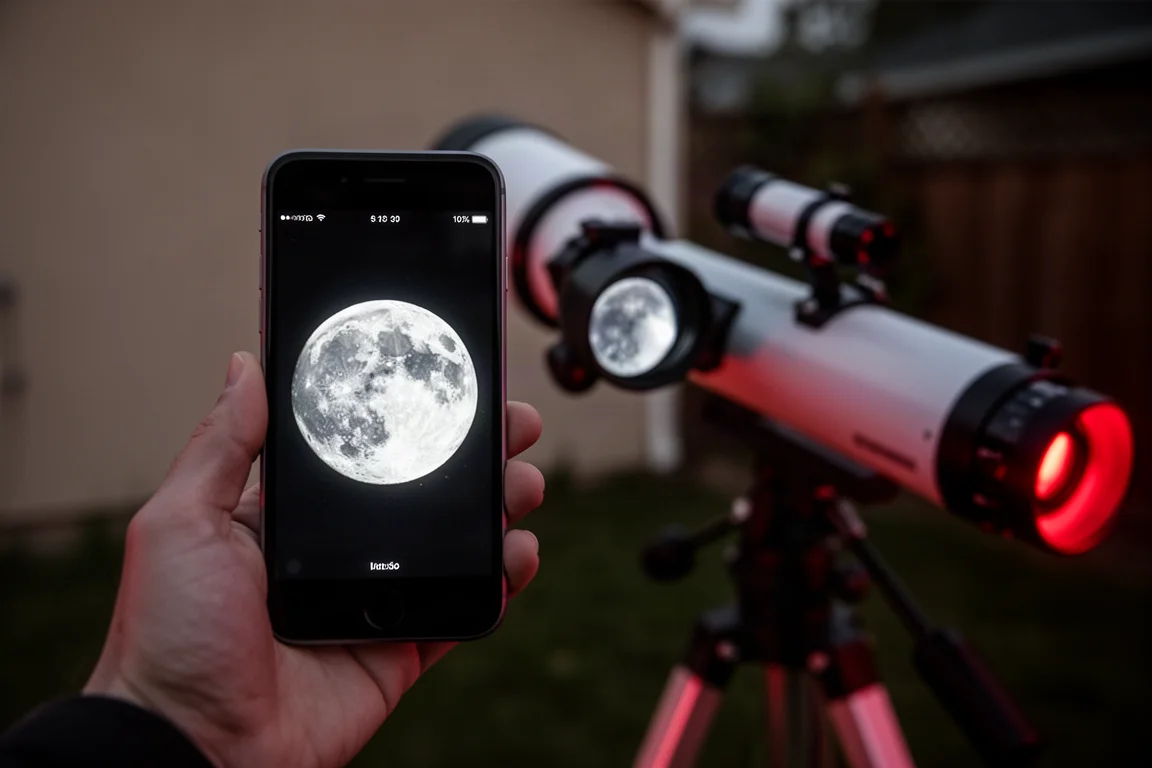
On astrophotography: since this is a fully manual, non-tracking Dobsonian mount, long exposure deep-sky astrophotography is out of the question. However, the big aperture produces a bright image at the eyepiece, which makes pictures of the moon and the brightest planets possible with a smartphone adapter holding your phone securely against the eyepiece. It is tricky since you are pointing at a moving target, but that first shot of the moon or Saturn through a Dobsonian is still astrophotography, just the starting point.
Buying Advice
Manufacturers have tried adding go-to or hybrid functionality to manual Dobsonians before, with mixed results. The difference here is that StarSense uses your own phone as the technology component, saving you the cost of bolting on extra hardware with computing power. It is a proven system that works, and it is a lot of fun.
If you are in the market for a beginner telescope that nearly guarantees a positive first experience, an 8-inch Dobsonian remains one of the best options available. If an additional layer of guidance via your smartphone appeals to you, the StarSense Explorer Dob is an incredible value that gets beginners to that first point of victory sooner.
Conclusion
The Celestron StarSense Explorer 8-inch Dobsonian combines the classic strengths of a large-aperture manual telescope with genuinely useful smartphone guidance. It makes astronomy more approachable for beginners, delivers impressive planetary and deep-sky views, and leaves room to grow, whether that means eyepiece upgrades, simple eyepiece astrophotography, or eventually exploring the wider world of plate solving technology.
Product link
View more details for Celestron StarSense Explorer 8-inch Dobsonian
This product is mentioned in the review. Check the specifications, options, and compatibility before buying.
View more details for Celestron StarSense Explorer 8-inch DobsonianFurther reading
Related Reviews

Telescopes
Sightron SJ75 UF and Sky-Watcher HS125: Two Telescopes Worth Watching
A look at two notable telescopes from a recent camera and optics expo: a sharp new astrograph from Sightron Japan and a compact fast reflector from Sky-Watcher.

Telescopes
SV503 102ED Review: A Budget 102mm Refractor That Surprises
The SV503 102ED is an affordable 102mm doublet refractor that delivers surprisingly decent star shapes and a smooth focuser, despite some chromatic aberration and light falloff.

Telescopes
SVBony MK127 Review: A Compact Maksutov-Cassegrain That Surprises
The SVBony MK127 is a 127mm Maksutov-Cassegrain telescope with a unique 0.65x reducer, making it a versatile option for visual astronomy and even some deep-sky imaging.