Telescopes
Celestron StarSense Explorer 8-inch Dobsonian Review: Big Aperture, Easy Finds
Celestron's 8-inch StarSense Explorer Dobsonian pairs serious light gathering with a push-to smartphone app that makes finding deep sky objects genuinely simple.
Introduction
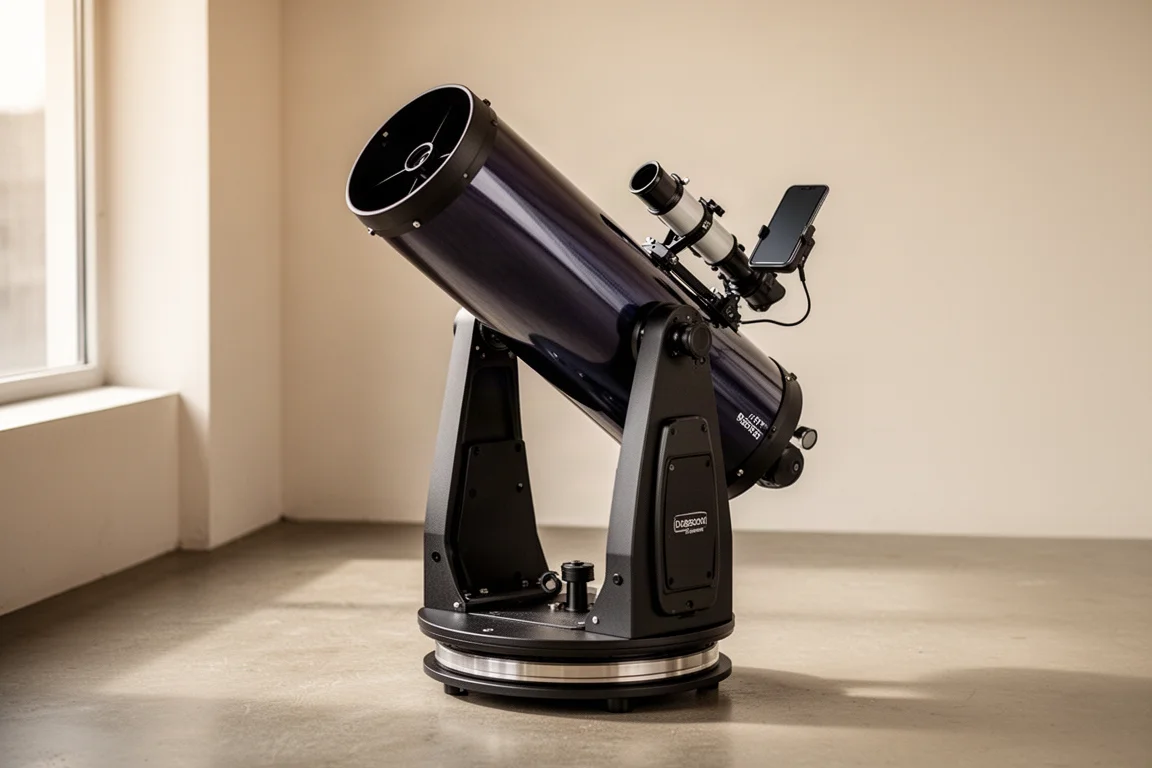
Celestron’s StarSense Explorer series has earned a reputation as one of the easiest ways for beginners to get into astronomy, and the 8-inch Dobsonian is the biggest statement yet in the lineup. It takes the same friendly smartphone-guided system from the smaller StarSense models and pairs it with serious light gathering power.
The obvious questions are the ones every Dobsonian buyer asks: is it portable enough to actually use, is collimation going to be a headache, and can a newcomer really find objects without knowing the night sky? A backyard observing session under Bortle 7 skies helps put those concerns to rest.
Who This Telescope Is For
This scope suits beginners who want more aperture than a small starter refractor can offer but do not want to fight with star charts or computerized hand controls. The push-to system means you select an object in the app and it tells you exactly where to point the scope, so you never need prior knowledge of the sky.
It also suits backyard observers under suburban skies. The 8-inch aperture gathers noticeably more light than smaller StarSense models, which helps on globular clusters, planetary nebulae, and galaxies, though heavy light pollution still sets real limits.
Setup and Assembly
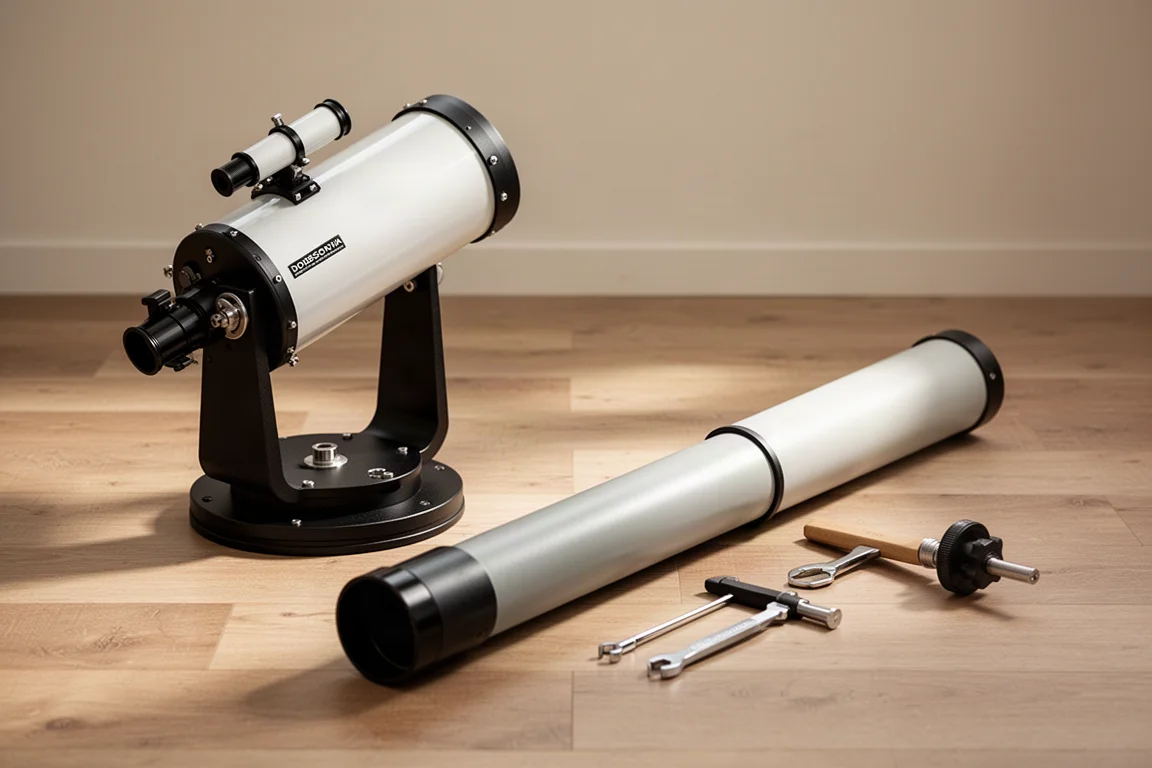
Setting up the base is simple and takes roughly 20 to 30 minutes. Once assembled, the base does not need to be taken apart again, which makes grabbing the scope for a quick evening view genuinely convenient.
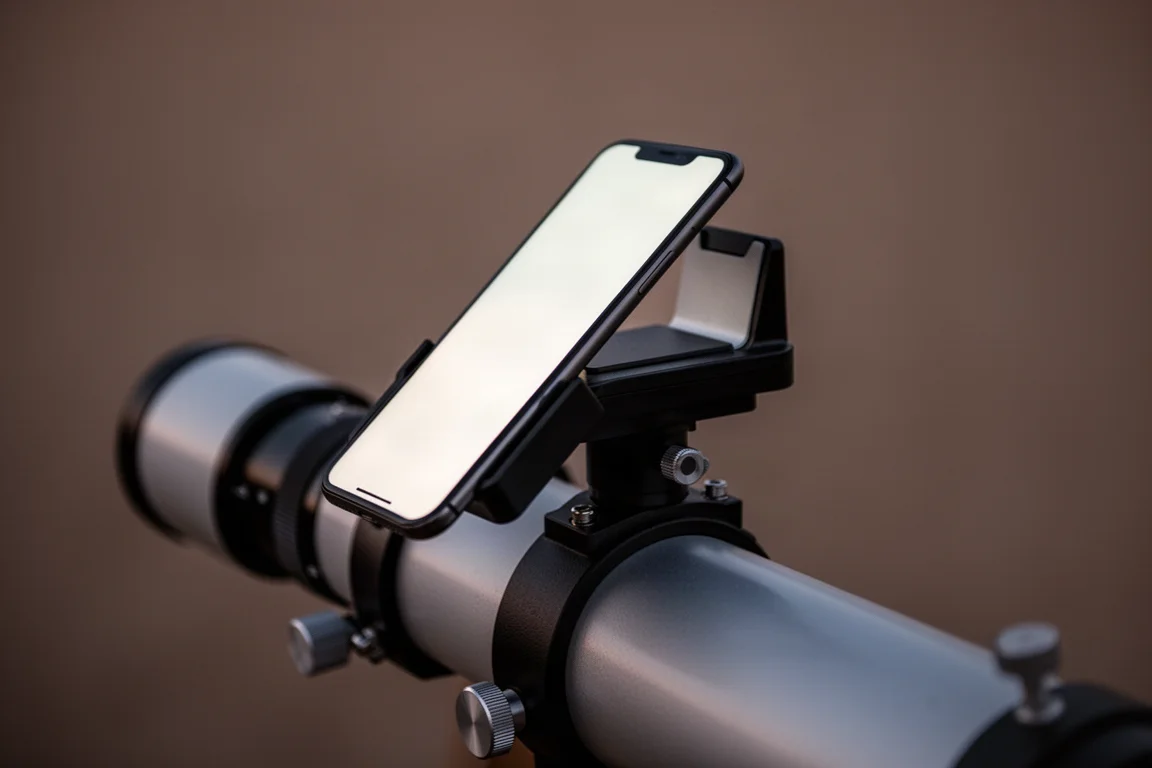
The tube comes fully assembled with a handy built-in handle. You load it onto the base so it sits firmly on the bearings, then use tension knobs on either side to adjust resistance in altitude movement, and a bolt on the base to adjust azimuth tension. The included smartphone dock slides into the adapter on top of the scope near the eyepiece and tightens down with two thumb screws.
Attaching the red dot finderscope is quick too: remove the dust cap from the focuser, insert the included two-inch extension piece, slide in the 25mm eyepiece, then seat the finder in its shoe. It is worth calibrating the red dot during the day against something like a parked car or a telephone pole, especially if you want to search the sky manually without the app.
Collimation: Less Painful Than You Think
Collimation, the alignment of the primary and secondary mirrors, matters most for crisp planetary views. For deep sky objects it is less critical, though round stars are always nicer in the eyepiece.
The StarSense Dobsonian ships with a collimation cap, but a laser collimator such as the Apertura laser collimator makes the process much simpler, and the optional Apertura collimation knobs available at the product page make the scope extremely easy to collimate. If collimation has kept you away from Dobsonians in the past, this combination removes most of that friction.
The StarSense Explorer App and Push-To Finding
After downloading the StarSense app and entering the code in the manual packet, the quick start guide walks you through attaching your smartphone to the dock. The process is remarkably simple and is a major reason this system is so beginner-friendly.
The core feature is the app’s push-to object finding. You point the scope at a clear patch of night sky, the app determines your exact pointing position through plate solving, and then it guides you to nearly any object you select in its catalog. Clicking an object’s name brings up detailed information, and the included observing tips help you get the most from each view. A custom search lets you queue up targets directly.
This push-to approach is what separates the StarSense Explorer series from anything else on the market. It turns object hunting from a chore into the fun part.
Field Test: 15 Deep Sky Objects in 15 Minutes
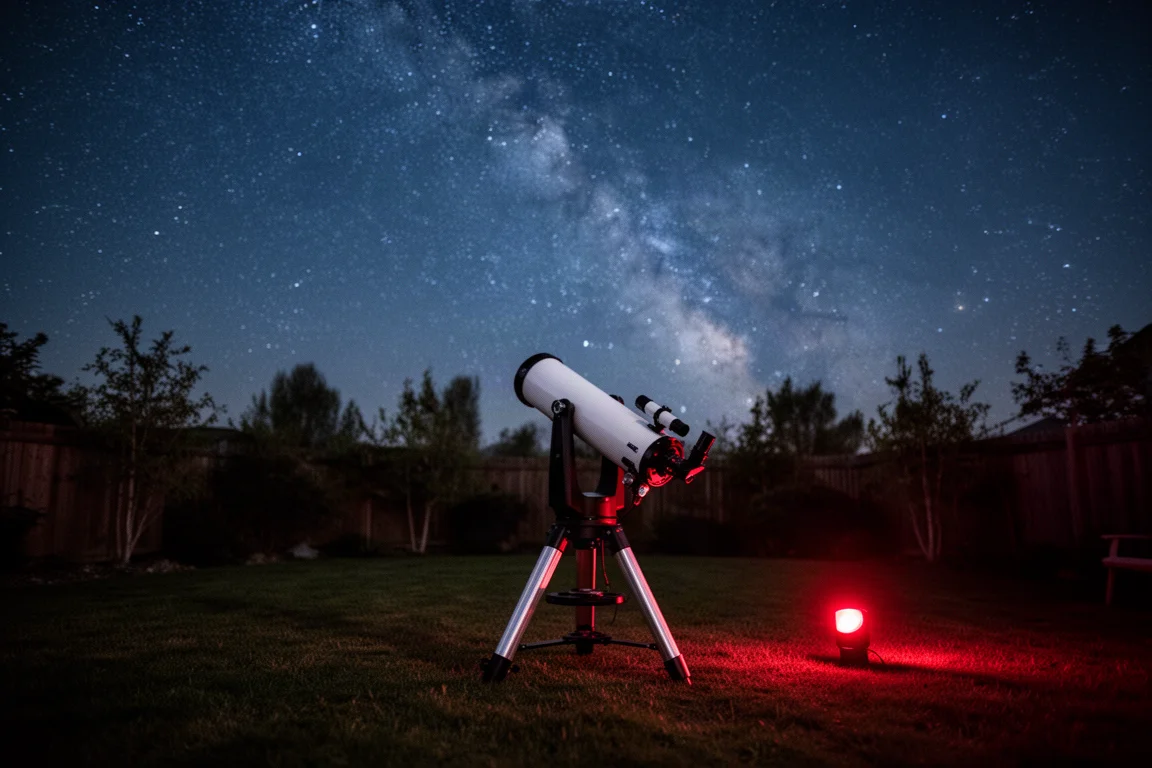
Under Bortle 7 suburban skies, hemmed in by trees and houses, the scope was given a list of deep sky targets and a 15-minute timer. The result: 15 deep sky objects viewed in 15 minutes, with darker skies and fewer obstructions that number would climb higher.
Highlights included Messier 13, the Great Hercules Cluster, clearly visible in the 25mm wide-field eyepiece with some of its brighter stars resolvable. The Blinking Planetary Nebula (NGC 6826) appeared as a tiny turquoise disk standing out from surrounding stars, and the session finished with a beautiful open cluster when the Whirlpool Galaxy turned out to be behind the trees.
How Faint Can the 8-inch Go?
Starting from Messier 13 at magnitude 5.78 and working down the magnitude scale, the Ring Nebula at magnitude 8.8 was easy to spot thanks to its high surface brightness, showing exactly the small ring shape its name suggests in a 25mm eyepiece.
After nearly an hour of searching for anything dimmer, the faintest object visible under these Bortle 7 skies was Messier 56, a magnitude 8.9 globular cluster that was genuinely hard to find. Aperture clearly helps, but under heavy light pollution you get what you get.
Buying Advice
If ease of use is your top priority, the StarSense Explorer system is hard to beat. The app makes the scope ultra usable and user friendly, the built-in handle and optional Apertura Dobsonian carrying case make it surprisingly portable for its size, and the collimation knobs keep mirror alignment manageable.
Add a laser collimator and the collimation knobs at purchase if you can. Consider the 10-inch version if you want even more light gathering, but for most beginners the 8-inch is the sweet spot of capability and livability. Under very dark skies this aperture rewards you even more than it did in the suburban test.
Conclusion
The Celestron StarSense Explorer 8-inch Dobsonian proves that big aperture and beginner simplicity can coexist. Finding objects is nearly effortless, setup is a one-time task, and the 8-inch mirror delivers views that keep you outside longer than you planned. It is an easy recommendation for anyone ready to move up from a small starter telescope.
Product link
View more details for Celestron StarSense Explorer 8-inch Dobsonian
This product is mentioned in the review. Check the specifications, options, and compatibility before buying.
View more details for Celestron StarSense Explorer 8-inch DobsonianFurther reading
Related Reviews

Telescopes
Sightron SJ75 UF and Sky-Watcher HS125: Two Telescopes Worth Watching
A look at two notable telescopes from a recent camera and optics expo: a sharp new astrograph from Sightron Japan and a compact fast reflector from Sky-Watcher.

Telescopes
SV503 102ED Review: A Budget 102mm Refractor That Surprises
The SV503 102ED is an affordable 102mm doublet refractor that delivers surprisingly decent star shapes and a smooth focuser, despite some chromatic aberration and light falloff.

Telescopes
SVBony MK127 Review: A Compact Maksutov-Cassegrain That Surprises
The SVBony MK127 is a 127mm Maksutov-Cassegrain telescope with a unique 0.65x reducer, making it a versatile option for visual astronomy and even some deep-sky imaging.