Telescopes
Celestron StarSense Explorer 130DX Review: A Beginner Telescope That Actually Delivers
A straightforward setup, a genuinely useful smartphone app, and a 30-minute session that found 19 deep sky objects make the 130DX a strong pick for new stargazers.
Introduction
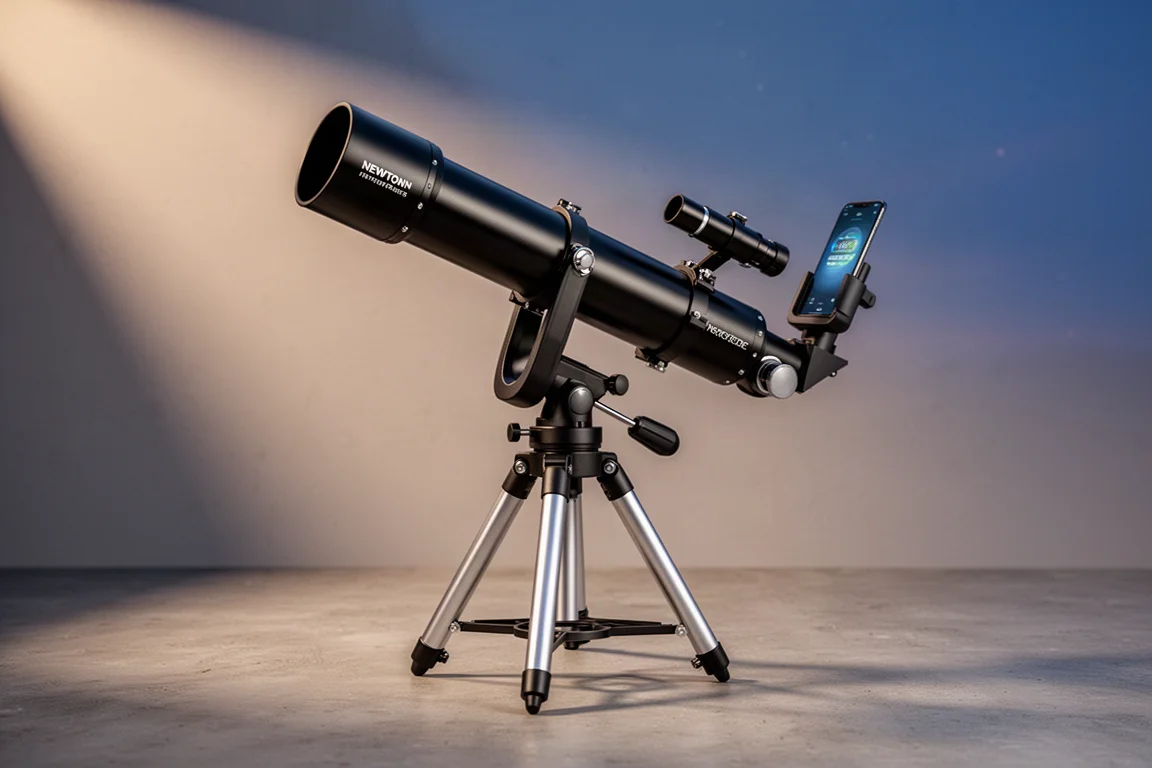
The Celestron StarSense Explorer series of refractors and Newtonians has built a reputation as some of the best telescopes for beginners on the market, and the StarSense Explorer 130DX is a strong example of why. It combines a classic Newtonian optical tube with a smartphone-guided pointing system that takes most of the guesswork out of finding objects in the night sky.
This review walks through the setup experience, the companion app, and a real field test: a 30-minute session aimed at viewing as many deep sky objects as possible.
Who This Product Is For
The 130DX is aimed squarely at beginner amateur astronomers who want to spend their first nights observing real targets rather than fighting with star charts. If you have never aligned a finder scope before, or you want a system that tells you exactly when your target is centered in the eyepiece, this design makes a lot of sense.
It also suits observers who value quick transitions between objects. During the field test, switching from a star cluster to a planet to a double star took about ten seconds, with the object landing right in the center of the eyepiece each time.
Setup: Quick and Genuinely Beginner-Friendly
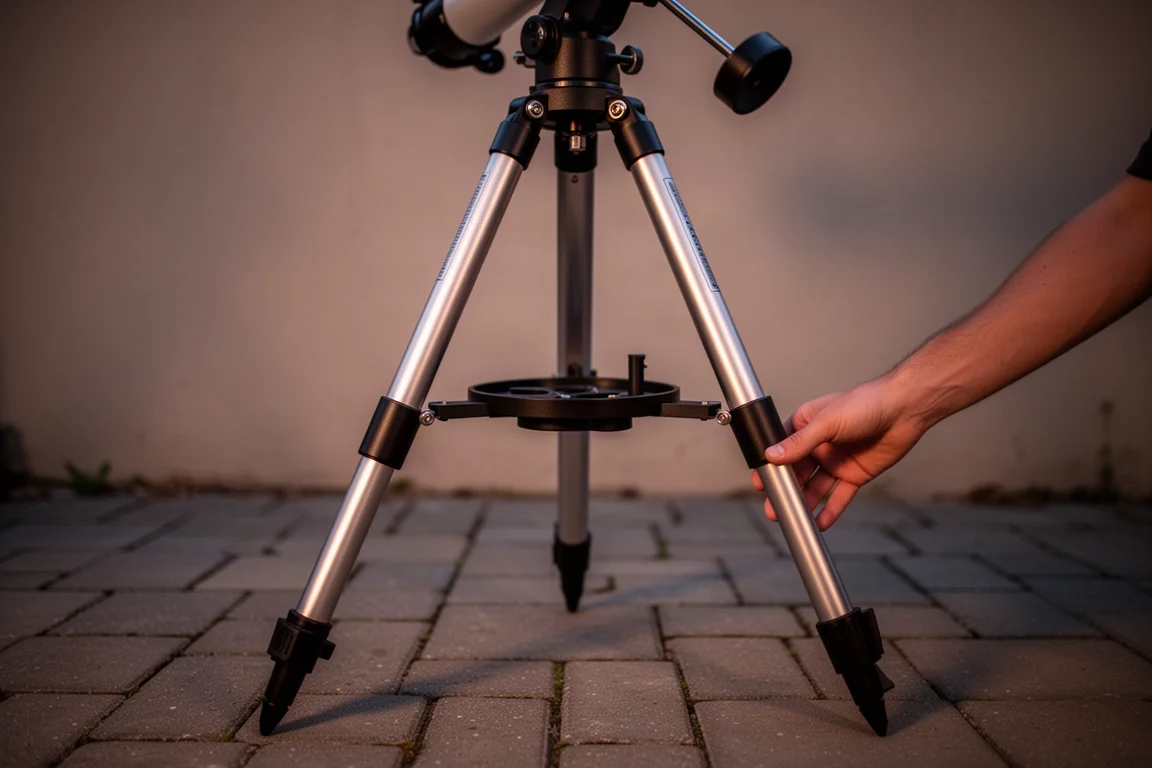
The setup follows a clear sequence. The tripod legs extend fully and press down onto the center leg brace, and the accessory tray attaches with three included thumb screws that thread through the tray into holes in the leg brace.
Next, the slow-motion control knobs mount to the altitude and azimuth axes. A hidden hex key on the side of the alt-azimuth mount head loosens the screw at the end of each knob so the insert can slide on and seat fully, then the screw is tightened back down. The dovetail clamp on the mount accepts the optical tube, which slides in and locks down at its center point.
The phone dock twists onto the mount head by matching an arrow with a black tab and rotating counterclockwise until the spring release pops through the bayonet mount. Removal is just as simple: press the spring release, twist clockwise, and pull the dock away.
Finally, the included 25 mm eyepiece goes into the focuser and the red dot finder slides into its bracket next to it. Celestron recommends calibrating the finder during the day by aiming at a distant object like a telephone pole or a parked car, focusing through the eyepiece, then adjusting the finder’s side and bottom knobs until its dot sits over the same object.
The StarSense Explorer App
The smartphone app is a major part of what makes this system appealing. Attaching and calibrating a phone to the dock is simple, and the app includes a quick start guide that stays available at any time during an observing session.
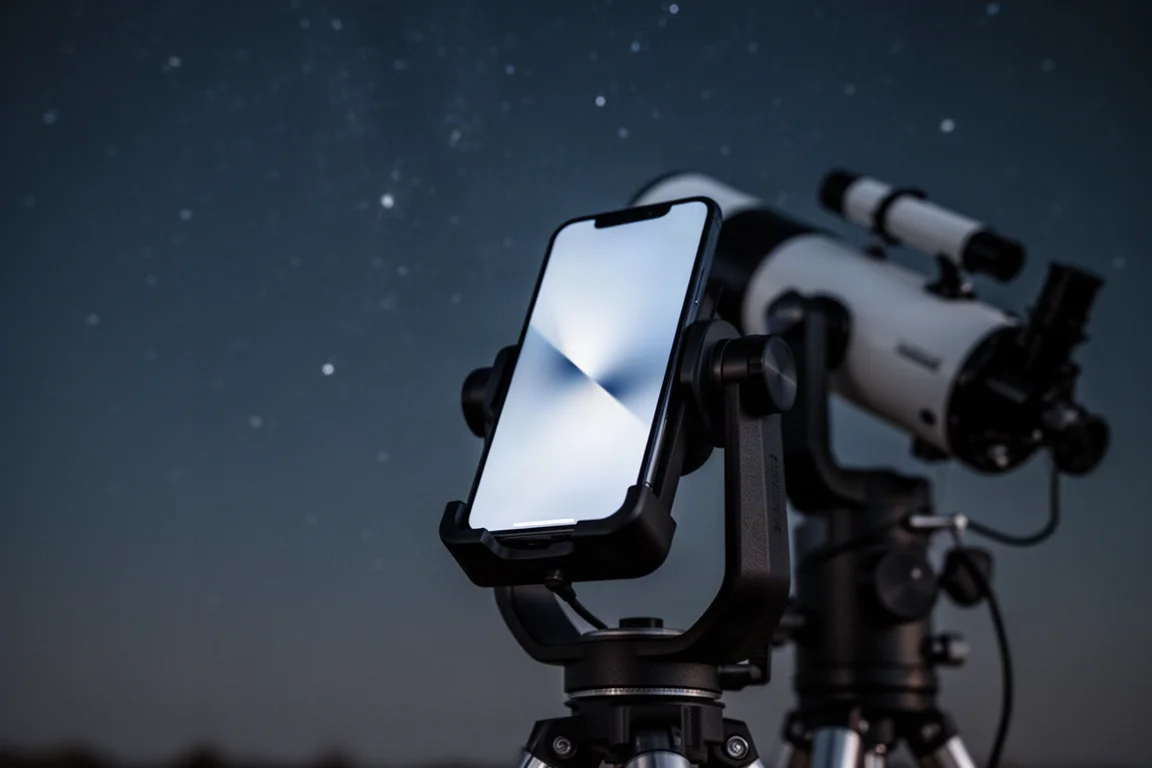
Several features stand out. Night vision mode helps retain your dark adaptation when observing under dark skies. The app also needs location enabled at the start of a session so it knows exactly where you are on Earth. From the home screen, the app provides information about the object you are viewing, with optional Celestron audio content and observing tips that are genuinely helpful for getting better views.
Object navigation is flexible too: a star button browses popular objects in the night sky, and a custom search covers nearly any target, including the Messier catalog, the Caldwell catalog, bright stars, and planets.
Field Test: 19 Deep Sky Objects in 30 Minutes
On a 23-degree night, the phone attached, the app started, and viewing began in roughly 30 seconds, on a first-ever run through the routine. A 30-minute timer then set the challenge: how many deep sky objects could the 130DX actually deliver?
The answer was 19 deep sky objects in the eyepiece, not counting targets blocked by trees or houses or sitting too low on the horizon. Highlights included the Double Cluster, with at least a hundred stars visible across two adjacent open clusters even under light-polluted skies, and the Pleiades, where around 60 stars were visible and the seven sisters shone a bright, vibrant blue.
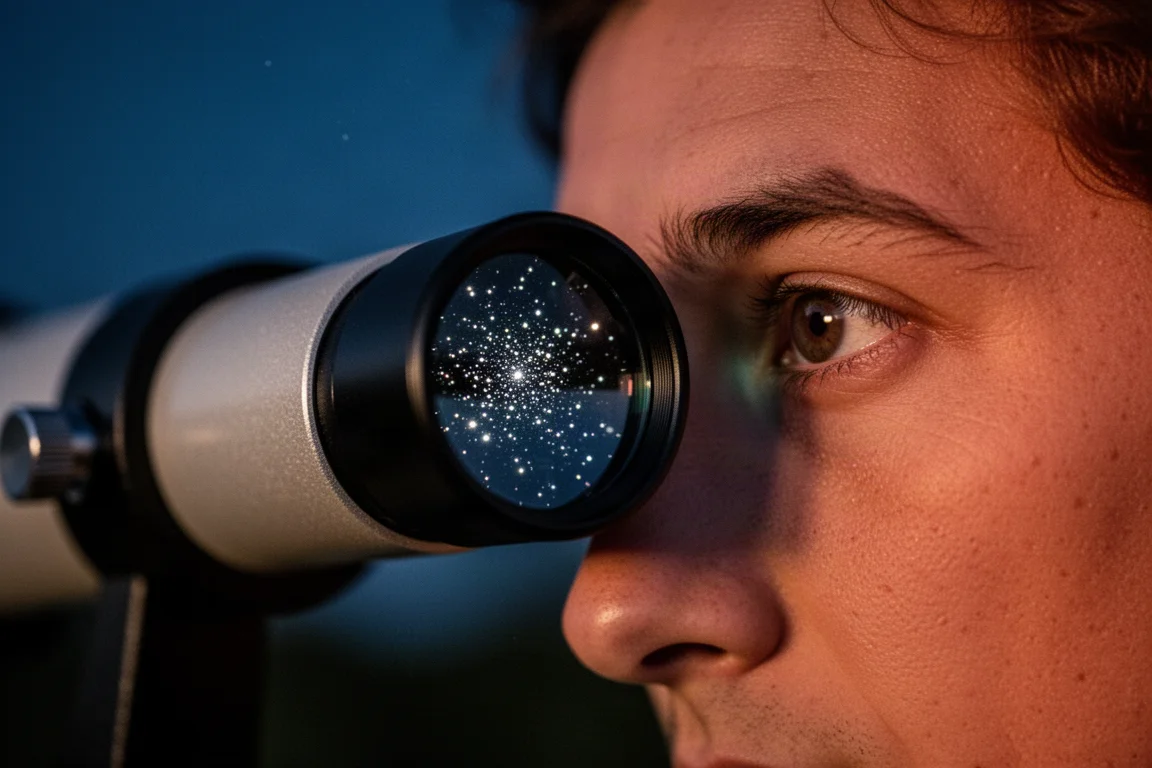
Even under a bright light pointed directly at the scope, Messier 27, the Dumbbell Nebula, remained visible as a faint smudge centered in the eyepiece, with darker skies likely revealing some structure. A spontaneous pointing at Uranus landed it in the center of the eyepiece, appearing as a faint, slightly turquoise point that looks subtly different from a star.
Things to Consider Before Buying
The 130DX earns its beginner-friendly reputation, but a few points are worth weighing. The setup, while straightforward, involves several steps including finder calibration, and doing that calibration during the day is the smarter approach. The app depends on your smartphone, so you will want a compatible phone with enough charge for your session.
The 25 mm eyepiece handles a wide range of targets well, and the scope’s light gathering showed its worth even from a light-polluted location. Under darker skies, faint objects like nebulae should reveal more detail.
Buying Advice
For a first telescope, it is hard to imagine a better fit than the StarSense Explorer 130DX. The initial setup is easy, but the app is the real highlight: moving between deep sky objects, star clusters, planets, and double stars is smooth and fast, and objects consistently land centered in the eyepiece.
There is also room to grow. Additional accessories attach to the StarSense scope, such as an Apertura smartphone adapter, which uses three thumb screws to position a phone’s camera directly over the eyepiece. With a little effort, that combination captures short videos of the moon, as demonstrated with the 102 mm refractor in the same series.
Conclusion
The StarSense Explorer 130DX makes first nights under the stars feel rewarding instead of frustrating. Setup is manageable, the app removes the hardest part of finding objects, and a real 30-minute session delivered 19 deep sky objects from a light-polluted site. For a beginner amateur astronomer, it is a compelling place to start. Clear skies.
Product link
View more details for Celestron StarSense Explorer 130DX
This product is mentioned in the review. Check the specifications, options, and compatibility before buying.
View more details for Celestron StarSense Explorer 130DXFurther reading
Related Reviews

Telescopes
Sightron SJ75 UF and Sky-Watcher HS125: Two Telescopes Worth Watching
A look at two notable telescopes from a recent camera and optics expo: a sharp new astrograph from Sightron Japan and a compact fast reflector from Sky-Watcher.

Telescopes
SV503 102ED Review: A Budget 102mm Refractor That Surprises
The SV503 102ED is an affordable 102mm doublet refractor that delivers surprisingly decent star shapes and a smooth focuser, despite some chromatic aberration and light falloff.

Telescopes
SVBony MK127 Review: A Compact Maksutov-Cassegrain That Surprises
The SVBony MK127 is a 127mm Maksutov-Cassegrain telescope with a unique 0.65x reducer, making it a versatile option for visual astronomy and even some deep-sky imaging.