Telescopes
Celestron PowerSeeker 60 Review: A Budget Telescope With Real Limits
We put Celestron's entry-level 60mm refractor through a full beginner telescope test, from lunar viewing to a hunt for Uranus, and found clear trade-offs at this price.
Introduction
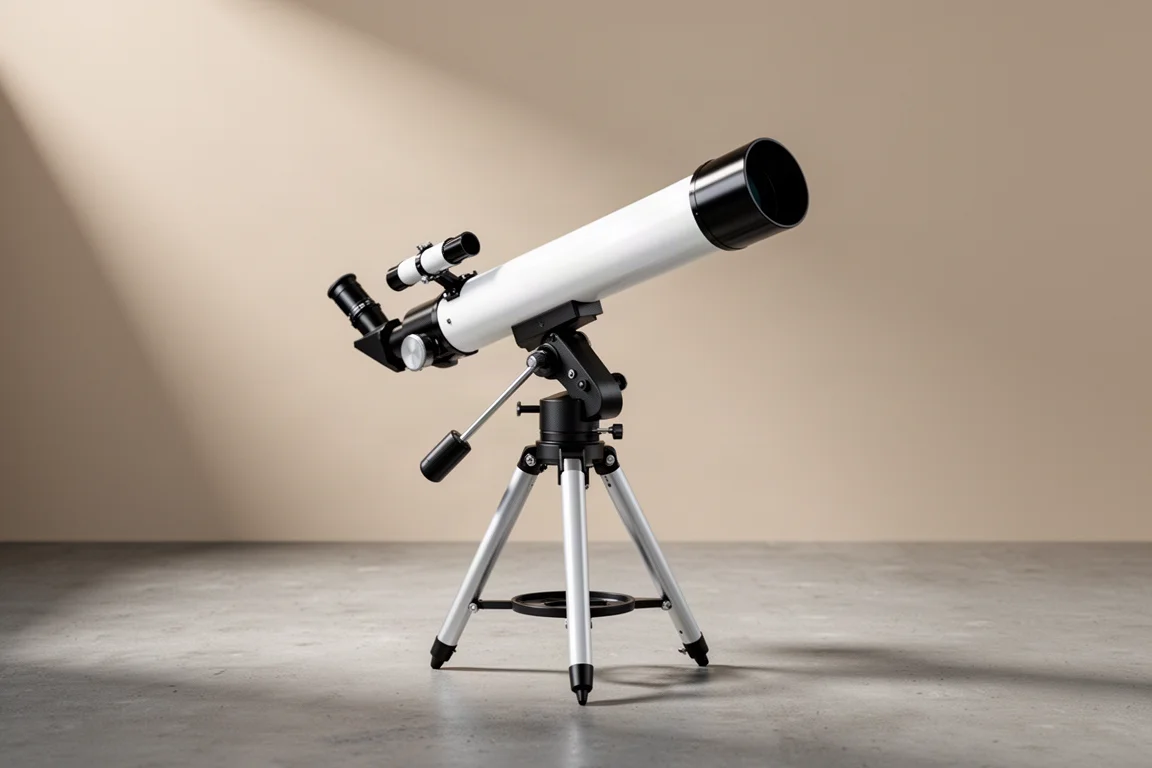
The Celestron PowerSeeker 60 is one of the most affordable refractor telescopes you can find new, and it regularly shows up secondhand for even less. We picked one up for around $34 used, with the new price hovering near $79. The obvious question: can a 60mm starter scope actually deliver on the night sky, or is it mostly a lesson in what to avoid? We spent several evenings with it, starting with the moon and ending with a genuine hunt for Uranus.
Who This Product Is For
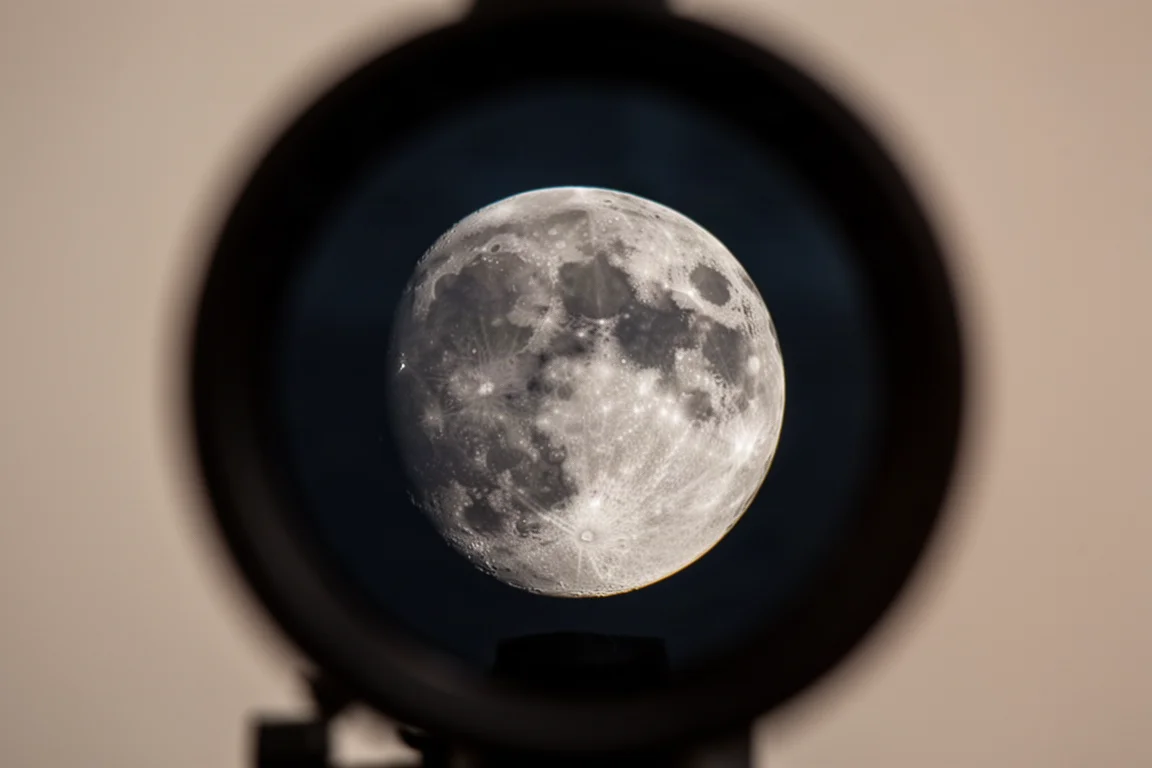
At this price, the PowerSeeker 60 is aimed squarely at absolute beginners and families testing the waters of stargazing. Jupiter, the largest planet in the solar system and one of the easiest targets besides the moon, is within reach of a 60mm scope. The moon looks genuinely beautiful through it. If your ambitions stop there, this telescope can be a satisfying first step. If you hope to track down faint outer planets like Uranus or Neptune, expect those to appear as mere point sources, like tiny stars, and only with the help of a current star map or astronomy software to point you in exactly the right place.
What Comes in the Box
Unboxing reveals two instruction manuals and a modest accessory set: a 20mm eyepiece providing 36x magnification, a 4mm eyepiece claiming 180x, and a 3x Barlow lens. Here is where a little knowledge matters. A telescope’s maximum useful magnification is roughly twice its aperture in millimeters, so this 60mm scope tops out around 120x. The 4mm eyepiece oversells that figure badly.
The Barlow combined with the 20mm eyepiece yields 108x, which is the more honest high-power option, though in practice it comes with caveats we cover below. Treat the included eyepieces as starting points rather than keepers.
Setup and the Finder Scope Problem
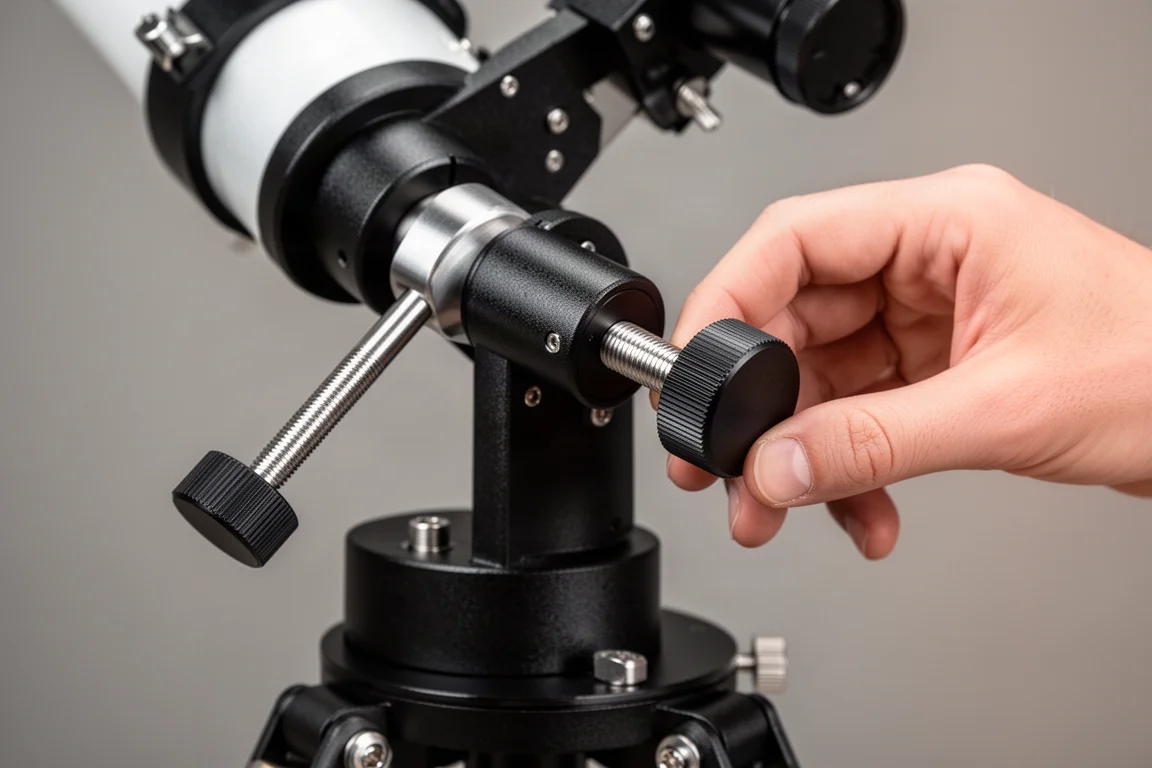
Assembly lines up the optical tube with the mount holes and inserts a slow-motion control rod. That rod lets you nudge the telescope up and down, but there is nothing smooth for left-to-right movement; you simply push the tube by hand. It works, but it is not elegant.
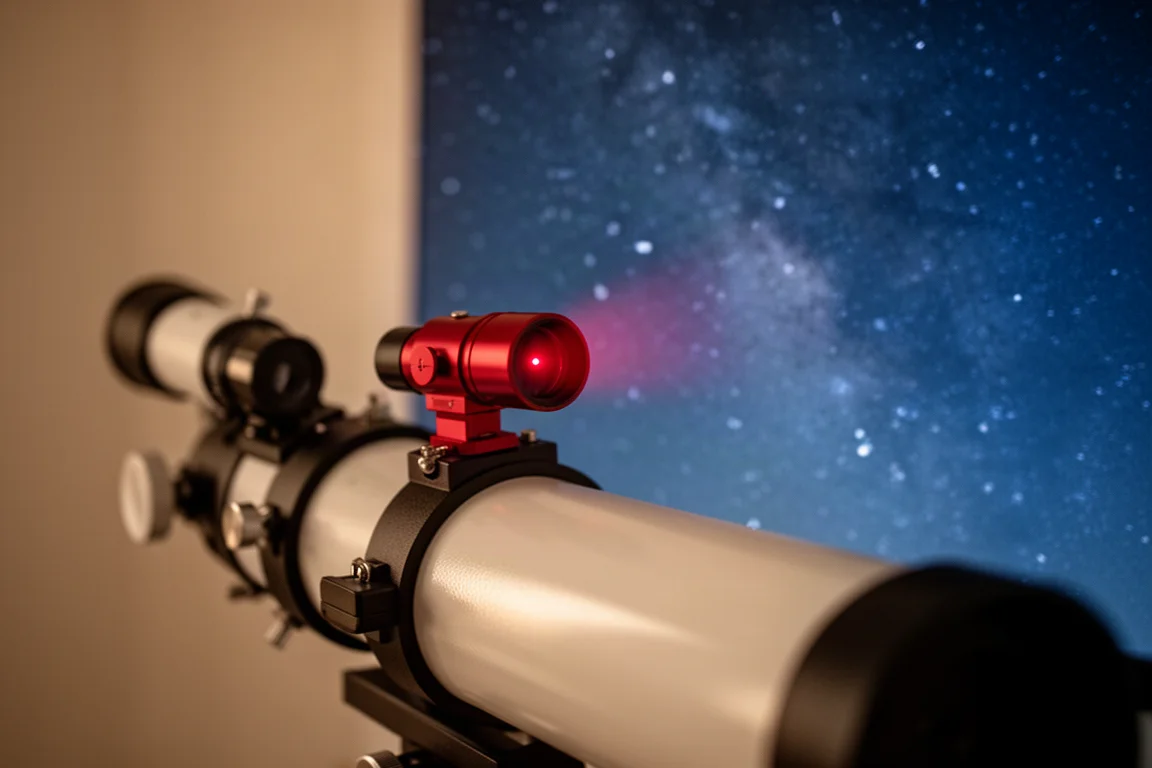
The bigger issue is the included finder scope. It is small enough that it is realistically only good for locating the moon, not for finding objects in deep space. Our recommendation: budget about $10 for a red dot finder, roughly one third the cost of the entire telescope, and align it against a distant target like a chimney. The red dot’s brightness knob matters too; at the lowest setting it can be nearly invisible, so turn it up until you can actually see it.
Viewing Planets: The Uranus Test
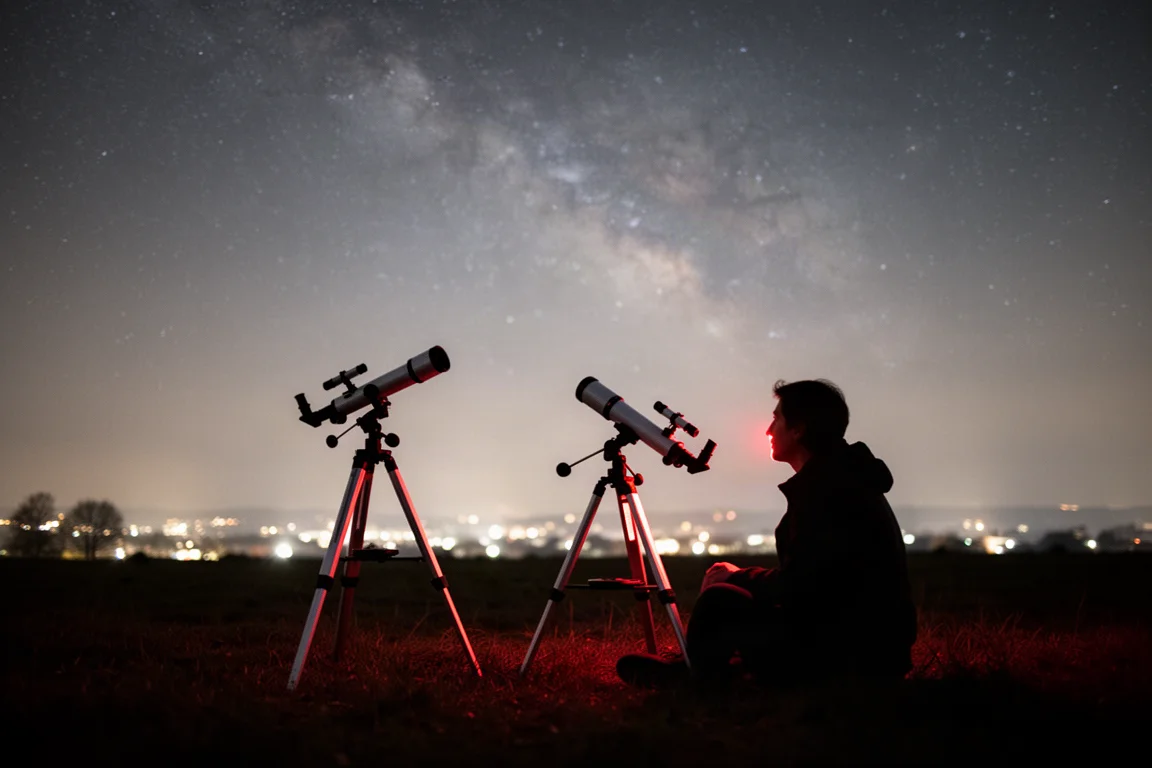
Out under darker skies, we built star maps in Stellarium and used bright stars as stepping stones to find Uranus. The plan: use a constellation map to point the telescope approximately right, then a second map showing what Uranus should look like in the eyepiece field of view, in this case three small stars in a row pointing at the planet, sitting beside another nearly equally bright star.
The result? Uranus was visible, but it looked like just another star. That is expected behavior for a 60mm aperture on a distant ice giant. You do not need fully dark-adapted eyes for planets, and you can technically see Uranus from the city, but a darker site makes the reference stars far easier to pick out.
A quick comparison in a larger telescope told the real story: there, Uranus resolves as an actual disc. The PowerSeeker 60 will show you bright planets and the moon well enough, but planetary detail beyond that is out of reach.
Beginner Telescope Checklist: How It Scores
Our standard beginner-telescope tests are where this scope stumbles:
- Does it move effortlessly? No. Pushing the tube around is genuinely annoying. Fail.
- Does it stay where you point it? Also no. Fail.
- Can it point high in the sky? Technically, but it took kneeling on the ground to manage. Yellow.
- Does it have four inches of aperture? Not even close; it has just over half that.
- Does it include a bullseye finder? No. Fail.
On the eyepieces themselves: the moon through the 20mm is lovely and crisp. The 4mm eyepiece is functional on the moon, though the view loses sharpness, and we would not use it on anything else. The 3x Barlow refused to reach focus with either eyepiece, so it went straight into a drawer.
Buying Advice
If someone hands you this telescope or you find it very cheap secondhand, it can still introduce you to the moon and the brightest planets, and swapping in a red dot finder makes it usable. But as a new purchase, the money is better saved toward a scope with smoother motion, better stability, and more aperture. If your budget is genuinely capped at the level of this telescope, be realistic: enjoy the moon, learn the constellations, and treat the outer planets as a future upgrade’s reward.
Conclusion
The Celestron PowerSeeker 60 is an honest entry-level refractor that does a few things well, chiefly lunar and bright-planet viewing, while failing nearly every practical usability test we set for a beginner telescope. Its included high-power eyepiece and Barlow oversell what a 60mm aperture can deliver, and the mount’s sluggish handling gets old fast. As a gift-scoped curiosity or an ultra-budget moon watcher, it has charm; as a serious first telescope, we would look elsewhere.
Product link
View more details for Celestron PowerSeeker 60
This product is mentioned in the review. Check the specifications, options, and compatibility before buying.
View more details for Celestron PowerSeeker 60Further reading
Related Reviews

Telescopes
Sightron SJ75 UF and Sky-Watcher HS125: Two Telescopes Worth Watching
A look at two notable telescopes from a recent camera and optics expo: a sharp new astrograph from Sightron Japan and a compact fast reflector from Sky-Watcher.

Telescopes
SV503 102ED Review: A Budget 102mm Refractor That Surprises
The SV503 102ED is an affordable 102mm doublet refractor that delivers surprisingly decent star shapes and a smooth focuser, despite some chromatic aberration and light falloff.

Telescopes
SVBony MK127 Review: A Compact Maksutov-Cassegrain That Surprises
The SVBony MK127 is a 127mm Maksutov-Cassegrain telescope with a unique 0.65x reducer, making it a versatile option for visual astronomy and even some deep-sky imaging.