Telescopes
Celestron Origin Intelligent Home Observatory Review: Smart Astrophotography Made Simple
A 6-inch f/2.2 RASA telescope with a Sony Starvis sensor and a feature-rich app that makes deep sky imaging feel effortless.
Introduction
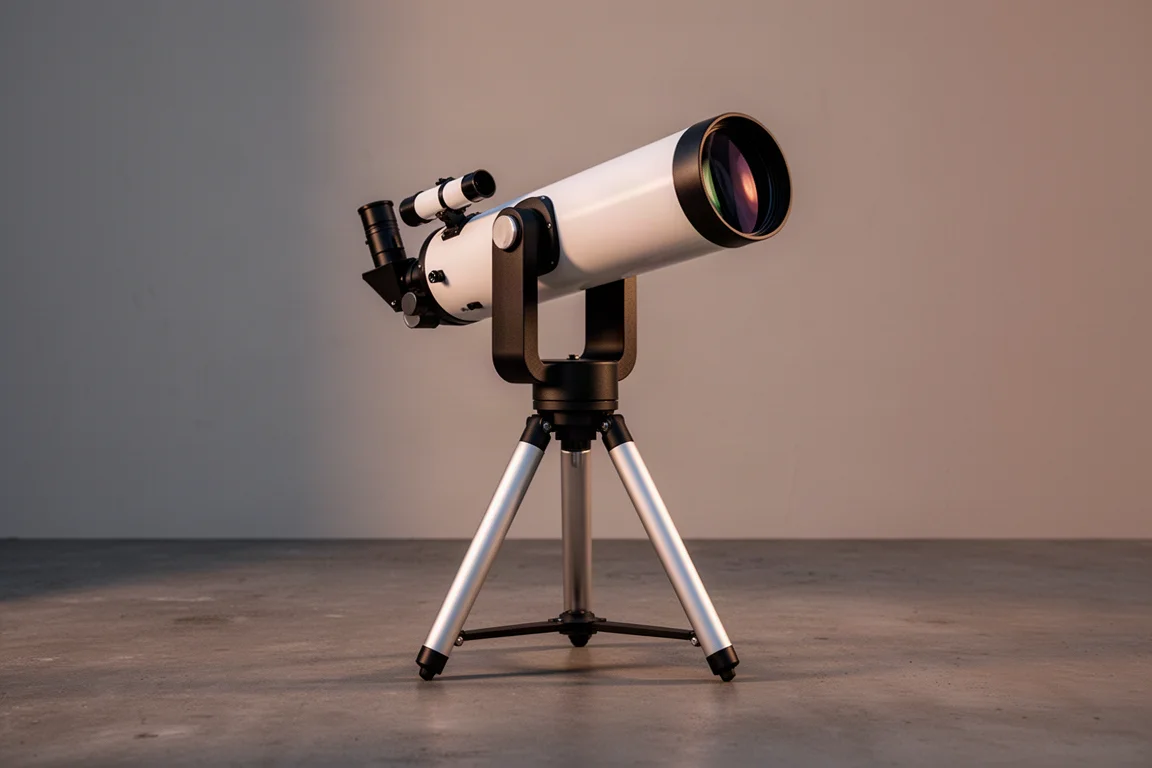
Culmination is a word that defines the highest point achieved after a very long time, and it fits the Celestron Origin well. This intelligent home observatory is the result of years of experience developing world-class telescopes, software, and astronomy equipment for professionals and amateurs alike. With custom Rowe Ackermann Schmidt Astrograph optics, a perfectly paired Sony Starvis sensor, and a polished interface, it is unlike anything we have had our hands on.
The Optics: A 6-Inch f/2.2 RASA Built for Deep Sky Imaging
The Rowe Ackermann Schmidt Astrograph, or RASA for short, is a custom optical design that offers large optics at an incredible speed. Integrated into the 6-inch f/2.2 RASA are a 1.25-inch to 2-inch filter drawer with a pre-installed UV IR cut filter, a Sony Starvis back-illuminated sensor capable of capturing faint deep sky objects at an impressive rate, and a built-in dew prevention system. Together, this combination offers an excellent window into our galaxy and those beyond.
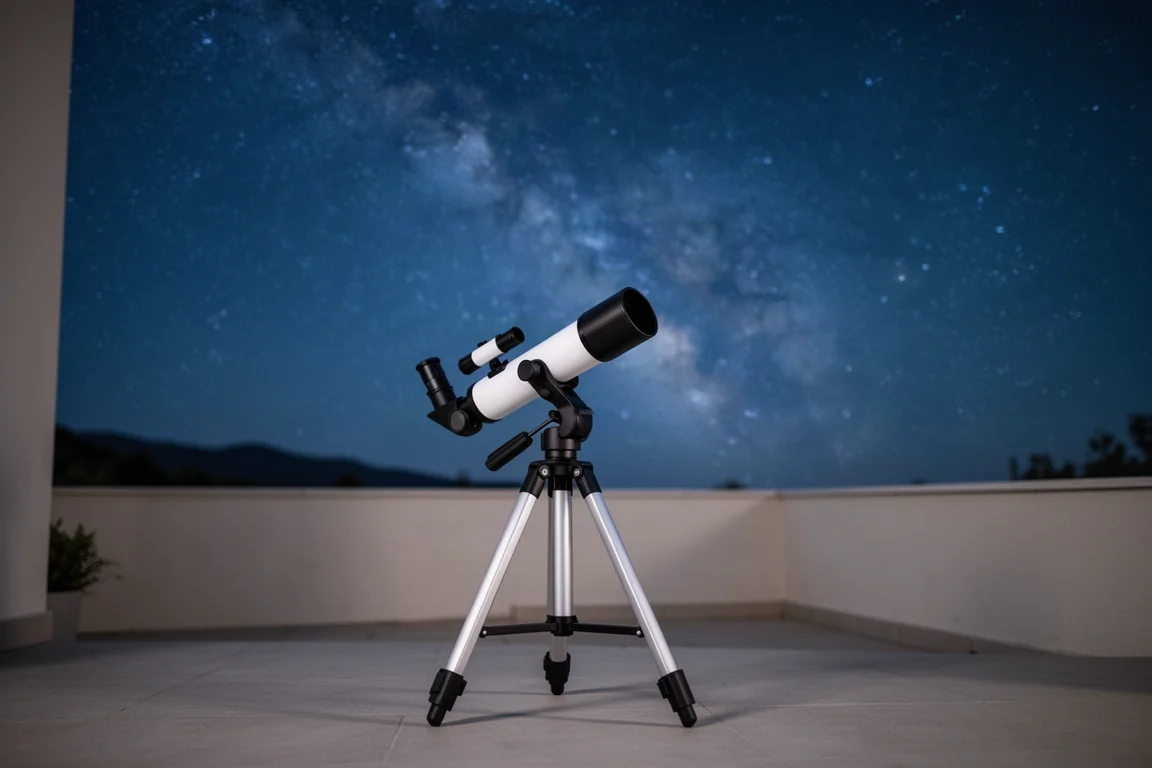
An optical and imaging system of this nature needs a foundation that is up to the task, and the Origin does not disappoint. The design is based on Celestron’s tried and true Evolution Mount, an ergonomic single-arm system that easily handles the optical tube assembly with incredible precision. An integrated long-lasting lithium battery adds a level of confidence unlike any other system we have used to date.
In practice, precision felt less like a feature and more like an expectation that Celestron’s engineers refused to overlook. Every single object we moved the telescope to landed smack dab in the middle, every single time. For well-versed amateur astronomers, that is a very welcome trait. For newcomers, you will not even realize precision was ever in question, and that is a good thing.
The App: Planetarium, Compass Mode, and Tonight’s Best
The brains of the Origin lie in a user-friendly, feature-rich app that offers an intuitive interface while still catering to the seasoned astronomer. Setting up the telescope itself is just as straightforward. You place the tripod on level ground, attach the mount head with the three screws underneath, slide the RASA into the single fork arm, and tighten it with the tension knob. The optical tube needs clearance so it does not hit the mount head, which you achieve by balancing it front to back with the altitude clutch loosened, leaving roughly an inch above the tripod head. Plug the auxiliary cable into port one on both the mount and the optical tube, power on, and wait about a minute for the LED on the back of the RASA to start spinning. Connect your smartphone over Wi-Fi, and the initialization process, including plate solving and autofocus, takes around two minutes.
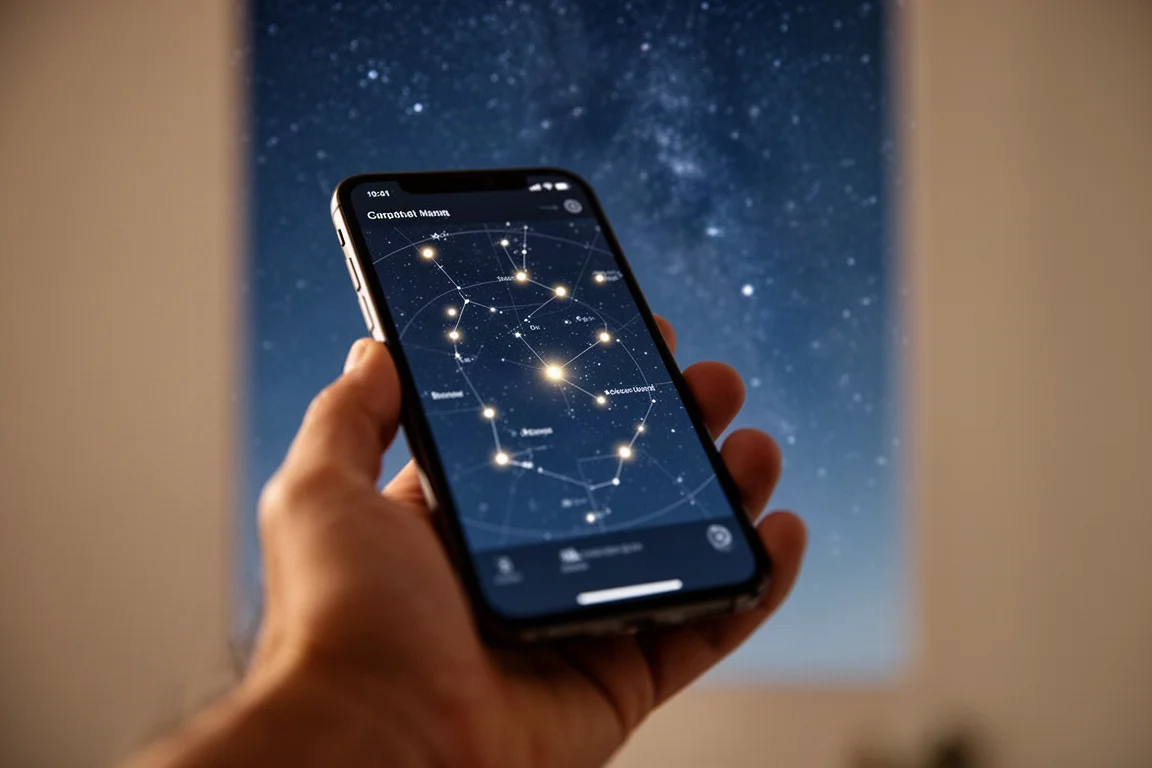
From there, the app opens up a planetarium and compass mode, a scheduling feature, a photo gallery of your captured images, manual scope controls, and advanced imaging controls that let you download RAW files for more creative control over your astrophotography journey.
Two features stood out during our time with the Origin. The first is the planetarium’s compass mode, which virtually simulates the skies from your exact location. Simply point your device upward toward the sky and select from the abundance of objects available to you. The second is the Tonight’s Best catalog on the main menu, which gathers the deep sky objects Celestron recommends from your given location. It is a thoughtful addition that makes the system even more intuitive and immersive.
Real-Time Imaging and AI Processing
In imaging mode you have full control of ISO and exposure settings, but the app automatically defaults to the best ISO and exposure time based on the object you have picked. For your first experience with the Origin, we recommend auto exposure.
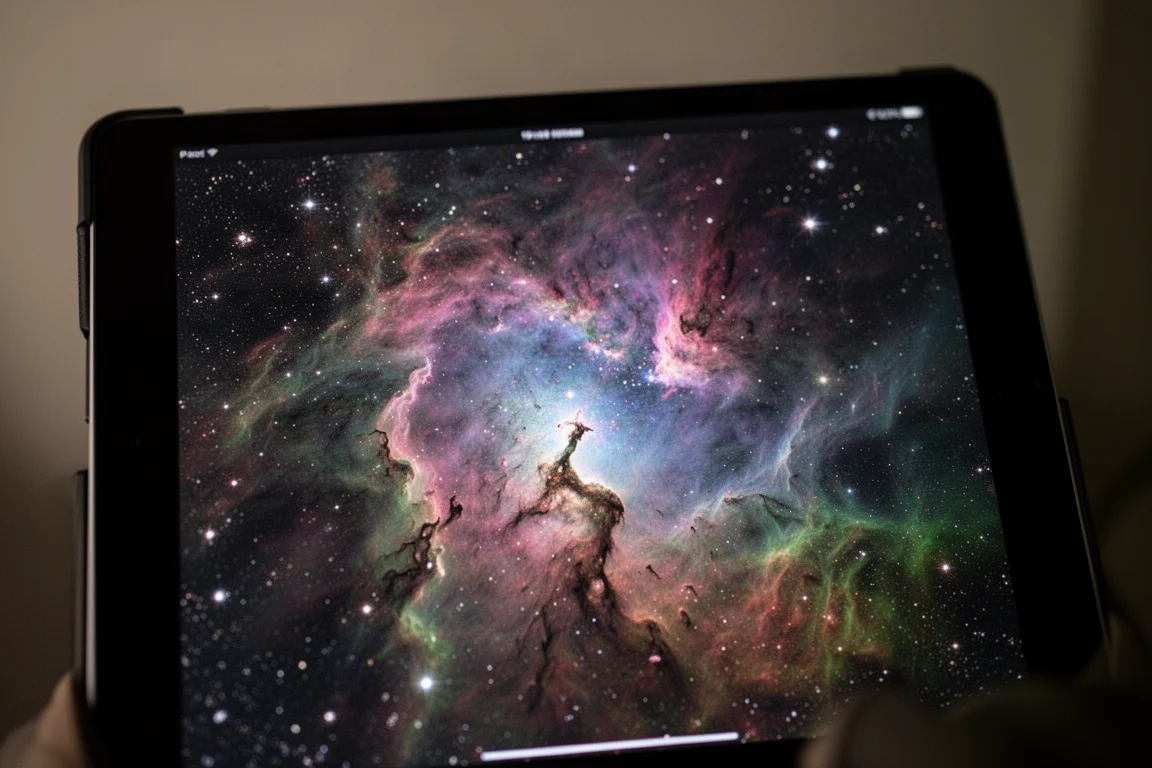
From there you can watch as your target increases in brightness and color while the app intuitively stacks and processes your image in real time. The internal AI automatically applies noise reduction and gradient removal, both of which can be adjusted in advanced settings.
The astrophotographer in us was eager to see what the 6-inch f/2.2 optics were capable of. Capturing Messier 27, the Dumbbell Nebula, for only 7 minutes under light-polluted skies, and spending about 5 minutes post-processing the RAW files in PixInsight, produced results that did not disappoint. Imaging Messier 3, a beautiful globular cluster, was just as rewarding.
Sharing the Night Sky with Friends and Family
Beyond the specs and software, the Origin shines as a shared experience. It brings together friends and family and delivers an experience that simply cannot be matched with traditional telescopes, and with remarkable ease. During a full outreach event, the Origin worked flawlessly from start to finish. There was nothing to worry about; it just worked, letting us quickly and easily share a passion for astronomy with everyone who stopped by.
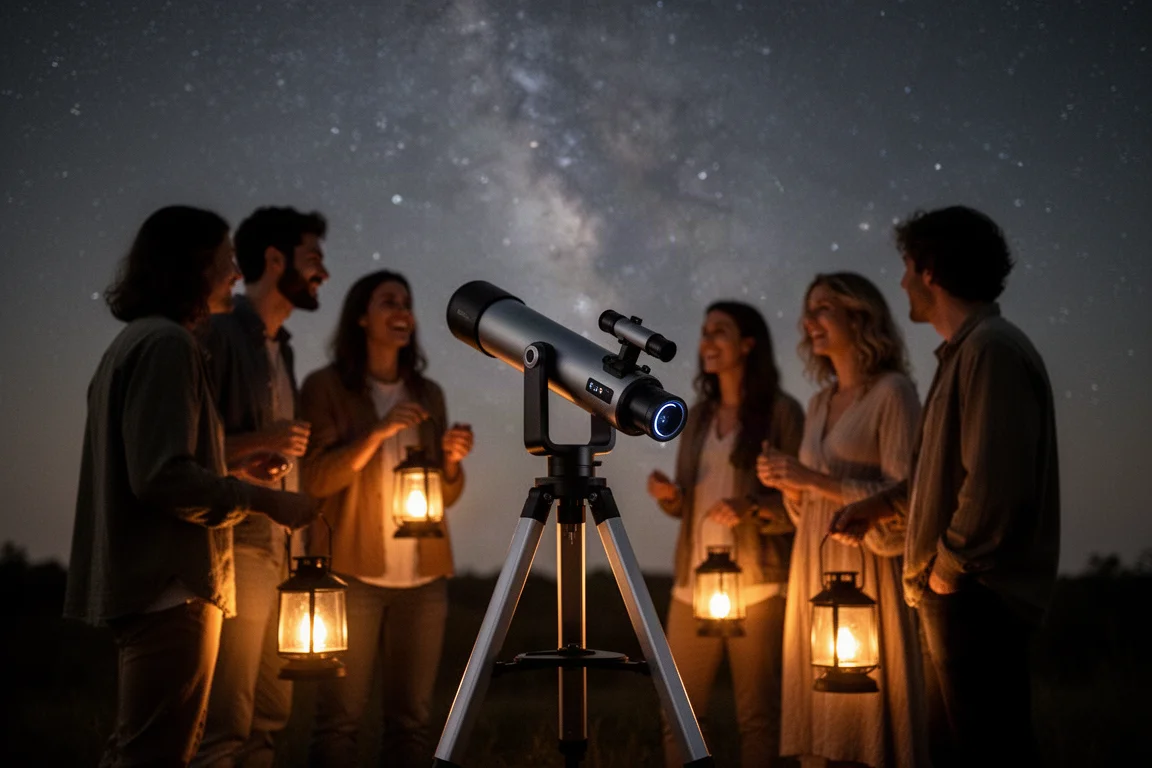
If you have ever attended an astronomy outreach event, there is a good chance you have looked through a Celestron telescope. Celestron is in the business of making memories, and with the Origin Intelligent Home Observatory, we expect that tradition to continue.
Buying Advice
The Celestron Origin suits two audiences at once. Beginners get a system that sets up in minutes, initializes automatically, and chooses sensible exposure settings for them, so the night sky becomes approachable rather than intimidating. Experienced astrophotographers get fast f/2.2 optics, a capable Sony Starvis sensor, RAW file downloads, and advanced imaging controls that leave room for serious post-processing work.
Before buying, consider where you will use it. The tripod needs level ground, and the setup process, while simple, benefits from a few minutes of care when balancing the optical tube. If you want a telescope that handles precision pointing, stacking, and processing on its own while still giving you manual control when you want it, the Origin is a very compelling choice.
Conclusion
The Celestron Origin Intelligent Home Observatory combines fast custom optics, a precise Evolution Mount with an integrated lithium battery, and a genuinely thoughtful app into a package that works for newcomers and seasoned imagers alike. It captured impressive deep sky results in minutes under light-polluted skies, ran flawlessly through a full outreach event, and made sharing the night sky effortless. For anyone who wants astrophotography without the usual friction, the Origin is easy to recommend.
Product link
View more details for Celestron Origin Intelligent Home Observatory
This product is mentioned in the review. Check the specifications, options, and compatibility before buying.
View more details for Celestron Origin Intelligent Home ObservatoryFurther reading
Related Reviews

Telescopes
Sightron SJ75 UF and Sky-Watcher HS125: Two Telescopes Worth Watching
A look at two notable telescopes from a recent camera and optics expo: a sharp new astrograph from Sightron Japan and a compact fast reflector from Sky-Watcher.

Telescopes
SV503 102ED Review: A Budget 102mm Refractor That Surprises
The SV503 102ED is an affordable 102mm doublet refractor that delivers surprisingly decent star shapes and a smooth focuser, despite some chromatic aberration and light falloff.

Telescopes
SVBony MK127 Review: A Compact Maksutov-Cassegrain That Surprises
The SVBony MK127 is a 127mm Maksutov-Cassegrain telescope with a unique 0.65x reducer, making it a versatile option for visual astronomy and even some deep-sky imaging.