Telescopes
Celestron Omni AZ 102 Review: A Rare Budget Refractor Worth Hunting For
A 102mm refractor on a smooth altazimuth mount with slow motion controls, sold at a budget price. Here is what it does well and what to check before buying.
Introduction
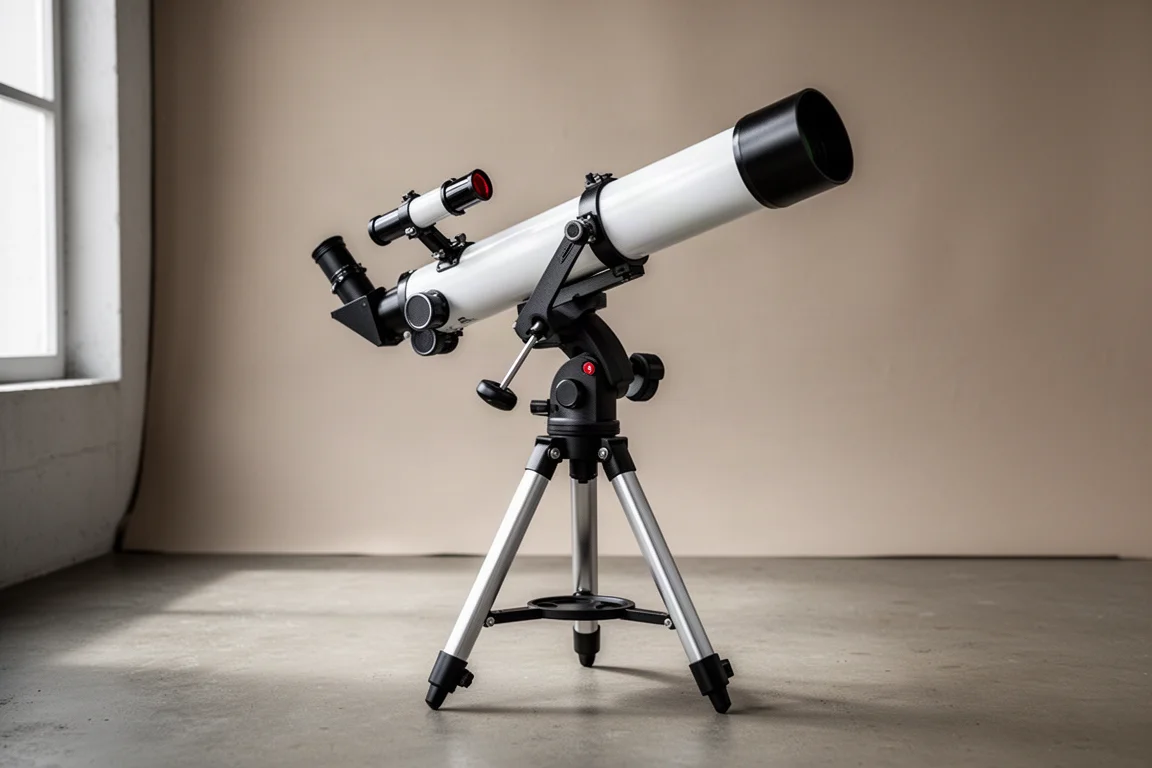
Finding a genuinely good telescope under about 200 US dollars has been one of the hardest questions in amateur astronomy for years. Most sub-300 telescopes are what Sky and Telescope calls hobby killers: frustrating instruments that drive people out of the hobby entirely. The Celestron Omni AZ 102 is the exception, a 102mm refractor that appeared at Costco for 249 Canadian dollars, roughly 194 US dollars, and it is easily one of the strongest options in that price range. The catch is availability. The telescope appears to be discontinued from Celestron’s regular lineup, which makes finding it at a warehouse retailer feel like a genuine second chance rather than a routine purchase.
Who This Telescope Is For
This is a beginner telescope for someone who wants to actually see things in the night sky without fighting their equipment. If you are shopping with a budget of around 200 US dollars, the common advice has often been to buy binoculars or save for something bigger. But most people in the market for a telescope want a telescope, and the Omni AZ 102 is one of the few at this price that earns the name. It also suits anyone who wants a solid, mostly-metal optical tube with a Vixen-style dovetail, which means it can be moved onto other telescope mounts later if your interest grows.
What Comes in the Box
The accessories cover the basics well. The 20mm eyepiece gives 33x magnification and is the one you will use most, especially for deep sky objects like star clusters and bright nebulae. The 10mm eyepiece provides 66x, useful for zooming in on the Moon and planets.
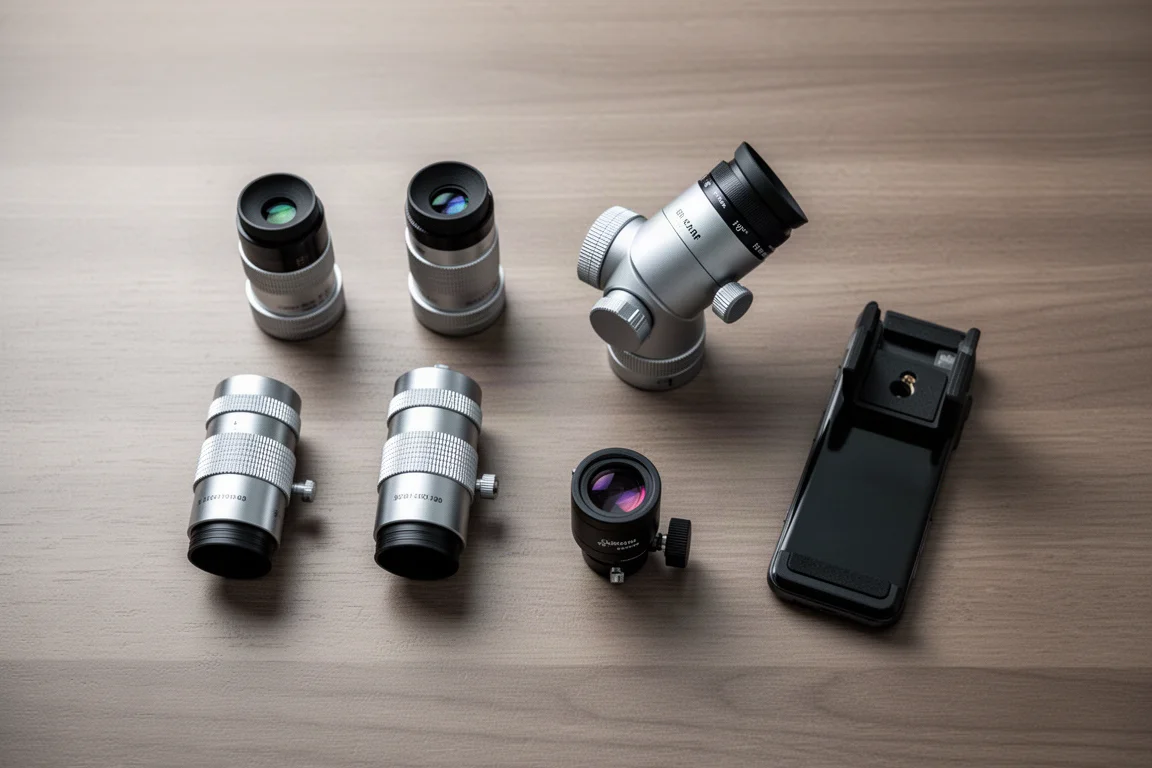
You also get an image-erect 90-degree diagonal, which corrects the image so the telescope works for terrestrial viewing too, along with a red dot finder and a fairly decent smartphone adapter aimed mainly at Moon photography. Notably absent is a 2x Barlow lens. With a 100mm aperture, the maximum useful magnification is 200x, and adding a 2x Barlow to the 10mm eyepiece would bring the total to 132x, which is great for the Moon and the rings of Saturn. If lunar and planetary viewing is your priority, plan on that as a small extra purchase.
Build Quality and a Hidden Surprise
The optical tube assembly feels solid, and unlike some sibling models it is made mostly of metal rather than plastic. The most surprising detail is the focuser: it can accept 2-inch diagonals and eyepieces, which also opens the door to attaching an astronomy camera and a field flattener down the road. That is an unusual amount of headroom at this price and a real reason this telescope punches above its class.
Why This Telescope Passes the Beginner Test
A good beginner telescope has to pass a few practical tests, and the Omni AZ 102 clears them all. Does it move effortlessly left, right, up, and down? Yes. Does it stay where you put it when you reach your target? Yes, and the slow motion controls on the altazimuth mount are what make the difference. These controls are extremely rare among beginner telescopes and are the best part of this package.
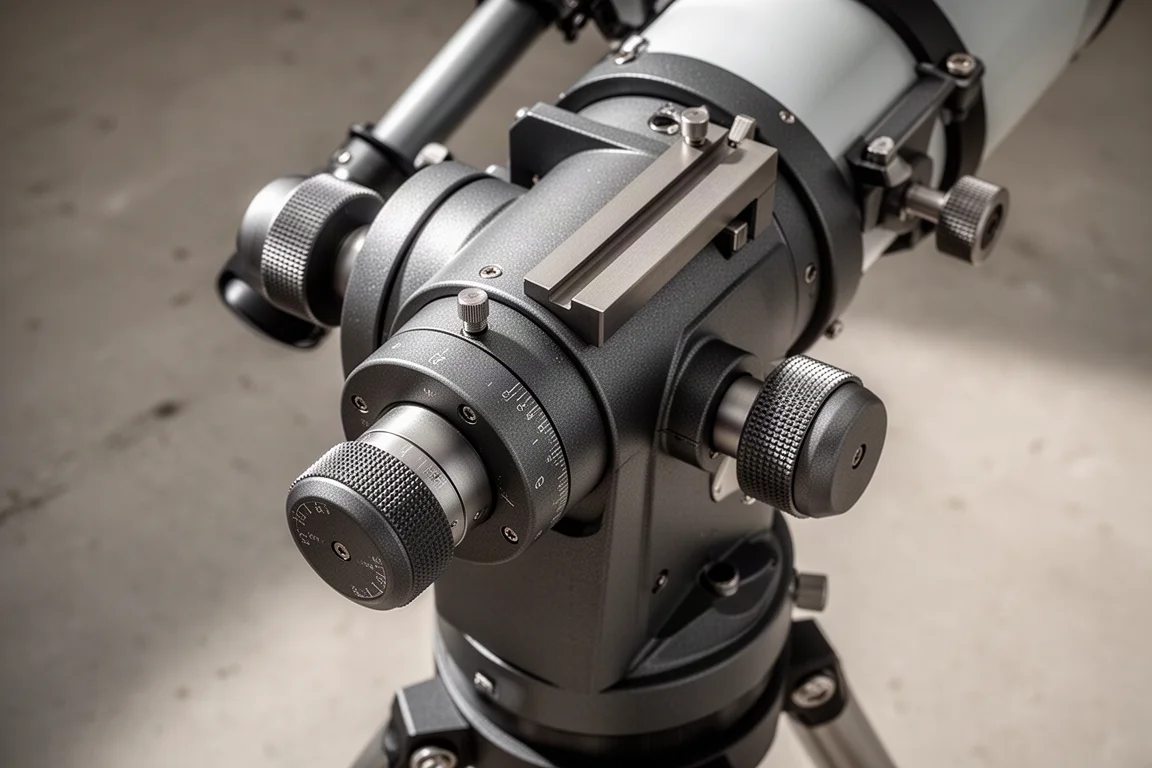
With the 90-degree diagonal, the telescope can also point high in the sky comfortably. The 102mm aperture, just over four inches, collects enough light to show deep sky objects like star clusters with decent resolution. And it comes with a red dot finder, far easier to use than the tiny finder scopes bundled with many inexpensive telescopes. Finally, the wow test: it passes. First impressions through the eyepiece draw exactly the reaction a first telescope should.
First Setup and Finder Alignment
Assembly is straightforward, though you will want an Allen wrench on hand for the dovetail bolt. Once assembled, aligning the finder is the essential first step before any stargazing, and it is done in daylight using a distant target such as a chimney.
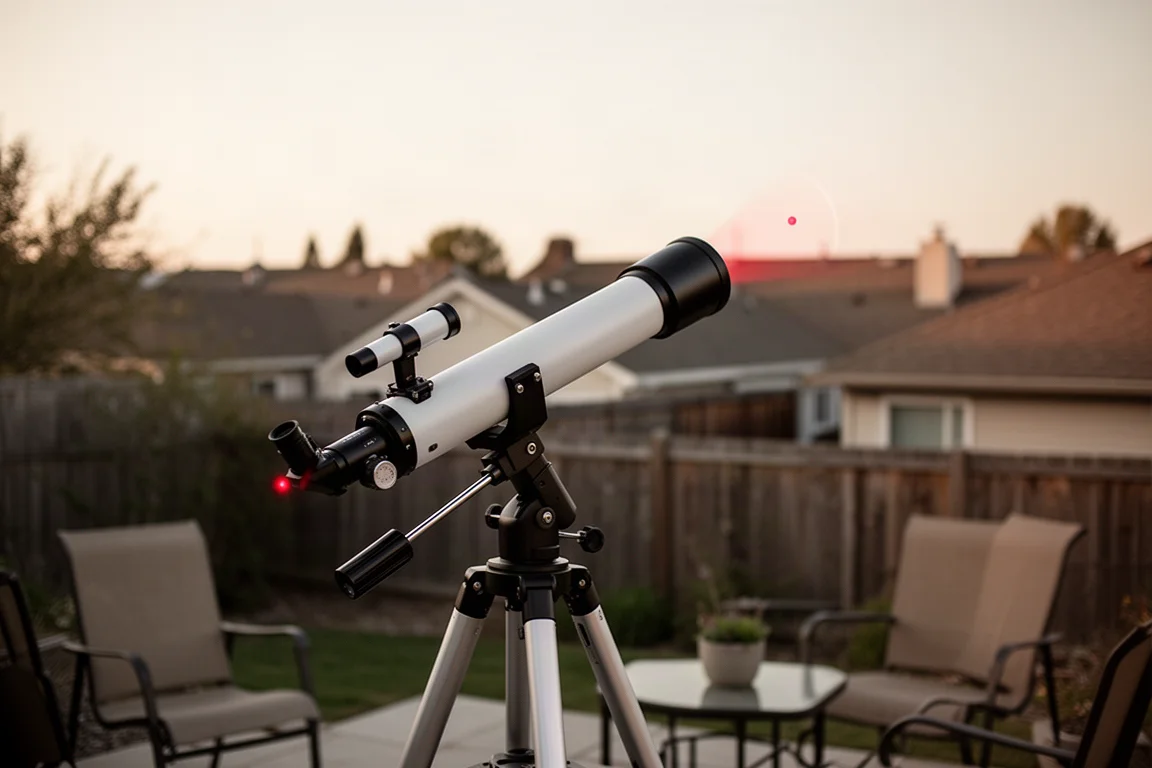
Center the target in the main eyepiece using the slow motion controls, then adjust the finder’s knobs until the red dot sits on the same spot. Check back and forth between finder and eyepiece until both point at precisely the same place. One practical tip worth adopting immediately: stargaze from a chair. It genuinely helps when using refractors like this one.
Things to Consider Before Buying
Availability is the biggest question mark. The telescope appears to be discontinued, and third-party sellers list it at inflated prices on large marketplaces. At inflated prices there are better options, including Dobsonians and refractors on go-to mounts, so it is worth ignoring those listings and waiting for a fair deal. Deep sky astrophotography is out of reach on the stock altazimuth mount, and smartphone shots are realistically limited to the Moon, with perhaps an acceptable attempt at Saturn or Jupiter. Also note that some versions of this telescope ship with the simple red dot finder rather than the StarPointer Pro found on some variants.
What You Can Realistically Expect to See
Through the eyepiece, expect pleasing views of star clusters, the Moon, and brighter deep sky targets. Short-exposure images taken with this telescope show open clusters like M36, M37, and M38 well, the Orion Nebula as a rewarding target, and the Pleiades revealing around a hundred stars where the naked eye sees only six or seven. Fainter objects like M78 are just a tiny smudge and need very dark skies, and the Crab Nebula shows roughly as it appears through the eyepiece in this configuration. Even the Horsehead Nebula can be captured with a camera through this telescope from a city, though that is a photographic target only.
For Moon and planet viewing, a 2x Barlow with the 10mm eyepiece gets you to 132x, well within the telescope’s 200x maximum useful magnification, which is enough to enjoy the rings of Saturn.
Buying Advice
If you can find the Celestron Omni AZ 102 at its warehouse retail price of around 200 US dollars, buy it. It avoids nearly every trap that catches first-time buyers: wobbly mounts, frustrating pointing, tiny finders, and underpowered optics. It is also one of the rare budget telescopes you will not outgrow immediately, thanks to the 2-inch-capable focuser and standard dovetail. Skip overpriced third-party listings and be patient.
Conclusion
The Celestron Omni AZ 102 is a rare thing: a budget telescope that respects the beginner. Solid metal construction, 102mm of aperture, smooth slow motion controls, and room to grow make it an easy recommendation at its original price point. If it ever returns to the lineup at entry-level prices, it would instantly become the default answer to the question of what telescope to buy with 200 US dollars.
Product link
View more details for Celestron Omni AZ 102
This product is mentioned in the review. Check the specifications, options, and compatibility before buying.
View more details for Celestron Omni AZ 102Further reading
Related Reviews

Telescopes
Sightron SJ75 UF and Sky-Watcher HS125: Two Telescopes Worth Watching
A look at two notable telescopes from a recent camera and optics expo: a sharp new astrograph from Sightron Japan and a compact fast reflector from Sky-Watcher.

Telescopes
SV503 102ED Review: A Budget 102mm Refractor That Surprises
The SV503 102ED is an affordable 102mm doublet refractor that delivers surprisingly decent star shapes and a smooth focuser, despite some chromatic aberration and light falloff.

Telescopes
SVBony MK127 Review: A Compact Maksutov-Cassegrain That Surprises
The SVBony MK127 is a 127mm Maksutov-Cassegrain telescope with a unique 0.65x reducer, making it a versatile option for visual astronomy and even some deep-sky imaging.