Telescopes
Celestron NexStar 102 SLT Review: A Go-To Refractor Worth a Look
A 102mm computerized refractor with a friendly hand controller, upgradeable focuser, and views that punch above its portability.
Introduction
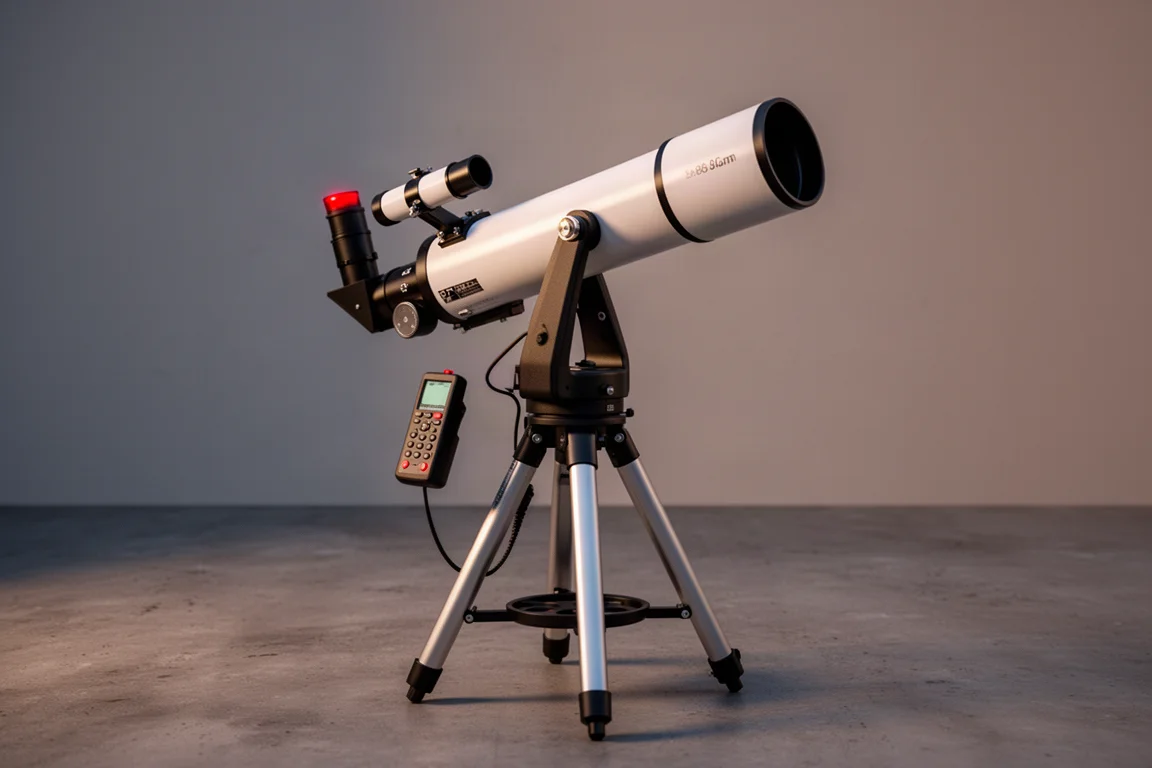
The Celestron NexStar 102 SLT is a 102mm refractor on a computerized go-to mount, and it fills a role many first-time telescope buyers are looking for: reasonably portable, reasonably priced, and capable of pointing itself at thousands of night-sky targets. This review covers the optics, the NexStar go-to system, and how the SLT compares with its non-computerized siblings.
What’s in the Box
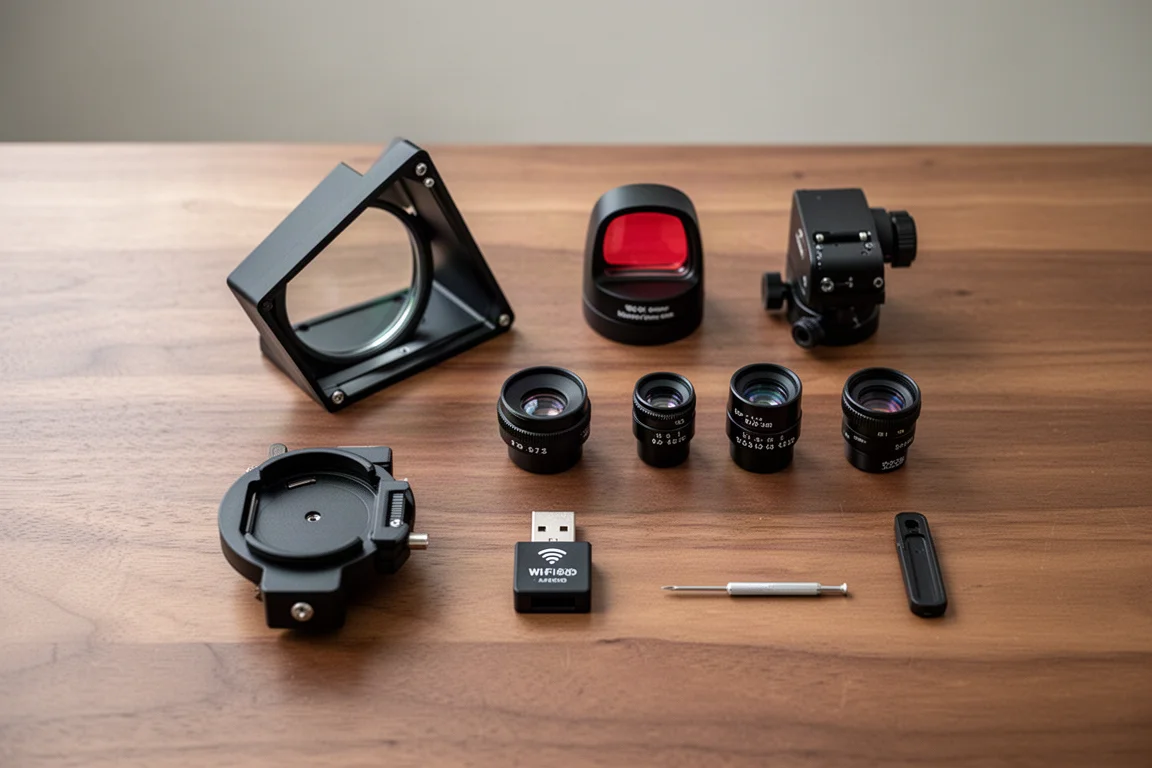
The SLT ships with a practical starter kit. The 1.25-inch diagonal accepts eyepieces at a comfortable 90-degree angle, and the included red dot finder helps line the telescope up with the sky. Two eyepieces come standard: a 25mm offering 26x magnification and a 9mm offering 73x. A premium 5mm eyepiece was also included for planetary viewing, along with the NexYZ smartphone adapter and the SkyPortal Wi-Fi adapter, plus a small screwdriver for assembly.
Optics and the Upgrade Path
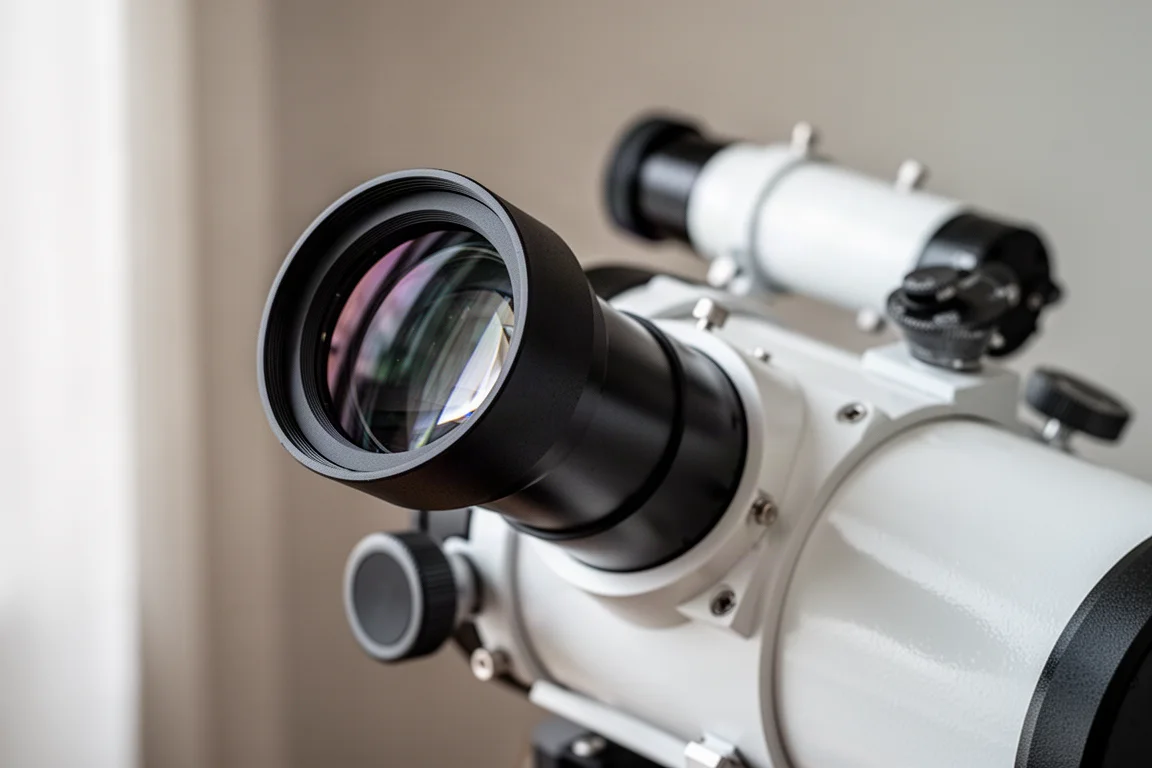
The optical tube uses the familiar 102mm aperture and 660mm focal length shared with Celestron’s Omni 102 and StarSense Explorer 102 DX, and it includes the same 2-inch focuser. These 102mm refractors sit at a genuine sweet spot: small enough to stay portable and affordable, but large enough to deliver impressive deep-sky views from dark sites, and they tend to perform better than expected on the planets.
The 2-inch focuser opens an upgrade path. Remove the 1.25-inch adapter, add a 2-inch diagonal and a 2-inch ultra-wide-field eyepiece, and the sky becomes a much more immersive experience. One practical note: added gear at the back of the tube means sliding the telescope forward on the mount to keep everything in balance.
Refractors in this class also avoid the collimation headaches of Newtonian reflectors. In a prior comparison of a 102mm refractor against two 114mm Newtonians, the refractor offered clearly superior clarity and contrast. Refractors like these tend to just work.
Why a Hand Controller Matters
There are two main differences between this telescope and the StarSense Explorer 102 DX. The StarSense is a push-to system: you push the telescope yourself and use slow-motion controls to center the target. The NexStar simply slews you to the target and tracks objects as they move across the sky.
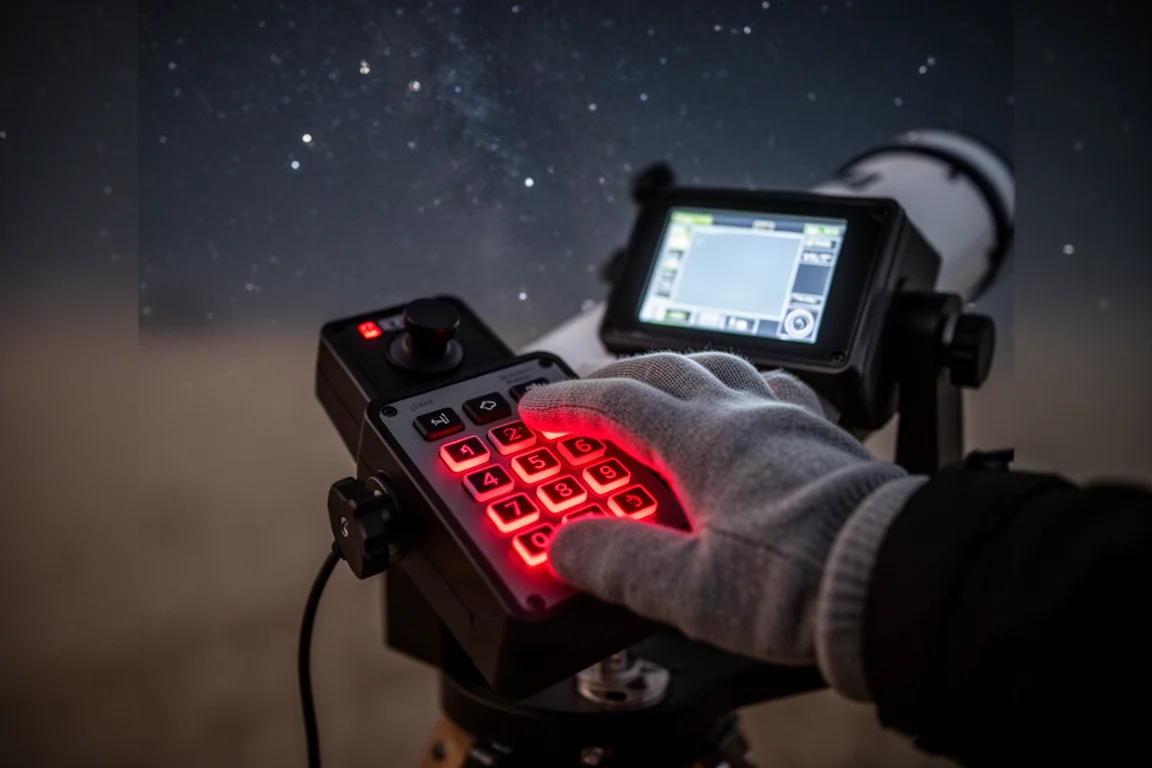
Several manufacturers have moved toward phone-controlled telescopes, but for visual observing the hand controller is the better tool. Unlocking your phone for every adjustment gets old fast, phone-to-telescope connections can be finicky, and on cold nights the NexStar hand controller works with gloves on. It is also refreshingly simple to use, with dedicated buttons for solar system objects, deep-sky catalogs, motor speed, and object info.
Power is straightforward. The mount accepts AA batteries, but a 12-volt external power supply is the smarter choice, since an accidentally switched-on mount in a car can drain batteries before you ever reach a dark site.
Getting Aligned to the Sky
Setup begins the same way for everyone: align the finder to the telescope during the day using a distant target, adjusting the finder’s knobs until both point at exactly the same spot.
At night, set the telescope where there is a clear view of the sky and check the bubble level to confirm the mount is level. SkyAlign needs only three bright objects, and you do not even need to know what they are. Power on the mount, enter your location, time, and date, center the first bright object in the finder, then in the eyepiece, and repeat for two more. If clouds or planets complicate things, a Solar System alignment on a single visible planet is a fallback option. The two- or three-star alignment method is the most accurate route, though it requires knowing star names.
After alignment, the go-to system takes over. Motor speed buttons set slew speeds from 1 to 9, with 9 for slewing and 5 for fine centering. Hitting Align and Center on any current target adds it to the alignment algorithm to improve accuracy over the session. If a “star points are off” warning flashes after alignment, it is simply a reminder to power down the red dot finder when it is not in use.
Finding Objects with the NexStar System
The object database is deep. The Solar System menu lists planets visible at your current time and location. Under Deep Sky, the Named Objects list offers roughly a dozen popular targets, though some, like the Horsehead Nebula, are beyond this telescope’s reach in most conditions. The Messier list is the most practical menu, provided you know the object numbers, and a good seasonal guidebook solves that. NGC and Caldwell catalogs are included for more advanced observers.
Two extra features are worth knowing. Sky Tour cycles through the night’s most popular targets, including stars and deep-sky objects known only by their designations. Object Info scrolls a short description of whatever you are viewing. And if you spot something unidentified, the Identify feature searches the database of your guessed catalog, such as the Messier list, and reports the closest match.
Buying Advice
This telescope suits a first-time buyer who wants the sky delivered to the eyepiece without fumbling with star charts, and it suits anyone who prefers a physical hand controller over a phone app. The 102mm refractor optics are shared with cheaper manual mounts, so the real premium here is the go-to tracking. If you already enjoy star-hopping, the StarSense Explorer 102 DX may be the more economical choice.
Conclusion
The NexStar 102 SLT combines proven 102mm refractor optics with a genuinely usable go-to system, an upgradeable 2-inch focuser, and a hand controller that works with cold hands. It is an easy recommendation for beginners who want tracking and a deep object catalog in one portable package.
Product link
View more details for Celestron NexStar 102 SLT
This product is mentioned in the review. Check the specifications, options, and compatibility before buying.
View more details for Celestron NexStar 102 SLTFurther reading
Related Reviews

Telescopes
Sightron SJ75 UF and Sky-Watcher HS125: Two Telescopes Worth Watching
A look at two notable telescopes from a recent camera and optics expo: a sharp new astrograph from Sightron Japan and a compact fast reflector from Sky-Watcher.

Telescopes
SV503 102ED Review: A Budget 102mm Refractor That Surprises
The SV503 102ED is an affordable 102mm doublet refractor that delivers surprisingly decent star shapes and a smooth focuser, despite some chromatic aberration and light falloff.

Telescopes
SVBony MK127 Review: A Compact Maksutov-Cassegrain That Surprises
The SVBony MK127 is a 127mm Maksutov-Cassegrain telescope with a unique 0.65x reducer, making it a versatile option for visual astronomy and even some deep-sky imaging.