Telescopes
Celestron FirstScope Review: A $50 Beginner Telescope That Rewards Tweaking
The Celestron FirstScope is a small 3-inch Dobsonian with real flaws, but with a few cheap accessories and some collimation work it can deliver surprisingly sharp views of the Moon.
Introduction
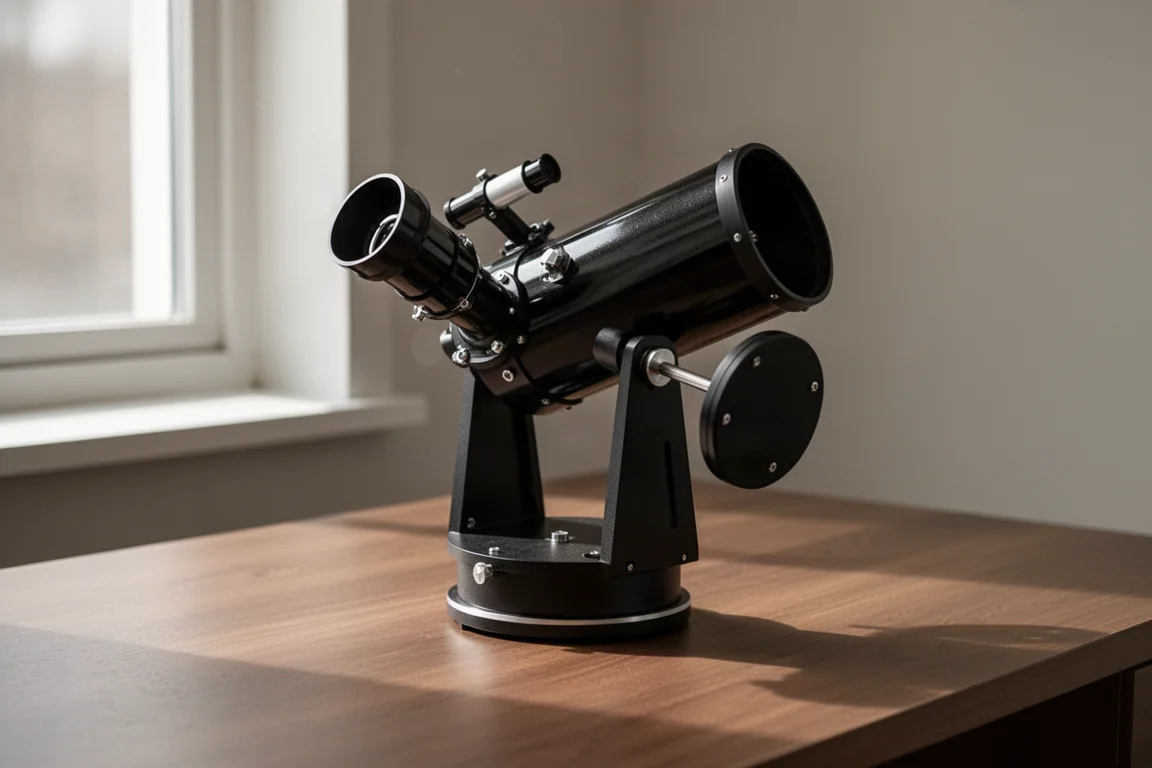
The Celestron FirstScope is a tiny 3-inch (76 mm) Dobsonian reflector, and it has quietly become one of the most popular starter telescopes around. After spending more time with it, one thing became clear: this little scope is genuinely fun to use, and its popularity has created a surprisingly rich ecosystem of community-made accessories. If your budget sits somewhere between $50 and $70, and especially if a child in your life is showing a budding interest in astronomy, this is a very sensible place to start. Binoculars are a common alternative for young stargazers, but for kids a real telescope tends to feel a lot cooler.
Who This Telescope Is For
This is a telescope for absolute beginners, families, and anyone curious enough to want a real optical instrument without a real optical instrument budget. It is small enough to live on a desk, simple enough for a child to operate, and cheap enough that an impulse purchase will not sting.
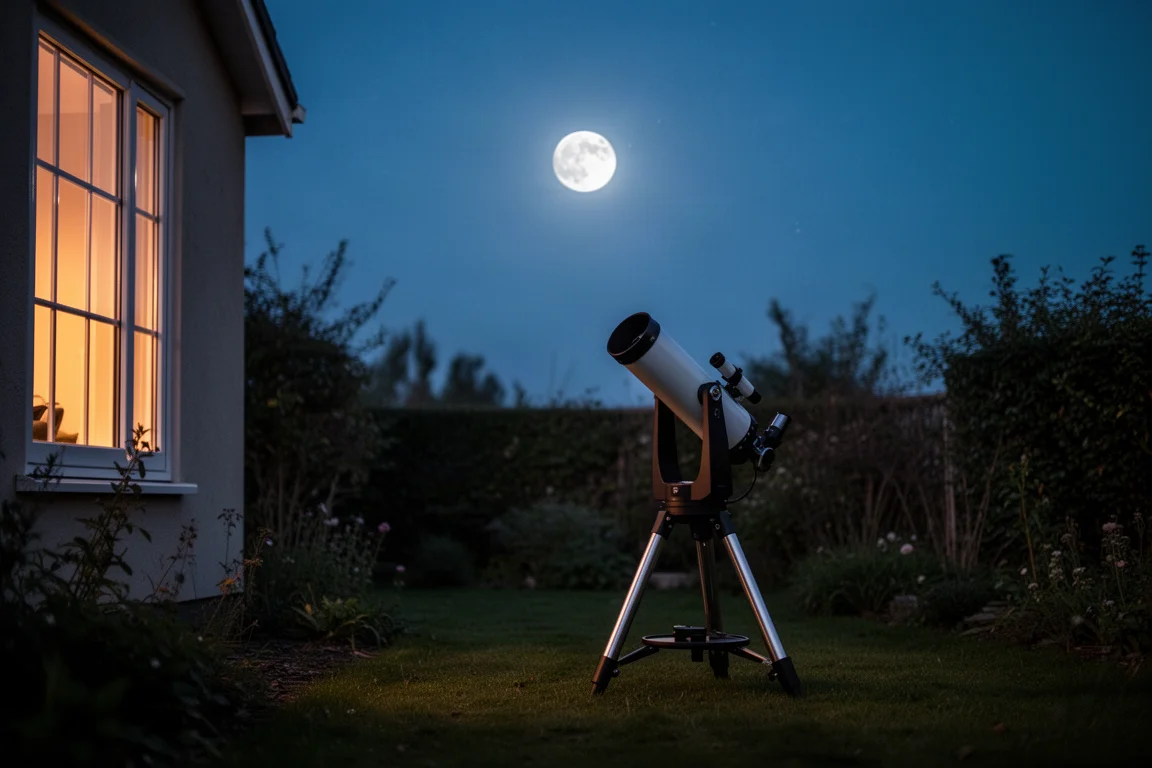
Because it uses a spherical mirror at this price point, image quality is its main weakness straight out of the box. That is exactly why a bit of setup effort pays off so much here.
The Aperture Mask Trick
The most interesting finding from extended use is how well aperture masks work on this telescope. Because the FirstScope and its similar knockoffs are so popular, there is a large collection of 3D-printable objects designed to fit it, and the most important of these are pre-made aperture masks. If you do not want to cut one out of cardboard, you can simply print one in plastic.
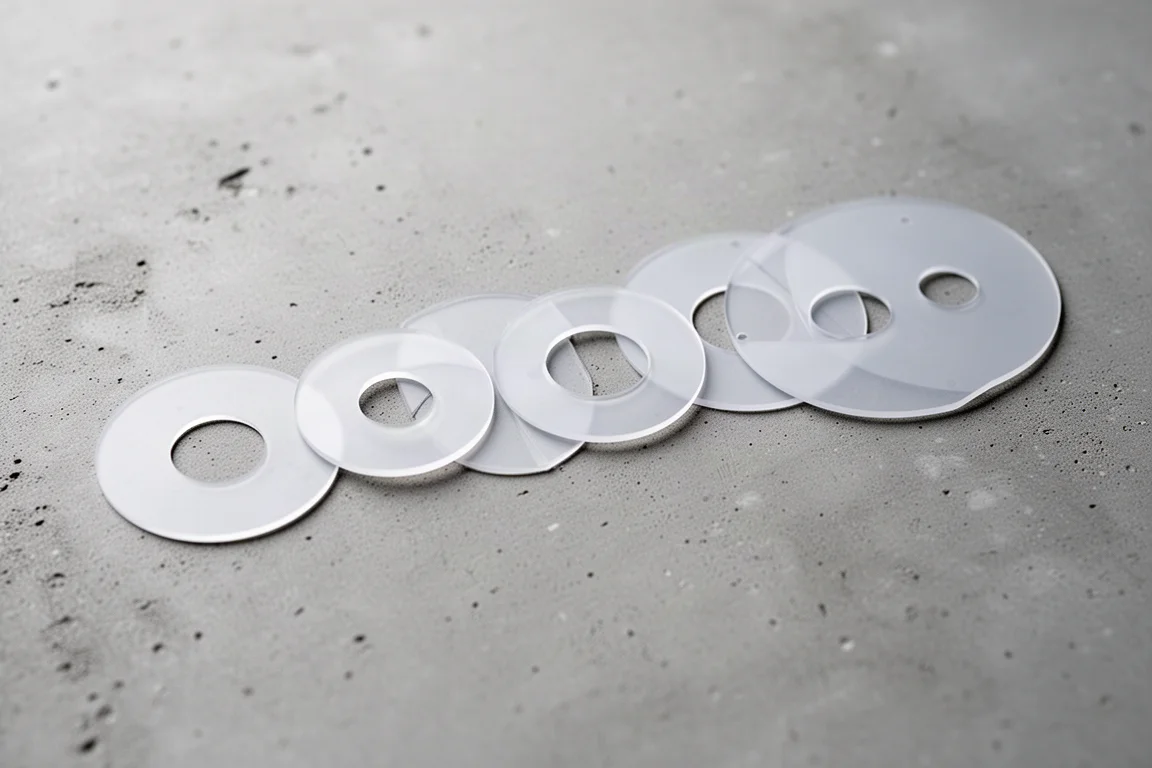
A full set covers f/4, f/5, f/6, f/7, and even an offset f/12 mask, plus a small Bahtinov focusing mask. Each mask takes roughly an hour to print. The idea is simple: masking the aperture down reduces the light coming from the outer edge of the mirror, where spherical aberration is worst. The trade-off is that the central obstruction blocks some of the light getting through, and an offset mask cannot be used here because it would keep spherical aberration in the equation. The smaller the hole, the less contribution from the mirror’s problematic outer edges.
Getting the Most Out of It: Collimation
Before testing the masks, it is worth doing a thorough collimation. Start by making sure the secondary mirror is perfectly centered in the tube; the smallest mask works well as a centering guide, and a little bending of the secondary’s support rod gets everything aligned. A red dot finder added on top also makes aiming much easier.
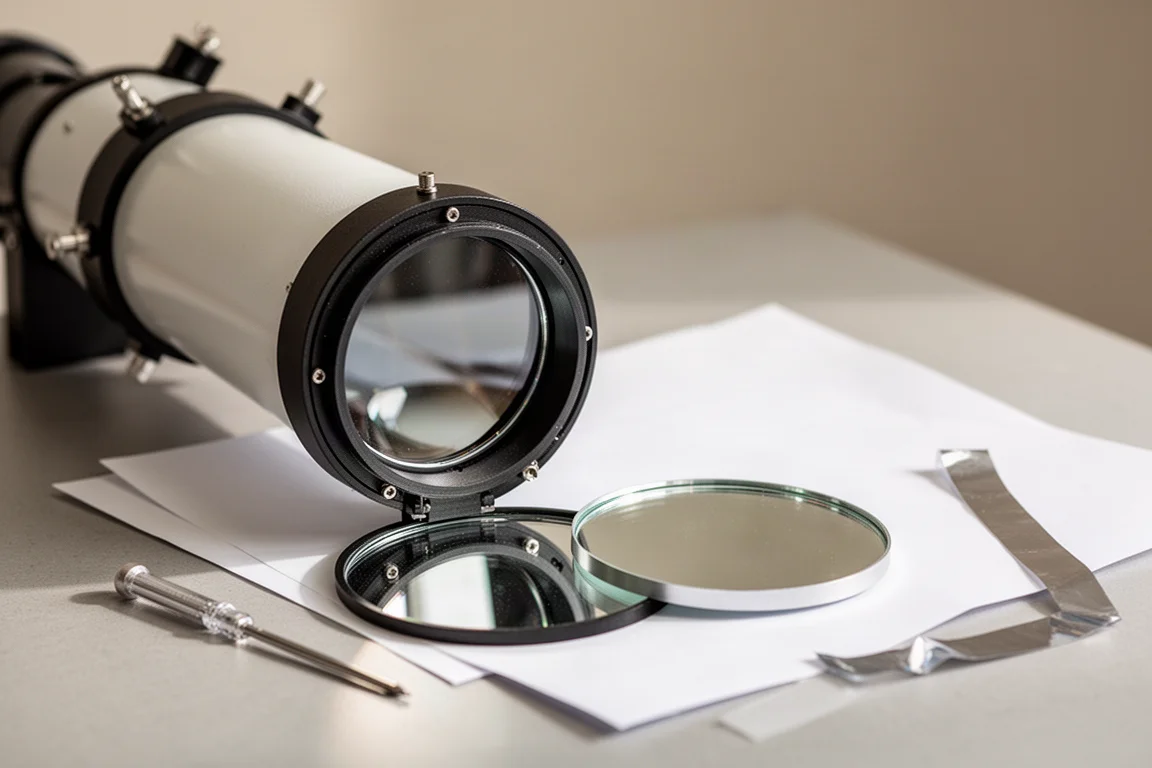
The trickiest part is that the primary mirror has no collimation adjustment screws. One approach is to remove the mirror cell, set it down on a sheet of paper, and use a laser collimator to align the secondary so the laser dot is perfectly centered on the paper below the tube. Then put one mounting screw back in as a rotation point, tilt the mirror until the laser target is just right, and secure it firmly with metal tape. It is unorthodox, but it gets the telescope as well collimated as it can be, which matters a lot for a scope with a spherical mirror.
How the Masks Performed
Testing on the Moon with the stock 4 mm symmetric Ramsden eyepiece at roughly 75x magnification made the differences easy to see. With no mask, the view showed the full effect of the spherical aberration. The f/4 mask was almost the same as the full aperture, with little improvement. The f/5 mask brought a slight improvement, with one edge of the Moon appearing a touch sharper.
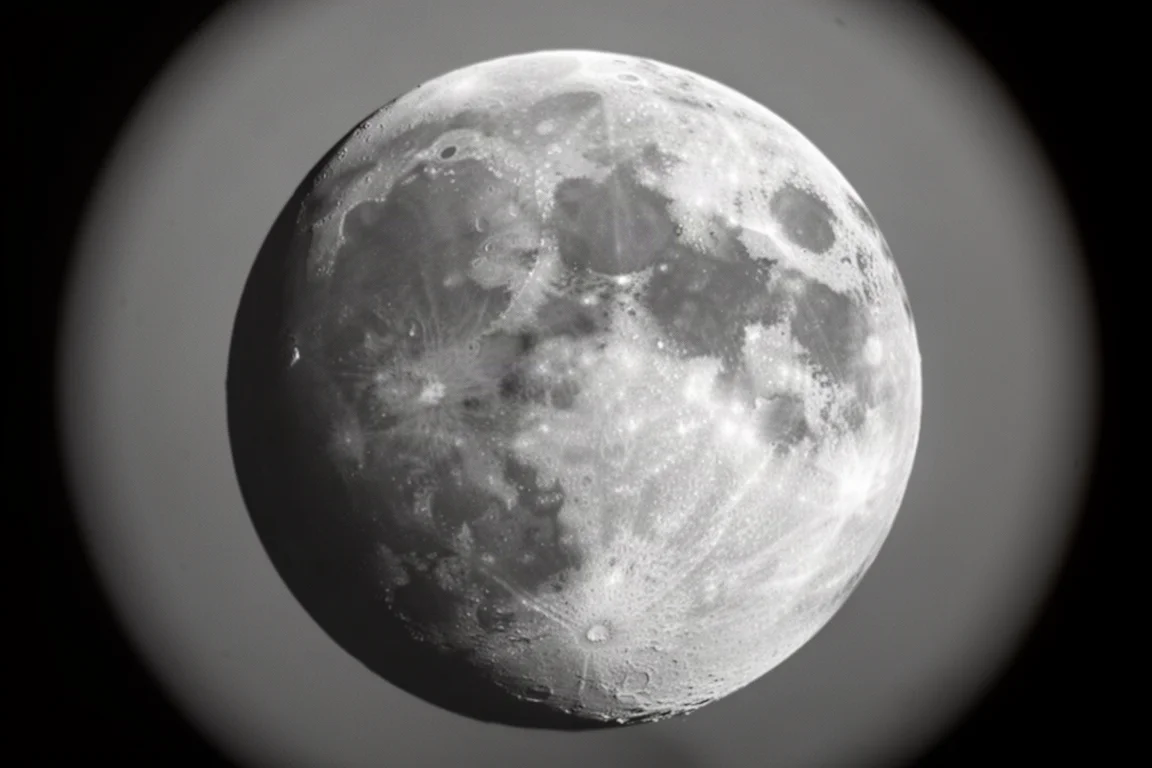
The f/6 mask was a genuine step up, and the f/7 mask delivered an extremely sharp, very good image. It looks like f/7 provides the sharpest image with the least loss of light. The tiny offset f/12 mask, by contrast, performed poorly: with so little light passing through, the view mostly picks up light bouncing off the outer edge of the spherical mirror, so spherical aberration shows up badly. Going back to f/7 delivered a really sharp view of the Moon.
Buying Advice
If you have a 3D printer and any variant of the 76 mm FirstScope, downloading a set of printable masks is one of the cheapest performance upgrades you can make. An eyepiece holder that attaches to the main bolt is another useful community-made accessory; it conveniently holds the two eyepieces the telescope ships with.
At a typical price of $50 to $70, and with frequent sales, the FirstScope remains an easy recommendation as a first telescope, particularly for children with a budding interest in astronomy. Be prepared to put in a little collimation effort and consider a red dot finder, and this modest little scope will reward you far beyond its price.
Conclusion
The Celestron FirstScope is not a perfect telescope, but it is a genuinely enjoyable one. With careful collimation, a printed f/7 aperture mask, and a red dot finder, its lunar views become remarkably sharp for the money. For a beginner on a tight budget, it is still very easy to recommend.
Product link
View more details for Celestron FirstScope
This product is mentioned in the review. Check the specifications, options, and compatibility before buying.
View more details for Celestron FirstScopeFurther reading
Related Reviews

Telescopes
Sightron SJ75 UF and Sky-Watcher HS125: Two Telescopes Worth Watching
A look at two notable telescopes from a recent camera and optics expo: a sharp new astrograph from Sightron Japan and a compact fast reflector from Sky-Watcher.

Telescopes
SV503 102ED Review: A Budget 102mm Refractor That Surprises
The SV503 102ED is an affordable 102mm doublet refractor that delivers surprisingly decent star shapes and a smooth focuser, despite some chromatic aberration and light falloff.

Telescopes
SVBony MK127 Review: A Compact Maksutov-Cassegrain That Surprises
The SVBony MK127 is a 127mm Maksutov-Cassegrain telescope with a unique 0.65x reducer, making it a versatile option for visual astronomy and even some deep-sky imaging.