Telescopes
Celestron C-62 Cometron Review: A Charming 1980s Moon Scope
A compact Vixen-made Japanese refractor from the Halley's Comet era, with sharp lunar views and a surprisingly clever folding design.
Introduction
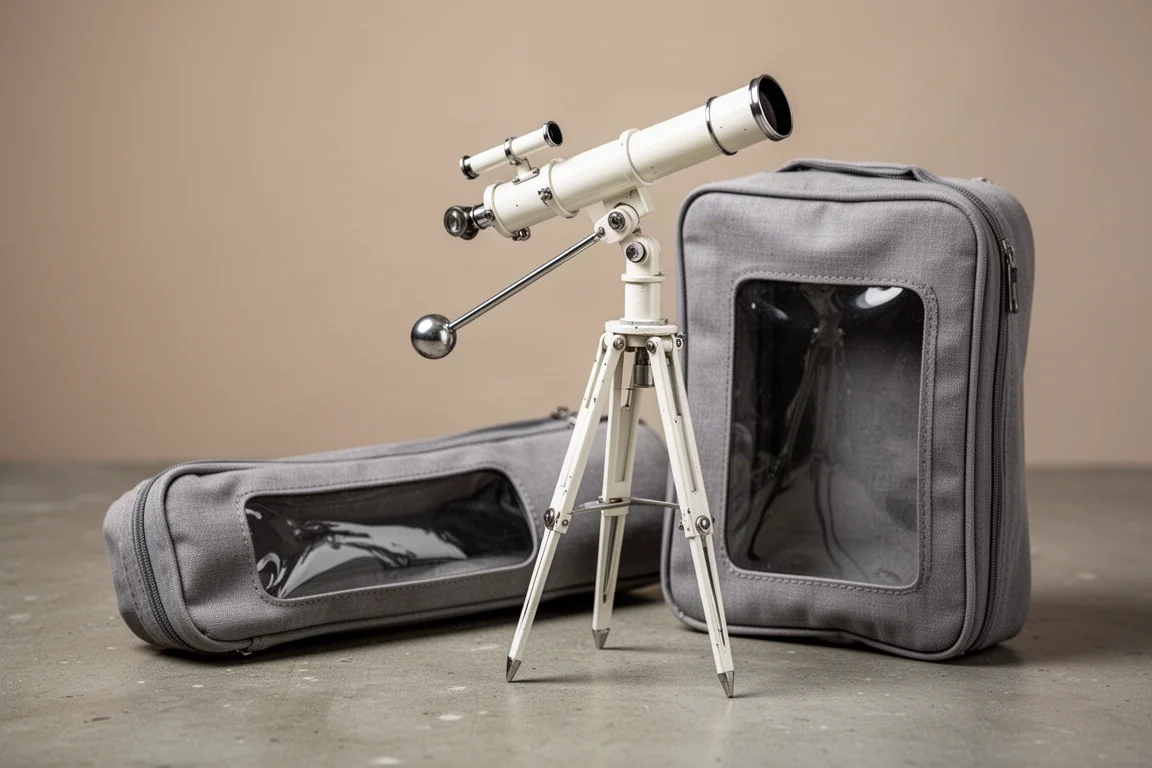
The Celestron C-62 Cometron is a small refractor with a story. Its 62mm front lens gives it the “62” in the name, and the Cometron branding dates it squarely to the mid-1980s, when Celestron launched the line to ride the wave of Halley’s Comet enthusiasm sweeping the hobby. The telescopes were built in Japan by Vixen and resold in North America under the Celestron name.
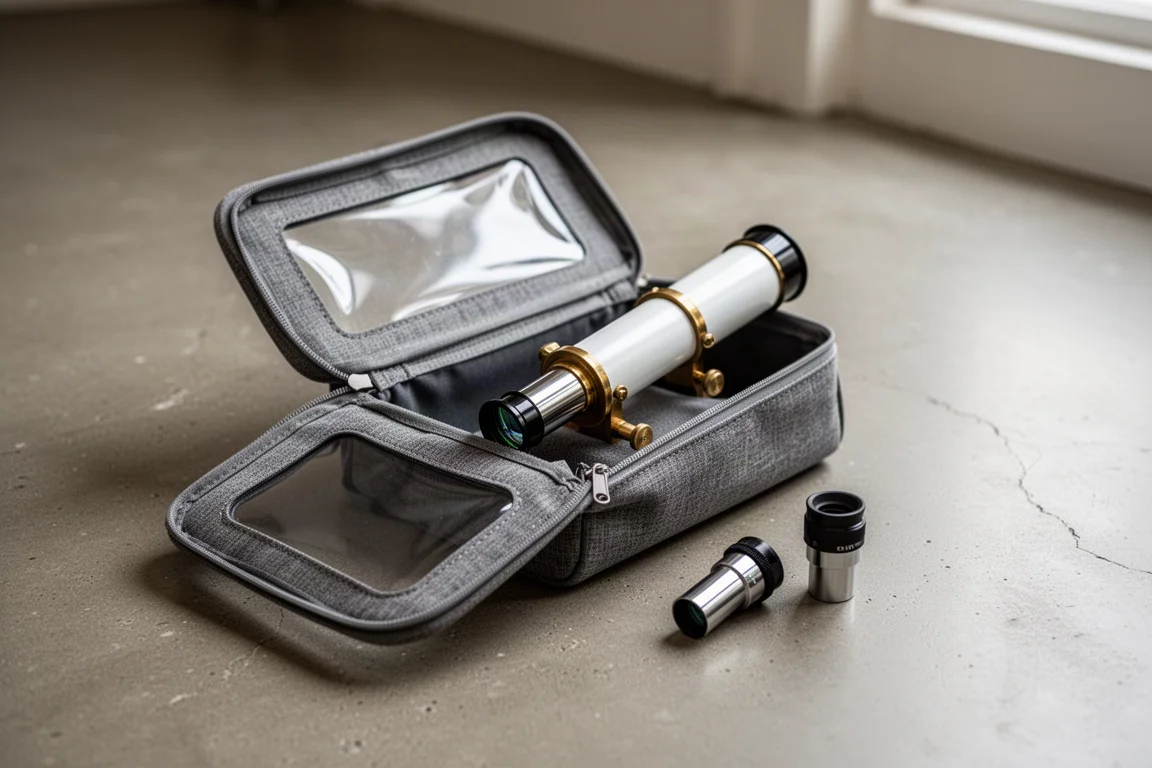
It is a genuinely compact instrument, sold with a carry case that even has a clear window in the front, and a design that unfolds from its own storage case into a usable observing setup. While its magnification range is modest, it turns out to be a very capable Moon scope with a level of optical quality that holds up decades later.
Design and Assembly
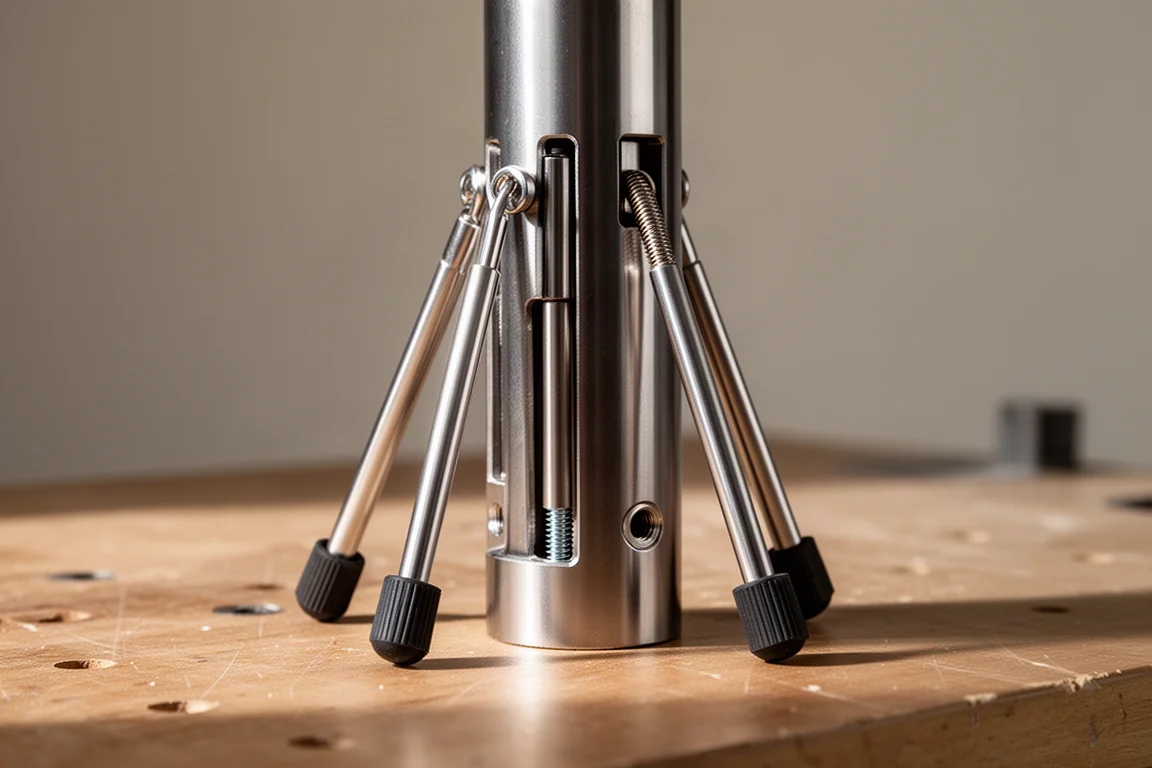
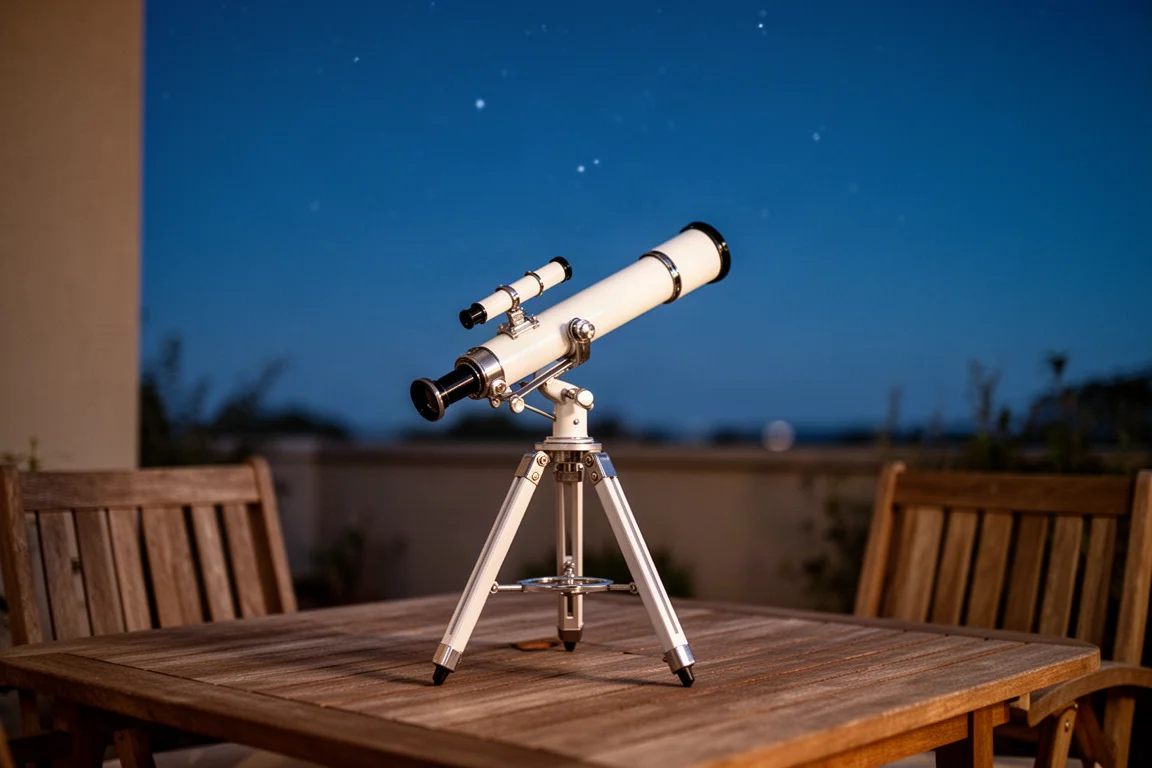
The most delightful part of the C-62 is how it goes together. The three tripod legs hide inside the vertical shaft of the mount column and pull out into threaded holes, with rubber feet that let you set it on a table, the ground, or even a car hood. The telescope itself attaches to the column with a quarter-20 thread, and a very heavy counterweighted handle keeps the whole setup balanced. The counterweight does a genuinely good job of taming balance issues, though it also makes the little scope surprisingly heavy for its size.
The package includes a Celestron star diagonal made in Japan, plus two eyepieces in the classic “volcano top” style: a 25mm and a 9mm, both with tapered tops rather than rubber eye cups. A cover on the assembly carries a “V” inside a circle, the mark of Vixen, the Japanese manufacturer behind the Cometron line.
Observing Performance
For testing, the C-62 went head to head against a short 380mm refractor bought secondhand for four dollars, using the same eyepieces on the Moon. The difference was obvious immediately.
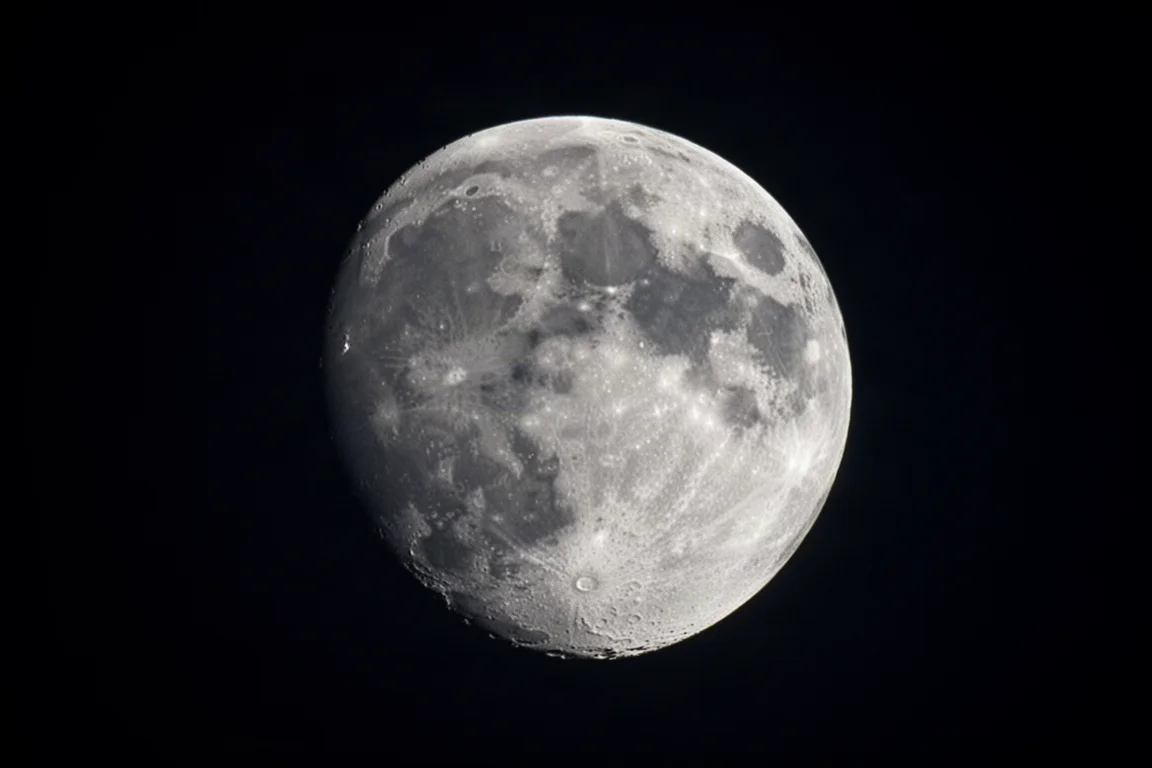
With the 25mm eyepiece at around 12x magnification, the Cometron delivered razor-sharp lunar edges and craters in crisp focus, with no visible chromatic aberration. Swapping to the 9mm eyepiece for roughly 33x produced a really fantastic image of the Moon: sharp craters, a sharp limb, and no color smearing.
That is impressive for a short 62mm refractor, since instruments with focal lengths this brief often show chromatic aberration. The built-in viewfinder also makes aiming far easier than on the comparison scope, which had none. The verdict on lunar viewing: a clear thumbs up.
With a 300mm focal length, top magnification tops out around 33x, which places it in the same performance bracket as a decent pair of astronomical binoculars. That limits it to large, bright targets, and the Moon is where it truly shines.
Things to Consider Before Buying
This is a vintage instrument, and most examples on the market today will be secondhand, sometimes after sitting in a closet for decades. Telescopes made by Vixen in the 1980s are increasingly sought after as collectibles, which speaks to the craftsmanship but can also push prices beyond what the optics alone justify.
The magnification ceiling is the practical limitation. Beyond the Moon, there is not much this scope is suited for, though it can pull double duty as a ground spotting scope. If you want deep-sky or planetary detail, you will need something with more aperture and focal length.
Who Should Buy One
The C-62 Cometron suits a specific kind of buyer: someone who appreciates Japanese-built vintage refractors, wants a charming and portable lunar scope, or collects 1980s Vixen-made equipment. As a low-magnification wide-field instrument, it behaves much like astronomy binoculars, but with the trade-off of being less convenient to set up.
For casual Moon watching on a table-top mount, it is genuinely good, and the counterweighted handle makes balancing effortless. If your expectations match the optics, it delivers.
Buying Advice
Look for a complete example: the original case, the Vixen-marked diagonal, and both volcano-top eyepieces matter for both usability and collectible value. Check that the focuser and pull-out legs still work smoothly after decades of storage. Given the growing collectible status of 1980s Vixen telescopes, expect prices to reflect rarity as much as optical performance. If you find one complete and clean, it is a rewarding little scope.
Conclusion
The Celestron C-62 Cometron is compact, heavy for its size, beautifully built, and optically excellent for what it is: a sharp, color-free Moon scope with undeniable vintage charm. It may have missed the comet it was named for, but with Halley’s Comet due back in 2061, this little refractor may yet have the last laugh.
Product link
View more details for Celestron C-62 Cometron
This product is mentioned in the review. Check the specifications, options, and compatibility before buying.
View more details for Celestron C-62 CometronFurther reading
Related Reviews

Telescopes
Sightron SJ75 UF and Sky-Watcher HS125: Two Telescopes Worth Watching
A look at two notable telescopes from a recent camera and optics expo: a sharp new astrograph from Sightron Japan and a compact fast reflector from Sky-Watcher.

Telescopes
SV503 102ED Review: A Budget 102mm Refractor That Surprises
The SV503 102ED is an affordable 102mm doublet refractor that delivers surprisingly decent star shapes and a smooth focuser, despite some chromatic aberration and light falloff.

Telescopes
SVBony MK127 Review: A Compact Maksutov-Cassegrain That Surprises
The SVBony MK127 is a 127mm Maksutov-Cassegrain telescope with a unique 0.65x reducer, making it a versatile option for visual astronomy and even some deep-sky imaging.