Telescopes
Celestron AstroMaster 70AZ vs Inspire 100AZ: Which Beginner Telescope Makes More Sense?
A closer look at two entry-level Celestron refractors, including how a smaller aperture can sometimes outperform a bigger one on the planets.
Introduction
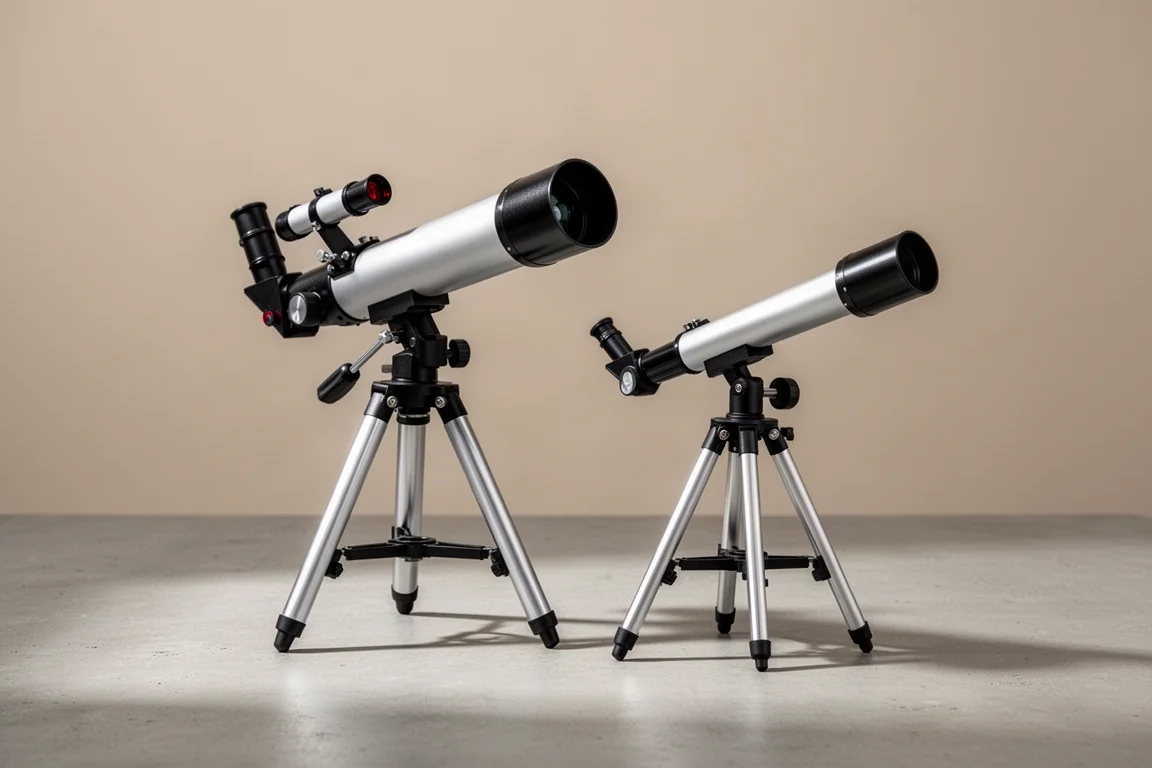
The Celestron Inspire 100AZ earned its place as a solid beginner telescope: four inches of aperture, easy pointing, and a friendly entry price of around 200 US dollars. Inflation has since pushed it higher, though, and that leaves room for a genuine budget alternative. The Celestron AstroMaster 70AZ has stayed inexpensive for years, and it keeps coming up as the scope people ask about when money is tight.
The surprise is that the cheaper, smaller scope is not simply the weaker option. On planets, at least, the little 70AZ can hold its own. Here is how the two compare, and who each one actually suits.
Aperture: Why the Numbers Matter More Than You Think
The most important specification of any telescope is its aperture. The 70AZ gathers light through a 70mm lens, while the 100AZ uses a 100mm lens. That difference sounds like 30 percent, but the real gap is much bigger: the larger telescope collects about 2.04 times as much light. In practice, that means more faint deep-sky objects come within reach, and the objects you do see should look better.
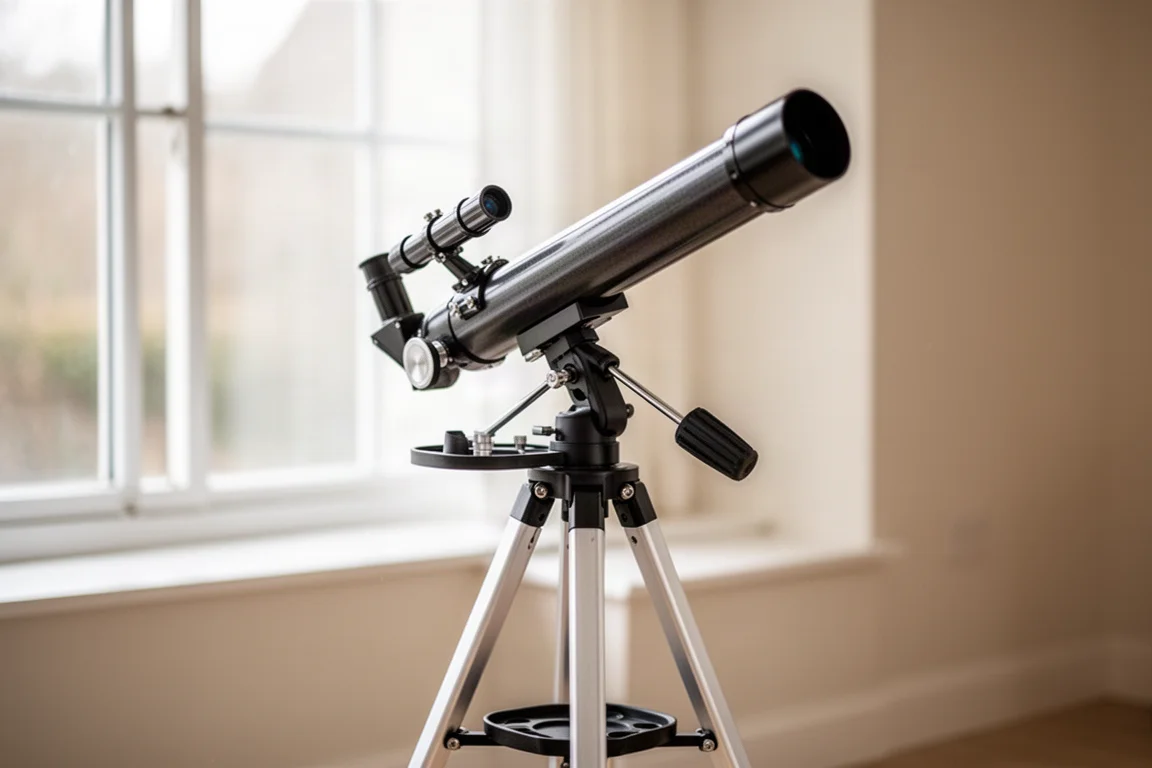
That said, the comparison is not entirely fair. The 100AZ seems designed with deep-sky viewing in mind, and its included 20mm eyepiece yields only around 30x magnification, which is ideal for star clusters and bright nebulae, where lower magnification often works better. The 70AZ looks aimed at a narrower goal: the Moon and Saturn’s rings. If that is all you want, the smaller scope should do the job well.
Moon Observing: What Each Scope Can Resolve
The Moon is what you will observe most with a small telescope, so it is a fair test. Working from the average distance to the Moon and the Rayleigh criterion, the theoretical smallest detail the 100AZ can resolve on the lunar surface is about 1.9 kilometers across. The 70AZ manages around 2.7 kilometers. On paper, the larger scope is clearly sharper.
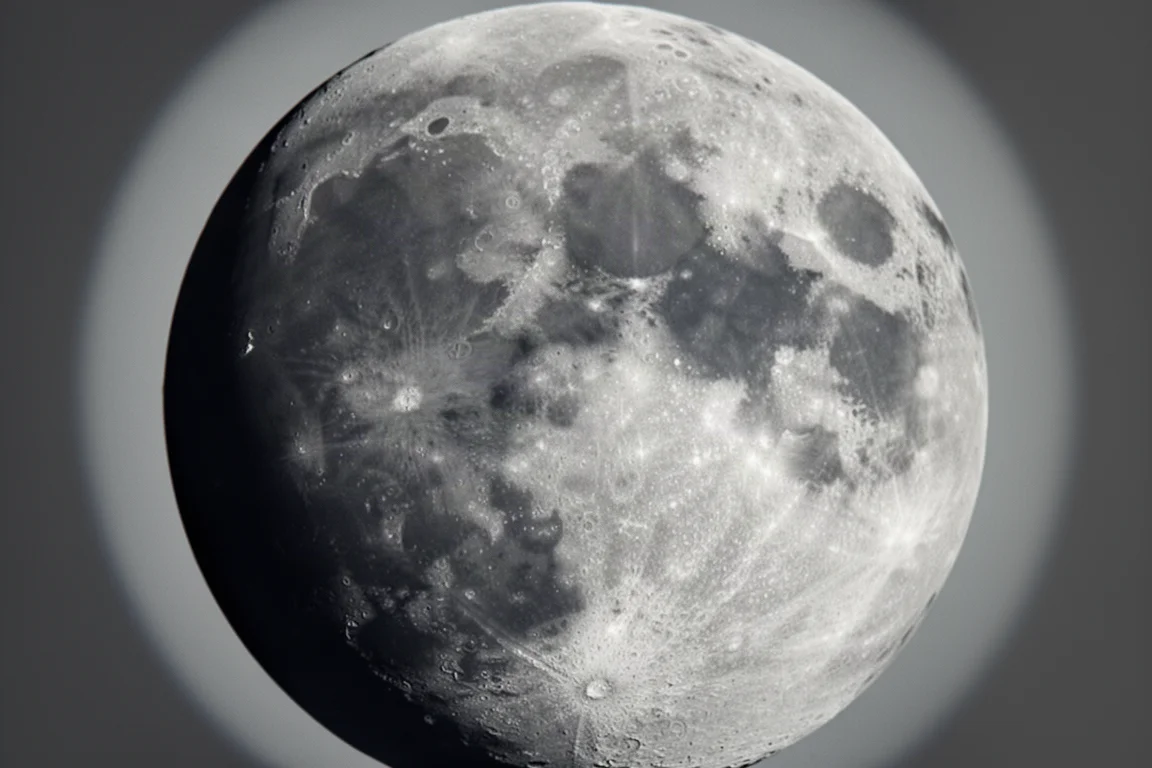
Real-world viewing, however, does not always follow the math. A longer tube with a higher focal ratio tends to show less chromatic aberration, and a smaller aperture is less affected by rippling atmospheric turbulence, which can make planets shimmer and flicker. That is why small, long refractors sometimes deliver steadier planetary views than larger siblings, even though the theory favors the bigger aperture.
Setup Notes and Quirks
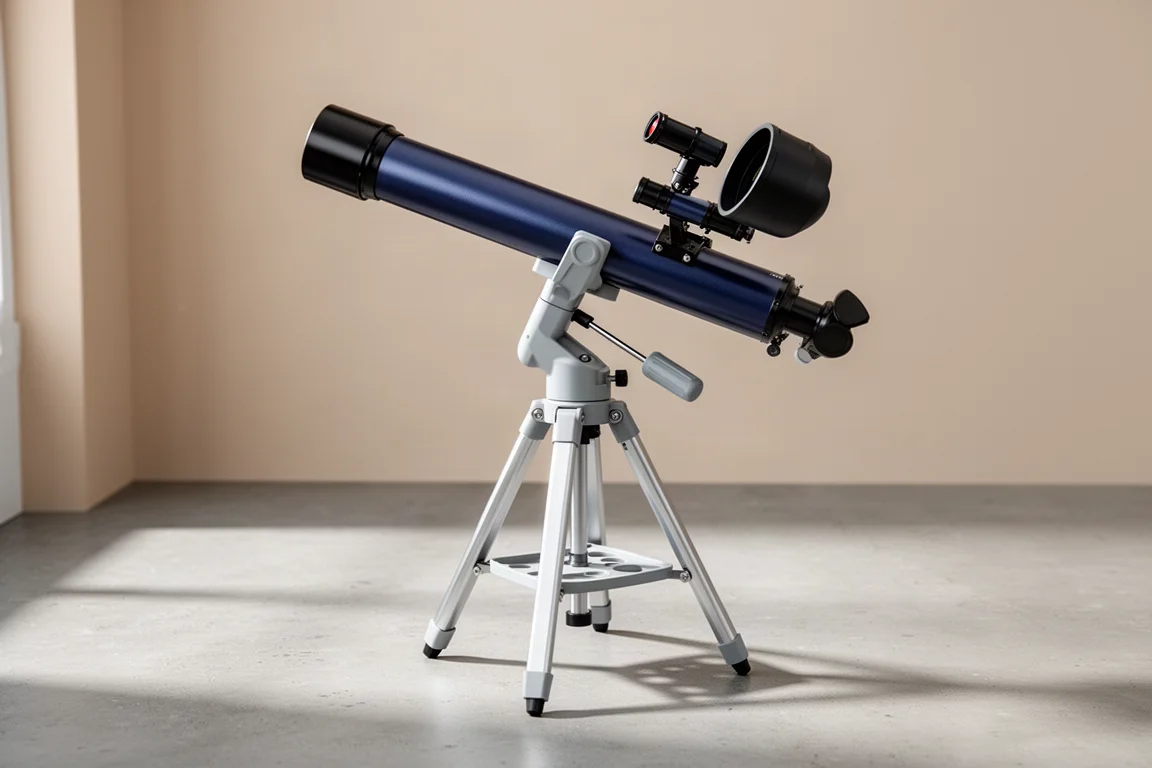
Out of the box, the AstroMaster 70AZ is nicely built. The optical tube is well packaged, the dew shield is solid, and the tube rides on a Vixen dovetail, so you can move it onto a premium mount later if you upgrade. The included accessories are a 10mm eyepiece giving 70x and a 20mm eyepiece giving 35x. There is no Barlow in the box, which is arguably intentional, since Barlows are often overused and make finding objects harder. Still, with a maximum useful magnification of roughly 140x, a 2x Barlow paired with the 10mm eyepiece is a sensible addition for Moon and Saturn viewing.
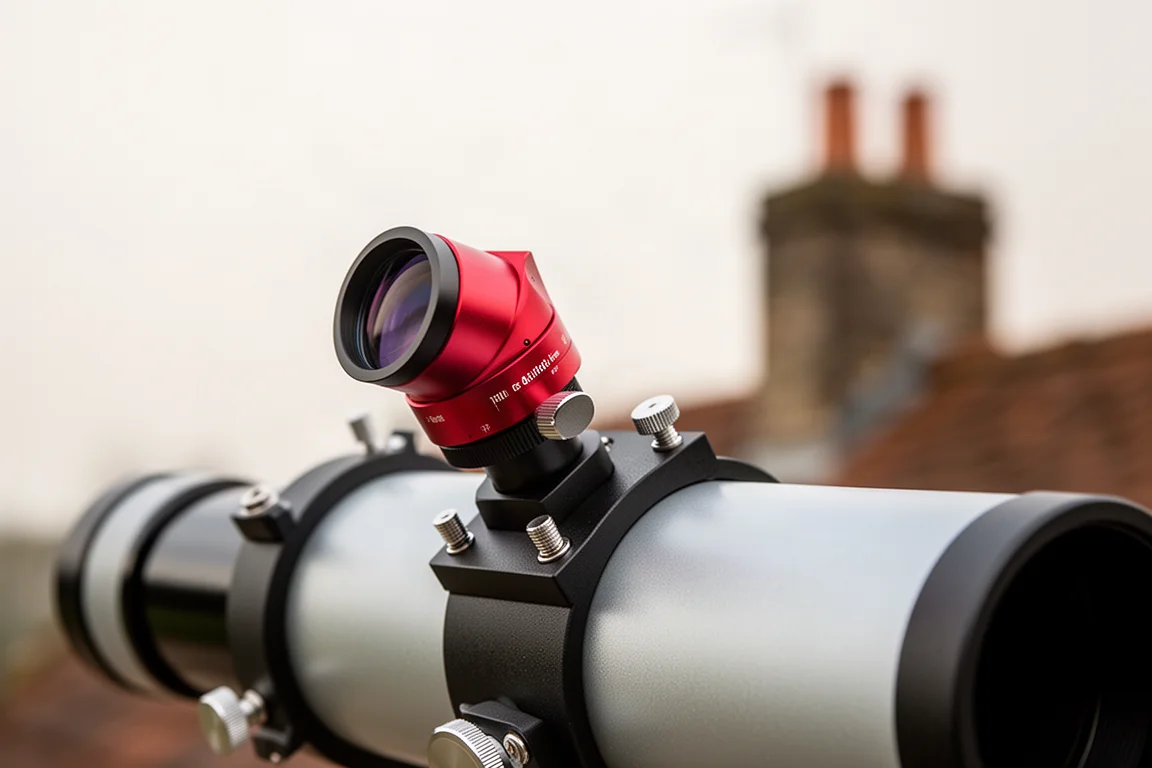
A few quirks are worth knowing before you buy. The included diagonal is a 45-degree unit, which suits daytime terrestrial viewing but makes looking high in the sky awkward, despite the box art showing a 90-degree diagonal. Swapping in a 90-degree diagonal fixes this immediately. The red dot finder works fine once aligned, though it is less convenient for star-hopping than the bullseye finder on the Inspire, and it runs on a CR2032 battery that is easy to leave switched on. The accessory tray on the sample tripod arrived cracked, and attaching the finder initially confused even an experienced user, so read the instructions.
Before any night of observing, align the finder during the day on a distant object like a chimney: center the target in the eyepiece, then adjust the finder’s knobs until the dot sits exactly on the same spot.
Jupiter: Where the Small Scope Shines
Viewing Jupiter is where the story gets interesting. The 70AZ shows the planet and several of its moons with a noticeably steadier, sharper image than the larger Inspire 100AZ, which renders the planet somewhat bloated. The likely reasons are the 70AZ’s longer focal ratio, which reduces chromatic aberration, and its smaller aperture, which suffers less from turbulence-driven distortion. For planetary viewing specifically, the smaller scope is the sharper instrument of the two.
Which One Should You Buy?
If your goal is the Moon and planets on a tight budget, the AstroMaster 70AZ is a genuinely capable choice, and its steadier planetary views are a real advantage. Budget for a 90-degree diagonal and possibly a 2x Barlow to get the most from it.
If you want more versatility, fainter deep-sky objects, and the friendlier bullseye finder, the Inspire 100AZ remains the more capable all-around telescope, provided the higher price still fits your budget. Its larger light-gathering area more than doubles what you can reach, and it is the better platform as your interests grow beyond the Moon and Saturn.
Conclusion
Aperture rules on paper, but real-world viewing complicates the picture. The AstroMaster 70AZ is a well-built, inexpensive lunar and planetary scope with a surprisingly steady image, held back only by its terrestrial-oriented diagonal and basic finder. The Inspire 100AZ costs more but gathers twice the light and suits a wider range of targets. Choose the 70AZ for tight budgets and planetary viewing; choose the 100AZ if deep-sky objects are on your list.
Further reading
Related Reviews

Telescopes
Sightron SJ75 UF and Sky-Watcher HS125: Two Telescopes Worth Watching
A look at two notable telescopes from a recent camera and optics expo: a sharp new astrograph from Sightron Japan and a compact fast reflector from Sky-Watcher.

Telescopes
SV503 102ED Review: A Budget 102mm Refractor That Surprises
The SV503 102ED is an affordable 102mm doublet refractor that delivers surprisingly decent star shapes and a smooth focuser, despite some chromatic aberration and light falloff.

Telescopes
SVBony MK127 Review: A Compact Maksutov-Cassegrain That Surprises
The SVBony MK127 is a 127mm Maksutov-Cassegrain telescope with a unique 0.65x reducer, making it a versatile option for visual astronomy and even some deep-sky imaging.