Telescopes
Celestron 80mm FirstScope: A Vintage Japanese Refractor That Still Delivers
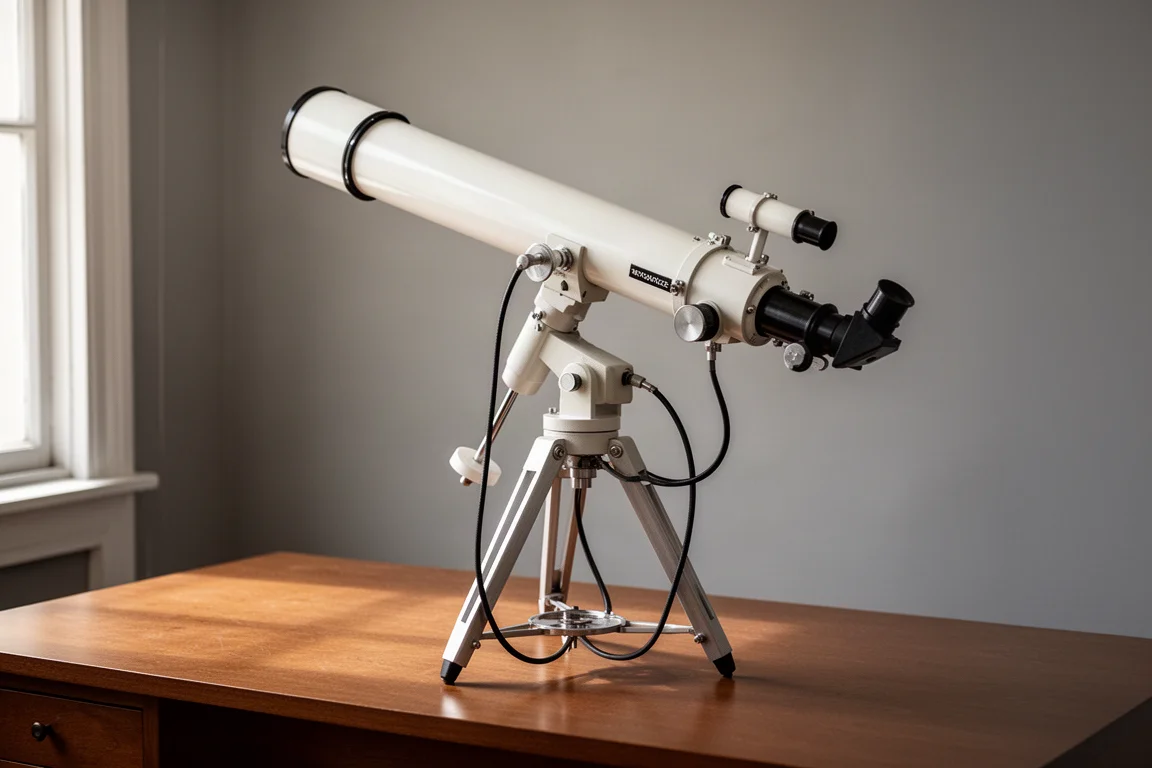
An early 1980s Celestron 80mm refractor, made in Japan, with sharp optics and a rock-solid focuser decades later.
Introduction
Some telescopes from the 1980s are still worth your money, and the Celestron 80mm FirstScope is a good example of why. This long refractor was made in Japan in the early 1980s and sold under the Celestron label in North America, in the same way the Meade 320 was sold under the Meade name in the United States.
This particular example arrived with nothing more than a layer of dust on it. After a clean-up, it turned out to be a telescope that is genuinely special: solid mechanics, excellent optics, and a mount design that still feels thoughtful forty years on. If you are browsing used marketplaces and a vintage Japanese refractor like this appears at a fair price, it is worth taking seriously.
Who This Telescope Is For
This is not a low-end beginner telescope, and it was not one when it shipped either. The fact that it came with a 1.25-inch 18mm Ortho eyepiece back in the early 1980s says a lot about where it sat in Celestron’s lineup at the time.
It suits a few kinds of buyers very well:
- Anyone who enjoys lunar and planetary viewing with classic refractor optics
- Collectors of vintage Japanese-made telescopes
- Shoppers patient enough to hunt the used market for a well-priced example
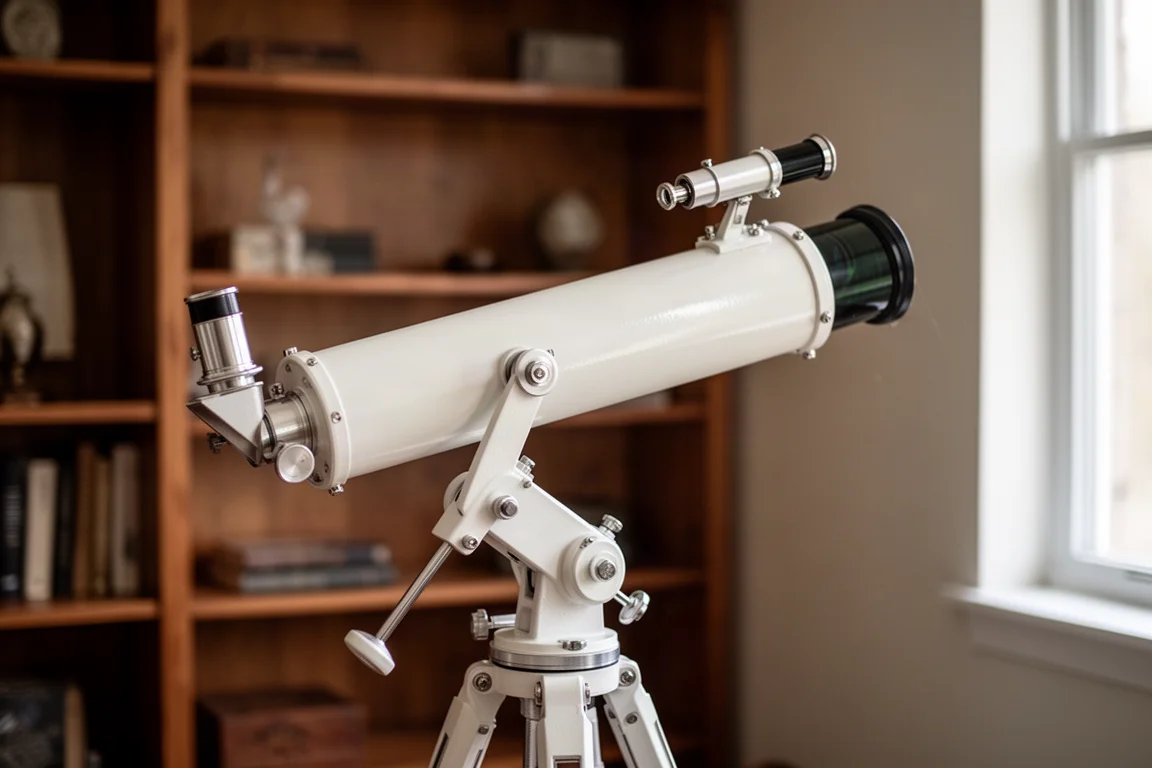
If you want computerized GoTo convenience or deep-sky imaging, this is not that kind of scope. Its appeal is simplicity, optical quality, and a tactile observing experience that modern budget refractors often do not match.
Build Quality and the Focuser
Starting at the back end, the telescope comes with an 18mm Ortho 1.25-inch eyepiece and a 45-degree Celestron diagonal. The 45-degree angle is a little unusual for an astronomical telescope, where 90-degree diagonals are more common, but it works well and has held up nicely. A 90-degree Orion diagonal can be swapped in at any time if you prefer.
The rack and pinion focuser is the standout mechanical surprise. Rack and pinion focusers are often a little loose, especially on older scopes, but this one has no slop at all. Nearly four decades later it is still rock solid.
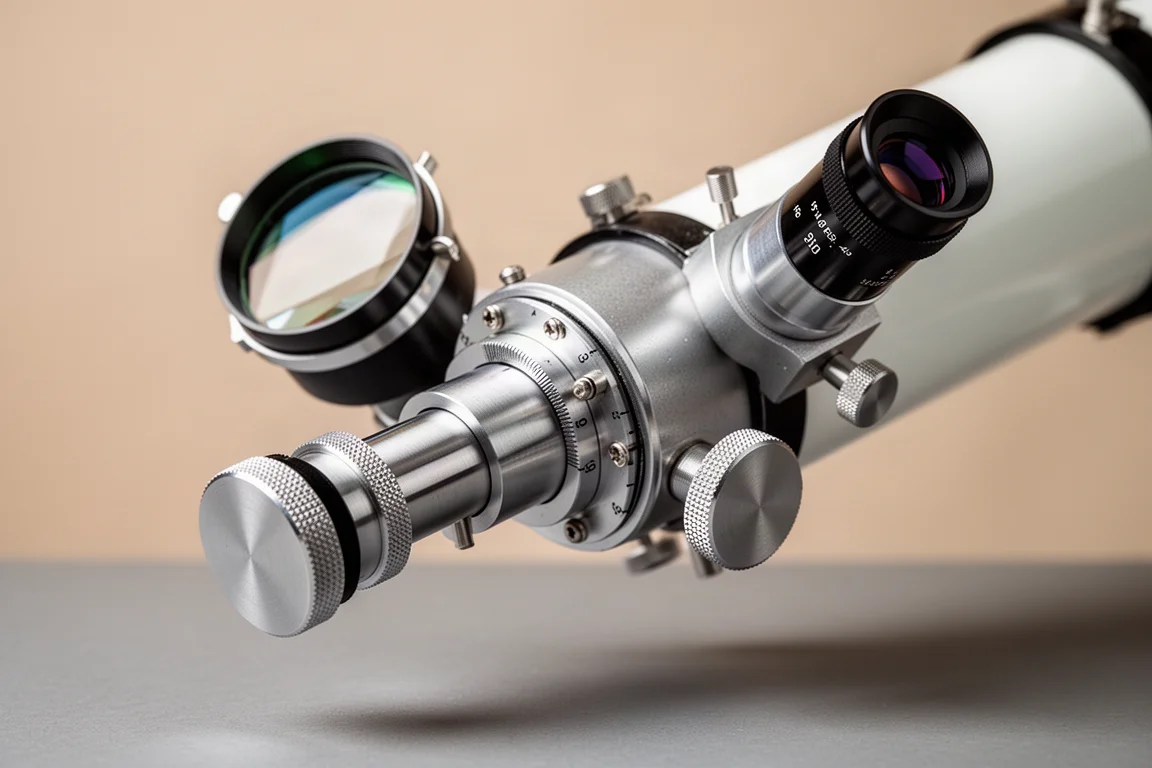
There is more clever engineering hidden here. Two adjustment screws sit under the base plate beneath the viewfinder. Tightening them presses a small block of wood against the focuser body to keep everything firm, an impressively simple way to preserve the feel over decades.
The standard optical viewfinder is not image-corrected, so everything appears upside down, but the crosshairs were perfectly intact. That is a real bonus on a scope this age, since damaged crosshairs are a common issue on used finders.
The Mount: An Unusual Alt-Azimuth Design
The mount is the most distinctive part of the package. It is an alt-azimuth setup, even though the flexible slow-motion cables give it the look of an equatorial mount. The mount is marked Vixen, and the construction points to Vixen in Japan as the manufacturer, though it uses two ring connectors rather than a modern Vixen dovetail block.
The workflow is simple: point the scope close to your target, lock the azimuth, then use the flexible slow-motion cables for fine control in elevation and azimuth. The result is very fine-grained movement, though the adjustment range is limited. The mechanism rides on a threaded block over a screw, so you get roughly plus or minus ten degrees of travel. In practice that limitation barely matters, because the mount keeps enough friction that you can still nudge the tube by hand and then resume slow-motion tracking.
Optical Performance
The optics are where this telescope earns its reputation. Views of the Moon show no chromatic aberration at all, which is remarkable for a refractor. Many refractors of this size show at least a trace of false color on bright targets, but this one does not.

That experience matches a pattern: long-focal-length refractors with good Japanese optics from this era simply perform. The Meade 320 restored previously showed the same trait, with terrific, color-free views. Venus was also observed, though it sat too low in the sky for a proper assessment.
Orion shows up well in this scope, but under heavily light-polluted Bortle 8 skies, faint deep-sky objects are difficult without a larger aperture. This is a lunar, planetary, and bright-double instrument at heart, and within that role its views are excellent.
Things to Consider Before Buying
A few practical points before you go hunting for one of these:
- Missing accessories are common. This example arrived without its dust cover, which had to be sourced separately through the CloudyNights classifieds. The replacement fit perfectly, but factor in that small parts may need replacing.
- The finder is not corrected. If an upside-down view bothers you, plan on an upgrade or some getting used to.
- Limited slow-motion range. The fine-adjustment mechanism covers roughly ten degrees of travel, so you re-aim the scope by hand for bigger moves.
- Aperture limits. In light-polluted skies, a small refractor will not reveal faint deep-sky targets. Buy it for what it does well.
Buying Advice for Used Vintage Refractors
This one was found on Facebook Marketplace from a seller who was moving and simply had no room for it. They were not into astronomy and likely inherited it or received it as a gift years ago. That is exactly the kind of situation where these telescopes surface at reasonable prices.
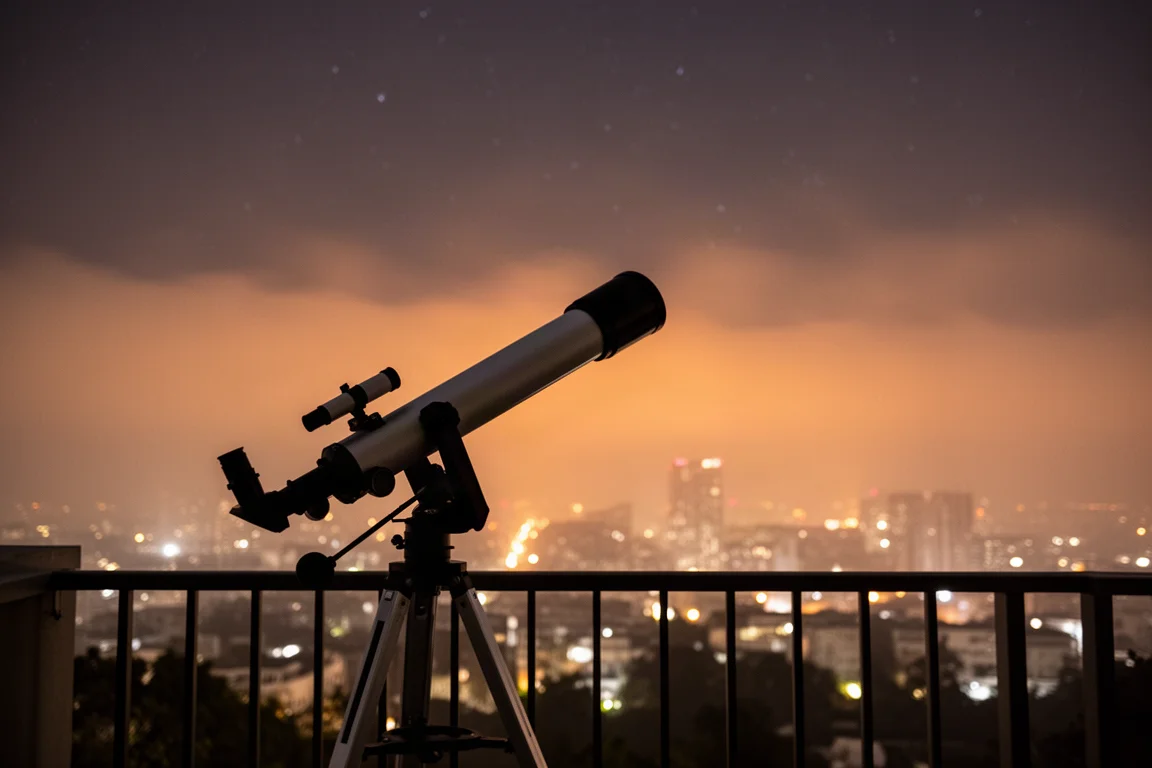
The advice is straightforward: if you come across a Japanese-made 1980s vintage refractor at a fair price, go ahead and grab it. The combination of excellent optics, durable mechanics, and Vixen-built mounts makes them genuinely rewarding telescopes even today, and they do not need much beyond a cleaning to get back to work.
Conclusion
The Celestron 80mm FirstScope proves that a well-made 1980s refractor can still be a satisfying telescope. Sharp, color-free lunar and planetary views, a focuser with zero slop, and an unusual but effective alt-azimuth mount all hold up decades later. If one appears on your local used market at a good price, it is a purchase you are unlikely to regret. Clear skies.
Product link
View more details for Celestron 80mm FirstScope
This product is mentioned in the review. Check the specifications, options, and compatibility before buying.
View more details for Celestron 80mm FirstScopeFurther reading
Related Reviews

Telescopes
Sightron SJ75 UF and Sky-Watcher HS125: Two Telescopes Worth Watching
A look at two notable telescopes from a recent camera and optics expo: a sharp new astrograph from Sightron Japan and a compact fast reflector from Sky-Watcher.

Telescopes
SV503 102ED Review: A Budget 102mm Refractor That Surprises
The SV503 102ED is an affordable 102mm doublet refractor that delivers surprisingly decent star shapes and a smooth focuser, despite some chromatic aberration and light falloff.

Telescopes
SVBony MK127 Review: A Compact Maksutov-Cassegrain That Surprises
The SVBony MK127 is a 127mm Maksutov-Cassegrain telescope with a unique 0.65x reducer, making it a versatile option for visual astronomy and even some deep-sky imaging.