Cookware Reviews
Caraway Stainless Steel Cookware Review: Pretty Pans With a Price Problem
Caraway's new fully clad stainless line looks great and has some genuinely nice lid design, but weak value, hot handles, and questionable marketing claims make it a tough recommendation.
Introduction
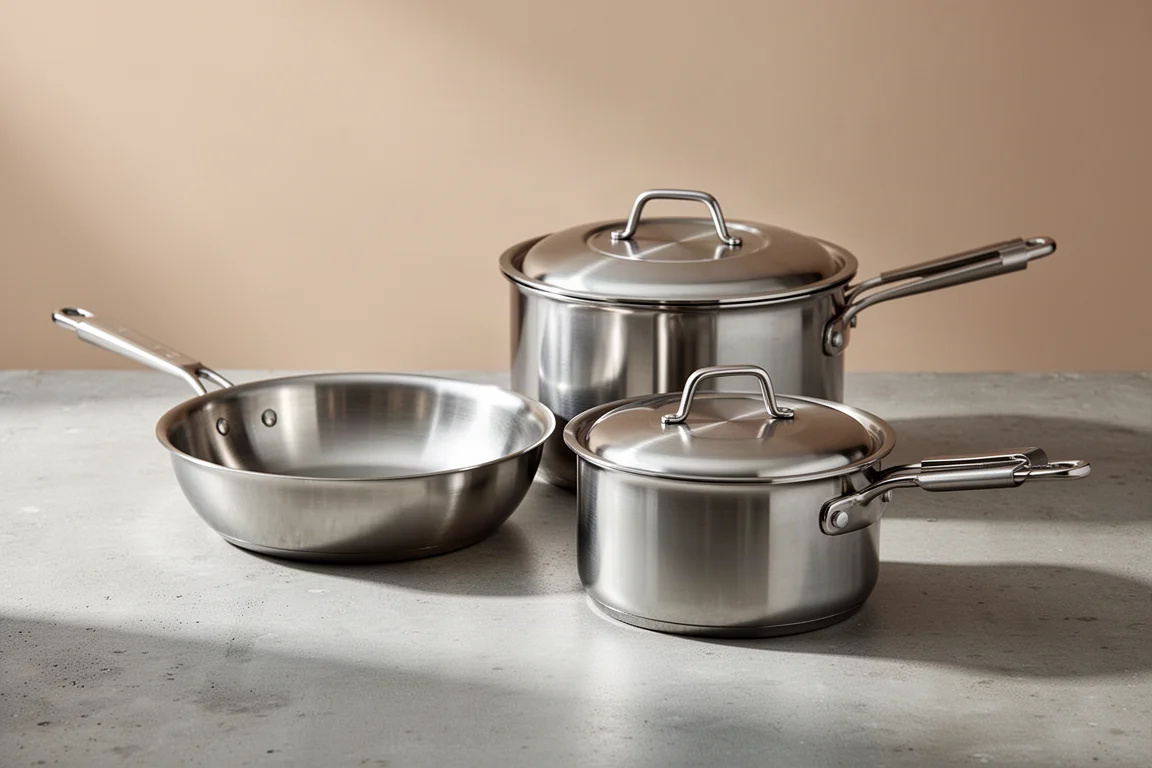
Caraway made its name with colorful ceramic-coated cookware and a wellness-first brand story, and in October the company launched a line of fully clad stainless steel pans. After cooking with them, we can say the pans are not terrible. The pricing, however, is hard to defend, and the marketing around the line raises even more questions than the price. This review breaks down where the pans succeed, where they fall short, and whether they make sense at all for most buyers.
Who This Product Is For
On paper, this line targets people who care about what they cook with and want a polished, modern-looking stainless set. In practice, there is a contradiction at the heart of that positioning. The company recommends hand washing these pans rather than using a dishwasher, apparently to avoid edge wear issues. But buyers diligent enough to hand wash premium cookware are rarely the audience a convenience-focused lifestyle brand is built around. It is worth knowing who actually fits this product before buying: someone who values looks, likes heavy well-machined lids, and is willing to hand wash and pay a substantial premium for a largely standard design.
Build Quality and Materials
These are typical five-ply stainless pans, with 304 stainless on the interior, ferritic stainless on the outer face for induction compatibility, and an aluminum core. If the core layer is roughly the same thickness as the inner and outer walls, that works out to around 1.7mm of aluminum, which is genuinely good. All five layers are ground flush at the top edge, which gives the pans a sleek look, but that flush edge can wear down over time, leaving sharp stainless edges exposed where the softer aluminum has eroded. This is the same issue that led to a hefty class action settlement for another brand, and Caraway’s recommended fix is simply to skip the dishwasher.
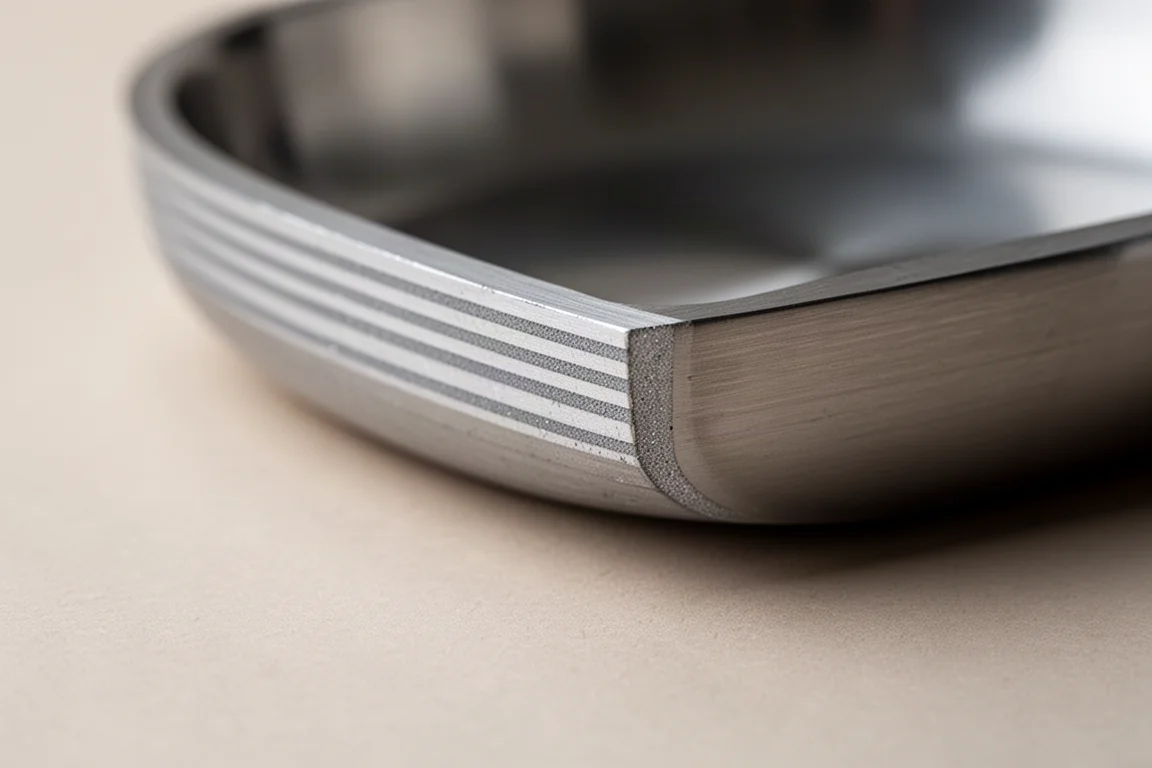
As a rule, five-ply construction is more about marketing than measurable performance. Bigger numbers sound better, and that framing suits a brand that leans heavily on marketing. The materials themselves are fine, but at this price we hoped for more than a standard sandwich.
Design and Aesthetics
This is where Caraway does best. The pans are prettier than average, with a modern shape and details that feel considered. The lids are a genuine highlight: heavy, with an inset bevel that keeps them seated in place. The handles deserve split treatment. The strap-style handles used on the sides are actually good, though they sit close enough to the pan body to get quite hot during cooking.
The longer stick-style handles are the opposite. They feel misaligned with the product’s price point, surprisingly thin and cheap to the touch, to the point that reaching for one often prompts a second glance to check it is not plastic. They are the weakest part of an otherwise well-finished design.

Then there are the straight sidewalls. Caraway skipped the flared, rounded lips most cookware brands use, and the reason becomes obvious the moment you pour anything out: liquid clings, runs down the outside, and makes a mess. It is a small detail that shapes daily use more than any spec sheet number.
Real-World Performance
The most troubling performance finding came from ordinary use. Caraway claims its pans are more corrosion resistant than other stainless steel pans, supported by side-by-side comparison charts. After boiling a single pot of noodles, we saw significant pitting compared to what we would expect from other brands. That claim simply did not hold up in the kitchen.
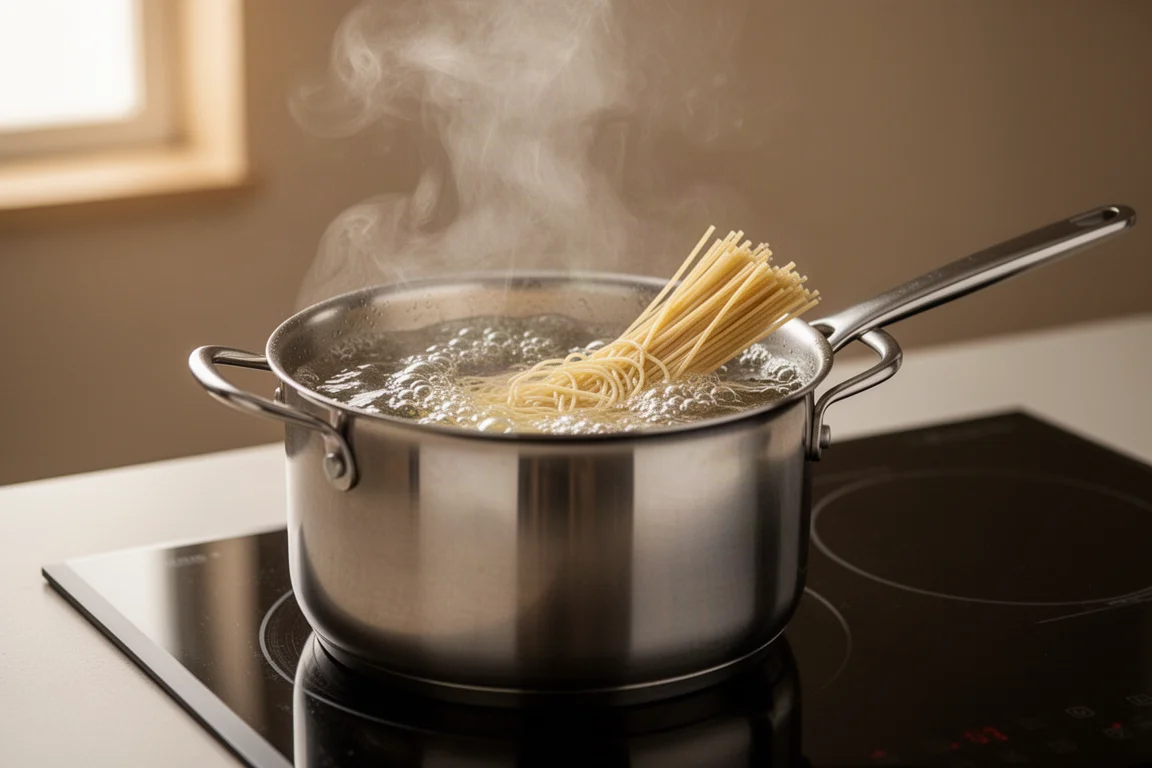
The lid’s steam vent is another oddity. The hole exists to prevent lid rattling, but cover it up and the lid does not rattle anyway; steam simply escapes elsewhere around the rim. The tolerances are not tight enough to require it, which makes the vent feel like a solution to a problem these pans do not have.
The Marketing Problem
Caraway’s brand is built on being non-toxic, and the product pages list chemicals the cookware supposedly avoids: PFOA, which was phased out of use in the US roughly a decade ago and banned even earlier in Europe; hexavalent chromium, a welding byproduct irrelevant to finished cookware; and elements like mercury and cadmium that have no bearing on the product at all. Even hard anodization, a benign hardening process, makes the list.
What the list omits is more interesting. Like most stainless steel, these pans contain both nickel and chromium, which are heavy metals. The company’s FAQ acknowledges them but says they will not affect you unless you have an allergy. That is only partially true under specific conditions, and the selective framing is hard to square with a brand whose identity is safety.
The origin story follows founder Jordan Nathan overheating a PTFE pan in 2018, with Caraway launching in 2019. It may be true, but Nathan’s background is consumer psychology rather than materials science, and the brand’s growth has been credited largely to lifestyle and wellness influencers. The overall pattern is a generic product sold at an exorbitant price through an information disparity rather than transparency. At this level, value is the real casualty.

Buying Advice
If you already love the Caraway look and do not mind hand washing, the lids and strap handles are legitimately nice, and the pans cook fine. But with the lowest stainless steel score we have recorded and a price well above comparable five-ply sets, there is little functional reason to choose this line over established alternatives. Buyers who want fully clad stainless should look elsewhere unless the aesthetics alone justify the premium for them. Wait for a deep discount if the design wins you over.
Conclusion
Caraway’s stainless steel line is a well-finished, attractive set held back by hot stick handles, awkward pouring, dishwasher restrictions, questionable corrosion resistance in real use, and marketing that oversells and selectively omits. The lids are great, the strap handles are good, and the design is lovely, but at this price the value is simply not there for most home cooks.
Product link
View more details for Caraway Stainless Steel Cookware
This product is mentioned in the review. Check the specifications, options, and compatibility before buying.
View more details for Caraway Stainless Steel CookwareFurther reading
Related Reviews
Kitchen Cookware
Best Budget Cookware 2026: Which Affordable Brands Actually Perform
After testing dozens of budget cookware options, here are the brands worth buying and the red flags to avoid when shopping for affordable kitchen pans.
Cookware
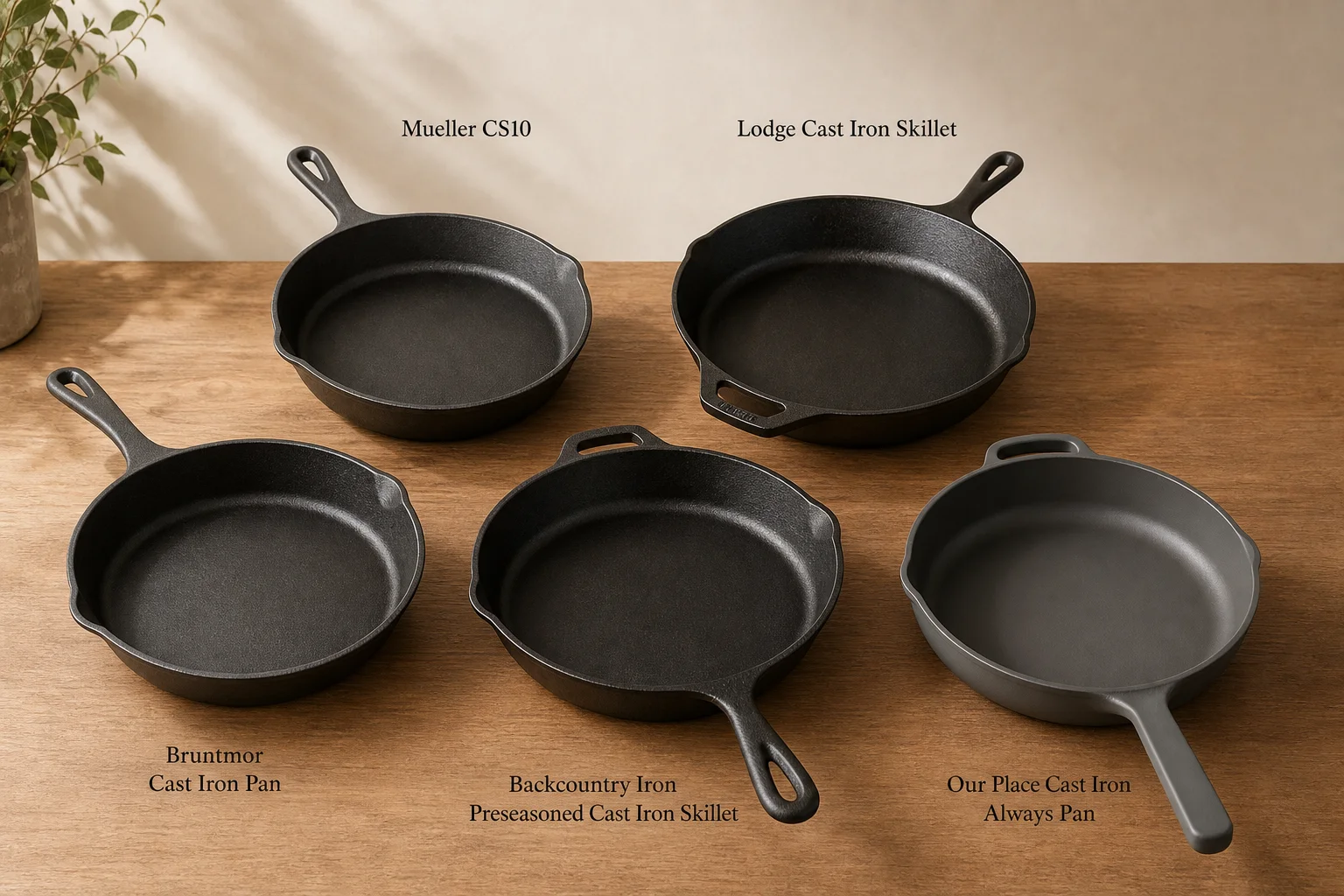
Best Cast Iron Pans 2026: Five Options from Budget to Premium
A practical breakdown of five cast iron skillets, from affordable Mueller to premium Our Place, with clear strengths and trade-offs for different cooking needs.
Cookware
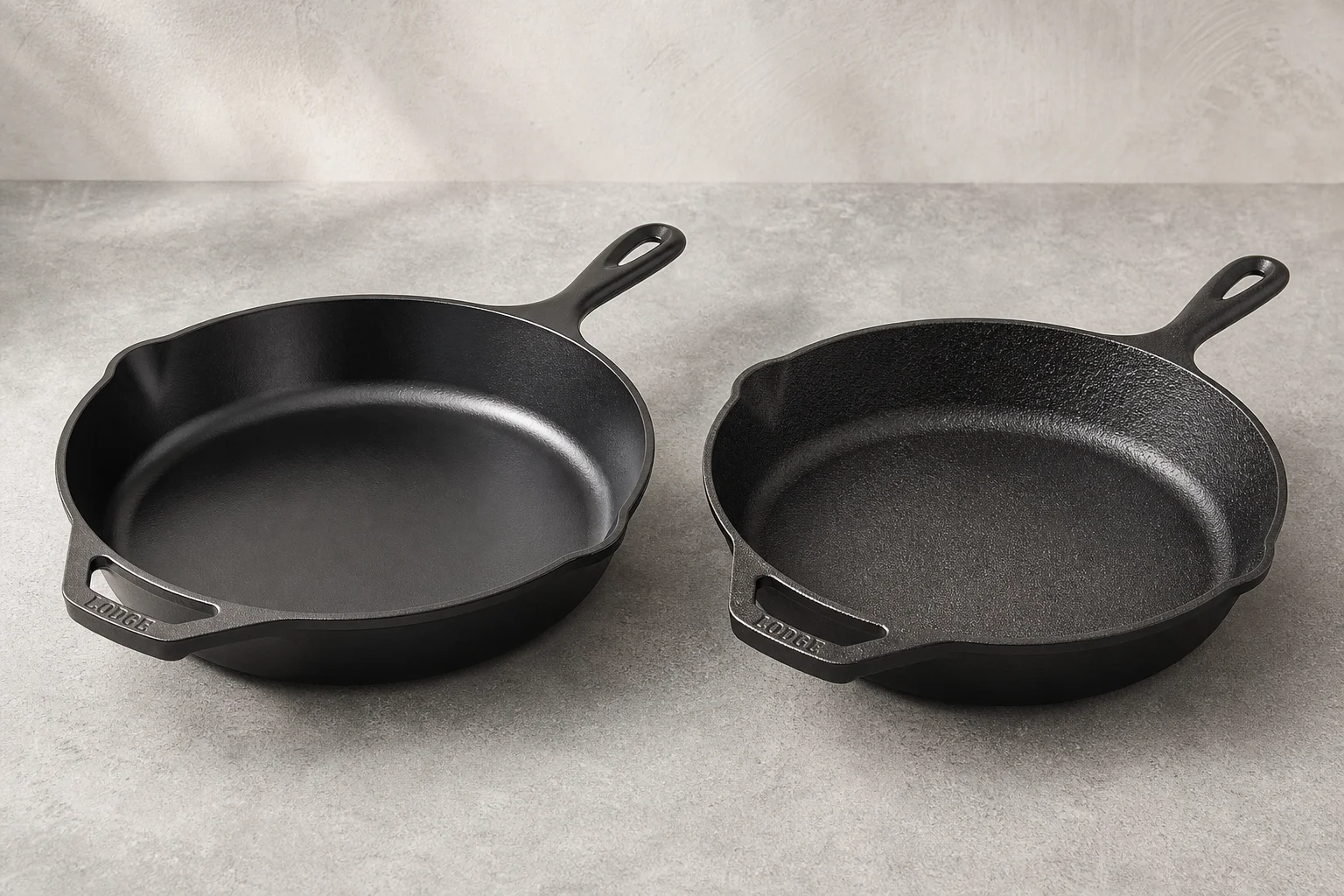
Best 12-Inch Cast Iron Skillets: Premium Craftsmanship vs. Reliable Budget Option
Two standout 12-inch cast iron skillets tested for heat retention, surface finish, and durability. One premium choice and one budget-friendly alternative that both deliver.