Snowboarding
Capita Indoor Survival: A Beginner-Friendly Park Snowboard Worth a Close Look
A fully twin, soft-flexing park board with a catch-free camber profile that makes switch riding, presses, and ollies easier for newer park riders.
Introduction
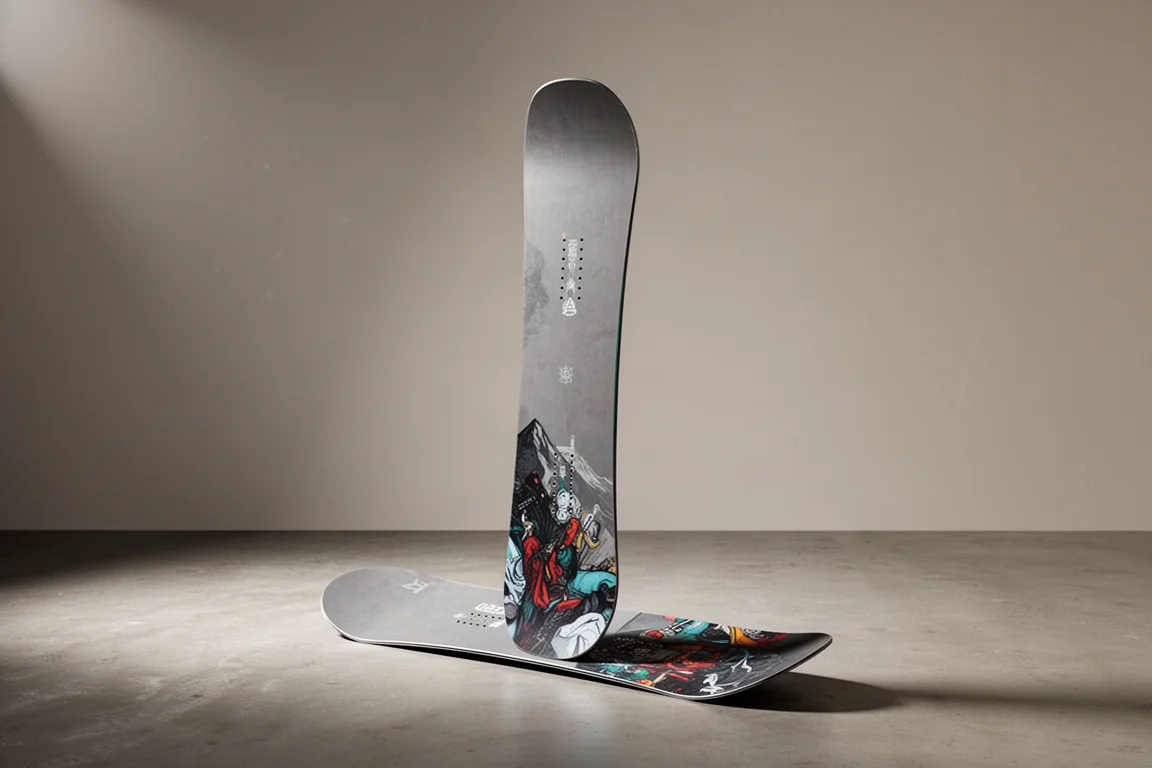
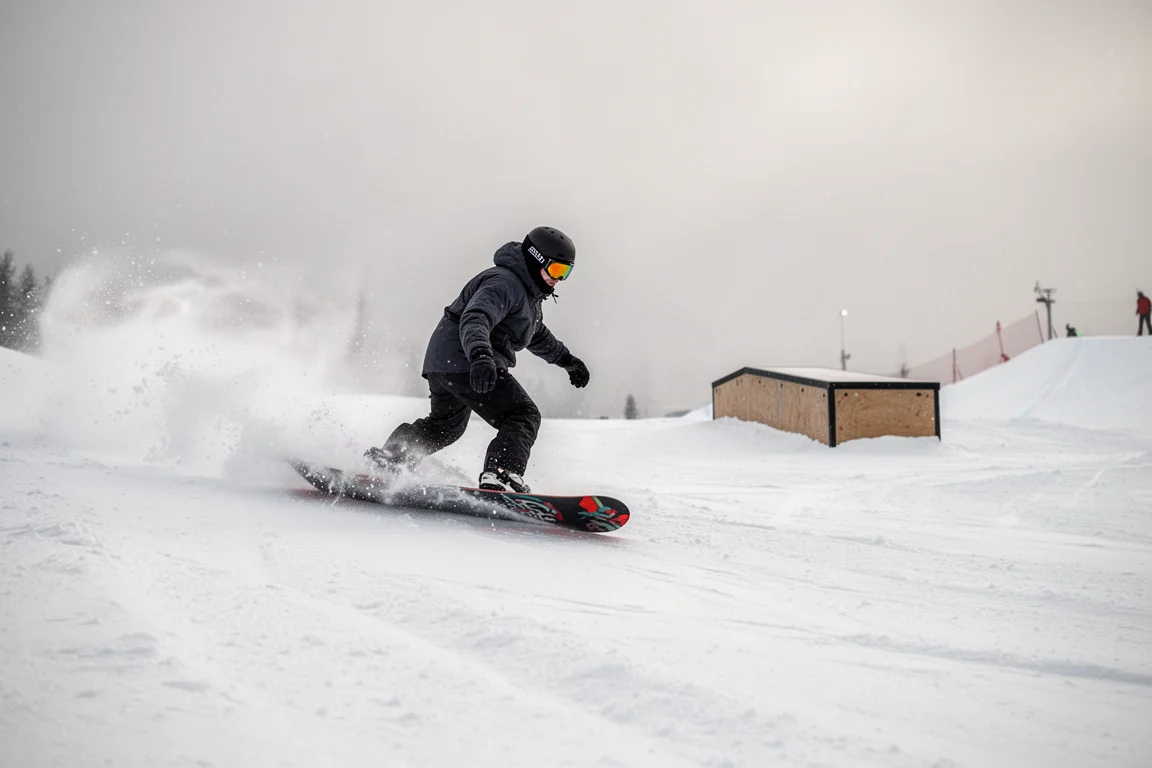
A good beginner park snowboard should make everything about the terrain park easier: riding switch, holding presses, popping ollies, and generally feeling more confident while learning tricks. Not every park board is built the same, though, and each one has its own strengths. The Capita Indoor Survival is a board that lines up with nearly every trait worth looking for in a first park deck, from its fully twin shape to its soft flex and forgiving camber profile.
Who This Board Is For
The Indoor Survival is aimed at riders who are new to park riding and want a board that helps rather than fights them. Its shape is completely twin, meaning the board is identical from nose to tail. That symmetry is one of the most basic but important features for beginners, because it makes switch riding, landing switch, and learning spin tricks much easier.
Main Strengths
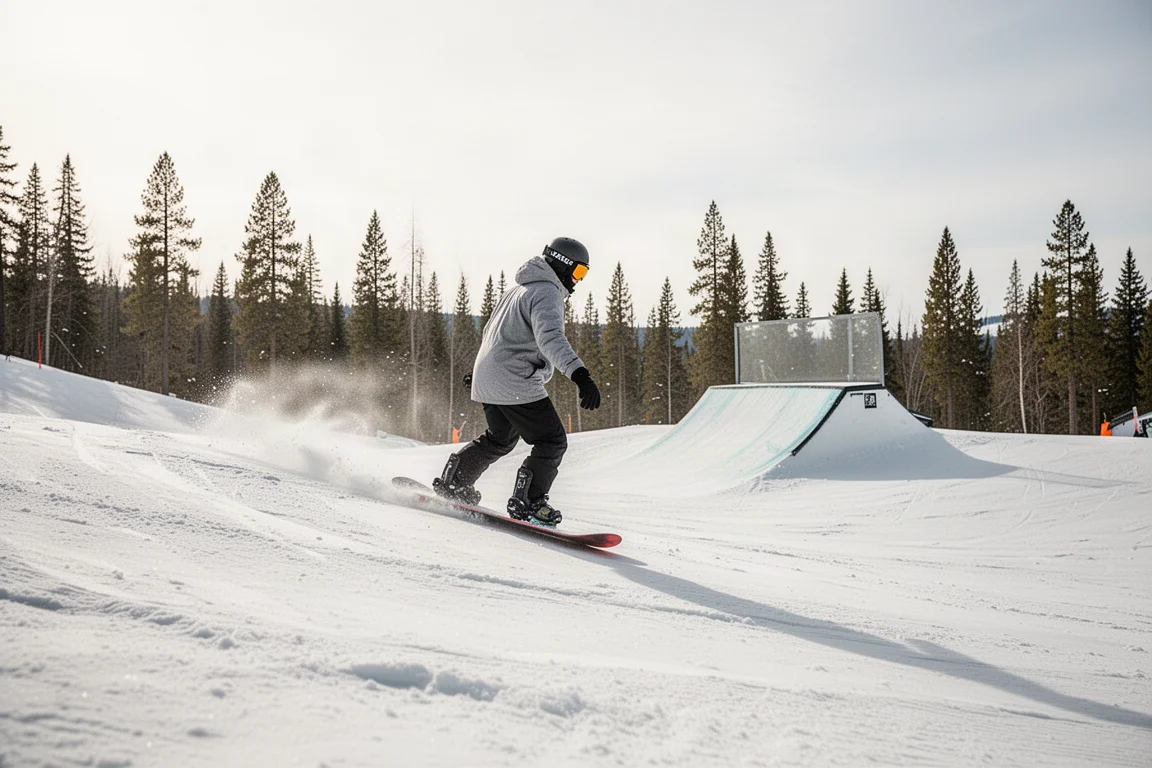
The standout trait of this board is its soft flex. On a scale out of 10, the flex sits around a four. That softness means that when you put your weight over the tail or nose, the board easily flexes and lets you press onto features. It also makes ollies and nollies easier, since the board loads and pops with less effort. A stiffer board, by contrast, makes presses genuinely hard to get into, and many riders struggle with butters until they move to something softer.
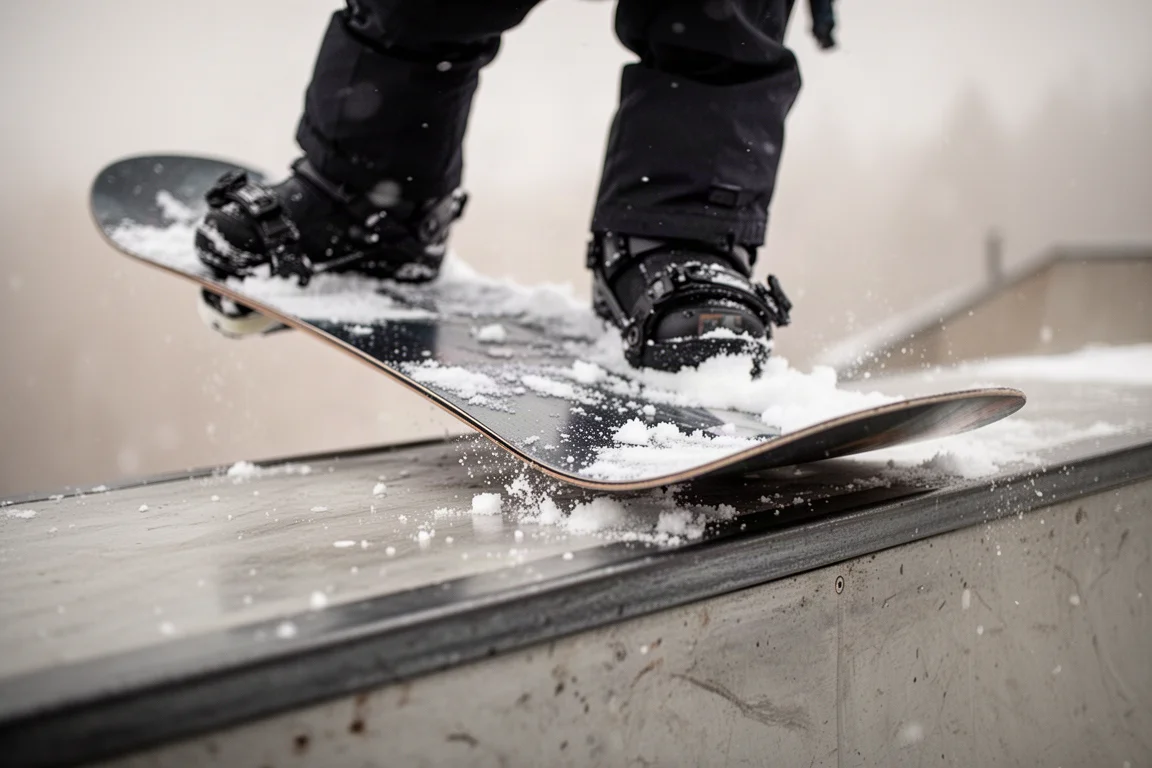
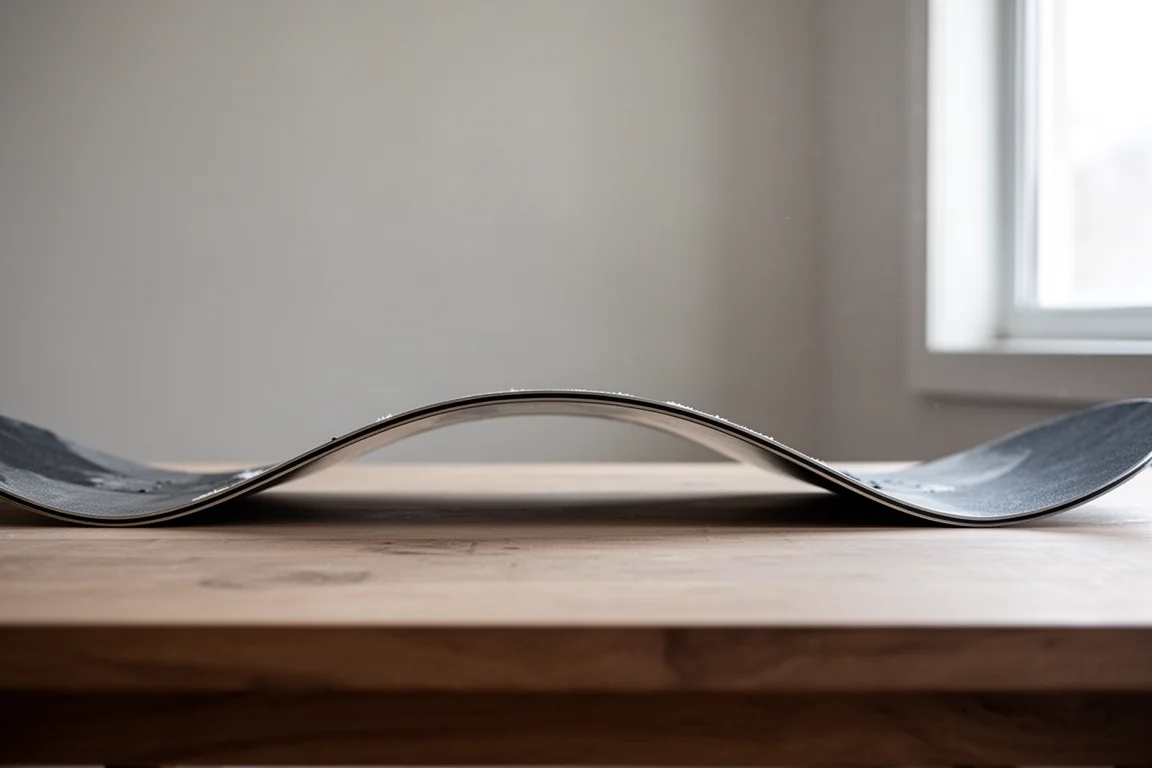
The camber profile is another strong point. The majority of the board’s profile is positive camber, with the middle of the board sitting highest and the profile dropping toward the tips. Toward the tips, the profile goes flat or slightly reverse, which gives you two things: stability and energy from the positive camber underfoot, and a much more catch-free feel at the contact points. For park riding, that matters a lot, because quick turns up to a box or a jump feel effortless when the tips are not grabbing the snow.
Things to Consider Before Buying
There are a few practical points worth weighing up before committing. On price, a beginner park board should not cost too much. As a rough guide, the upper end sits around $600 American, and the low end around $350. At the lower end, boards may use heavier woods, but those woods can actually add stability and pop since they are typically stronger. Lower-priced boards often come with an extruded base, which is easier to damage; spending a bit more usually gets you a sintered base, which is stronger but needs waxing more often.
Two more technical considerations also apply. The sidecut radius matters for quick turning: a smaller number means the board draws a smaller circle and turns faster, which is exactly what beginner park riders want. Sizing matters too. Match the board length to your weight using the manufacturer’s size chart, and if there is a range that fits, lean toward the smaller size for the park since a shorter board makes tricks easier. Just stay within the range, because going too small costs you stability and going too big makes turning and getting airborne harder. Boot size is worth checking as well: if your boots go above a size 10, a wide board helps keep your toes and heels from dragging in the snow.
Buying Advice
Beyond the specs, it genuinely helps to pick a board you are excited to look at. A fun graphic can be inspiring in the park and get you amped up for learning tricks, and the Indoor Survival pairs its park-friendly specs with artwork that many riders find genuinely cool. If your priority is a soft, symmetrical, catch-free deck for learning butters, presses, and spins, this board checks the boxes.
Conclusion
The Capita Indoor Survival brings together the core ingredients of a great beginner park snowboard: a fully twin shape for easier switch riding, a soft flex around four out of ten for effortless presses and butters, and a positive-camber-dominant profile that flattens toward the tips for catch-free quick turns. Match the length to your weight, size up to wide if your boots run above a 10, and you have a board that will help you progress faster in the park.
Product link
View more details for Capita Indoor Survival
This product is mentioned in the review. Check the specifications, options, and compatibility before buying.
View more details for Capita Indoor SurvivalFurther reading
Related Reviews
Snowboarding
2025 Snowboard Gear List: Five Picks That Earned Their Place on the Mountain
From Zeiss-lens goggles to a hybrid step-in binding, here are five pieces of 2025 snowboard gear that held up across a full season of riding.
Snowboarding
2026 Snowboard Gear List: Boards, Bindings, Boots and Outerwear Worth a Look
A season-ready snowboard setup built from the bottom up: base layers, Strafe outerwear, Ride and Union boots, Union bindings, and two new Capita boards.
Snowboarding
32 Cold World Review: A Playful Hybrid Camber Board for Park Laps
The 32 Cold World blends classic camber underfoot with flat nose and tail sections for a predictable, butter-friendly ride aimed at intermediate park riders.