Gravel Bikes
Canyon Grail Review: A Gravel Race Bike Built Around Handling
Canyon's redesigned gravel race bike swaps the Hover Bar for a conventional cockpit, adds genuinely useful accessories, and delivers stable, confident handling.
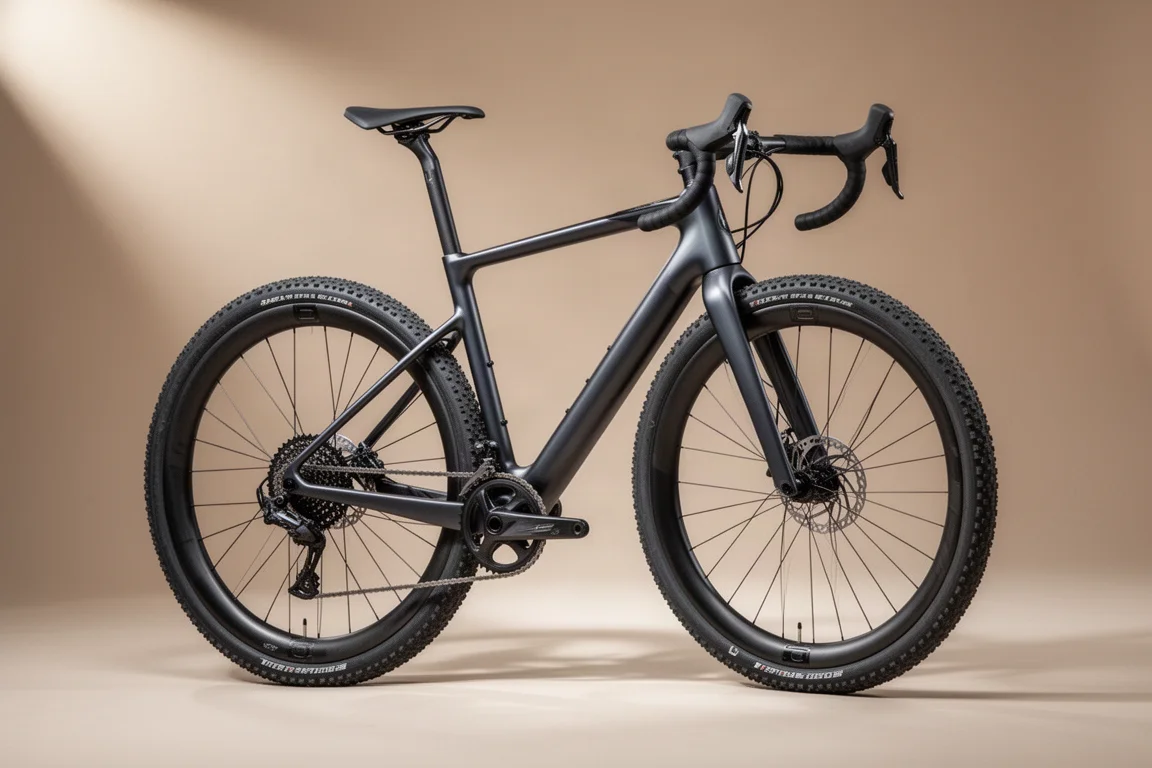
Introduction
The Canyon Grail has been rebuilt around a longer, more stable geometry, and the most divisive feature of the original has been retired. The Hover Bar, the double-decker cockpit that defined the first-generation Grail, is gone. In its place is a conventional one-piece double drop bar with shaping developed specifically for off-road riding.
Canyon positions the new Grail as the best gravel bike it has built, and the package supports the claim: strong handling, a comfortable ride, genuinely useful integration and a set of thoughtful accessories, wrapped in a shape that looks fast standing still.
The bike covered here is the third-tier Grail CFR Di2, priced at £6,699, with US pricing still to be confirmed. That is not a bargain, although against competitor bikes at the same price the build is competitive. Move further down the range and value improves noticeably, which matters when the geometry that makes the bike so good is shared across the platform.
Who This Bike Is For
This is a gravel race bike first. It suits riders who want a fast, planted bike for long gravel events and mixed-surface racing, and who value stability at speed over the twitchy reactivity of a pure cyclocross machine. The seated pedalling position is superb, and the ride position is appropriate for racing: with a few spacers under the stem there is still a small amount of saddle-to-bar drop, and those spacers can be removed for a lower, more aggressive front end.
It also suits riders who want one bike to cover more than racing. Optional integrated mudguards and removable fork sleeves that carry up to 3 kg of luggage or extra water make the Grail far more adaptable than many of its contemporaries.
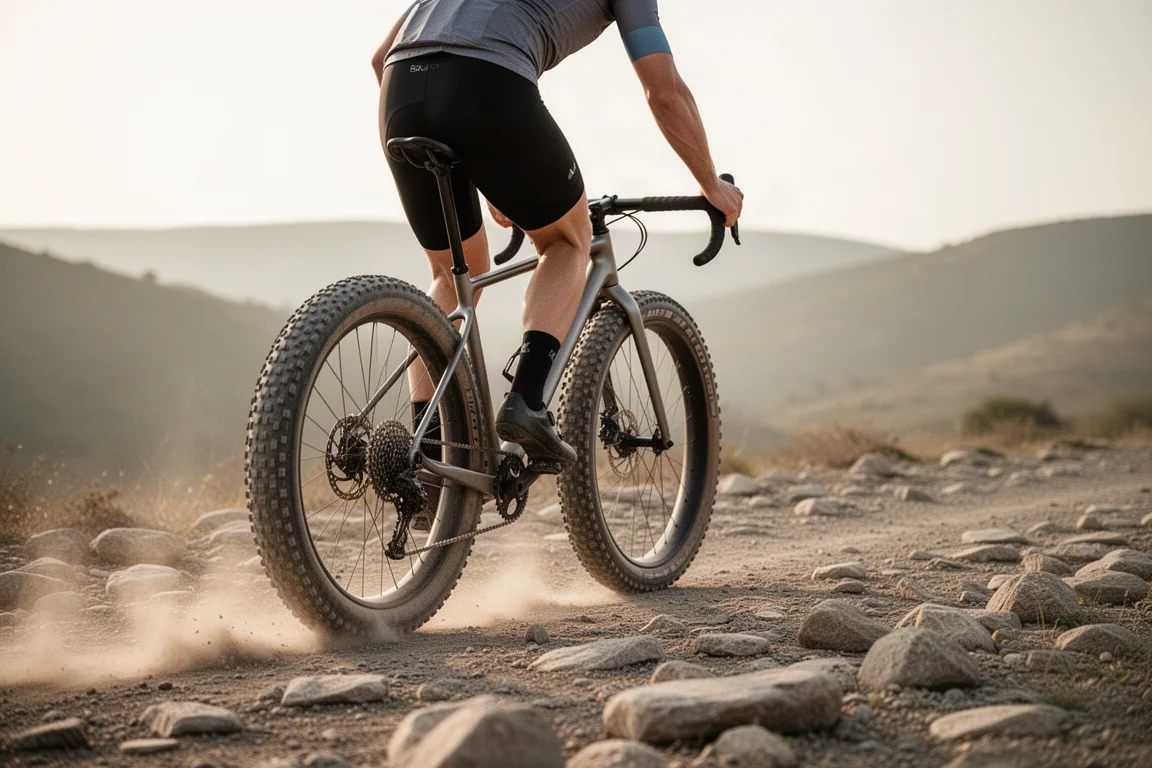
Riders who prefer to run very wide rubber, or who want a simple, easily swapped cockpit, should weigh those points carefully before committing.
Handling and Geometry: The Heart of the Ride
Geometry is the main talking point, and the main reason the bike rides as well as it does. Canyon set out to build on the stability of the original Grail while improving high-speed handling and keeping the bike agile. The result is a bike that feels stable, sure-footed and calm at speed. It ploughs through rattly gravel roads, yet climbs calmly with no urge to wander when you are pushing on the bars.
That stability means a little more forethought is needed for last-minute avoidance, such as dodging a puddle, but the bike is not sluggish or unreactive. The effect is less pronounced at slow speeds: on steep or technical terrain the Grail feels amply capable, and it is easy to shift weight fore and aft and lift the rear end when required.
The numbers explain part of it. The wheelbase is 27 mm longer than the previous Grail, at 1,080 mm on a size large, which is notably long for a fast gravel race bike. The front centre, the distance from the bottom bracket to the front axle, is long as well, which is why the bike does not feel as sluggish as the geometry chart alone might suggest. Chainstay length stays short, which helps the bike remain reactive.
Cockpit and Integration
Canyon says the Hover Bar was retired partly because it was not aerodynamic. Two handlebars at the front of a bike create more to catch the wind, and the design also carried practical drawbacks. Its replacement is a fairly conventional one-piece cockpit with some carefully judged shaping.
The stem is short at 70 mm, which helps make the most of the long geometry. The tops are flattened without being so broad that they become uncomfortable over long hours. The ramps extend out to 70 mm, giving a useful hand position on the hoods or further back on the corner before the ramps. The drops flare out nicely and are long enough to avoid crushing the wrists, and the gentle flare and slight down sweep put the wrists in a neutral position.
A size large bike comes with a 44 cm wide bar, which is wider than a serious gravel racer might want. Canyon also offers an aftermarket 40 cm wide bar for riders who want a narrower, more aerodynamic front end.
One-piece cockpits always involve a trade-off. They look clean and, when the fit works, there are few disadvantages, but changing one is expensive and time-consuming. Canyon’s version is friendlier than some: the bike uses a standard round 1 1/8 inch steerer, so most aftermarket finishing kits will fit, although the hoses do pass through the headset top bearing.
A small slot in the bar area, called the Gear Groove, is where accessories such as an aero cockpit are mounted. The aero cockpit is borrowed from the Speedmax triathlon bike, with the pads at the base of the bars spaced slightly wider to suit gravel riding. Aerobars are not universally permitted in gravel racing, but for ultra-endurance events they are a significant comfort aid. The Gear Groove appears only on the two top-tier bikes; CF SL models do not have it. For accessories such as a computer mount there is little functional difference between the versions.
Accessories and Adaptability
Two accessories stand out. The first is a set of optional, fully integrated mudguards. Very few gravel race bikes offer provision for mudguards at all, let alone mudguards designed to match the frame. Critically, tire clearance is unaffected by fitting them, so a 42 mm tire still fits underneath. Compatibility with generic mudguards would have been preferable, but designing around mudguards at all is a point in the Grail’s favour.
The second is Canyon’s patented fork sleeves. These cargo mounts slide onto each fork leg and come off again, and each carries three-boss cage mounts for up to 3 kg of luggage or additional water. On a bike whose primary purpose is gravel racing, that kind of flexibility is unusual.
The Aero Load system is the name Canyon gives its down tube storage compartment. Integrated storage is more convenient and neater than strapping a bag to the frame, and this implementation is well designed, neat and quiet. Stock bikes ship with only the small multi-tool, which is the one part specific to the system, and most riders will be able to fill the rest with kit they already own. This feature is not available on the third-tier CF SL bike, which is a shame, although a frame bag or handlebar bag remains an option.
Tire Clearance, Tires, and Comfort
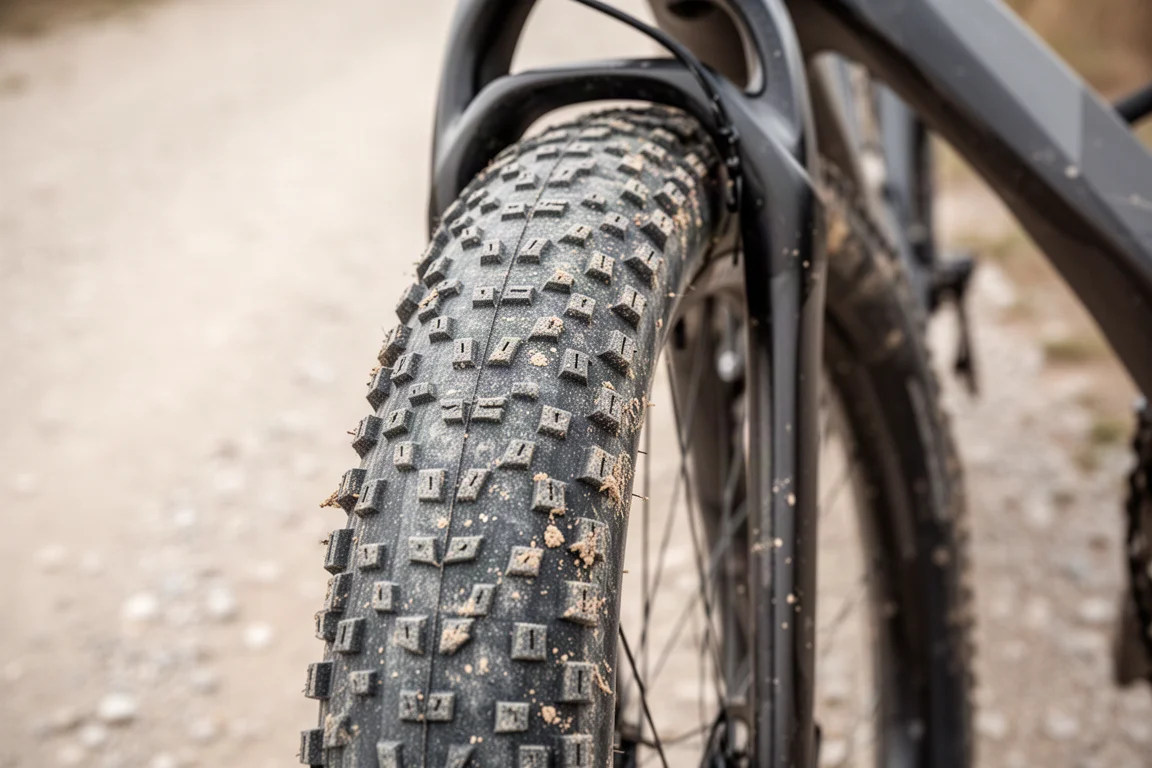
Tire clearance tops out at 42 mm, which is narrow by contemporary gravel standards. Canyon gives two reasons. First, its professional riders asked for the bike to accept road-sized chainrings, and the Grail takes up to a 52-tooth outer and 36-tooth inner ring. Increasing tire clearance while keeping those chainrings would have meant either dropping the chainstays or lengthening them, and both would have affected handling. Second, 42 mm is broadly the widest that racers tend to go in gravel events.
Most models in the range are fitted with Schwalbe G-One RS tires. The cornering lugs are widely spaced and the centre tread does not hold onto mud, so in wet or sticky conditions the tires are predictable even if they are not the grippiest available. They can feel a little delicate, and adding more sealant and a tire insert would be a sensible precaution.
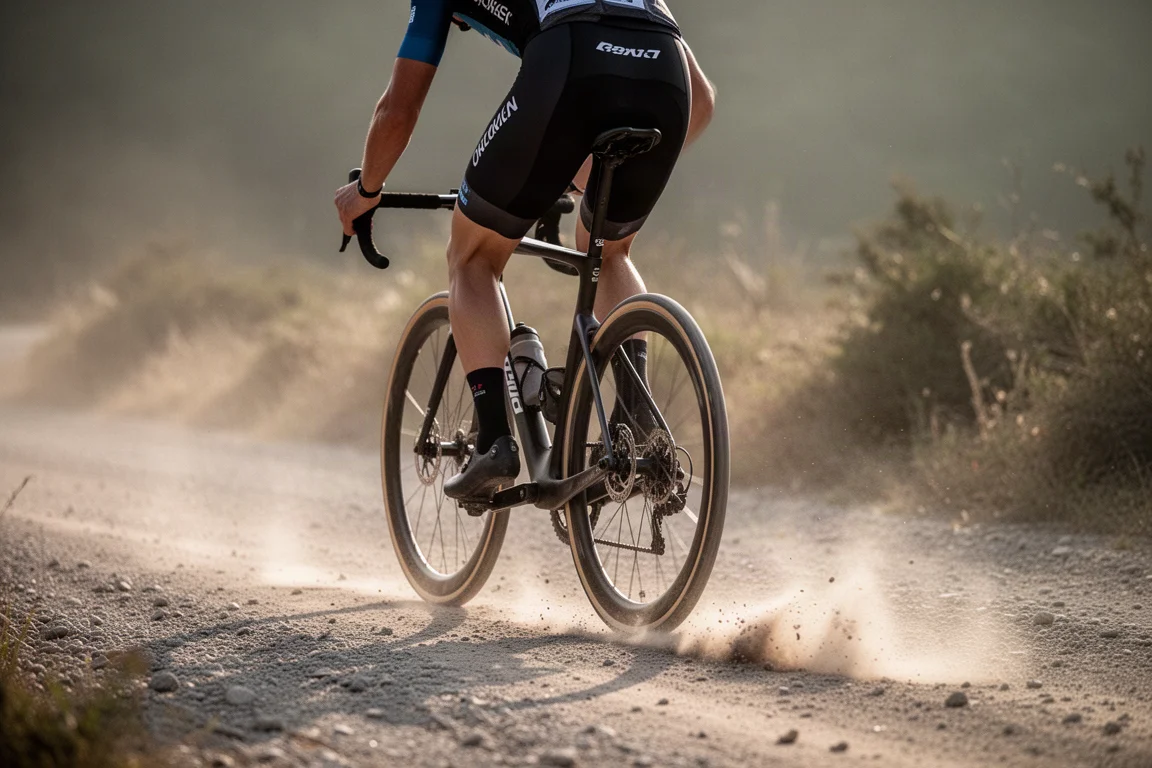
The VCLS leaf-spring seatpost found on many Canyon gravel bikes has been replaced by a D-shaped post using the same profile as the one on the Endurace endurance road bike. Canyon says the change followed feedback from professional riders who did not like the springy feel of the VCLS post. The new post is not as compliant on very rough terrain, but it still flexes plenty and is not uncomfortable. The seat clamp is straightforward, using an easy-to-torque Torx head, and it does not slip.
Things to Consider Before Buying
The headline consideration is price. At £6,699 for the CFR Di2 build, the top end of the range is expensive, even if it is competitive against similarly priced rivals. Tire clearance of 42 mm is narrower than some contemporaries offer, so riders who want to run larger volume should look elsewhere. The one-piece cockpit is also a commitment: if the fit does not suit, changing it is costly.
Finally, the Gear Groove and the Aero Load down tube storage are reserved for the more expensive builds. Buyers on a tighter budget lose some of the integration that helps the Grail stand out, though the geometry and the wider adaptability of the platform remain.
Buying Advice
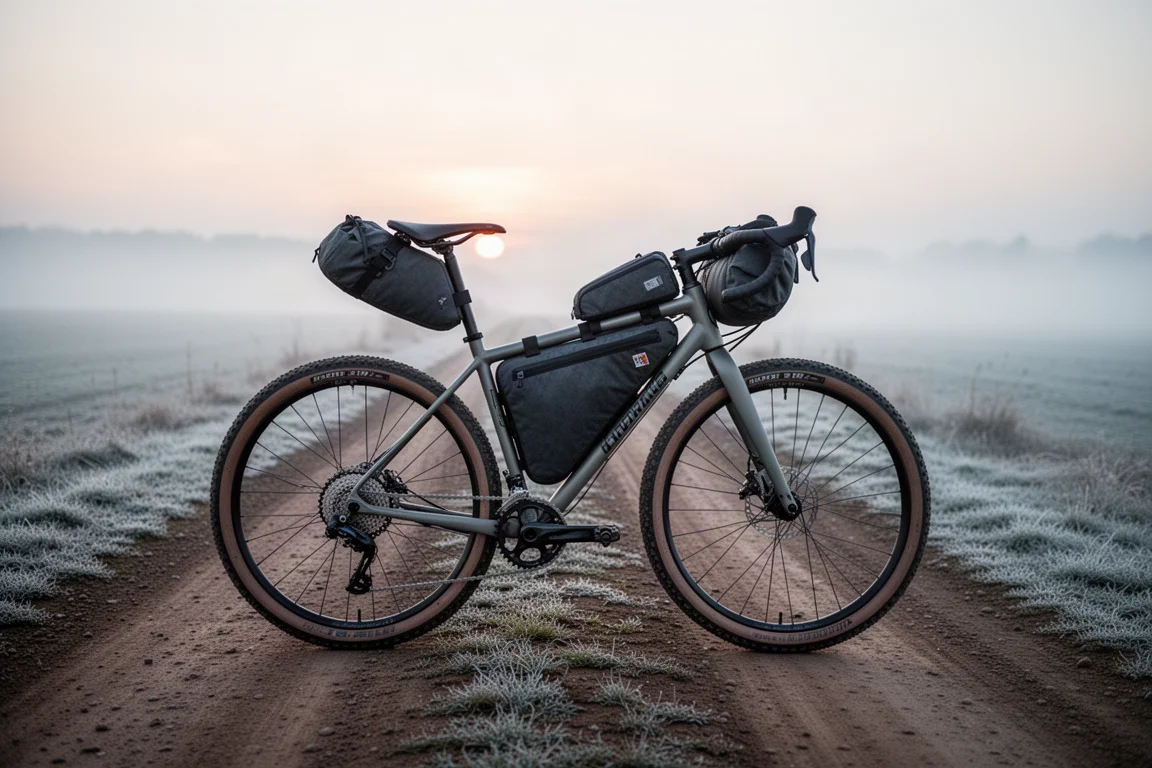
The geometry and the adaptability of the Grail platform are what make it so good, and those carry across the range. That makes the mid-tier builds the smart place to look. The Canyon Grail CF SLX 8 Di2, at £4,999, looks almost every bit as good as the CFR Di2 and retains the down tube storage and the Gear Groove on the cockpit, so the features that define the bike are still present for considerably less money.
That is still a significant sum, but it buys the handling, the ride quality and the accessory ecosystem that make the Grail compelling. Riders who do not care about the extra integration or adaptability will likely be delighted by the cheaper builds as well, since the ride character comes from the frame platform rather than the finishing kit.
Conclusion
The new Canyon Grail is a well-rounded gravel bike that is more adaptable than many of its competitors. The geometry is dialled, the ride is a joy, and the accessories are genuinely useful rather than decorative. The main caveats are price at the top of the range, narrower tire clearance than some rivals, and the fact that the best integration is reserved for the most expensive builds. For riders in the market for a gravel race bike, the Grail platform deserves a place at the top of the shortlist, ideally in one of the mid-tier builds.
Product link
View more details for Canyon Grail
This product is mentioned in the review. Check the specifications, options, and compatibility before buying.
View more details for Canyon GrailFurther reading
Related Reviews
Gravel Bikes
3T Exploro Ultra Review: A Fast Gravel Bike Built for Big Tyres
A close look at the 3T Exploro Ultra, an aero carbon gravel bike designed around wide tyres, with road-like handling, a 980 g frame and genuine rough-terrain capability.
Gravel Bikes
3T Extrema Italia Review: Aero Gravel Speed With Room for 57 mm Tires
The 3T Extrema Italia pairs an aero frame with huge tire clearance, Italian-made carbon and a more comfortable ride than the RaceMax. Here is what to know before buying.
Gravel Bikes
3T Race Max 2 Italia Review: An Aero Gravel Race Bike Made in Italy
A closer look at the second-generation 3T Race Max 2 Italia, covering its aero updates, ride character, tire clearance, internal storage and who it suits.