Gravel Bikes
Cannondale Topstone Carbon Review: A Gravel Bike for Rough, Long Routes
A carbon gravel bike with a flexing rear triangle, integrated lights and radar, and a wheel upgrade, tested over 160 kilometres of Welsh tracks in a heat wave.
Introduction
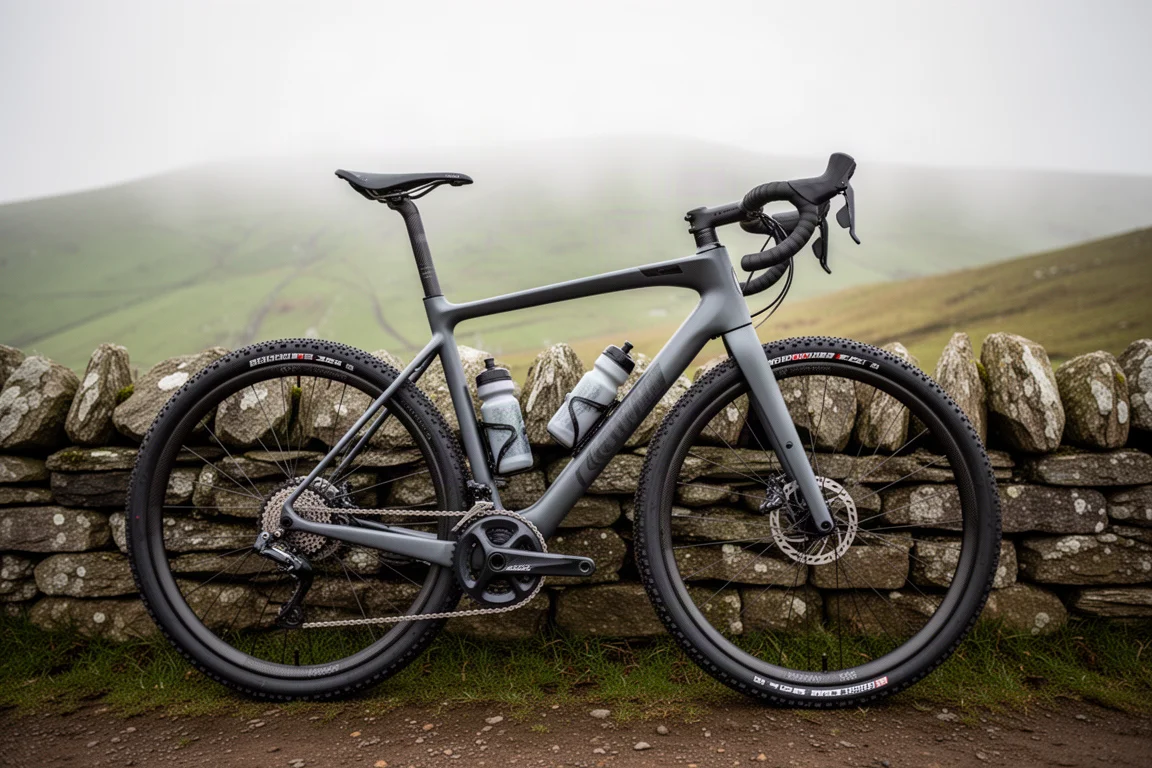
A 160 kilometre crossing of Wales in two days, in the middle of a heat wave, is not a gentle introduction to any bike. The route was originally developed in the 1990s, when mountain biking was king and off-road riders had one obvious tool for rough ground. That history makes the natural assumption clear: for terrain this demanding, a mountain bike should still be the sensible choice. The bike used for the attempt was the new Cannondale Topstone Carbon, and the thinking behind it was that modern gravel bikes have become capable enough to blur the line between the two categories. The useful question is therefore a simple one: can a gravel bike genuinely handle a route built for mountain bikes?
The Topstone Carbon has been in the range for a few years, and this new version keeps the geometry and the Kingpin rear suspension of the original while adding a set of updates that change how easy the bike is to live with. The headline changes are a non-asymmetric rear end, a threaded bottom bracket, a round seatpost, a lighter frame, a revised Kingpin design, and an integrated lighting and radar package carried over from the Synapse.
Who this product is for
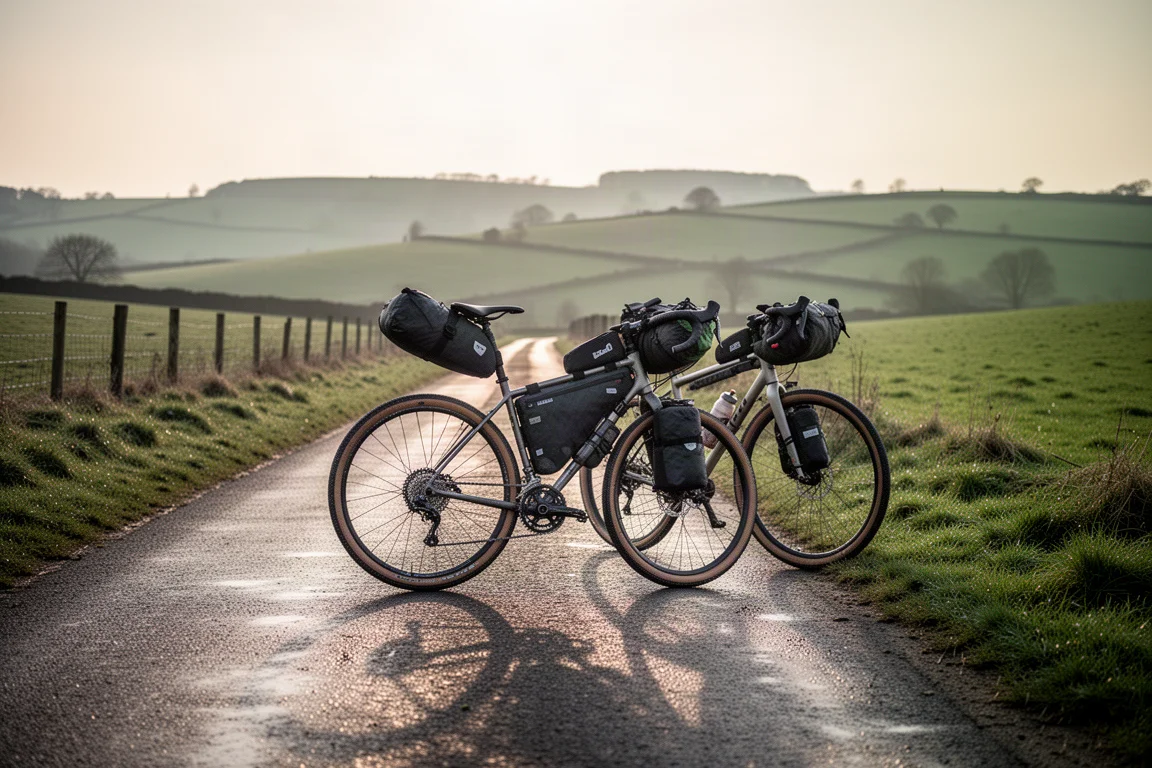
The Topstone Carbon makes most sense for riders who want a single bike that can cover long distances, handle rough gravel, and still feel quick on tarmac. It suits bikepackers in particular, because the frame and fork give you real mounting options and the integrated electronics remove some of the awkwardness of strapping lights to a loaded bike. Riders who want to race a weekend gravel event and then strip the bags off for a road ride are squarely in its target group.
It is a less natural fit for riders who want the lowest possible climbing gears straight out of the box, or who expect the stock tyres to survive the most extreme rocky terrain without changing them. Those riders can still buy the bike, but they should plan the build around the riding they actually do rather than assuming the factory specification covers every case.
Main strengths
The first thing that stands out is how quick the bike feels in more than one context. It is fast on tarmac, fast on gravel, and the geometry strikes a balance between the agility you want on twisting trails and the stability you want at speed. On loose, rocky, rooty ground the bike holds its line well, which is exactly the quality that matters when a bikepacking bike is asked to cope with conditions the rider has never met before.
Frame and rear-end updates
The most practical change is the move to a non-asymmetric rear end. The previous version used an offset rear wheel that had to be re-dished, which limited you to specific wheels. The new frame accepts a regular rear wheel, so replacements and upgrades are straightforward. There is still clearance for a 45mm tyre with around 6mm of space around the wheel and frame.
Elsewhere, the bike adopts a threaded bottom bracket in place of the older press-fit standard, along with an external clamp, and it takes a regular round seatpost, so you can fit a carbon post or a dropper depending on how rough your riding gets. The frame has also shed roughly 100 grams, and the Kingpin suspension has been updated to use bushings rather than bearings.
Comfort and composure
Comfort turned out to be the most surprising part of the ride. The bike ran fat tyres, but also high pressures, around 40 psi at the rear to account for the extra weight of bags, over ground that had been baked hard by weeks of heat. Despite that, the Kingpin system, which is not suspension in the conventional sense but engineered flex in the rear stays, delivered noticeably more comfort than a fixed rear triangle.
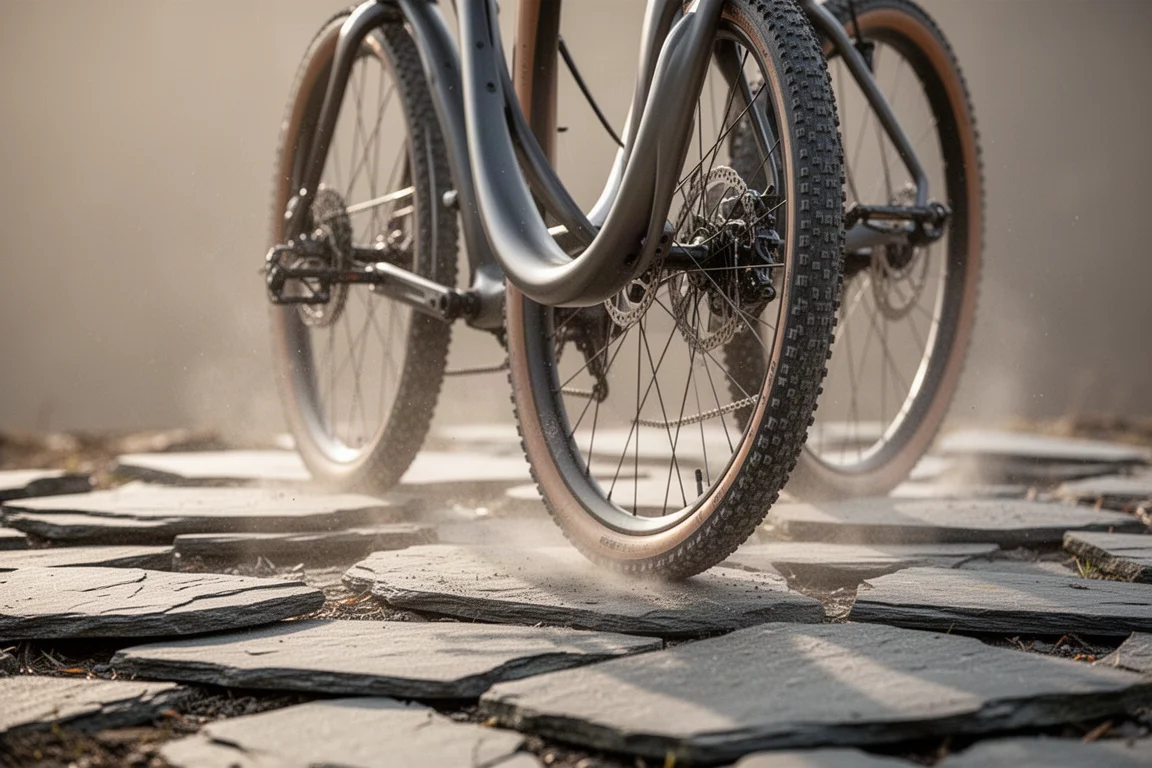
That flex is real rather than theoretical: watching another Topstone Carbon being ridden ahead on the same trip, the rear triangle could be seen moving and compressing over rough ground. The front end was also surprisingly smooth for a bike without suspension up front, so the whole package felt balanced and composed rather than cushioned at the back and harsh at the bars. For a bike that has to stay comfortable over two long days in the saddle, that balance is a genuine asset.
SmartSense lighting and radar
The Topstone Carbon carries the SmartSense system that first appeared on the Synapse. It combines a removable battery, a front light, a rear light and a radar unit, all powered from a single battery integrated into the frame. Because the mounting points use GoPro-style interfaces, the lights can be repositioned to suit the setup, whether that means fitting the rear unit under the saddle or on the back of a rack.
For bikepacking this is a bigger deal than it might sound. Rides often run later than planned, and adding lights to a bike that is already covered in strapped-on bags is fiddly. Having lighting and radar wired into the bike itself removes that problem entirely, and it is one of the main reasons the top build costs what it does.
Things to consider before buying
Two trade-offs are worth understanding before committing. The first is tyre choice: the stock rubber is quick and comfortable in most conditions, but it is not built for the most punishing rocky surfaces. The second is gearing: the specification favours a wide overall range over genuinely low climbing gears, and on steep, loose climbs the lowest ratio can feel like a compromise.
Neither point rules the bike out, and both are solvable with a specification change at the point of purchase or later. They are simply the details most likely to prompt an upgrade, so it makes sense to factor them into the budget rather than discovering them mid-trip.
Tyres and gearing
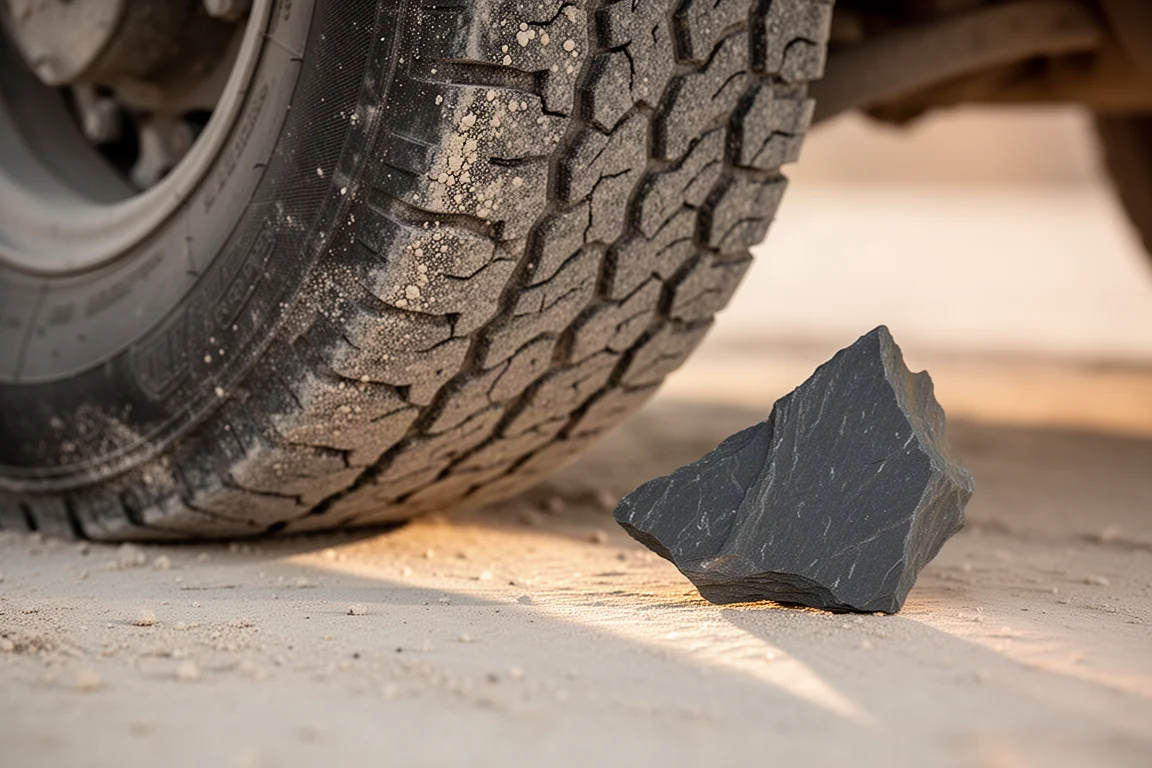
The tyres fitted are a fast-rolling option that works well on tarmac and gravel, with plenty of grip in dry conditions and a 45mm width that adds a useful amount of cushioning. On one stretch of around 15 kilometres covered in a thick, deep layer of slate, however, the light sidewall was simply not tough enough. There was nowhere to pick a line and nowhere to go around the debris, and the result was a series of punctures, including a sidewall slash that could not be repaired and required an inner tube. It is worth emphasising how extreme that section was, far beyond typical gravel riding, but a beefier sidewall would have been a welcome option.
On gearing, the build uses a two-by chainset with a 43/30 combination and an 11-36 cassette. The experience on this trip reinforced a preference for a single chainring setup with a 10-44 cassette, which puts more of the range where it is actually used. Off-road and loaded, riders spend far more time in the low gears than they do chasing top-end speed, and the lower climbing gear matters more than the extra high gear.
Buying advice
The range is wider than the headline price suggests. The carbon models start at around £2,800, and there is an alloy version from around £1,150, so there are sensible entry points below the top-tier build tested here, which comes in at around £8,000. Much of that top-end cost sits in the integrated SmartSense lighting and radar package and in the wheels.
Those wheels are worth noting on their own merits: a claimed weight of 1,325 grams, a 27mm internal rim width, tubeless-ready construction that can also run clincher tyres, and hubs built around DT Swiss 240 internals. After being ridden hard over rocky, slate-covered tracks they were still running true, with no dents in the rims and spoke tension intact. If you are buying for loaded bikepacking rather than fast gravel days, budget for a tougher rear tyre and consider a single chainring drivetrain with a wider cassette, since those two changes address the only real weak points encountered.
Conclusion
The bike proved to be the right choice for a route that was designed for mountain bikes, and it handled far more than most gravel bikes are ever asked to. It is quick on the road, quick on gravel, comfortable over long days thanks to the flex built into the rear stays, and genuinely versatile once the bags come off for a weekend ride in the woods.
The honest summary is that the two things worth changing are the rear tyre and the gearing, and both are decisions a buyer can make deliberately rather than accept by default. With those adjustments, this is a machine that covers long-distance bikepacking, rough gravel and fast tarmac without needing to be anything other than what it is.
Product link
View more details for Cannondale Topstone Carbon
This product is mentioned in the review. Check the specifications, options, and compatibility before buying.
View more details for Cannondale Topstone CarbonFurther reading
Related Reviews
Gravel Bikes
3T Exploro Ultra Review: A Fast Gravel Bike Built for Big Tyres
A close look at the 3T Exploro Ultra, an aero carbon gravel bike designed around wide tyres, with road-like handling, a 980 g frame and genuine rough-terrain capability.
Gravel Bikes
3T Extrema Italia Review: Aero Gravel Speed With Room for 57 mm Tires
The 3T Extrema Italia pairs an aero frame with huge tire clearance, Italian-made carbon and a more comfortable ride than the RaceMax. Here is what to know before buying.
Gravel Bikes
3T Race Max 2 Italia Review: An Aero Gravel Race Bike Made in Italy
A closer look at the second-generation 3T Race Max 2 Italia, covering its aero updates, ride character, tire clearance, internal storage and who it suits.