Kitchen Knives
Cangshan Knife Collections Review: Thomas Keller, Yari, Haku, and Helena Compared
A close look at Cangshan's four most popular knife series, covering design, steel types, real performance, and the downsides to weigh before buying.
Introduction
Cangshan launched in 2015, yet the brand has already collected several Red Dot Design Awards and appeared on Oprah’s Favorite Things list multiple times. Recognition is one thing, but the real question is whether these knives are worth your money. After looking closely at the four most popular series, including the collection designed with Michelin-star chef and restaurateur Thomas Keller, the picture is largely positive, with a few caveats you should know about first.
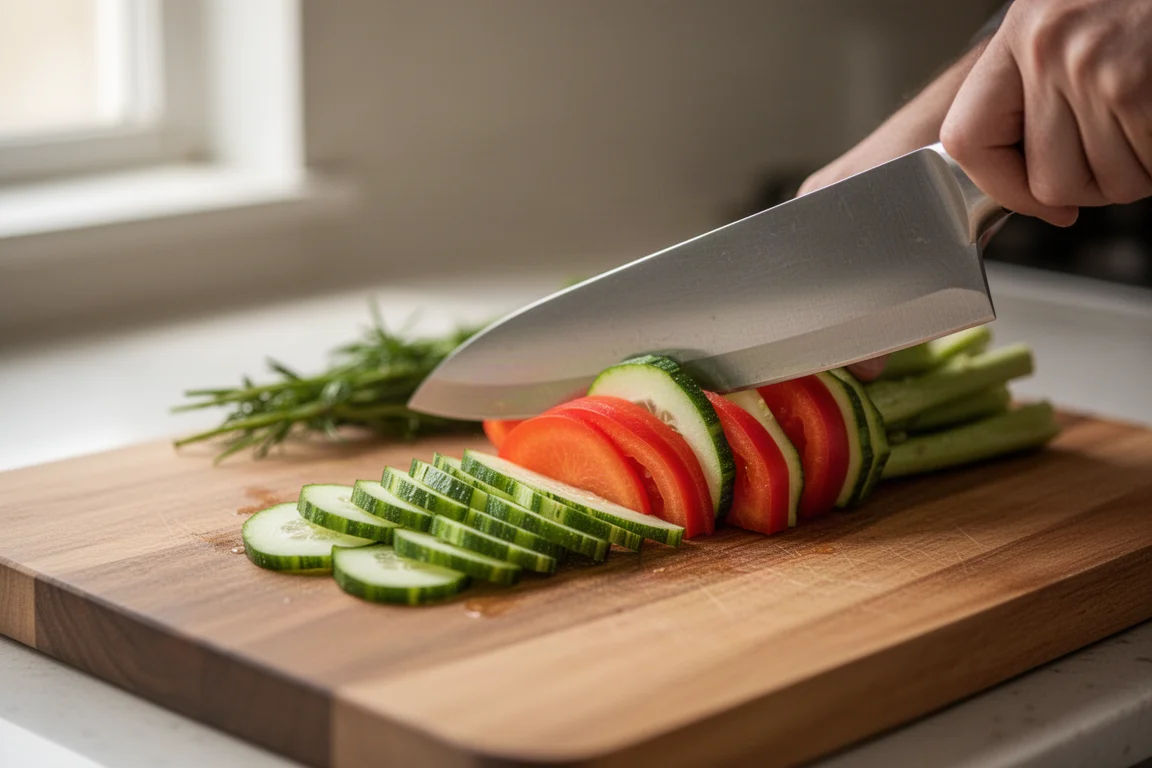
One thing that stands out immediately is sharpness. Every blade is sharpened to a 16-degree angle per side, which produces a fine edge that slices effortlessly through soft ingredients as well as dense foods like squash. Razor sharp out of the box, these knives hold their edge well, particularly the series built on harder steels.
Steel Types Explained
Cangshan makes over two dozen knife series spanning Western-style, Asian-style, and hybrid designs, and it stands out by using several different types of premium steel to optimize blades for specific needs and budgets.
German X50CrMoV15 steel is used for several series, including Elbert, Helena, and TN1. Its high chromium content makes it highly stain-resistant, and at around 58 on the Rockwell scale it holds an edge well without being prone to chipping like harder steels. X-7 is a proprietary Cangshan steel developed to match the hardness of VG10, around 61 Rockwell, without being as brittle or prone to chipping; it is used for the Haku and Yari series. Swedish 14C28N steel from Sandvik is easy to sharpen and balances edge retention, strength, and hardness nicely, and it appears in the Oliv, TC, and TS series.
At the top of the range, Thomas Keller collection blades use Swedish Damasteel RWL34, a powdered steel with a fine grain structure that delivers excellent strength, corrosion resistance, and hardness up to 62 Rockwell.
Cangshan claims on its website that its knives outperform other brands made of the same steel, citing Initial Cutting Performance and Total Card Cut measured on CATRA machines. The scores are impressive, but the company does not disclose which brands it compares against or provide much test detail, so treat those results with a grain of salt.
Thomas Keller Signature Collection
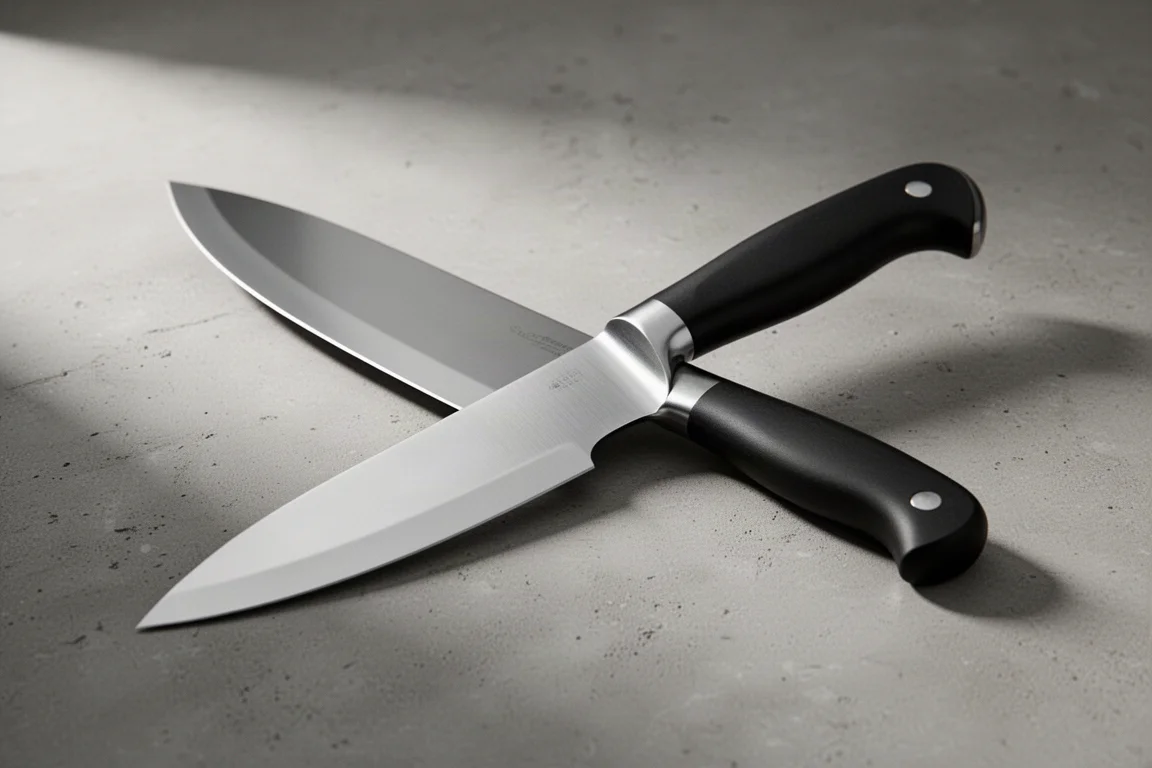
Designed with Michelin-star chef and restaurateur Thomas Keller, this collection features slightly curved blades with a tapered bolster. The durable polymer handle is ergonomic, with a curve at the end to cradle your pinky and a single rivet carrying Keller’s signature. The 8-inch chef’s knife weighs 9.4 ounces, so it has some heft.
The Swedish Damasteel RWL34 blade maintains its edge especially well, and the comfortable handle makes this collection a strong pick if you prefer Western-style knives. Just note that this is the most expensive line in the range.
Yari Series
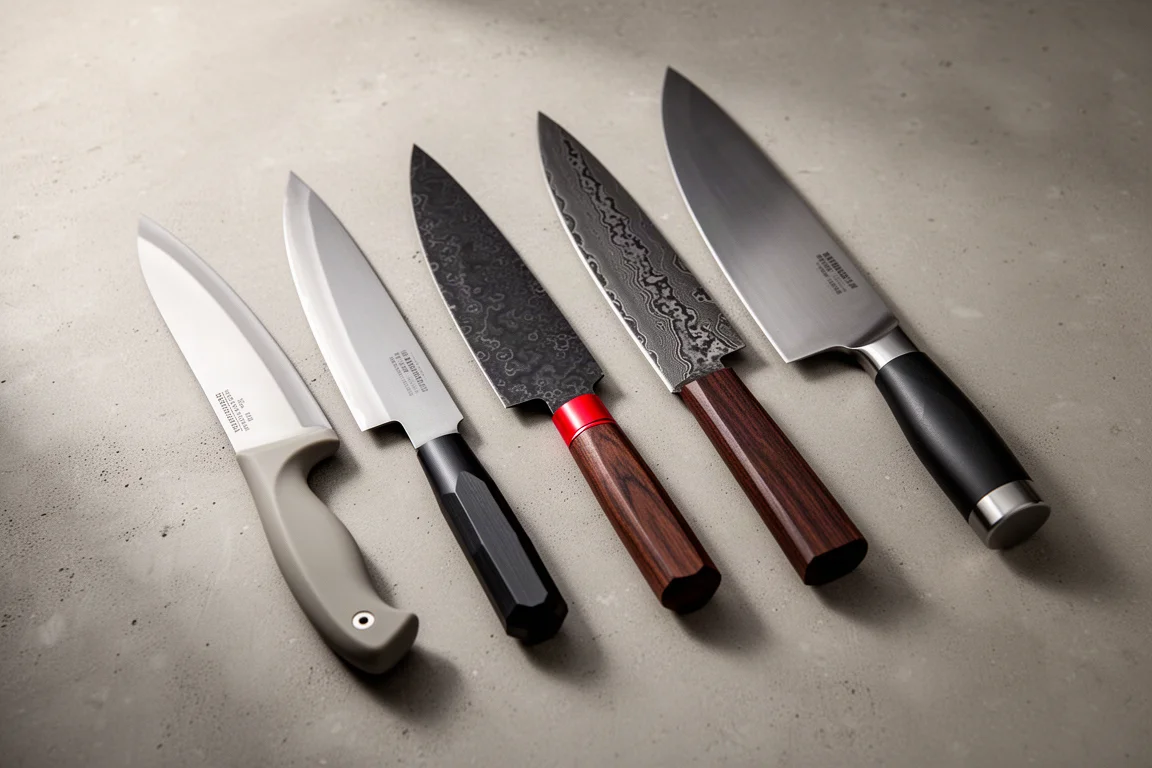
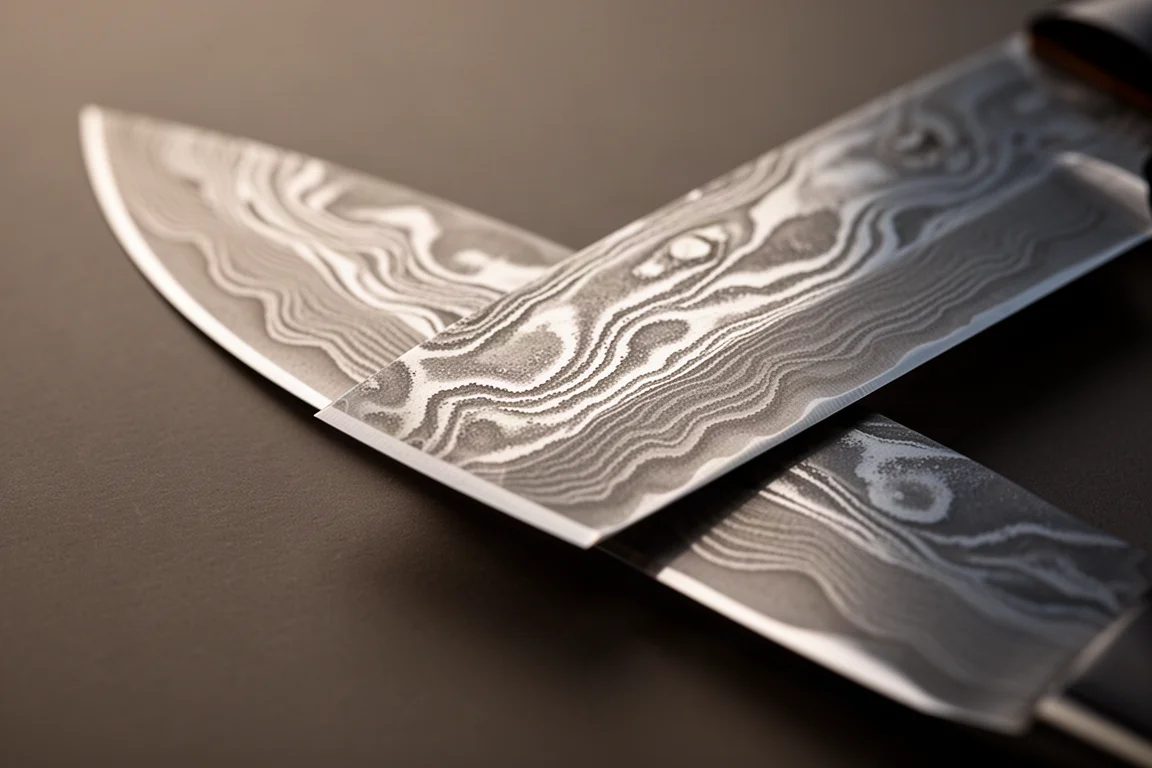
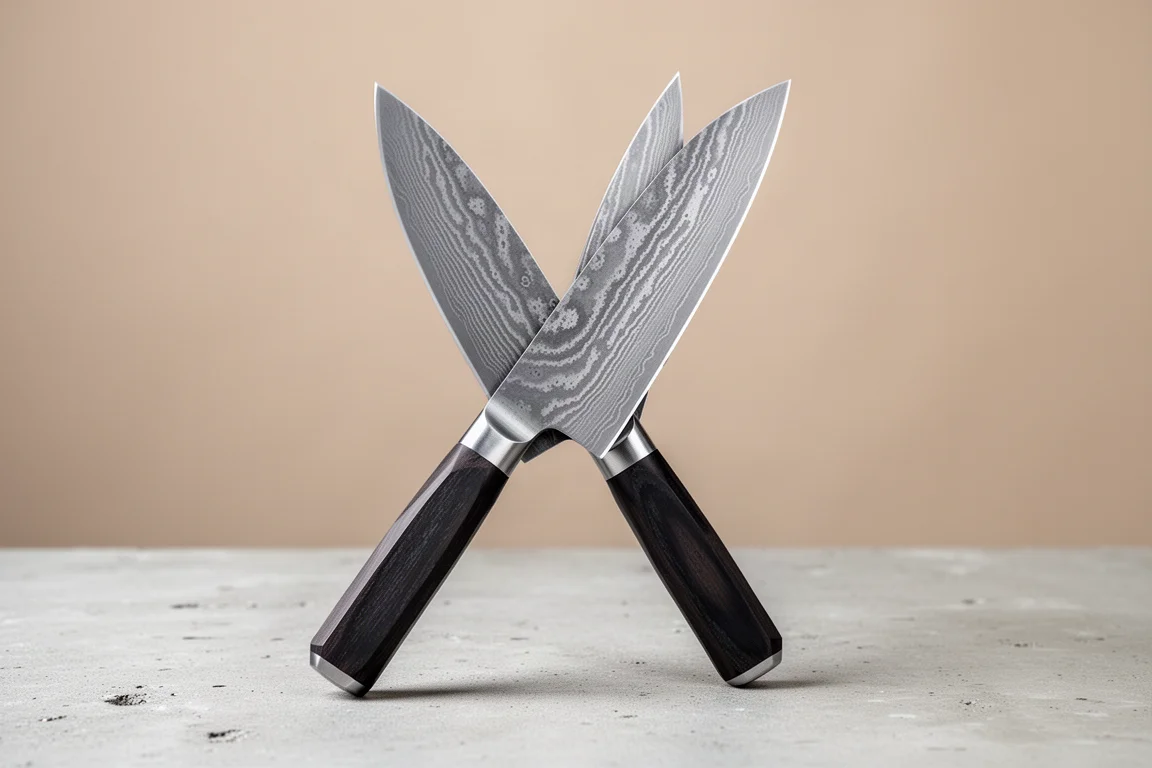
Yari knives carry a Damascus pattern on their blades and traditional Japanese wa handles with a stylish red accent ring and mosaic rivet. The handles are made of G10, a hard woven fiberglass material that is lightweight yet dense and water-resistant.
If you are looking for traditional Japanese-style knives that feel lighter and more nimble in the hand, the Yari series is a great option. The harder X-7 steel also keeps the edge sharper for longer than softer German steel.
Haku Series
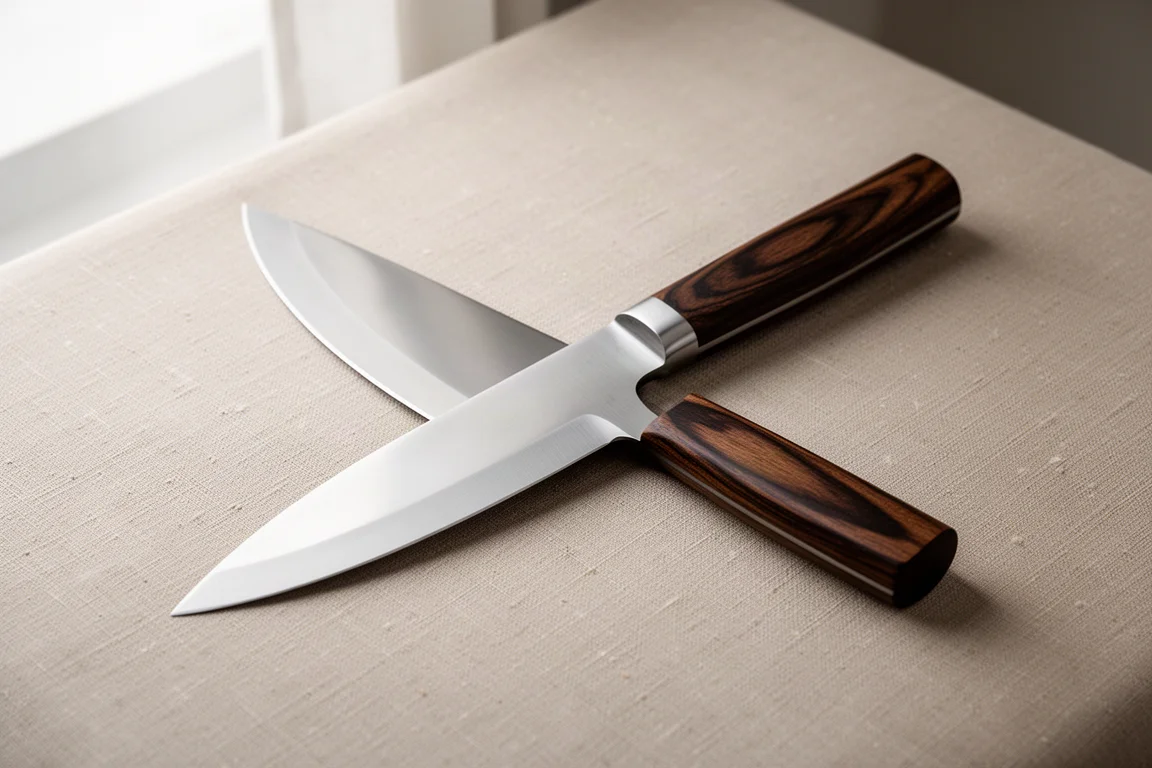
Haku knives also feature Damascus blades, but instead of G10 octagonal handles, Haku handles are made of ultra-dense African Blackwood with a straight profile and rounded edges. Look closely and you can see subtle wood grains.
This series suits cooks who want the sharpness and edge retention of hard steel paired with a classic wooden handle. Like the Yari and Thomas Keller series, it benefits from harder steel than the Helena line, which shows in how well the edge holds up over months of use.
Helena Series
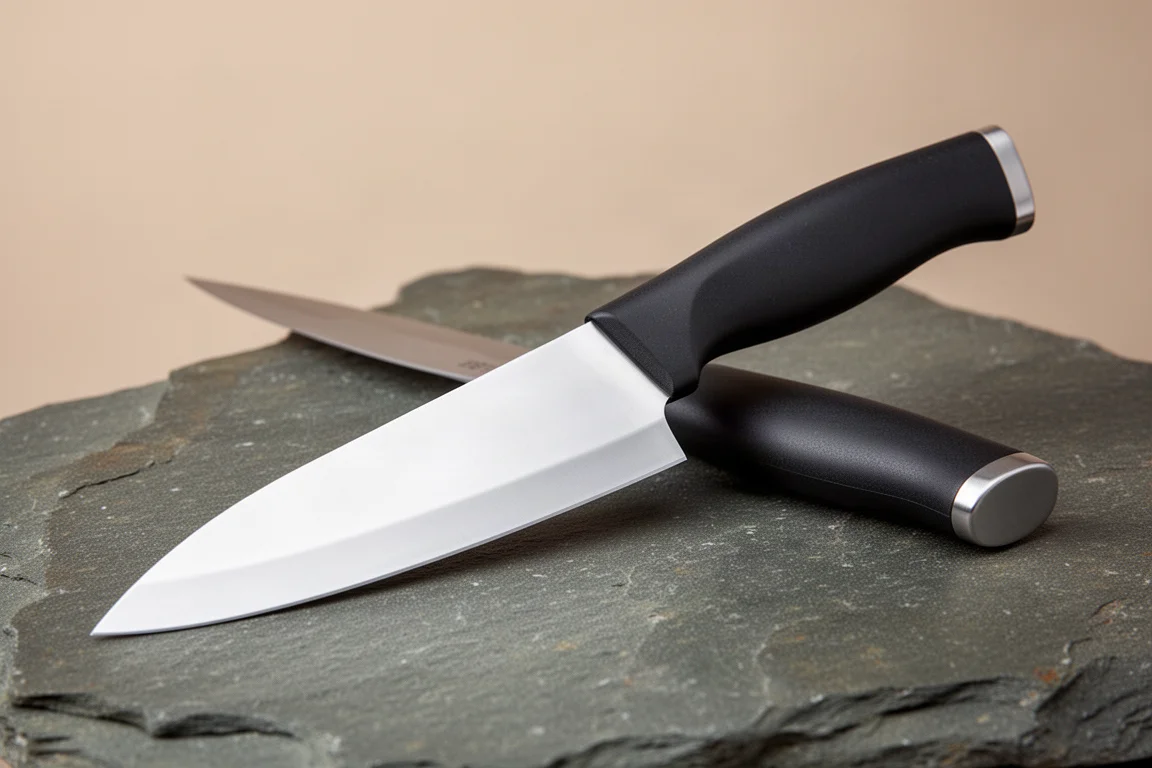
Helena Series knives feature thick German steel blades and durable polymer handles. The handle has a steel butt end and a slightly curved profile that fills the palm comfortably, and it is thicker than most, making it ideal for people with larger hands.
The trade-off is heft: the 8-inch rocking chef’s knife weighs 10 ounces, and Helena blades are among the thickest tested. That makes them blade-heavy and unbalanced, which can strain your wrist during long sessions, though the weight does help with some tasks by letting gravity do part of the work.
The Downsides Worth Knowing
While Cangshan knives look impeccable at first glance, some imperfections appear on close inspection. The Helena rocking chef’s knife has tiny gaps between the steel tang and plastic handle scales that you can feel when running a fingernail over the transition. Similar uneven gaps were found on the Thomas Keller chef’s knife handle, and its blade edges are not ground symmetrically, with one side higher than the other. At these prices, you want the small details to be perfect.
The very hardness that keeps these edges sharp is also a risk. The X-7 and Swedish steels rate above 60 on the Rockwell scale, so the edge stays sharper longer but is more brittle and prone to chipping. Slamming the knife against a cutting board or cutting frozen foods or bones can chip or crack the edge. Chipping is a common theme in negative customer reviews, so it is something to be mindful of if you are used to softer blades.
Cangshan is also a relatively new brand. Although the knives perform well and have won design awards, the company does not have the centuries-long track record of brands like Wüsthof and Zwilling, so long-term durability remains to be seen. The knives are manufactured in the company’s own factory in Yangjiang, China, a region with over 1,400 years of cutlery history, but some shoppers still perceive Chinese-made knives as lower quality. Testing shows quality knives regardless of origin, but the perception is understandable.
Finally, higher-end series like Thomas Keller are significantly more expensive than other knives made in China. You could buy comparable Japanese and German knives from established brands like Wüsthof, Zwilling, and Shun for around the same price, which makes the premium harder to justify given the brand’s short history.
Which Cangshan Series Should You Buy?
After several months of testing, the verdict is that Cangshan kitchen knives are worth buying, provided you research which materials and features fit your cooking needs and budget. The 8-inch chef’s knives range from $40 to $200, with several options in between. At the high end sits the Thomas Keller series with its powdered Swedish steel, while entry series made of German steel cost less than half the price.
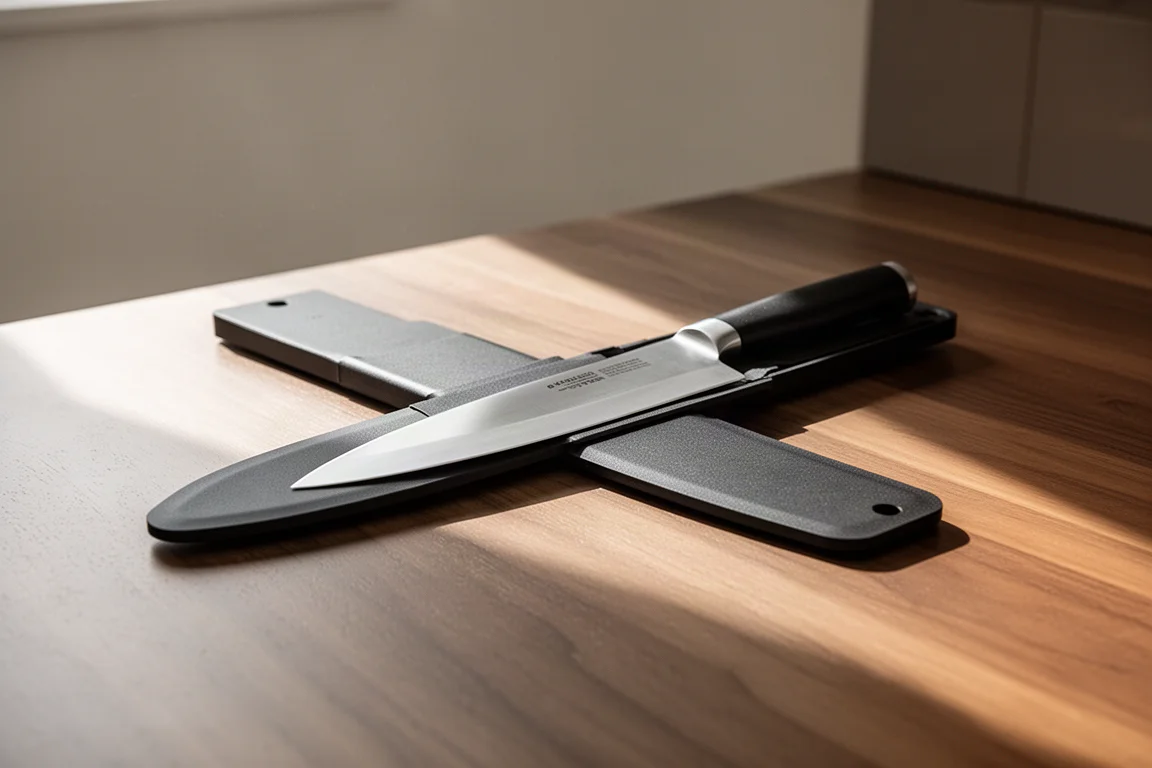
Most individual knives also come with a magnetic sheath that protects the blade and makes storage and transport easy. The sheath attaches securely and stays in place even when you hold the knife by the handle with the tip pointing down, a thoughtful touch you do not always see at these prices.
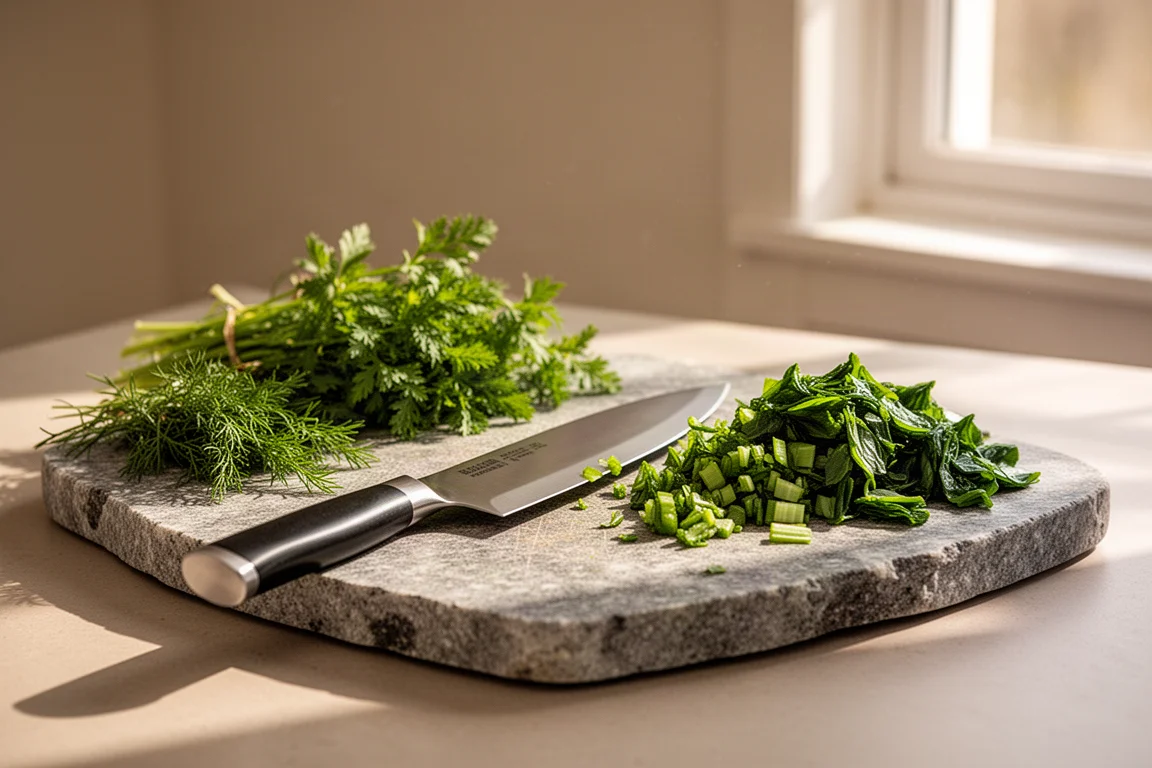
For Western-style knives, the Thomas Keller Signature collection stands out thanks to its comfortable handle and edge-holding steel. For a lighter, nimbler traditional Japanese option, the Yari series is the pick. Either way, Cangshan knives are not perfect, but they are sharp, retain their edge well, and offer comfortable, secure, and durable handles. If you are willing to take a chance on an up-and-coming brand, they are a solid investment.
Conclusion
Cangshan delivers genuinely sharp, well-performing knives across four distinct series, each optimized for a different style and budget. The fit-and-finish flaws, chipping risk with hard steel, and the brand’s short track record are worth weighing, but for cooks open to a newer name, the value and performance on offer make these knives easy to recommend.
Further reading
Related Reviews

Kitchen Knives
Best Chef's Knives 2026: 27 Popular Options Tested and Ranked
A comprehensive review of 27 chef's knives ranging from $18 to $380, with honest assessments of handle comfort, blade balance, and real-world performance.

Kitchen Knives
Best Chef's Knives Under $75: Two Tested Recommendations
Two practical 8-inch chef's knives that balance sharpness, comfort, and durability without premium pricing.

Kitchen Knives
Best Chef's Knives 2026: 27 Options Tested and Ranked
A comprehensive review of 27 chef's knives ranging from $18 to $380, with honest assessments of handle design, balance, blade profile, and real-world performance.