Camping Stoves
Camping Moon Propane Stove Review: A Higher-Output Alternative to Coleman and Ozark Trail
A 16,378 BTU propane camp stove with 490 flame holes, a built-in regulator, and a sturdy stainless steel body, priced close to the stoves it replaces.
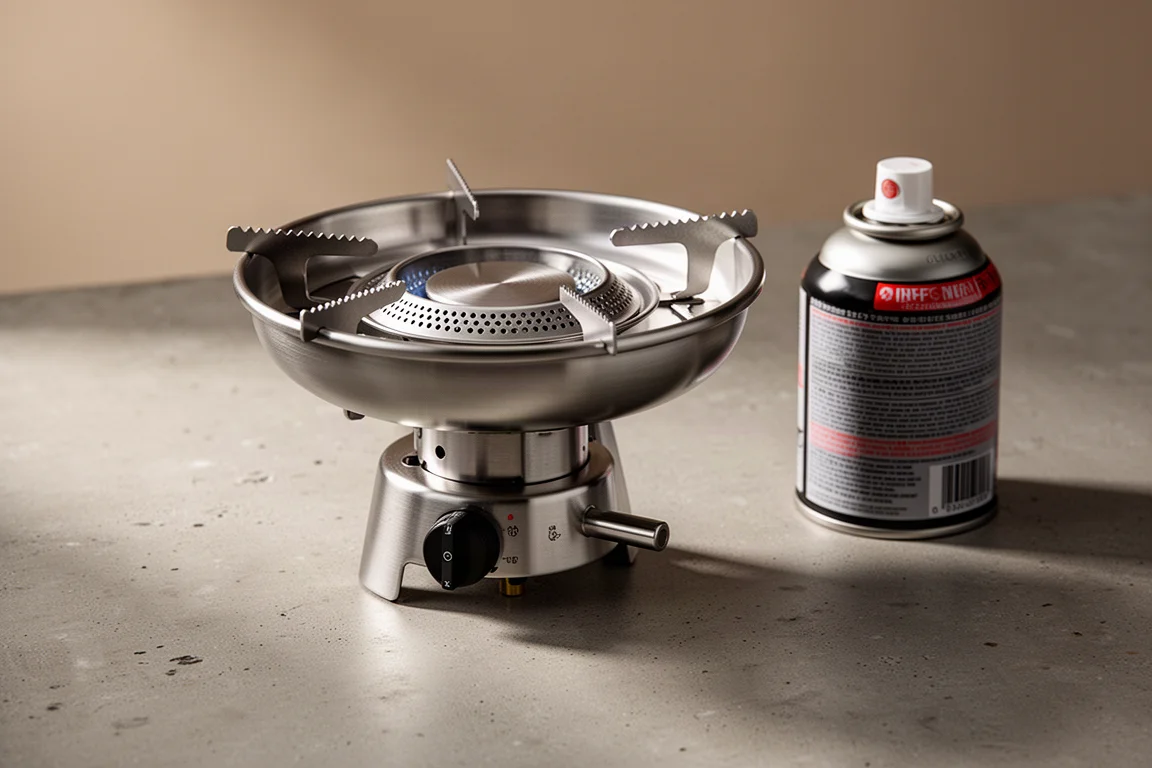
Introduction
Propane camp stoves from Coleman and Ozark Trail are everywhere. Outfitters stock them, big-box stores stock them, and they turn up at almost every car campsite. They are also bulky, heavy, and only moderately powerful for their size, which is an odd combination when a stove that large sits next to a one-pound fuel canister.
The familiar routine goes something like this. Set the stove up, put a kettle on, walk away to handle something else, come back, and the water is still not boiling. The stove will get the job done for cooking, but boiling water is slow work.
The Camping Moon propane stove takes a different approach. It is rated at 16,378 BTUs, roughly double the 7,650 BTUs of the Coleman and Ozark Trail stoves it competes with, and it sells for about the same money. It is also built more substantially, and it arrives with a storage bag.

What follows is a practical look at what this stove does well, where it is limited, and which buyers it suits.
Who This Stove Is For
This is a stove for people who cook from a vehicle rather than from a backpack. It fits overland setups, car camping trips, and tailgate cooking, where a one-pound propane canister and a stable burner matter more than shaving grams.
It also makes sense as a household backup. When the power goes out, a stove like this lets you cook a meal and boil water in a hurry, and one-pound canisters are inexpensive and easy to find.
Anyone who mainly wants to fry, simmer, or reheat food will find that the older Coleman and Ozark Trail stoves still do the job. The case for the Camping Moon is strongest when speed matters, particularly when boiling water is the task at hand.
Main Strengths
The headline number is output. At 16,378 BTUs, this stove delivers roughly twice the rated power of the 7,650 BTU Coleman and Ozark Trail models, and that difference shows up in real use rather than only on a specification sheet. Two cups of water came to a boil in 2 minutes and 17 seconds, a figure that is hard to match among stoves rated at similar or even higher BTU numbers.
The burner head explains part of that result. It uses 490 flame output holes, which spreads heat evenly across the base of a kettle or pot instead of concentrating it in one hot spot. Even heat transfer is what turns a big BTU number into a fast boil.
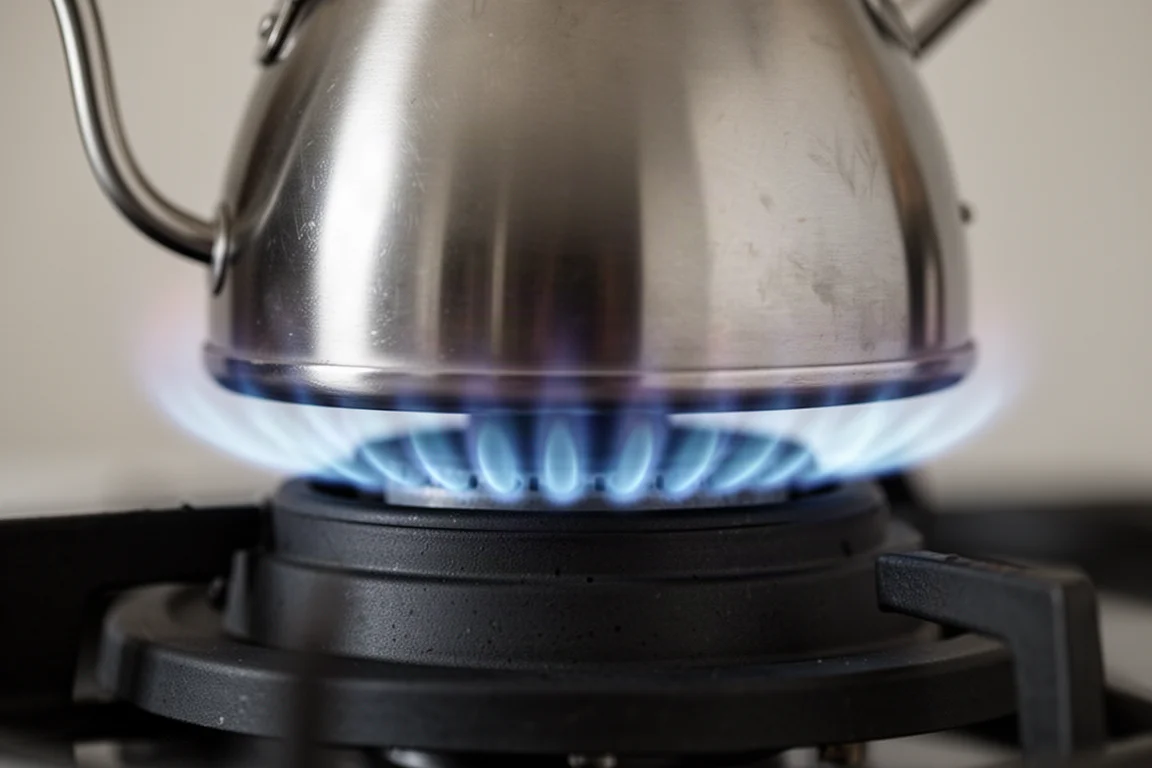
The built-in regulator is the other half of the story. A regulator keeps fuel pressure consistent, so performance holds up in cold weather and as the canister empties. Stoves without one can fall off badly in those conditions, which is exactly when a hot drink matters most.
The igniter has lit on every attempt, and the control adjuster has just enough tension to feel precise without tipping the stove when you turn it. Fuel economy is strong as well: at full output on a one-pound cylinder, the stove runs for over an hour, and most cooking sessions use a fraction of that.
Build Quality and Burner Design
The body is made primarily from stainless steel, with some aluminum and brass components, and the storage bag is polyester. It weighs 1.4 pounds with the bag. Against the typical Coleman or Ozark Trail stove, the difference in feel is obvious: those units can come across as flimsy, and this one does not.
It measures 6.1 inches across with a height of 4.6 inches, and the pot supports span 3.9 inches from point to point, which is enough for most pots, kettles, cups, and pans. The supports are removable and lock back into place securely, with aggressive serrations that hold cookware steady so nothing slides around.
The surrounding walls are sturdy and add stability, but they are not a true windscreen. With so many openings in the burner design, wind blocking is limited by design.
Cooking Performance and Fuel Use
Testing took place on a snowy day at around 40 degrees, cloudy with no breeze, and the stove still performed very well. That result points back to the regulator, which keeps output steady in cool and cold conditions and when the canister is running low.
Fuel consumption is modest for the power on offer. A one-pound propane cylinder lasts over an hour at a fully opened 16,000 BTUs, so a single canister covers many trips. Those canisters are widely available and inexpensive, which keeps running costs low.
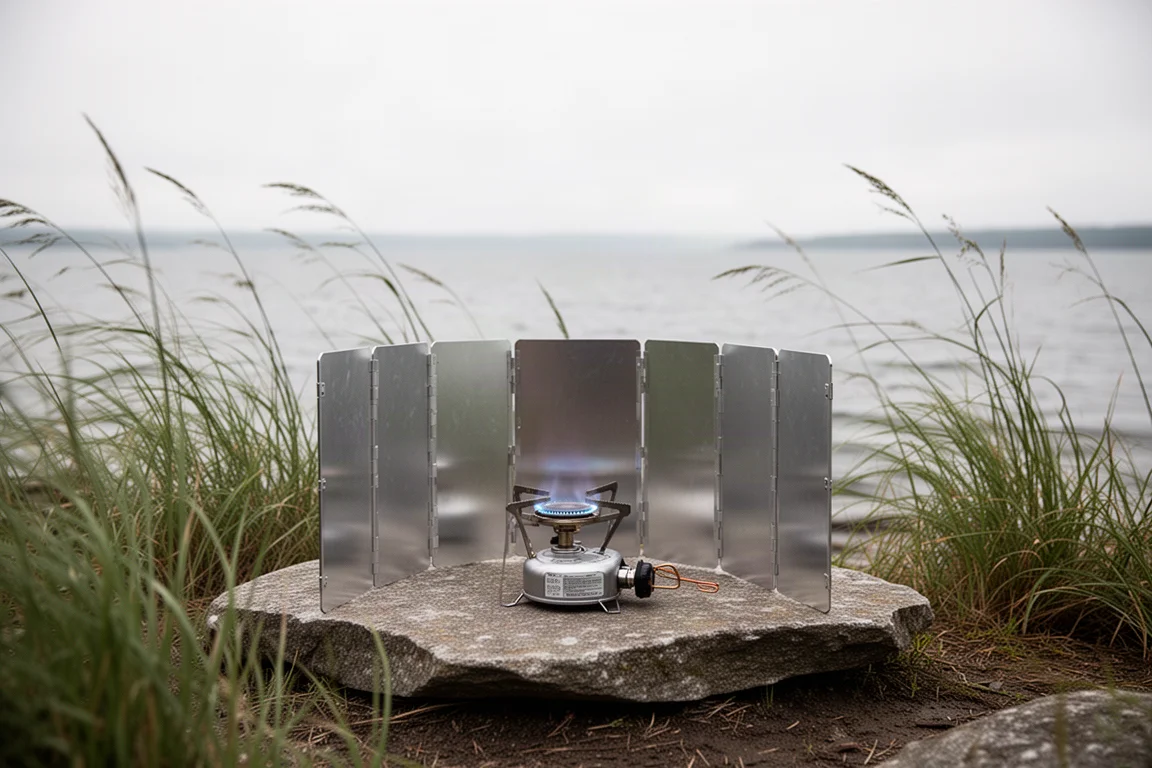
The stove is also stable in use. There are no leg supports at the base, but the footprint is wide enough that it sits confidently on the ground or on a table.
Things to Consider Before Buying
Wind is the main limitation. On a breezy day, plan on placing something in front of the stove or using a windshield, because the vented walls will not block moving air on their own.
The storage bag is merely adequate. It is just large enough for the stove, which makes the stove slightly awkward to pull out, and it offers limited protection. A hard case would be a welcome addition, though the included bag is better than nothing.
There are two versions of this stove: one that runs on propane and one that runs on isobutane. Buyers should confirm which fuel type they want before ordering, since the two are not interchangeable.
If you want extra stability, a small base stand for the one-pound canister can be added, and those are inexpensive. It is not required for normal use.
Buying Advice
The propane version was listed at around $55, while the comparable Coleman stove sits near $50. That is a small gap for roughly double the rated output, a built-in regulator, a reliable igniter, and a noticeably better-built body.
If you already own a Coleman or Ozark Trail propane stove and it does the job, there is no urgency to replace it. If you have found yourself waiting on a kettle, or you want a stove that holds its performance in cold weather and on a low canister, this is a straightforward upgrade at close to the same price.
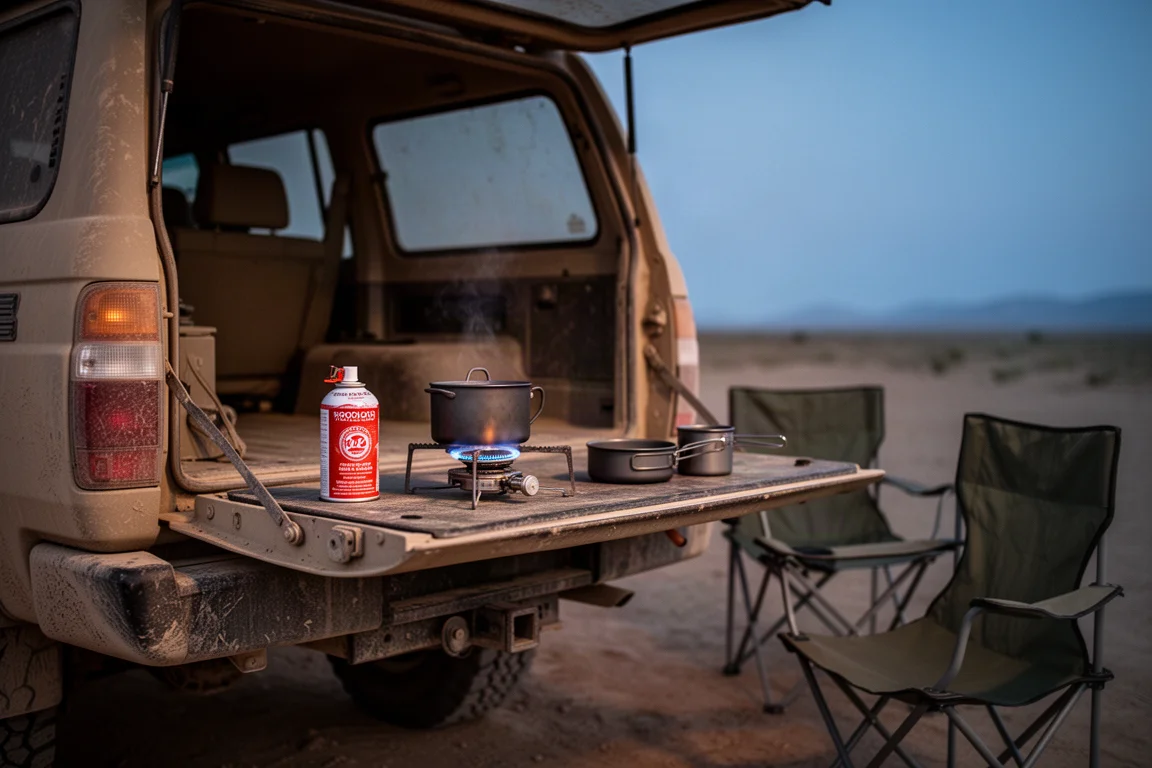
For overlanding, car camping, and emergency cooking at home, the combination of output, fuel economy, and build quality makes this an easy recommendation at its price point.
Conclusion
The Camping Moon propane stove is a well-made replacement for the familiar big-box propane stove. It is roughly twice as powerful, it regulates fuel pressure so cold mornings and low canisters do not slow it down, and its 490 flame holes spread heat evenly enough to boil two cups of water in 2 minutes and 17 seconds.
Its limits are honest ones: the walls do not stop wind, the storage bag is tight, and there is no base support beyond a wide footprint. None of those change the value equation. At a price close to the Coleman it outperforms, it is a sensible pick for anyone who wants faster boiling water without paying a premium for it.
Product link
View more details for Camping Moon Propane Stove
This product is mentioned in the review. Check the specifications, options, and compatibility before buying.
View more details for Camping Moon Propane StoveFurther reading
Related Reviews
Camping Stoves
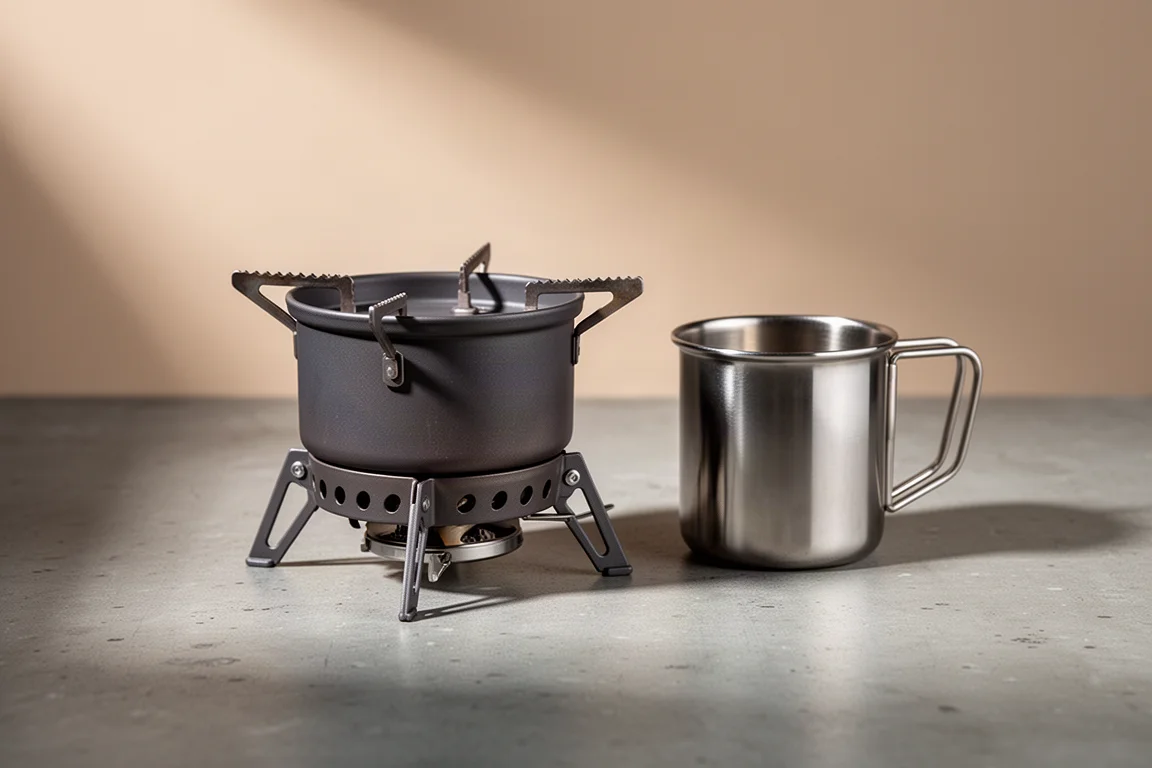
BCB Fire Dragon Mini Cooker Review: A Tiny Folding Stove With Real Trade-Offs
A palm-sized, fuel-flexible folding stove that heats water well enough, but brings flame control, stability, and fuel cost questions worth understanding first.
Camping Stoves
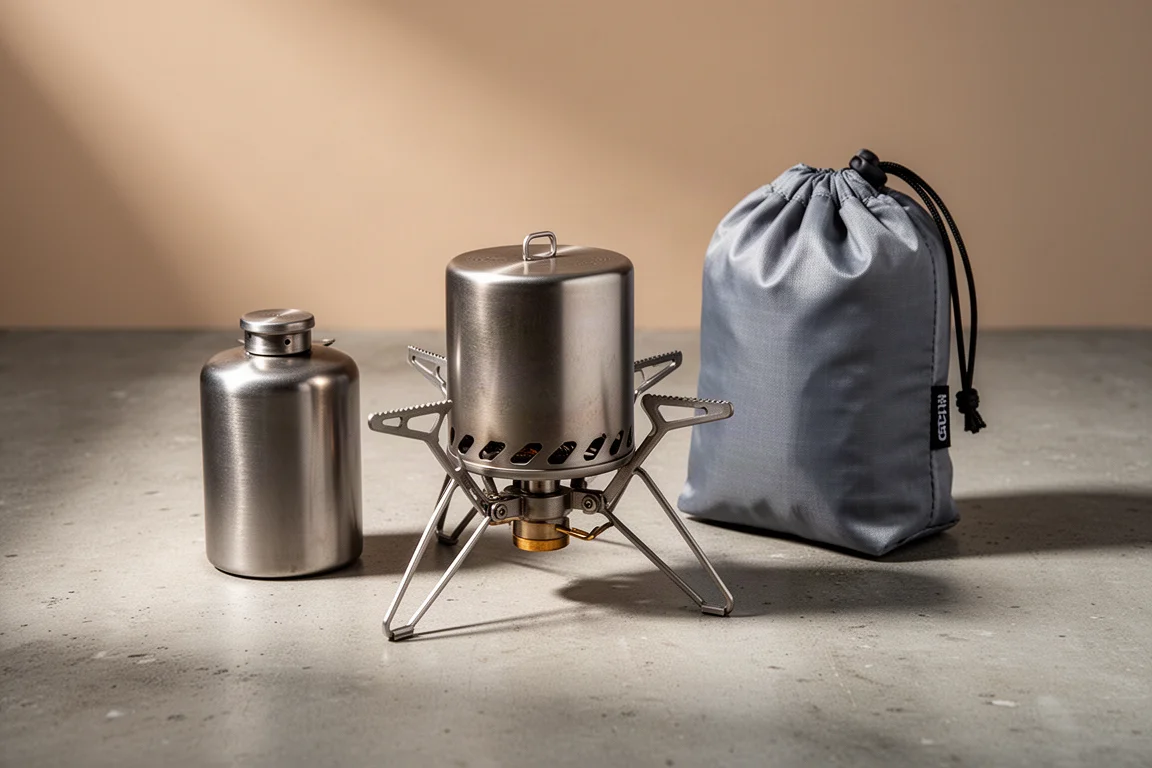
Boundless Voyage Titanium Alcohol and Wood Stove Review: Ultralight Cooking, Two Ways
A titanium alcohol and wood burning stove kit that weighs 4.5 oz complete, boils two cups of water in about 10 minutes, and costs $36.
Camping Stoves
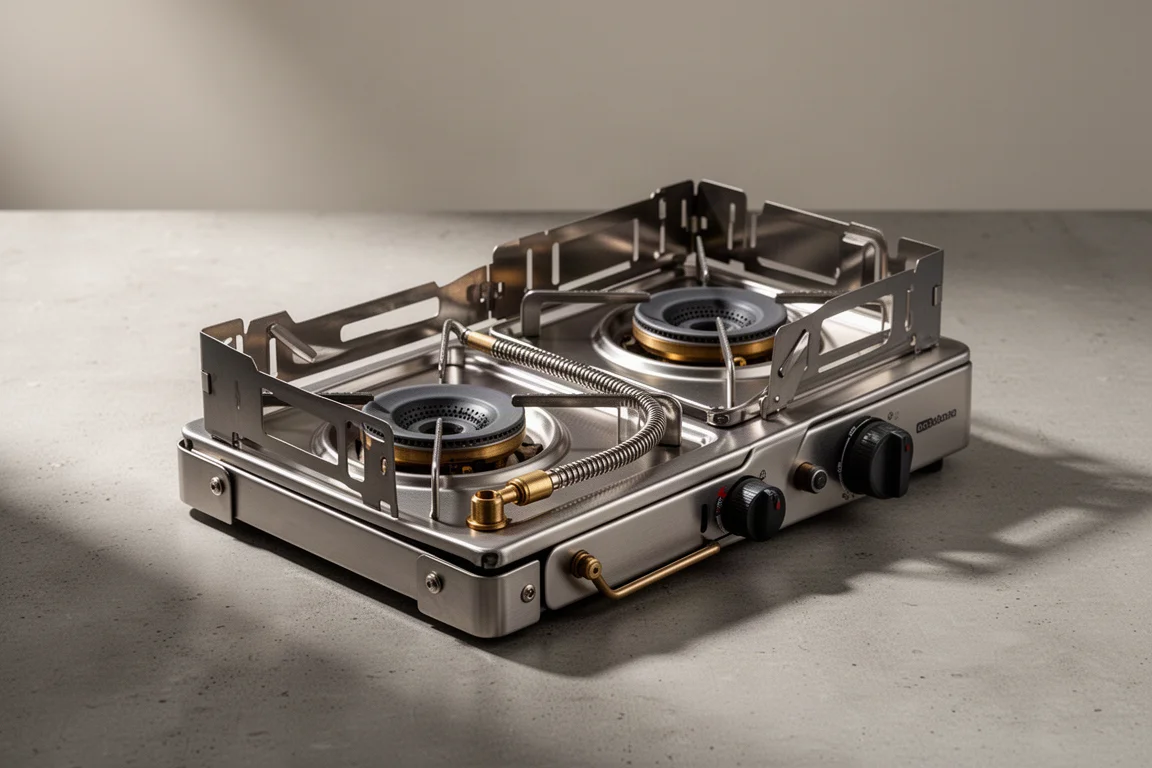
BRS 32 Dual Burner Stove Review: A Folding Two-Burner That Packs Down Flat
A detailed look at the BRS 32, a slim folding dual burner camping stove that expands into a stable cooking platform for around $60.