Camping Stoves
Camping Moon Micro Rocket vs SOTO WindMaster: Two Regulated Stoves Compared
A budget pressure regulated canister stove takes on the long proven original. Here is where the Camping Moon Micro Rocket XD2F and the SOTO WindMaster really differ.
Introduction
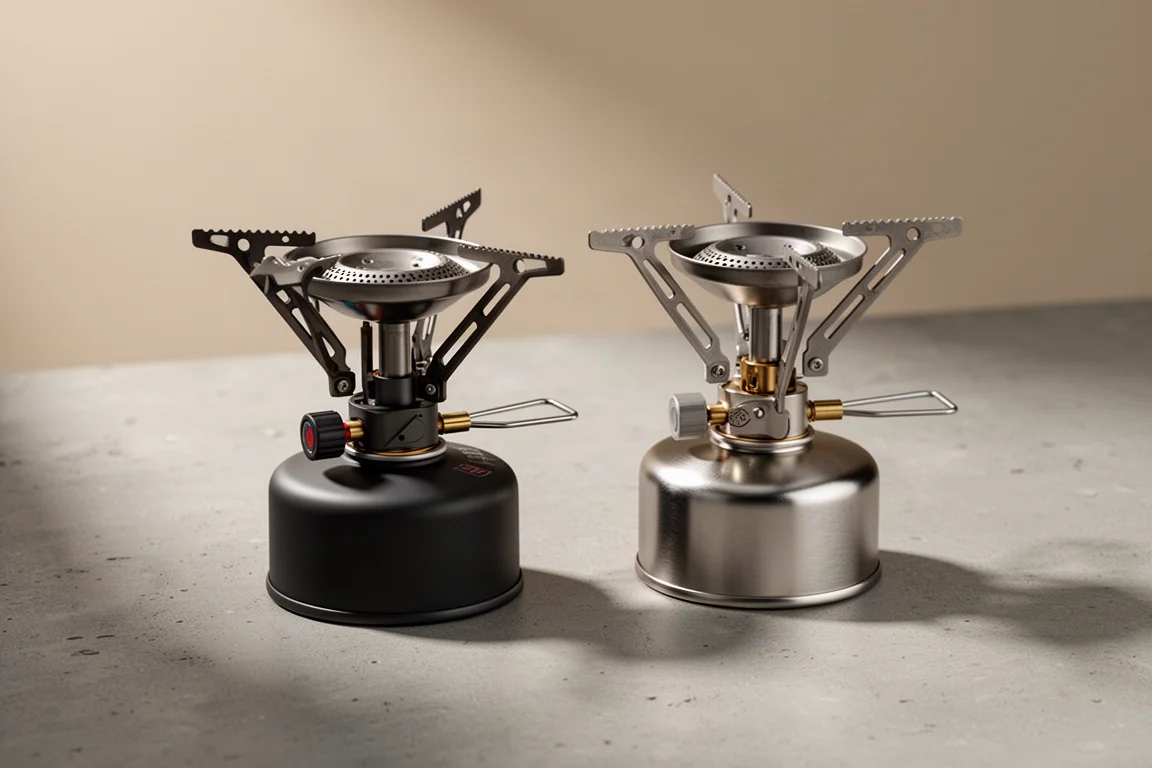
Two pressure regulated canister stoves, one at roughly half the price of the other, and a layout that looks almost identical when they sit side by side. That is the short version of the Camping Moon Micro Rocket Regulator Stove XD2F and the SOTO WindMaster.
Both are micro regulated stoves, which means the burner holds its output as a canister empties or as temperatures drop, instead of fading the way an unregulated stove does. Both use a low burner head surrounded by a wide cup of jets, and both are built around wind resistance. The question worth answering is whether the cheaper stove is genuinely comparable, or whether the price difference shows up somewhere that matters on a cold morning.
What Matters in a Regulated Canister Stove
Three things separate a good canister stove from an annoying one.
The first is regulation. A pressure regulated burner should perform much as it did on a full canister even when the canister is running low or the weather turns cold, which matters for consistent boil times and predictable simmering.
The second is wind behaviour. On both of these stoves the burner head sits inside a shallow cup with multiple jets, and the gap between the top of the burner and the base of the pot is deliberately small. That cup shields the flame, and the short distance limits the airflow that would otherwise push the flame around. It is the main reason this style of stove holds up in breezy conditions.
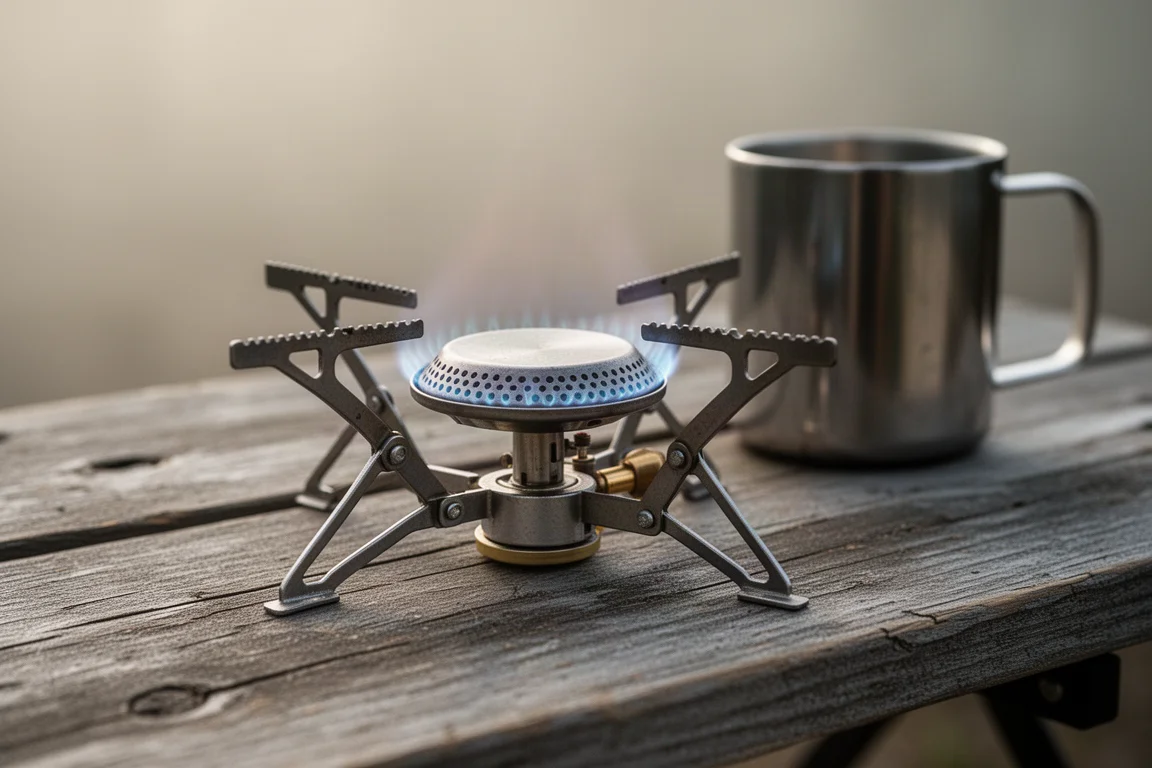
The third is the pot support. Fold-out arms that clip onto the burner head give a wide, stable platform for frying pans and larger pots, which is more useful than it sounds once you move beyond boiling water.
Ignition and simmer control round out the list. A built-in piezo igniter saves hunting for a lighter, and the ability to dial the flame right down is what separates a stove you can actually cook on from a stove that only boils.
Camping Moon Micro Rocket Regulator Stove XD2F
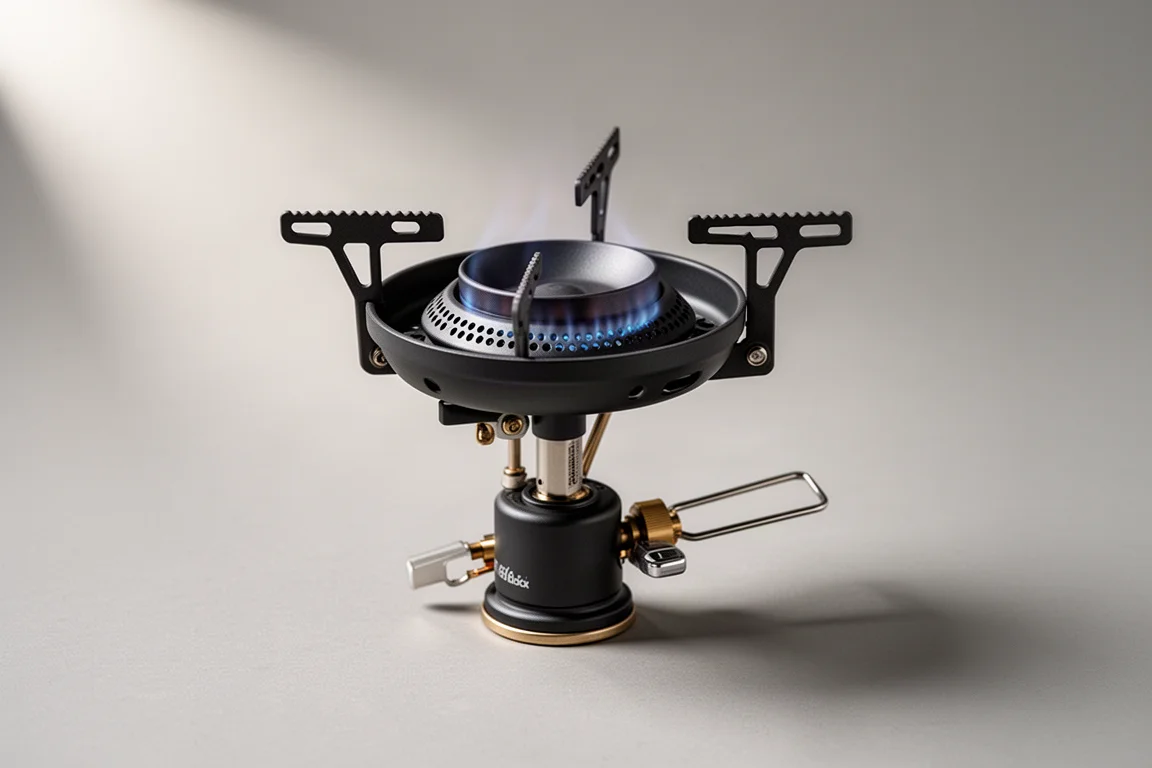
The Camping Moon Micro Rocket XD2F arrives in a zippered cordura style case, with a bungee strap holding the stove in place and a separate pocket for the pot support arms. The arms fold out, feel spring loaded, and clip onto the top of the burner head.
It is a pressure regulated micro stove with a built-in piezo igniter. In use it lit on the first click and ran from a very large flame down to a low, steady simmer without fuss. The igniter button itself is metal, which is a small detail that feels better than a plastic one.
The canister connection does not use a rubber seal, and unscrewing a canister produces a slight pop. The connection still sealed cleanly during use. Shaking the stove reveals a little play in the arms, and the same amount of play is present on the far more expensive stove it resembles.
On price, this one sits at around £30 to £35, which is roughly half the cost of the SOTO.
SOTO WindMaster
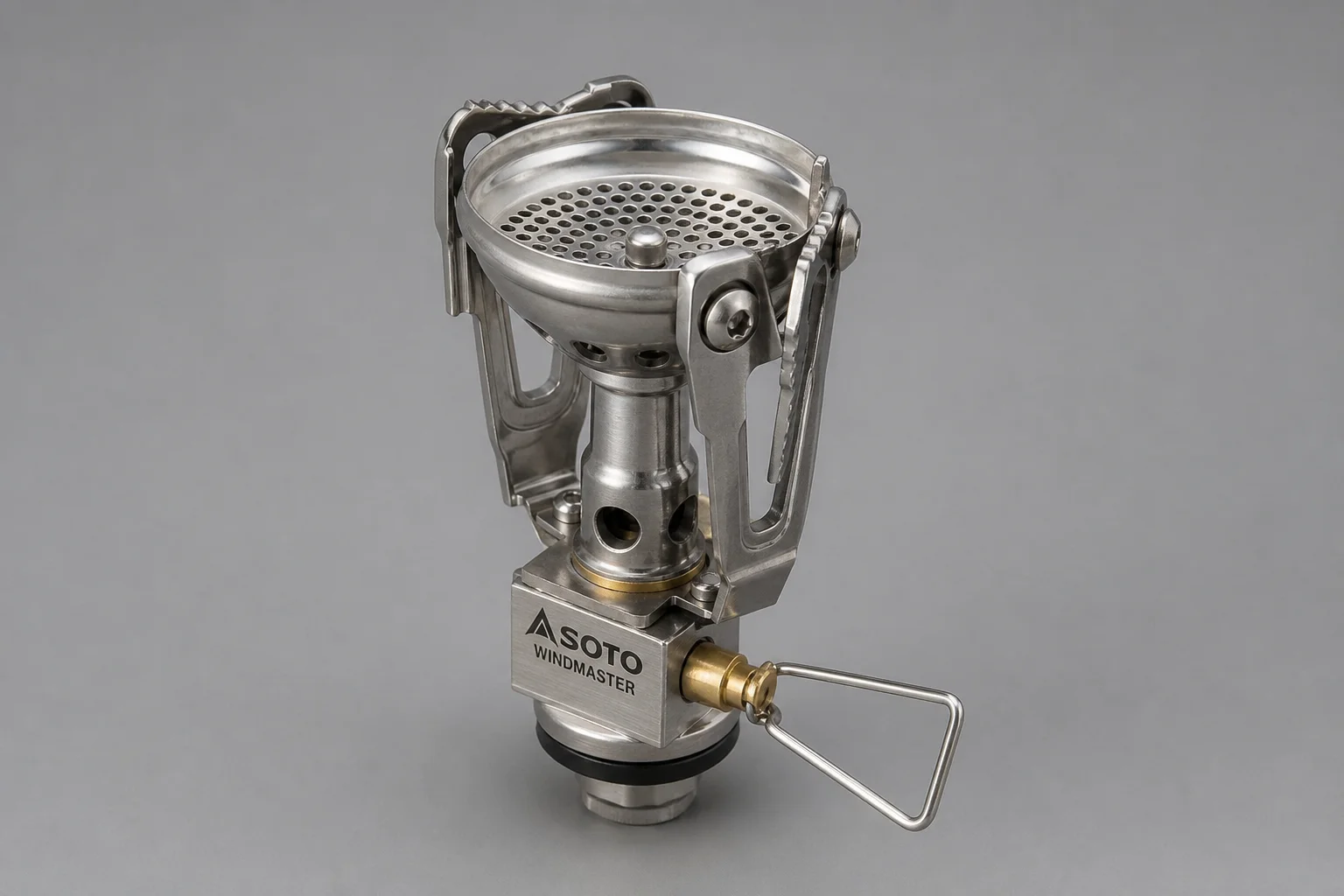
The SOTO WindMaster is the stove this design is best known for, and it has been the benchmark for years on performance, efficiency, wind handling and fuel consumption. This particular unit has seen around four years of use and still looks set for several more.
The differences are small when the two are side by side. The igniter sits in a different position on the stem and uses a plastic button rather than a metal one. The WindMaster also has a small rubber seal at the canister connection, which helps prevent leaks around the valve, and it unscrews without the pop. The burner head, the jet cup and the pot support arms look and behave almost identically.

Storage is where they diverge. The WindMaster’s case wraps around the folded stove so it packs into its most compact form inside a pot, though the case itself is less pleasant than the Camping Moon’s. SOTO also offers a lighter three-prong pot support as an option, which suits small pots better than the standard arms.
At around £65 to £70, it costs roughly twice as much.
Boil Time and Wind Performance in Practice
A side-by-side boil test with roughly 300 ml of water, enough for a brew, in a light breeze with the lid on gave a clear but narrow result. The WindMaster reached steam in 1 minute 3 seconds. The Camping Moon took 1 minute 34 seconds.
Both produced a very similar flame pattern, focused tightly on the base of the pot because of the small gap between burner and pot. That focus is the reason neither stove wasted much flame to the surrounding air.
Two caveats are worth keeping in mind. The Camping Moon is listed with a higher BTU output, so the slower time here is not what the specification would suggest, and conditions such as starting water temperature and wind shift results constantly outside a lab. Fuel consumption was not measured by weight, so no conclusion can be drawn about which stove is more efficient. Treat the numbers as directional rather than definitive.
Build Quality, Storage, and Everyday Durability
Side by side, there is not a huge amount of difference in perceived quality. Both stoves have a little play in the pot support arms when shaken, and on both the igniter is the part most likely to fail first.
The Camping Moon’s case is the better of the two. Keeping the stove in its own case frees up space inside a pot for coffee, a dehydrated meal or other small items. The WindMaster’s wrap-around case is designed to fold the stove into its most compact form so it can be stored with a canister inside a pot, although the folded package does not fit smaller pots.
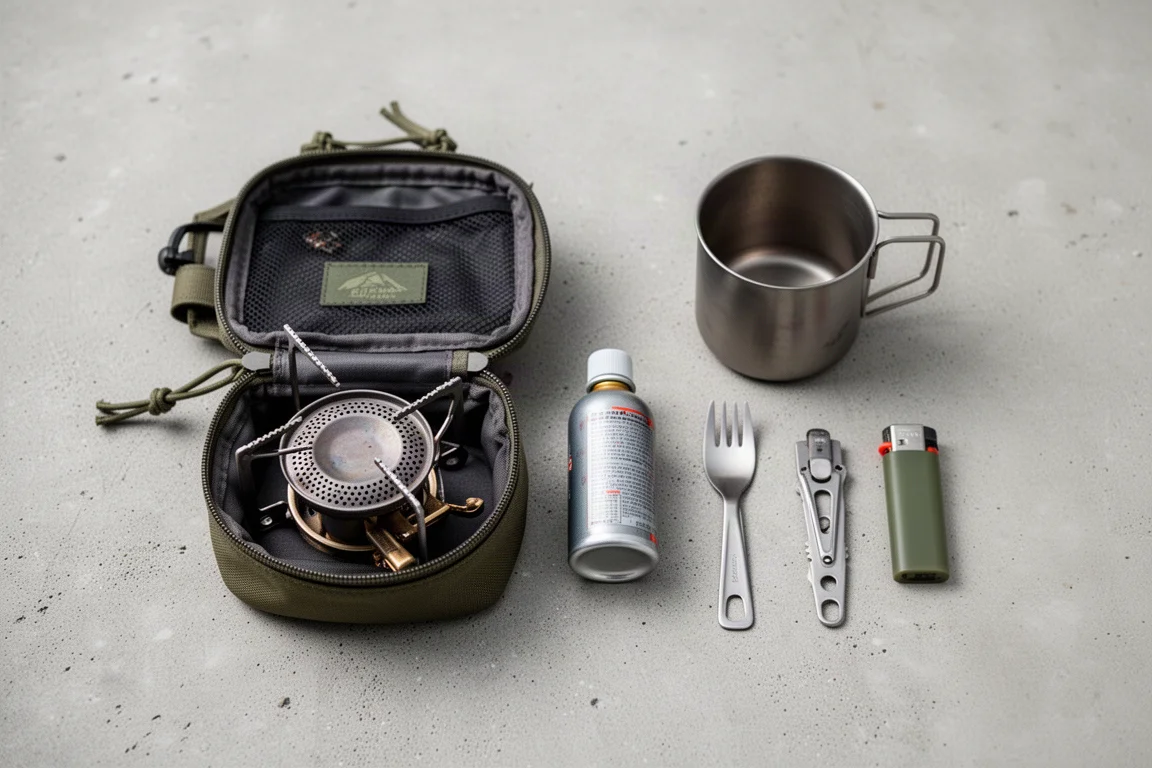
Longevity is the one area where the comparison is uneven. The WindMaster has four years of hard use behind it and remains reliable. The Camping Moon is newer, so its long term durability is unproven, though nothing about its construction suggests an obvious weak point beyond the igniter.
That difference in packaging matters more than it sounds. A stove that lives in its own case is quicker to pack and easier to find, while a stove that folds into a pot keeps the total kit smaller. Neither approach is wrong, and both stoves work well enough that the choice comes down to how you like to organise your pack.
Simmer Control and Cooking Flexibility
Both stoves are pressure regulated and both can be dialled from a big flame down to a low one, which makes them suitable for more than boiling water. The wide fold-out arms are sturdy enough to hold a frying pan or a larger pot, and they are a genuine advantage over narrow three-prong supports for anything beyond a mug.
SOTO’s optional lighter three-prong support is the better match if you only ever use small pots, but the standard arms on both stoves cover a wider range of cookware.
Buying Advice: Which Stove Suits You
The honest answer depends on what you value. If you want the same regulated, wind-resistant design for around half the money, the Camping Moon Micro Rocket XD2F is difficult to argue with. It lit first time, simmered cleanly, comes with the better case and matches the layout of the stove it follows closely.
If a long, documented service life and the reassurance of an established design matter more than the saving, the SOTO WindMaster remains the safer pick. Four years of use without a fault is a meaningful data point, and the rubber seal at the canister connection is a small practical advantage.

Either way, both stoves share the same core strengths: pressure regulation, a shielded low burner head that copes with wind, stable pot supports and usable simmer control. The decision comes down to budget against track record rather than a gap in day to day performance.
Conclusion
The Camping Moon Micro Rocket Regulator Stove XD2F is a strong budget alternative that gets the essentials right, and the SOTO WindMaster is still the proven original. Choose the Camping Moon to save roughly half the cost, and choose the WindMaster if long term reliability is the priority.
Further reading
Related Reviews
Camping Stoves
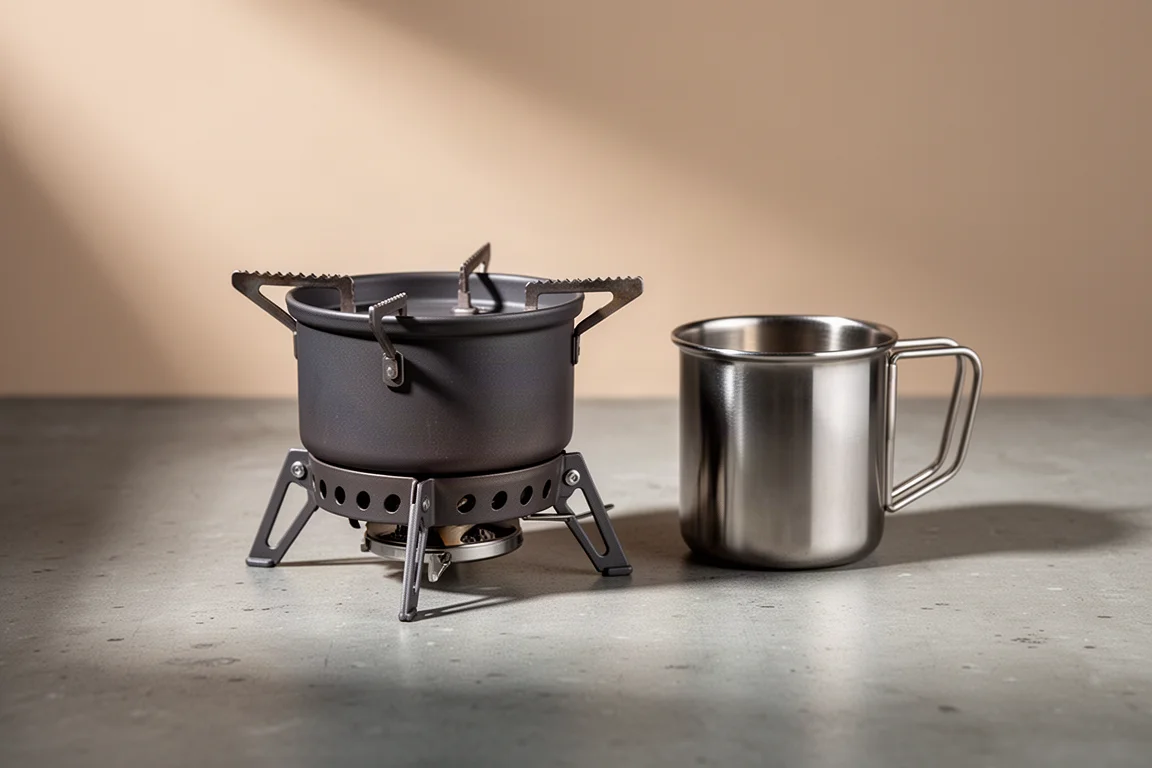
BCB Fire Dragon Mini Cooker Review: A Tiny Folding Stove With Real Trade-Offs
A palm-sized, fuel-flexible folding stove that heats water well enough, but brings flame control, stability, and fuel cost questions worth understanding first.
Camping Stoves
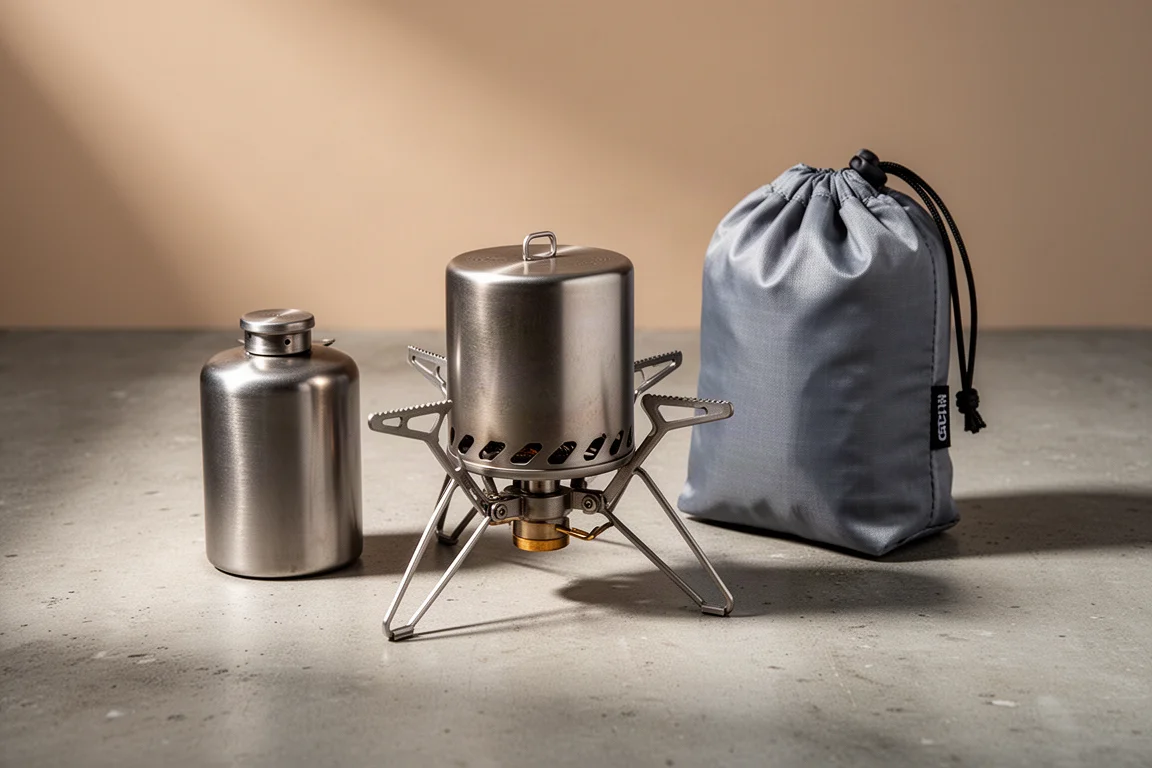
Boundless Voyage Titanium Alcohol and Wood Stove Review: Ultralight Cooking, Two Ways
A titanium alcohol and wood burning stove kit that weighs 4.5 oz complete, boils two cups of water in about 10 minutes, and costs $36.
Camping Stoves
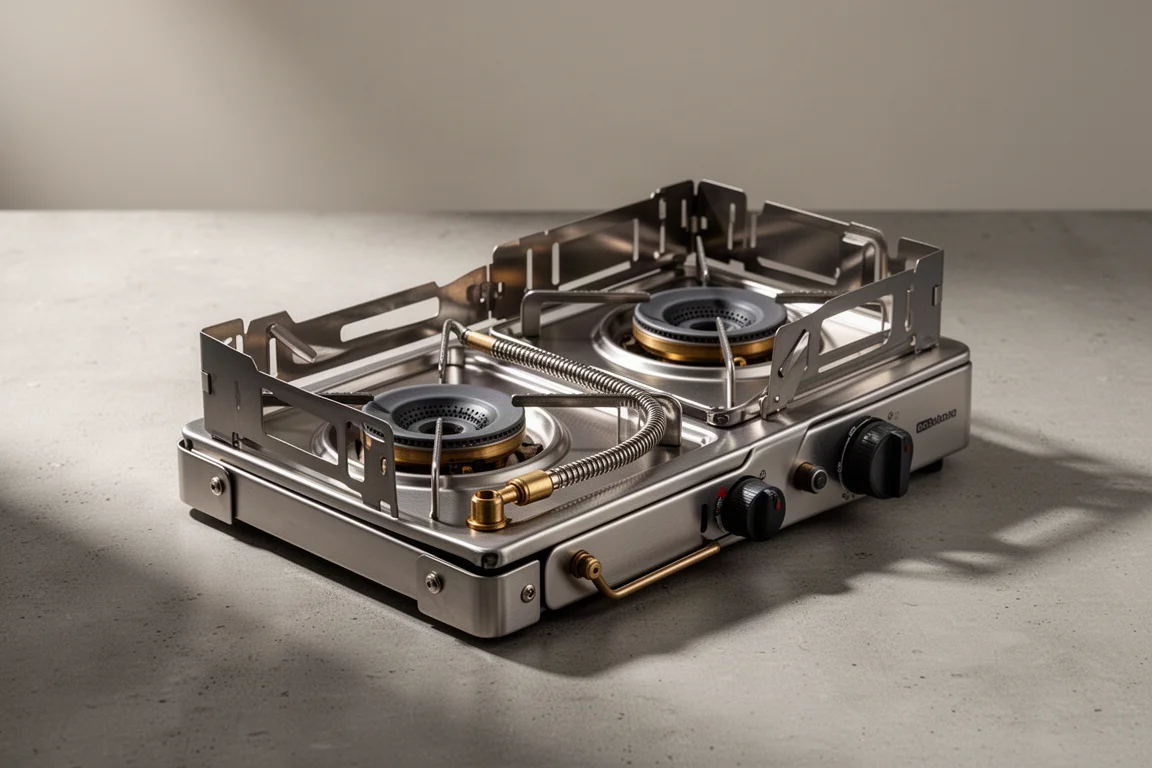
BRS 32 Dual Burner Stove Review: A Folding Two-Burner That Packs Down Flat
A detailed look at the BRS 32, a slim folding dual burner camping stove that expands into a stable cooking platform for around $60.