Hand Tools
Calvan Tools 488 Reversible Adapter Review: 3/8" to 1/4" in One Piece
A reversible square drive adapter that flips between 3/8" and 1/4" with a push of an internal rod. Handy idea, but the design comes with real trade-offs.
Introduction
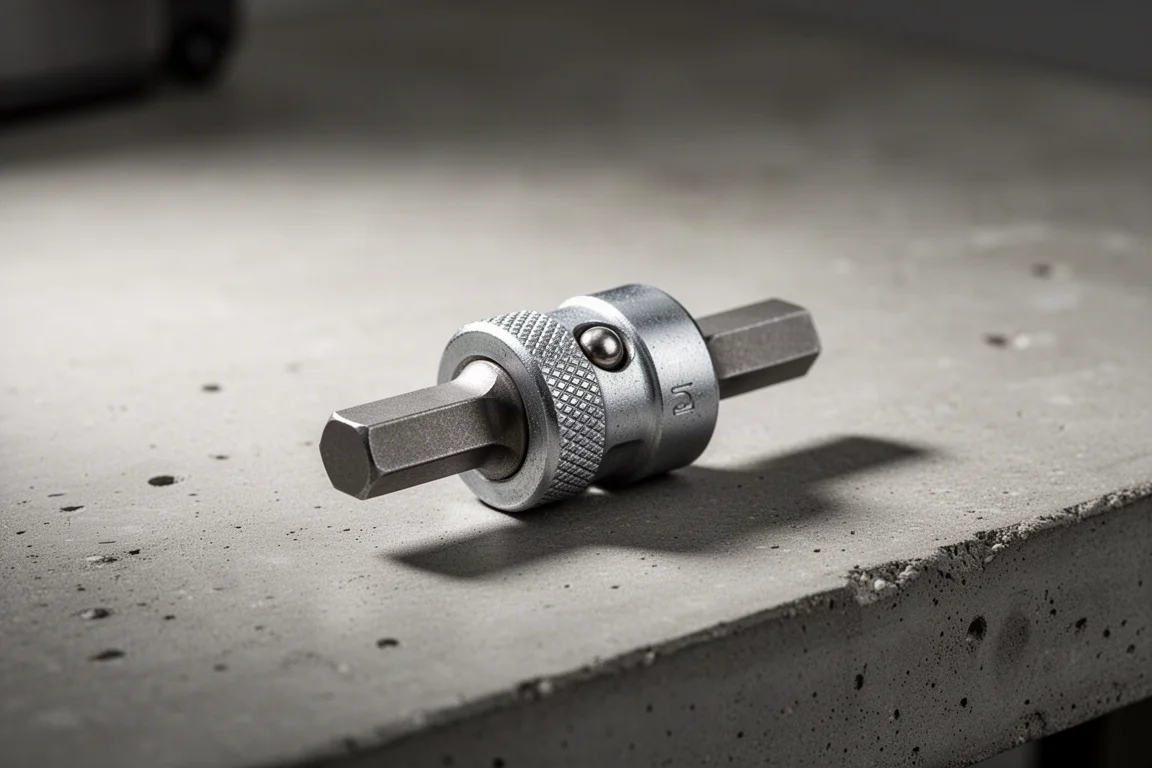
Sometimes the simplest tools raise the most interesting questions. The Calvan Tools 488 is a reversible drive adapter that switches between 3/8” and 1/4” square drive by pushing a small internal rod from one end to the other. It is a patented, compact piece of kit, made in Taiwan, that promises to do the job of two separate adapters in one part.
That promise is appealing if you carry a limited socket set or want to trim weight from a tool roll. But as with most clever mechanical compromises, the design carries trade-offs worth understanding before you buy. This review walks through what it does well, where it falls short, and who it actually makes sense for.
Who This Product Is For
This adapter suits people who frequently bounce between 1/4” and 3/8” drive tools and want one part instead of two. Home mechanics, hobbyists, and anyone building a compact toolkit will find the concept attractive: rather than packing a 3/8”-to-1/4” step-down and its reverse, you carry a single piece that flips both ways.
It is less compelling for professionals who rely on adapters under serious torque, or anyone who expects a rigid, slop-free connection. The design’s inherent flex means it works best for light-duty, hand-tightened tasks rather than high-load fastening.
How the Reversible Design Works
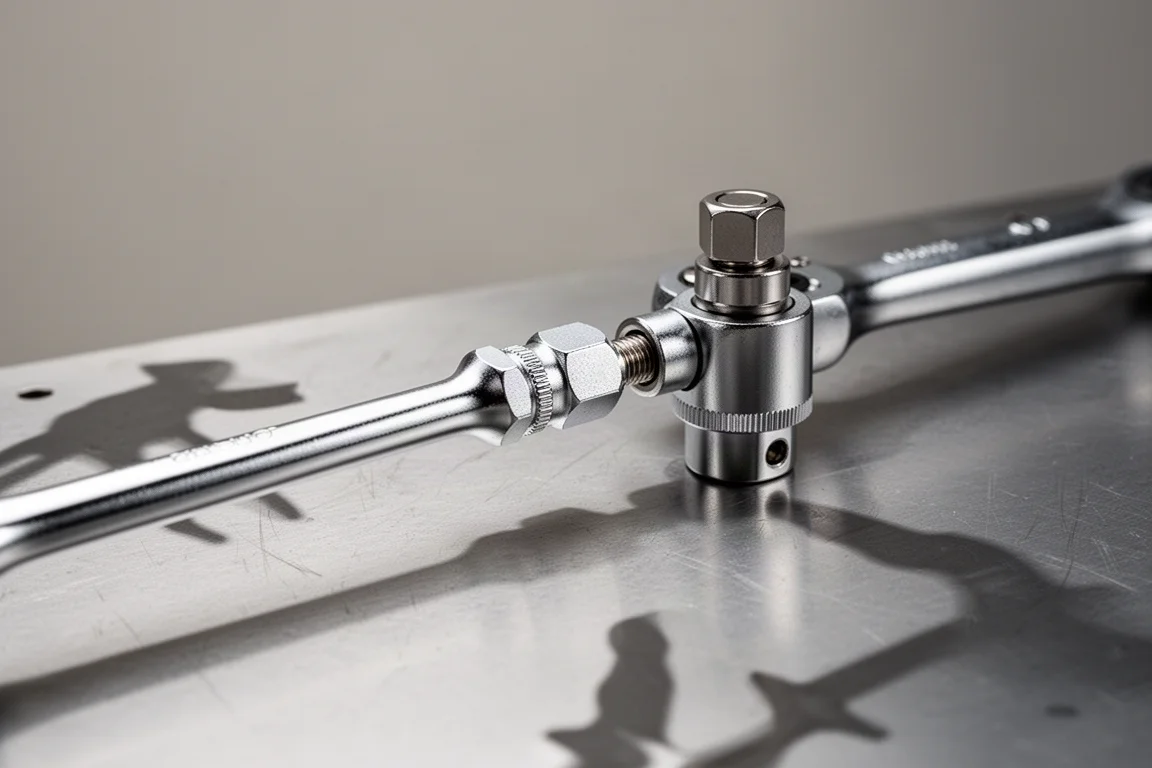
The core idea is simple. A rod slides through the hollow center of the adapter. Push it one way and the tool becomes a female 3/8” to male 1/4” square drive; push it the other way and it becomes a female 1/4” to male 3/8”. In practice, you put a handle or ratchet on one end, drop a socket on the other, and reverse the configuration by flipping the internal rod.
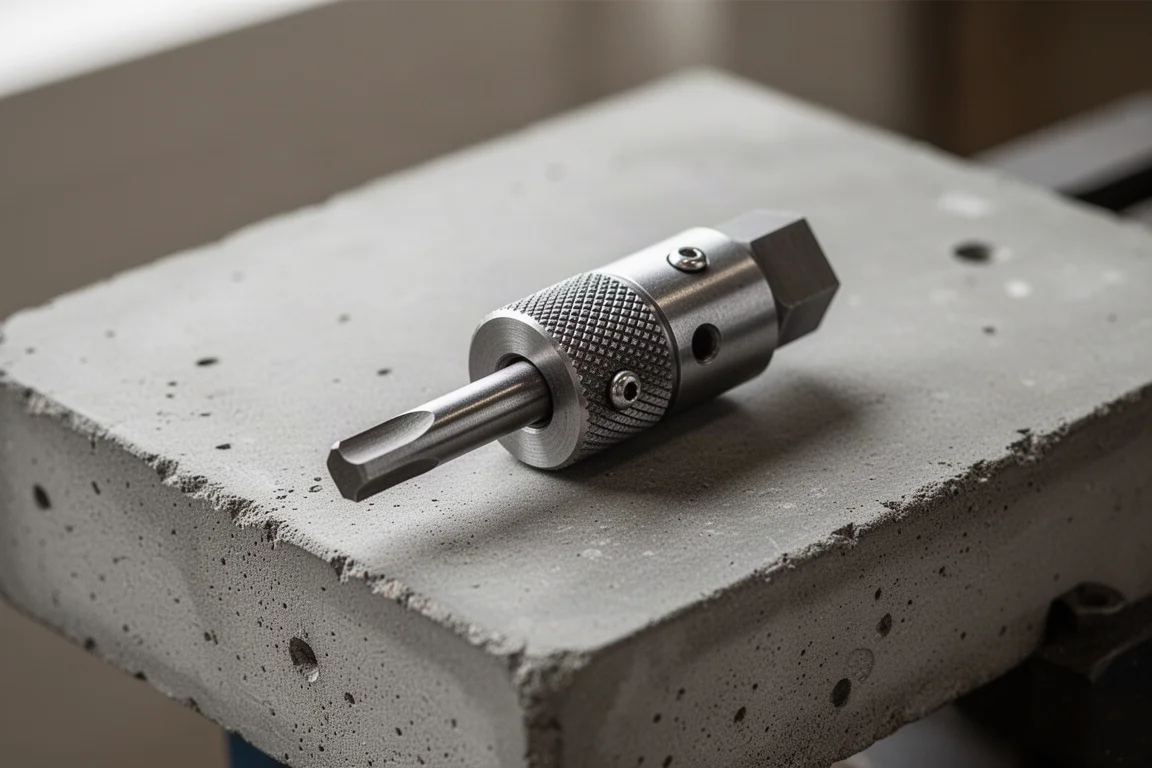
The central rod is secured by a roll pin set into the middle of the knurled body, which holds the whole mechanism together. It is a neat mechanical trick, and the double-branded drive ends give it a genuinely unusual identity among socket adapters.
The Drawbacks: Play and Weakness
Here is where the honest assessment matters. When the 3/8” square drive is extended, the internal shaft that supports it tapers down to well below a quarter inch in diameter, roughly losing a third of its thickness. That slim central rod carries all the load, which means the adapter is not very strong. It has survived hand-force testing, but there is real doubt it would hold up under heavy breaker-bar use.
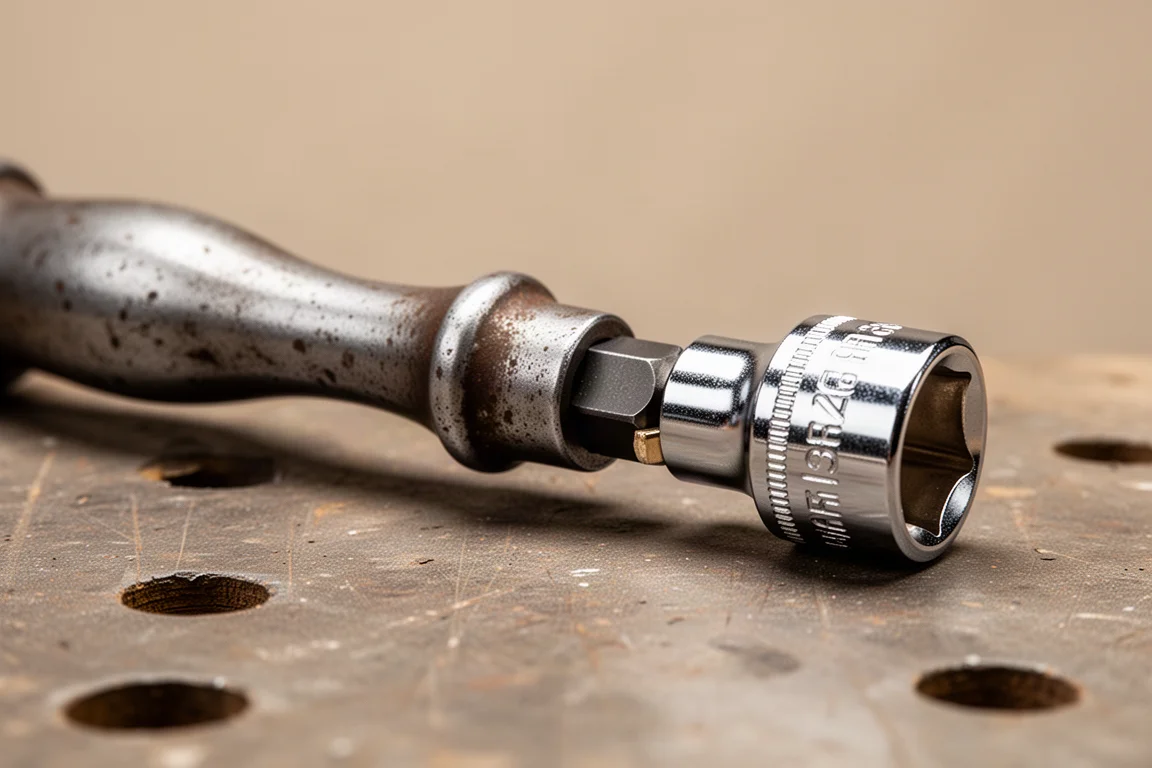
The extension also creates noticeable play at the drive end. Because the 3/8” stub sits far out from the body, sockets and ratchets seat with considerable wobble, especially if the ball detent is allowed to sit where it naturally rests.
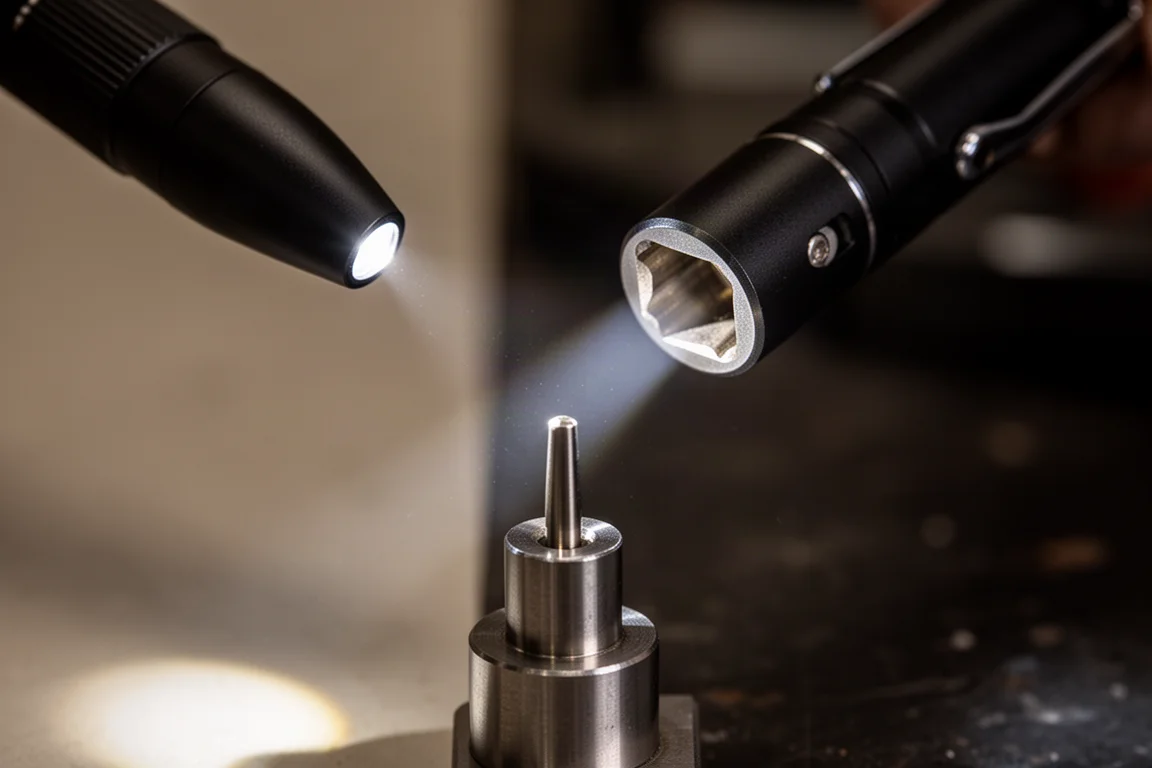
A focused inspection light reveals just how dramatically the 3/8” shaft narrows inside the body, down to a small, screwdriver-sized cross-section.
Practical Usability Issues
There is a second, more mundane problem: fitment. When a ratchet or socket is attached to one end, the opposite drive end can slide through the receiving tool unless something occupies that end. In testing, a 3/8” socket would not stay seated on the extended stub, and the same issue repeated with a 1/4” socket on the reverse configuration. You have to keep something engaged in the free end to keep the adapter from slipping through.
As a hand spinner, it performs acceptably in one direction and poorly in the other, depending on how far the mating tool seats onto the stub. That inconsistency is worth knowing about before it surprises you mid-job.
Should You Buy It?
The Calvan Tools 488 is an interesting tool with a genuine drawback at its core. If your need is occasional, light-duty conversion between 1/4” and 3/8” drive, and you value carrying one part instead of two, it can earn a spot in a drawer. The reversible mechanism works as described and the concept is legitimately clever.
If you need a stiff, strong, play-free adapter for anything beyond gentle hand use, a pair of conventional single-direction adapters will serve you better. The extended, thin-walled drive stub simply asks for more flex than serious work tolerates.
Conclusion
The Calvan Tools 488 reversible adapter is a patented idea executed with real charm but predictable mechanical compromise. It flips between 3/8” and 1/4” drive as promised, yet the slim internal shaft and long exposed drive stub bring meaningful play and limited strength. Buy it as a novelty convenience for light tasks, not as a replacement for proper adapters in demanding work.
Product link
View more details for Calvan Tools 488 3/8" to 1/4" Reversible Adapter
This product is mentioned in the review. Check the specifications, options, and compatibility before buying.
View more details for Calvan Tools 488 3/8" to 1/4" Reversible AdapterFurther reading
Related Reviews
Hand Tools
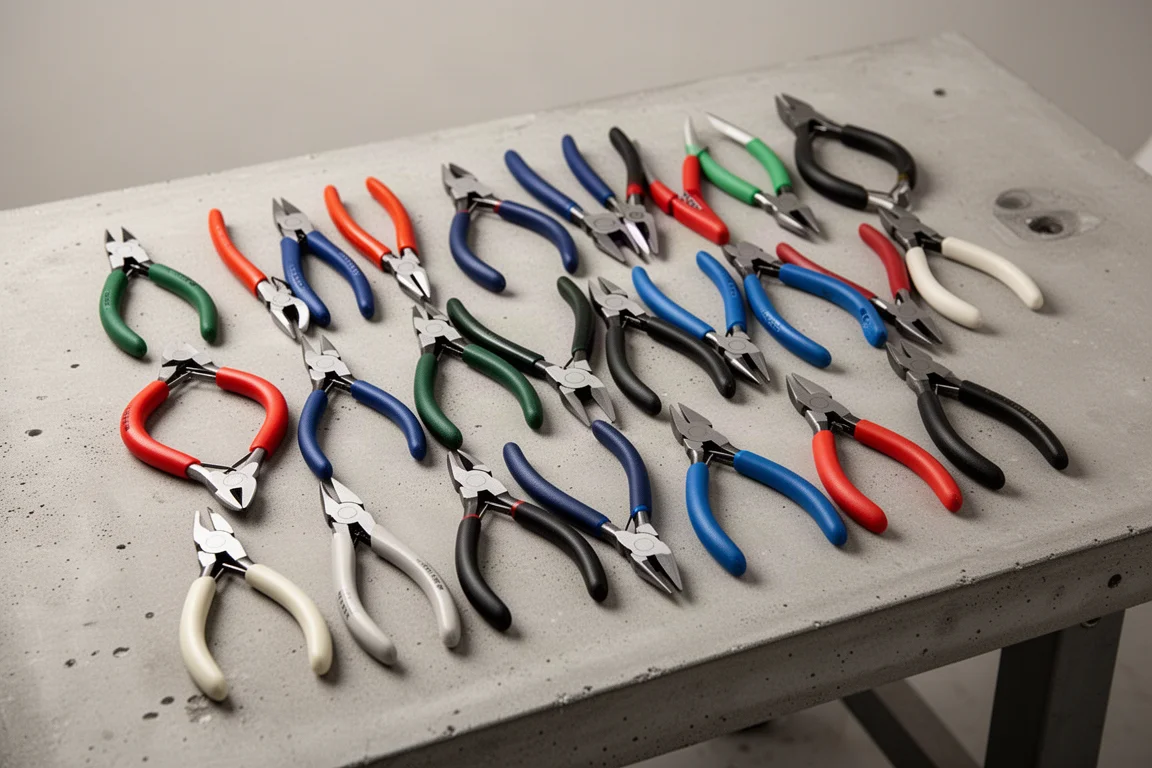
Best Diagonal Cutters 2026: 16 Pliers Tested for Cutting Power and Durability
We put 16 diagonal cutters through nail, screw, drill bit, and hex key tests to find the best value picks for your toolbox.
Hand Tools
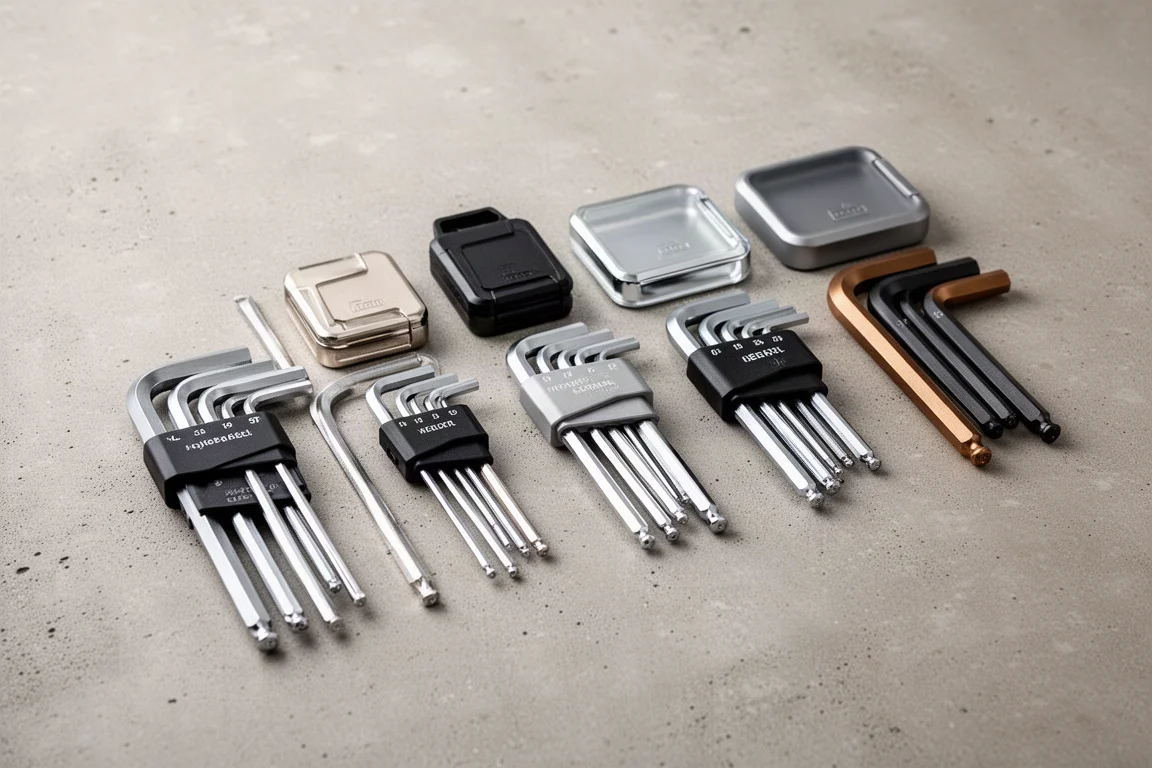
Best Hex L Key Sets 2026: Nine Sets Tested for Real-World Torque
Nine hex L key sets from budget to premium, tested for torque, fit, and durability. See which sets deliver real performance and which ones to skip.
Hand Tools
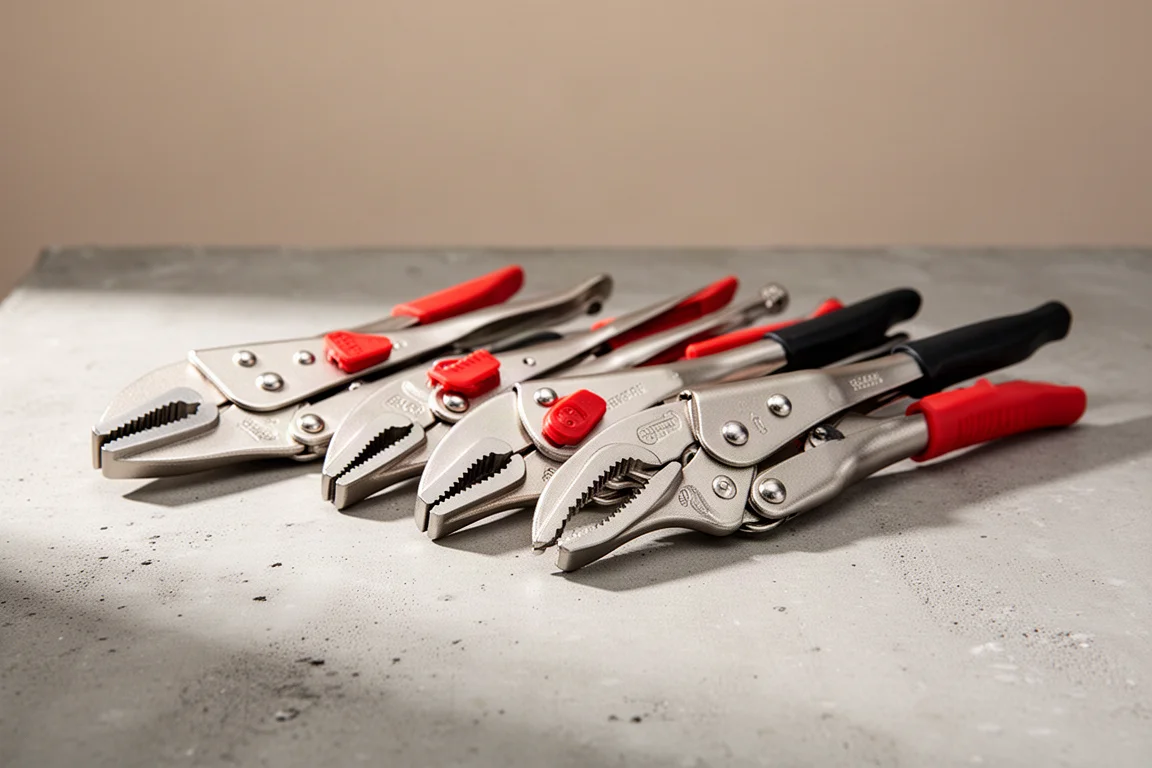
Best Locking Pliers 2026: Top Picks Tested for Grip and Durability
We tested 18 brands of 10-inch locking pliers for grip strength, jaw bite, build quality, and ease of release to find the best options for tough jobs.