Woodworking Tools
Byrd Tool Shelix Helical Cutter Head Review: A Smarter Upgrade for Your DeWalt Planer
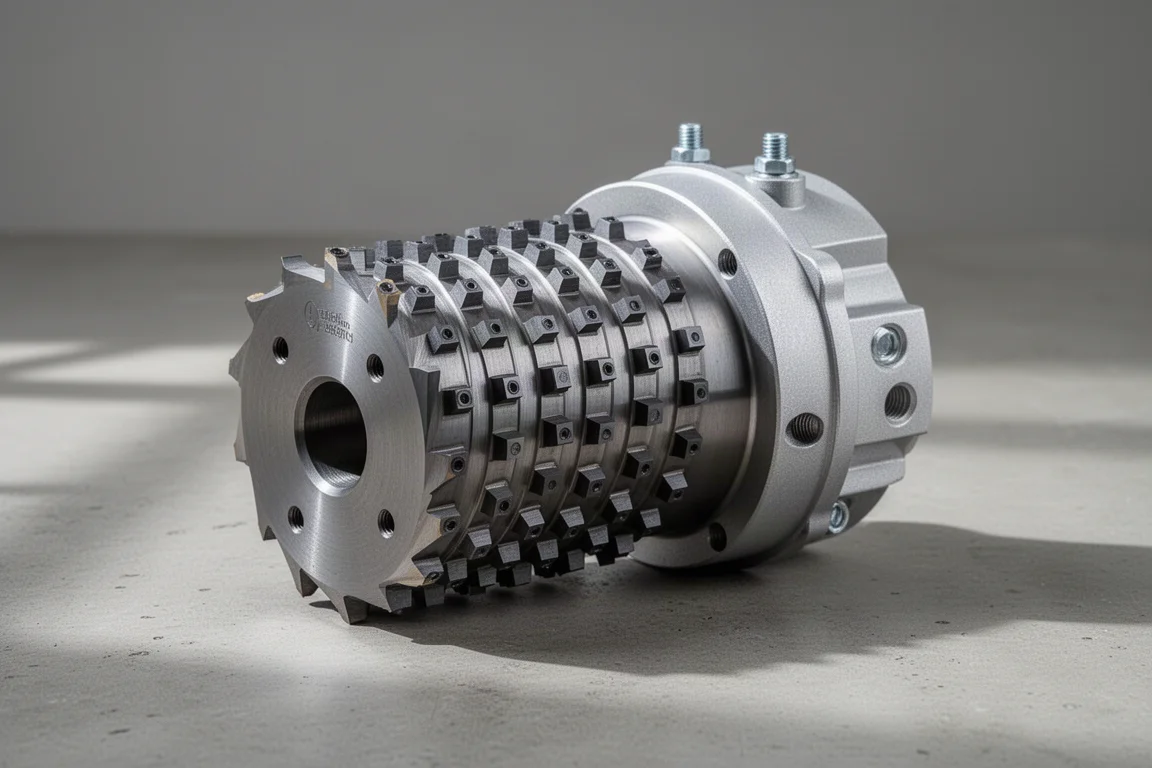
Swapping straight knives for the Shelix helical cutter head transformed planing noise, surface quality, and running cost. Here is what changed and what the installation really involves.
Introduction
If you run a benchtop thickness planer with straight knives, you probably already know the compromises: rough surfaces, extra sanding, occasional tear-out, and a noise level that makes earplugs non-negotiable. That was exactly the situation before upgrading to the Byrd Tool Shelix helical cutter head on a DeWalt planer.
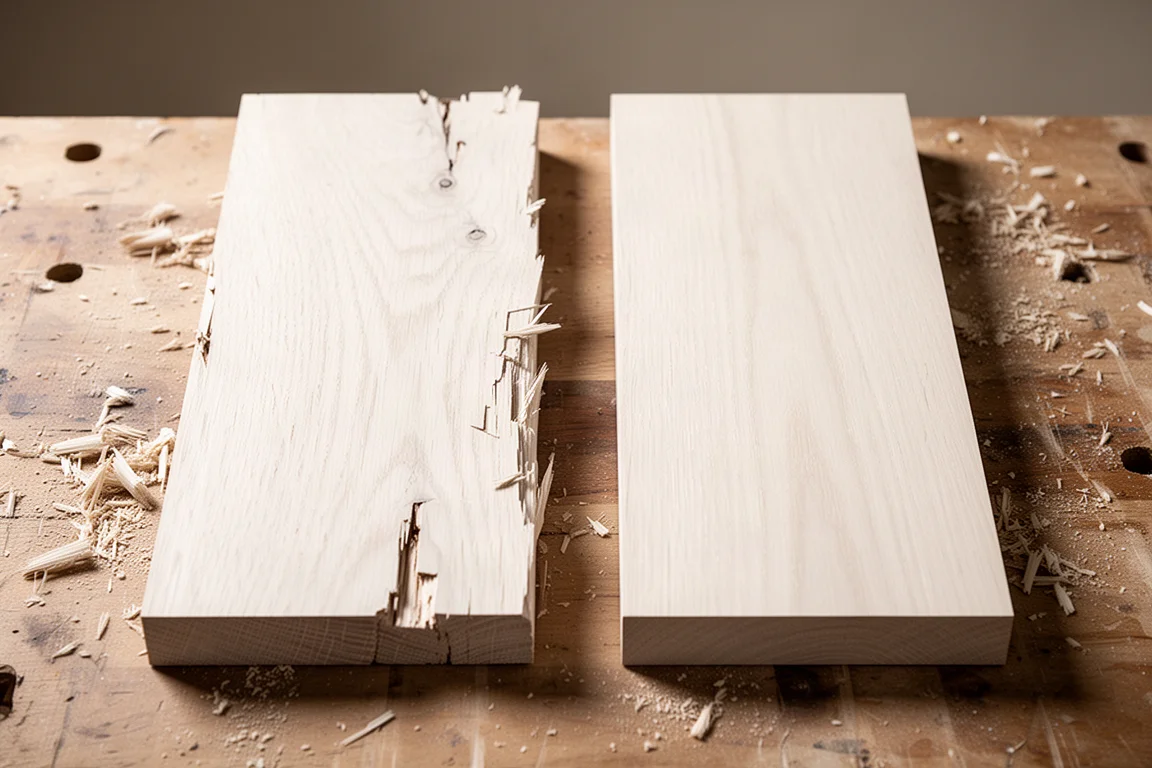
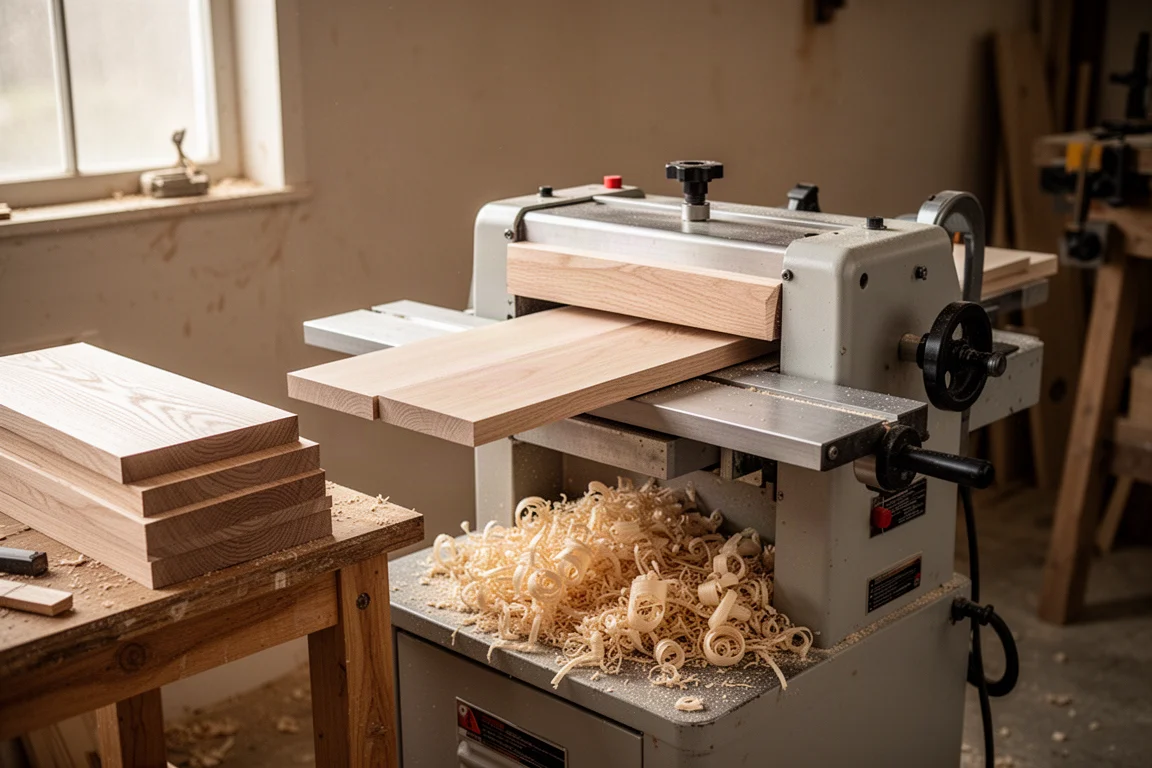
The old straight knives were producing a rough surface with plenty of extra sanding and a bit of tear-out, even on straightforward material. A helical carbide cutter head promised to fix all three problems at once, so a controlled before-and-after test was set up: the same 5-inch wide white oak board, run through with the stock knives first, then again with the Shelix installed, comparing finish, noise, feed rate, and depth of cut.
Before the Upgrade: Straight Knife Performance
With the original DeWalt straight knives, a 1/16-inch cut on white oak went through without bogging down, but the results told a different story. There were ridges in the surface from nicks in the knives, and the board needed sanding with 120 grit and then 220 grit to get anywhere close to usable.
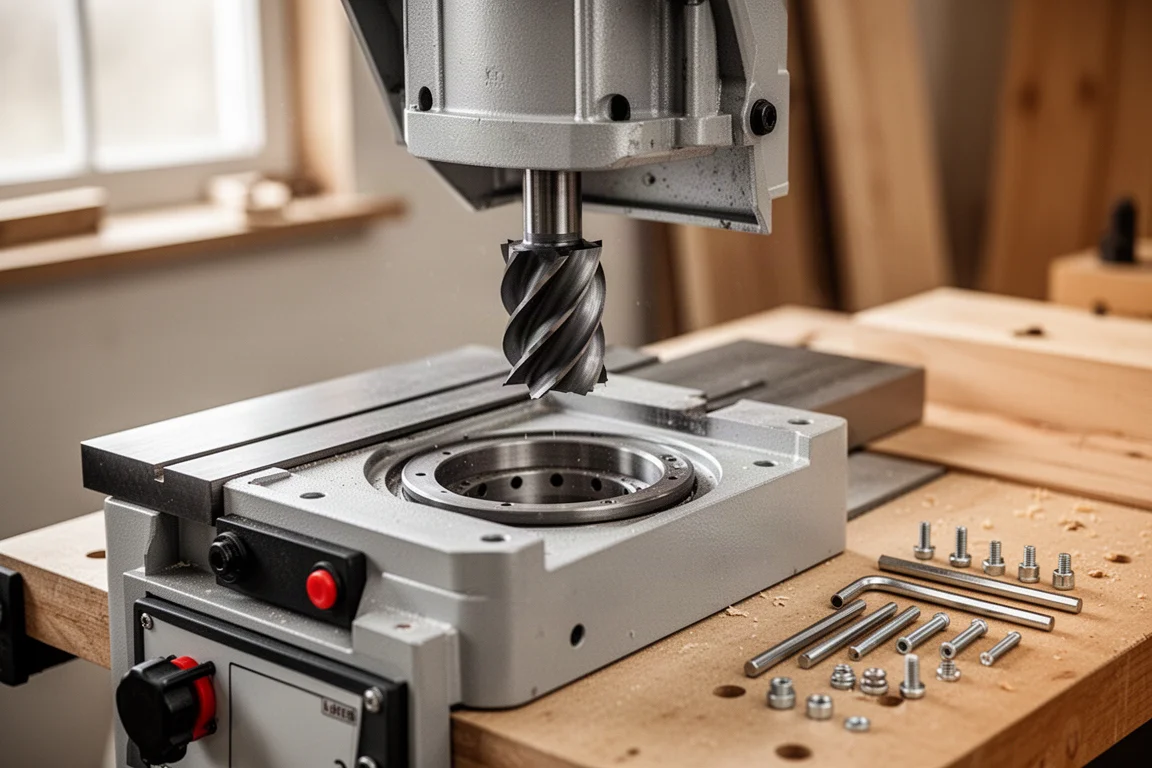
A 1/8-inch cut performed much the same. The noise level stayed consistent, the finish felt roughly identical, and the machine worked a little harder without any real improvement in output. For anyone planing hardwood regularly, that means more time at the sander and more frustration than the tool should demand.
Installation: Fussy But Very Doable
Installing the cutter head is not difficult, but it rewards patience. Anyone with basic mechanical ability, especially experience working on their own car, will have no real trouble. The key is paying attention, because there are a few genuinely counterintuitive steps.
The most important warning involves the stop that DeWalt puts in place to hold the straight knife cutter head. The Phillips screws are secured with thread locker, and if you cam them out while loosening, you will create a real problem for yourself. Go slowly and use good technique.
There is also one trap that is easy to miss: when removing the old cutter head, a spacer on the end can come off with it. If that spacer is left behind, the new Shelix will not have proper clearance when reassembled. It is a small detail with an outsized impact.
The good news is that Byrd Tool Experts support is a genuine strength of the whole package. They answer questions by phone, they actually know the machine you are working on, and they can point you to the best installation guides. That combination of phone support and detailed instructions makes a nervous install far less stressful.
Before and After: The Test Results
After the install, the same 5-inch white oak board went through with the same depth of cut. The difference was immediately obvious on both counts: volume and cut quality. The comparison between the Shelix helical head and the somewhat-used DeWalt straight knives was not close.
Noise: The straight knives measured around 118 dB. With the Shelix, the level dropped dramatically, to the point where the machine no longer hurts your ears and you can carry on a conversation without earplugs. Whether you are a professional or a DIY woodworker, less noise in the shop is a huge win on its own.
Cut quality: The Shelix surface was far smoother. One small ridge remained, which is sandable with 100 grit paper, and adjusting individual carbide bits eliminated similar lines during setup. As familiarity with making those adjustments grows, even that single ridge should disappear. It is a good idea to mark your reference points when you start adjusting individual cutters.
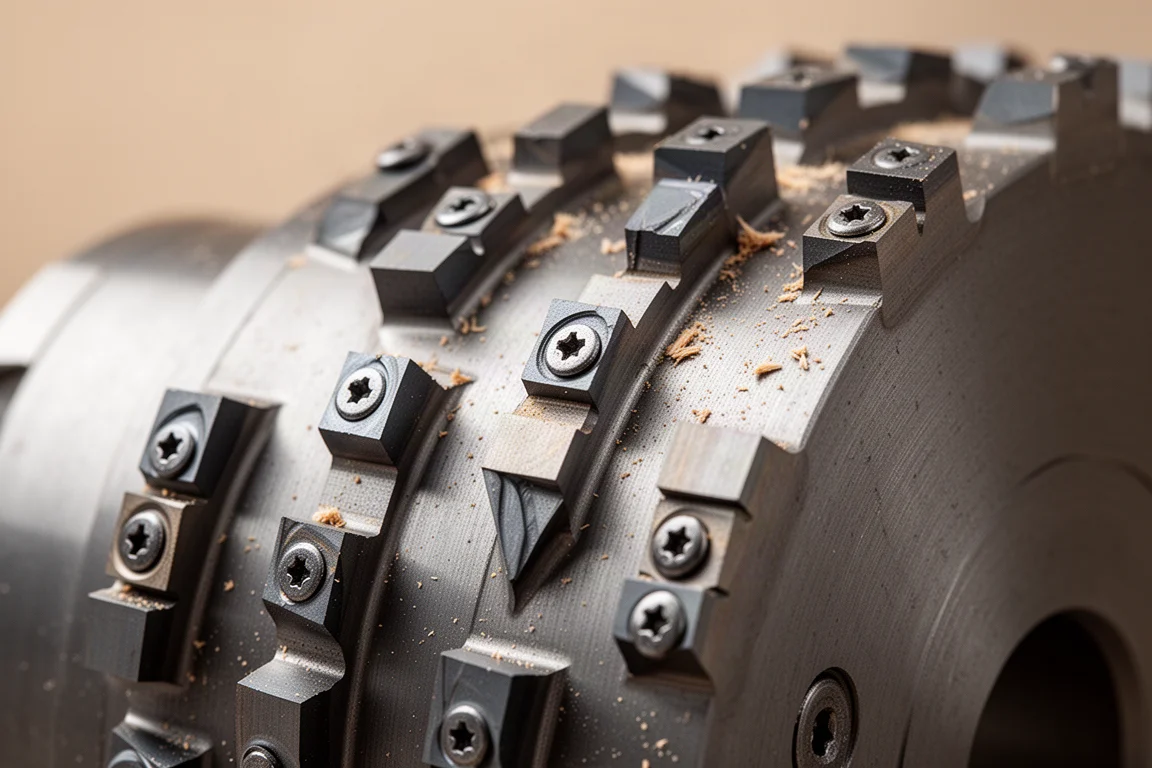
Machine load: The planer did not seem to bog down as much with the helical head in place. Feed and depth of cut felt more comfortable overall, which matters when you are running a lot of material.
The Hidden Savings: Indexable Carbide
One advantage that is easy to overlook is the economics of the cutter design. Instead of one long knife that needs sharpening or replacing, the Shelix uses individual carbide bits. When a spot dulls or gets nicked, you rotate or replace just that bit, and each position offers multiple usable edges.
Because of the nature of the bit, there are effectively four blade changes available before you need fresh cutters. Over the life of the machine, that adds up to serious money compared with repeatedly buying or sharpening straight knives.
Is It Worth It?
In plain terms, the Shelix upgrade is cost-effective, money-saving, eardrum-saving, and frustration-saving. The finish coming off the machine is good enough that sanding becomes a light touch-up rather than a grinding chore, and the shop becomes a far more pleasant place to work while the planer is running.
For anyone running a DeWalt benchtop planer with straight knives and regularly fighting tear-out, noise, and sanding time, this is one of the highest-impact upgrades available. The installation demands care, but with manufacturer phone support and solid guides available, it is well within reach of a competent home woodworker.
Conclusion
The Byrd Tool Shelix helical cutter head turned a loud, finicky planer into a quieter, cleaner-cutting machine with dramatically lower running costs. The noise reduction alone justifies the upgrade, and the surface quality improvement makes it a clear recommendation for anyone who planes hardwood regularly.
Product link
View more details for Byrd Tool Shelix Helical Cutter Head
This product is mentioned in the review. Check the specifications, options, and compatibility before buying.
View more details for Byrd Tool Shelix Helical Cutter HeadFurther reading
Related Reviews

Woodworking Tools
123 Blocks and the Hardware Kit That Fixes Their Biggest Flaw
A practical look at 123 blocks, the hardware kit that solves their most common design flaw, and a sharpening station worth considering.

Woodworking Tools
Cool Tools for Woodworking: Seven Upgrades That Earn Their Place in the Shop
A practical roundup of seven woodworking tools and accessories that improve accuracy, safety, and everyday shop efficiency.

Woodworking Tools
Debuke Clamps Review: A Family-Made Aluminum Bar Clamp Worth Knowing
Debuke Clamps are lightweight aluminum bar clamps made by a small Iowa family business. Here is why they stand out from the many knockoffs on the market.