Kitchen Knives
Bush Boy Knives 250mm Kiritsuke Review: A Bold Single Bevel Interpretation
A hand-forged 250mm kiritsuke from Australian maker Bush Boy Knives, with a unique hollow-ground take on the single bevel design.
Introduction
Bush Boy Knives is the workshop of Greg Mander, a maker based in Adelaide, Australia who has been crafting knives for seven years, hand forging most of them for the last three and a half. He works in Damascus, twisted patterns, mosaics, mono steel, and stainless steel, with Japanese-style knives as his favorite style to make. The knife reviewed here is his 250mm kiritsuke, knife number 52 from the workshop, and it arrived with a personal note suggesting the unboxing be enjoyed privately at home with a whiskey by the fireplace. The knife was sent for review, and the opinions below remain independent.
Unboxing and First Impressions
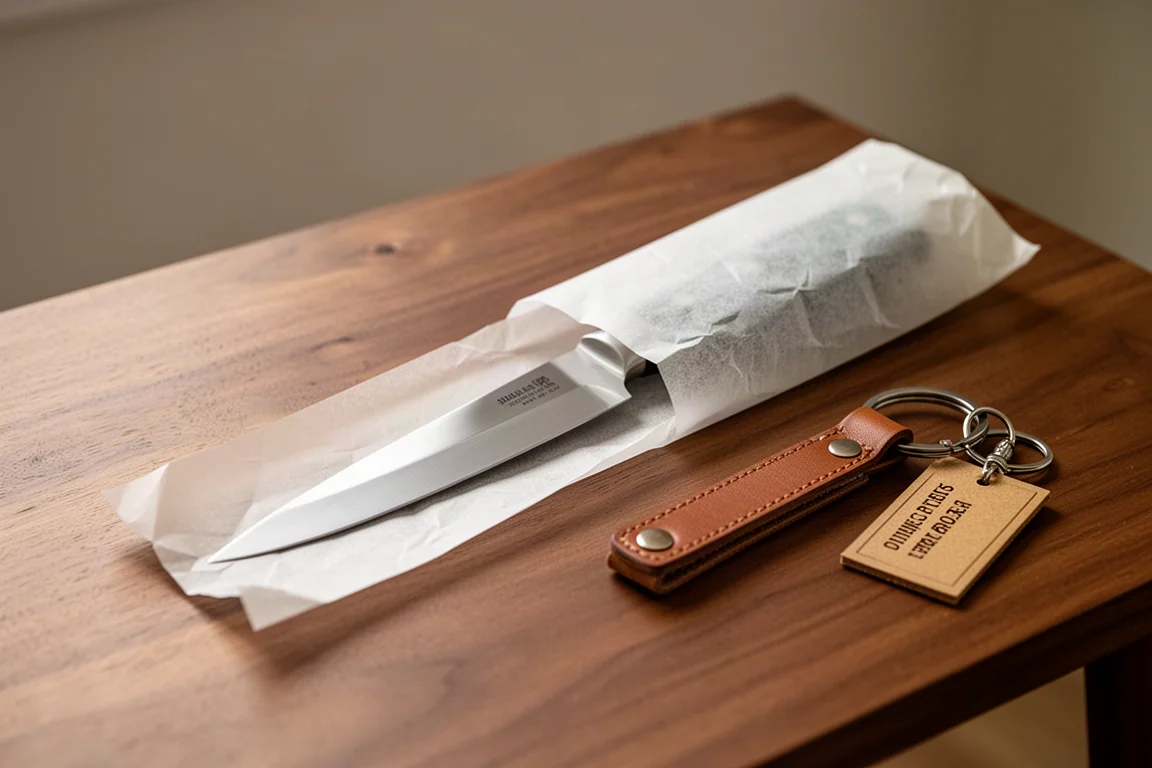
The packaging experience is a genuine highlight. The knife was wrapped like a salami, wax paper and all, which is a charmingly quirky touch. Alongside it came a small leather honing strap, a keychain with a QR code on the back, a three-page instructional care guide, a certificate of authenticity, and walnut wax for moisturizing the handle.
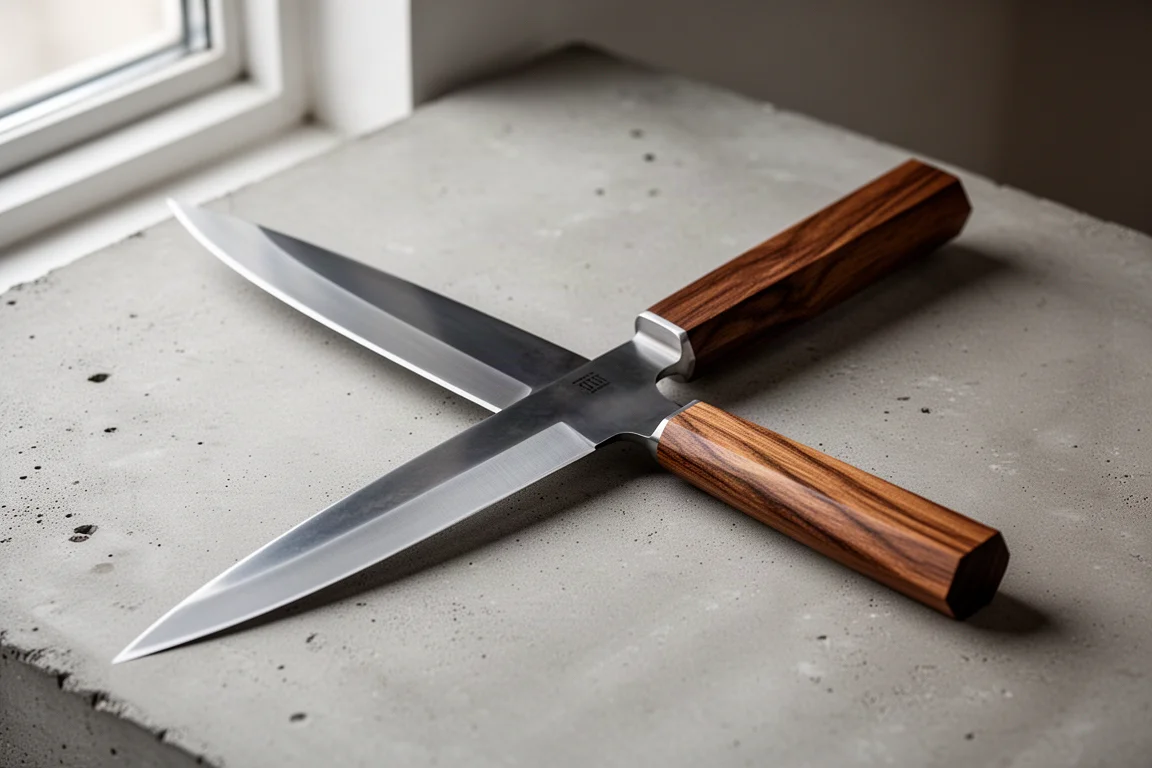
The first surprise is the size. For a 250mm blade, the knife feels far smaller and lighter than expected. It feels nimble in hand, the handle is gorgeous, and the ferral tapers toward the sides to sit at a relatively even plane height. The blade has a distinctive hue rarely seen on other knives, and the design suggests enough knuckle clearance despite the modest blade height.
Design and Edge Geometry
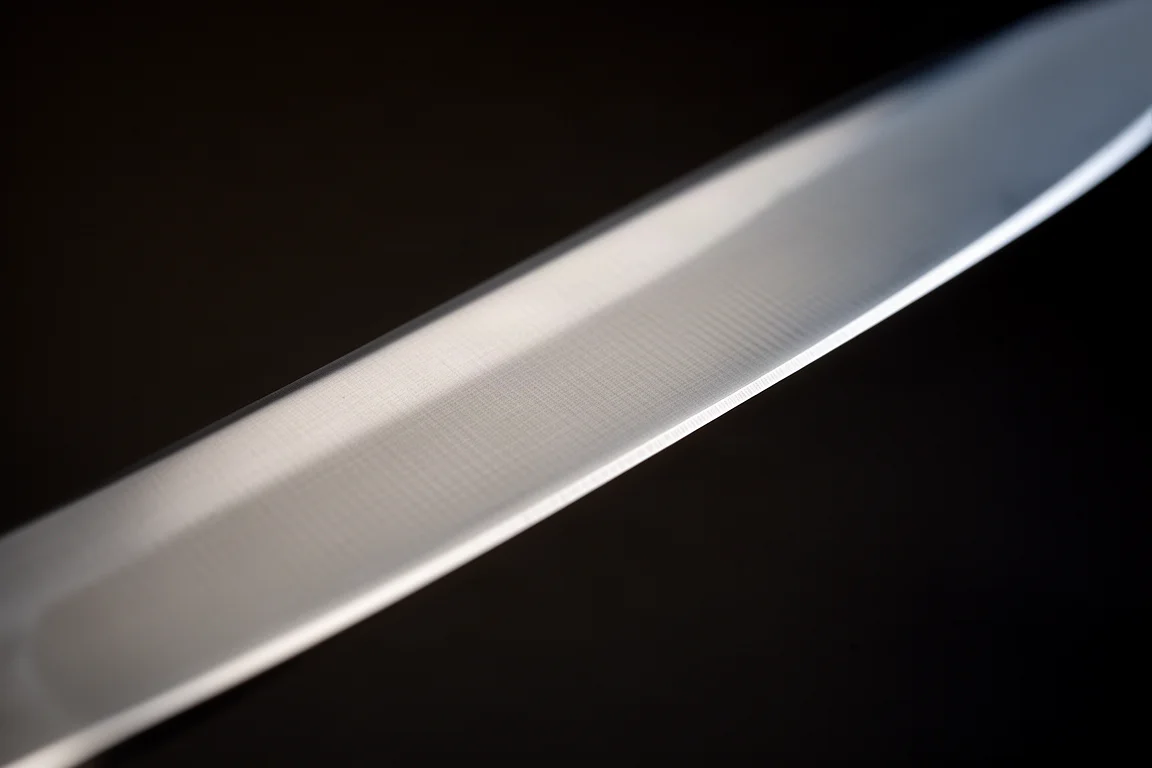
This is best described as an interpretation of a single bevel kiritsuke. It is very thin from spine to tip to cutting edge, with a hollow on the hira that makes it easy to forget this is a single bevel knife at all. It still carries a slight draw to the left in use.
Under close inspection, the right-side convex grind is the one area that could have been flattened a little better to improve overall performance. The knife also lacks a true ura or hollow, which affects food release somewhat. The cutout on the right side, while visually cool, reduced the overall thickness of steel the maker had to work with on the left side.
The blade is finished on a 3K stone, which produces a sharp cutting edge but sets expectations accordingly: this is not a knife for cherry tomatoes or the skin side of a bell pepper. Single bevels are notoriously difficult to make, and attempting one outside his usual wheelhouse shows real courage from the maker.
Cutting Performance
On the board, results were mixed depending on the ingredient, but one constant stands out: this is an incredibly light and comfortable knife to hold. The knife felt best when pull cutting rather than push cutting, thanks to an impressively flat profile across roughly the first 60% of the cutting edge.
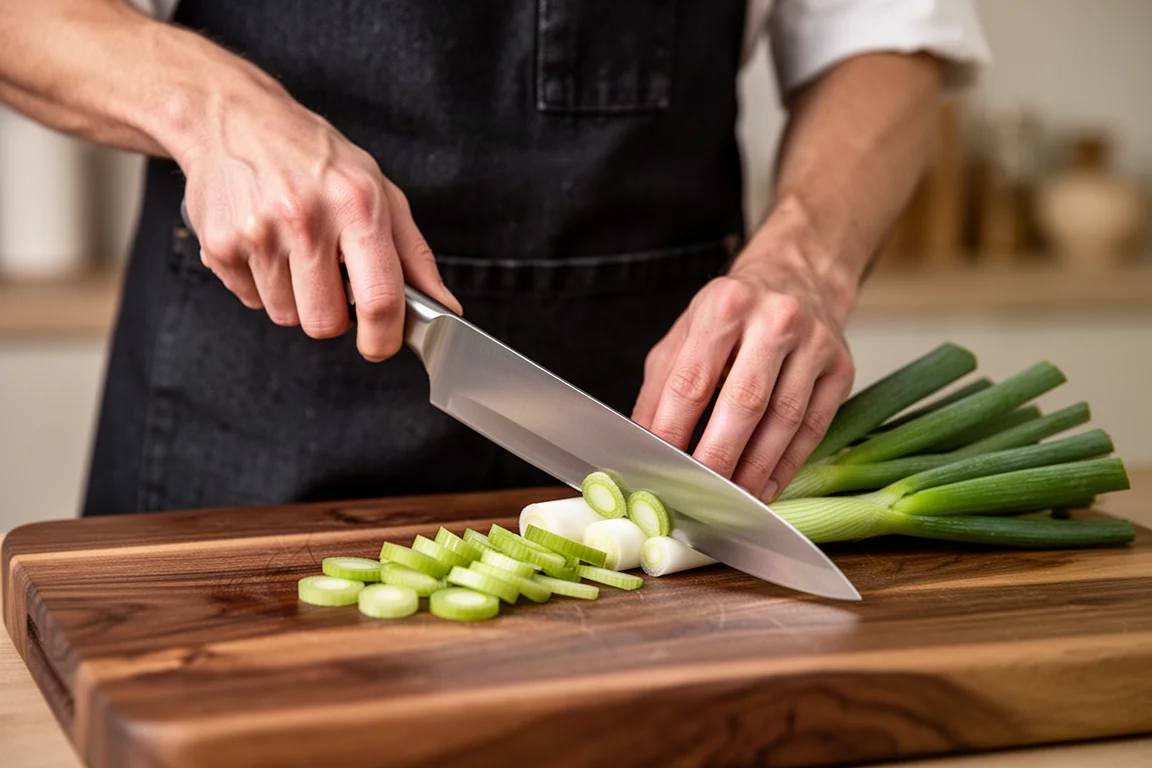
Where it shines is on tasks like riblets and a soft orange cheese wheel, and the long, flat profile with slight tip curvature makes rocking cuts on green onions genuinely enjoyable. Initial concerns about shallow knuckle clearance proved unfounded.
Things to Consider Before Buying
The thin spine is the main trade-off. Because it is so thin and not polished or beveled, long pinch-gripping sessions become slightly uncomfortable as pressure concentrates on a very narrow piece of metal. A thicker spine, tapering to the same micro-thin tip, would allow more room for a hollow or ura and add the heft needed to push through tougher ingredients like apple.
That said, this is a thin kiritsuke, not a cleaver, and it does not need to power through everything to be a good knife. Buyers who understand what a 3K-finished, hollow-ground single bevel interpretation is meant to do will be pleased.
Handle and Saya
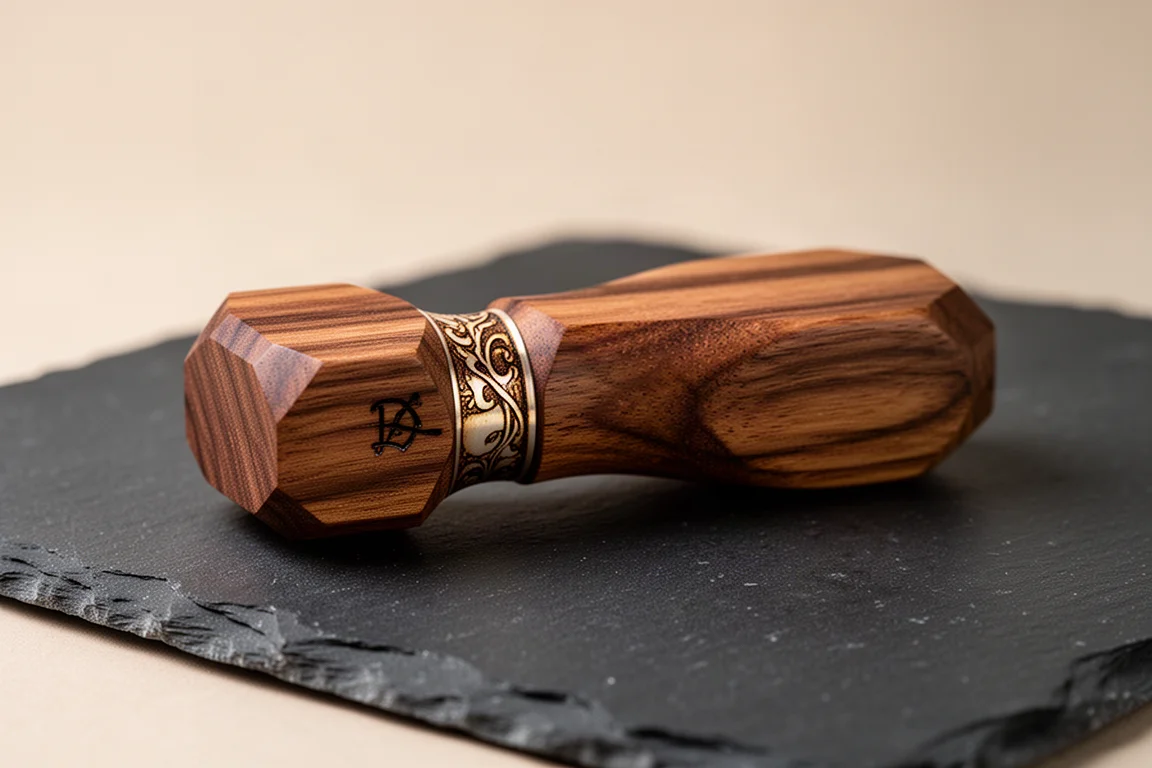
The handle deserves special praise. Handles that include metal fittings often become uncomfortable over time as the wood shrinks while the metal stays rigid. After months of use, this handle remains flawless, possibly thanks to locally sourced Australian hardwood timber suited to dry climates, or simply careful craftsmanship. The maker’s logo is pyro burned into the saya collar, a personal touch that stands out.
The saya itself is remarkable, especially as only the maker’s third attempt. It is ultra thin and friction fit, sliding easily into a knife roll.
Buying Advice
This knife suits collectors and enthusiasts who appreciate handmade Japanese-style knives from independent smiths, especially those drawn to unconventional interpretations of traditional forms. It is ideal for pull-cutting tasks and Rocking cuts on longer produce. Anyone needing a heavy push-cutter for dense ingredients should look elsewhere. Progress images shared during the build are part of the experience, keeping buyers connected to the making of their knife from start to finish.
Conclusion
This is an incredibly fun knife to use with a sharp 3K cutting edge and a saya that punches well above its weight. The handle is among the best of its type, the materials are exquisite, and the whole package reflects a maker willing to push outside his comfort zone. For anyone considering a handmade kiritsuke with genuine character, Bush Boy Knives is a name worth following.
Product link
View more details for Bush Boy Knives 250mm Kiritsuke
This product is mentioned in the review. Check the specifications, options, and compatibility before buying.
View more details for Bush Boy Knives 250mm KiritsukeFurther reading
Related Reviews

Kitchen Knives
Best Chef's Knives 2026: 27 Popular Options Tested and Ranked
A comprehensive review of 27 chef's knives ranging from $18 to $380, with honest assessments of handle comfort, blade balance, and real-world performance.

Kitchen Knives
Best Chef's Knives Under $75: Two Tested Recommendations
Two practical 8-inch chef's knives that balance sharpness, comfort, and durability without premium pricing.

Kitchen Knives
Best Chef's Knives 2026: 27 Options Tested and Ranked
A comprehensive review of 27 chef's knives ranging from $18 to $380, with honest assessments of handle design, balance, blade profile, and real-world performance.