Everyday Carry
Building an Everyday Carry Kit From Scratch: 8 Swaps Worth Considering
Starting with nothing, here is a complete everyday carry kit built from the ground up, from wallet and carabiner to knife, flashlight, watch, and notebook system.
Introduction
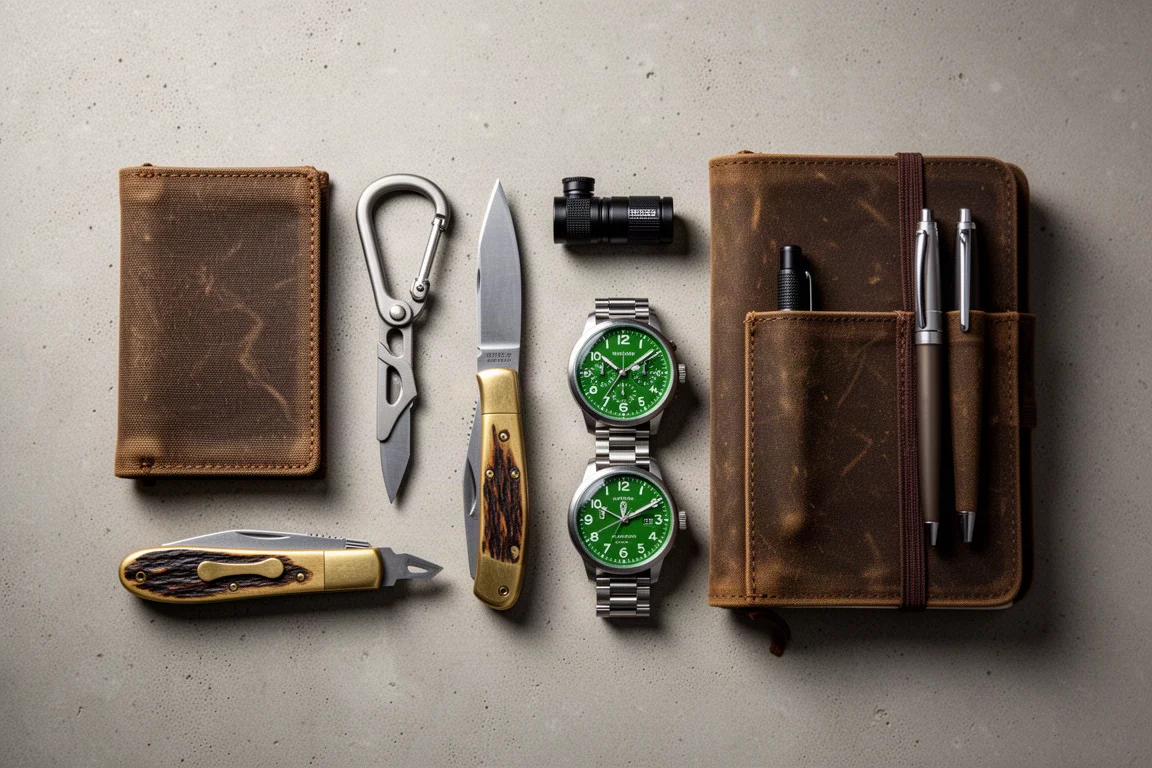
A good everyday carry kit earns its place over years of daily use. The point of this exercise is simple: imagine the familiar pieces were never made, and build a complete new kit from the ground up. The guiding rules are consistent throughout: nothing in a pocket should add unnecessary bulk, every item must earn its spot with a real use case, and earth tones always help.
The current long-term kit covers each category well, so every swap below has to genuinely hold up against proven favourites. Here is what came out of that challenge.
Wallet: Carhartt Zipper Card Keeper
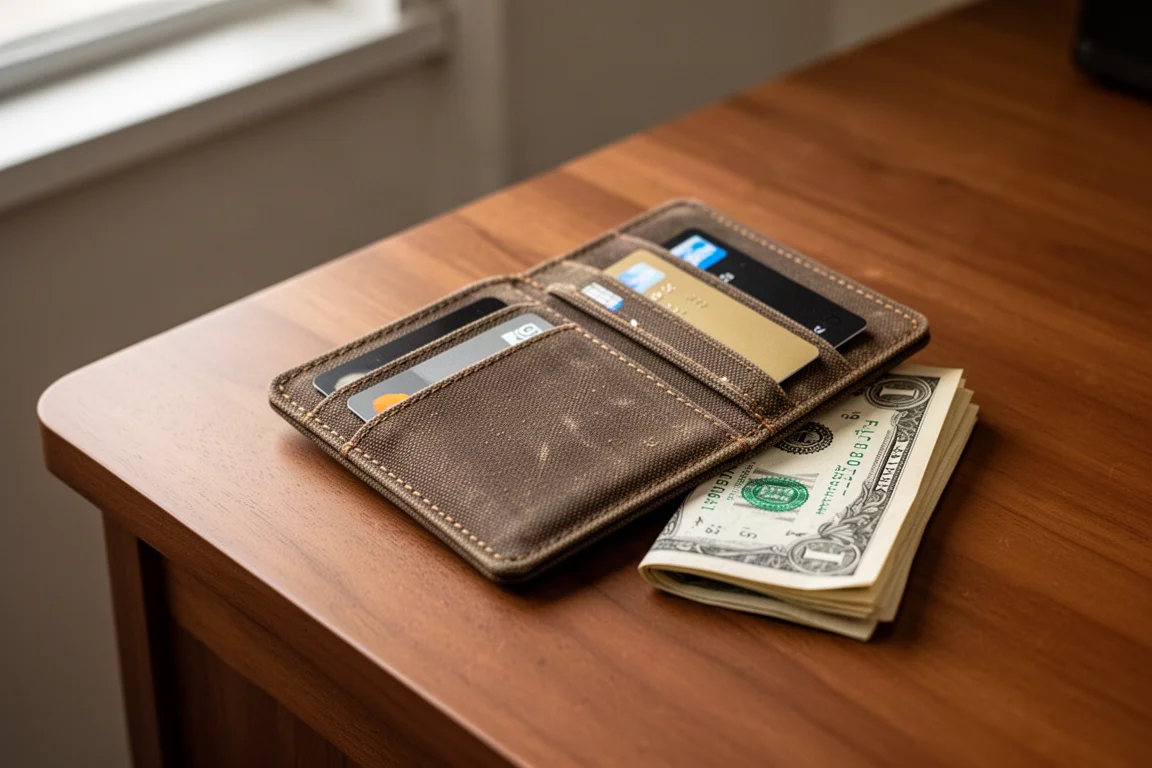
For years the go-to slim wallet has been the Bellroy Card Sleeve, which stores seven cards with a frequently used card up front, the rest in a central pull-tab pocket, and some emergency cash in the rear pocket. It is still a hard act to beat in terms of how slim the whole setup stays.
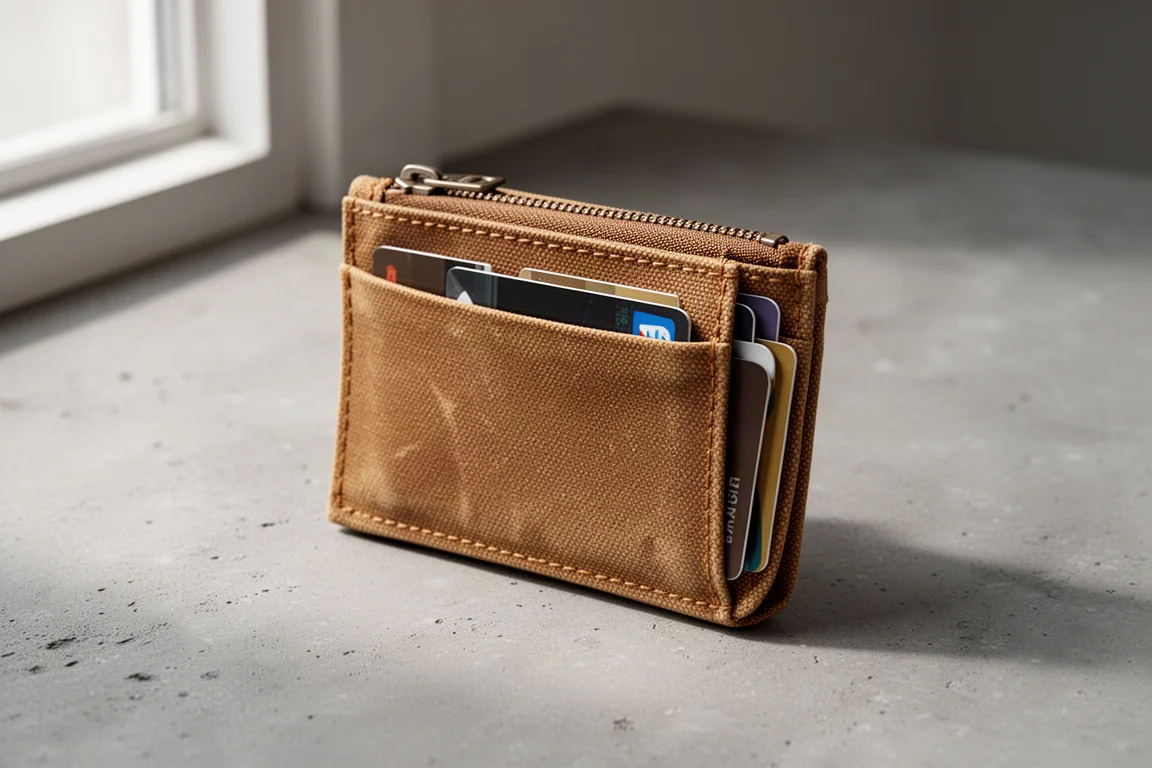
The alternative chosen for this rebuild is the Carhartt zipper card keeper wallet. It has six card sleeves plus a zippered pocket up top, so almost every card gets a dedicated spot, and the two least-used cards share the larger pocket on the back. The emergency cash slides easily into the zipper pocket, which is also a great place for other small flat objects: a spare Band-Aid for parents, or a sobriety coin for those who carry one. It is available in a range of colours beyond the usual earth tones.
Keychain: Rovivon U4 Pro Ti Carabiner
The daily keychain piece has been a small copper workshop-made fidget with a patina finish, originally designed as an antimicrobial button presser and door opener but now mostly a finger toy. Replacing something personal like that was always going to be tough.
The Rovivon U4 Pro Ti carabiner turned out to be a compelling substitute. Titanium construction keeps it super light yet strong, the narrow gate mitigates accidental slip-outs, and the thin hook portion attaches to many anchor points, including tiny ones like zipper pulls or the loop on the Carhartt wallet above.
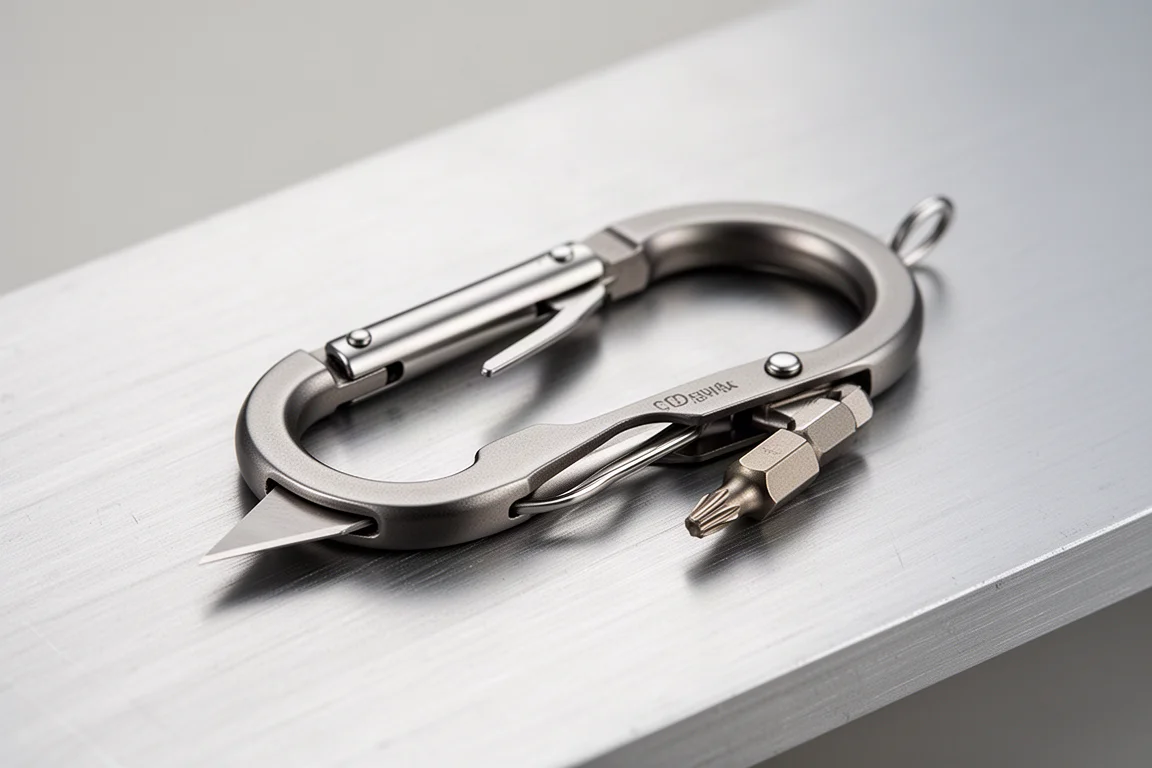
It is also a multi-tool of sorts. There is a super sharp replaceable surgical scalpel that takes standard number 11 blades, plus a swing-out jewel T6 and T8 Torx driver bit. Even without the blade and driver, the titanium frame and the design decisions around the carabiner itself justify the pick.
Pocket Knife: Civivi Elementum
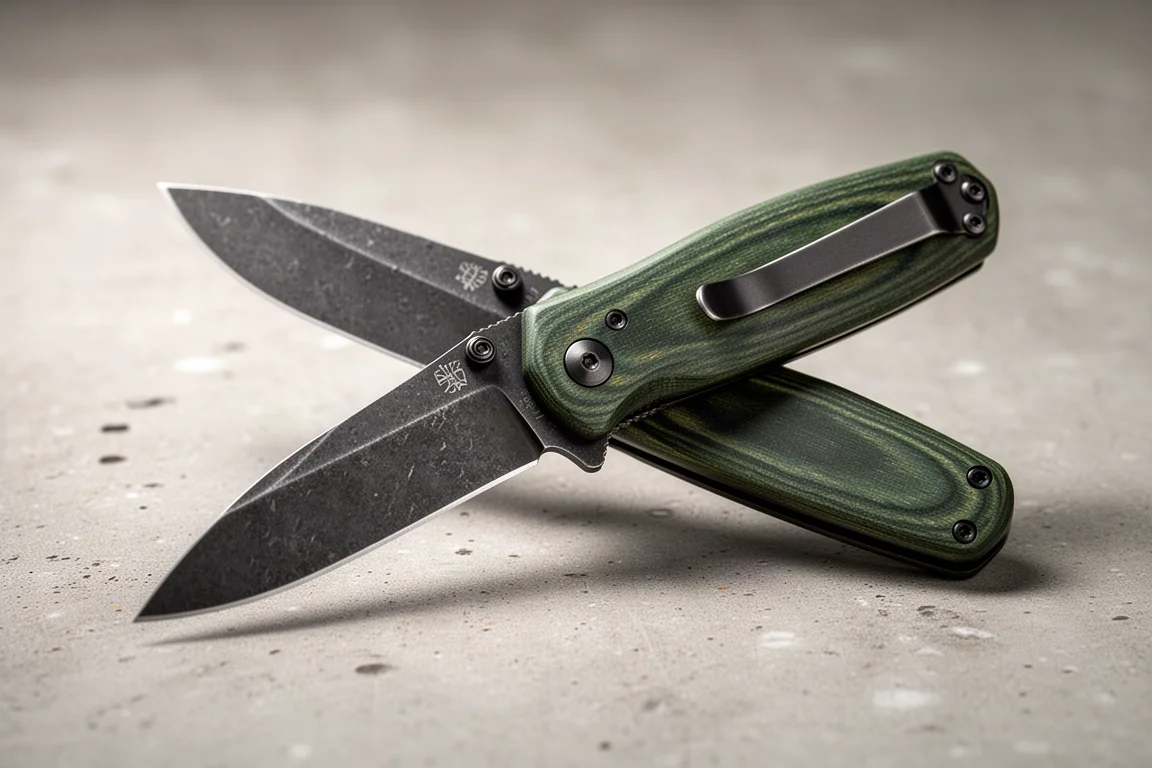
The long-term workhorse here is a Benchmade Bailout with an M4 Tanto blade, metal-feeling construction, and a deep carry clip. A Tanto blade is a must for daily workshop use, whether stabbing through thicker rubber materials or light prying. The M4 steel is loved but prone to corrosion and slow to sharpen, so the ideal replacement wants a Tanto blade, metal handles, a deep carry clip, and preferably easier-to-maintain steel.
The knee-jerk answer would be a Chris Reeve Sebenza with a Tanto blade in S35VN steel, and that remains a fine choice. But real-world pocket dumps in the manufacturing space reveal plenty of hard-use tradespeople running budget-friendly D2 steel in their true daily knives. Blade steel debates aside, D2 clearly holds up for real human beings doing hard work, and it saves money.
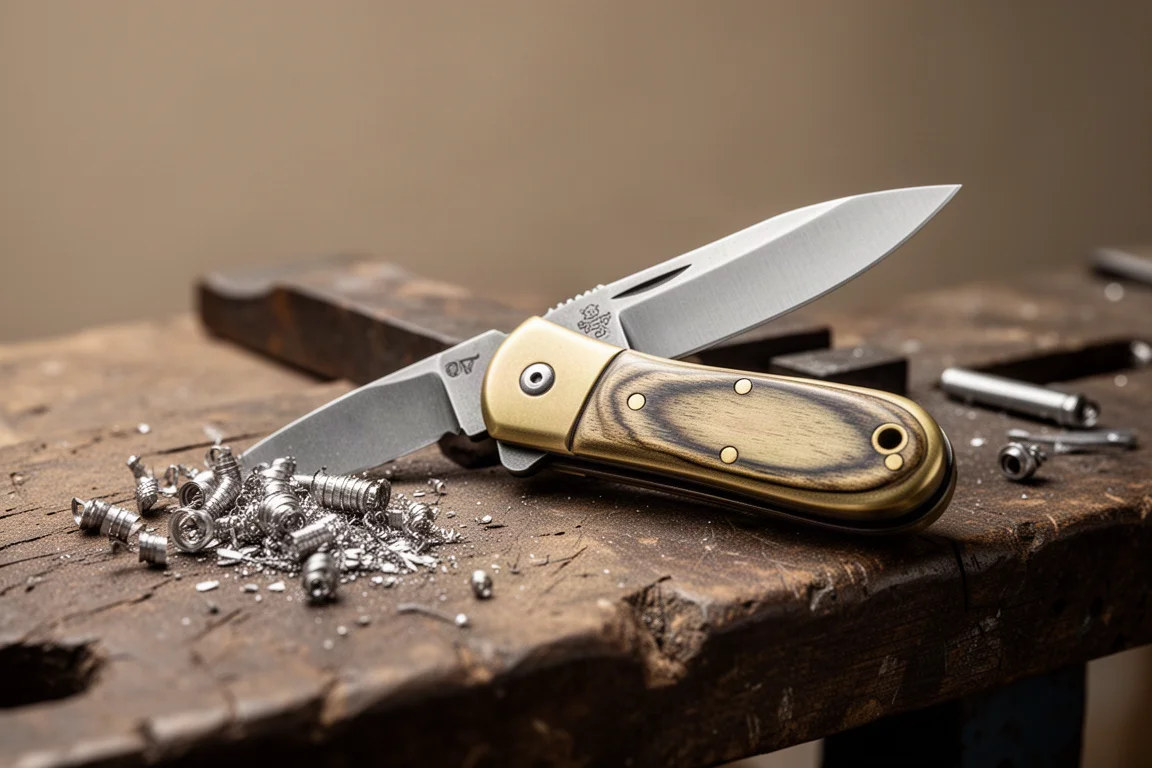
That leads to the Civivi Elementum with a D2 Tanto blade and hand-rubbed brass scales. It hits the metal construction requirement and ships with a deep carry clip from the factory. Instead of a thumb stud it uses a fidgety flipper to deploy, and a liner lock replaces the Benchmade’s axis lock. At roughly five times less in price, it is absolutely worth a shot.
Flashlight: Rovivon E4 Titanium
The daily carry flashlight for the past few years is the Nitecore TUP 1000, chosen for work use, while the more robust Olight Warrior Mini 2 lives at the workshop. The TUP’s mini display showing exactly how much illumination remains at every output is genuinely useful, since it does not get charged every day or even every week.
The core requirements for an EDC flashlight: compact size with an anchor point for a keychain or small carabiner, a dual or beam-up carry clip so it can mount to the brim of a baseball cap for hands-free light, confidence in knowing roughly how much charge is left, and around 200 to 300 lumens, which is plenty for casual impromptu tasks rather than work or camping.
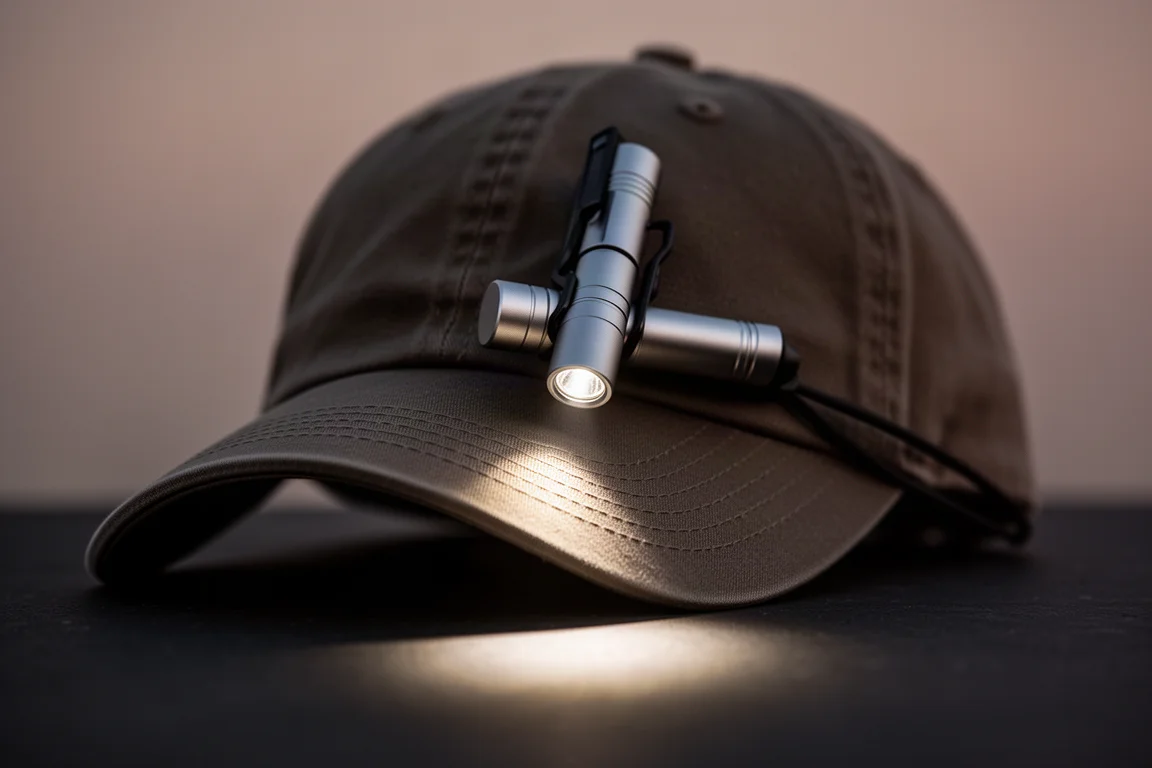
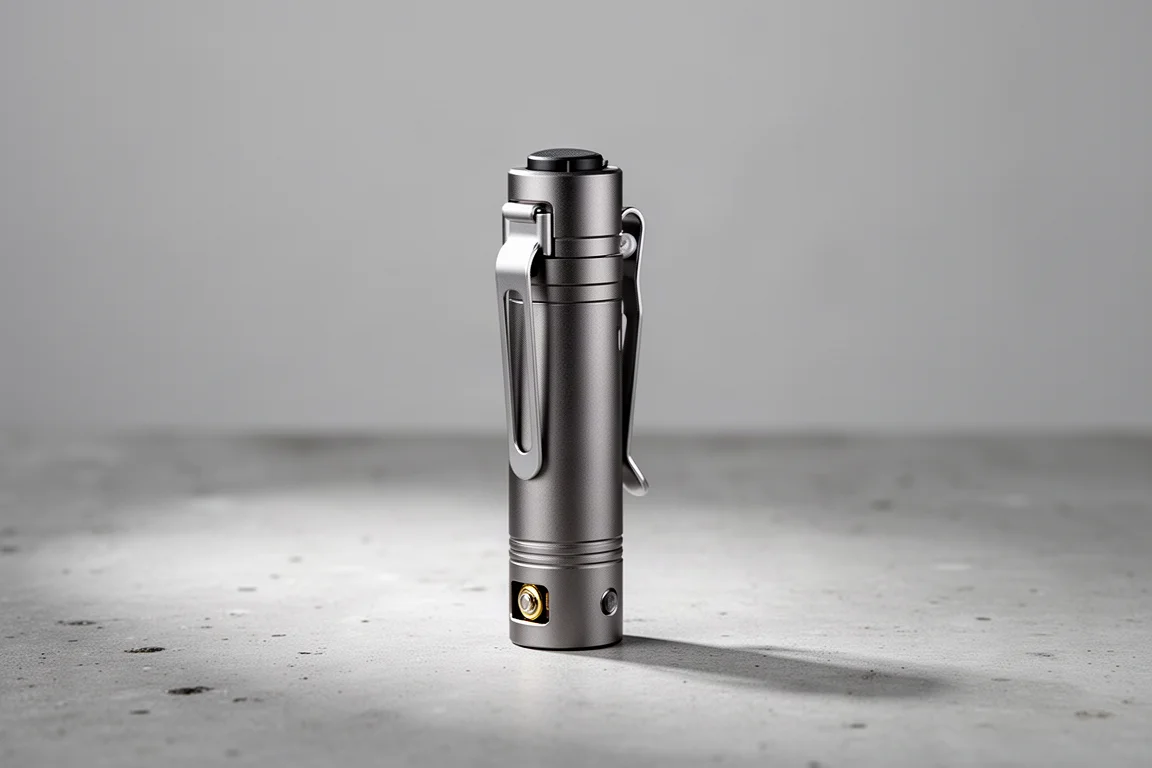
The pick here is the Rovivon E4 Titanium, the titanium variant of the E3 Plus. It is super compact, even thinner than the TUP 1000, has an anchor point, a reversible clip for cap mounting, and peaks at 700 lumens, far more than virtually anyone needs from a casual torch. What it lacks is a screen or charge bars. Where it compensates: a flip-out AAA battery slot on a completely separate circuit, so even if the built-in lithium battery runs flat there is still light, and AAA batteries are available at any gas station or 24-hour convenience store in a real pinch.
Wristwatch: Seiko SSA405J1 Alpinist
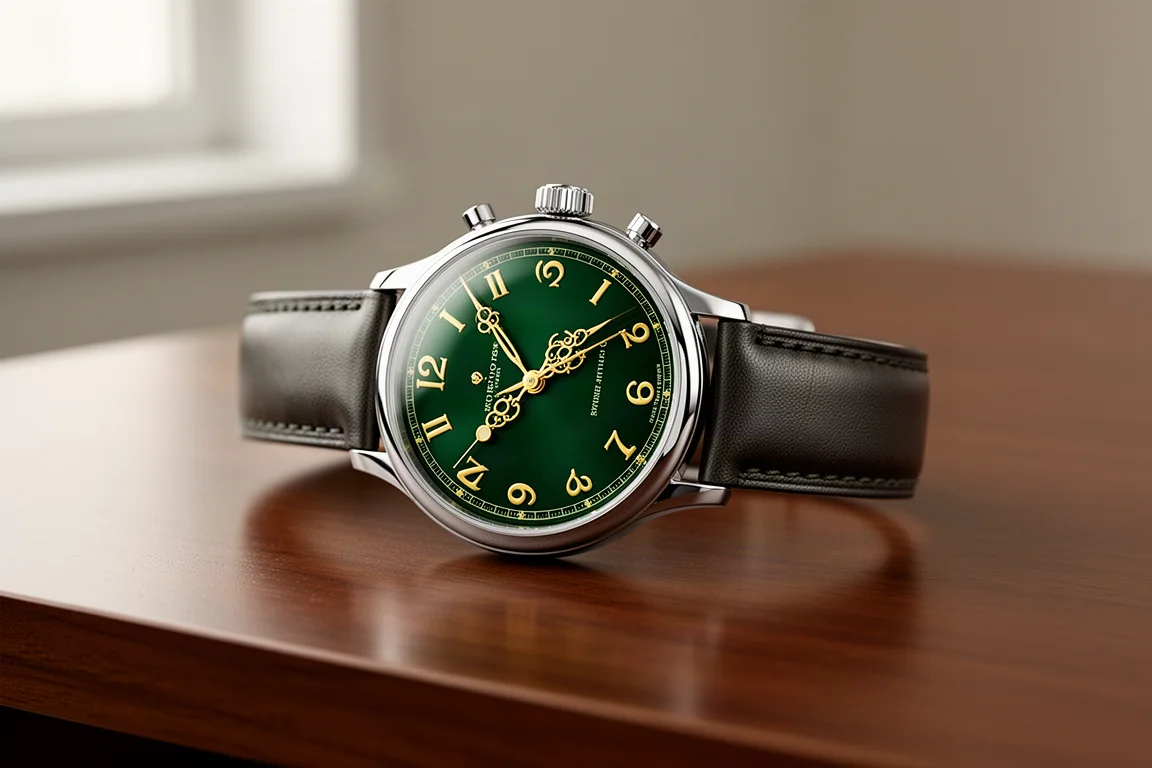
For six or seven years the most wrist time has gone to the Seiko SKX007, a proven everyday diver. This experimental kit, however, is lacking some green.
The swap is the Seiko SSA405J1, colloquially known as the Alpinist. The green sunray-style dial with pops of gold on the numbers and applied indices, combined with those cathedral hands, comes together into a great package. It is also two millimeters smaller in case size than the SKX, which fits a growing preference for smaller-case watches.
Notebook and Pens: Lock B, Tactile Turn, and Koeko
The notebook and pens are the money makers. A Traveler’s Notebook in regular size and two Lamy Safari pens have been, by a wide margin, the most important tools for earning a living: they are what get used in sales and discovery meetings to break down client challenges and work out solutions iteratively.
The must-haves for a notebook and pen system are clear. First, notebook refills with a small page count, which eliminates usage anxiety and lets separate notebooks serve individual client projects without waste. Second, the system must hold and organize at least two inserts at a time: one for personal notes, goals, and task tracking, another for specific active projects. Third, two different coloured pens, since different colours help emphasize different types of information in workflow diagrams and discovery notes. Fourth, everything stored together in one package so no extra pencil case is needed. In the long-standing setup, a Superior Labor dual pen clip attaches the pens to the Traveler’s Notebook.
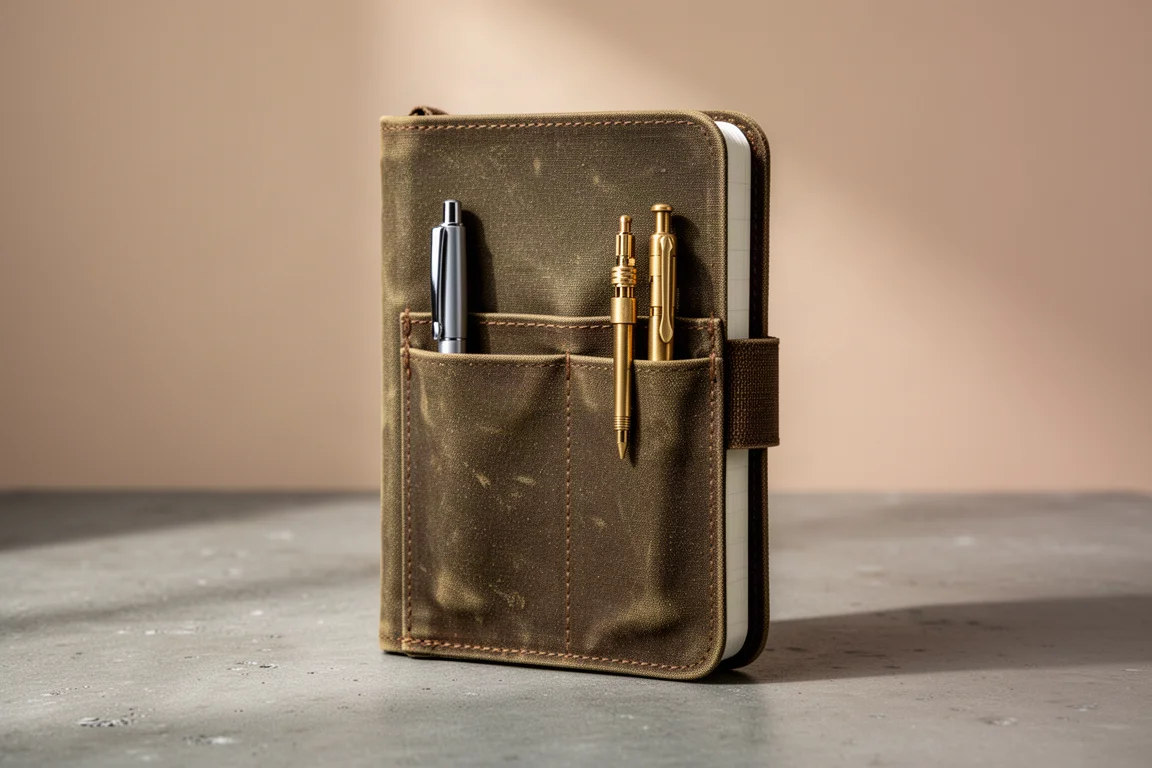
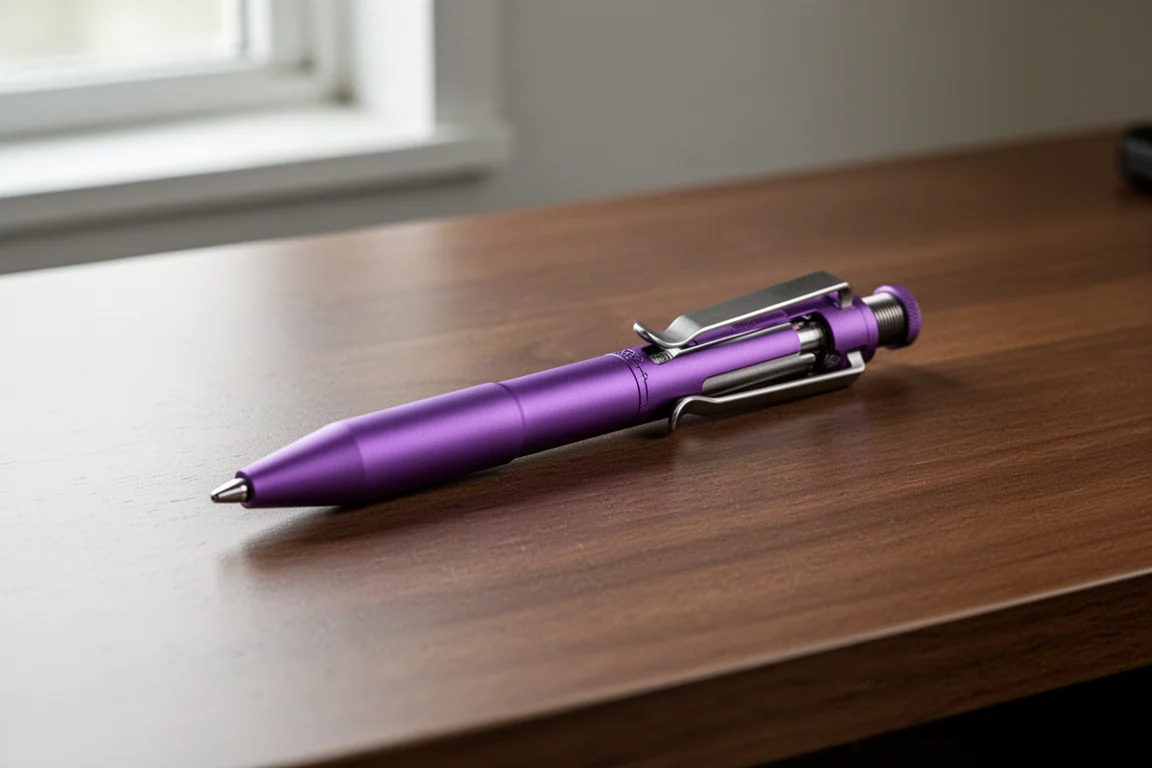
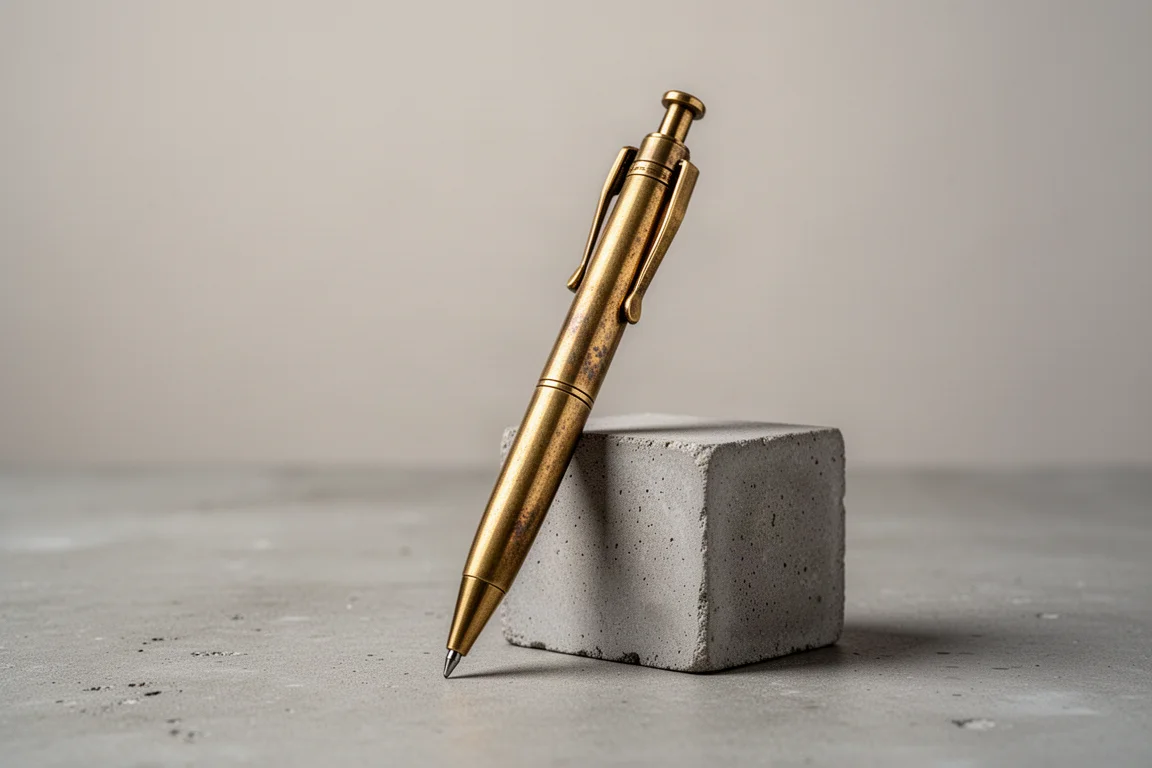
For the rebuild, the answer is the Lock B Pocket Journal along with a Tactile Turn titanium bolt action pen and a chubby brass mechanical pencil from Koeko. Both slide directly into the integrated sleeve pockets on the waxed canvas shell.
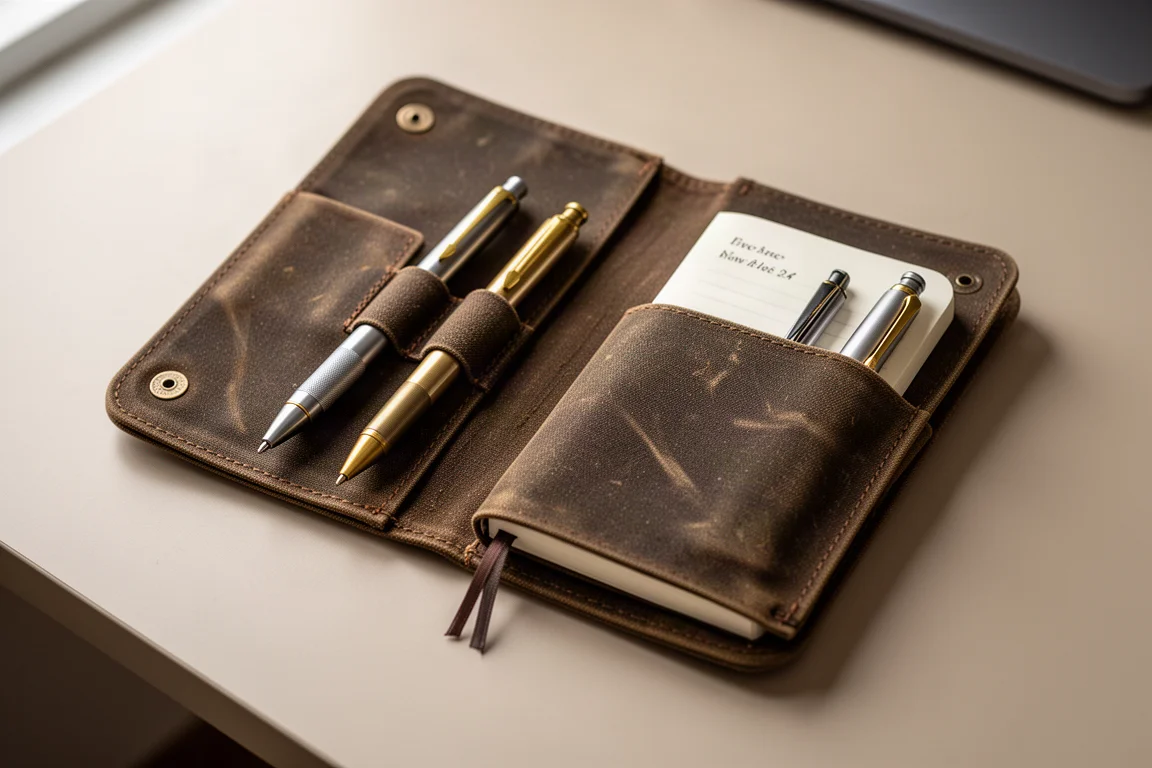
The Lock B system stores two low-page-count notebooks, and Lock B’s own notebooks are the same size as Field Notes, so if Field Notes are preferred or already lying around, they work in this shell too.
Conclusion
Building an everyday carry kit that works comes down to reflecting on what needs to be done every day and, more importantly, how each individual prefers to do those things. Every swap in this kit passed that filter: a wallet with a genuinely useful zip pocket, a titanium carabiner that doubles as a mini tool, a budget-friendly Tanto workhorse, a compact flashlight with backup power built in, a smaller green-dialed watch, and a notebook system that keeps two projects and two pens together in one shell. The long-tested kit remains unchanged because it still works, but each of these alternatives would not feel like a downgrade.
Further reading
Related Reviews

Everyday Carry
Everyday Gear That Deserved a Second Look
A roundup of solid everyday carry items: watches, pens, a pencil, a knife, and a smart ring that each earned a place on the table.

Everyday Carry
KORE Tactical Bifold Wallet Review: A Durable Everyday Carry Option
A close look at the KORE Tactical Bifold Wallet, a reinforced nylon wallet with magnetic closure and room for cards, cash, and IDs.

Everyday Carry
Krabby Wallet Review: A Slim, Simple Carry That Has Stood the Test of Time
A closer look at the Krabby Wallet, a slim canvas and elastic design with a loyal following and a simple, functional approach to everyday carry.