Pocket Knives
Boker Tech Tool 7 vs RAKE Knives LD 40 41B: Two Layered Pocket Tools Compared
Two layered pocket knives with near-identical tool sets but very different sizes. Here is how they actually differ in hand.
Introduction
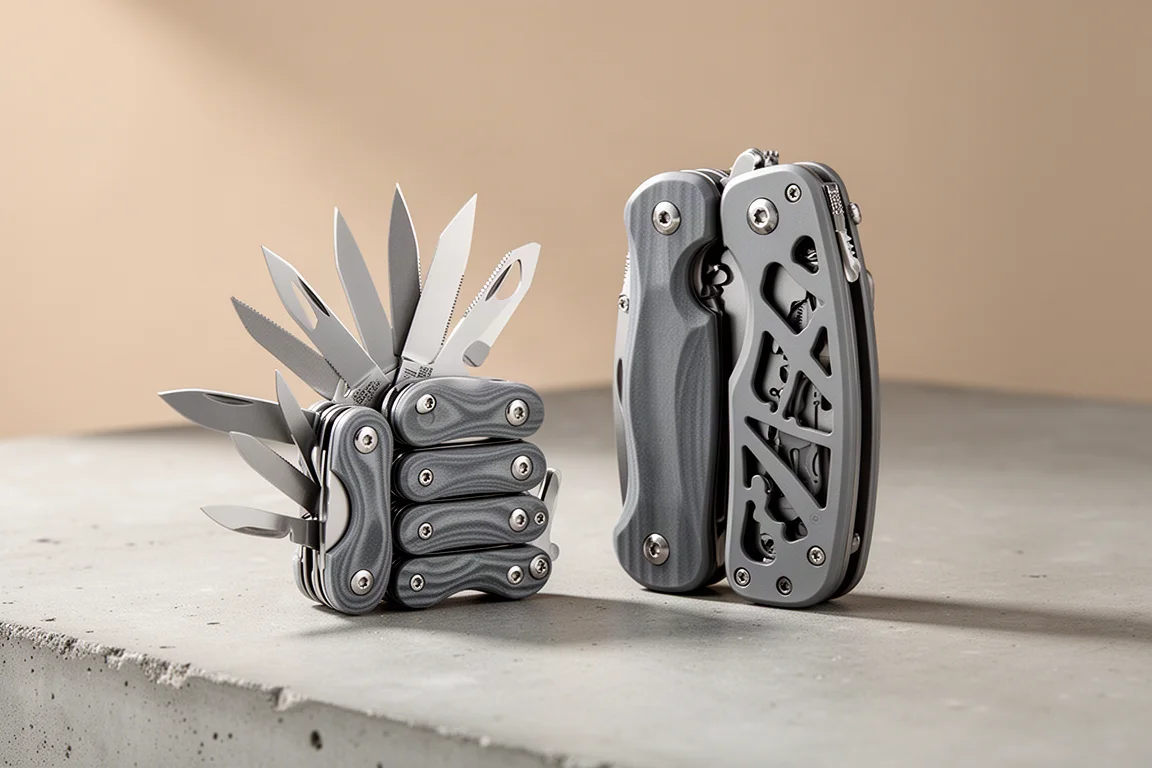
Two layered pocket tools, nearly identical tool sets, and a very different feel in the hand. The Boker Tech Tool 7 and the RAKE Knives LD 40 41B are close cousins on paper, but size, weight, and a few clever design choices split them into two very different buying decisions.
Two Tools, One Factory
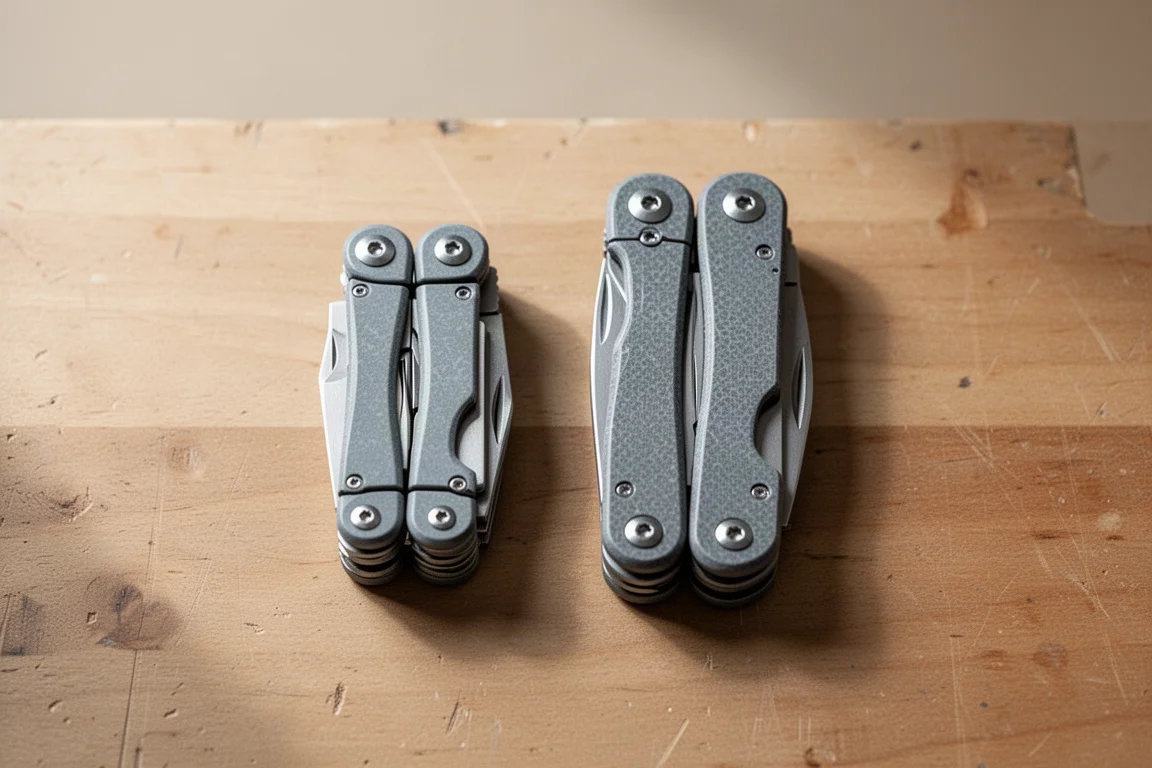
First, some context: both tools are made by the same OEM, Sanrenmu in China, and it shows. Build quality is almost identical, and the tool sets are nearly the same layer for layer. The difference starts with size.
The Boker Tech Tool 7 is a four-layer knife weighing roughly five ounces. The RAKE LD 40 41B is substantially larger and heavier at just over seven ounces, and every tool on it is a little bigger than its Boker counterpart.
What Each Tool Brings
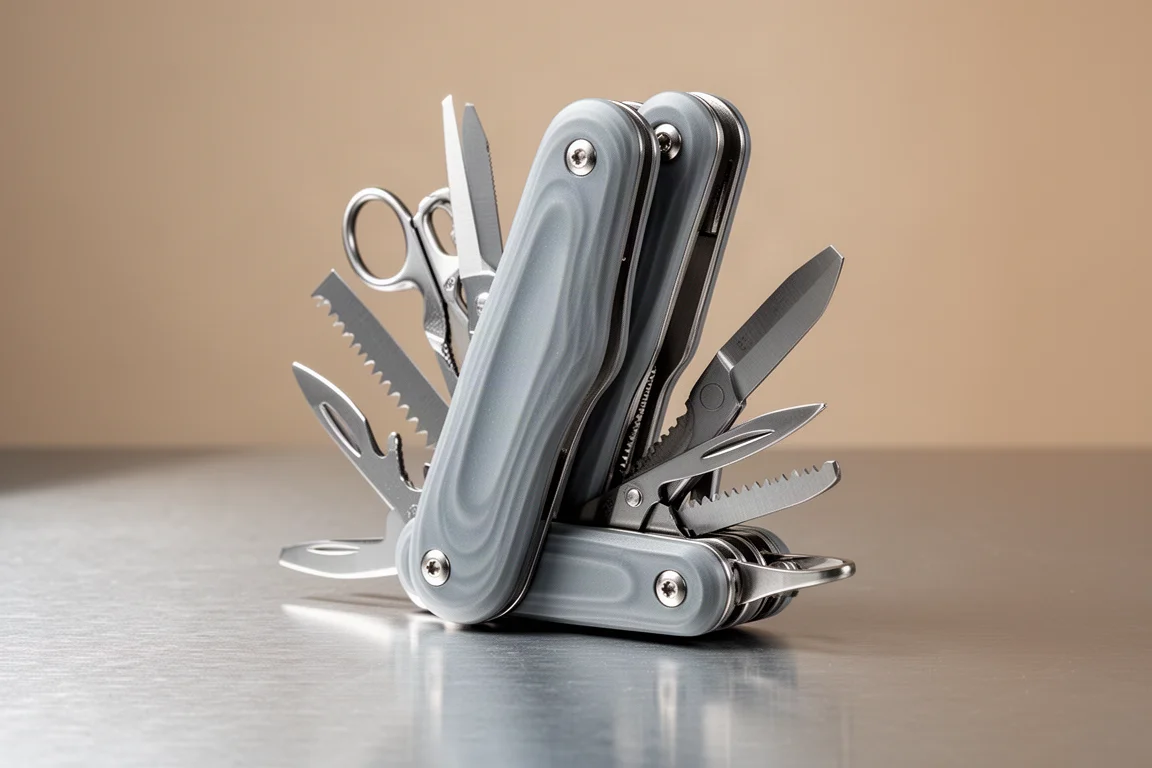
The Boker Tech Tool 7 carries a flathead bottle opener, scissors, saw, and a blade in 12C27 steel. That steel matters: it is a much better blade steel than what you will find in a typical Swiss Army Knife, and with prices on these tools dropping they are becoming directly comparable to Victorinox in cost. The Boker also has the shared Philips and cutter option, which many users treat with caution given how sharp its edges are.
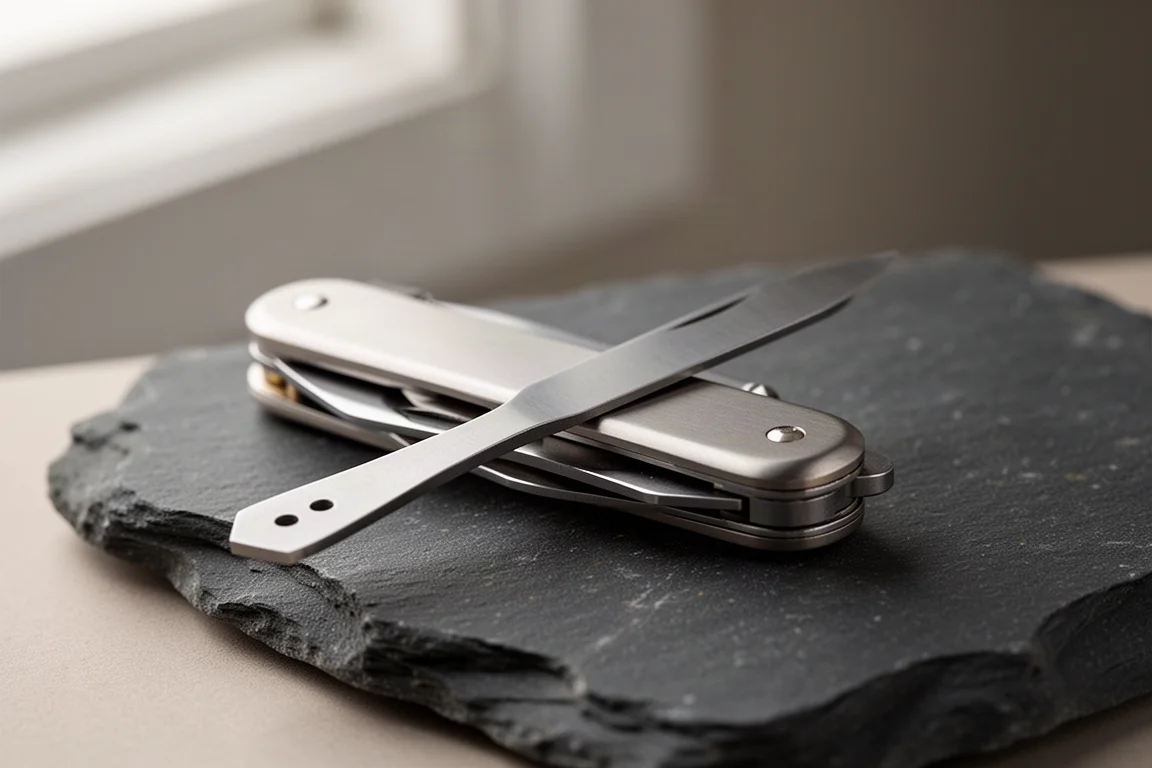
The RAKE LD 40 41B scales everything up. Its flathead has two holes designed for wire bending, the saw is much longer, the scissors are much bigger, and there is an inline awl that fits underneath the scissors. RAKE knives also include a pair of very serious tweezers with good spring tension and rigidity, and they fit neatly inside the G10 scales. A quick pass on a file brings them to full sharpness.
The Locking Blade Changes the Picture
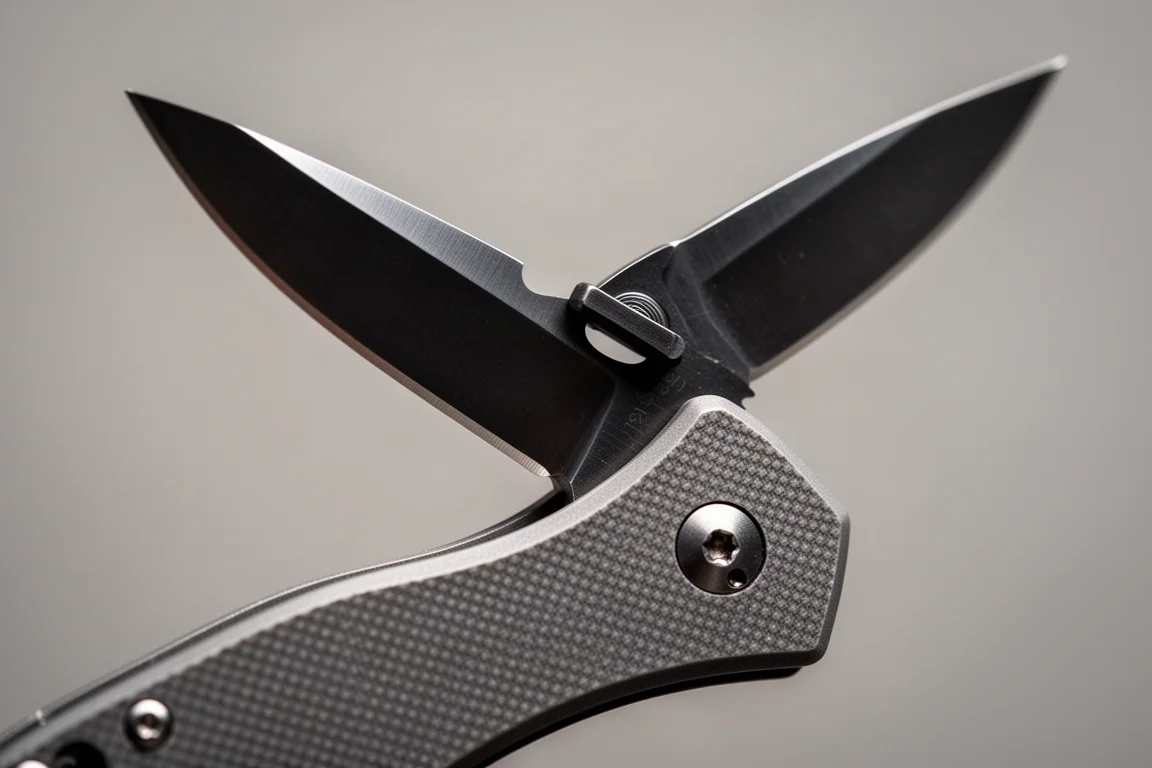
The RAKE LD series has a locking 12C27 blade with a liner lock. The lock is not the highest quality liner lock in the world, but it works, and with practice you can flick the blade open one-handed despite the relatively strong spring. For many people, having a one-handable, locking blade on a layered tool is the single biggest reason to choose it over the Boker Tech Tool 7 or the medium version of the RAKE knives.
Note that there is also a non-locking L series of these larger tools, so check which variant you are buying.
Scissor Performance: The Biggest Surprise
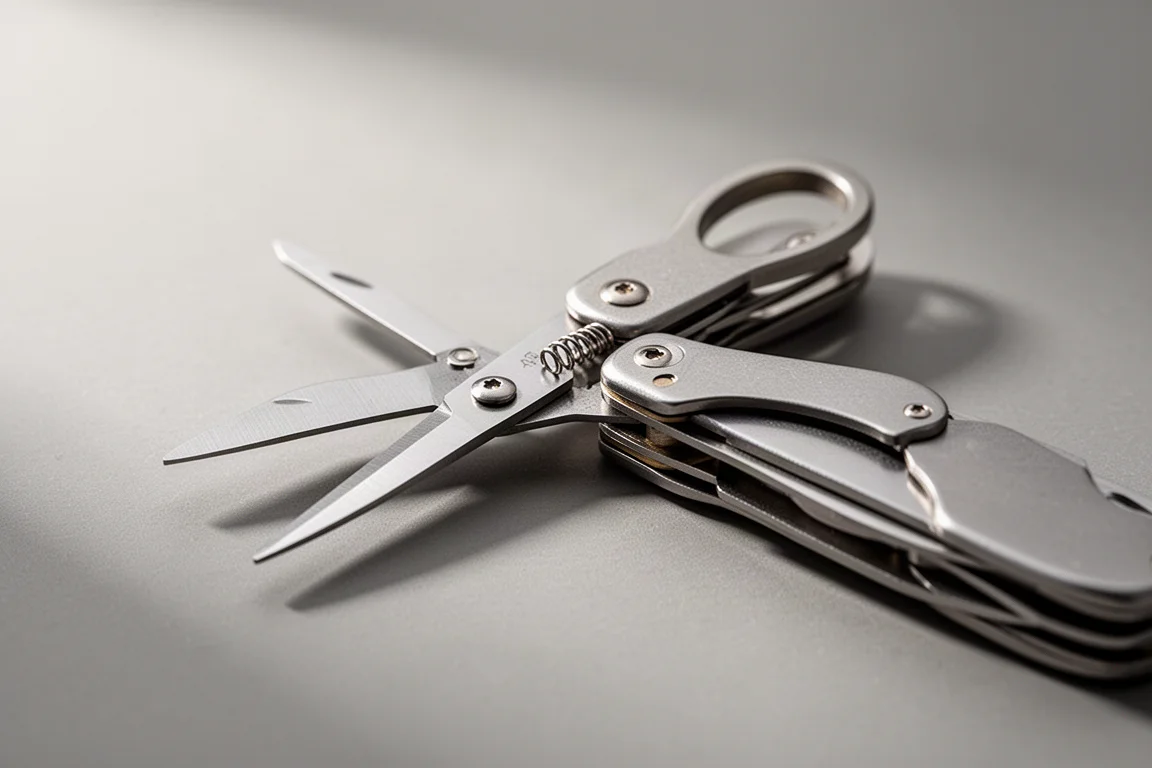
The scissors perform very differently despite their apparent similarity. In testing against the Gauntlet, the LD series scissor scored 13 out of 20 while the Boker Tech Tool 7 scored 9 out of 20.
The difference shows up in how the scissors behave under pressure. On the Boker, both arms move when you press, one shifting out and one in. On the RAKE, only the cutting arm moves while the rest stays stable, which is excellent. This appears to be the only integrated-back-spring scissor tested that does not shift under pressure. The theory after disassembling an L series version is that the Boker scissor is engaging its spring, causing the shift. It may be possible to improve the Boker’s scissor by adjusting that engagement, and as-is the RAKE simply feels more solid.
Small Details That Matter
The inline awl on the RAKE deserves its own mention. Because it is inline rather than on the back of the tool, it is easier to manipulate, keeps your fingers away from the blade, and is significantly longer, so it digs deeper and creates a bigger hole.
On the Boker’s side, the contoured G10 scales are genuinely more comfortable than the RAKE’s graphic-looking cutouts, which end up feeling sore in the hand after a while. The Boker also has the ability to switch the pocket clip from tip up to tip down. What the Boker lacks is the tweezers, which is a real gap.
Which One Should You Get?
It comes down mostly to weight and how you plan to carry it. If you are fine with a slip joint and you do not need a lock, the Boker Tech Tool 7 is a great option: the spring is softer, the blade uses its full length, and it is very comfortable in the hand. It also sits about an ounce and a half lighter than the larger RAKE.
If, on the other hand, you like a pocket tool that replaces your folding knife entirely so you are not carrying multiple blades, the larger RAKE platform makes sense despite the extra weight. The 12C27 steel is tough and very decent for a budget knife, and there is also a slightly thinner RAKE variant without the saw that comes out to around six ounces.
Both tools stack up well against a Victorinox-style layered knife. Compared to the well-regarded Victorinox Huntsman, both are heavier, but the blade is more robust, especially on the LD series. The RAKE LD series comes a lot closer to having an advantage over the Victorinox than the Boker does, since it keeps the tweezers, adds the better inline awl, and has a much larger saw, closer to the one found in the 118 millimeter class. Longer is better when it comes to saws. One bonus: with slight modification of its geometry, a firesteel and tinder piece designed for the Victorinox corkscrew geometry can also fit these tools, adding fire-starting capability to either platform.
Conclusion
Both are high-quality, good-value tools from the same OEM, and the choice hinges on carry style. Choose the Boker Tech Tool 7 if you want a lighter, more comfortable two-handed slip joint. Choose the RAKE LD 40 41B if a locking, one-handable blade, better scissors, a longer saw, an inline awl, and tweezers are worth the extra ounce and a half.
Further reading
Related Reviews
Pocket Knives
Best Budget Ganzo Knives Under $40: Three standouts Plus a Worthy Rival
Ganzo's Firebird lineup delivers near-premium fit and finish at ultra budget prices. We look at three models that show exactly why, plus the Ontario RAT Model 1 for comparison.
Pocket Knives
Two New Civivi Budget Knives Worth Watching: Sentinel Strike and the Snacks Lock Collaboration
Two fresh budget EDC knives from Civivi: an integral-handle Sentinel Strike in K110 steel, and a collab bringing an open-source lock design to a knife under $80.
Pocket Knives
Vosteed Ankylo Review: A Push-Button Pivot Lock That Actually Feels Different
The Vosteed Ankylo pairs a 3.18-inch Elmax reverse tanto blade with an innovative Vaner lock recessed into the pivot, multiple deployment options, and an overbuilt feel at a friendly price.