Gravel Bikes
BMC URS LT One vs Giant Revolt Advanced 0: Two High-Performance Gravel Bikes Compared
Two top-of-range gravel bikes with very different philosophies: BMC's suspension-led URS LT One against Giant's lightweight Revolt Advanced 0.
Introduction
Gravel bikes have quietly split into two camps. One camp adds suspension and comfort technology to a drop-bar chassis, chasing control on rough surfaces. The other strips weight and sharpens handling, betting that a light, stiff frame is enough. The BMC URS LT One and the Giant Revolt Advanced 0 sit at the top of their respective ranges and represent those two philosophies almost perfectly.
Both are expensive, both are fast, and both are built for riders who want to ride dirt without giving up drop bars. The differences show up in how they go about it.
If you are buying at this level, the decision is less about specification lists and more about which riding style you actually want to develop. That is what this comparison is for.
What Sets These Two Gravel Bikes Apart
The clearest dividing line is suspension. The BMC URS LT One carries a rear elastomer suspension system and a suspension fork, while the Giant Revolt Advanced 0 relies on frame design, seat post flex and tyre clearance to smooth the ride.
Tyre clearance also differs. The BMC accepts up to 45 mm tyres on 700c rims. The Giant goes further, with clearance for up to 53 mm on 700c at the front, and a flip chip dropout at the rear that extends the wheelbase so it can run the same size tyre. In the short, standard setting the rear takes 42 mm.
The two bikes also differ in weight. The BMC is quoted at 9.87 kg, while the Giant is quoted at 8.33 kg. That gap shapes how each bike feels the moment the road tilts upward.
BMC URS LT One: Micro Travel Suspension on a Fast Gravel Chassis
The BMC URS LT One is built around Micro Travel Technology, first seen on the original URS. The seat stays contain a section of elastomer with twin alloy shafts that slide up and down, providing a smooth 10 mm of travel. It is a small number, far less than a mountain bike would use, and that is deliberate.
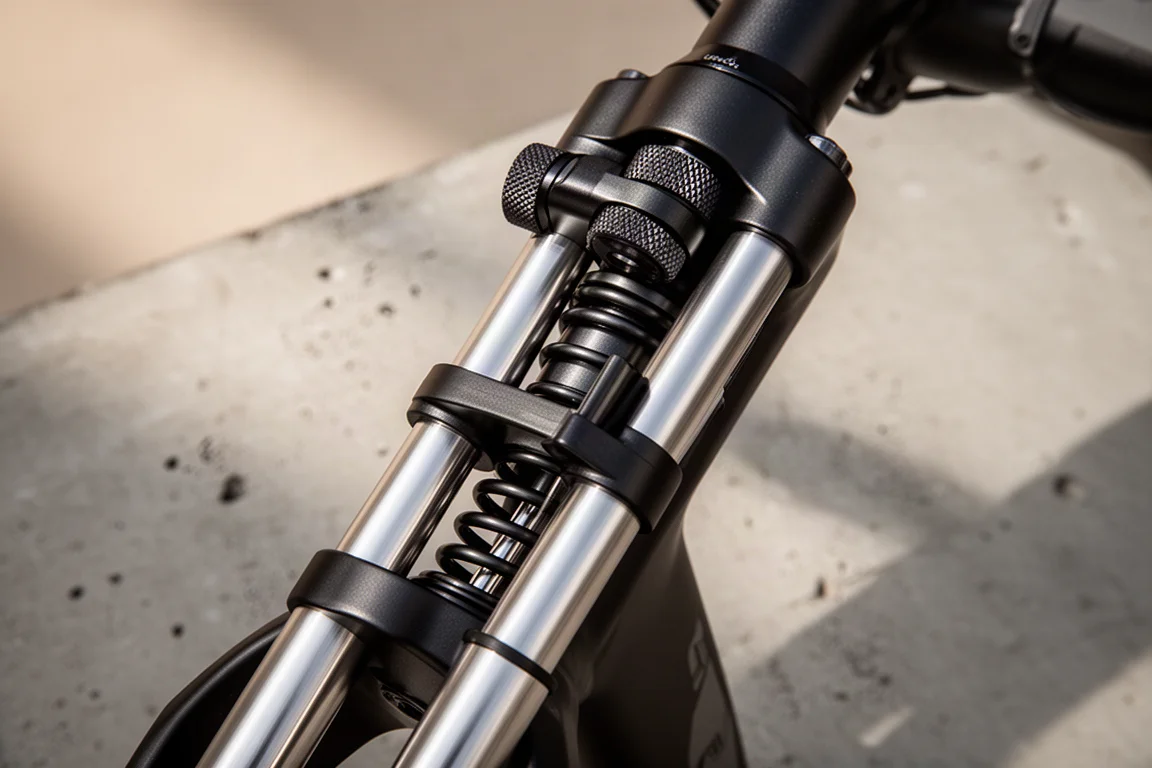
The MTT fork was developed with HiRide and hides 20 mm of tunable suspension inside the head tube. It combines a coil spring with a hydraulic damper, and a dial on top of the head tube lets you tune the feel or lock it out entirely for smooth road sections.
The geometry follows the same forward-thinking approach. A slack 70 degree head angle lengthens the wheelbase for stability over rough ground, and a size-dependent short stem of 70, 80 or 90 mm counters the slower steering that the slack angle would otherwise introduce. The result tracks straight and stays true under braking while still navigating technical terrain.
At the rear, a steep 74 degree seat angle and a zero offset seat post place the rider directly over the centre of the cranks, which makes the bike feel road-race responsive under acceleration. The soft tail does not bob in the way a mountain bike rear end can.
BMC also builds compliance into key areas of the frame and fork and uses its signature D-shaped carbon seat post. The drivetrain mixes SRAM Force AXS shifters and brakes with a 38 tooth Force carbon single chainset, a 12-speed X01 Eagle rear mech and a wide-range 10-52 tooth cassette. Shifts are slick and accurate and braking is powerful. The large cassette can produce a metallic resonance from the chain in the mid-range gears at the top of a climb, which does not affect performance but is audible. A WTB SL8 saddle with titanium rails and an Easton EA70 AX alloy handlebar complete the build; the bar has a subtle flare and a comfortable oversized top section, though at this price an alloy bar is a notable omission.
Versatility is a genuine strength. The frame is ready for front and rear mudguards, a rear rack, and even has internal routing provision for a front dynamo hub. Tyres are relatively slender 40 mm WTB Raddler units on tubeless-ready carbon rims, which keeps the running gear light and contributes to the bike’s lively feel.
Giant Revolt Advanced 0: A Lighter, Nimbler Gravel Platform
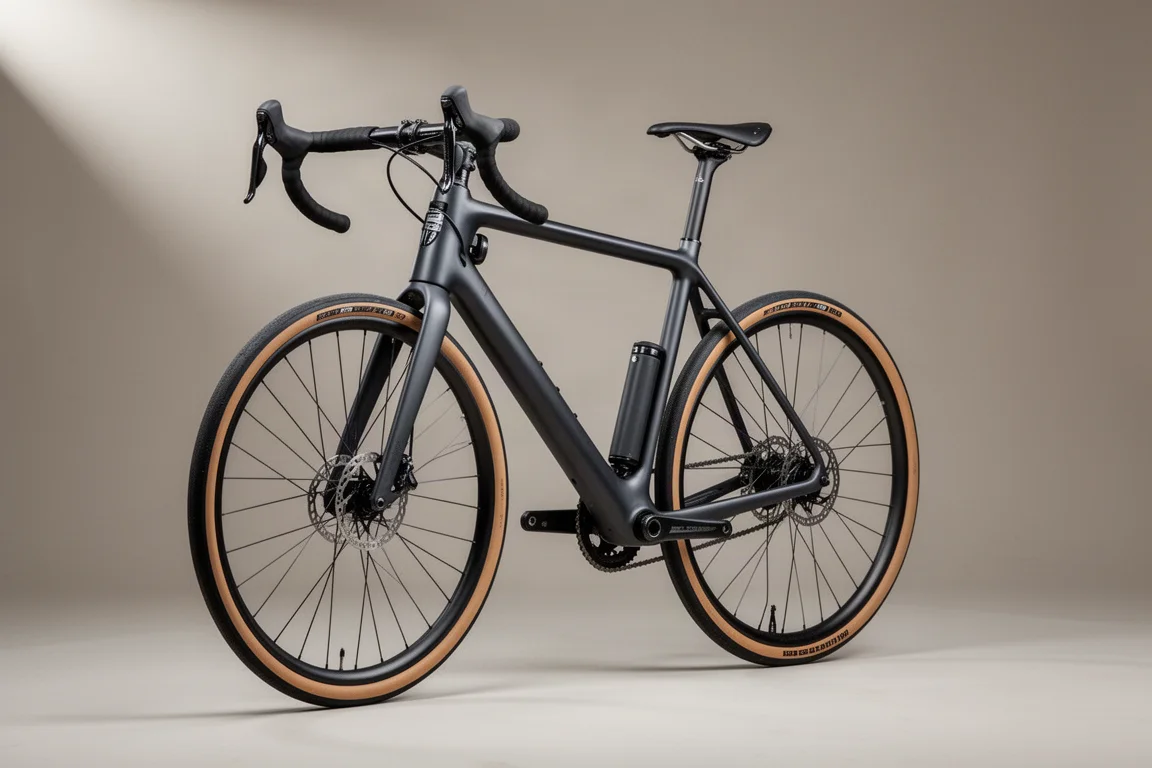
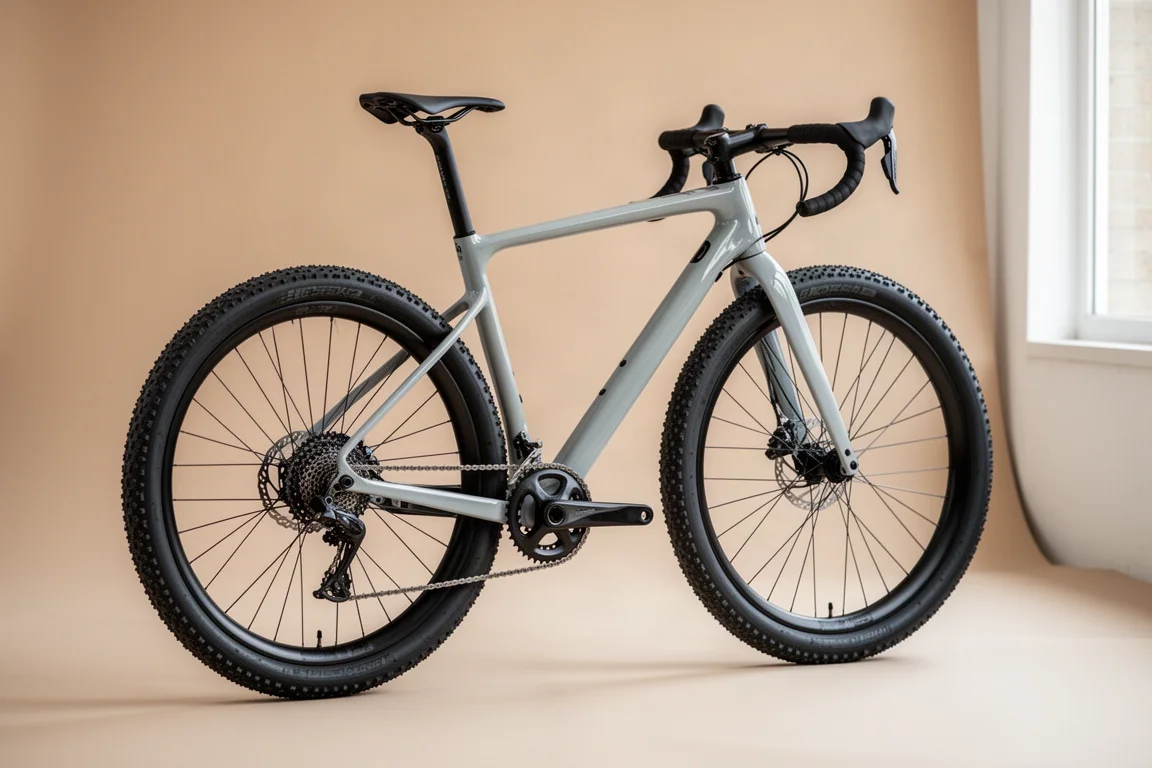
The Giant Revolt Advanced 0 takes the opposite route. Its all-new frame and fork save over 200 grams compared with the previous model, and the design borrows heavily from Giant’s road range. The triangulated head tube junction recalls the TCX cyclocross bike with a little TCR influence, while the ovalised seat tube with its aero-style cutaway and the dropped seat stays echo the Defy endurance road bike.
Several details are new. The seat stays are slimmer than before, and the yoke where they meet the seat tube is flattened to add flex. The D-shaped seat post carries over, but the fitment is new: a round seat tube with a wedge that accepts the D-shaped post, which means the Revolt can take a dropper post if you want to change the setup.
The new fork is lighter and provides front clearance for up to 53 mm tyres on 700c rims. At the rear, a flip chip dropout extends the wheelbase to accept the same size tyre, with 42 mm of clearance in the short standard setting. Giant says the larger tyres and longer wheelbase push trail out to 68 mm on a large frame, which should add stability when you are making the most of bigger rubber on tough terrain.
The build centres on Shimano GRX Di2, specifically the 11-speed RX815 groupset throughout. The lever shape is designed to fit the hand better when braking from the hoods, and combined with mountain bike servo wave technology the brakes deliver excellent feel and a progressive power curve. Shifting is exact and precise, and the clutch-equipped rear mech keeps chain bounce in check. One caveat worth knowing: a dropped bike can twist a shifter and pull the Di2 wire from its connection, which leaves the system dead until it is reconnected.
The CXR wheelset weighs just 1,398 grams per pair, which is road-wheel territory rather than tough gravel hoop territory. They accelerate well with a laterally stiff feel, and the DT Swiss internals in the Giant hubs give 54 points of engagement for snappy response. Giant also ships the bike set up and sealed tubeless, which avoids the worst-of-both-worlds compromise of tubeless wheels and tyres fitted with inner tubes.
Ride Quality and Handling Compared
The ride quality of the BMC is superb. It sets out to be a fast gravel bike that brings comfort and vibration reduction into play rather than a machine for squashing big drops or descending boulder-strewn streams. On chattering byways and rooted fire roads it feels wonderfully compliant, closer to running large balloon tyres than to a conventional gravel setup, without the sluggishness or added weight. The overall sensation is similar in character to other suspension-equipped gravel bikes.
The Giant is a different kind of comfortable. At the rear, the combination of skinny stays and the new seat post gives plenty of compliance. It is not quite up with the URS, but it is closer than you might expect from a rigid frame. Up front, the handling feels sharper, quicker to react and a little nimbler than before. It may have lost a touch of stability, but it more than makes up for that by being more exciting to ride. On road, even on 40c tyres, its manners feel very similar to the Defy, one of the best endurance road bikes around.
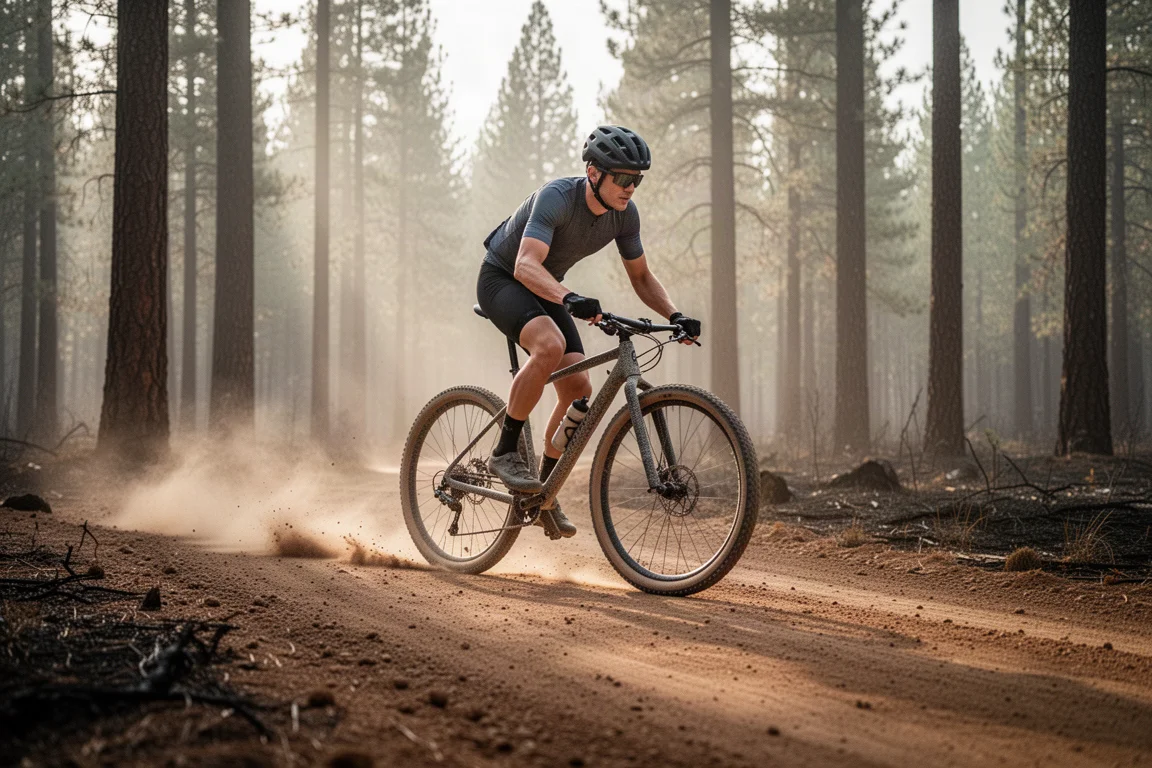
The weight difference shows up in motion. The Giant is quoted at 8.33 kg, which sounds merely average on paper for a road rider, yet it rides like a much lighter bike. Much of that comes down to the CXR wheelset. The BMC at 9.87 kg is respectably light for a gravel bike this capable, and its lively feel comes from light running gear rather than a stripped frame.
Who Each Bike Suits
If you are coming to gravel from the road side, the BMC URS LT One is the more compelling proposition. Its ride quality is unlike anything you will have experienced with drop bars, and the suspension system makes it a more forgiving friend when the going gets really rough.
If you are coming to gravel from mountain biking, the Giant Revolt Advanced 0 is the easier transition. It gives you a flavour of the lightweight world of drop-bar riding while still feeling familiar and fun when you are hacking down singletrack in the woods.
There is also a practical split. The BMC is the more versatile canvas for loaded riding and long-distance setup, thanks to its rack, mudguard and dynamo provisions. The Giant is the more direct performance tool, quicker on tarmac between trails and lighter on the climbs.
Buying Advice
At this level, both bikes are brilliant examples of cutting-edge gravel design, and neither is a compromise. The choice comes down to what you value most.
The BMC URS LT One carries a price of 7,600 pounds or 7,999 dollars. That buys genuine suspension technology front and rear, a tuned geometry that blends stability with quick steering, and a chassis prepared for real-world versatility. If comfort on rough surfaces and long-distance capability matter more than outright weight, it justifies the outlay.
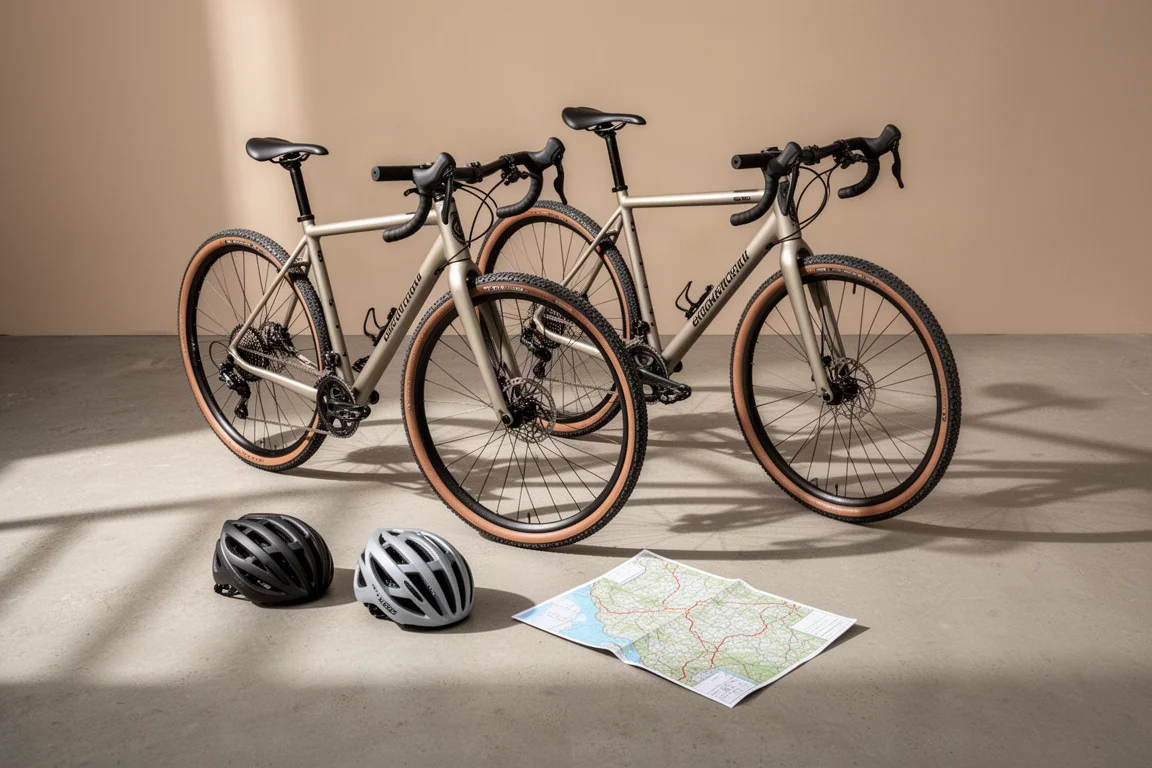
The Giant Revolt Advanced 0 comes in at 4,400 dollars, just under five thousand pounds. For that you get a lighter, sharper platform with a quality electronic groupset, an exceptional wheelset for the money and a tubeless setup straight out of the box. It is very well priced for the level of kit supplied, and for many riders it will simply be the quicker, more engaging bike.
If forced to pick one, the Revolt has the edge for its lightweight, nimble character and its jack-of-all-trades feel. It is the faster bike on tarmac sections between trails and the better value. The BMC remains a great-looking machine and an absolute blast off-road, so the honest answer is that both are correct choices for different riders.
Conclusion
The BMC URS LT One and the Giant Revolt Advanced 0 both aim to lure riders into drop-bar dirt riding, and both succeed on their own terms. One invests in suspension and comfort, the other in low weight and sharp handling.
Match the bike to the rider and the riding you actually do. Road-influenced riders who want smoothness on rough ground will feel at home on the BMC. Mountain-bike-influenced riders who want a light, lively drop-bar machine will feel at home on the Giant.
Further reading
Related Reviews
Gravel Bikes
3T Exploro Ultra Review: A Fast Gravel Bike Built for Big Tyres
A close look at the 3T Exploro Ultra, an aero carbon gravel bike designed around wide tyres, with road-like handling, a 980 g frame and genuine rough-terrain capability.
Gravel Bikes
3T Extrema Italia Review: Aero Gravel Speed With Room for 57 mm Tires
The 3T Extrema Italia pairs an aero frame with huge tire clearance, Italian-made carbon and a more comfortable ride than the RaceMax. Here is what to know before buying.
Gravel Bikes
3T Race Max 2 Italia Review: An Aero Gravel Race Bike Made in Italy
A closer look at the second-generation 3T Race Max 2 Italia, covering its aero updates, ride character, tire clearance, internal storage and who it suits.