Skis
Blizzard Sheeva 9 (2024) Review: A 96 mm All-Mountain Ski Built for Versatility
The 2024 Blizzard Sheeva 9 grows to a 96 mm waist, adopts a TrueBlend Free Ride wood core, and moves its metal to the edges. Here is how it skis and who it suits.
Introduction
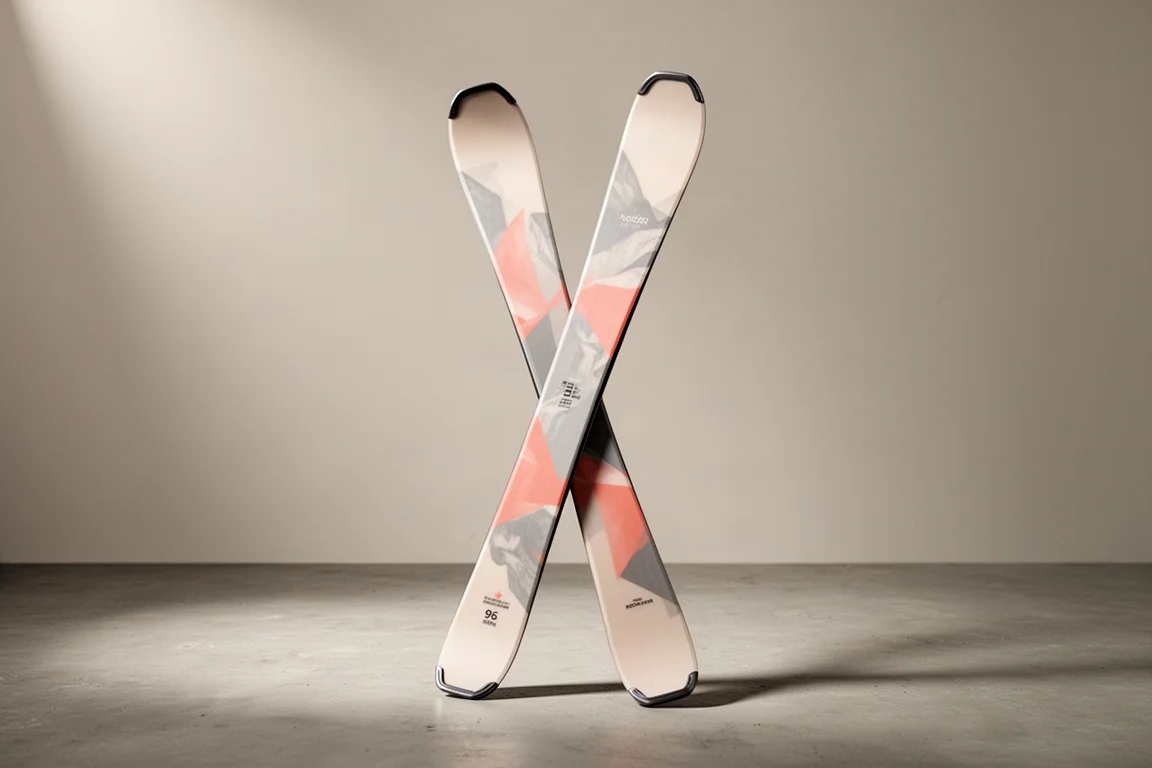
The Blizzard Sheeva 9 for 2024 is a genuine redesign rather than a graphics refresh. The women’s all-mountain ski grows from a 92 mm waist to 96 mm, moves to a TrueBlend Free Ride wood core shared with the brand’s freeride collection, and changes the way metal is applied inside the ski. Those three decisions shape nearly everything about how it feels on snow.
Time on this ski covered spring-like soft snow, firm groomers, and tighter off-piste terrain including bumps and tree runs. Across all of it, the Sheeva 9 came across as stable and planted underfoot while keeping an energetic release out of the turn. It is a ski that rewards input without demanding it.
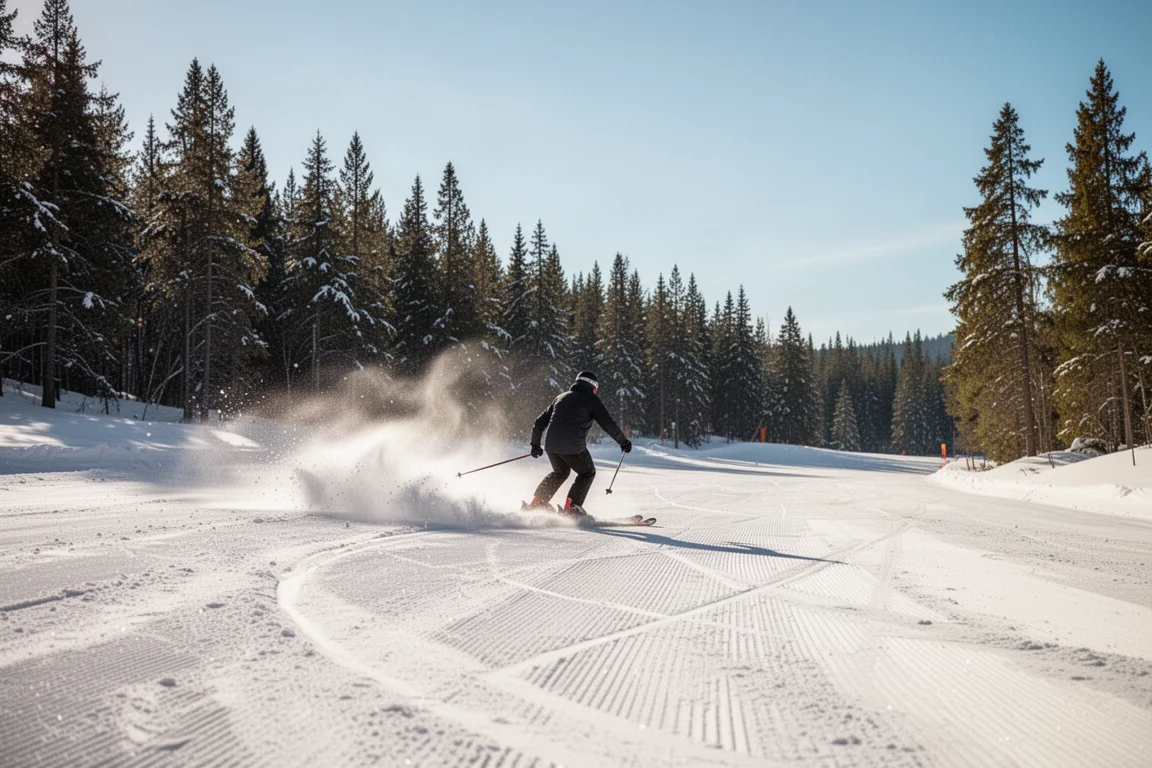
The wider platform is the change most likely to divide opinions, so it is worth addressing early. The extra width adds flotation and soft snow composure, and it does so without making the ski feel slow to pivot in tighter spots. For anyone weighing a single pair of skis for a whole season, that balance is the heart of the appeal.
What Changed for 2024
The biggest structural change is the switch to a TrueBlend Free Ride wood core, a blend of beech, poplar and paulownia. Because the core is assembled from many small sections of different density woods, the flex pattern can be tuned section by section along the ski instead of applied uniformly. It is a fine-tuned approach to construction, and it reads clearly on snow as an even, consistent flex from tip to tail.
The metal application is where the new version diverges most obviously from the outgoing one. The previous ski used full-width metal underfoot that tapered toward the tips and tails, ending roughly where the rocker began. The 2024 ski runs metal along the edges instead, and that metal extends considerably further along the length. One distinction matters within the collection: the Rustler models add an extra sheet of metal underfoot, while the Sheeva models use fiberglass in that position. The edge metal behaves a little like a tuning fork, dissipating vibration along its length rather than blocking it with a solid plate.
Shape changes are more modest. Waist width increases from 92 mm to 96 mm. Tip rocker is slightly shallower and a touch more abrupt, tail rocker stays close to the previous version, and there is still a generous amount of rocker at both ends. Turn radius is essentially unchanged, sitting in the mid-teens depending on length.
Who This Ski Is For
The Sheeva 9 is an all-mountain ski at heart, and it makes its strongest case as a one-ski quiver. For skiers in the East, a mid-90s waist covers firm groomers day to day and still handles the occasional soft snow window. Skiers out West who describe themselves as all-mountain rather than freeride will also find it a sensible daily driver, because it trades some of the damp, locked-in feel of heavier metal skis for maneuverability and a friendlier demeanor.
Skiers who chase deep snow regularly will likely look at the wider Sheeva 10 or Sheeva 11, neither of which changed width this year. The line also sees use in freeride competition, with athletes competing on the Sheeva 11, and the 9 shares the same construction family. For most resort skiers, though, the 9 is the most versatile of the three.
On-Piste Performance and Edge Grip
On groomers, the harmony between the wood core and the edge metal is immediately noticeable. Turn initiation is easy and smooth, and the flex feels even and predictable through the whole arc. Leaning the ski over and getting it up on edge feels confident and reliable, and releasing out of the turn delivers a surprising amount of energy and pop. That lateral acceleration, the sense of being boosted out of the turn, is the standout trait.
Compared with the outgoing version, the 2024 ski is more consistent through its length. The older model could feel like it had a hinge point in the forebody when a skier really powered the shovel to generate a turn. The new ski holds up better there, and that consistency translates into confidence, especially at speed.
It helps to place the ski against a few familiar reference points. It is not as damp or as planted as a heavier metal laminate ski such as the K2 Mindbender 99 Ti, but it asks far less of the skier, and most people will find it more controllable and approachable. Against a Nordica Santa Ana 98, the Sheeva 9 feels a little less demanding, largely because of the Santa Ana’s flatter tail. The Sheeva releases out of a turn more readily and pivots more easily, though it gives up a little of that locked-in feeling. Compared with a softer, freestyle-leaning all-mountain ski like the Bent 100, the Sheeva 9 offers noticeably more edge grip and high edge angle stability while keeping a forgiving, maneuverable character. That is the sweet spot it occupies: more edge grip and power than a playful park-oriented ski, less demand and less weight than a serious metal laminate.
Off-Piste and Mixed Terrain
The Sheeva line carries the freeride collection’s construction, and that shows up in tighter terrain. In bumps and trees the ski is maneuverable and quick edge to edge, and it handles transitions from groomers into chopped-up snow without feeling like a different ski. Because the metal runs along the edges and the tips and tails are left unencumbered, those ends bend and flex naturally. They stay forgiving, playful and easy to press into, which makes bump lines feel smoother than the ski’s width might suggest.
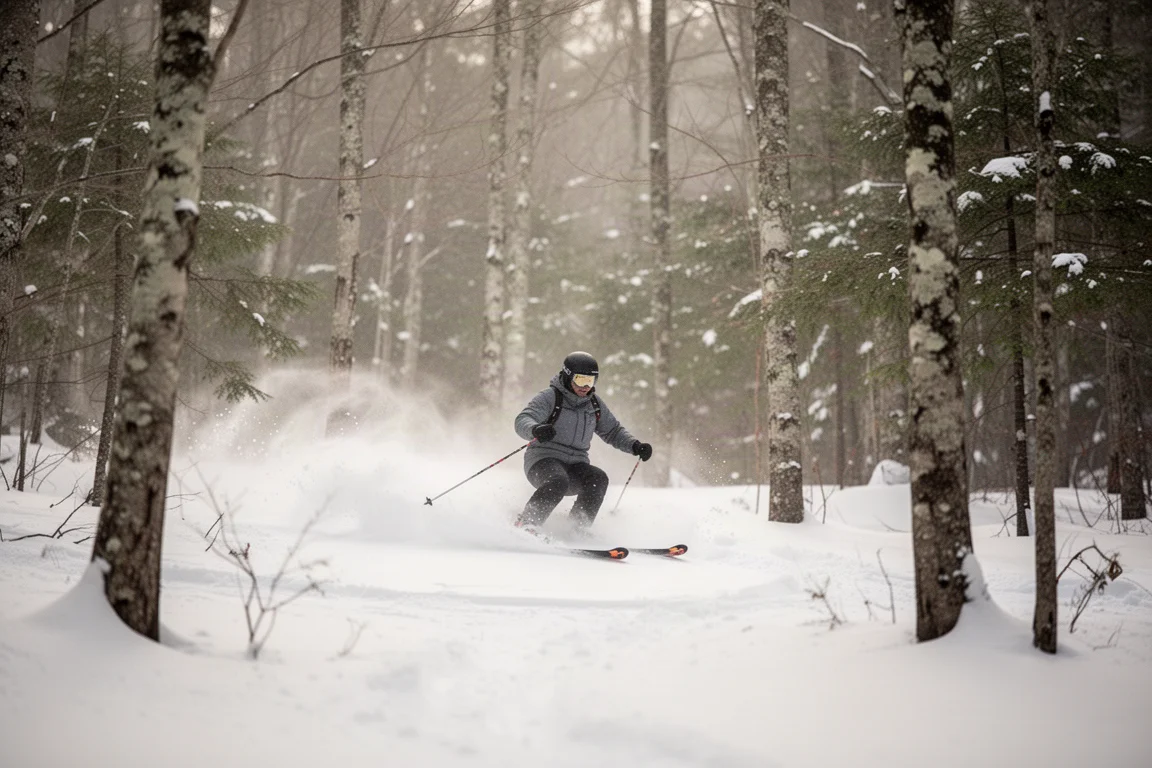
The added width pays off here as well. Going from 92 mm to 96 mm improves flotation and soft snow performance, which broadens the range of conditions the ski handles well. Riders who want a ski that moves comfortably between groomers and off-piste without a compromise in either direction will find the Sheeva 9 does exactly that.
Things to Consider Before Buying
The width change is the first thing to weigh. Skiers who valued the previous 92 mm version specifically for edge-to-edge quickness may see the move to 96 mm as a step in the wrong direction. In practice, four millimetres is a small difference, and the ski does not feel sluggish as a result. Still, if rapid edge-to-edge transitions are your single highest priority, a narrower ski such as one of the Black Pearl models at 82, 88 or 97 mm is the more direct answer.
Damping is the second consideration. The edge metal adds grip and stability, but there is no extra sheet of metal underfoot the way there is on the Rustler models. That means the Sheeva 9 does not have the heavy, glued-to-the-snow feel of a full metal laminate ski. Strong skiers who want maximum damping and power will likely prefer a different category of ski, and they should expect to work harder for it.
Finally, keep the lineup in mind. The Sheeva 9 is the firm snow focused member of the family. If soft snow and powder days are what you plan around, the Sheeva 10 and Sheeva 11 are the more appropriate choices, and neither of them changed width this year.
Buying Advice
If you are shopping for one ski to cover most of a season, decide first by where and how you ski. A mid-90s waist is a practical one-ski answer in the East, where firm groomers dominate and soft days are occasional. Out West, it suits an all-mountain skier who wants versatility rather than a dedicated powder ski. If you already know that you want quick edge-to-edge handling above all else, go narrower. If you want maximum damping and power, go heavier. If you want a ski that does a lot of things well and stays friendly while doing them, this is the strongest case for the Sheeva 9.
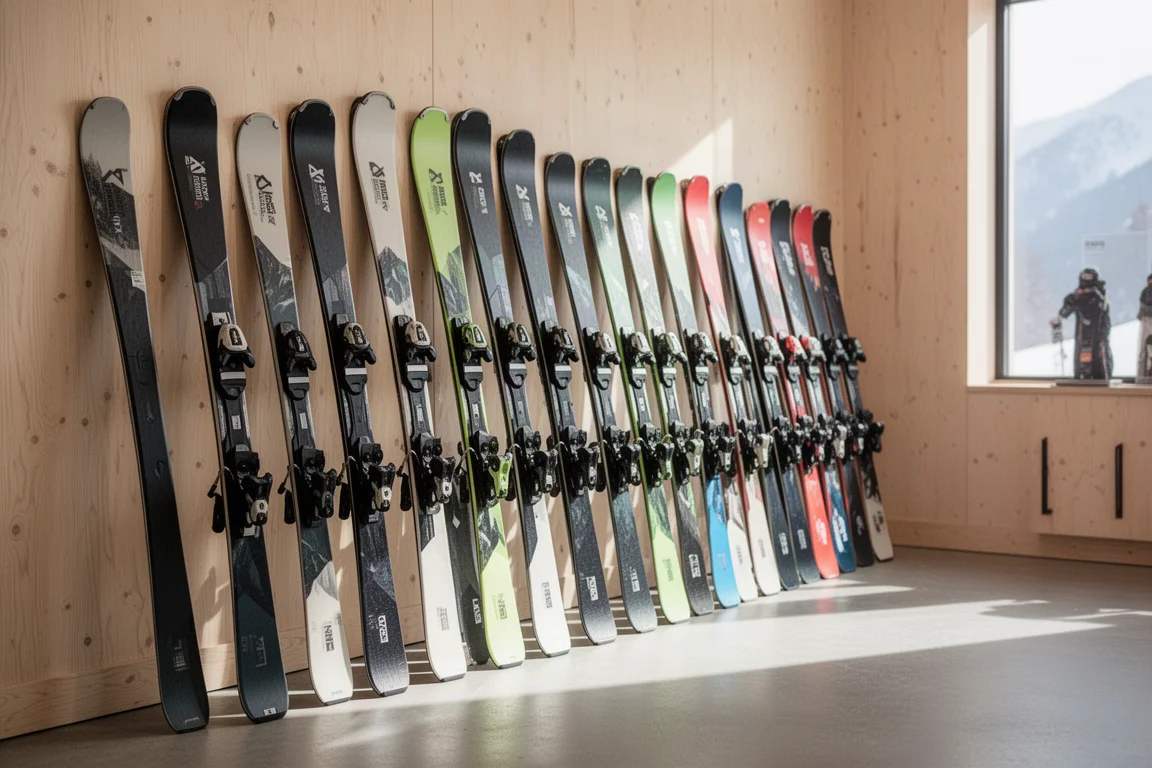
Length is the other decision. The 164 cm and 168 cm sizes were part of this season’s time on snow, and both come with turn radii in the mid-teens. Match length to your height, weight and how aggressively you ski, and lean toward the longer option if you spend most of your time on open groomers at speed.
Conclusion
The 2024 Blizzard Sheeva 9 is a well-rounded all-mountain ski that got better in the ways that matter. The TrueBlend Free Ride core and the edge-focused metal layout produce a more consistent flex and stronger edge grip than the outgoing version, while the wider 96 mm platform adds flotation without costing the ski its playful, maneuverable feel. It is stable underfoot, energetic out of the turn, and forgiving enough to stay enjoyable when conditions get tight. For skiers who want one pair of skis to handle groomers, bumps and trees with confidence, it is a compelling choice.
Product link
View more details for Blizzard Sheeva 9 (2024)
This product is mentioned in the review. Check the specifications, options, and compatibility before buying.
View more details for Blizzard Sheeva 9 (2024)Further reading
Related Reviews
Skis
Armada Anti Matter 82 W Review: A Light, Approachable All-Mountain Carver
Armada's Anti Matter 82 W pairs a lightweight Karuba and carbon build with an easygoing all-mountain shape, aimed at intermediates through lighter-footed advanced skiers.
Skis
Armada Anti Matter 88W Review: A Light, Playful 88mm All-Mountain Ski Plus Two Alternatives
The Armada Anti Matter 88W returns unchanged in spirit from its Reliance 88C days, and it remains one of the most versatile 88mm skis around. We also look at the Nordica Santa Ana 87 and Anti Matter 92 W as alternatives.
Skis
Armada ARV 100 vs Atomic Bent 100: Which 100mm Freestyle Ski Should You Buy?
Two of the best all-mountain freestyle skis of the season compared: one leans playful and park-ready, the other holds up better everywhere else.