Skis
Blizzard Hustler 10 Review: A Light, Energetic Freeride Ski That Still Carves
A close look at the Blizzard Hustler 10, a carbon and wood freeride ski built on the Rustler 10 shape, and what that means for resort skiers and hybrid setups.
Introduction
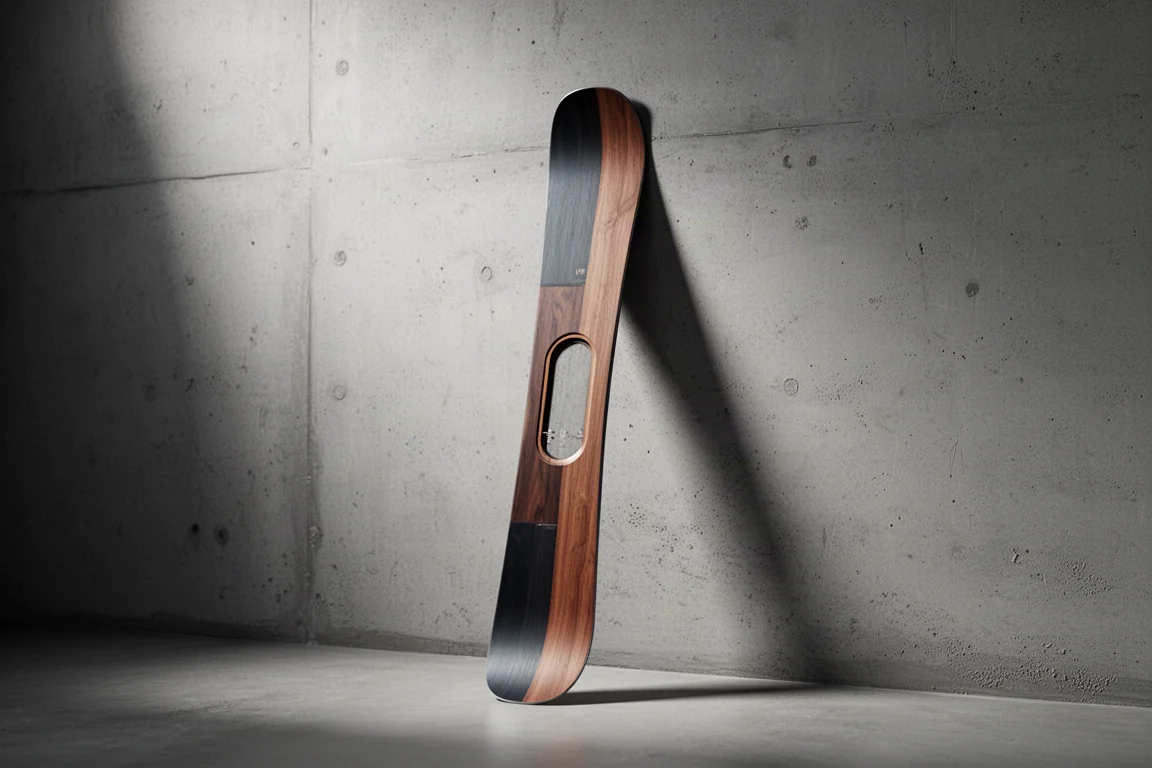
The Blizzard Hustler 10 is one of the more interesting freeride skis to come out of the Blizzard line, and most of that interest sits under the topsheet rather than in the shape. It shares the Rustler 10 platform: the same sidecut dimensions, the same length breakdown, and a very similar rocker and camber profile. Leaned against a wall, the two look nearly identical, with the Hustler showing slightly more camber.
The real difference is construction. The Hustler 10 uses Blizzard’s freeride True Blend build, a mix of beech, poplar, and paulownia wood, with paulownia the lightest of the three species. Where the Rustler 10 runs a metal laminate underfoot and into the tips and tails, the Hustler substitutes carbon, laid edge to edge underfoot and continued in a stringer-style pattern that is visible through a window in the topsheet. It also adds a skin attachment point, which the Rustler does not have.
The weight difference is real but moderate. In a 172 cm length the Hustler 10 comes in at roughly 1,725 g, against roughly 1,850 g for the Rustler 10. For context, a dedicated lightweight touring ski in the same length can land closer to 1,400 g. Underfoot, the Hustler measures 102 mm at 172 cm and 104 mm at 180 cm.
Blizzard’s early messaging around the Hustler 10 leans heavily on touring, and that application is genuine, but it does not tell the full story. The ski is fully at home with an alpine binding and an alpine boot, riding lifts, and it has more than enough performance to justify that use. Understanding where it sits between a resort ski and a touring ski is the single most useful thing to sort out before buying.
Who the Blizzard Hustler 10 Is For
The Hustler 10 suits skiers who want a light, energetic freeride ski for lift-served terrain and are not willing to give up carving ability to get it. If your days revolve around trees, bumps, soft snow, and natural features, the low swing weight and springy flex make the ski easy to move around and rewarding to play on.
It also suits skiers who want a single setup that covers resort days and occasional touring. Because the ski works with a wide range of bindings, from a standard alpine binding to a hybrid touring binding to a lightweight tech binding, the same ski can be configured toward either end of that spectrum.
It is a less obvious fit for skiers whose priority is dedicated backcountry travel. Anyone who spends most days earning turns will likely want a lighter dedicated touring model, and the weight gap between this ski and a specialist touring ski is meaningful on long ascents.
Main Strengths
The most distinctive trait of the Hustler 10 is energy. The carbon build gives the ski a snappy, springy, bouncy feel, and it finishes turns with noticeably more pop than a metal-laminated ski of the same shape. That energy pushes you into the next turn rather than absorbing the transition, which makes the ski feel lively rather than planted.
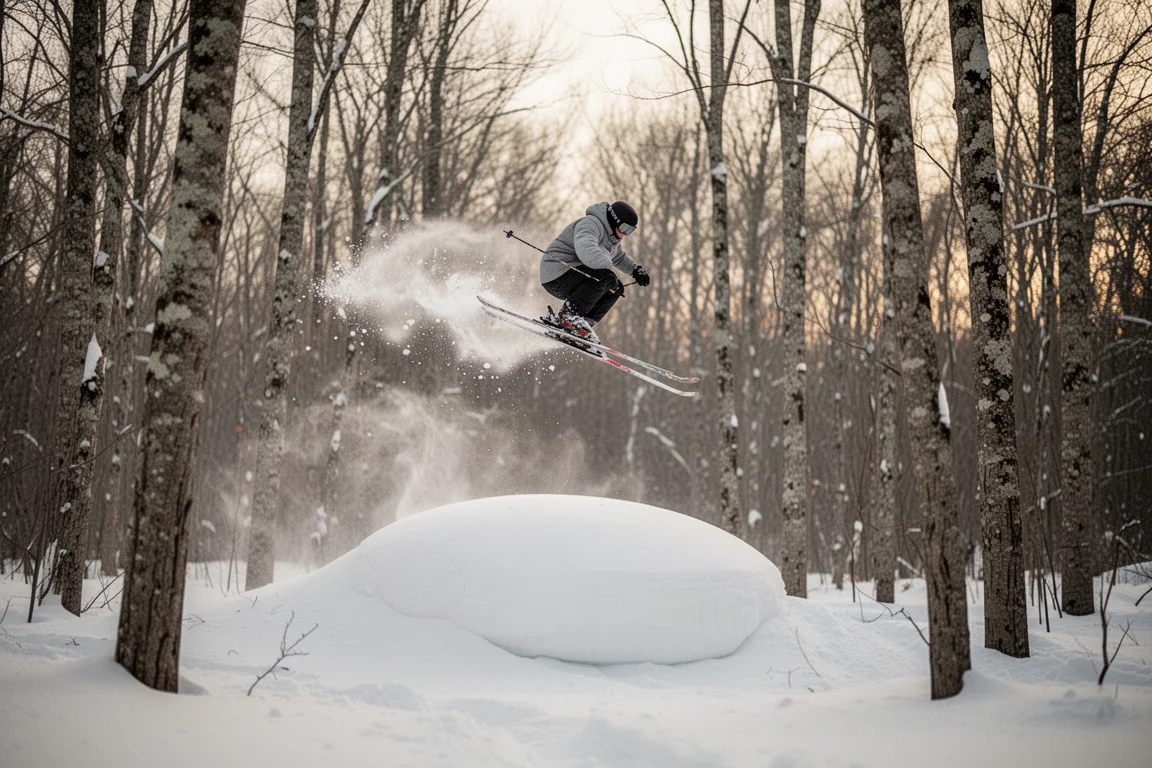
Playfulness is the second strength. The light swing weight makes it easy to flick sideways, tap the tail, throw in a quick press, or line up a bump and jump off it. In the air the ski comes back underneath you easily, and it feels comfortable in trees and bumps where quick direction changes matter more than top-end stability.
Third, and more surprising for a ski in this width, it carves well. The Hustler 10 holds an edge on groomers and feels stable and predictable at higher edge angles, without the twitchiness you might expect from a lighter build. Carving is not the highlight of the ski, and a narrower frontside model will always do it better, but the fact that it works at all is a meaningful part of its versatility.
Hand flexing the ski reveals a flex that is not dramatically softer than the Rustler 10. The livelier feel comes from how the ski reacts and rebounds rather than from a much softer overall profile, which helps explain why it still holds up on harder snow.
Things to Consider Before Buying
The trade-off for that energy is damping. The Rustler 10 is smoother, quieter, and more planted, with the classic feel of a metal laminate. The Hustler 10 gives up some of that calm in exchange for pop. Heavier skiers, or anyone who skis very fast all the time, should weigh that difference carefully.
The second consideration is marketing versus use. Much of the early public material around the Hustler 10 emphasizes touring, and a buyer could easily conclude the ski is only meant for that. It is not. Mounting it with an alpine binding and skiing it exclusively in the resort is a perfectly sensible way to own it.
Third, be honest about the weight. At roughly 1,725 g in a 172 cm length, the Hustler 10 sits much closer to a resort ski than to a dedicated touring ski at around 1,400 g. It can tour, but it is not a featherweight uphill machine.
How the Hustler 10 Compares With Similar Skis
Against the Rustler 10, the Hustler shares the same shape and rocker profile, then diverges in construction and character. The Rustler 10 is heavier at roughly 1,850 g in a 172 cm length, uses a metal laminate, and rides damper and smoother. The Hustler 10 is lighter, adds a skin attachment point, and delivers more snap and pop out of a turn. If you want a quiet, damp ride, the Rustler is the better fit. If you want a livelier ski with a lighter swing weight, the Hustler makes more sense.
Against the Nordica Enforcer 104 Unlimited, the Hustler 10 is the more directional of the two. The Enforcer carries more tail rocker and a more twin-tip shape, which makes it surfier and smearier, while the Hustler gives more feedback through the tail. Beyond that difference the two feel quite similar, and they are very comparable options for the same kind of skier.
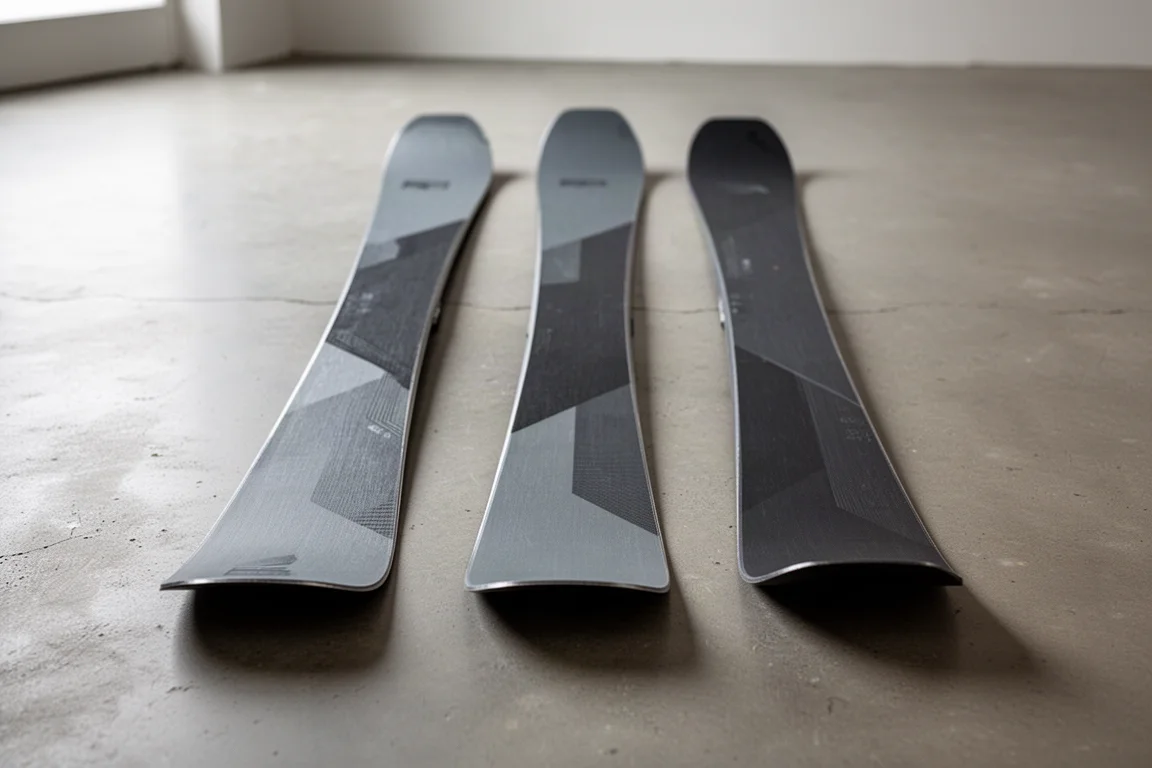
A dedicated lightweight touring ski such as the Zero G 105, at roughly 1,400 g in the same length, shows how far the weight can drop. That ski is a specialist. The Hustler 10 trades some of that uphill ease for far more capability on the descent and in the resort.
Binding and Setup Considerations
What you mount on the Hustler 10 changes what kind of ski it becomes. A standard alpine binding turns it into a light, playful resort freeride ski with no uphill pretensions, which is exactly how many owners will use it.
A hybrid binding, in the style of a Shift 13, is a natural match. It keeps the ski usable on lifts while opening up touring, and it pushes the versatility of the setup about as far as it can go.
At the other end, a lightweight tech binding is entirely workable for skiers who want the lightest possible backcountry setup, even though the ski itself is heavier than a dedicated touring model. The growing range of hybrid boots and bindings makes this middle ground easier to reach than it used to be, and it is the reason so many skiers now consider one setup instead of two.
Buying Advice
If you ski mostly lifts and want a freeride ski that feels light, snappy, and easy to throw around, the Hustler 10 deserves a serious look. Do not let its touring-oriented positioning steer you away from using it as a resort ski, because that is a genuinely strong application for it.

If you want one setup to cover both lift-served days and occasional touring, pair the Hustler 10 with a hybrid binding and a boot that can handle both. That combination delivers most of the performance of a resort ski with the option to head uphill when you want to.
Within the same family, the Hustler 9 leans further toward dedicated touring, while the Hustler 11 covers similar all-round ground on a wider platform. Matching width and weight to how you actually ski matters more than the label printed on the ski.
Conclusion
The Blizzard Hustler 10 is a light, energetic freeride ski built on a proven shape, with carbon replacing metal to cut weight and add pop. It carves better than its width suggests, plays well in trees, bumps, and soft snow, and can be configured for the resort or for touring depending on the binding you choose. Buy it for what it does on the way down, and choose your setup based on where you plan to ski.
Product link
View more details for Blizzard Hustler 10
This product is mentioned in the review. Check the specifications, options, and compatibility before buying.
View more details for Blizzard Hustler 10Further reading
Related Reviews
Skis
Armada Anti Matter 82 W Review: A Light, Approachable All-Mountain Carver
Armada's Anti Matter 82 W pairs a lightweight Karuba and carbon build with an easygoing all-mountain shape, aimed at intermediates through lighter-footed advanced skiers.
Skis
Armada Anti Matter 88W Review: A Light, Playful 88mm All-Mountain Ski Plus Two Alternatives
The Armada Anti Matter 88W returns unchanged in spirit from its Reliance 88C days, and it remains one of the most versatile 88mm skis around. We also look at the Nordica Santa Ana 87 and Anti Matter 92 W as alternatives.
Skis
Armada ARV 100 vs Atomic Bent 100: Which 100mm Freestyle Ski Should You Buy?
Two of the best all-mountain freestyle skis of the season compared: one leans playful and park-ready, the other holds up better everywhere else.