Skis
Black Crows Draco Freebird 110 Review: A Light 110 mm Ski That Rewards Timing
A detailed look at the Black Crows Draco Freebird 110, a light freeride ski that floats in powder, handles bumps and trees with ease, and carves better than its width suggests.
Introduction
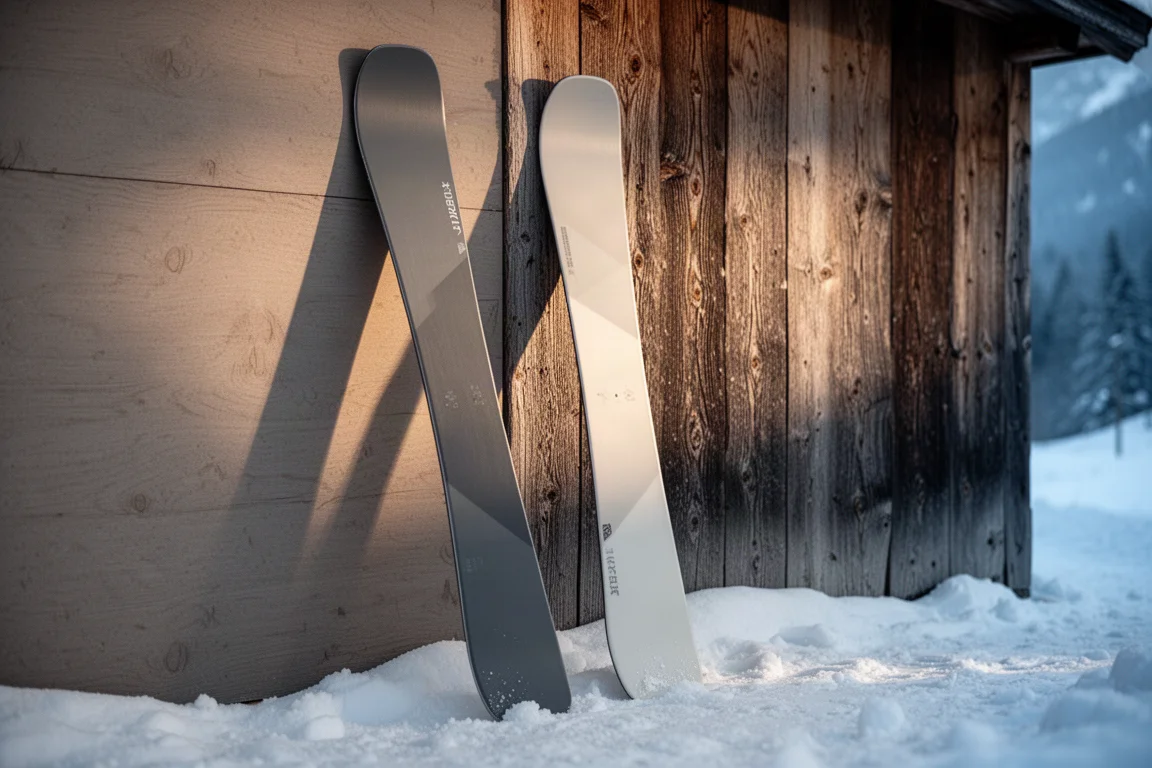
Black Crows has built a strong visual identity, and that can make it hard to judge whether the skis underneath the graphics are as serious as the design language suggests. The Draco Freebird 110 settles the question. At 110 mm underfoot it is a freeride ski aimed at soft snow, trees, and terrain that can be reached on skins, and it sells for roughly $1,000 depending on when you buy. What stands out once it is on snow is not the finish but the flex pattern: light enough to flick around in moguls, yet stable enough to hold a fully loaded carve.
Who the Black Crows Draco Freebird 110 Is For
This is a ski for riders who spend most of their time off piste in light, dry snow, the kind of conditions Black Crows itself associates with Utah and Idaho. It suits skiers who like to work a turn rather than simply tip a ski over, and who value a smooth, gradual flex more than instant edge engagement.
It also carries a touring angle. Both the tip and the tail have skin notches, so the ski can be set up for a backcountry kit. That does not make it a first touring ski for a beginner; it simply means the platform can be skinned when a day calls for it.
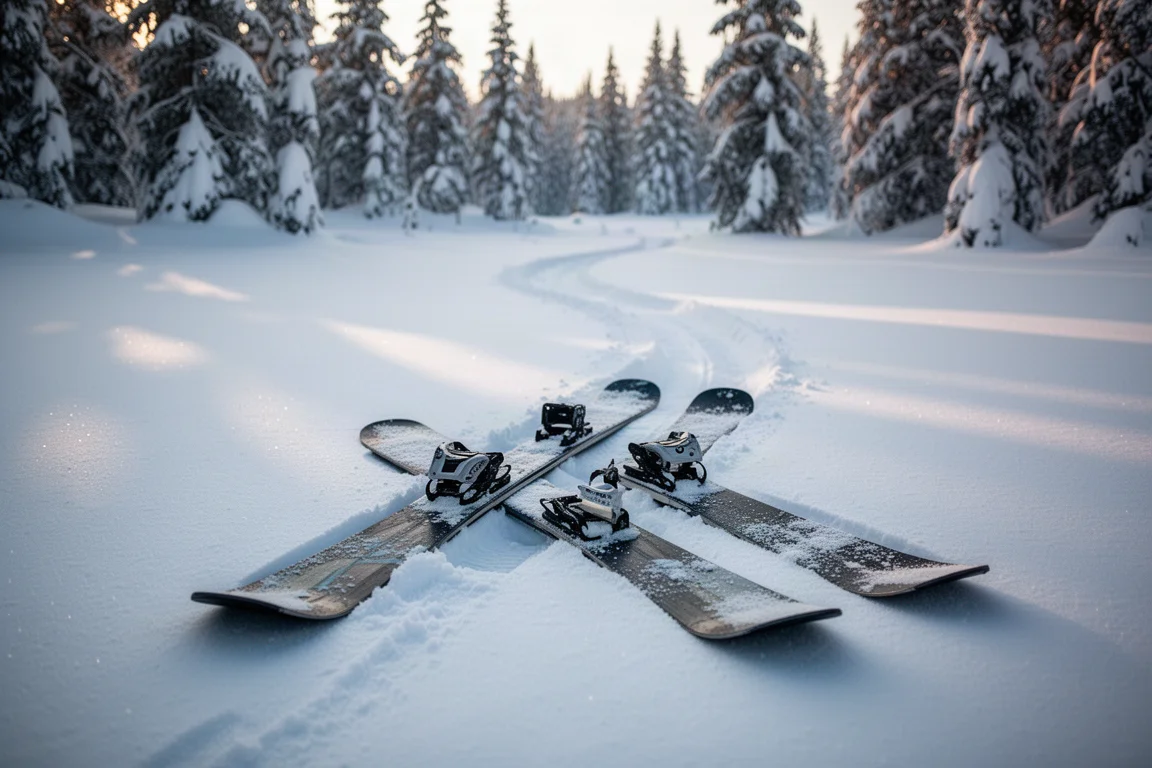
Riders who split their time between resort powder days and human-powered laps will find the combination of low weight and a 110 mm platform unusually flexible for a single pair of skis.
Light Weight That Changes How You Ski
The Draco Freebird 110 is built around a paulownia core, a light, fine-grained wood, together with poplar and fiberglass. The 181 cm length comes in close to 1,900 g without bindings, and weight across the size range sits at roughly 1,800 g to 1,900 g. For a ski this wide, that is remarkably light.
That low weight shows up most clearly in moguls and variable off-piste terrain. Lifting a foot to stay level over a rollover takes noticeably less effort than it does on heavier freeride skis, and the ski is easy to reposition when a line changes shape. Turn-to-turn transitions feel quick, and the width never reads as dead weight underfoot.
In trees, the same quality matters just as much. The ski navigates tight lines with ease and can be washed out quickly when a turn has to be cut short.
A Gradual, Rewarding Flex
Black Crows builds in a progressive rocker profile: camber underfoot, a gradual rocker at the tip, and more rocker toward the tail. On snow, that produces a flex that changes shape smoothly rather than in steps. The midsection stays comparatively stiff while the tip and tail soften.
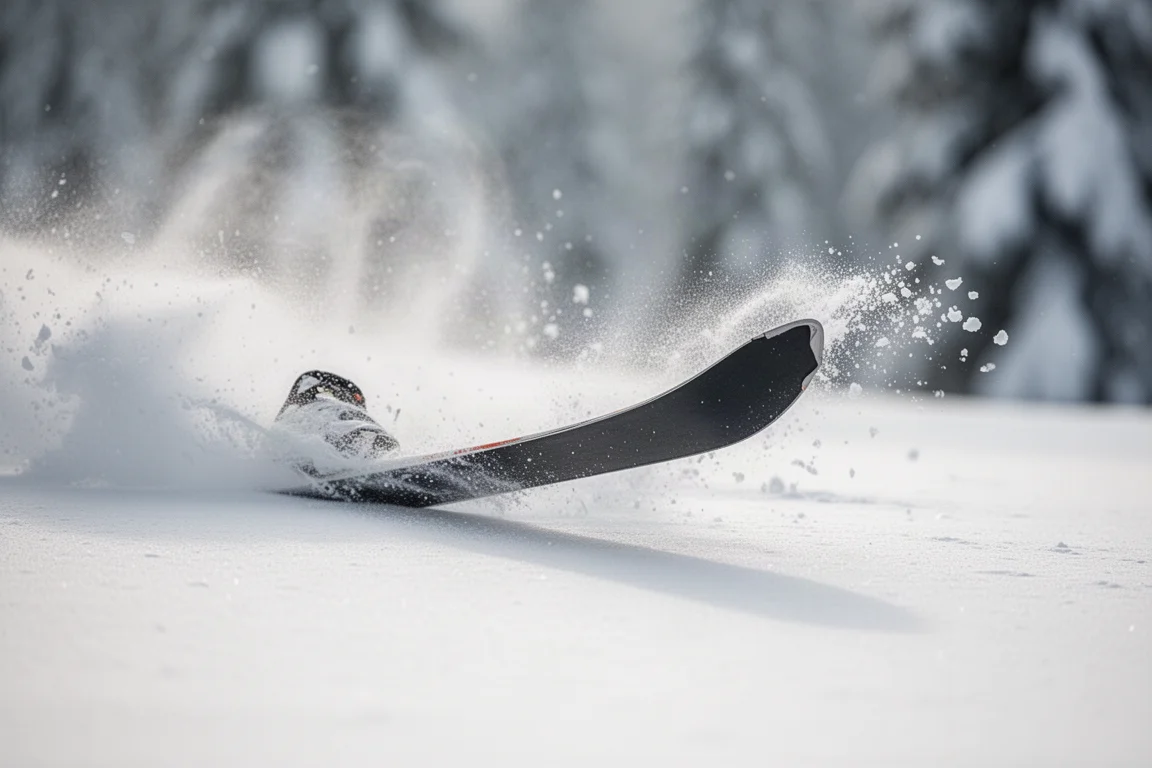
The practical result is a ski that has to be loaded gradually. Pressure needs to build through the turn before the edge hooks up and the arc completes. Once that timing is dialed in, the turn is unusually clean and consistent, and the platform stays stable even with the ski fully loaded.
Carving Performance and Stability
Carving is not the primary job of a 110 mm ski, and the Draco Freebird 110 is honest about that. In a narrow corridor or on a steep fall line, where there is no time to build pressure into the flex, it will not snap into a clean carve the way a narrower all-mountain ski does.
Give it room, though, and it carves far better than its width suggests. Edge-to-edge transitions are quick, and the ski holds a stable platform through the apex of a turn. The flex stays smooth and gradual as the ski changes shape underfoot, and the arc that comes back is more rewarding than what many narrower skis deliver. The material and the consistency of that flex are where the design effort clearly went.
Things to Consider Before Buying
The main trade-off is snow type. In wet, heavy, warm snow the wide shovel and light construction get grabbed quickly, and the ski stops behaving like a crud cutter. In spring conditions, keeping the base waxed matters a great deal; without it, the shovel tends to catch and hang up.
The second consideration is technique. This is not a ski that rewards a passive turn. Riders who want to tip a ski over and feel it engage immediately may find it slow to come around, while those willing to learn its timing will get considerably more out of it.
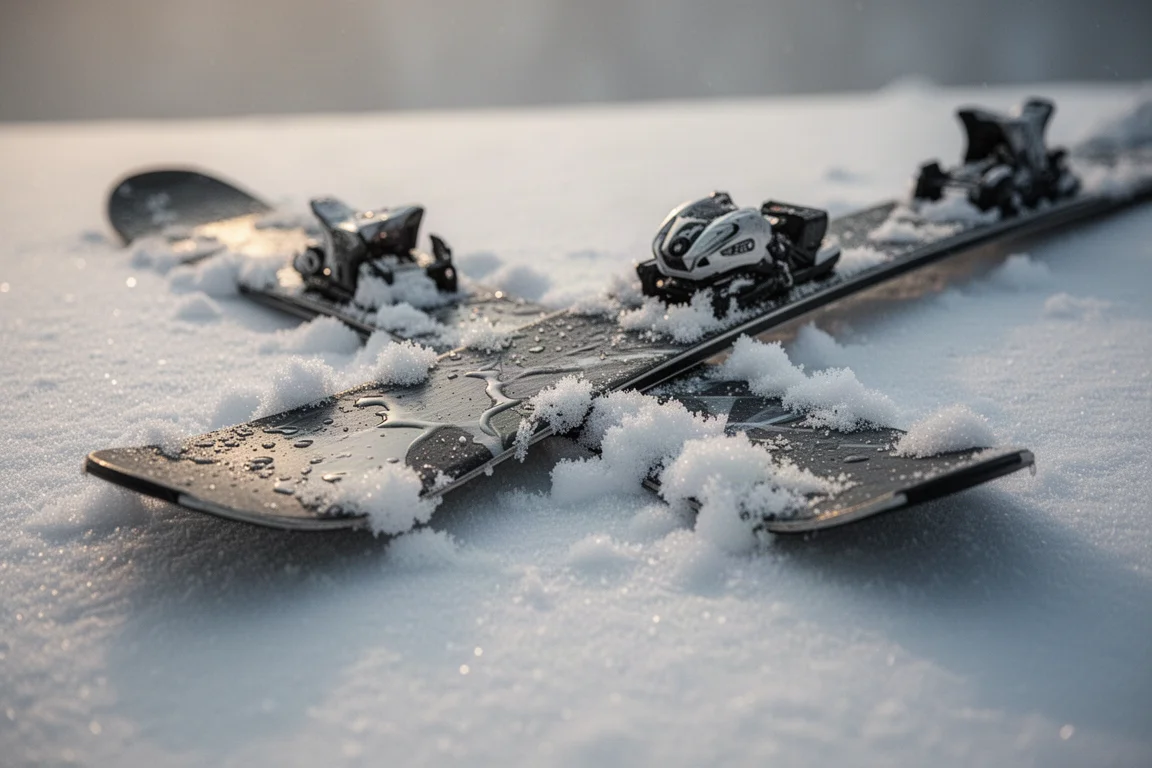
It is also worth thinking through the boot and binding setup, since a light ski paired with a mismatched system can blunt exactly the qualities that make this ski appealing in the first place.
Snow Conditions and Terrain Where It Shines
Light, dry powder is the natural home. The ski floats well, holds a stable platform in soft snow, and keeps its composure in moguls and trees. It handles small-radius turns in tight terrain and stays quiet and predictable over rollovers, which makes long off-piste days less tiring than they would be on a heavier ski.
The best fit is a region with reliably light snow. In wetter, coastal snowpacks it can still work on a good day, but its weaknesses become far more visible, and it is not the tool for sloppy, saturated snow.
Buying Advice
Pricing lands around $1,000 depending on when you buy, which places the Draco Freebird 110 at the premium end of the freeride market. It is worth being honest about whether that spend matches your local snow.
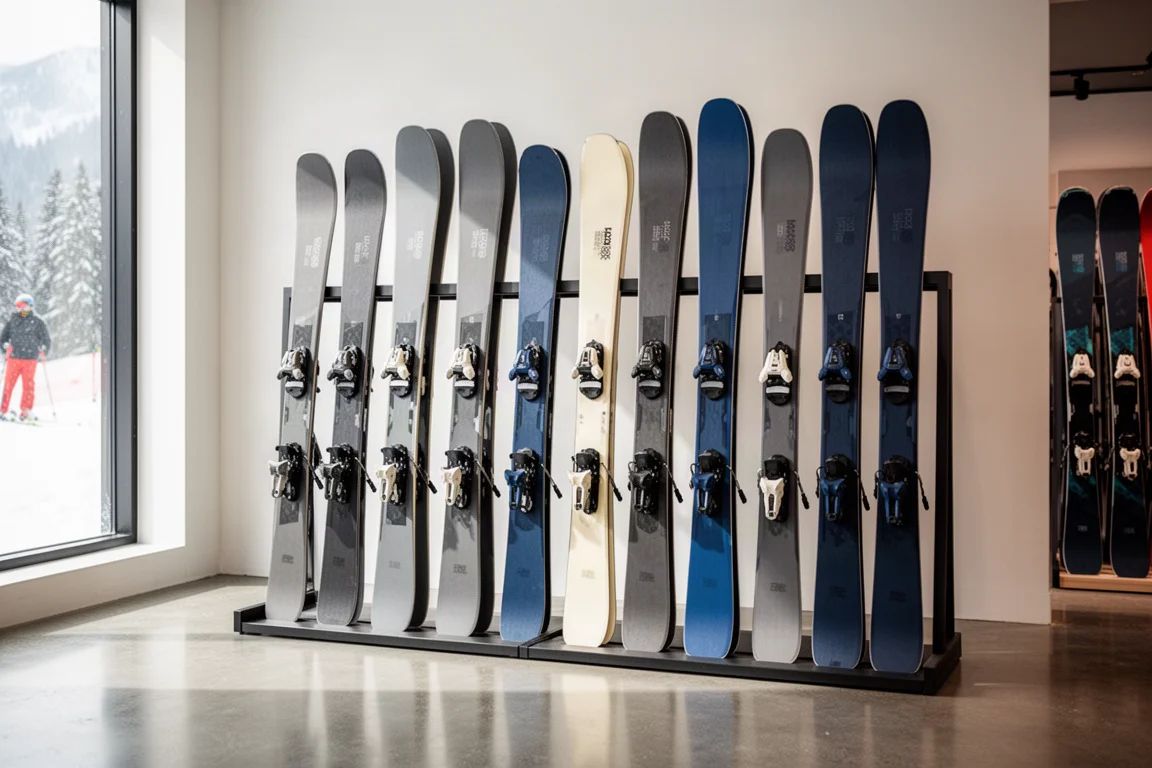
If you ride light, dry powder for most of the season and want one ski that floats, takes skins, and still carves with real feel, this is a straightforward recommendation. If your mountain serves heavy, wet snow more often than not, a narrower or stiffer ski will be the better match, and the money is better spent elsewhere.
Conclusion
The Black Crows Draco Freebird 110 is a light, carefully tuned freeride ski that earns its price through its flex rather than its graphics. Its low weight makes moguls and trees genuinely easy, its gradual flex produces a smooth and stable carve once it is loaded properly, and its float in light powder is exactly what a 110 mm ski should offer. It asks for patience and timing, and it dislikes wet, heavy snow, but in the right conditions and the right hands it is one of the more rewarding skis available.
Product link
View more details for Black Crows Draco Freebird 110
This product is mentioned in the review. Check the specifications, options, and compatibility before buying.
View more details for Black Crows Draco Freebird 110Further reading
Related Reviews
Skis
Armada Anti Matter 82 W Review: A Light, Approachable All-Mountain Carver
Armada's Anti Matter 82 W pairs a lightweight Karuba and carbon build with an easygoing all-mountain shape, aimed at intermediates through lighter-footed advanced skiers.
Skis
Armada Anti Matter 88W Review: A Light, Playful 88mm All-Mountain Ski Plus Two Alternatives
The Armada Anti Matter 88W returns unchanged in spirit from its Reliance 88C days, and it remains one of the most versatile 88mm skis around. We also look at the Nordica Santa Ana 87 and Anti Matter 92 W as alternatives.
Skis
Armada ARV 100 vs Atomic Bent 100: Which 100mm Freestyle Ski Should You Buy?
Two of the best all-mountain freestyle skis of the season compared: one leans playful and park-ready, the other holds up better everywhere else.