Skis
Black Crows Corvis 2025 Review: A Softer, More Playful Big Mountain Ski
The 2025 Black Crows Corvis drops a metal plate, softens its flex and adds rocker. Here is how the redesign changes deep snow days and groomer runs.
Introduction
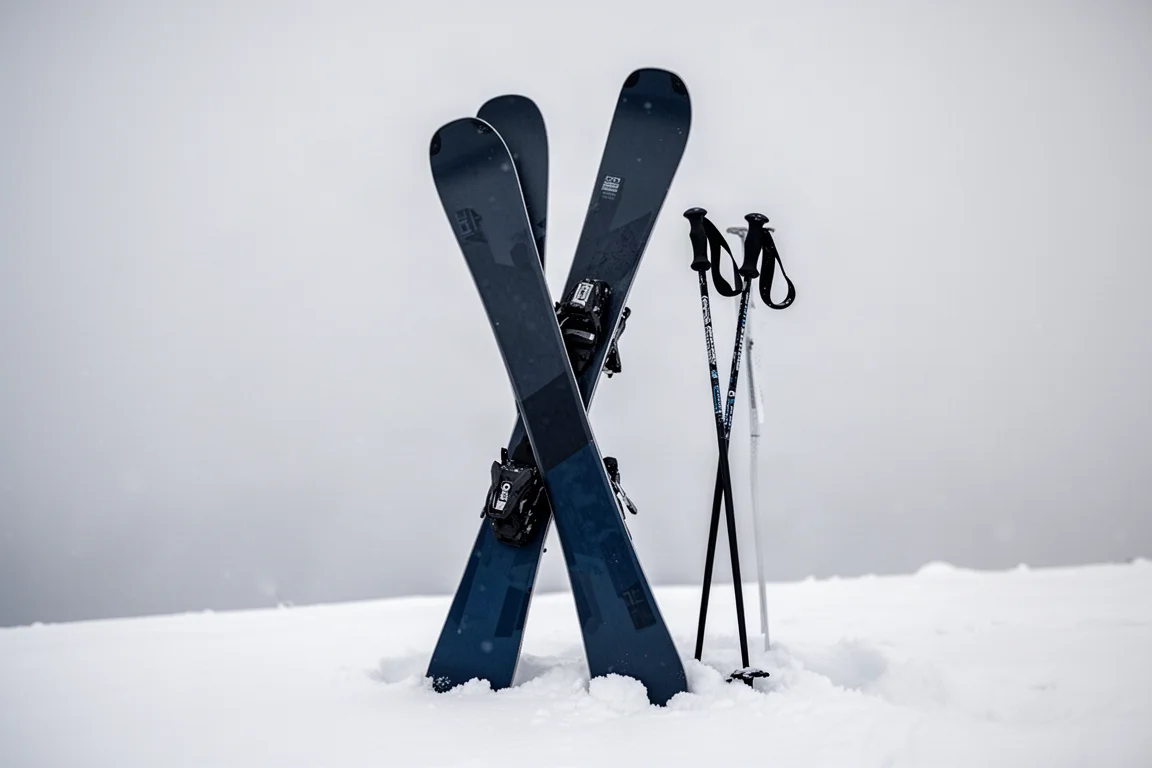
The Black Crows Corvis has spent years as the brand’s flagship big mountain ski: a flat, metal-heavy, stiff board built to run straight down steep faces. The 2025 Corvis keeps the name and the category, but very little else carries over. The flat profile is gone, the metal layup has been reduced, and the flex is softer from tip to tail.
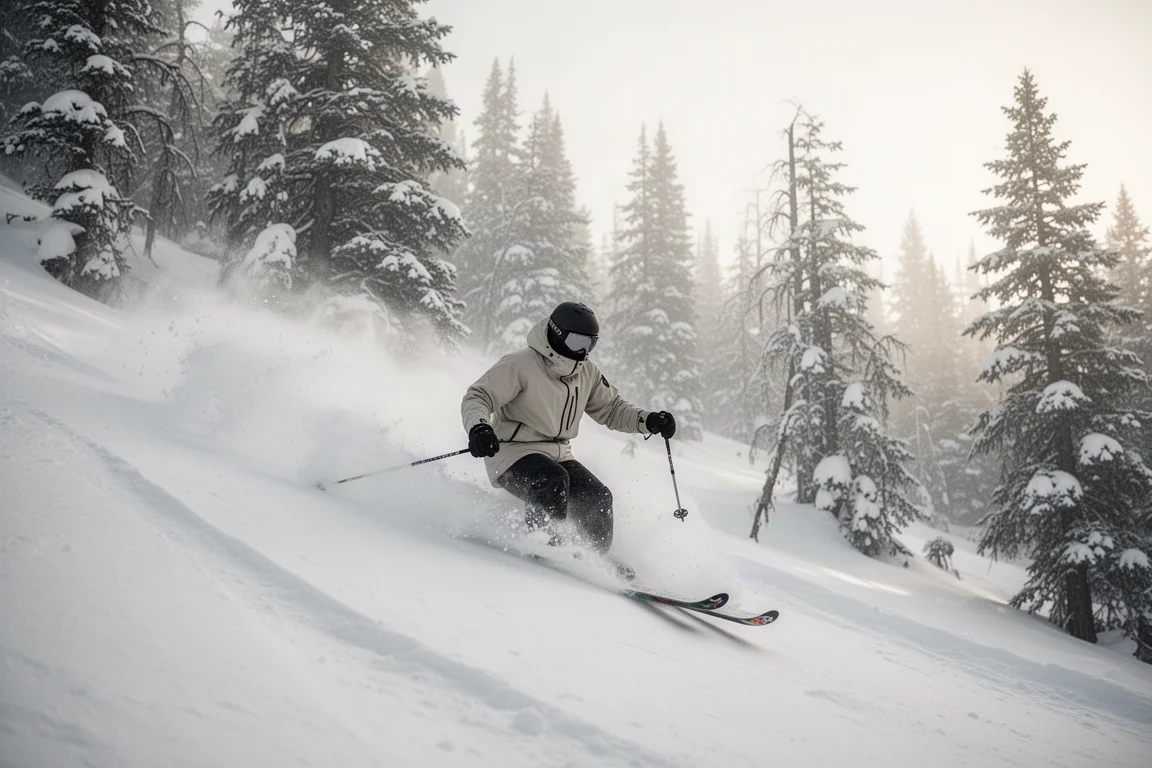
That makes the new Corvis a different proposition for a different kind of skier. It still sits in the brand’s big mountain range, but its character now leans toward playful freeride performance rather than pure straight-line charging. Anyone who remembers the older ski will notice the change immediately, and anyone who wanted a more forgiving wide ski should pay attention.
Who the 2025 Black Crows Corvis Is For
This ski suits people who spend most of their time in soft snow, steep trees and open powder fields, and who value maneuverability over a locked-in, race-like feel. The soft flex and deep rocker make it easy to pivot and smear, so it rewards a relaxed, creative style rather than a skier who wants to be pushed hard against the front of the boot.
It is also a sensible choice for someone who wants one wide ski that handles a powder day and can still be skied back to the lift without drama. Riders who want a stiff, damp, flat-tailed charger should look elsewhere, because that ski no longer exists in this model.
Construction and Shape: What Changed for 2025
The 2025 Corvis uses a poplar and beech wood core with a single titanal plate, replacing the older poplar and fiberglass build that carried two metal plates. The core is thicker and the beech adds density, so the ski gives up one layer of metal and takes on more wood. Weight drops by roughly 75 g in the 186 cm length, to about 2,075 g, against roughly 2,150 g before.
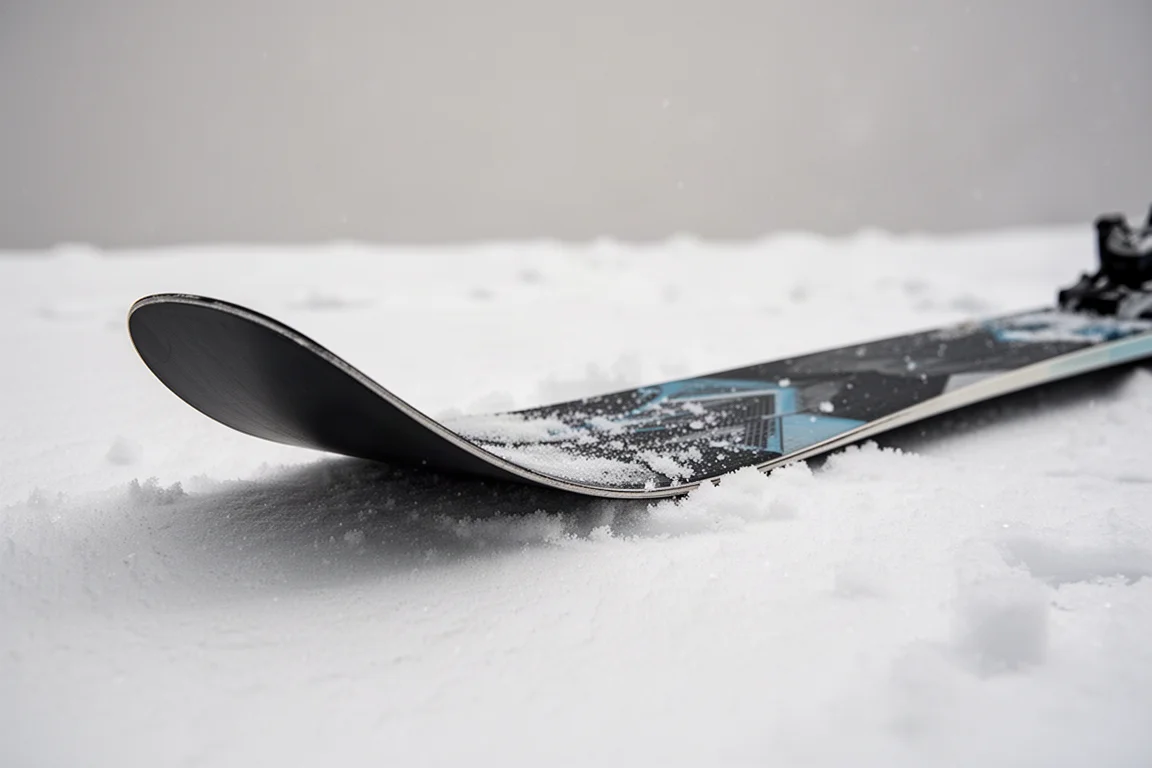
The shape is where the change is most obvious. There is now camber underfoot, though not a great deal of it, plus substantial tip rocker and a long tail rocker with pronounced early taper and a pintail. The turn radius is 25 m and the waist measures 110 mm, up from 108 mm on the previous version. Flex is soft, particularly in the tips and tails, which is a long way from the old Corvis feel.
Main Strengths: Soft Snow Performance
In deep snow the Corvis is genuinely fun. In around 30 inches of fresh snow it felt nimble and maneuverable rather than demanding, with the tapered tail and softer flex making it easy to whip sideways through steep trees. It stays intuitive: instead of planning turns far ahead, you can change direction on a moment’s notice.
The long 25 m radius and relatively straight underfoot section still let the ski run fast when you point it, so the playfulness does not come at the cost of the ability to charge. It blends maneuverability with enough stability to ski aggressively in open terrain.
Weight helps here too. At just over 2,000 g in the 186 cm, the Corvis is not heavy for a 110 mm ski, and the softer flex and tapered tail make it feel lighter than the number suggests.
On-Piste and Variable Snow Performance
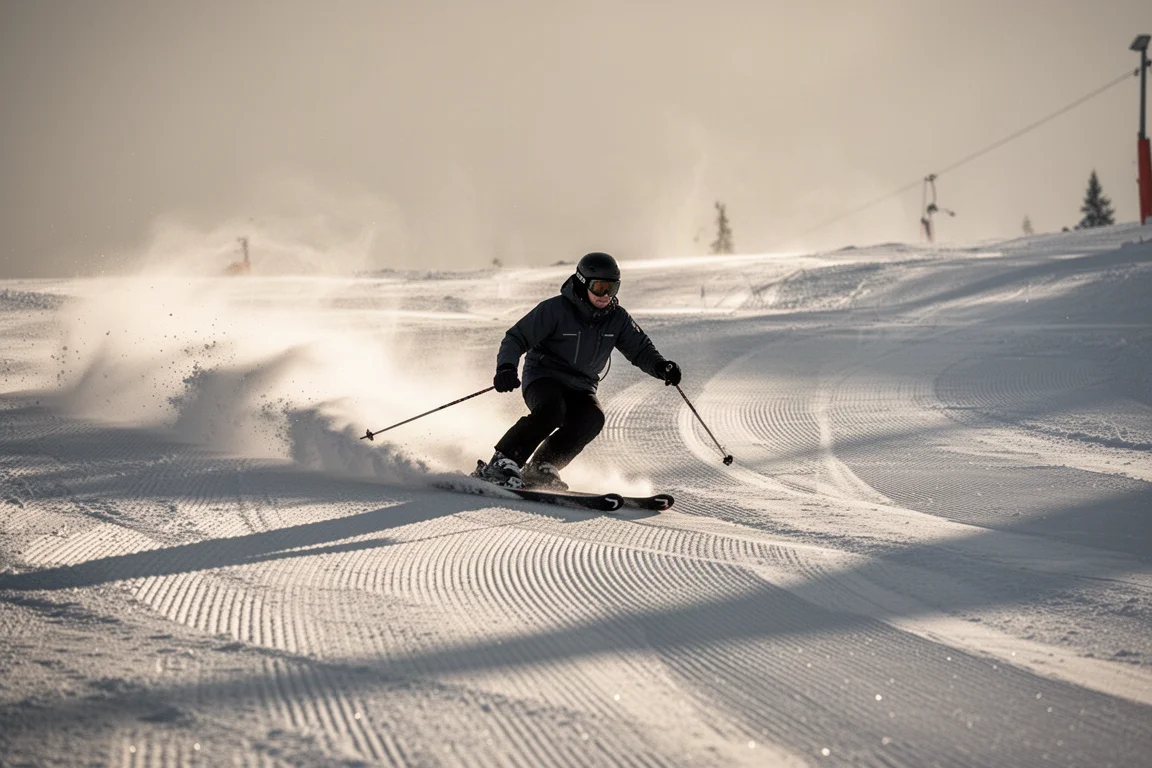
Nobody buys a 110 mm ski for carving, but groomer days happen, and the Corvis is usable there. The long radius means you wait a beat for the ski to engage, then it holds a stable, predictable arc once you commit. Skiers who ride more flat and surfy will find it does not feel catchy, and playing with edge angles is genuinely enjoyable.
In chopped-up and variable snow the picture is less flattering. The tips can get deflected and have a tendency to dive, so it helps to ski more centered. Sizing up is the practical fix if you are between lengths and expect to spend time in fast, variable conditions on steep faces.
Things to Consider Before Buying
The Corvis is not a charger in the traditional sense, and anyone who loved the old flat, stiff, twin-metal version will find this one very different. The soft flex and deep rocker trade away some top-end stability for playfulness, which is a deliberate design decision rather than a flaw.
Sizing matters more than usual. The 186 cm was well matched to tight terrain, and a 192 cm is available for anyone who wants more float and more ski underfoot, with a 181 cm also in the range. If you are between lengths, going up is the safer bet for variable conditions and deeper snow.
Buying Advice
The 2025 Corvis makes the most sense as a soft snow and freeride ski rather than a daily driver for firm conditions. If your days are mostly powder, steep trees and soft chop, it is an easy ski to recommend. If you split your time between hardpack and a handful of powder days, a narrower or stiffer option will serve you better.
Comparisons worth knowing: the RENOUN CenterFree 110 covers similar ground with more metal in the middle and more rocker at the tips and tails, while the Salomon QST Blank is floaty with dramatic rocker but a much shorter turn radius. The Volkl Revolt 114 shares a similar rudder-style tail for skiers who like that feel.
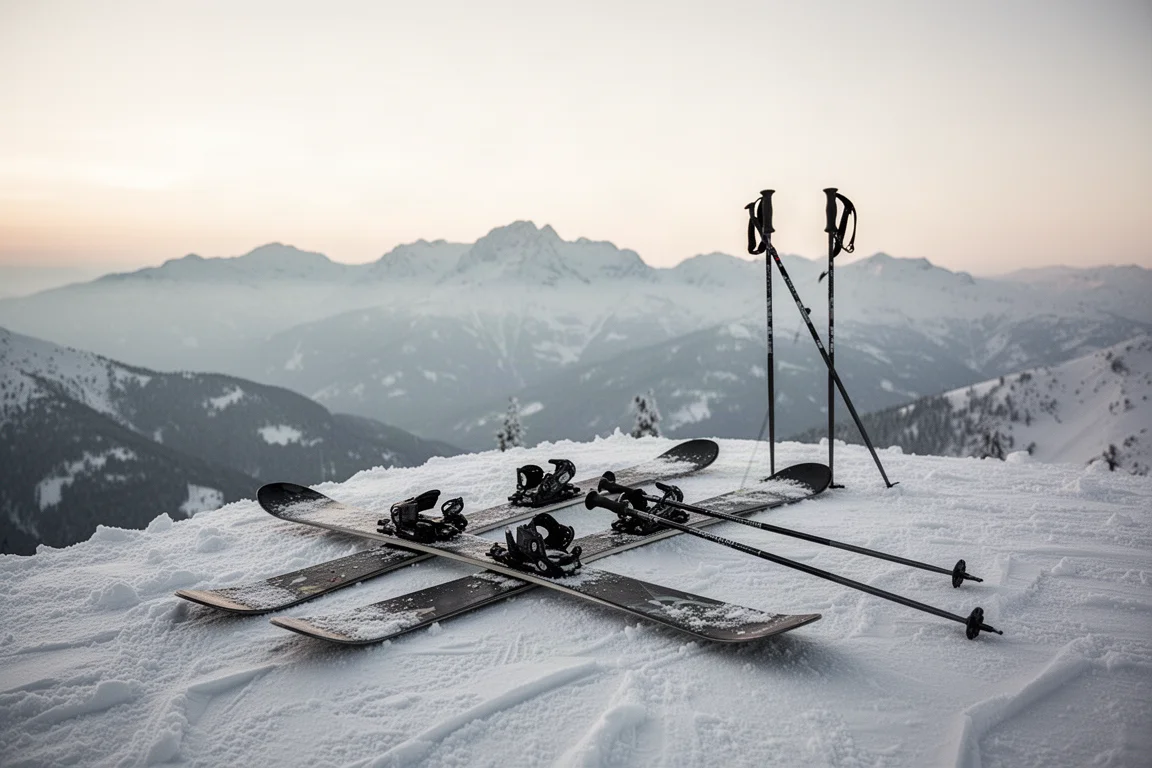
If you are between sizes, sizing up remains the safer choice for variable conditions and deeper snow, and the 186 cm stays the most versatile length for most skiers. The ski carries enough heft to feel planted without becoming cumbersome, so it works well as a dedicated soft snow tool in a quiver rather than a one-ski solution.
Conclusion
The 2025 Black Crows Corvis is a substantial redesign that changes the ski’s character. It gives up the flat, metal-heavy build for a lighter core, a softer flex and a modern rocker profile, and the payoff is a playful, intuitive freeride ski that is genuinely fun in deep snow. Skiers who wanted the old Corvis will miss it, but anyone shopping for a maneuverable big mountain ski for soft conditions should put this one on the list.
Product link
View more details for Black Crows Corvis
This product is mentioned in the review. Check the specifications, options, and compatibility before buying.
View more details for Black Crows CorvisFurther reading
Related Reviews
Skis
Armada Anti Matter 82 W Review: A Light, Approachable All-Mountain Carver
Armada's Anti Matter 82 W pairs a lightweight Karuba and carbon build with an easygoing all-mountain shape, aimed at intermediates through lighter-footed advanced skiers.
Skis
Armada Anti Matter 88W Review: A Light, Playful 88mm All-Mountain Ski Plus Two Alternatives
The Armada Anti Matter 88W returns unchanged in spirit from its Reliance 88C days, and it remains one of the most versatile 88mm skis around. We also look at the Nordica Santa Ana 87 and Anti Matter 92 W as alternatives.
Skis
Armada ARV 100 vs Atomic Bent 100: Which 100mm Freestyle Ski Should You Buy?
Two of the best all-mountain freestyle skis of the season compared: one leans playful and park-ready, the other holds up better everywhere else.