Kitchen Knives
Birch and Bevel 230mm Gyuto Review: Birch Bark vs Master Birch Compared
Two handmade 230mm gyutos from the Birch and Bevel carbon steel line, compared on fit, finish, steel, and everyday cutting performance.
Introduction
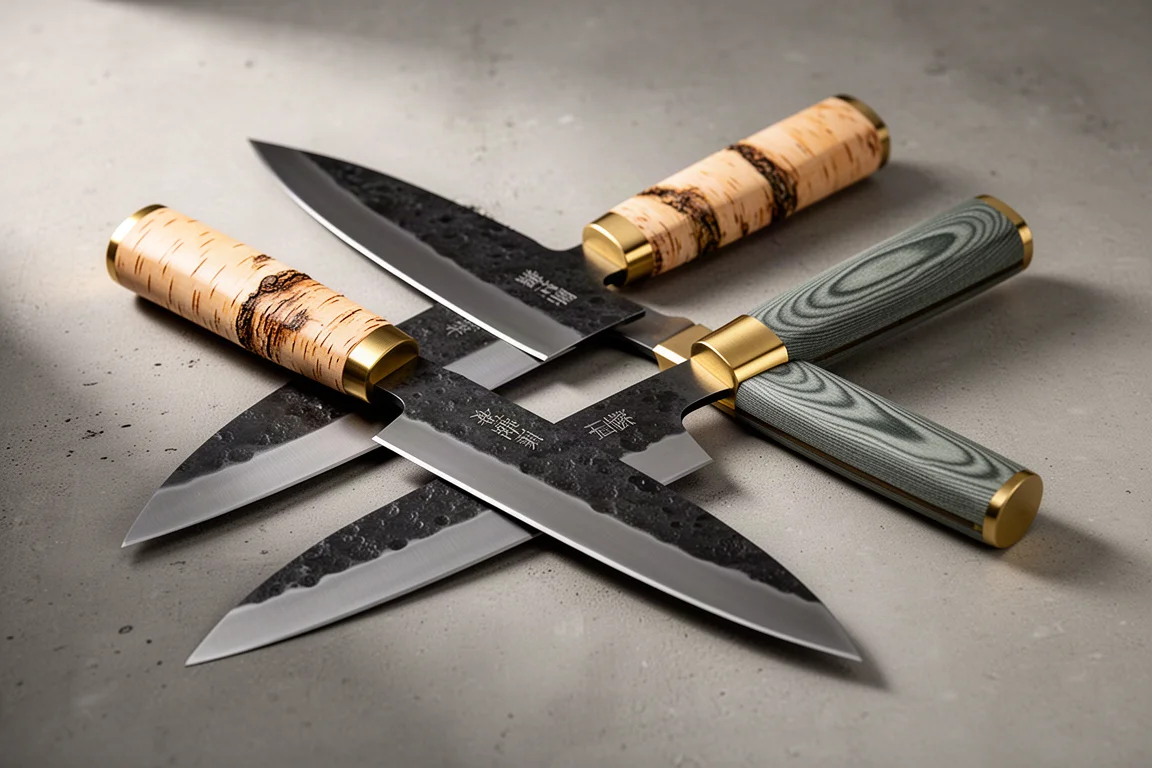
The Birch and Bevel 230mm gyuto arrives in two handle variants from the brand’s carbon steel line, both fully handmade and both sharing the same blade. After putting both knives through a full range of kitchen tasks, this comparison looks at what sets them apart and which one makes the more sensible buy.
At $380 USD (508 CAD), these are not budget blades, but the fit and finish on display here competes with knives well above this price range.
A Small Brand Built on Specialist Craftsmen
Birch and Bevel is sold exclusively through Modern Cooking, a premium kitchen knife shop in Berlin, and the brand’s founder is closely involved with the shop itself. The concept leans on specialists for each component: expert blade makers for the steel, expert smiths for the handles, and so on.
For this carbon steel line specifically, the blade is forged by Fredrik Spåre of Sweden, while the handles come from Austrian smith Martin Huber. That division of labour shows in the result, where consistency between the two knives is remarkably tight.
The Steel and Blade Construction
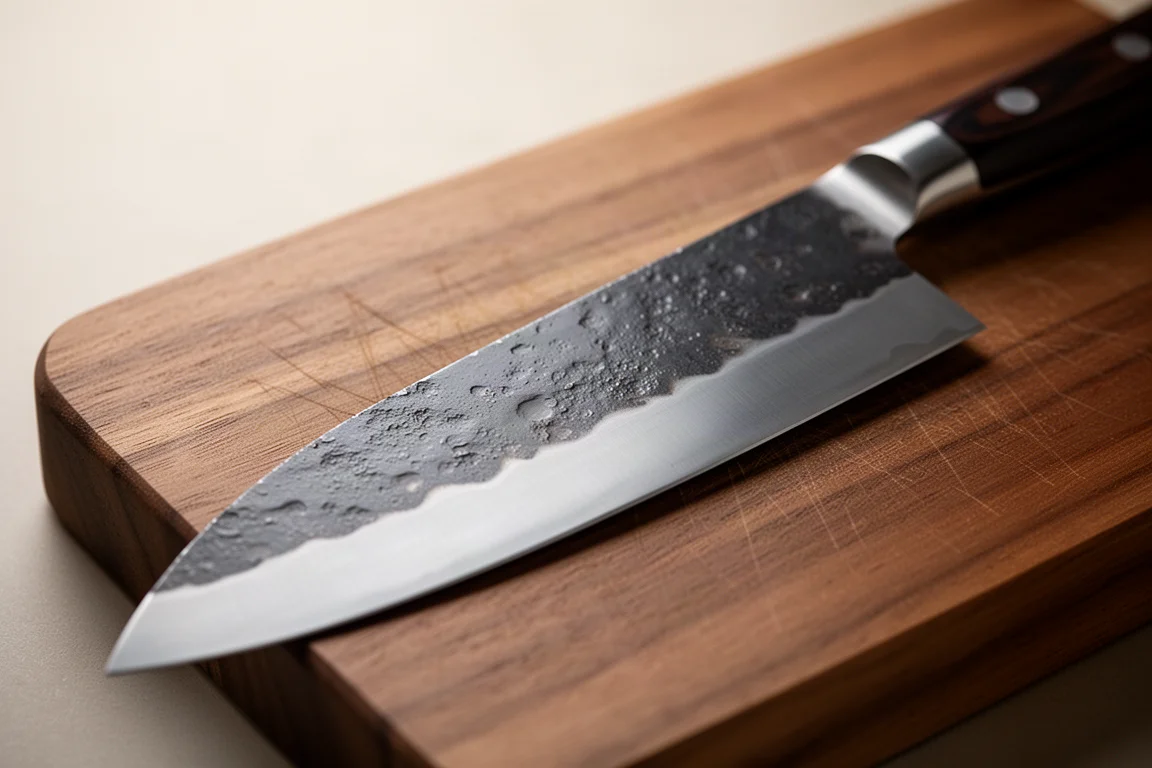
The carbon steel line uses a mono steel construction in 1.2419, a low alloy German steel with a healthy amount of chromium and tungsten that allows high hardness. Here it reaches an HRC of 65.
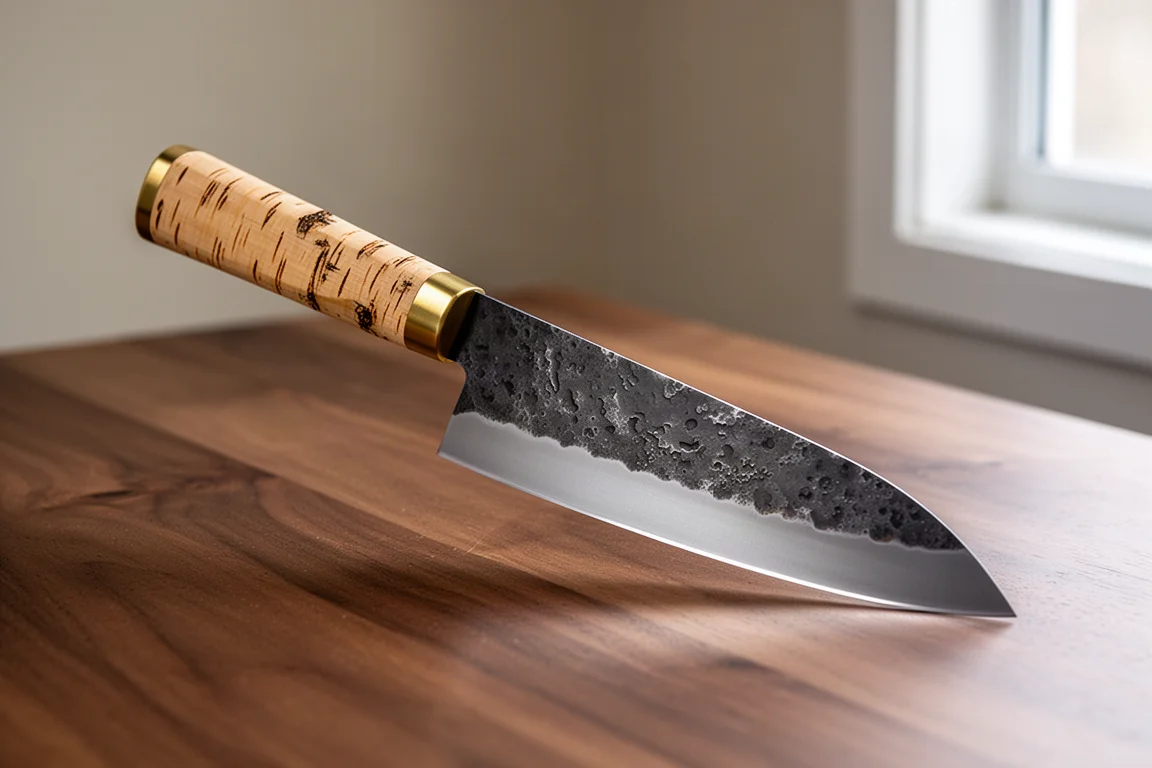
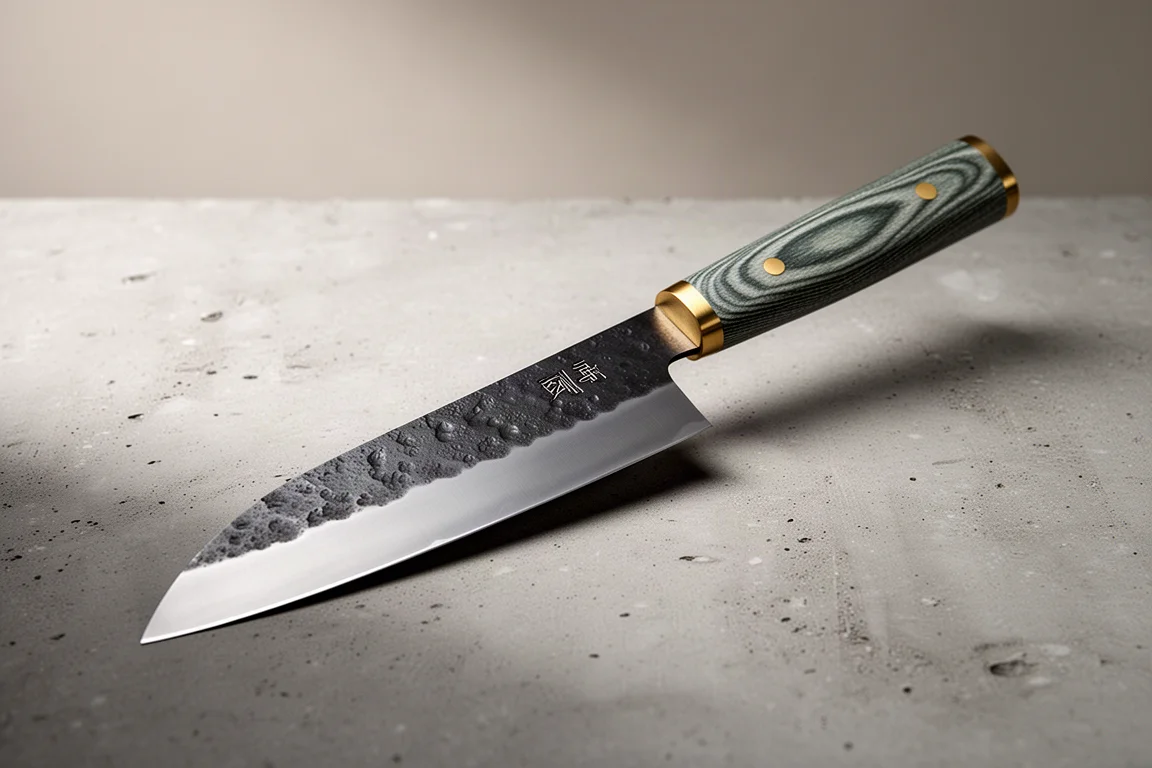
The blade carries a textured kurouchi finish with a satin polish, which should look interesting once a patina starts to build. There is a convex grind, and the spine tapers from 4mm at the heel to 1mm at the tip. The profile reads as an early Western chef knife meeting a Japanese gyuto, which should suit a gentle rocking motion. The knife weighs 188g, feels balanced for smaller hands, and offers plenty of flat cutting edge along the blade path.
Performance: From Tofu to Butternut Squash
The testing covered soft ingredients like tofu, hard ones like butternut squash and sweet potato, small items like garlic and capers, and larger produce. The usual cherry tomato test, rock chop, sweep chop, push cut, and pull cut all featured too.
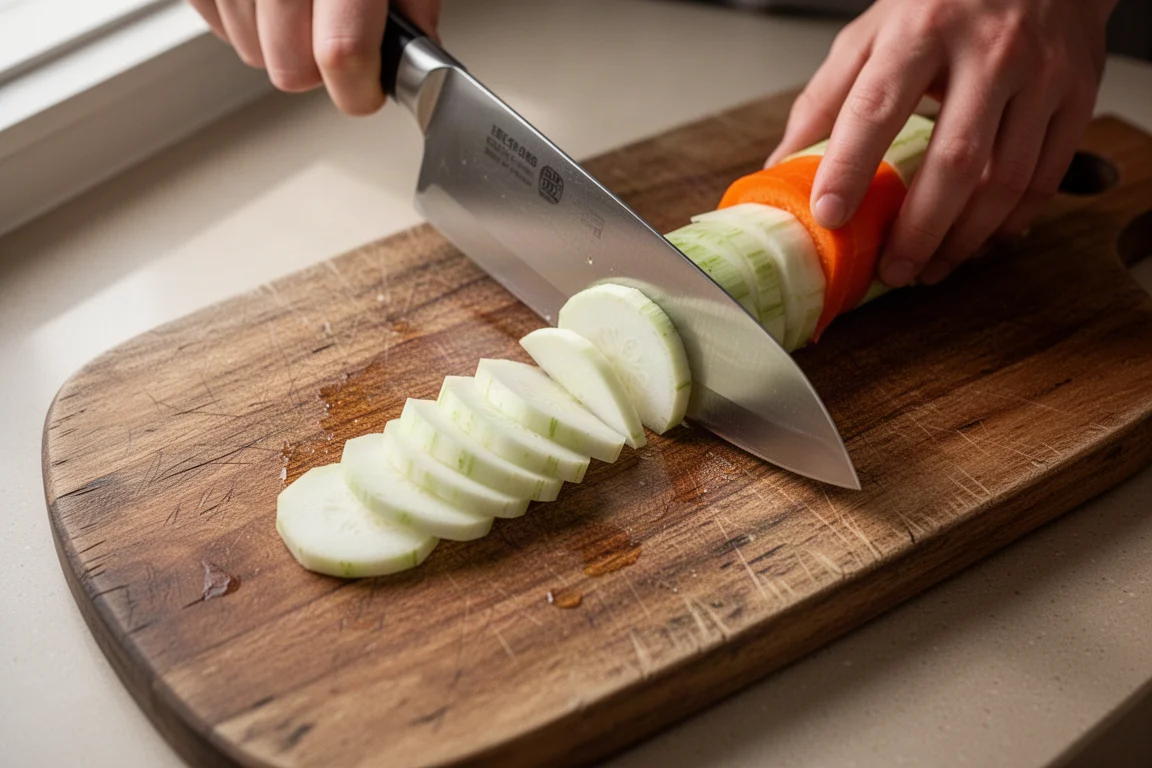
Most knives would not be trusted with hard root vegetables, but this one inspires confidence, and with good technique there were no issues at all cutting squash or sweet potato. A slow carrot cut showed no cracking, which says good things about the grind and thickness. Potatoes, cured prosciutto, bell pepper skin, and onions all came through cleanly.
What Could Be Better
A few honest caveats emerged. Food release is nothing special, and the convex grind, while present, does not feel pronounced enough to be the selling point of these blades. The tip looked slightly blunted on close inspection, though in use this was not noticeable. Early rocking attempts felt awkward, but that turned out to be excess pressure; once the knife was allowed to do the work, rocking performed much better.
Which Handle Should You Choose?
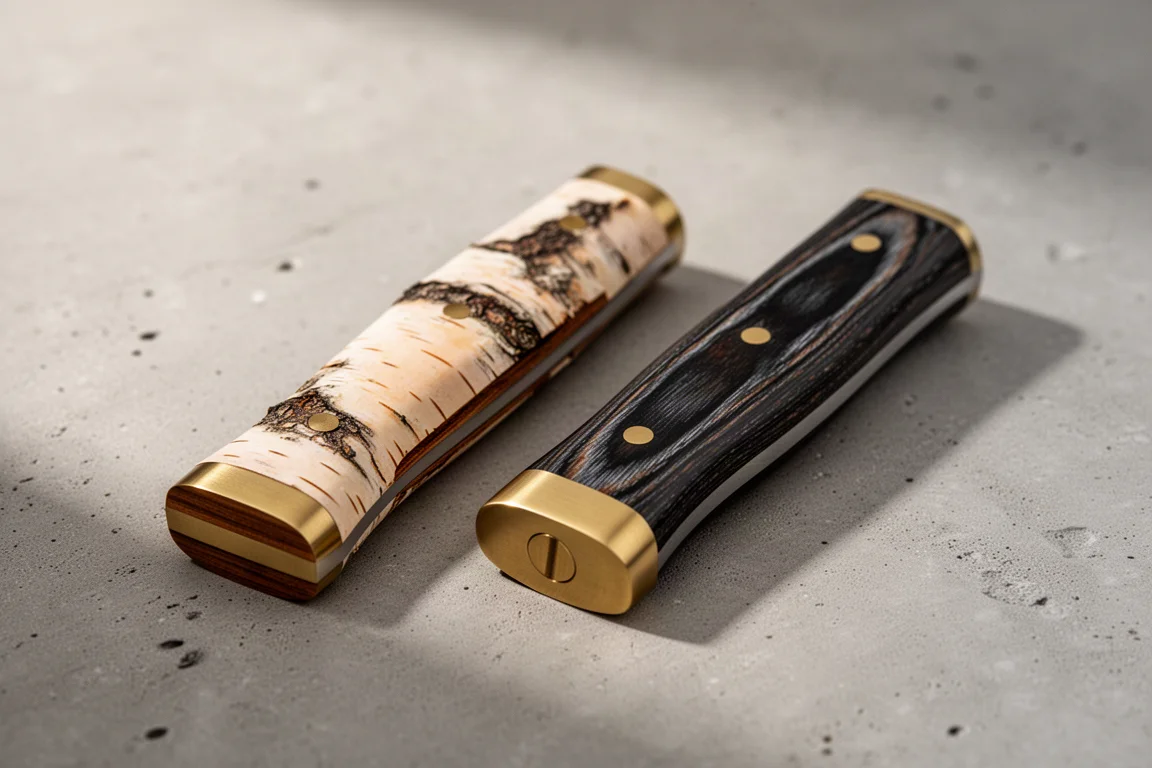
Both handles are beautifully made, and the aesthetic difference between the two knives is nearly impossible to spot, which is impressive for fully handmade pieces. The classic option pairs stacked birch bark with brass, with a slightly less linear, more organic bark orientation that has real character. The Master edition uses master birch micarta with G10 and brass, with cleaner, more uniform lines and a feel reminiscent of Nordic outdoor knives.
Both feature a polished choil and spine, and both handles feel well crafted to the point of being flawless.
Buying Advice
For the price, it is hard to find a better performing handmade knife. The Birch and Bevel carbon steel line works well as a workhorse knife or as an entry-level carbon gyuto for someone special. If you prefer a classic, organic look, the birch bark handle is the characterful pick; if you want a more uniform, durable-feeling handle, the Master birch micarta is the one to choose. Both share the same excellent blade, so the decision mostly comes down to handle preference.
Conclusion
Incredible fit and finish, strong performance across every ingredient category, great steel choice, and well-crafted handles make the Birch and Bevel 230mm gyuto an easy recommendation at $380 USD. The convex grind is subtle and food release is average, but as an all-round handmade workhorse, this line punches well above its price.
Further reading
Related Reviews

Kitchen Knives
Best Chef's Knives 2026: 27 Popular Options Tested and Ranked
A comprehensive review of 27 chef's knives ranging from $18 to $380, with honest assessments of handle comfort, blade balance, and real-world performance.

Kitchen Knives
Best Chef's Knives Under $75: Two Tested Recommendations
Two practical 8-inch chef's knives that balance sharpness, comfort, and durability without premium pricing.

Kitchen Knives
Best Chef's Knives 2026: 27 Options Tested and Ranked
A comprehensive review of 27 chef's knives ranging from $18 to $380, with honest assessments of handle design, balance, blade profile, and real-world performance.