Cycling Tech
Bike Tech That Changes How You Ride: Four Innovations Worth Knowing
Four unusual cycling technologies explained: freewheeling cranks, a sealed gearbox, a self-inflating tire pressure system, and an adaptive crank for riders with limited knee flexion.
Introduction
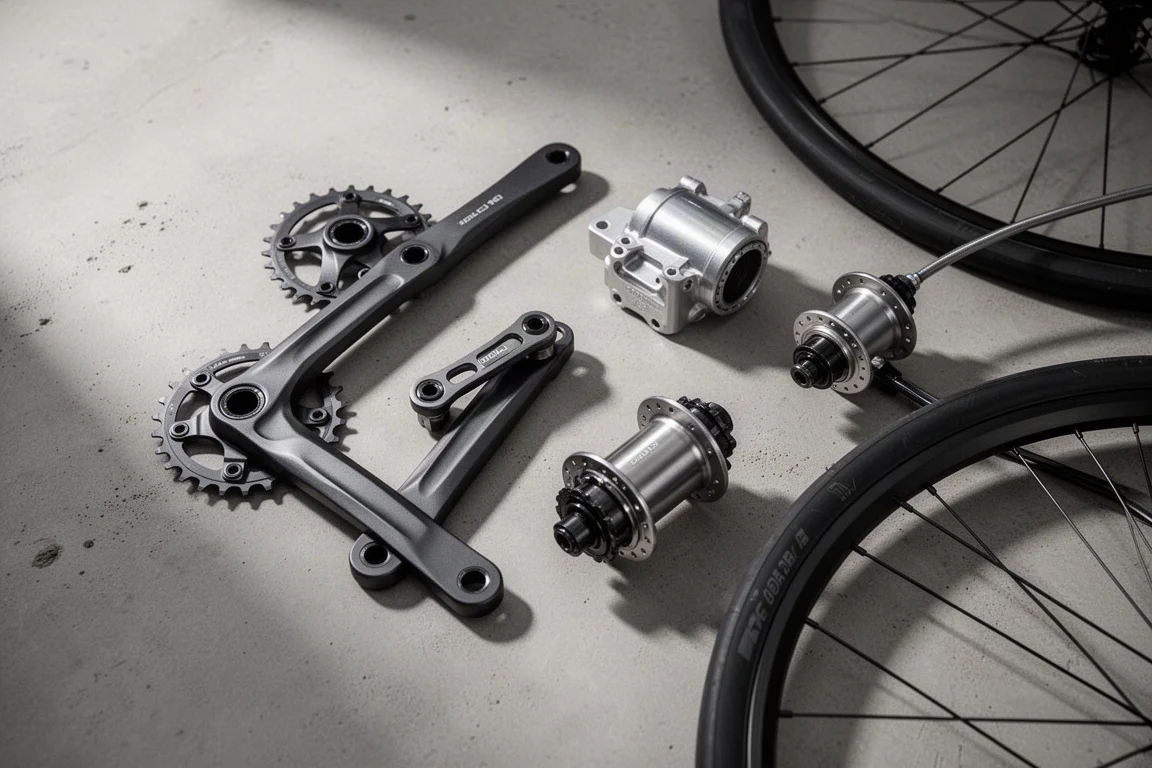
Some of the most interesting bike technology is not about going faster. It is about removing the jobs you would rather not do: cleaning a chain, adjusting a derailleur, stopping to change tire pressure, or working around a knee that no longer bends the way it used to.
The four products below each attack one of those problems from a different direction. Two change how the drivetrain works, one changes what your tires do mid-ride, and one adapts the crank itself to the rider. None of them are mainstream yet, and several are expensive or demand a specific frame. Each one, however, is a genuinely different answer to a question most riders have asked at some point.
What These Four Technologies Have in Common
The common thread is subtraction. A gearbox moves the gears inside a sealed unit so there is no exposed derailleur to knock or adjust. A freewheel at the crank keeps the chain moving while the bike coasts, so shifting no longer depends on your legs. A hub-based pressure system replaces the roadside stop with a control on the bars. The goal in every case is fewer interruptions and less upkeep.
The trade-offs follow a similar pattern too. Sealed and integrated systems cost more upfront, often weigh more, and frequently require a dedicated frame, hub, or mounting standard. The more self-contained the system becomes, the harder it is to fix at home, which matters if you like doing your own maintenance.
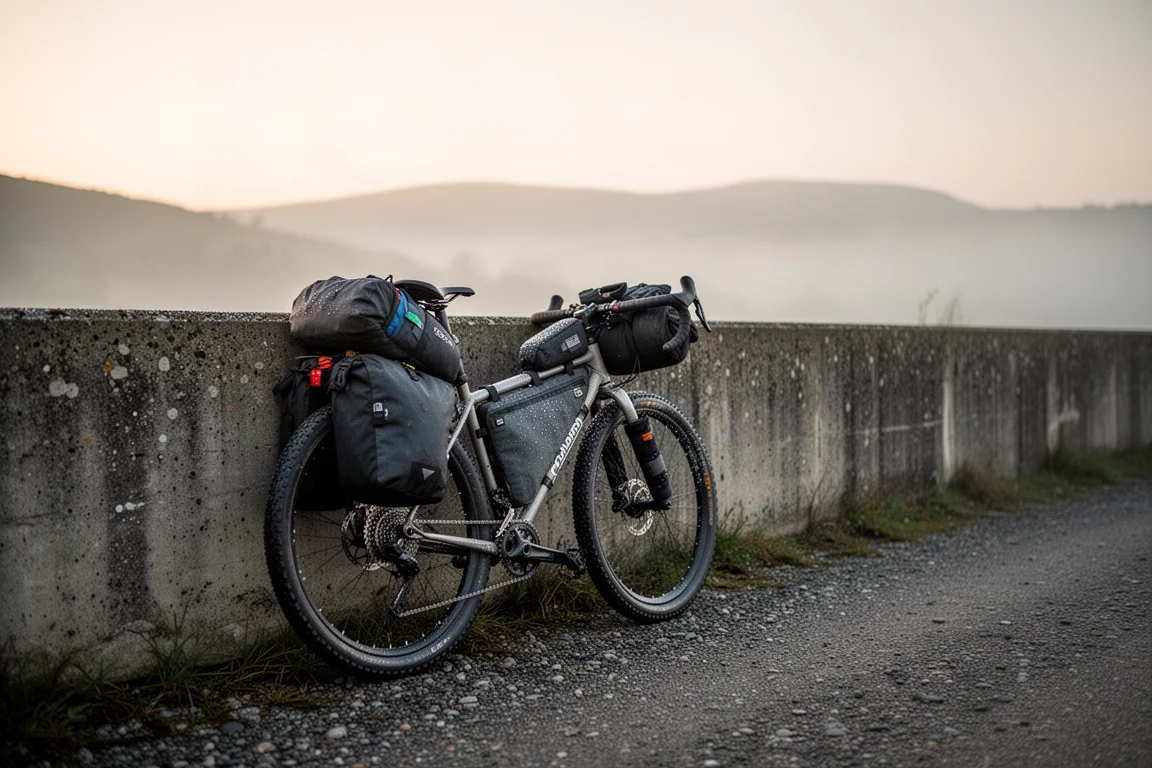
The Swing Crank breaks that pattern entirely. It is not about efficiency, weight, or maintenance. It is about access, and it exists for riders whose knees simply do not bend as far as the mechanism assumes.
HXR Easy Shift Cranks: Shifting Without Pedaling
The HXR Easy Shift crank is made in Germany and designed in France, and it was released in 2016 as a mountain bike crank that lets you change gear without pedaling. On a normal bike, the freewheel lives in the rear hub. Stop turning the cranks and the cassette stops with them, the chain stops, and clicking the shifter does nothing until you start pedaling again. Sometimes that delayed shift works out, and sometimes the drivetrain complains loudly when it finally happens.
Easy Shift inverts that arrangement. The freewheel moves to the crank set at the front, and the rear hub is fixed, much like a track bike. As long as the rear wheel is spinning, the chain keeps travelling around the cassette, so a shift command lands straight away.
That matters most in enduro and downhill mountain biking, and it shows up on trials bikes as well. Picture a rock garden or a tight corner where you cannot pedal because your pedals would strike the ground. With Easy Shift you can click into a harder gear for the exit without moving your legs. Drop into a descent and spot a sudden steep climb, and you can shed several gears while still freewheeling, arriving at the base already in the right ratio.
HXR is not the first to try this. Freewheeling cranks have been popular on trials bikes for years because of their sturdiness, and Shimano offered a front freewheel system back in the 1980s. It remains a specialist answer rather than a universal upgrade, and for most riders the standard setup is still the sensible choice.
Pinion Gearbox: Sealed Gears at the Bottom Bracket
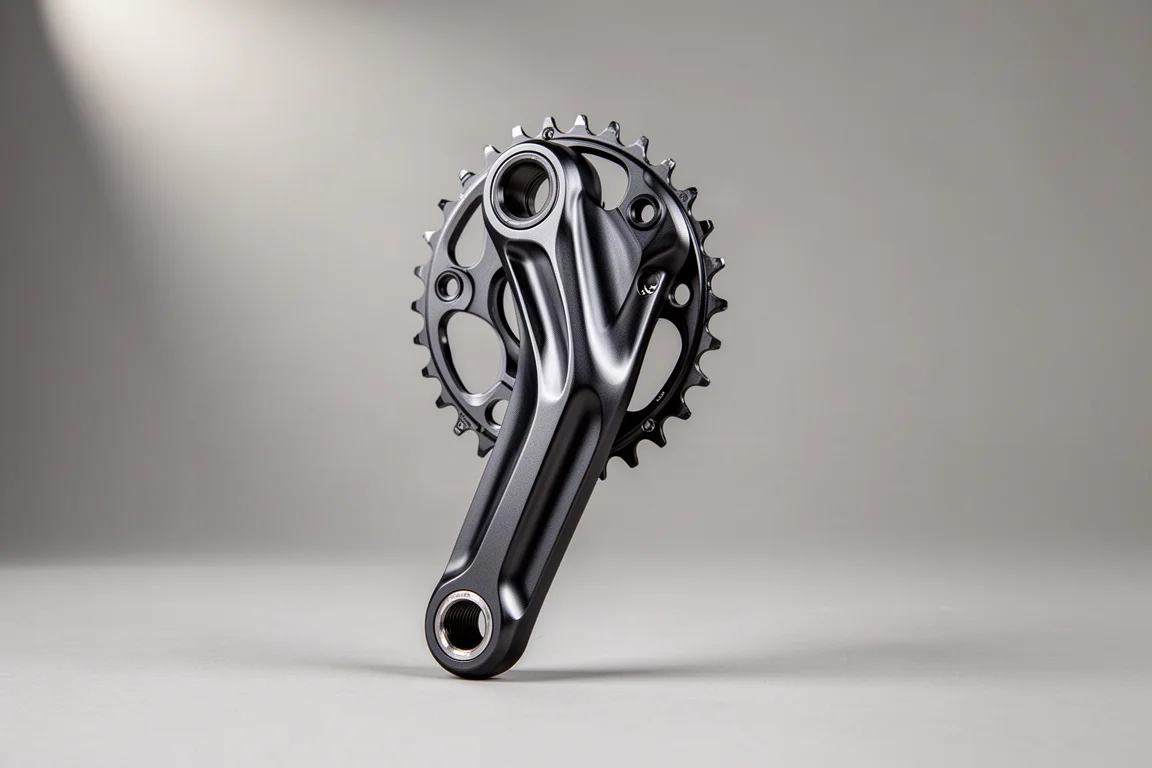
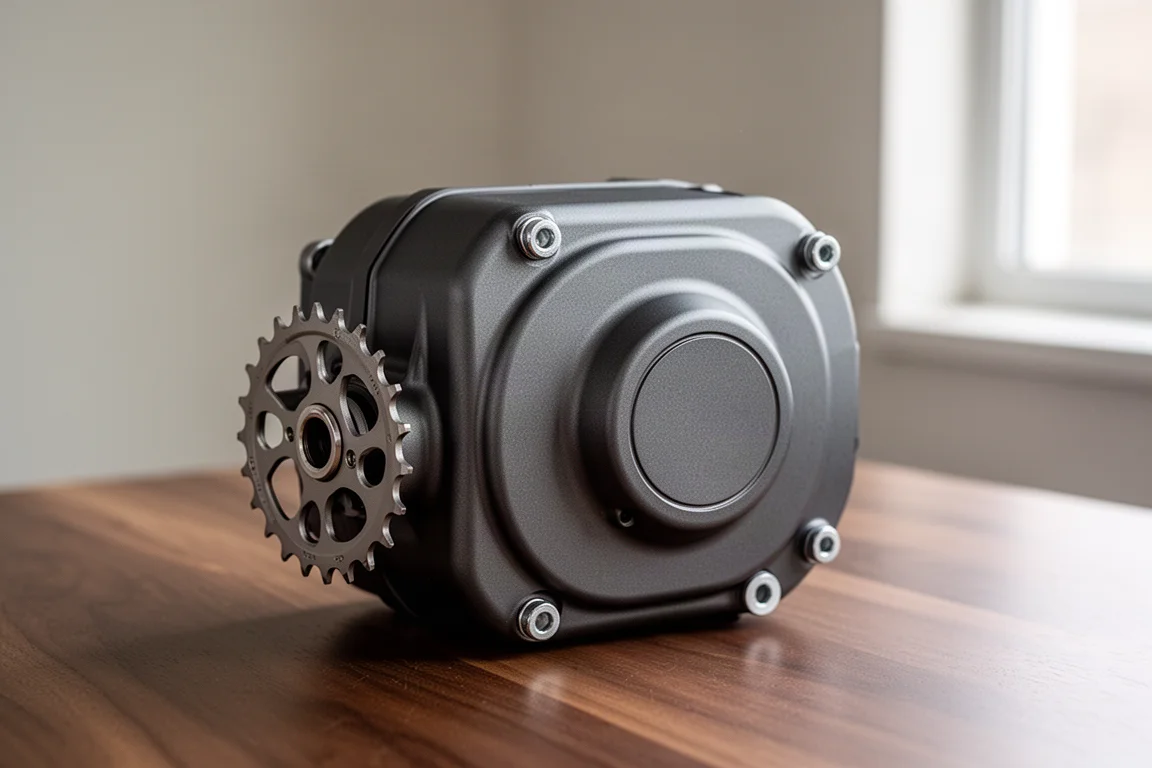
Pinion is a German company founded by former Porsche engineers, and its product is exactly what the name suggests: a box of gears. Every ratio is sealed inside a unit mounted at the bottom bracket and bathed in oil. Think of it as a car gearbox scaled down for a bicycle, and priced accordingly.
Inside the housing there are two parallel shafts carrying multiple sets of intermeshing gears. Most Pinion units use a multiplier layout, so a 12-speed box might pair a four-speed subunit with a three-speed subunit. When you shift, internal mechanisms lock specific gear pairings onto the shaft to change the ratio.
Because the shifting happens inside the box, the chain or belt never moves sideways. It stays in one perfectly straight line between a single front cog and a single rear cog, which on paper means less to go wrong and far less to clean.
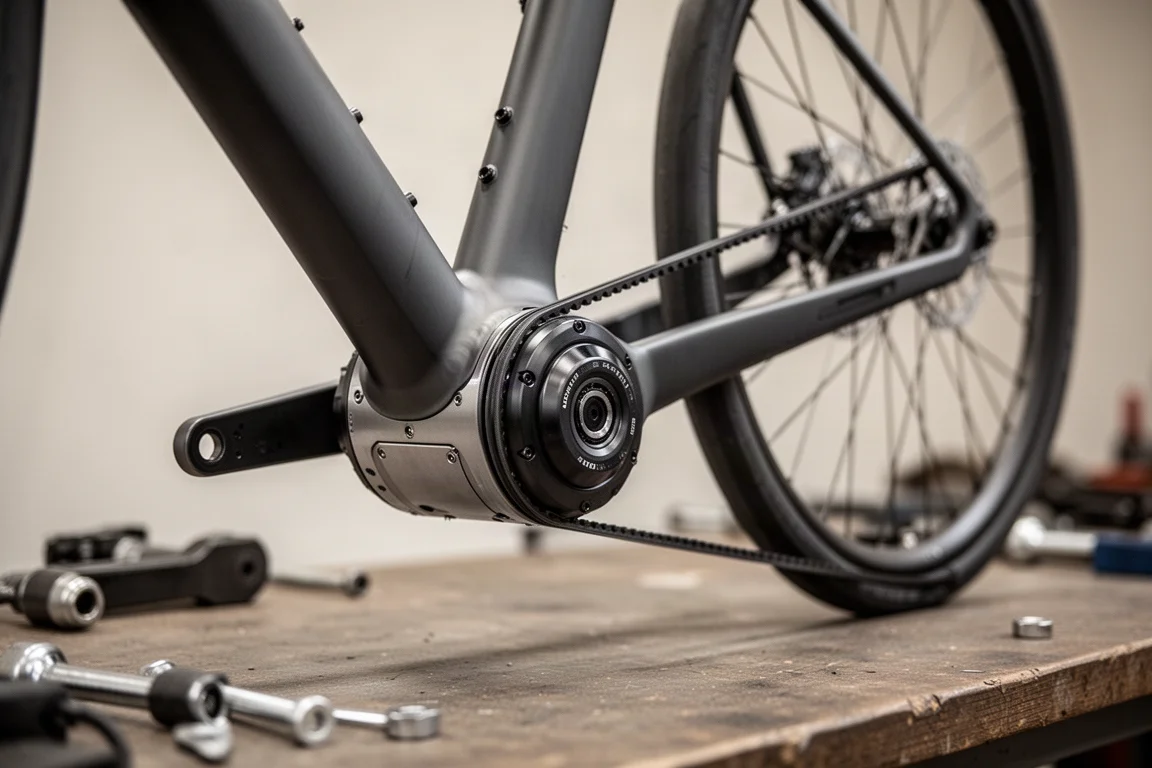
The practical benefits are substantial. Maintenance is minimal, the unit is fully sealed against dirt, water, and weather, and the only recommendation is an oil change every 10,000 km. The gear range is unusually wide: the 18-speed P line is quoted at 636%, against roughly 500 to 520% for mainstream Shimano and SRAM systems. Centralising the weight gives a low centre of gravity, more ground clearance, and no dangling derailleur, and you can shift while stationary, which is genuinely useful when you stall on a steep climb and need to get rolling again.
The downsides are just as clear. These are premium products costing into the thousands of pounds, they require a frame built specifically to take them, and they are heavier than a derailleur drivetrain. Efficiency is slightly lower than a clean, well-lubricated chain, and if something does go wrong the unit goes back to Pinion rather than to your local workshop. Historically these boxes were shifted with a grip-style lever on flat bars; more recently Pinion released an electronic version called Smart Shift that can pair with road-style levers such as the TRP Highwire, opening the door to drop handlebars. Pairing Shimano levers is reportedly possible but unofficial and may need tinkering. Pinion units are also often paired with belt drives for ultra low maintenance setups.
Gravaa Adaptable Tire Pressure System: Self-Inflating Tires
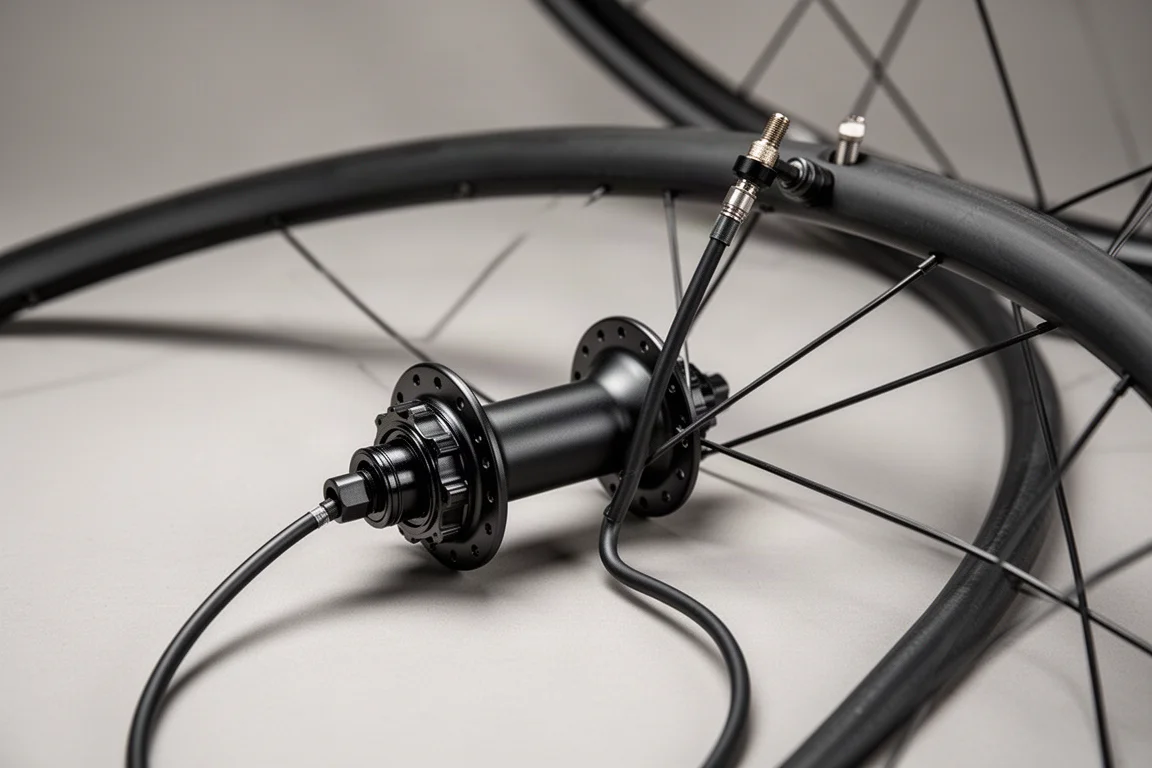
The Gravaa system is a wheel hub setup that lets you change tire pressure while you ride, without stopping. It is discreet and fits almost any bike. The package includes front and rear hubs, a hose running from each hub to the rim, a valve adapter that screws onto a regular Presta valve with the core removed, cockpit controls for manual commands, and a wireless connection to your bike computer if you have one.
Raising pressure works through an actuator-enabled clutch inside the hub. The clutch connects a camshaft to the axle, which stops the camshaft from spinning, and the rotation of your wheel then drives a tiny pump whose pistons move up and down. The pressurised air travels up a hose connected to one of the spokes and into the tire. Lowering pressure uses a valve inside the hubs that expels air quickly and closes once the pressure is low enough. Pressure sensors monitor the tire continuously, so it should not drop further than you intended.
There is electronics involved, and the hubs have to be charged. Gravaa claims up to 40 active riding hours on a single charge, though that depends heavily on terrain and how often you change pressure.
The system appeared at the highest level of gravel racing, where the rider who won the 2024 Gravel World Championships used it. In that race a puncture three kilometres from the finish put the sealant in a tubeless gravel tire to work. Sealant can take a while to solidify, and plenty of air can escape before it does, so a system that keeps pushing air into the tire may have helped keep the wheel rolling. The finish also came at the end of a paved section, which allowed pressure to be raised specifically for the sprint. There is no way of knowing whether the puncture would have sealed anyway or whether the higher pressure decided the result, but for high-stakes racing the appeal is understandable.
One important caveat: Gravaa has declared bankruptcy, reportedly because it was not selling enough units during a difficult period for the bike industry. A company spokesperson indicated that several industry parties have shown interest and could take over the assets and restart the business. The technology itself remains clever, and self-inflating tires are unlikely to disappear for good.
Hypath Engineering Swing Crank: Adaptive Cranks for Limited Knee Flexion
The Swing Crank is a very niche item made by Hypath Engineering in the United Kingdom, and it has the potential to change some people’s lives. It is a special orthopedic adaptation for bicycles, designed for cyclists with limited range of motion in their knees. In the company’s own framing, you use a swing crank when one of your knees does not bend as much as it should.
Historically, riders in that position have tried very short cranks. Pedaling in much smaller circles means the knee does not have to bend as far, but the leg also never fully straightens at the bottom of the stroke, which is inefficient and tiring over distance. That compromise is even harder when only one leg is affected.
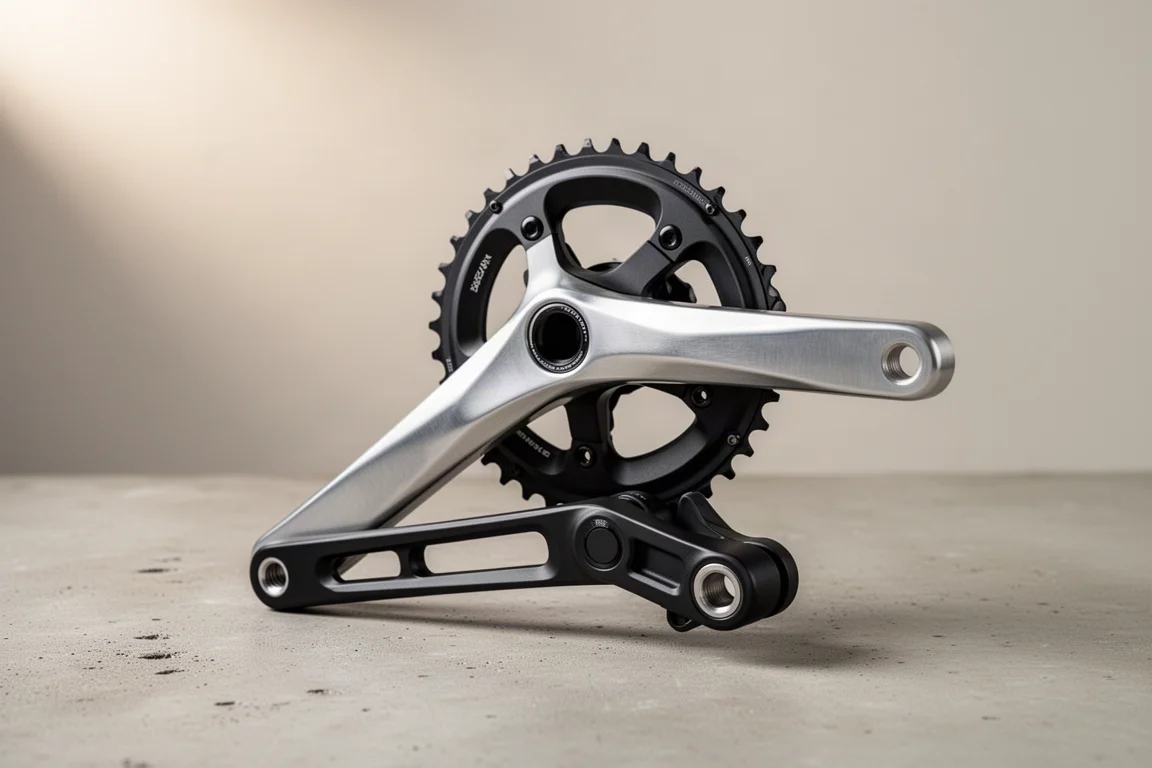
The Swing Crank takes a different route. A mechanical linkage lets the leg fully straighten at the bottom of the stroke without requiring it to bend past a comfortable limit at the top. The pedal follows a path that is the same at the bottom, preserving leg extension, but lower at the top, reducing knee flexion.
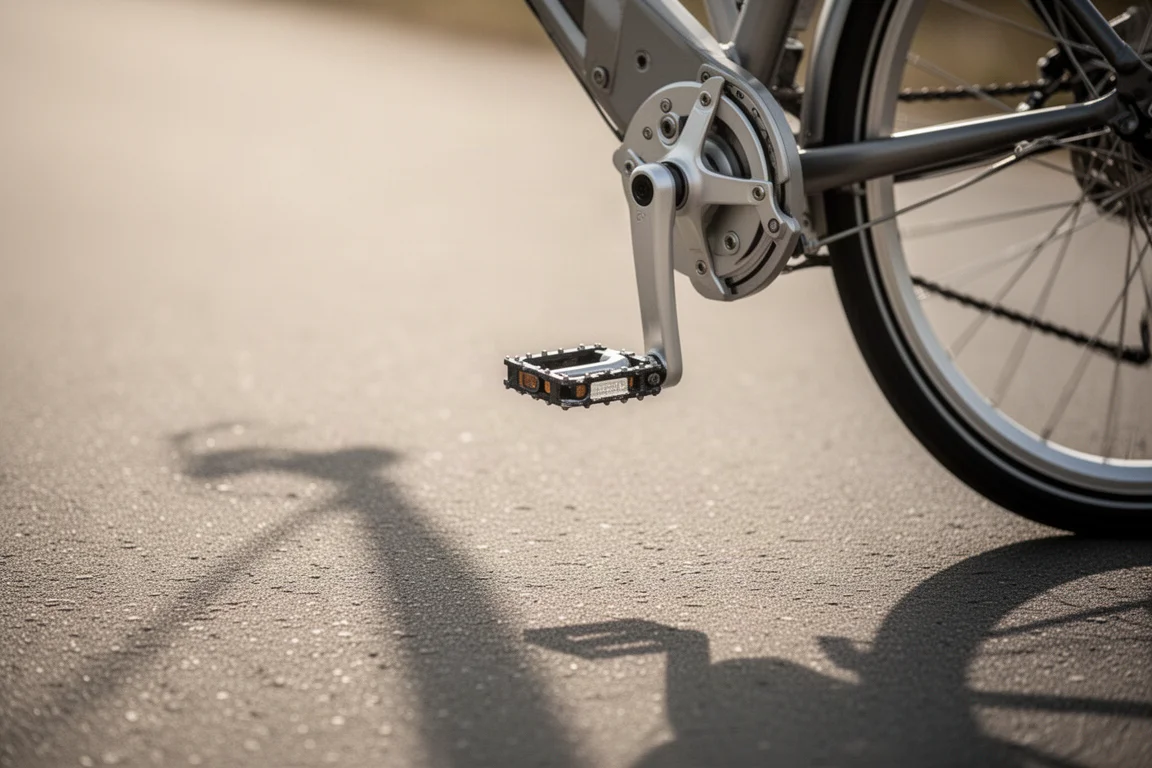
The system has two main parts working together. The crank shortener is a base plate that bolts onto your existing crank and provides a new pivot point. The swing arm then pivots on that shortener. Multiple thread positions let you tune how much the swing arm affects your pedaling circle.
One thing to plan for is stance, or Q factor. The system pushes your pedals further out from the bottom bracket, so if you want to stay symmetrical you will need to increase stance on the other side as well, using pedal extenders, cleat position, pedal washers, or a combination of the three.
What to Check Before You Buy
Compatibility is the first hurdle with every one of these products. A Pinion gearbox needs a frame designed around it. The Gravaa system uses its own hubs, which means building or rebuilding wheels around it. Easy Shift changes where the freewheel sits in the drivetrain, so it is not a straightforward retrofit either. Only the Swing Crank bolts onto a component you already own, and even then it changes your pedaling position.
Electronics and charging are worth factoring in. The Gravaa hubs need regular charging, with a claimed 40 active riding hours per charge, and that figure depends on how much you use the pressure adjustment.
Service and spares deserve honest thought. A sealed gearbox that fails goes back to the manufacturer rather than to a local mechanic, and with Gravaa having declared bankruptcy, long-term support for the pressure system is an open question. Buying into niche hardware always carries some risk on that front.
Weight and efficiency also matter. A gearbox adds weight compared with a derailleur system and is slightly less efficient than a clean, well-lubricated chain. If your priority is race-day speed on smooth roads, that trade is difficult to justify.
Finally, for the Swing Crank, budget time for the fit rather than just the purchase. Stance, cleat position, and pedal spacing all interact, and small adjustments make a large difference to comfort over a long ride.
Buying Advice: Matching the Technology to Your Riding
The right choice depends entirely on the problem you are trying to solve. If you want a drivetrain you barely have to think about, for commuting, touring, or bikepacking, the sealed Pinion gearbox is the most complete answer, provided you accept the cost, the weight, and the frame requirement. If your riding is downhill or enduro focused, and you regularly find yourself in terrain where pedaling is impossible, the Easy Shift crank solves a specific and real problem.
If you ride mixed surfaces and want to tune pressure as the ground changes under you, the Gravaa system addresses that directly, with the caveat that the company’s future is uncertain and support should be confirmed before you commit. And if limited knee flexion is what stands between you and comfortable riding, the Swing Crank is the one product here that can change what is possible rather than simply what is convenient.

None of these are impulse purchases, and none of them are for everyone. For the frame-dependent systems especially, it is worth speaking to a bike shop before spending, so you know what will fit and what will need changing around it.
Conclusion
What ties these four together is a willingness to rebuild familiar parts of a bicycle rather than refine them. A freewheel in a new place, gears sealed in oil, air added by the rotation of your own wheel, and a crank that pivots to suit a rider’s knee. Some of these ideas will stay specialist, and one of them may not survive its company’s troubles.
The most valuable of the four may also be the least glamorous. Being able to ride a bike can be genuinely life-changing, and a component designed around a rider’s physical limits is a reminder that innovation is not only about speed.
Further reading
Related Reviews
Cycling Tech
Best Cycling Tech: Nine Standout Products Worth Considering
Nine pieces of cycling kit that earned their place through long-term use, from a keenly priced World Tour race bike to a multi-tool that has survived two years of hard riding.
Cycling Tech
Best Pro Peloton Bikes and Components 2023: 8 Standout Upgrades
A roundup of the most technically interesting pro peloton bikes and components for 2023, from the Cannondale SuperSix EVO to Shimano Dura-Ace and Continental GP5000 S TR tires.
Cycling Tech
Bike Tech Roundup: Five Standout Upgrades Worth a Closer Look
A four-season tubeless tire, a featherweight climbing wheelset, a hangar-free drivetrain and two pairs of gravel shoes, assessed on the details that matter.