Cycling Tech
Bike Tech Roundup: Four Standout Upgrades for Road and Trail
Four recent cycling upgrades examined side by side, from a recycled UK-made stem and a CFD-shaped sunglass to an aero race bike and a crash-replacement carbon wheelset.
Introduction
This roundup gathers four very different pieces of cycling tech: a British-made mountain bike stem with a serious environmental story, an aero race bike making bold drag claims, a pair of sunglasses shaped in a virtual wind tunnel, and a carbon enduro wheelset that comes with free lifetime crash replacement. Each one targets a different kind of rider, and each one is worth understanding before you decide whether it belongs on your bike.
What We Looked For
The four products here have little in common on paper, so it helps to judge them against the things that actually matter to a buyer.
Materials and construction quality count most on components that take a beating. Environmental credentials are increasingly part of that picture, particularly where a brand can show how and where a part was made. Claimed performance gains matter too, but the strength of the evidence behind them varies widely, and it is worth knowing whether a number comes from a controlled test, a simulation, or the manufacturer’s own modelling.
Value is the final filter. A part can be beautifully made and still be hard to justify if the benefit is small or impossible to verify. The notes below flag where each product sits on that spectrum, and where the claims rest on the brand’s own testing rather than independent verification.
Pembree VFS Stem: Small Part, Serious Engineering
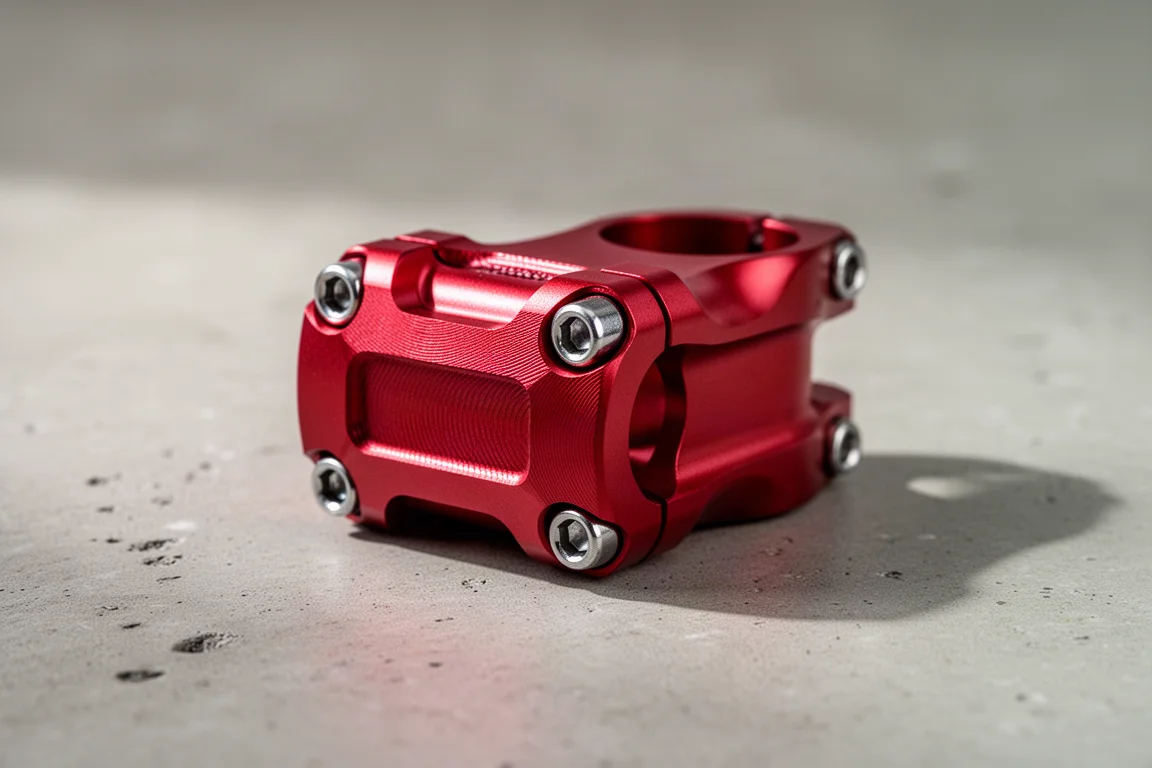
Pembree is an English company that makes its components in house from locally sourced materials, and it is unusually vocal about its environmental credentials. The VFS is its first stem, and the attention to detail is obvious. The Zero Gap face plate is precision machined to fine tolerances, which maximises stiffness and keeps clamping pressure even across the handlebar. Every bolt is made in the UK from stainless steel, and the stem itself is machined from UK-sourced aluminium with a minimum of 75 percent recycled content, which Pembree describes as making it the most environmentally friendly stem on the market.
Durability has not been sacrificed for the green story. The stem has passed international standard tests designed for downhill components, and it carries a five-year warranty. Despite that, it weighs just 148 grams. Pembree runs its facility in the south of England on green-certified Ecotricity and claims the stem is carbon neutral.
There are practical limits worth knowing. The VFS is only available in a 35mm length, which has become an industry standard for short stems, with a 35mm handlebar clamp diameter. At £109 or $132 it is not cheap, but it comes in red, silver, black, blue, bronze, orange, pink and purple, so there is a finish for most builds.
Ribble Ultra SL: Aero Claims Up Close
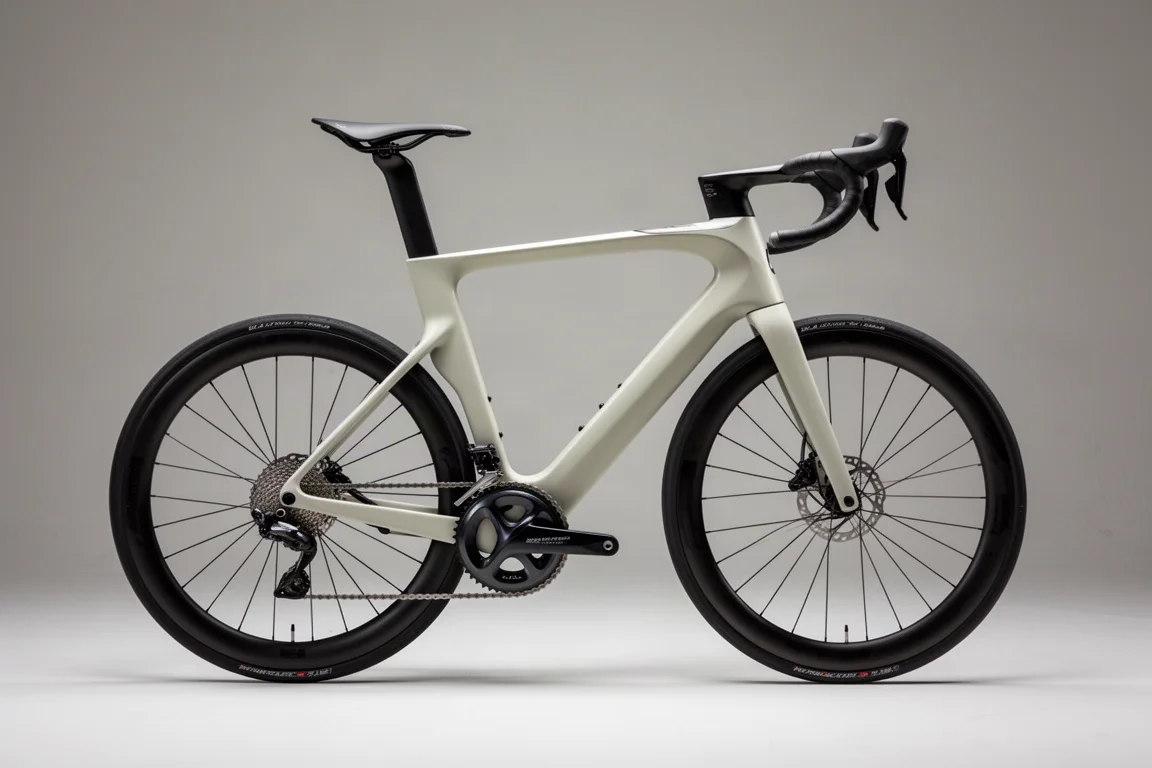
The Ultra SL is Ribble’s dedicated aero race platform, and it lands at a moment when dedicated aero race bikes are enjoying a revival, helped along by a UCI rule change that appears to favour designs like this. The integrated handlebar uses wake-generating bulges on the tops, which Ribble claims manipulate airflow over the rider to cut drag compared with a standard aero handlebar. The frame uses deep truncated aerofoil tubes, a narrow head tube and dropped seat stays, and the lower down tube flares out dramatically to manage airflow around a water bottle, on the assumption that most riders will carry at least one.
The fork is the most interesting detail. Ribble says it tested both narrow and wide fork designs and found that aligning the fork blades with the front wheel axle width was the optimum solution. The company claims the fork profile begins to create negative drag beyond five degrees of yaw, the point at which the bike feels like it is being pushed forward underneath you.
Ribble’s headline numbers are 11.6 watts saved at 22 miles per hour, averaged across five and ten degrees of yaw, which it says translates to 75.1 seconds saved over 40 kilometres. Those figures come from the manufacturer, so treat them as a starting point rather than a settled result.

Riders shopping at this level are usually weighing aero performance against ride quality, fit and the rest of the build. The Ultra SL is aimed squarely at racers and fast group riders who place aero efficiency near the top of that list.
POC Propel Aero Sunglasses: CFD Meets Eyewear
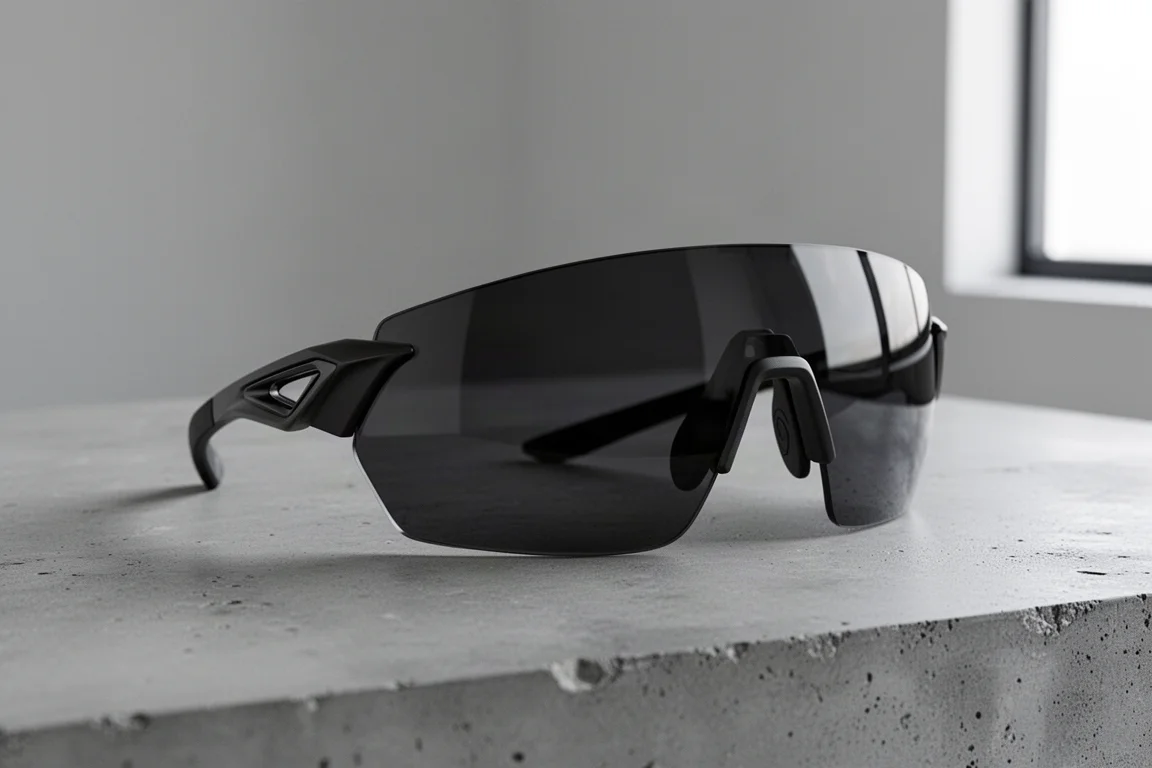
POC’s Propel Aero is the Swedish brand’s most aerodynamic cycling sunglass to date, developed using computational fluid dynamics modelling, in effect a virtual wind tunnel. The design pairs a wraparound lens with side fairings intended to divert airflow more smoothly around the rider’s ears and shoulders.
POC describes the gains as low single figure watt savings at 40 kilometres per hour, adding that the exact figure will vary with the rider and their position on the bike. Two caveats are worth keeping in mind. The comparison was made only against other models in POC’s own range, not against sunglasses from rival brands, and the aerodynamic claims rest solely on the brand’s CFD modelling. POC says it did not confirm the results with wind tunnel or track testing because glasses are too small an object to test reliably outside simulation. The company points to its experience developing other aero products, including the Tempor time trial helmet, as evidence that CFD results translate into real world riding.
At £230, €249 or $250 the Propel Aero is a premium purchase, though a spare clear lens is included as standard and the frame comes in a range of colours. For a racer who already wears sunglasses on every ride, an aerodynamically optimised pair is a defensible choice. For everyone else, the gains are small and unverified, and a cheaper pair will do the same job.
Hunt Proven Carbon Race Enduro Wheels: Built To Take A Pounding
Hunt’s Proven range is a new line of carbon mountain bike wheels developed with feedback from team riders Chloe Taylor, Fergus Ryan and Isla Short. The range covers the hard-hitting Carbon Race Enduro wheels covered here and the lighter Featherlite Carbon Race XC.
The Carbon Race Enduro is designed to survive real punishment, and Hunt backs it with its H Care programme at the £899 price. That includes free lifetime crash replacement for the first owner, provided the wheels are used with single crown forks, which makes the price considerably easier to justify for anyone riding hard.
Hunt claims the wheels offer excellent impact resistance and outstanding trail damping. The carbon layup is tuned differently front and rear: the front wheel prioritises comfort and steering precision, while the rear places strength and durability first.
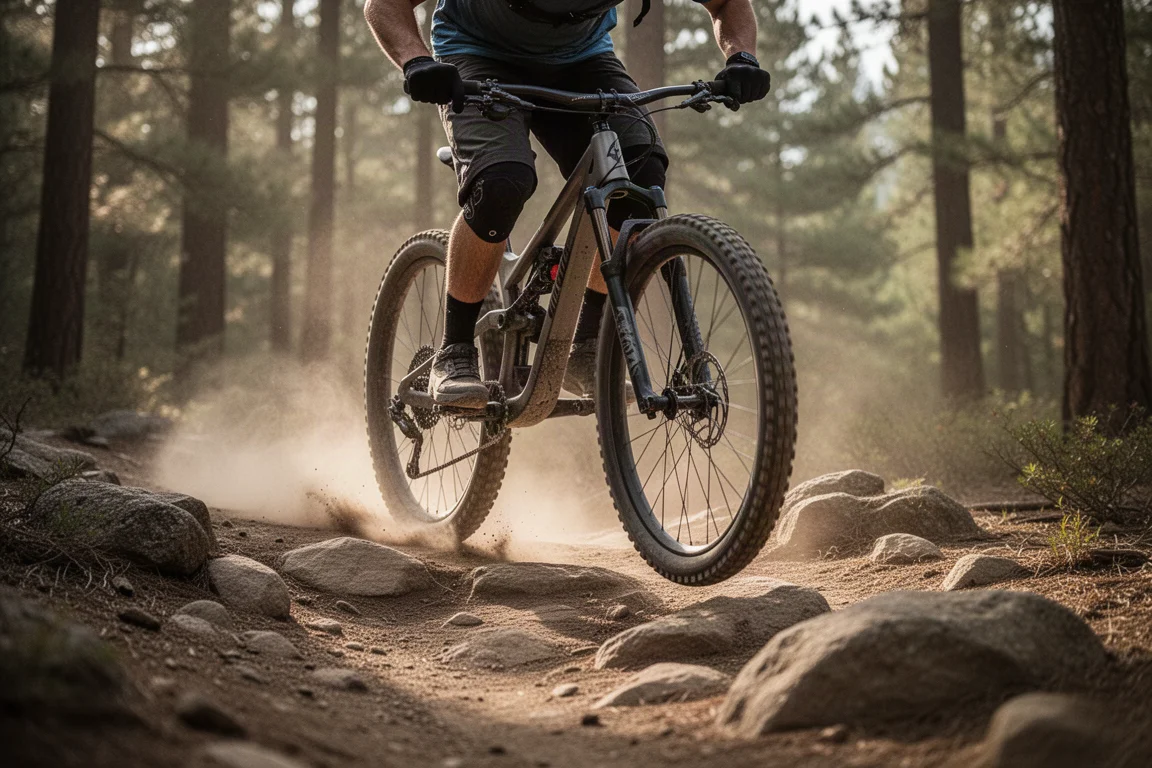
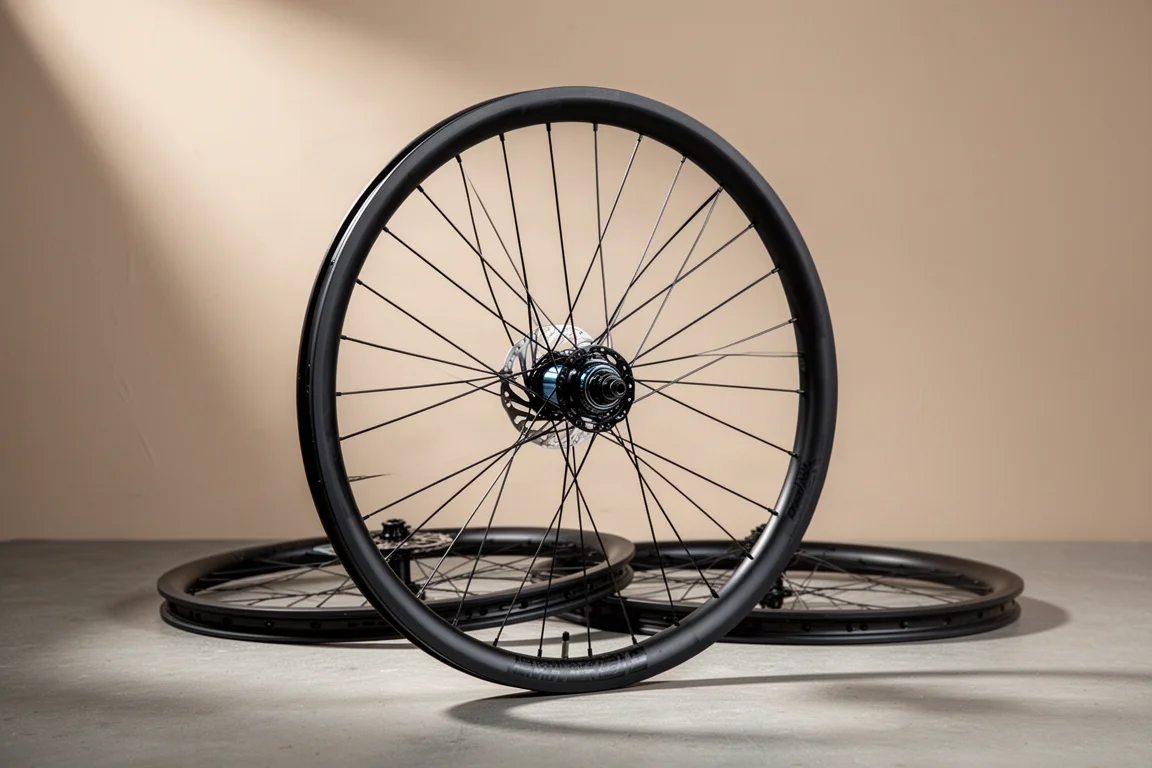
The rims use a 30mm internal width, on trend for wide enduro tyres, with a 23mm depth that should balance compliance and strength. They are laced to Hunt’s own large-body hubs with triple-butted Pillar spokes and oversized 17mm axles. The rear hub uses a rapid engagement system with five degrees of engagement and a notably loud freehub sound that will divide opinion on the trail. Our set came with a SRAM XD hub body, and Shimano Micro Spline or the older HG interface are also available.
The wheels arrive pre-taped with valves included for a tubeless setup. Hunt claims 1,929 grams for a 29 inch set, and they are also offered in a mullet configuration or a full 27.5 build.
Matching The Upgrade To Your Riding
For trail and enduro riders, the Hunt wheelset is the most straightforward pick of the four, because the crash replacement programme and the durability claims line up with how those bikes are actually used. The Pembree stem suits riders who want a short, tough stem and care about where their components come from, though the single 35mm length will not suit every cockpit.
On the road side, the Ribble Ultra SL is aimed at racers chasing every watt, provided the manufacturer’s claimed savings hold up in the real world. The POC Propel Aero is a smaller, more personal upgrade, best suited to riders who already treat eyewear as part of their race kit.
Buying Advice
Spending decisions here come down to how much weight you place on evidence. The Pembree stem and the Hunt wheels make claims that are easy to understand and, in Hunt’s case, backed by a concrete ownership benefit. The Ribble and POC products lean on manufacturer testing and simulation, which does not make the numbers wrong, but it does mean the gains are likely to be modest and difficult to confirm from the saddle.
If you are upgrading one thing at a time, start with the component that solves a problem you actually have. A wheelset that survives crashes and a stem built to downhill standards are practical answers. Aero gains measured in single figure watts are a refinement, and they make most sense once the fundamentals of your bike are already sorted.
Conclusion
Four very different products, and four different reasons to consider them. The Pembree VFS pairs recycled UK aluminium and downhill-grade testing with a genuinely low weight, which makes it an easy recommendation for riders who want a short stem built to last. The Hunt Proven Carbon Race Enduro wheels carry the strongest ownership proposition of the group thanks to the included lifetime crash replacement. The Ribble Ultra SL and the POC Propel Aero sit at the other end of the spectrum, where the appeal depends on how much you value small, manufacturer-measured aero gains. Choose according to the riding you do, and check that each detail fits your bike before you commit.
Further reading
Related Reviews
Cycling Tech
Best Cycling Tech: Nine Standout Products Worth Considering
Nine pieces of cycling kit that earned their place through long-term use, from a keenly priced World Tour race bike to a multi-tool that has survived two years of hard riding.
Cycling Tech
Best Pro Peloton Bikes and Components 2023: 8 Standout Upgrades
A roundup of the most technically interesting pro peloton bikes and components for 2023, from the Cannondale SuperSix EVO to Shimano Dura-Ace and Continental GP5000 S TR tires.
Cycling Tech
Bike Tech Roundup: Five Standout Upgrades Worth a Closer Look
A four-season tubeless tire, a featherweight climbing wheelset, a hangar-free drivetrain and two pairs of gravel shoes, assessed on the details that matter.