Workwear
Best Work Shirts for Logging, Construction, and Fabrication: Three Options Compared
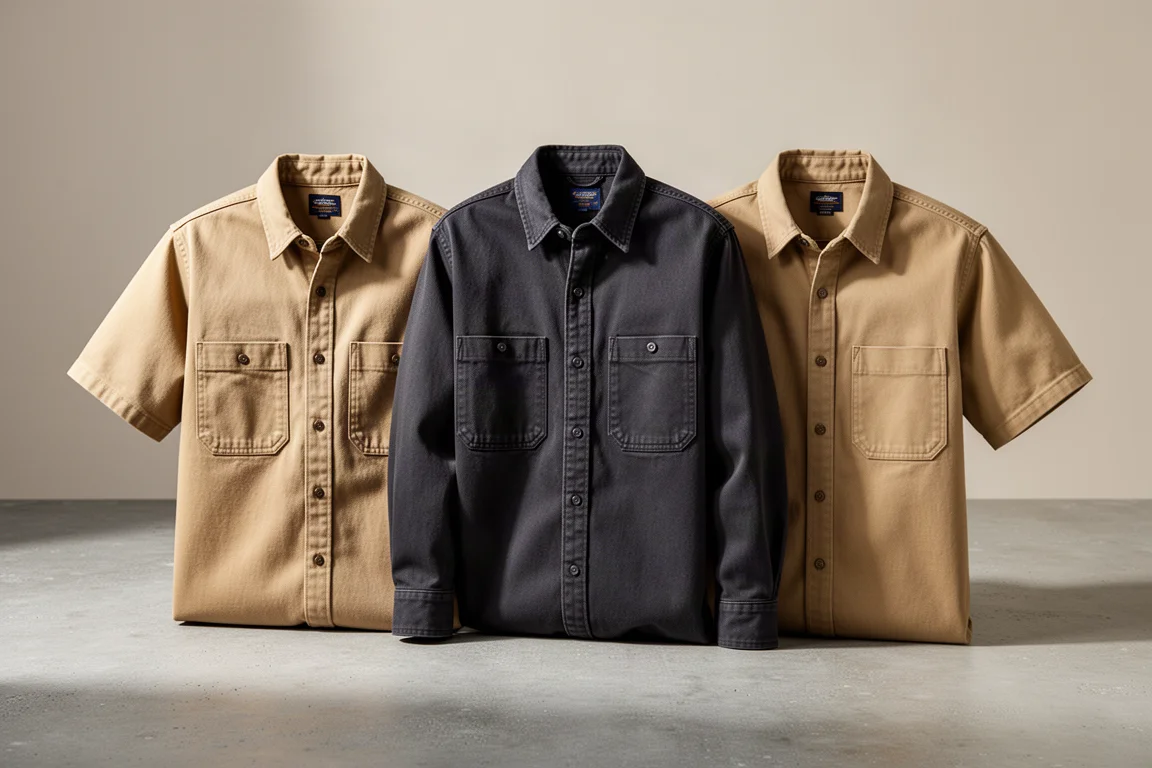
Three work shirts from a lifetime of trades work: a heavyweight hickory shirt, a high-cotton Carhartt shirt, and a consistent khaki value shirt from Red Kap.
Introduction
After decades spent logging, building, working concrete, fabricating, blacksmithing, and guiding hunters, one lesson stands out: there is no single best work shirt. There is only the shirt that provides the value and the service you need for what you do day in and day out. This comparison walks through three shirts that came out of that long search, each suited to a different trade and stage of working life.
The shirts covered here are the Key hickory shirt, the Carhartt high-cotton work shirt, and the Red Kap khaki work shirt. Each has clear strengths, and each has trade-offs worth understanding before you buy.

The Hickory Shirt Tradition: Key Hickory Shirt
Hickory shirts are the traditional uniform of southern Oregon loggers: heavy cotton twill, double front logger dungarees, suspenders, and cork boots. It is a look, and it is practical. Key makes a strong example of the style, and Key products generally hold up well in daily wear.
A hickory shirt uses about as heavy a cotton twill as you can buy. It fits well, feels substantial, and stays cool in summer because the fabric absorbs sweat and lets it evaporate. Most importantly, it takes a pounding: slow to rip and slow to wear through. That durability is why it has remained a favorite even after moving on to other shirts for daily work.
Why Cotton Matters Around Fire
One hard lesson came from welding under a low camp trailer, sparks and spatter landing on a roughly 50/50 polyester-cotton shirt. Synthetics catch fire and keep burning. That shirt ignited while finishing a bead, and the result was a painful burn and a permanent rule: if you work around fire, you do not wear flammable clothing.
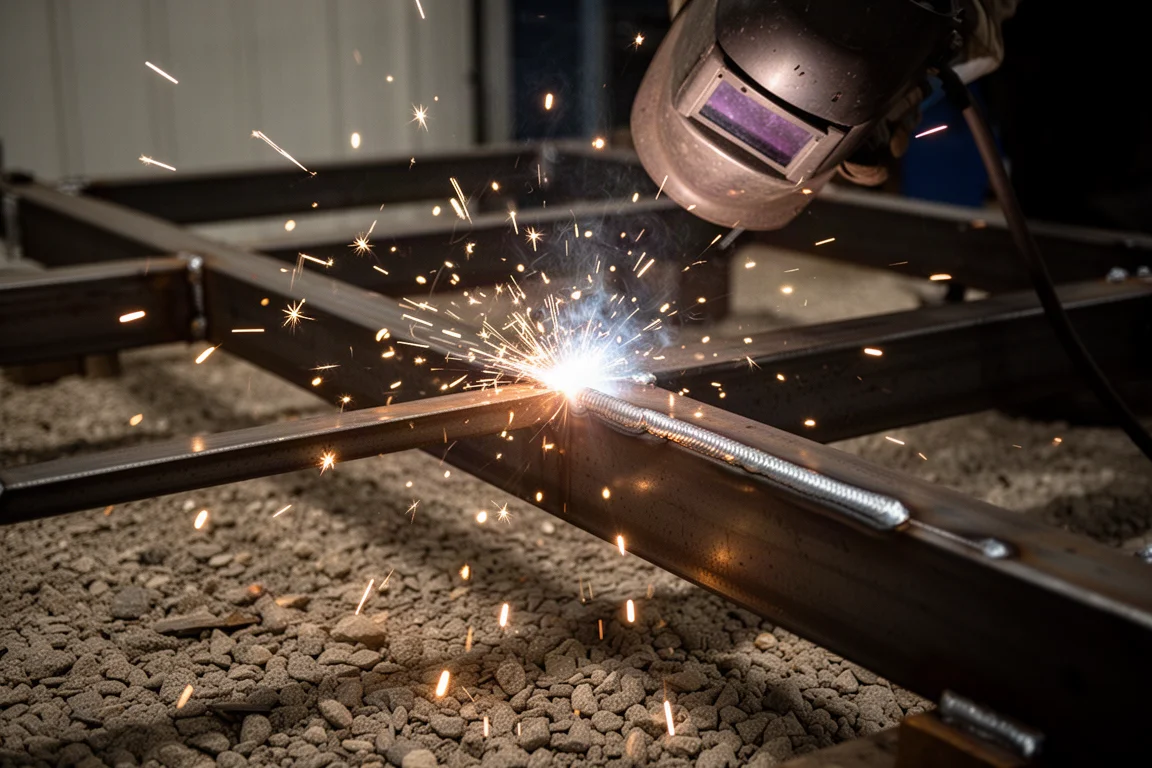
The takeaway is simple. Choose 100 percent cotton, or nearly so, for any welding, fabrication, or blacksmithing work. Cotton smolders rather than burning, which gives you time to put it out. Every shirt in this comparison is high-cotton for exactly that reason.
Carhartt Work Shirt: Strong Cotton, Worn Collars
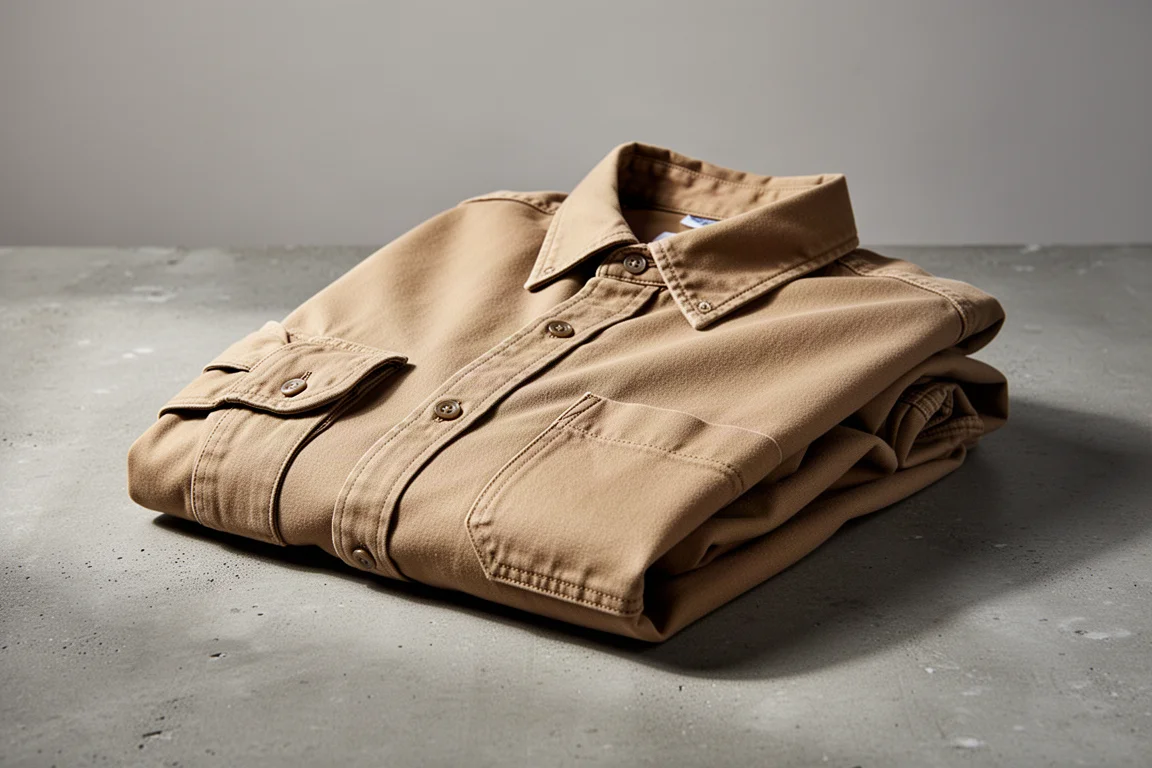
The Carhartt work shirt is 98 percent cotton and, back when the brand still focused on working people, it was a great shirt. The fabric is heavy enough for demanding trades and safe around welding spatter.
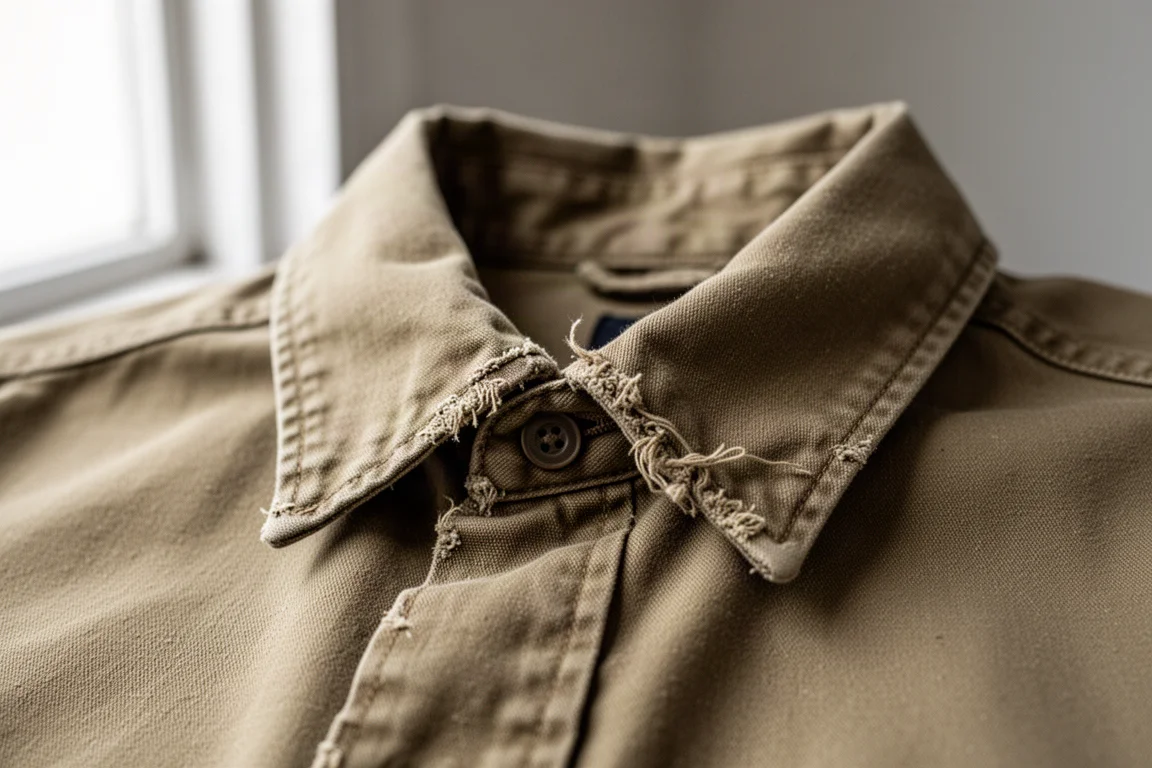
The persistent problem is durability at the collar. The cotton wears through noticeably faster than on other high-percentage-cotton shirts, and once the collar goes, a $50 shirt becomes a throwaway. Some wear marks are fine, but a prematurely worn-out collar is what eventually pushed this brand off the rotation.
Red Kap Work Shirt: The Settled-On Choice
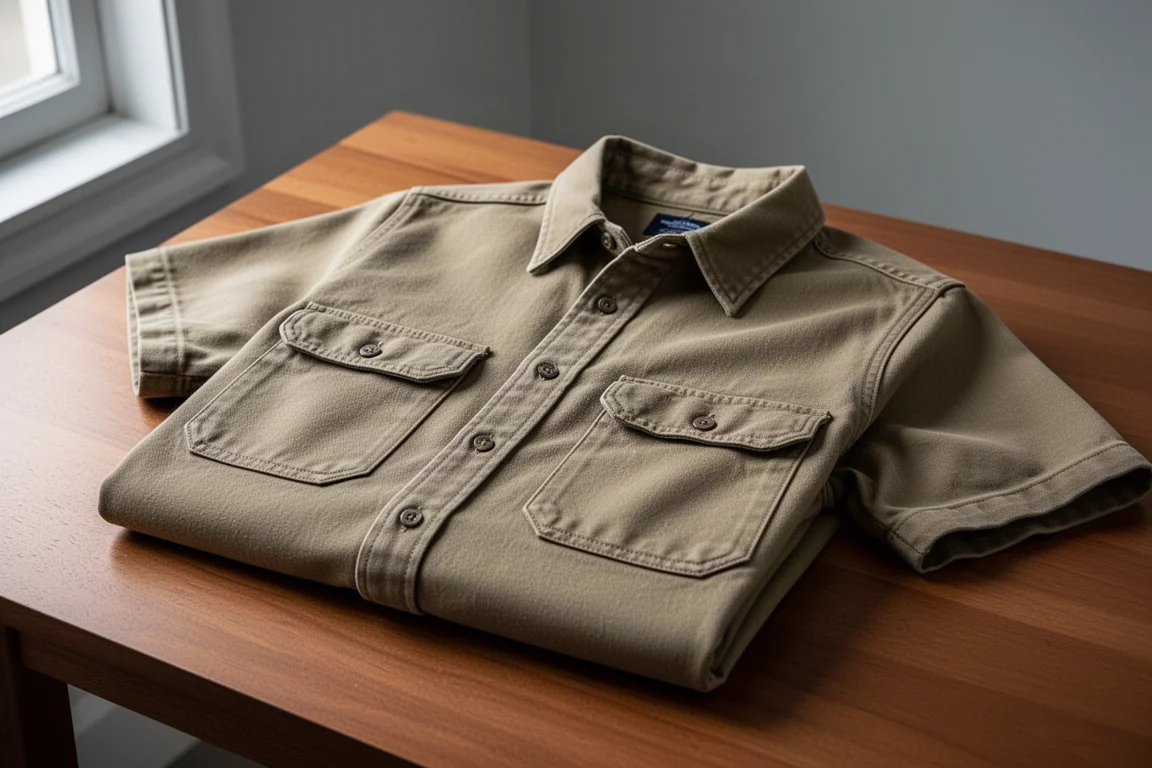
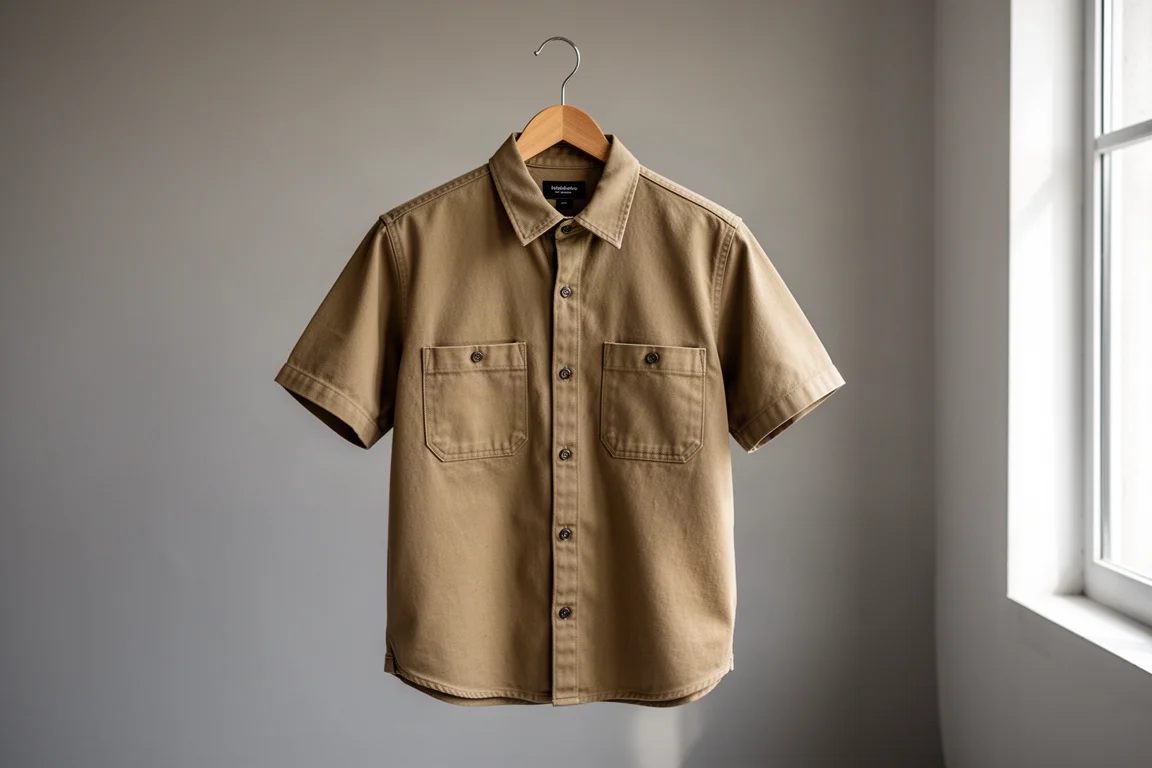
For the last few years, the Red Kap khaki work shirt has been the one worn every day. Ordered repeatedly, they are consistent: heavy material, high cotton content, buttons that stay on, and buttonholes that line up. Made in Honduras, not China, and priced as a genuine value.
Like any cotton shirt, the collar will eventually wear through, but it is in no hurry to do so. The one requested improvement would be a row of stitching around the collar to extend its life. Until something better appears, this is the uniform shirt: heavy, cotton, khaki, tough enough for abuse, and presentable enough to look professional. If you know a better shirt at higher cost, it would have to beat that combination.
The Value of a Uniform
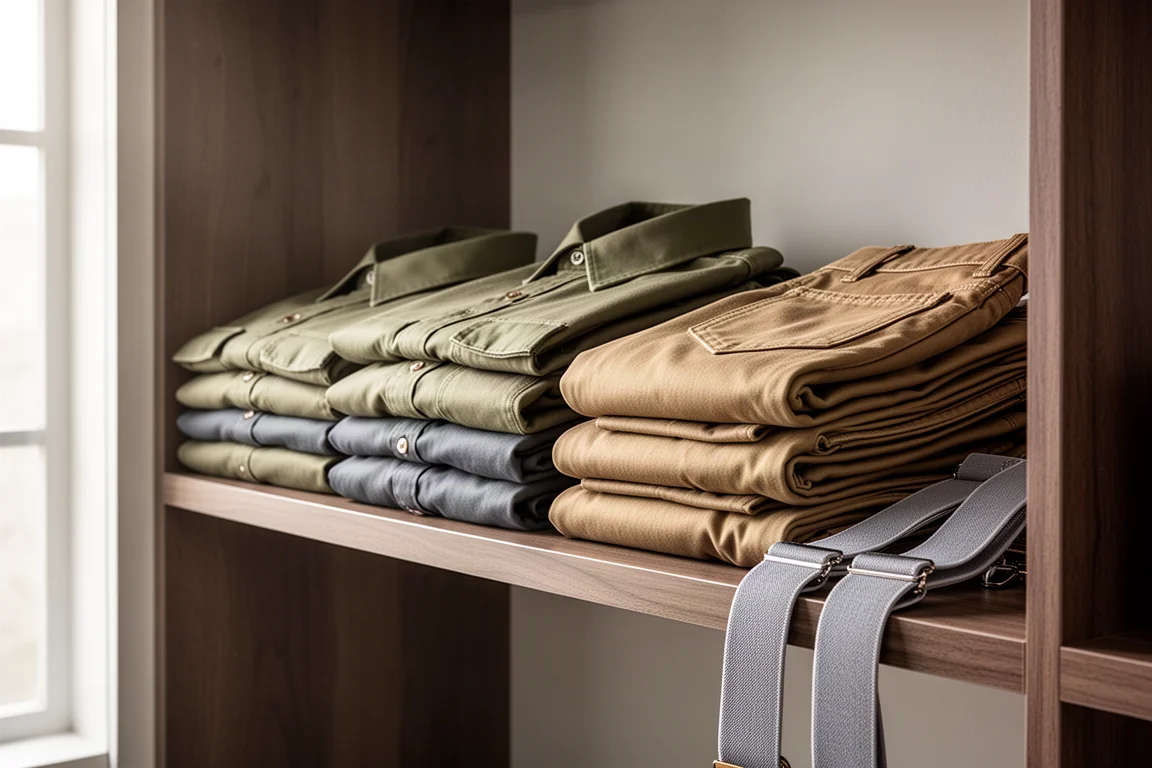
The real point of locking down on a shirt is peace of mind. There is a khaki shirt, double front logger dungarees, suspenders, and a dependable pair of work boots. No deciding what to wear in the morning, no hunting through stores, no exhausting choice fatigue. Selection takes energy, and a settled uniform gives some of it back.
It also changes how you shop. Local department store shirts work in a pinch, but ordering online means you often cannot judge the quality until it arrives. A consistent, repeatable supply matters when a shirt becomes part of your working uniform.
Buying Advice
Choose based on your trade and season. For logging or heavy brush work in summer heat, the Key hickory shirt is hard to beat. For welding, fabrication, or blacksmithing, prioritize high cotton content in any shirt you buy, which both the Carhartt and Red Kap satisfy. If you want one reliable everyday shirt you can reorder without thinking, the Red Kap is the strongest value pick of the three.
View more details for Red Kap Work Shirt
Conclusion
A work shirt is not about vanity or penny pinching. It is about having a uniform that fits the job: heavy enough to take abuse, cotton for safety around fire, and consistent enough to reorder for years. The Key hickory shirt earns its place in the woods, the Carhartt remains a capable cotton shirt with a collar weakness, and the Red Kap khaki shirt is the settled, sensible choice for daily work.
Further reading
Related Reviews
Workwear
1620 Workwear Foundation Series Work Pants: Built Like Armor, Priced Like It Too
Heavy-duty waterproof work pants made in the USA with a tailored fit, thick Cordura-blend fabric, and a few trade-offs worth knowing before you spend around $140.
Workwear
Bamal FR Flame Resistant Shirts and Pants: Fire, Tear, and Water Resistance in One Kit
A hands-on look at Bamal FR's treated cotton workwear, which combines flame resistance with water and tear resistance, plus sizing notes worth knowing before you buy.
Workwear
Brunt Workwear Picks: Three Pieces Worth Considering in 2026
The Marin, the Omen, and McKenna workwear: three Brunt products that hold up to hard use, plus what to know before buying.