Travel EDC
Why a Compact Flashlight Is the Most Underrated Travel Accessory: 5 Picks Worth Considering
Hands-free lighting, blackout backup, and peace of mind: five compact USB-C flashlights that earn their place in any travel kit.
Introduction
When most people pack for a trip, they think of adapters, power banks, and headphones. After nearly 250 flights spanning industrial settings, active combat zones, and leisure destinations from hot and humid to below-zero climates, one item stands out as the most underrated travel accessory of all: a simple dedicated flashlight.
Every phone has a built-in light, so the question is fair. But the three use cases below, ranging from minor nuisances to genuine emergencies, are ones a phone’s flashlight simply cannot handle well. This guide covers five compact picks that map to those use cases, plus the features worth prioritizing before you buy.
Use Case 1: Hands-Free Illumination
The first use case is about lighting without holding anything. Hiking on evenings, riding bike-share bicycles through a city at night, or changing a flat tire on a rental car in the dark: holding a phone as your light source turns every one of these into a juggling act. A compact flashlight clips to the brim of a cap and points the beam wherever you look, freeing both hands entirely.
For hands-free use, the key features are a compact size and, more critically, either an upward-firing beam or a double-sided clip that lets the light attach to a cap brim.
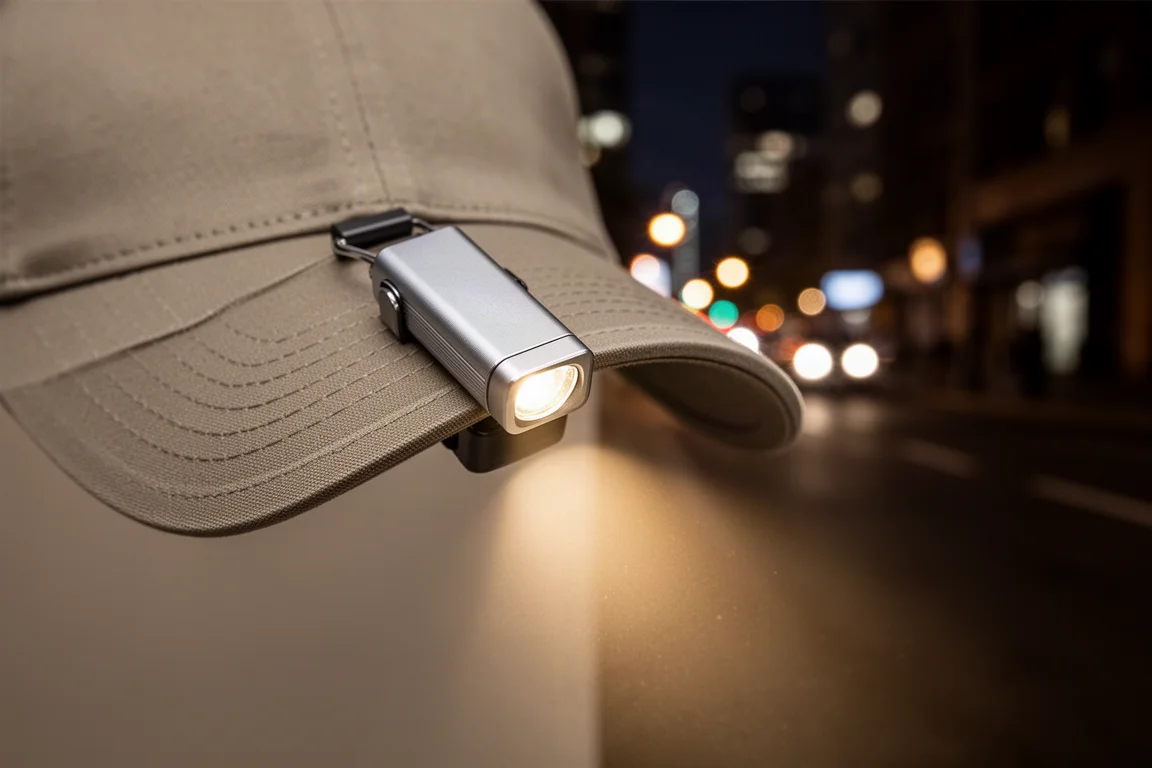
The Rovyvon E3S and E4S both offer that double-sided clip, making them easy to mount on a cap so the light follows your line of sight. Either works well for riders and hikers who want light where they are looking, not where their hand happens to point.
Use Case 2: Power Outages and Multi-Level Output
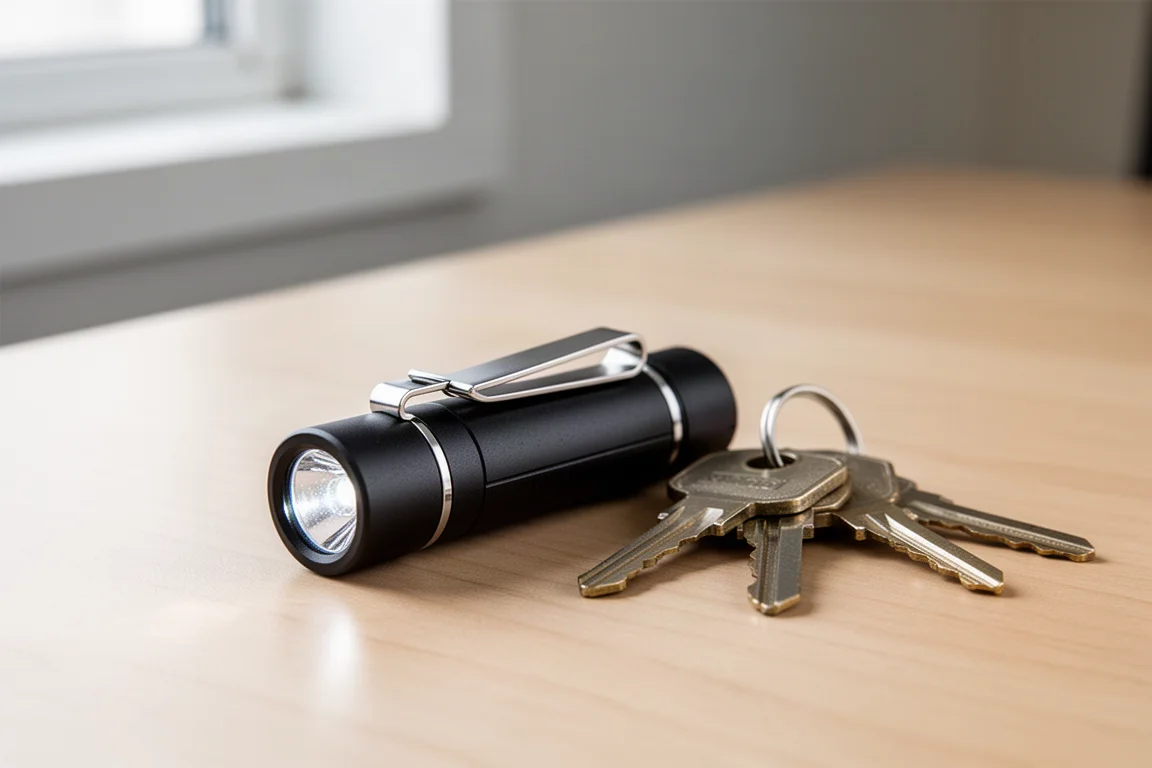
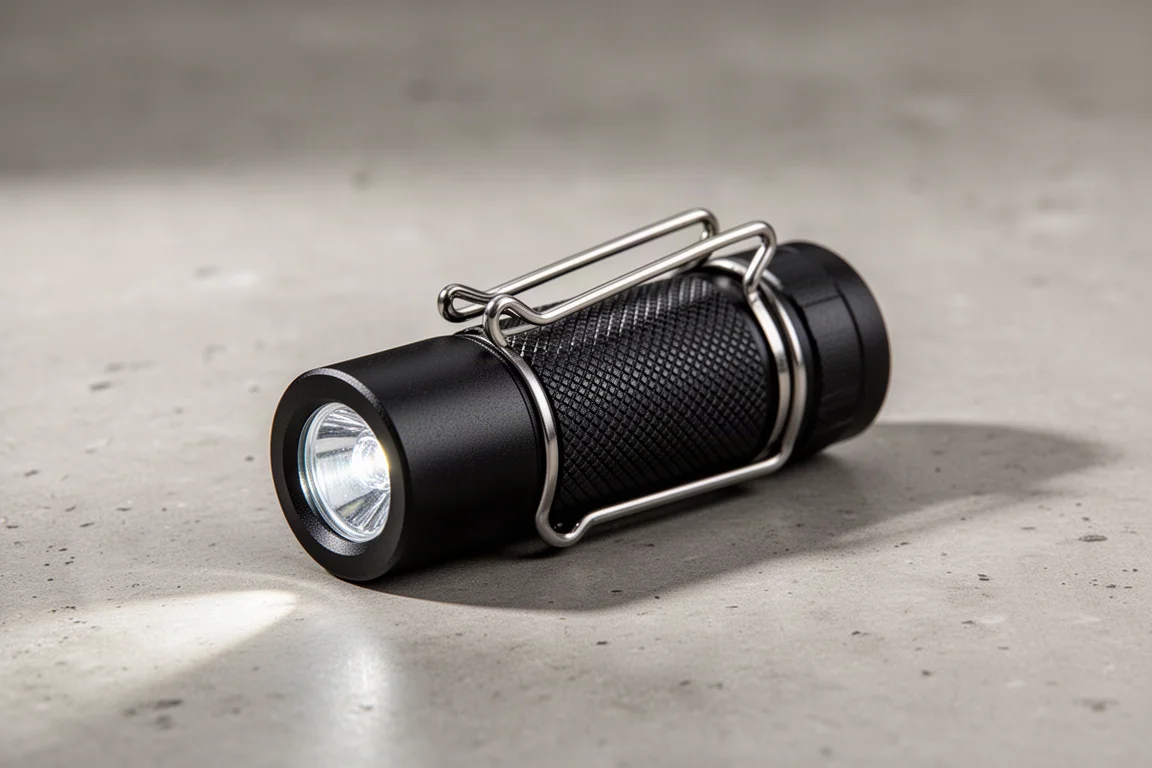
Unlike a phone’s light, most dedicated flashlights offer multiple output levels, and that flexibility matters most during a power outage. For context, the flashlight on modern iPhones outputs about 50 lumens. A capable travel torch can offer a gentle 1-lumen moonlight mode, practical mid levels around 15, 65, and 200 lumens, and a shockingly bright 4,000-lumen short-burst turbo mode.
Power outages can happen anywhere. The classic trick: stand the torch in a cup, aim it at the ceiling, and shove a sock in to keep it pointed up. Even at just 65 lumens, that upward bounce off a white ceiling can make an entire room fully functional for hours, while your phone stays free for checking updates or contacting people instead of serving as the light source.
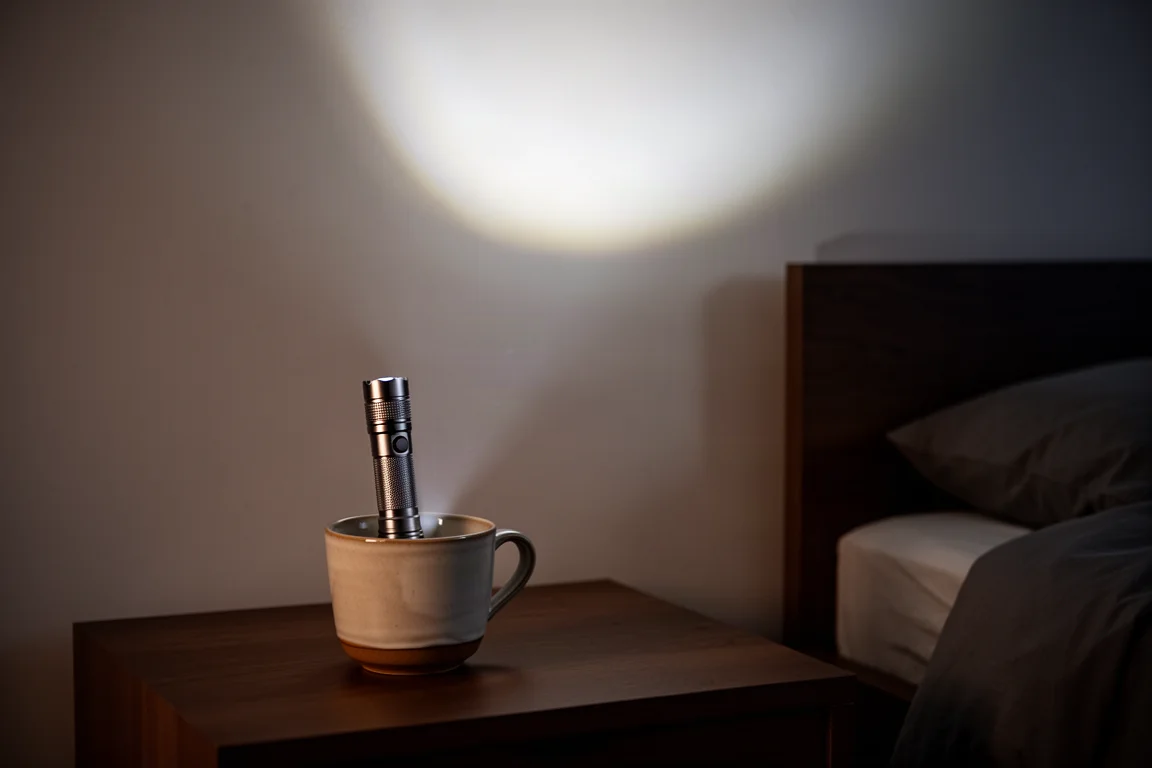
A 1-lumen moonlight mode may sound pointless, but for travel it is quietly brilliant. Need to dig through your backpack at night without drawing attention? Moonlight lets you search confidently without sticking out like a target.
Beyond output levels, look for a reliable way to see remaining power so you can use or ration it with confidence. The Nitecore T4K has a small display that shows remaining runtime down to the second at any given output level, which makes rationing remarkably easy.
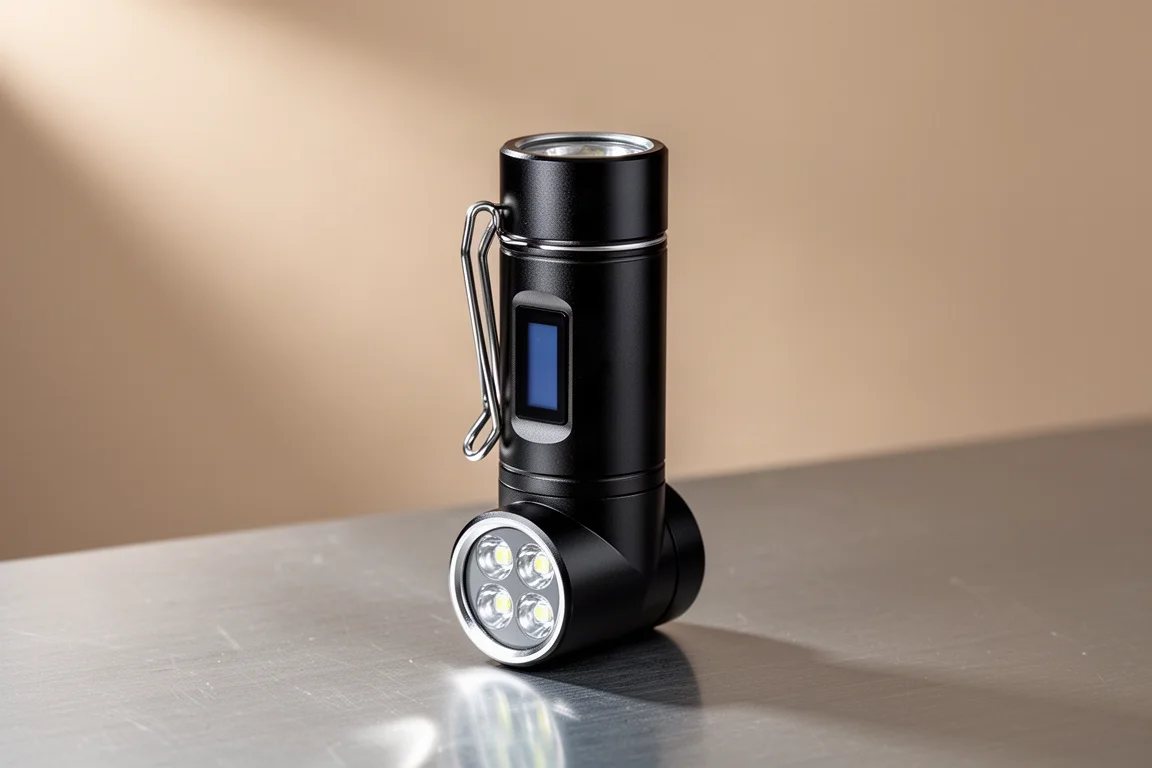
The Nitecore EDC33 takes a simpler approach with power bar LEDs on the side, a quick visual check of remaining charge. Both approaches work; the right one depends on how precisely you like to track your runtime.
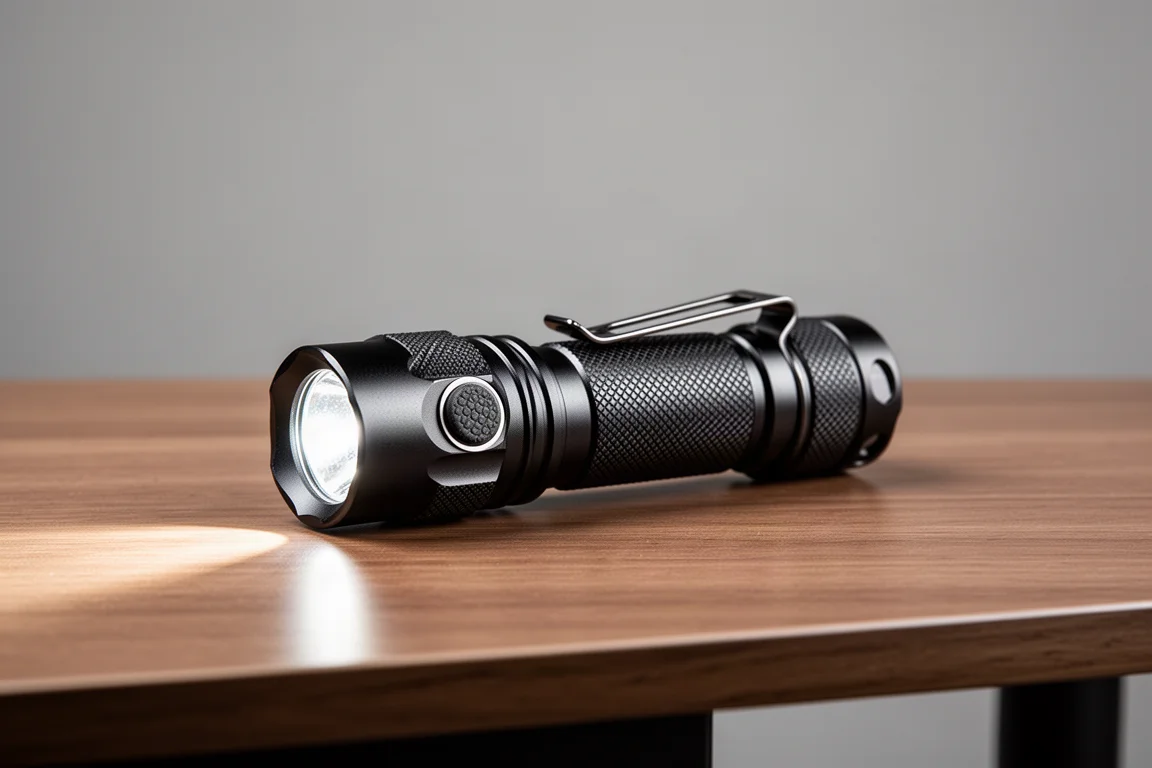
Use Case 3: Self-Defense Confidence
The third use case is the most serious. No matter how well trained you are, engaging in a physical altercation while traveling is one of the riskiest things anyone can do. Local laws are unfamiliar, and even a situation you “win” can end with injuries or legal trouble in a country where you cannot communicate effectively.
A high-output flashlight, by contrast, is arguably the most effective self-defense tool that carries essentially zero risk of criminal charges abroad. A 1,000-lumen blast at night is enough to disorient, and an additional strobe mode adds even more attention-grabbing, blinding disruption, like the one found on the Rovyvon P20.
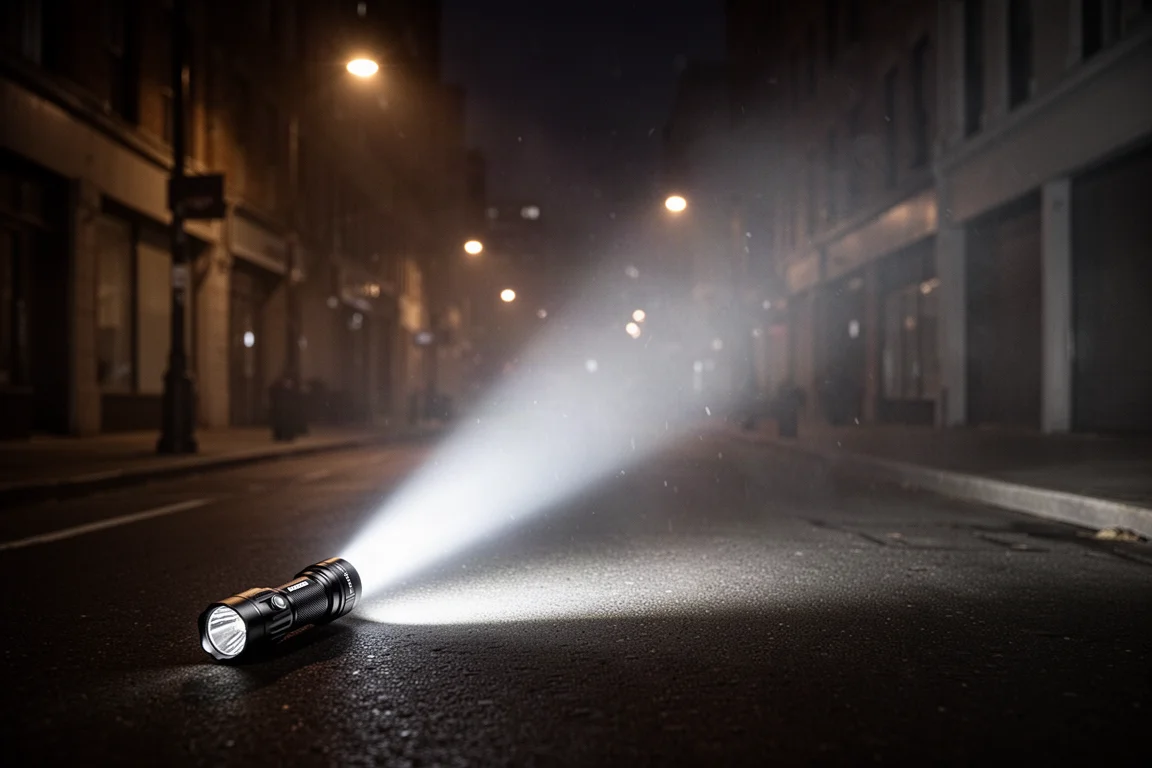
This is not meant to scare anyone. Statistically, most travelers never face a physical attack. But for solo travelers, and especially solo female travelers, a high-output torch in a back pocket is a genuine comfort that no weapon-related legal risk carries.
If self-defense is part of your reasoning, practice matters. Know how to activate turbo mode without looking, by touch, from a pocket. Know exactly where the torch is, avoid fumbling through other items to find it, and rehearse the button press until it is muscle memory. Adrenaline is real, and so is preparation.
The Full Roundup at a Glance
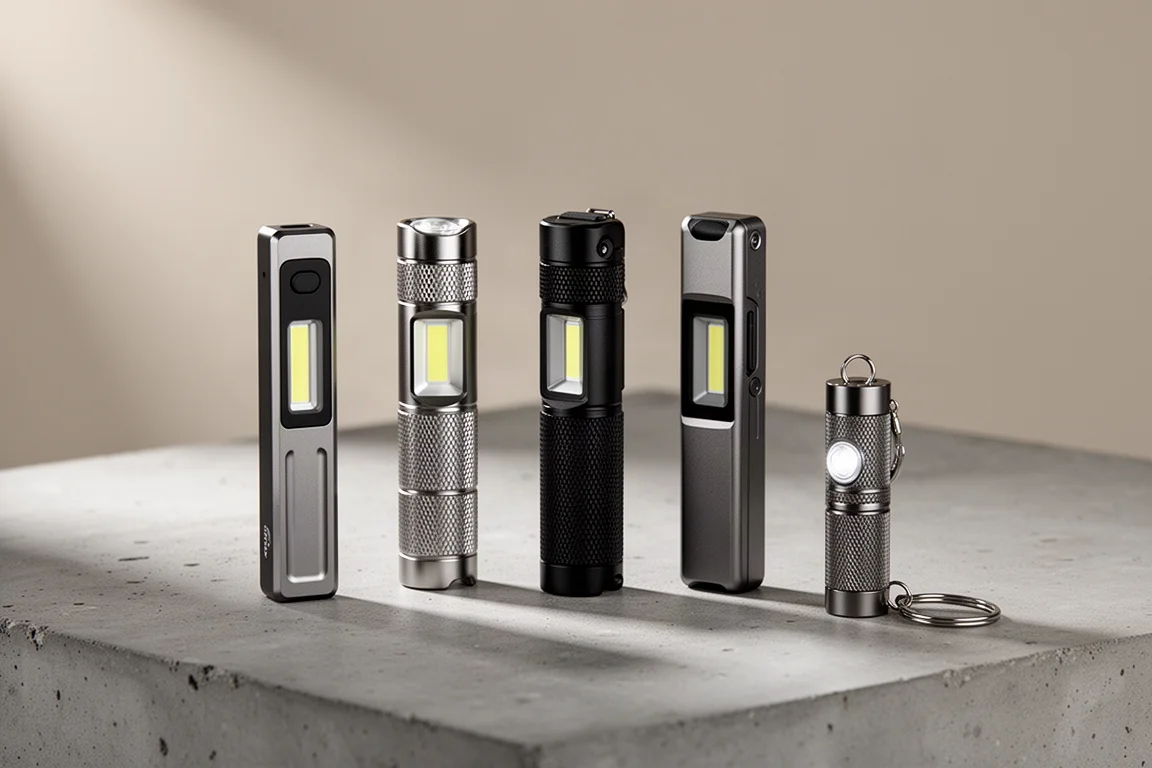
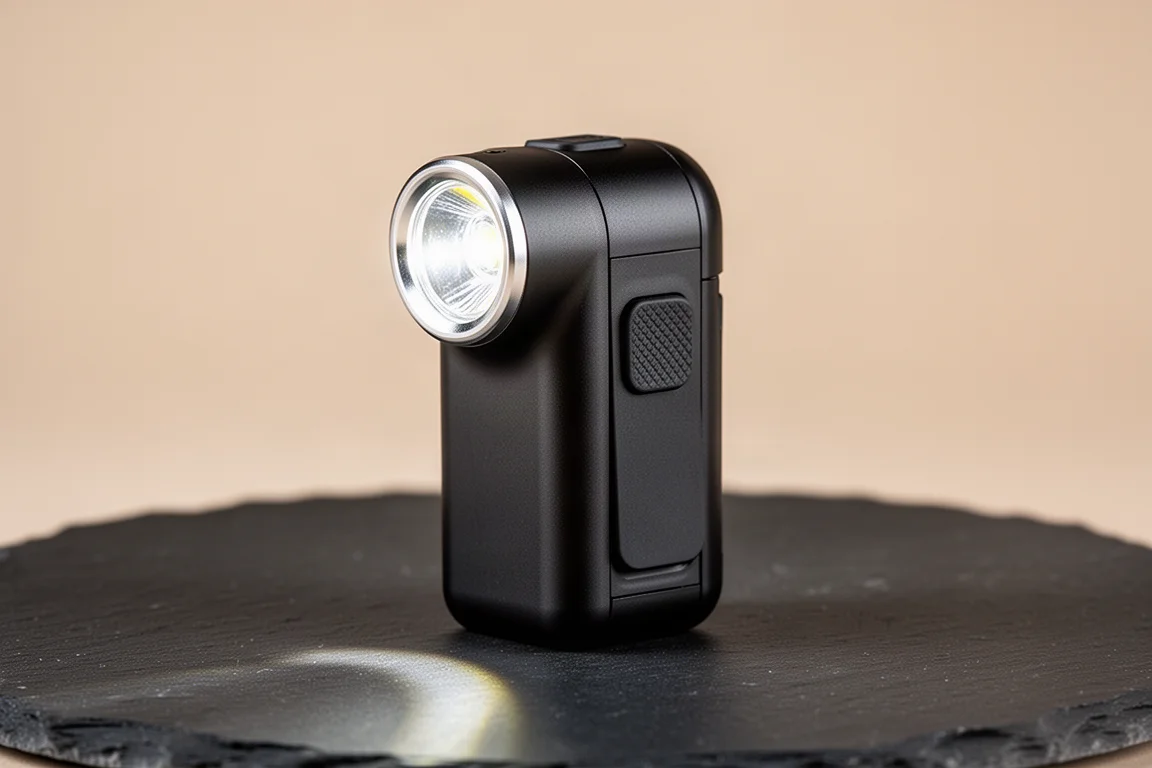
Each of these five picks maps cleanly to a specific travel need. The Rovyvon E3S and E4S excel at hands-free cap-brim lighting thanks to their double-sided clips. The Nitecore T4K is the precision pick with its second-by-second runtime display and five output levels. The Nitecore EDC33 offers straightforward power bar LEDs for quick charge checks. The Rovyvon P20 brings a strobe mode for those who want maximum disorientation capability in a self-defense scenario.
No single pick is objectively best; the right choice depends on which of the three use cases matters most for the way you travel.
Buying Advice: Charging and Runtime Awareness
One specification deserves special attention for travel: charging. Some flashlight brands rely on proprietary magnetic charging discs, which quietly disqualify them as travel torches. The picks in this guide use USB Type-C instead, meaning one single Thunderbolt cable can charge a laptop, cameras, microphones, a power bank, and the flashlight alike. For anyone consolidating their travel loadout, that shared-cable convenience is worth more than any spec sheet number.
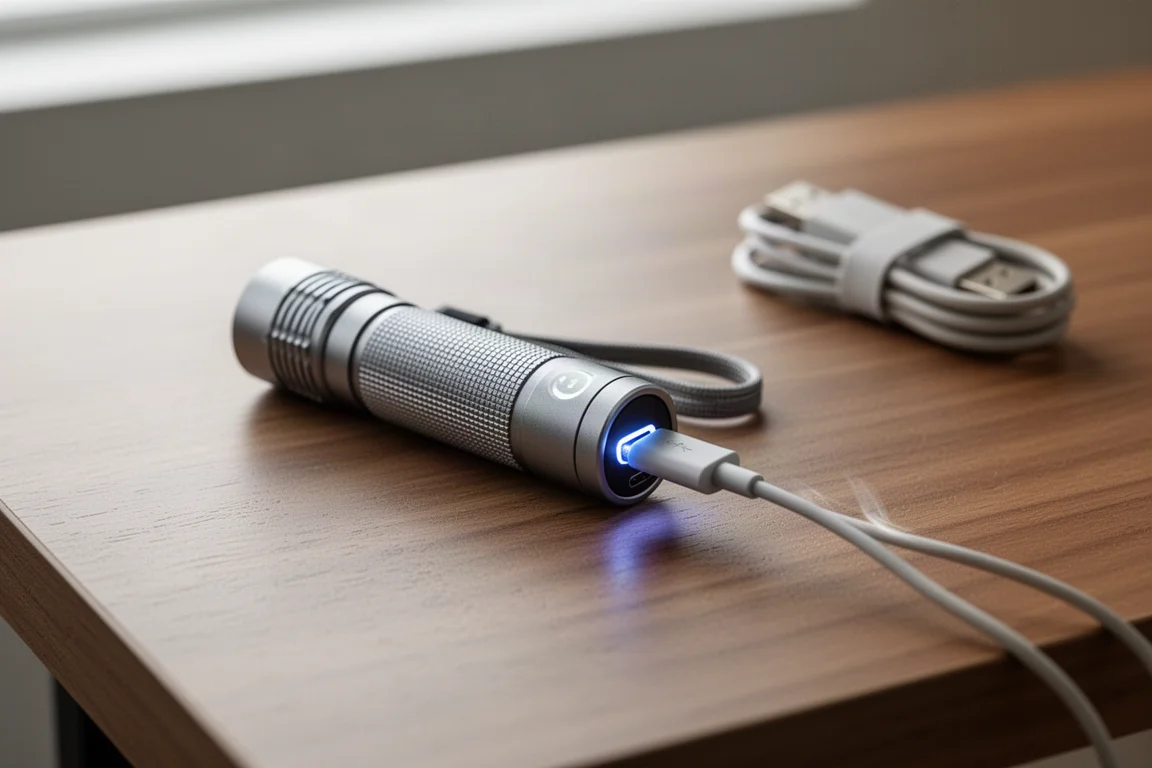
Before committing to any torch, also confirm how remaining charge is displayed, whether through a screen, power bar LEDs, or in one case a spare AAA battery slot as a backup when the built-in lithium battery dies. AAA batteries are typically available at 24-hour convenience stores everywhere, which is a reassuring redundancy for longer trips off the beaten path.
Conclusion
Beyond the three headline use cases, a capable compact flashlight earns its keep in smaller ways too: an extra light source for night photos, reading menus and bills in dark lounges, and countless minor moments in between. A dedicated flashlight may not be glamorous, but it is one of the most practical, low-risk, high-value additions to any travel kit. Choose based on the use case you will actually encounter, prioritize USB-C charging, and practice the button by touch before you go.
Further reading
Related Reviews

Wallets
Allett Coin Wallet Review: A Slim, High-Capacity Wallet Built for Coins
The Allett Coin Wallet combines a quiet coin slot, generous card capacity, and durable nylon construction in a slim package designed for international travel.

Wallets
ALPAKA ARK Bifold Wallet Review: A Light, Water-Resistant Card Holder
The ALPAKA ARK Bifold Wallet offers a thin, water-resistant design with five card slots and a reasonable price. Here is a closer look at what it does well.

Wallet Reviews
ALPAKA ARK Classic Wallet Review: A Refined Take on a Timeless Design
The ALPAKA ARK Classic Wallet brings a familiar bifold layout into a modern, durable package with a magnetic closure and a fresh custom material.