Power Tools
Best Tool Battery Air Dusters: Six Models Ranked and Tested
Six air dusters that run on DeWalt, Makita, Milwaukee, and M12 batteries, compared on air speed, air volume, static pressure, and noise.
Introduction
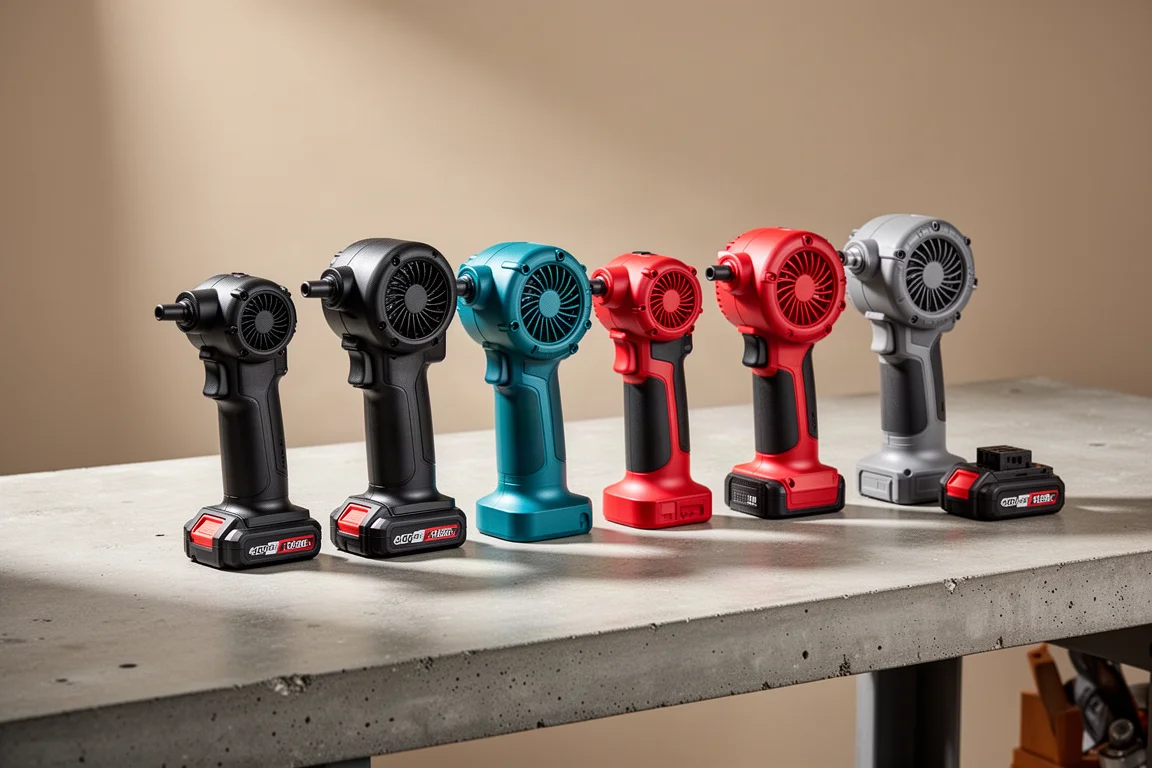
Tool battery powered air dusters have quietly become one of the more interesting corners of the cordless tool world. The idea is simple: instead of buying another proprietary battery, you bolt the duster onto the DeWalt, Makita, Milwaukee, or M12 packs you already own and get a portable replacement for an air compressor blow gun or a can of compressed air.
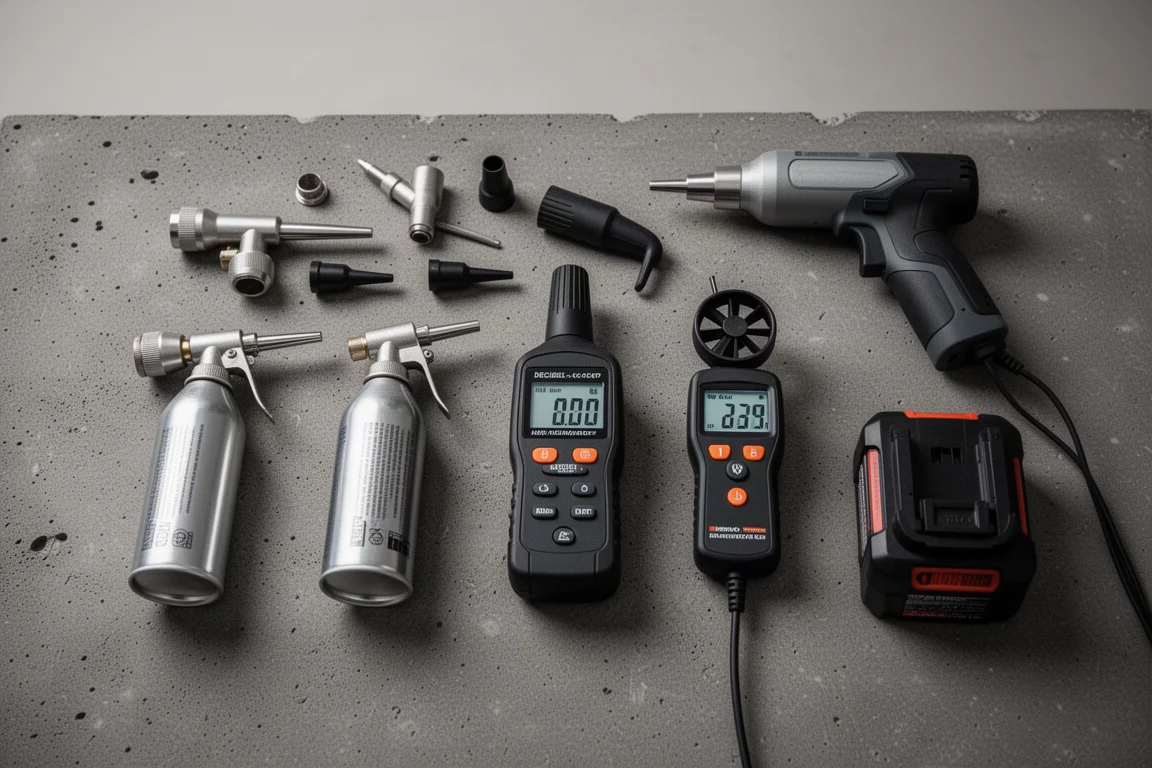
The catch is that these models range from genuinely potent pocket rockets to tools that are basically loud hair dryers. Specs on listings can be wildly optimistic, especially RPM claims, so the only fair way to rank them is with actual measurements: air speed, air volume (CFM), static pressure on a scale in grams, and noise in dB from one meter away. None of these come with a battery included, so pricing below refers to the bare tool.
Brandset DeWalt Battery Air Duster
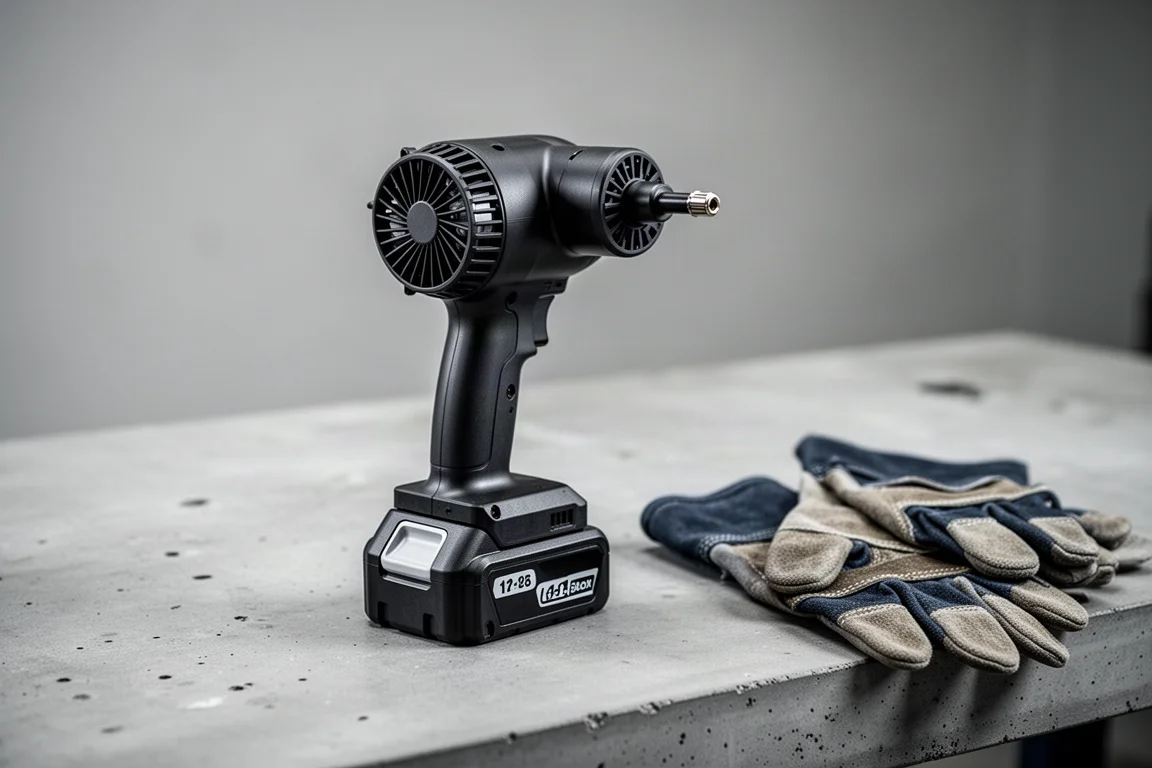
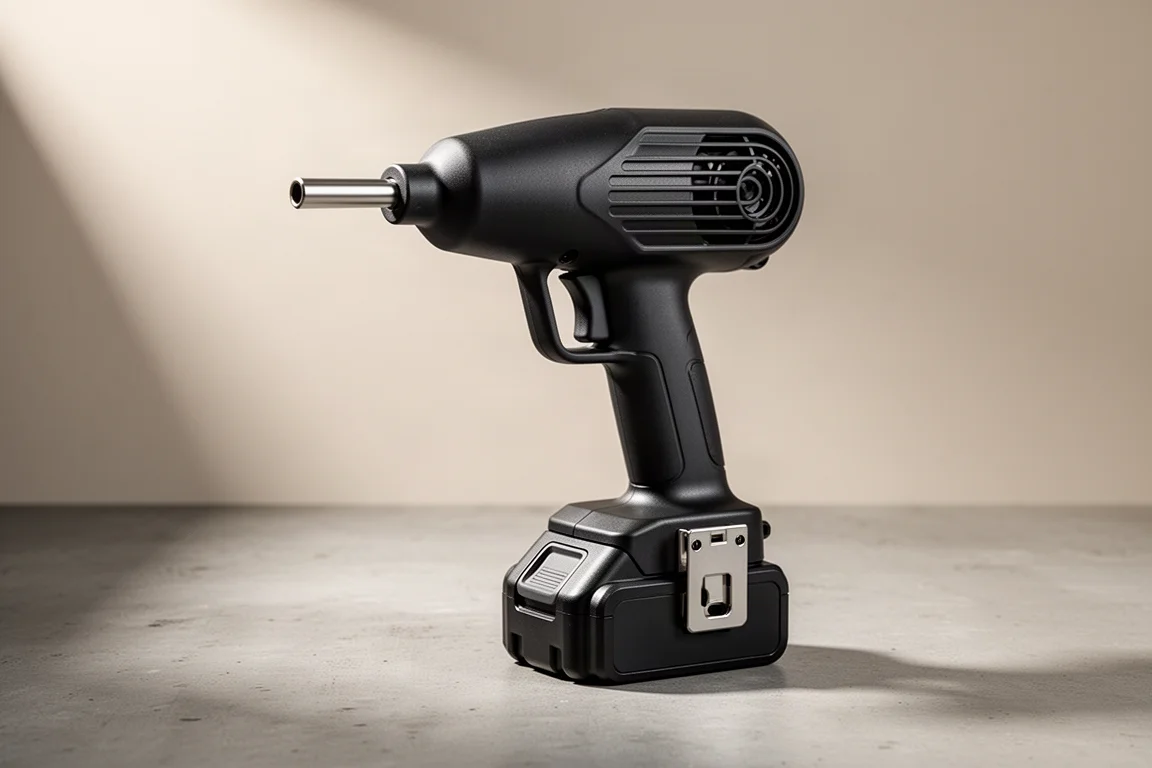
The Brandset is the cheapest entry at $30 and it takes DeWalt batteries. Physically, it looks like a typical handheld turbo fan blower with an adapter slapped on the bottom, which creates an odd balance: the handle feels weightless while the battery hangs below like an anchor. Without any battery weight inside the grip, it feels strange to hold compared to integrated designs.
The listing claims 268 mph and 300,000 RPM, but measured reality is more modest: about 71,800 RPM, roughly 114 mph of air speed (nearly the slowest ever recorded in this category), 37 CFM of air volume, and 116 g of static pressure, which is actually above average. It hit 92 dB, a loudness record for the category, and it shipped with no nozzles at all. For similar money you can find dusters with comparable performance that include their own battery.
Wums Makita Battery Air Duster
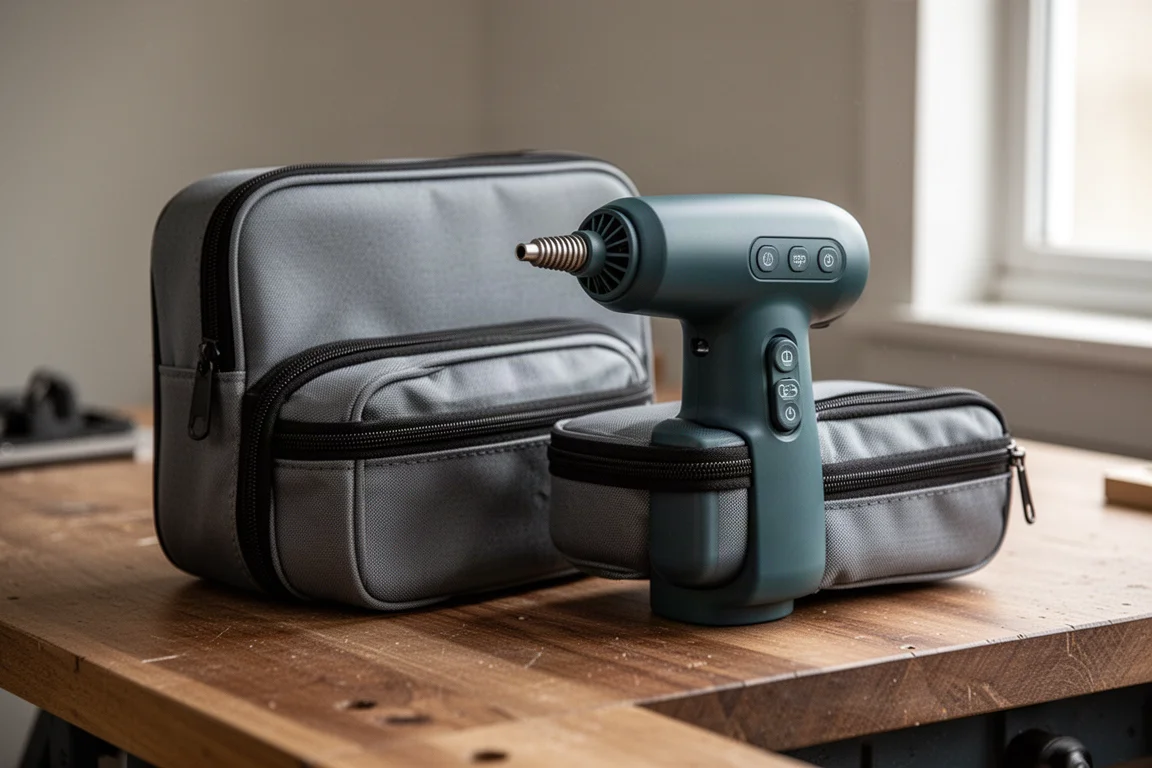
At $37, the Wums runs on Makita batteries and even includes a semi-rigid case. Controls live on the side of the body, which is a nicer layout than the tap-and-hold button schemes some rivals use. Its advertised specs are refreshingly conservative: 130,000 RPM and only 30 m/s (about 67 mph), which is far closer to reality than typical listing numbers.
Measured performance is genuinely good. In standard form it manages around 130 mph, but the included threaded nozzle (threads are nicer than snap-ons, which can pop off when shoved into tight car interiors) pushes it to roughly 180 to 185 mph, among the best recorded in this size class. Air volume lands at 39 CFM, and at just 83 dB it is pleasantly quiet for the category. If you already own Makita 18V batteries, it is hard to argue with.
Miliff DeWalt Battery Air Duster
Miliff was one of the original makers building tools around batteries from brands that did not yet offer that tool themselves. This $39 model is clearly inspired by the more expensive Makita duster but swaps in DeWalt batteries, since DeWalt has no equivalent of its own. It comes with a fair amount of extras, and the attachment design is well executed and even interchangeable with Makita accessories.
Where it shines is raw air speed. It maxed out the measurement gauge and, after backing off and applying an inverse square calculation, landed at around 205 mph, the best figure recorded at the time of testing. The small outlet that creates that speed hurts air volume, though: around 35 CFM. Static pressure is a strong 177 g, second best overall, and it measured 88 dB. Its trigger safety is arguably better than the Makita’s, since it does not require holding a toggle in each time before pulling the trigger.

OS Milwaukee M18 Battery Air Duster
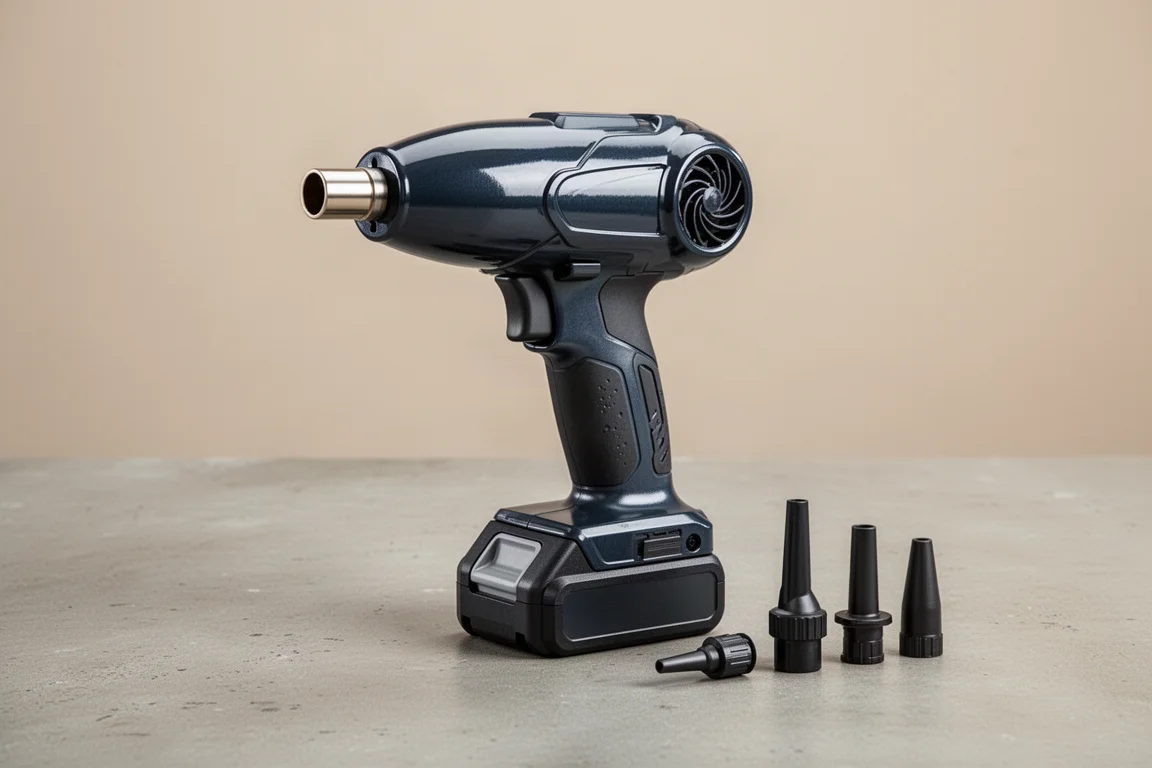
The OS takes Milwaukee M18 batteries and wears its internals openly, with a barely-there rear grill revealing not much more than a board and a blade. The advertised 100,000 RPM translates to a measured 78,500, which is unsurprising given its larger impeller diameter; only the smallest impellers hit or exceed 100k. It uses a potentiometer-style trigger, which is a good fit for this tool type, but the last half of the pull takes noticeable force, making long sessions less comfortable.
Bare, it manages only about 100 to 110 mph, but the included nozzle bumps it to 174 mph, very good, at the cost of back pressure that makes an already loud tool piercingly loud: 93.5 dB, a new record and higher than most full-size leaf blowers. Where it surprises is air volume: 63 CFM, near the best overall, and 180 g of static pressure. If raw airflow matters more than noise, this is the sleeper of the group.
U Run M12 Battery Air Duster
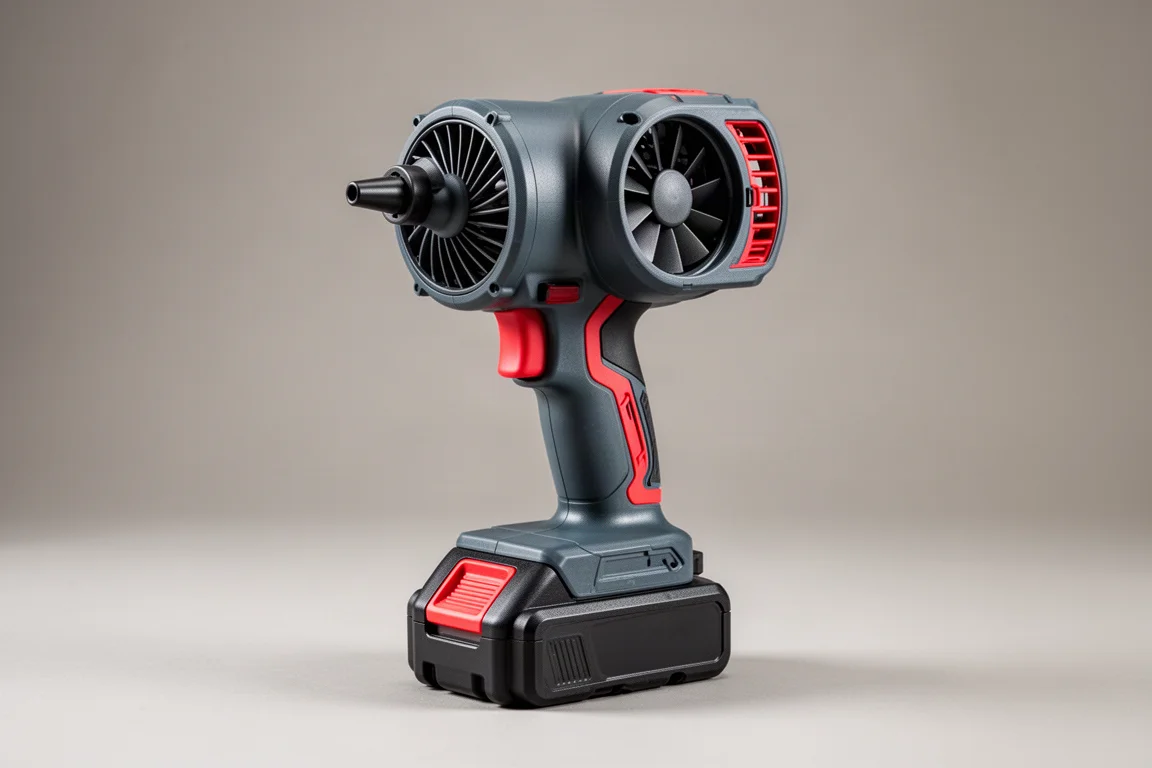
Oddly, the most expensive of the lesser-known brands here is also the smallest: the U Run at $46 takes M12 batteries. Form factor is its main selling point. Where most tool-battery dusters feel like club-foot attachments, with hollow plastic bodies and heavy packs hanging off the bottom, this one looks more like a traditional integrated duster (albeit with a 3D-printed aesthetic) and feels naturally balanced.
It advertises 45 m/s (about 100 mph) and delivers just over 136 mph, exceeding its spec, which is respectable for a 12-volt tool. Air volume comes in at 40 CFM, above average. Noise is a fairly decent 84 dB. It is not a performance leader, but as a compact, balanced option for M12 battery owners it makes sense.
Makita LXT Cordless Air Duster
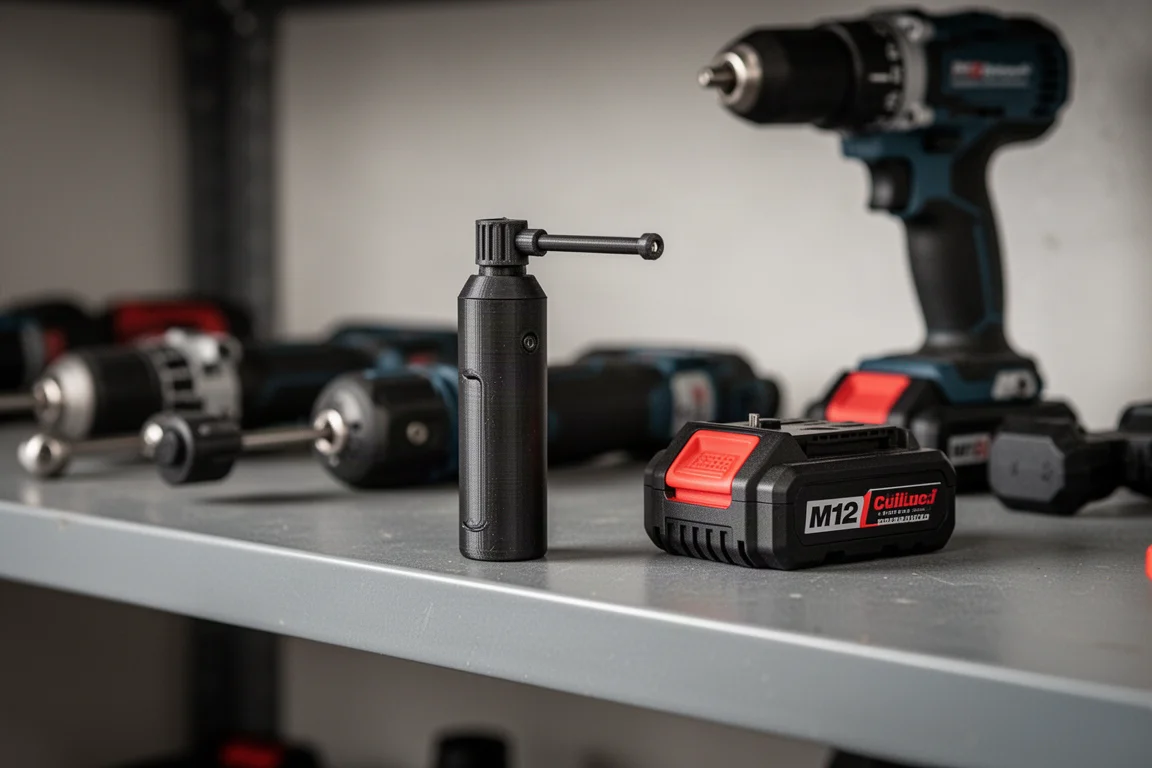
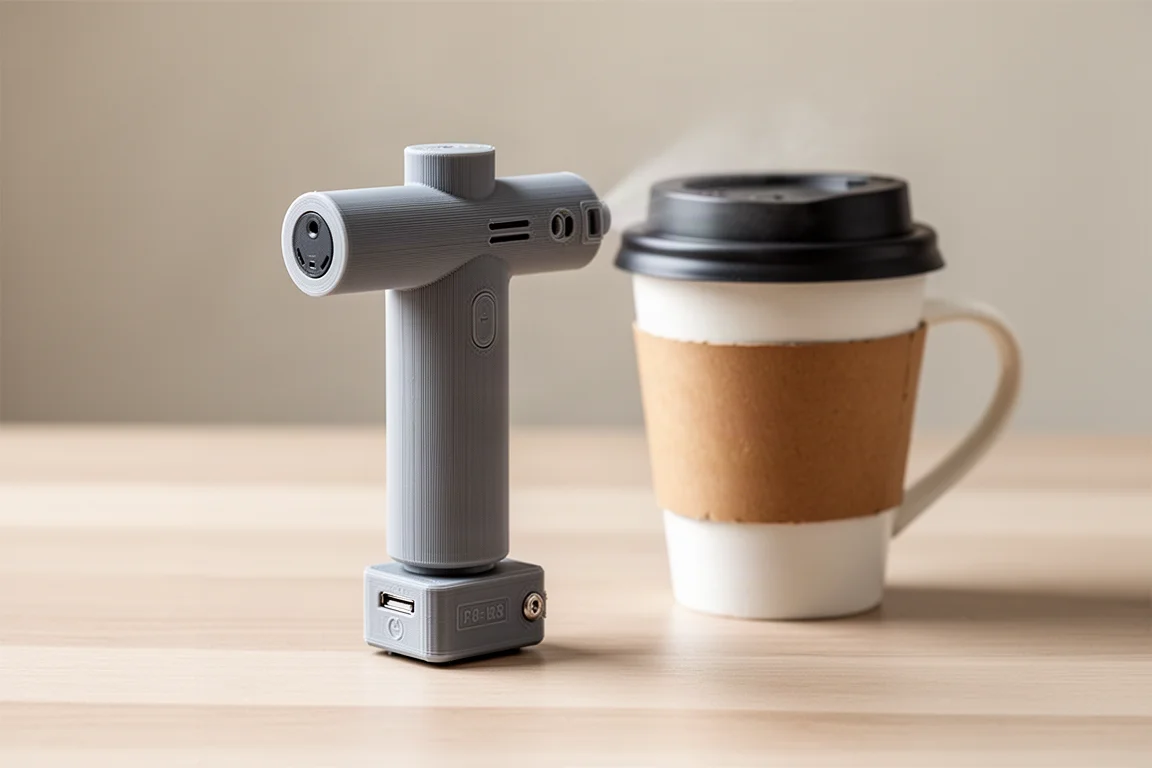
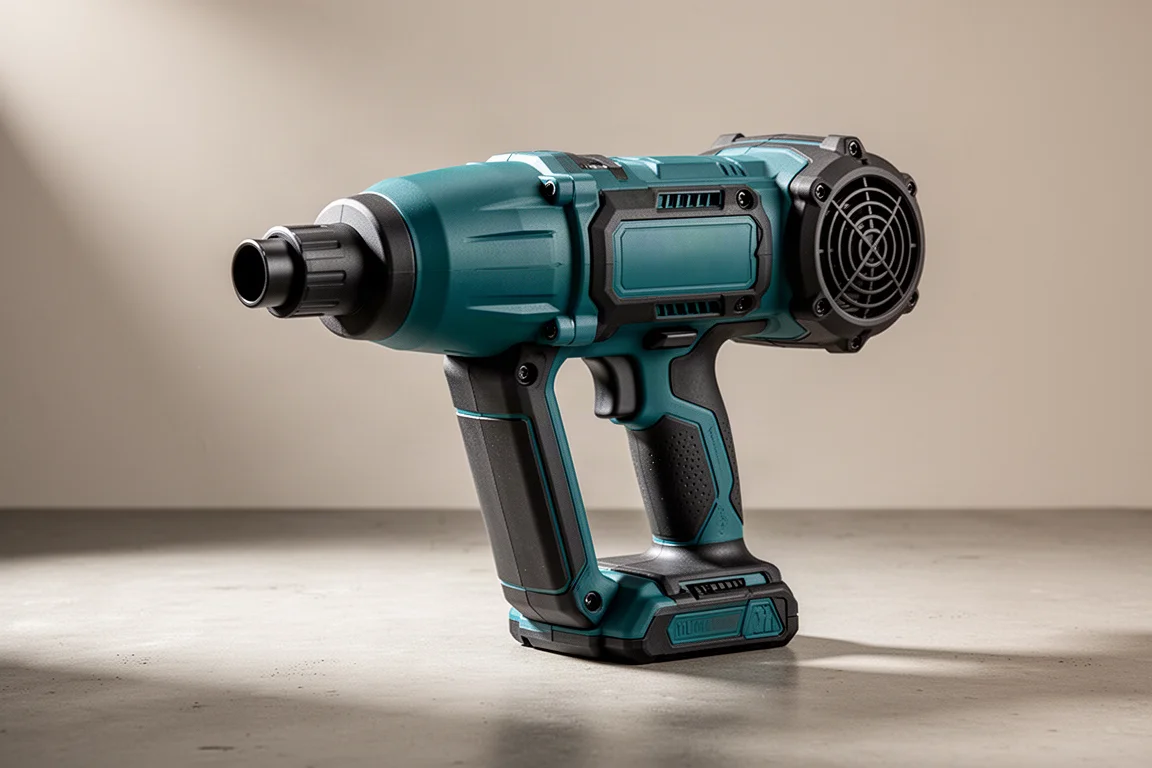
The Makita is the premium pick at $168, and it is a different class of tool entirely: larger, but genuinely comfortable to hold thanks to proper weight and balance, with the battery integrated into the design. Its trigger and toggle safety are nicer than the imitators, although the toggle does need to be held in before each trigger pull. The attachments are a pleasure to use.
Performance is the new benchmark. Air speed maxes the gauge even at nearly 3 inches from the meter and reaches a record 220 mph with the nozzle, at 37 CFM, close to the 39 CFM printed on the box. Static pressure is a dominant 250 g, far ahead of everything else, and you can feel the air heating up as it rushes through, with the airflow itself cooling the motor. Notably, no upgraded battery, from high-output packs to custom high-discharge builds, improved any of these tools, which supports Makita rating its 18V and 40V versions identically. It measured 86 dB, quieter than several cheaper rivals.
Overall Rankings and Buying Advice
Scoring every model across air speed, CFM, static pressure, and noise (with battery exclusion noted, since none include a pack), the Makita ranks best of this group with the fewest drawbacks, followed closely by the Miliff. The OS and U Run sit mid-pack, the Wums is quiet and strong with a nozzle, and the Brandset finishes last despite its flamboyant claims. Re-ranking against previously tested dusters, the Makita earns the most first-place finishes and ties for the top spot overall when battery cost is set aside.
A few practical takeaways: higher-capacity or high-discharge batteries do not improve any of these tools, so your existing packs are fine. Loudness varies dramatically, from the Wums at 83 dB to the OS at 93.5 dB with its nozzle fitted, worth considering if you work indoors. And check that the nozzle mounting style (threaded versus snap-on) suits how you plan to jam the tool into tight spaces.
Conclusion
If you already own DeWalt batteries and want serious air speed for around $40, the Miliff is the value standout. Makita owners get a quiet, well-balanced performer in the Wums. Milwaukee M18 users who prioritize airflow over noise should look at the OS, and M12 owners get a compact, balanced option in the U Run. For those who simply want the best tool regardless of brand, the Makita LXT duster is the outright performance leader, and its only real cost is its price.
Further reading
Related Reviews

Power Tools
Best 1-Inch Pistol Impact Wrenches: Three Heavy-Duty Options Compared
We compare three 1-inch pistol impact wrenches, from a budget-friendly Harbor Freight model to a premium Caterpillar unit, to help you choose the right one.

Power Tools
Best 3/4-Inch Impact Wrenches 2026: Five Contenders Compared
We compare five 3/4-inch impact wrenches across price and performance, from a budget Amazon option to Snap-on's most powerful model yet.

Power Tools
Best Budget Cordless Tools 2026: Walmart Finds That Punch Above Their Price
We tested five cordless tools from Walmart, including a high-torque impact wrench that trades blows with Milwaukee and a $35 duster that outperforms its price class.