Power Tools
Best T50 Staple Guns Tested: Which Ones Actually Earn a Spot in Your Toolbox
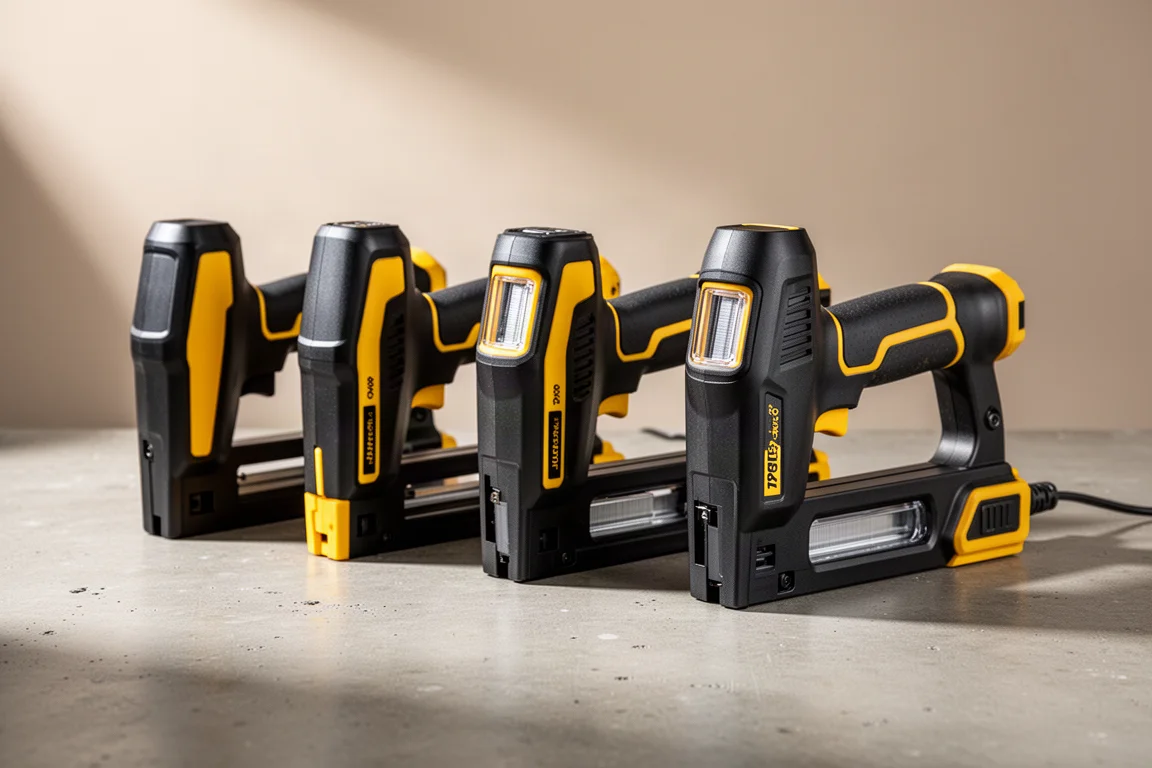
Fourteen T50 staple guns went through speed, jam-resistance, and penetration tests. These four came out on top for different reasons.
Introduction
Staple guns look interchangeable on the shelf, but under real pressure they behave very differently. We ran a full field of fourteen T50-compatible staplers through speed, jam-resistance, and penetration tests, from a $14 budget manual option up to a $219 pro-grade cordless model. The tests included driving 80 staples in a row, forcing staples into a steel plate, and attempting 9/16-inch staples in spruce, corner bead, oak, and composite decking.
A handful of tools dominated nearly every category. These four stood out for the clearest reasons, and each one makes sense for a different kind of buyer.
How We Evaluated
Every stapler faced the same battery of tests. Speed was measured by driving 80 staples in a continuous row, activation force was measured in pounds, and jam resistance was tested by accelerating staples into a steel block to force a failure. Penetration tests used consistent downward force against spruce 2x4 lumber, drywall corner bead, oak, and composite decking with 9/16-inch and half-inch staples.
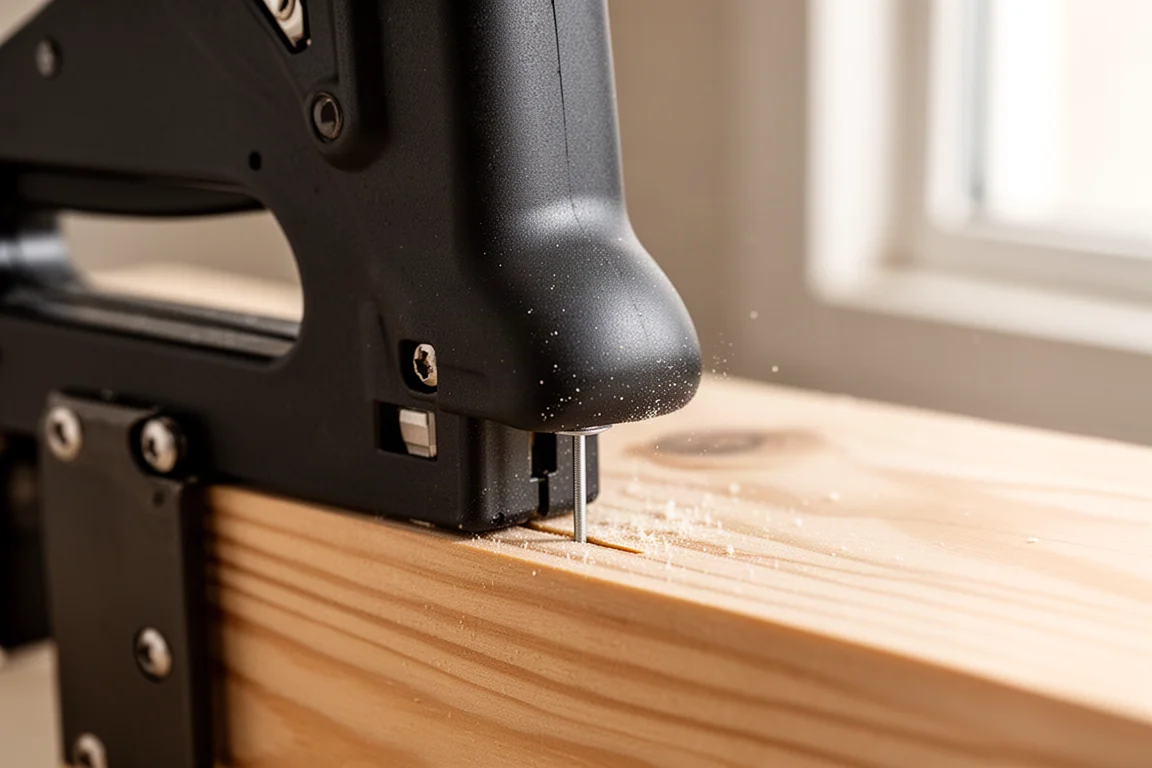
A few practical details also mattered: weight, noise level, staple capacity, and how close the nose gets to vertical objects. No single tool won everything, but the four below consistently finished at or near the top.
Stanley 2-in-1 Electric Stapler
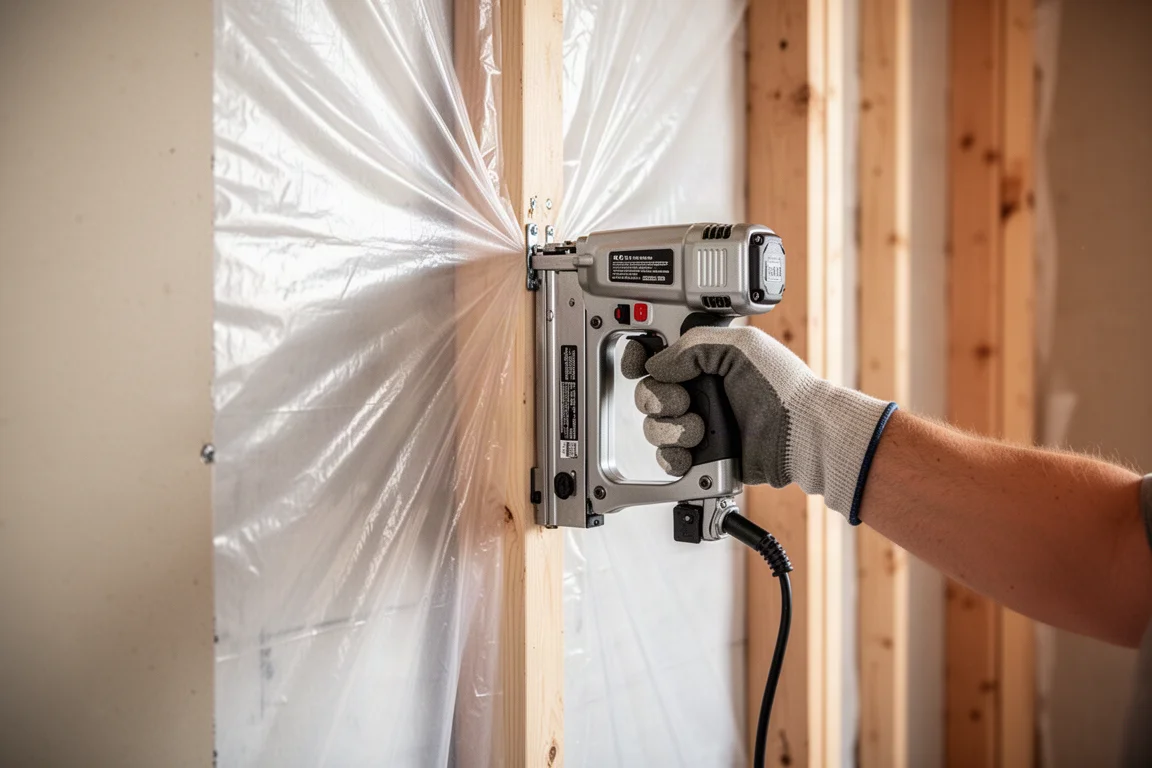
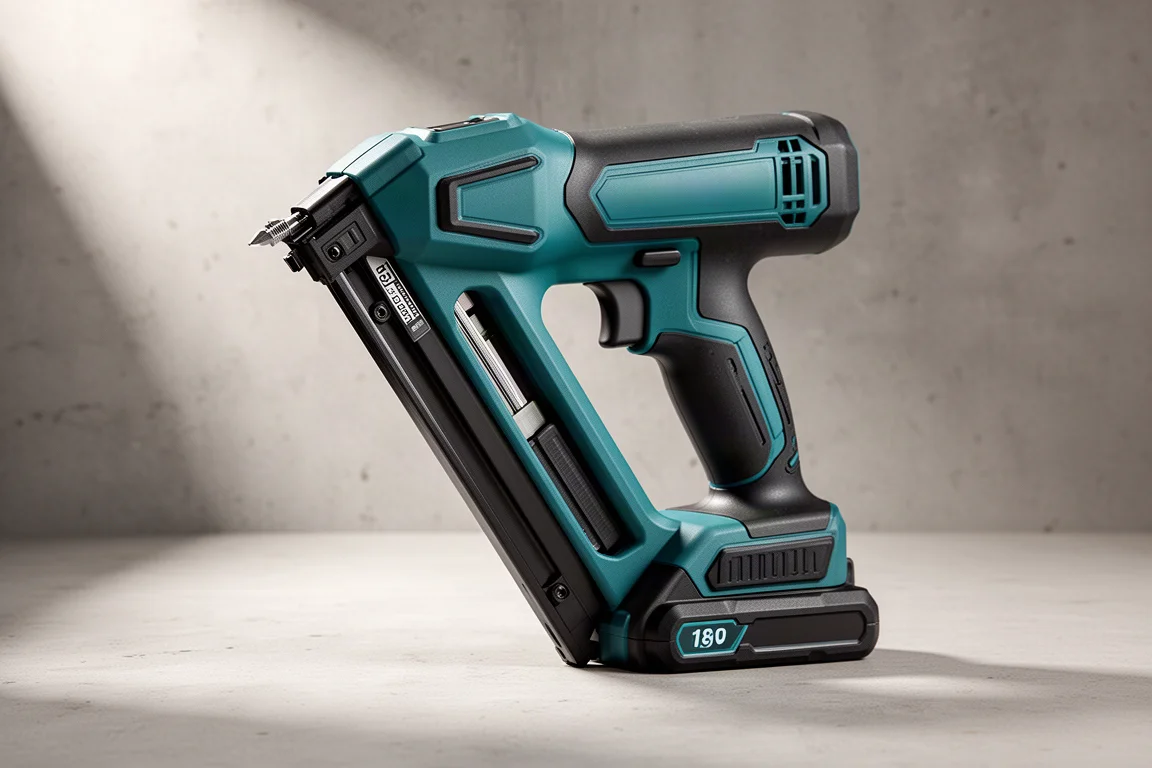
At around $30, the corded Stanley is the value story of the group. It ran a full row of 80 staples in 27.5 seconds, second only to the Makita, and it needed just 20 lb of force to bury a 9/16-inch staple into a spruce 2x4, a result that beat most cordless competitors. It also drove a staple completely into oak, something many more expensive tools could not do.
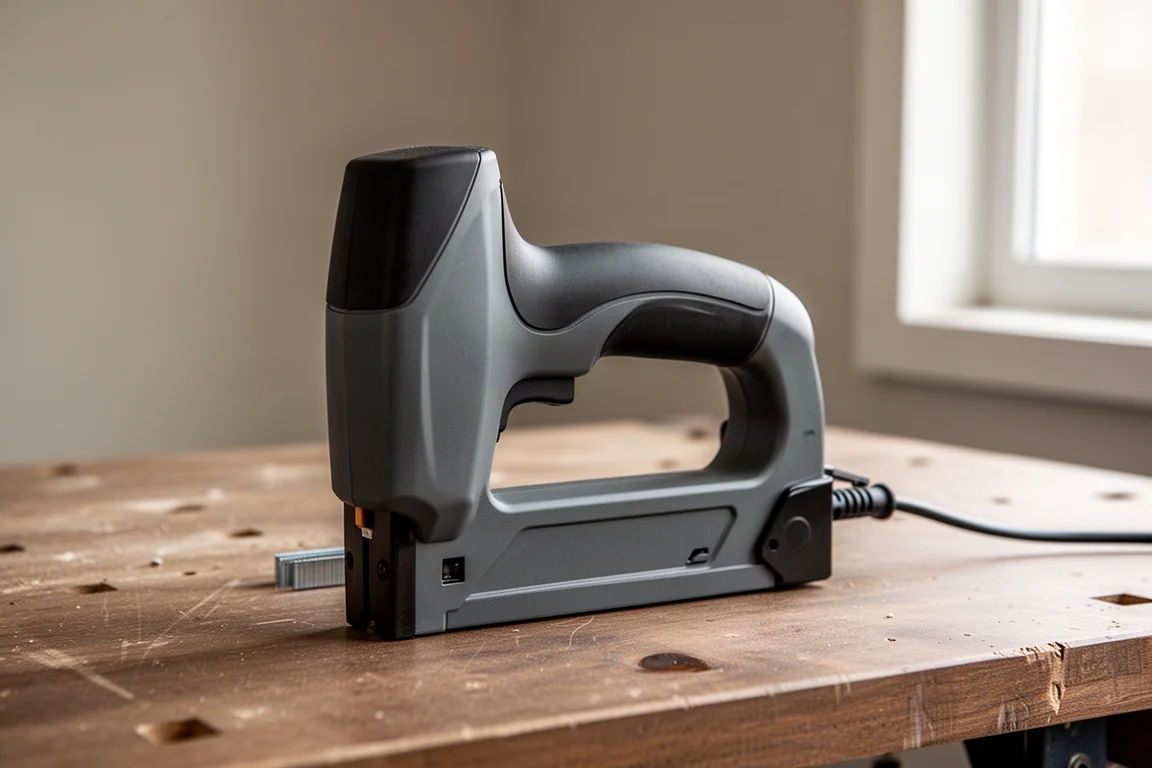
The Stanley handles T50 staples from 1/4 inch to 9/16 inch plus brad nails from 1/2 to 5/8 inch, and it includes an adjustment knob for hard and soft materials. Jams were rare and easy to clear when they happened. At 2.14 lb it is not the lightest tool here, and the cord means you are tethered to an outlet, but for repetitive tasks like stapling vapor barrier or insulation, it is remarkably productive for the price.
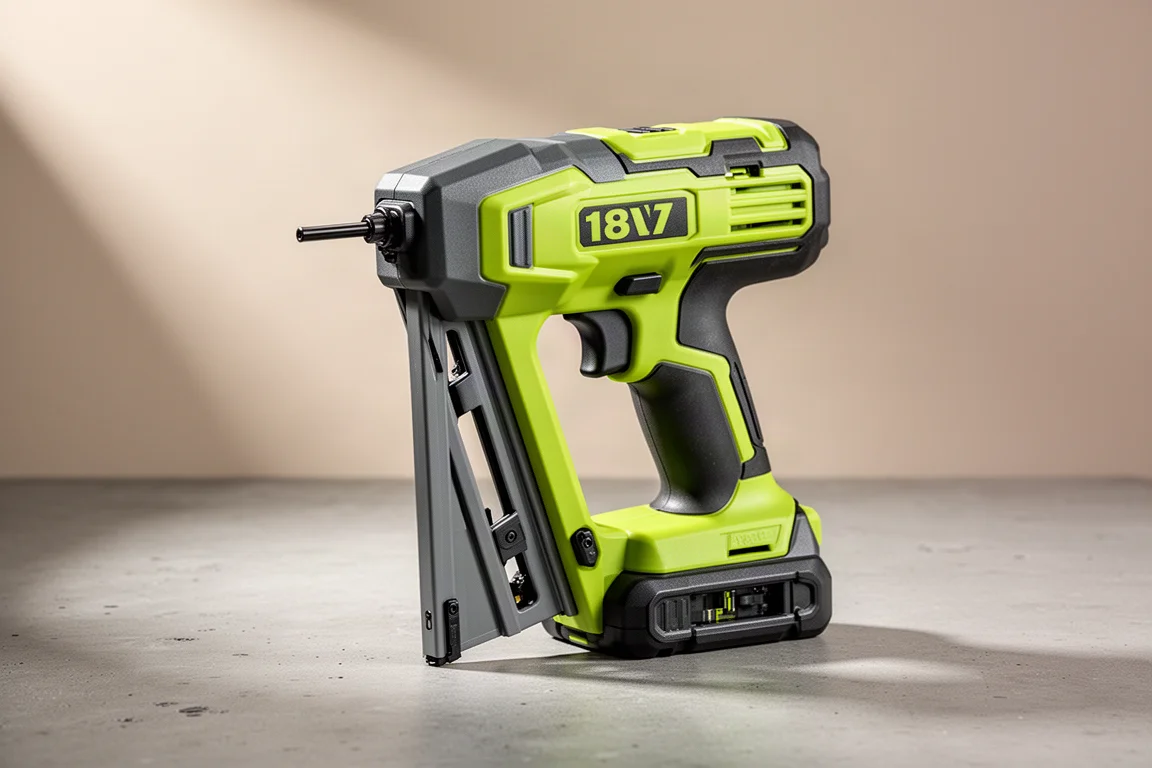
Ryobi ONE+ 18V Stapler
If you already own Ryobi ONE+ batteries, this is arguably the best-value cordless option in the entire test. At $84 for the bare tool, the Ryobi drove 80 staples in 29 seconds, only 1.5 seconds behind the corded Stanley and far ahead of every other battery tool except the Makita. Its hammer design is exceptionally well built: it drove a 9/16-inch staple into a 2x4 with just 10 lb of force, the second-best result overall, and it was one of only three tools to punch cleanly through drywall corner bead.
The Ryobi also completely drove a 9/16-inch staple into composite decking, a test that stumped nearly everything else. It handles T50 staples from 1/4 to 9/16 inch, offers an adjustable power setting with a drive force indicator, and claims up to 5,500 staples per charge. It runs without jams even under abusive testing. The trade-offs are weight, nearly 3 lb without a battery and 4.58 lb with a 4Ah pack, and the fact that batteries and chargers are sold separately.
Milwaukee M18 Stapler
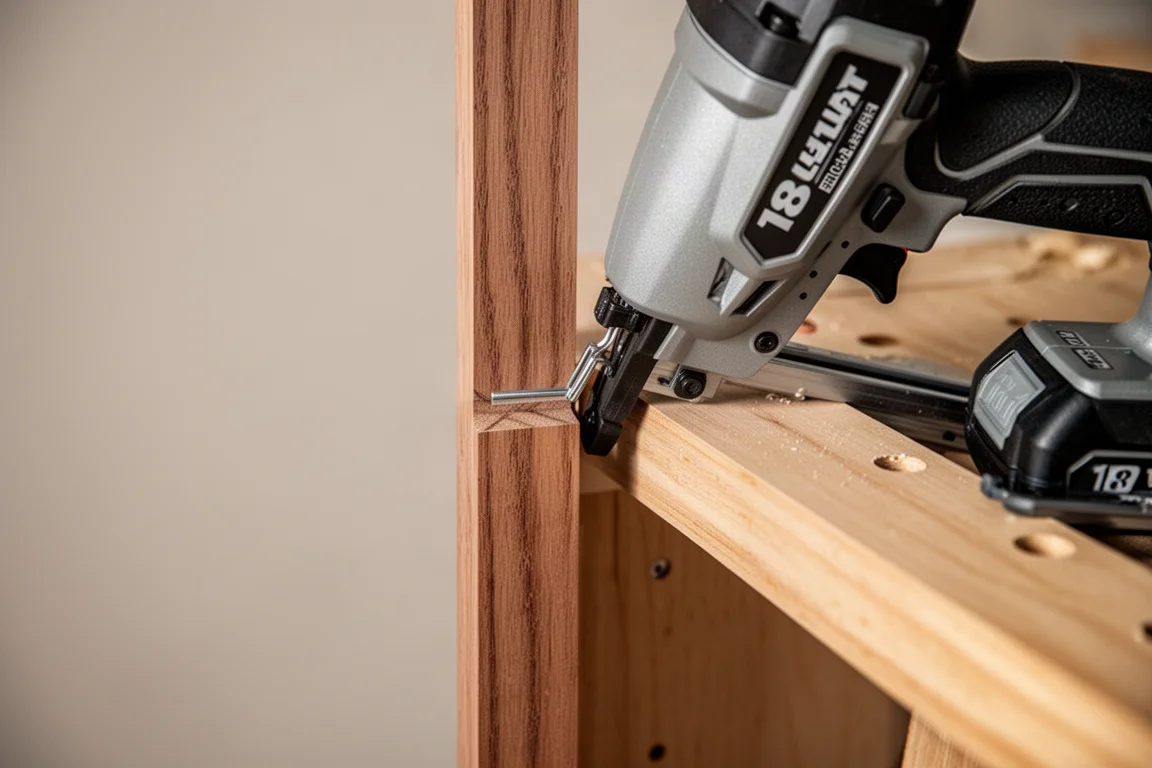
The Milwaukee M18 stapler is a very good tool that lands just behind the leaders. It fired 80 staples in 37 seconds, drove a 9/16-inch staple into spruce with only 12 lb of force, and required almost no activation pressure at all, the lightest trigger feel in the test. It was one of the three tools with enough power to penetrate corner bead and drywall, and it made easy work of half-inch staples in oak.
Feature-wise it is well equipped: a power adjustment dial, sequential and contact actuation triggers, a staple locating arrow, and dry-fire lockout to prevent blank firing. It handles T50 staples from 1/4 to 9/16 inch and weighs 3.16 lb bare, or 4.06 lb with a 4Ah battery. Two things held it back during testing: it locked out with a few staples remaining in the magazine repeatedly, and its cycle time between staples is slower than the Makita’s. At $119 for the bare tool, it is a solid choice, especially for existing M18 users, but it no longer leads the pack.
Makita 18V LXT Stapler
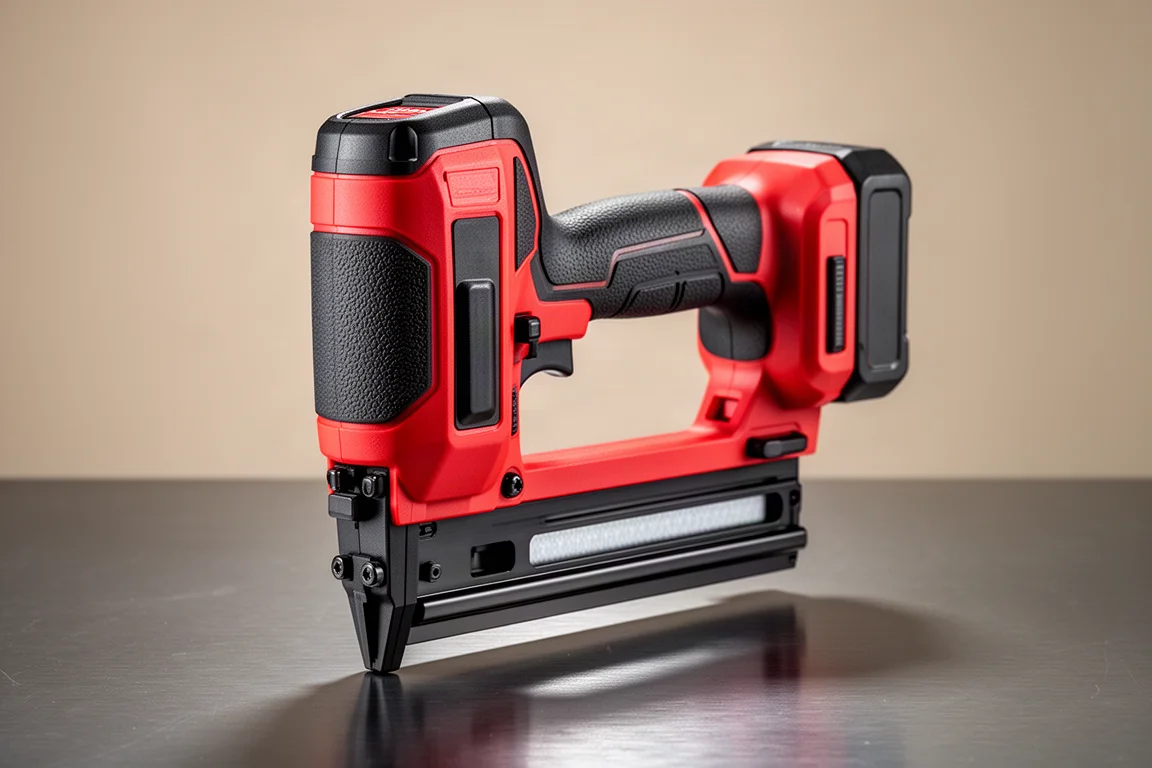
At $219 for the bare tool, the Makita is the most expensive stapler tested, and it is also simply the best. It drove 80 staples in 23.5 seconds, the fastest time of any tool, corded or cordless. Its cycle time is quick enough that holding the trigger and tapping the striker fires a staple with every press, and it drives a 9/16-inch staple into a 2x4 with just 7 lb of force, by far the least user effort in the test. It was the only tool to completely bury a 9/16-inch staple into composite decking, and it made back-to-back easy work of corner bead and oak.
The Makita handles crown staples from 3/8 to 7/8 inch. There is no power adjustment, but depth adjustment is available. It weighs 3.87 lb bare and 5.23 lb with a 4Ah battery, making it the heaviest tool tested, and like the other premium brands, batteries and charger are sold separately. If you want the tool that asks the least of you and finishes every test, this is the one.
Buying Advice: Which One Fits Your Work
For repetitive indoor jobs like insulation, vapor barrier, and upholstery, the corded Stanley delivers pro-level speed at a budget price, and you never worry about battery life. For cordless convenience at a fair price, the Ryobi is the standout, particularly if you already own ONE+ batteries.
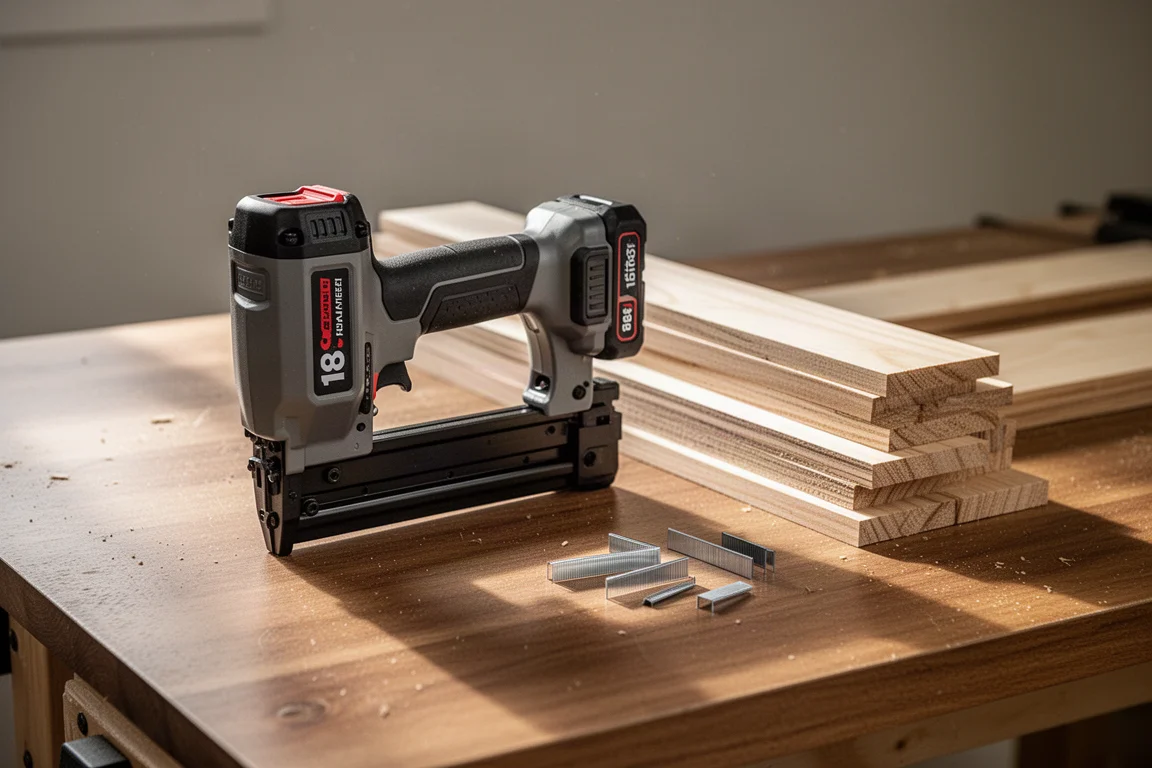
For tradespeople who need the absolute best penetration and cycle speed, the Makita justifies its premium. The Milwaukee remains a strong, feature-rich alternative, but it finished second-best in most head-to-heads. If your budget is tight, the $14 Citadel and $20 manual Arrow are fine for light-duty tasks like soft insulation materials, but they could not drive 9/16-inch staples into spruce, so keep expectations modest.
Conclusion
The Makita 18V LXT is the best T50 stapler we tested, the Ryobi ONE+ 18V is the best cordless value, the Stanley 2-in-1 is the best budget pick, and the Milwaukee M18 is a capable all-rounder that fits naturally into an existing M18 collection. Match the tool to your workload and you will not be disappointed with any of these four.
Further reading
Related Reviews

Power Tools
Best 1-Inch Pistol Impact Wrenches: Three Heavy-Duty Options Compared
We compare three 1-inch pistol impact wrenches, from a budget-friendly Harbor Freight model to a premium Caterpillar unit, to help you choose the right one.

Power Tools
Best 3/4-Inch Impact Wrenches 2026: Five Contenders Compared
We compare five 3/4-inch impact wrenches across price and performance, from a budget Amazon option to Snap-on's most powerful model yet.

Power Tools
Best Budget Cordless Tools 2026: Walmart Finds That Punch Above Their Price
We tested five cordless tools from Walmart, including a high-torque impact wrench that trades blows with Milwaukee and a $35 duster that outperforms its price class.