Everyday Carry
Best Swiss Army Knife Alternatives: 5 Tools That Challenge Victorinox
Five pocket multi-tools with genuine advantages over the classic Swiss Army knife, including one that might actually beat it in certain contexts.
Introduction
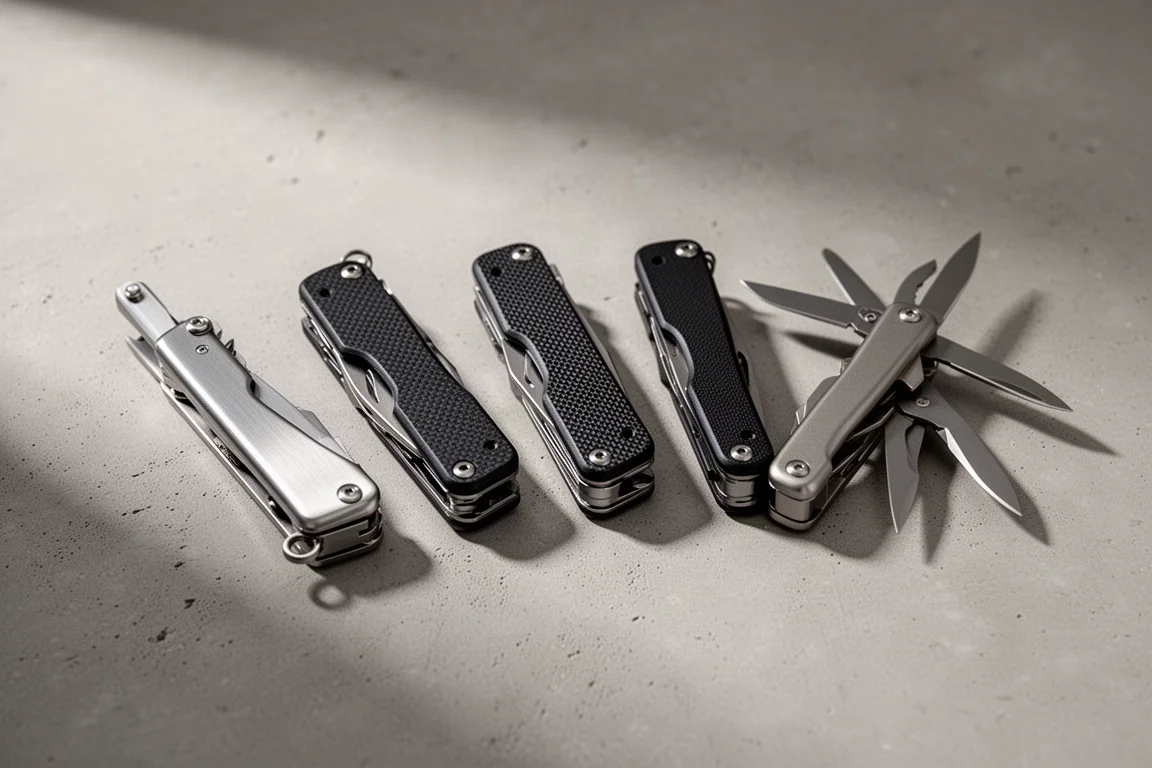
Victorinox has spent nearly a century defining what a great pocket knife should be, and its grip on value, quality control, and pedigree is remarkably hard to loosen. That said, there are now more credible challengers than ever, and a handful of them bring features the classic Swiss Army knife simply does not offer. Most of the tools below trade one advantage for another, but one of them stands out as the only option that could genuinely replace a Victorinox for certain users. Here is how the field stacks up.
What to Look For in a Victorinox Alternative
The benchmark is tough. A serious challenger needs good steel, solid fit and finish, a sensible tool set, and a fair price. Many lookalikes online fall short: they often use soft steels in the 3Cr to 5Cr range, come from unknown brands with no customer service, and suffer from questionable fit and finish. The tools covered here sit above that baseline.
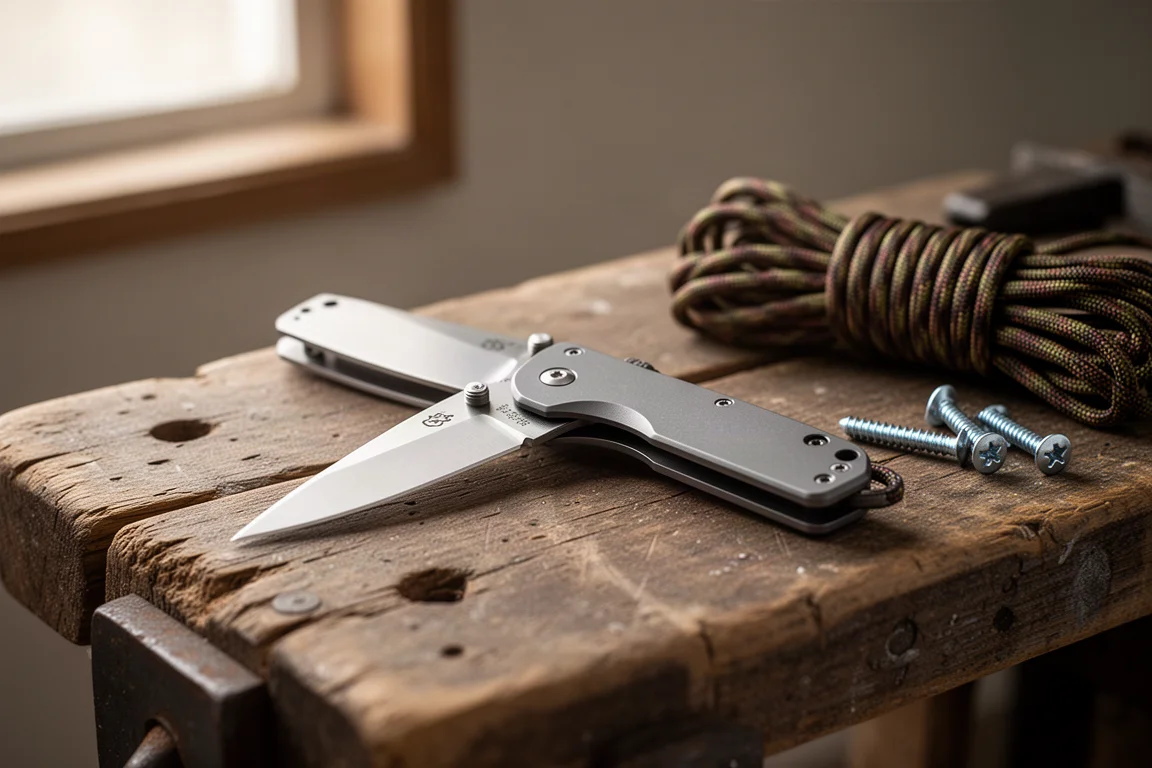
It is also worth being clear about what a challenger has to beat. Victorinox offers excellent out-of-the-box quality, a strong reputation, well-balanced tool sets, low weight, and long-term durability that makes old, heavily used knives still feel dependable decades later. Beating that on every front is rare, and most of the tools below do not attempt it. Instead, each carves out a specific advantage.
Gerber Armbar
The Gerber Armbar comes in several varieties, and quality control can be somewhat inconsistent across them. The standout feature is the bit driver, and the best variant is the one that combines a 420HC blade with the bit driver in a compact package. Other versions carry more tools but feel clunky, and there are better options at similar prices.
Leatherman Free T4
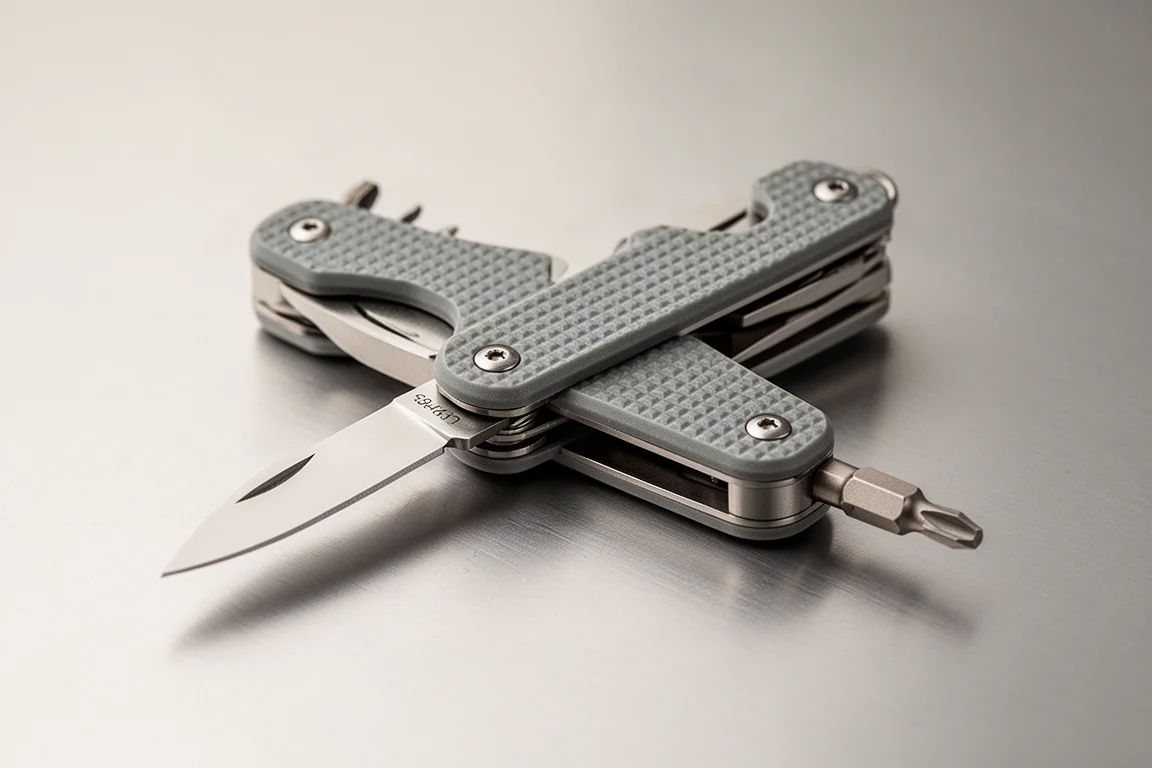
The Leatherman Free T4, released around 2019, is one of the few competitors with real reasons to choose it. Every implement deploys one-handed and locks, including a one-handable blade, flathead and prying tool, file with small flathead, Phillips, reamer with awl, small flathead, scissors, and a tweezer. The tool set is close to the Victorinox Super Tinker, and the locking, pocket-clip-friendly, one-hand-open format is a genuine advantage, especially in the US market.
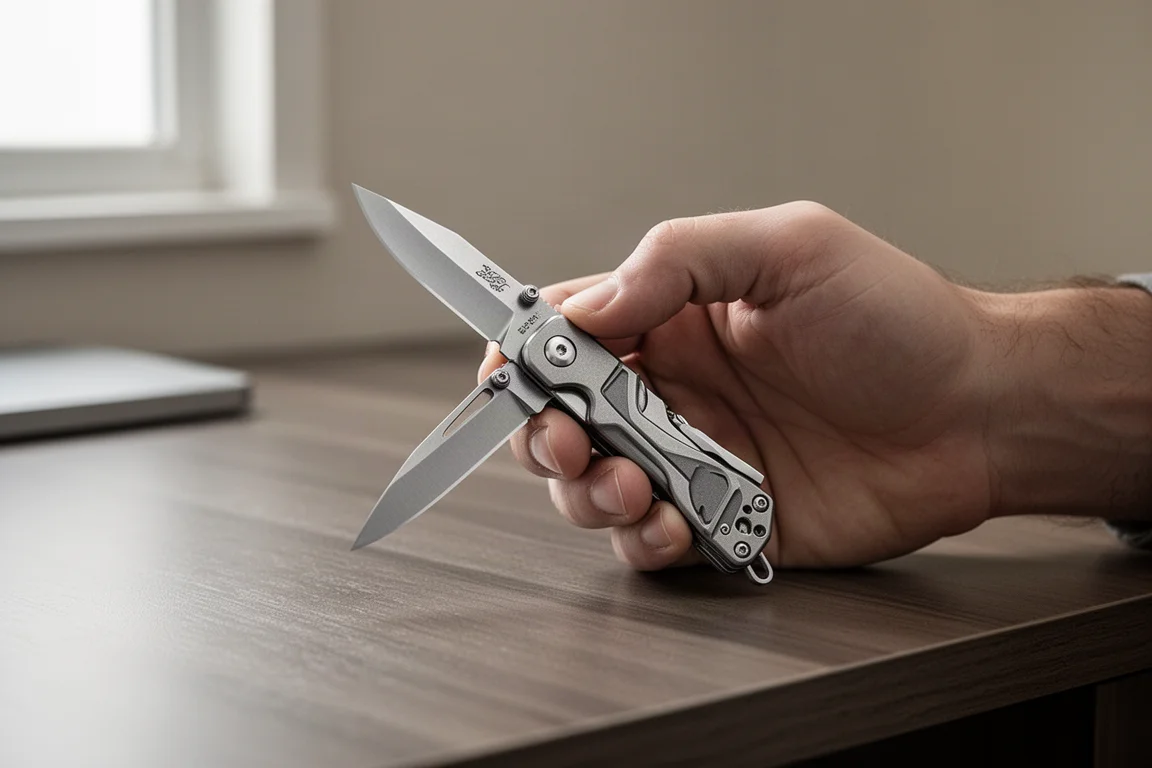
The problem is price. At around $70 it costs a lot for the tool set you get, and for $5 more you could step up to Leatherman’s plier-based Skeletool. Victorinox’s lifetime warranty also outlasts Leatherman’s 25-year coverage, and Victorinox tools have proven themselves over 30-plus years of use. One caveat on the Free T4: the blade is held between two springs, and opening it one-handed with both springs in place is significantly harder. Some users remove one spring to make it easier, but as shipped, the one-handable claim does not apply to everyone.

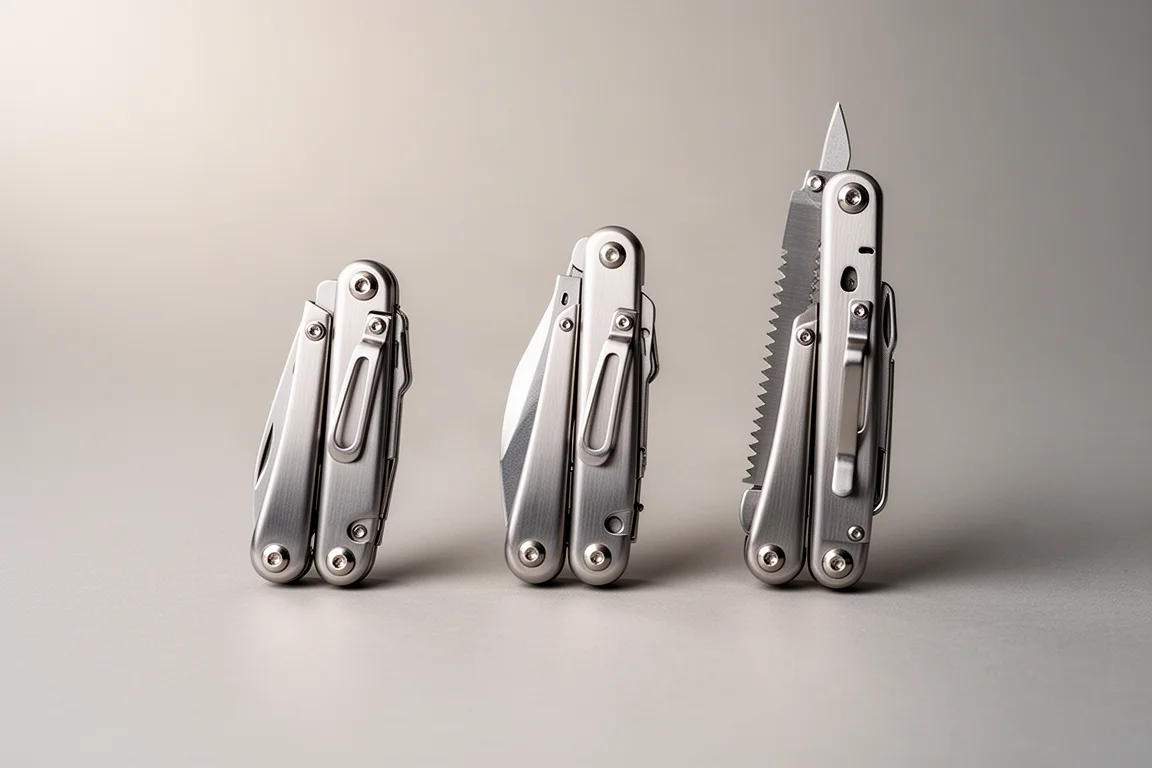
Ruike S/M/L Series
Ruike (pronounced “Rake”) makes a three-size series of Swiss Army knife style tools, and the same designs are sold under the Boker name from the same factory, only substantially more expensive. The Ruike versions include a tweezer built into the handle, a grippy texture, a pocket clip, a glass breaker, and blades in Sandvik 12C27, a strong budget steel. The blade is noticeably larger and thicker than a comparable Victorinox blade, with better edge retention, and the quality control is genuinely on point. The saw performs on par with Victorinox’s.
There are trade-offs. Steel liners instead of Victorinox’s aluminum ones make these tools heavier and thicker; a three-layer Ruike is only slightly thinner than a four-layer Victorinox. The most annoying flaw is the serrated blade marketed as a “two-dimensional Phillips”: using a non-locking angled blade as a driver is a bad idea and best ignored entirely. Prices run somewhat above Victorinox in most cases, though the gap is small on some models, and the pocket clip design alone makes these worth considering, especially when they go on sale.
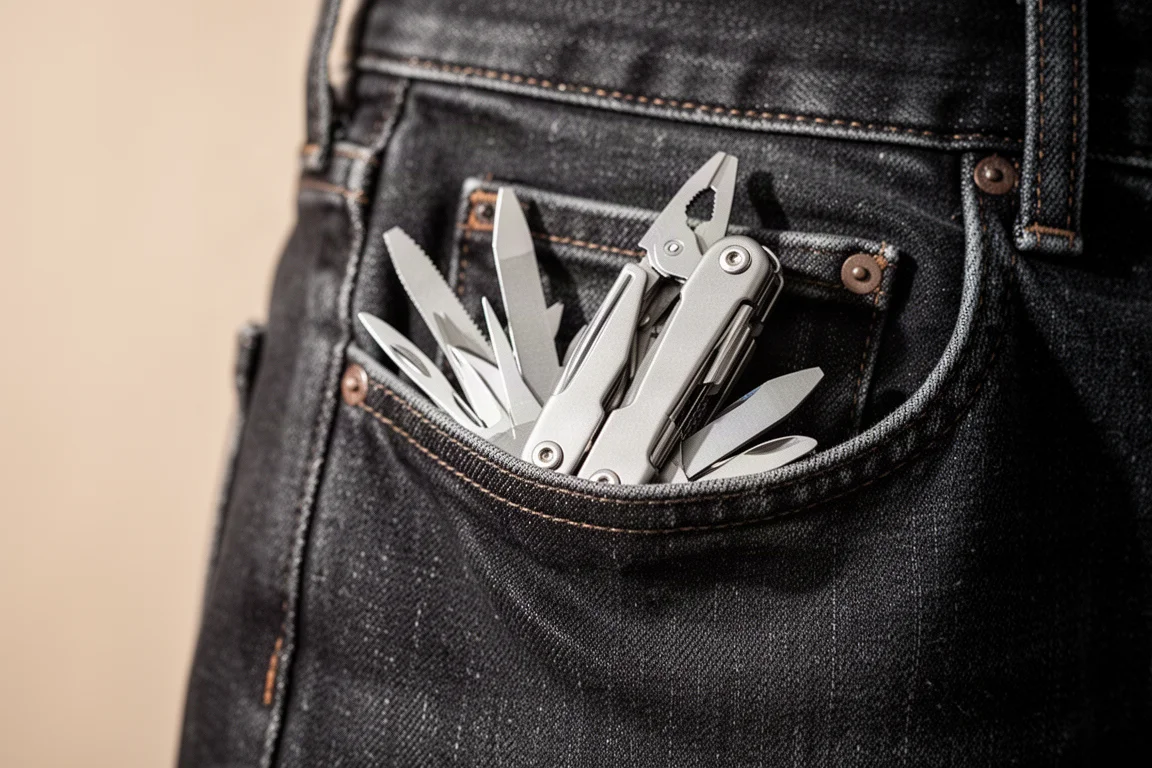
The large LD series deserves a specific mention. It offers a locking 12C27 blade with thumb studs, a very large saw, an excellent pair of scissors over an inline reamer with wire stripper, a pocket clip, and a glass breaker. It is built like a tank with solid steel springs and liners, but that weight is significant enough to make you consider plier-based multi-tools instead. Fewer back tools than a Victorinox, and the same serrated-blade-as-Phillips warning applies.
Keybar
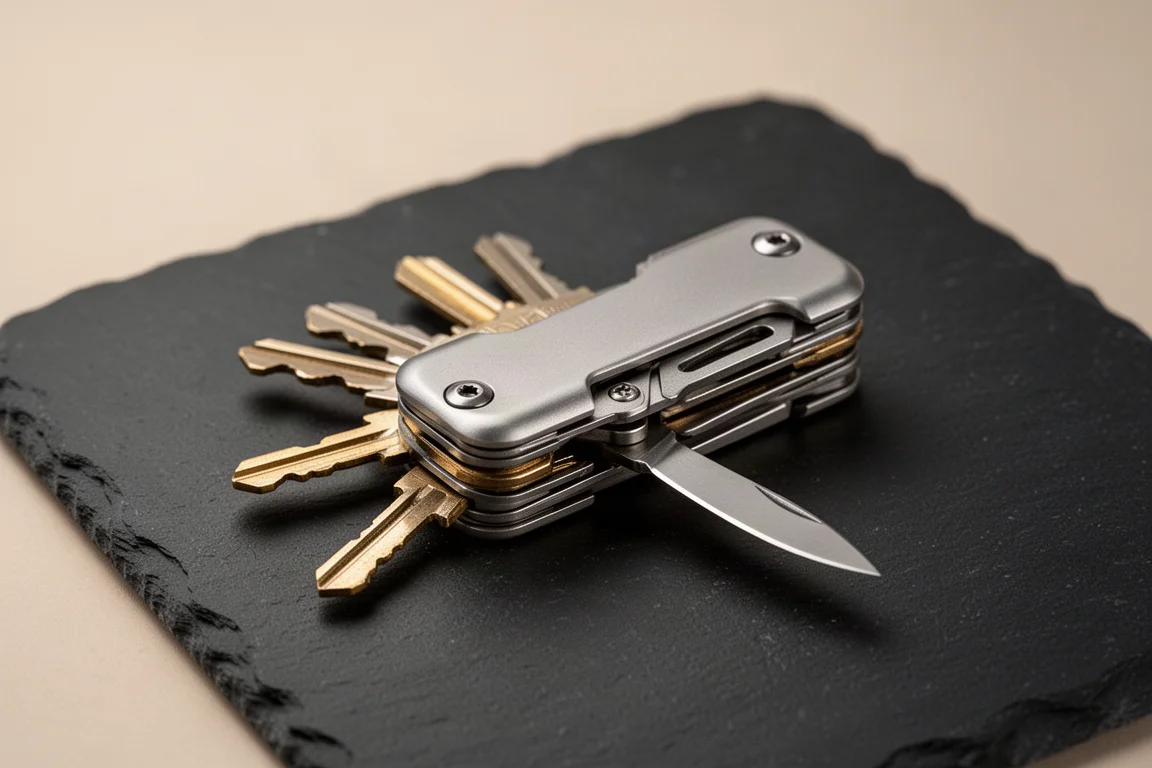
Keybar takes a different approach entirely: a modular, US-made key organizer with titanium springs and slip-joint or locking spring options. You can mix and match inserts, from screwdrivers to toothpicks, to build exactly the compact tool you want, and limited-release editions appear on the company’s site from time to time.
The 58mm-class variation is one of the few tools on this list worth choosing over a Victorinox outright. The 12C27 blade is dramatically larger and more capable than the equivalent small Victorinox blade, the flathead and pull cutters work great, the can and bottle opener locks in well, and the scissors cut incredibly well. The one drawback is weight: thick layers and steel liners make it heavier than a comparable Victorinox, and there is no tweezer. At $23 the price is actually good; if the weight bothers you, fifth-pocket carry works better than keychain carry.
Roxon KS2: The Standout Pick
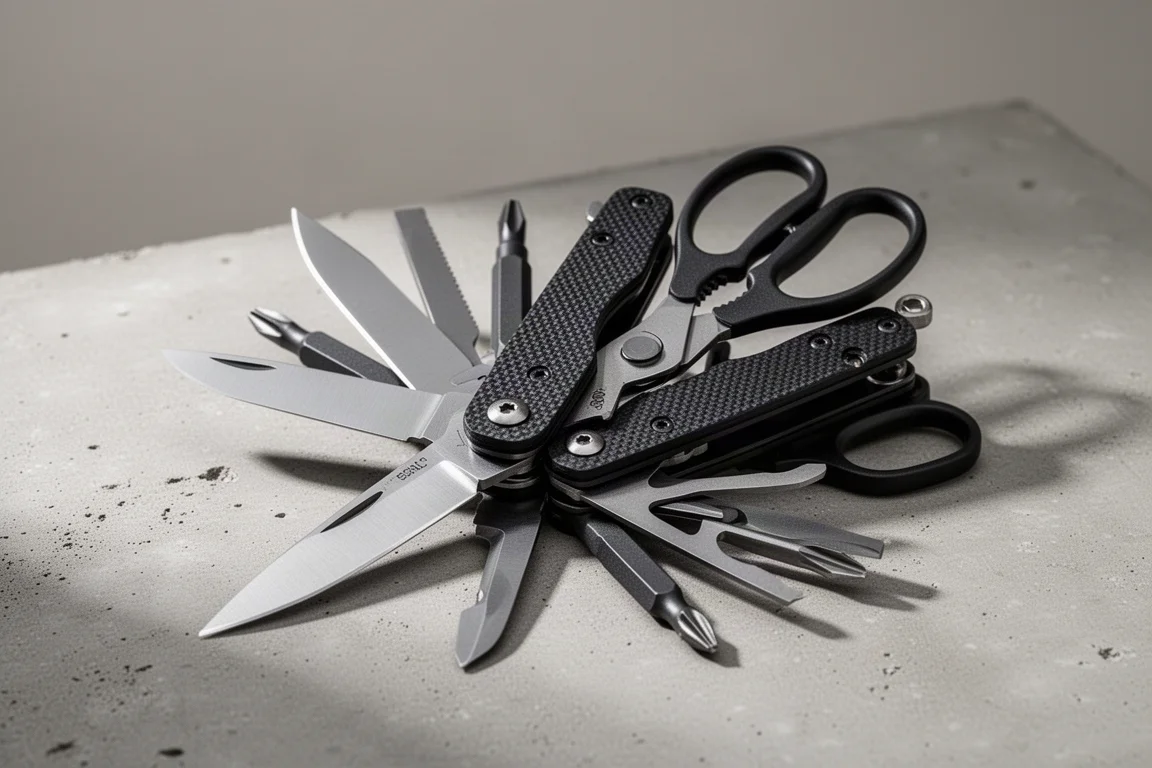
The Roxon KS2, especially the upgraded version with a D2 blade, German 4116 everything else, and the included bit kit, is the one tool here that genuinely argues it can beat a Victorinox in certain contexts. At roughly $38 for the elite kit, it matches or undercuts the price of a comparable Victorinox Fieldmaster. The locking blade is one-handable, the D2 steel holds an edge far better than standard steel, and the G10 scales take abuse far better than Victorinox’s cellidor, which scratches up quickly.
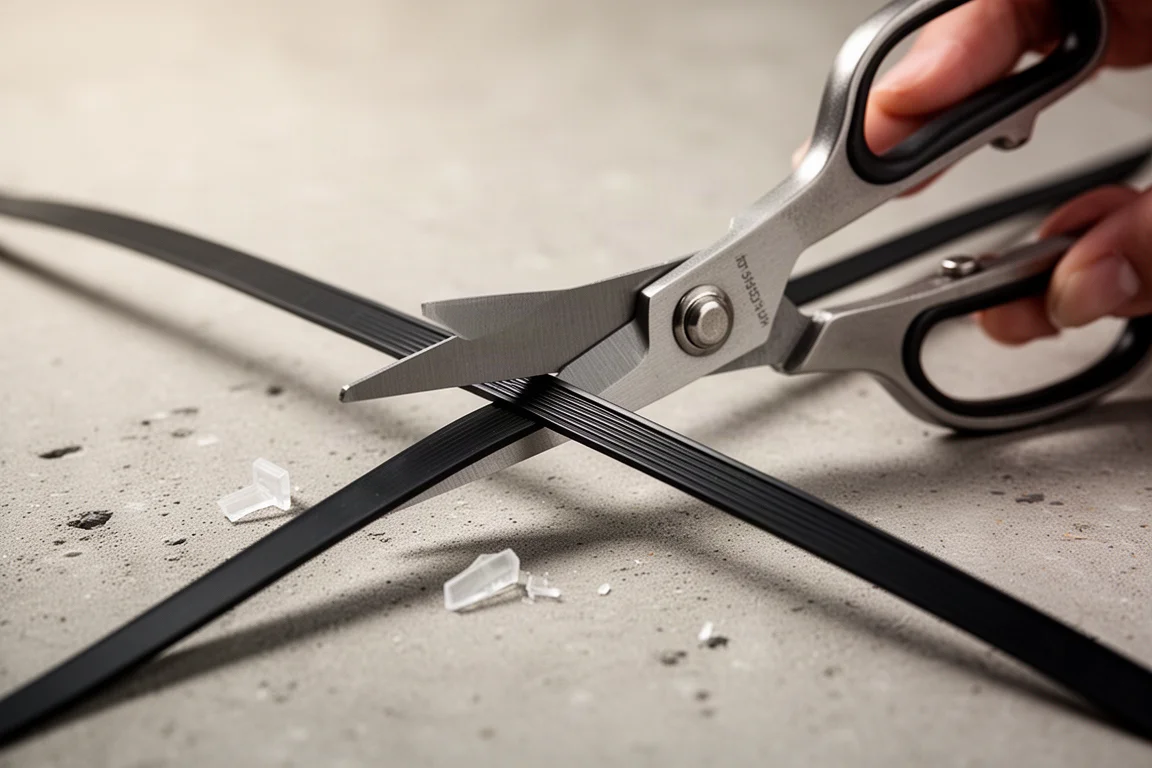
The KS2’s massive scissors are the star: they cut through even thick zip ties without trouble, and on the upgraded version they are made from harder 416 steel for better edge retention. A small tweezer hides in the handle, and there is a ceramic glass breaker bead and a pocket clip. On the other side, pressing the locking mechanism fans out three implements that all lock: an inline Phillips driver (far better than a T-handle design, and it doubles as an adapter for the 4mm bit system), a file with measurement markings, and a saw. The saw is not as good as Victorinox’s 91mm saw, being shorter and lacking the drilling capability, but the total package of locking tools and the inline Phillips is excellent.
The main caveats: every tool locks, which makes it illegal in places like the UK and EU, so this is a US-market pick. It is the single best argument for choosing something other than a Victorinox today.
Buying Advice
If you want a locking, one-hand-open tool with a pocket clip and can accept the price, the Leatherman Free T4 earns its place. If you want better steel and a bigger blade in a familiar format, the Ruike series is excellent value when discounted, with the caveat about weight and the mislabeled serrated driver. If you want compact, customizable, and are willing to accept a little extra weight, the Keybar at $23 is a genuine Victorinox alternative. If you want the full package in the US, the Roxon KS2 elite is the one tool that closes the gap completely, and arguably beats it where locking implements and better steel matter.
Conclusion
Victorinox remains the benchmark after nearly a hundred years, and its quality control, warranty, and low weight are still extremely hard to beat. But the Roxon KS2 has finally produced a credible case for choosing something else in markets where locking blades are legal, and the Ruike series and Keybar each offer focused advantages for specific users. Match the tool to the feature you actually need, and there is now a real alternative worth your money.
Further reading
Related Reviews

Everyday Carry
Everyday Gear That Deserved a Second Look
A roundup of solid everyday carry items: watches, pens, a pencil, a knife, and a smart ring that each earned a place on the table.

Everyday Carry
KORE Tactical Bifold Wallet Review: A Durable Everyday Carry Option
A close look at the KORE Tactical Bifold Wallet, a reinforced nylon wallet with magnetic closure and room for cards, cash, and IDs.

Everyday Carry
Krabby Wallet Review: A Slim, Simple Carry That Has Stood the Test of Time
A closer look at the Krabby Wallet, a slim canvas and elastic design with a loyal following and a simple, functional approach to everyday carry.