Kitchen Knives
Small-Run Kitchen Knives Tested: MagnaCut, Aegis Steel, and Where the Money Actually Pays Off
We spent months cooking with eight small-run and custom kitchen knives, from a $60-ish workhorse to a $55,000 art piece. Here is where the money is worth it, and where it is not.
Introduction
A while back we tested around 40 chef knives in one go, and the most common question afterwards was about MagnaCut, a newer steel formulation that was showing up in the knife world. At the time it was genuinely hard to find, and it still is. Most MagnaCut kitchen knives come from small-run or custom makers rather than big manufacturers.
So we tracked down a batch of small-run knives, priced from roughly $60 up to $750, and spent months cooking with them at home. The group included MagnaCut blades, Aegis steel, a Danish stainless, and carbon steel, plus a couple of mainstream recommendations for comparison. This is what we learned, including which knives earned a permanent place in our kitchen and which felt like expensive mistakes.
What Small-Run Knives Are Actually Like
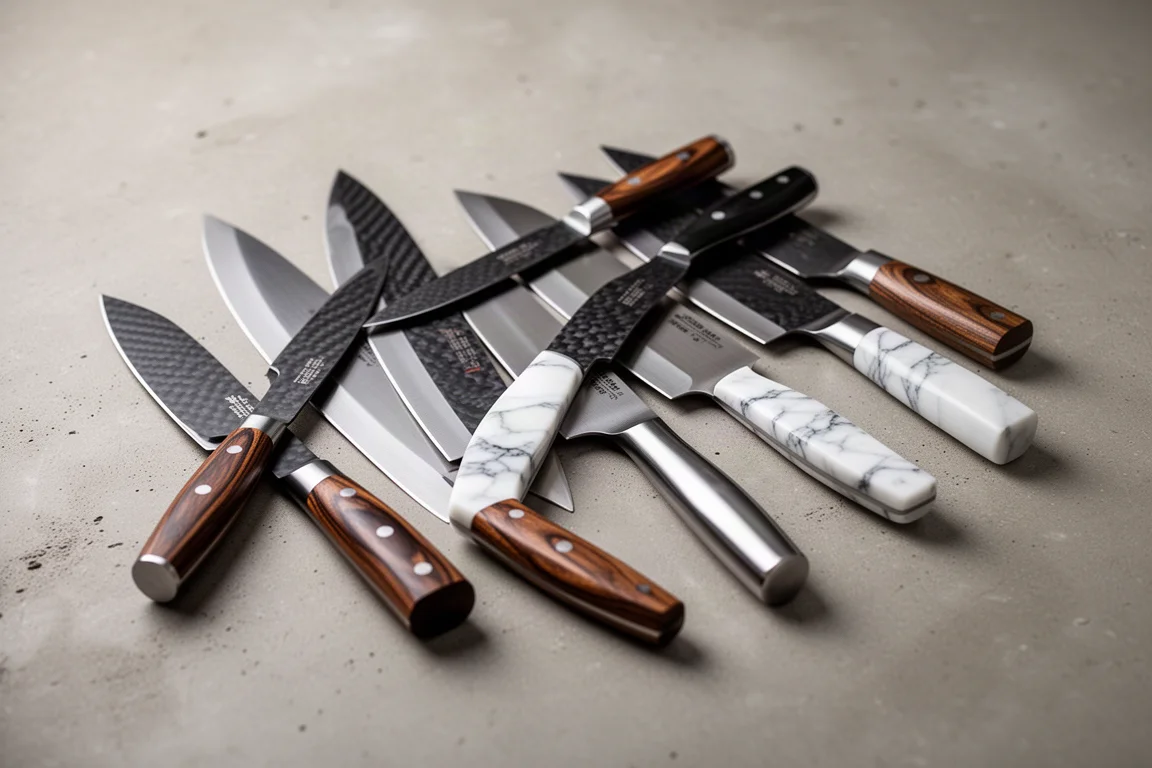
Before the individual picks, a few honest expectations. You are not getting economy of scale here, so most of these knives are expensive by nature. You also tend to get a lot of attention on aesthetics: tinted woods, marble-pattern handles, resin inlays, and unusual finishes. That can be a feature if you want an art object, but it does not make the knife cut better.
The bigger lesson is that geometry matters far more than steel composition. Beyond a certain threshold, paying for a better steel gets you diminishing returns very quickly. Geometry means how the blade bites into food when you slice: is it doing the work for you, or slowing you down? A knife with excellent steel but mediocre geometry will disappoint you every time you use it.
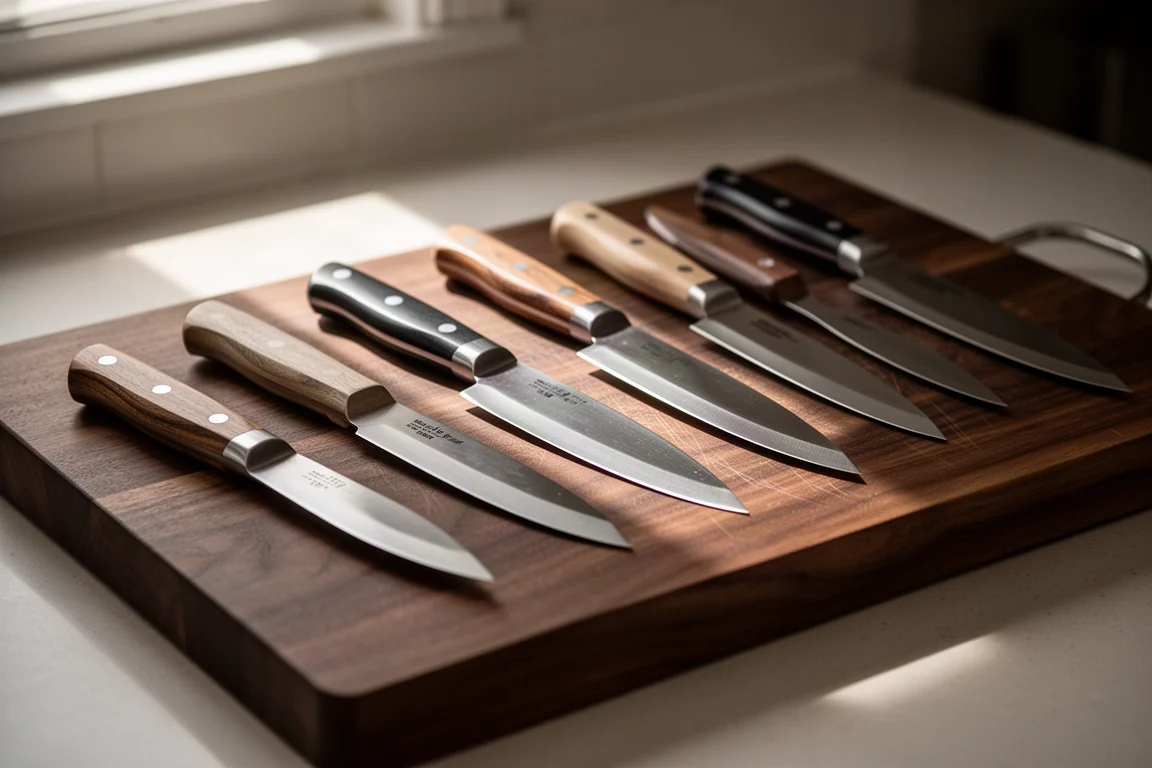
None of this means small-run knives are a bad idea. It means most people probably do not need one, and the reasons to buy one are more about the object itself than a dramatic performance jump.
The MagnaCut Disappointment
Here is the blunt summary: neither MagnaCut knife we tested justified its cost through the benefits of the steel. MagnaCut has impressive edge retention on paper, but in the kitchen, geometry and feel won out every time.
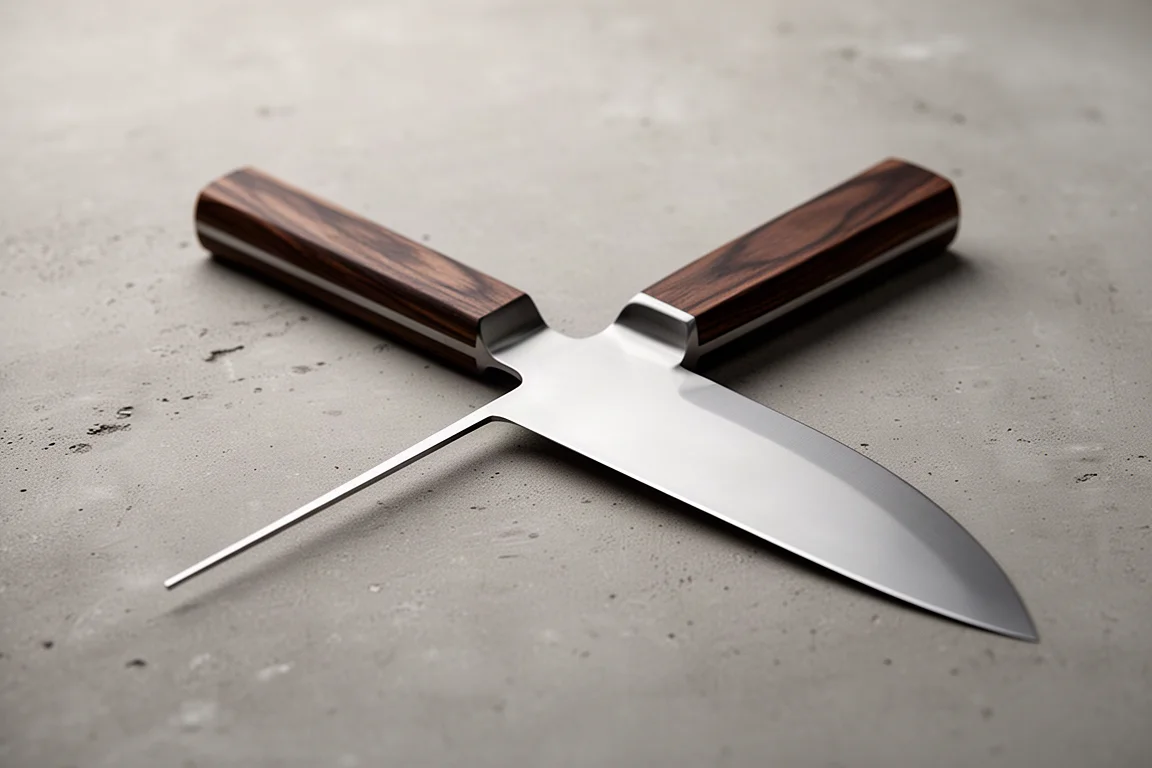
The Doberman Forge MagnaCut knife, at $550, basically feels like a piece of sheet steel. It is flimsy in hand, and although the spine is very thin, it is so flat that it lacks a proper taper, so it does not bite into food the way a well-shaped blade does. We liked the wood handle, but the geometry did not feel good in use and we quickly stopped reaching for it. It also dulled noticeably fast, despite the steel’s strong edge retention scores.
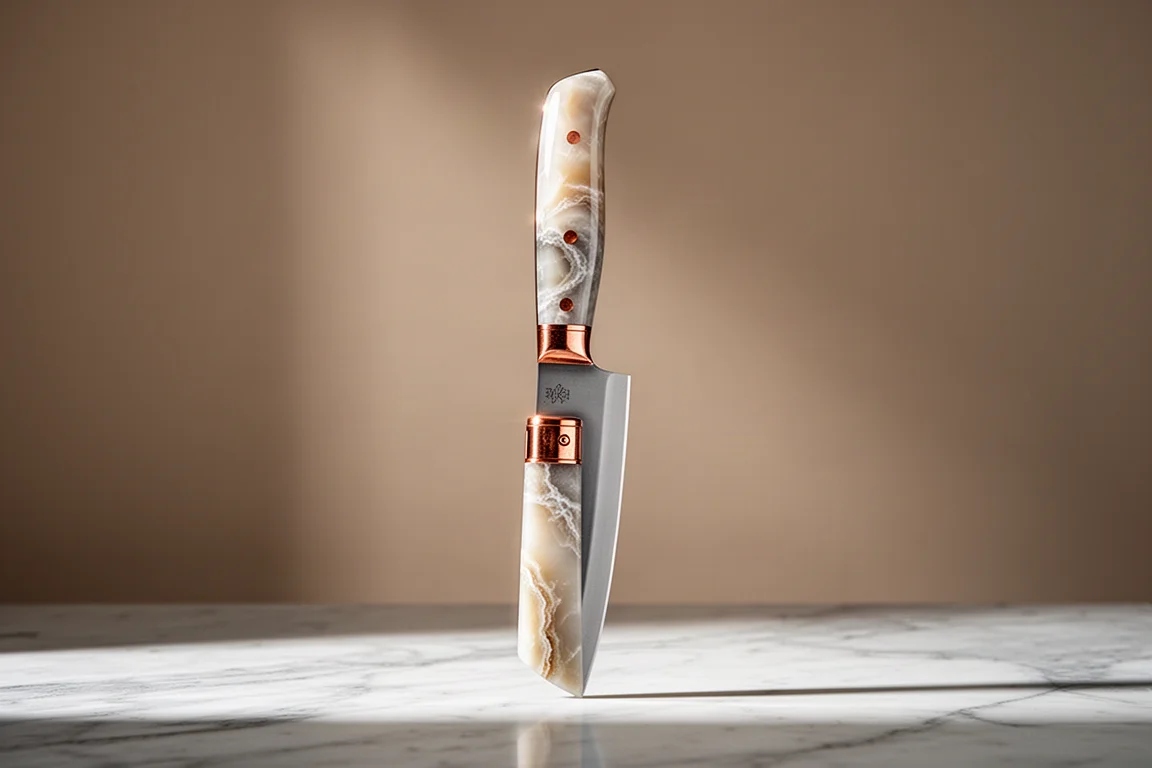
The Akuaia custom knife, at $750, we would describe as kitchen jewelry. These come with gemstone handles, brass or copper fittings, and a shiny gold edge line. The handle is so smooth that with your eyes closed you could not tell it apart from plastic. The knife itself is very long and very narrow for its profile, which did not suit our cutting style at all. We have friends who genuinely love theirs, but for us it was not a good fit, and at that price it should be.
Bradford: The Aegis Steel Sleeper
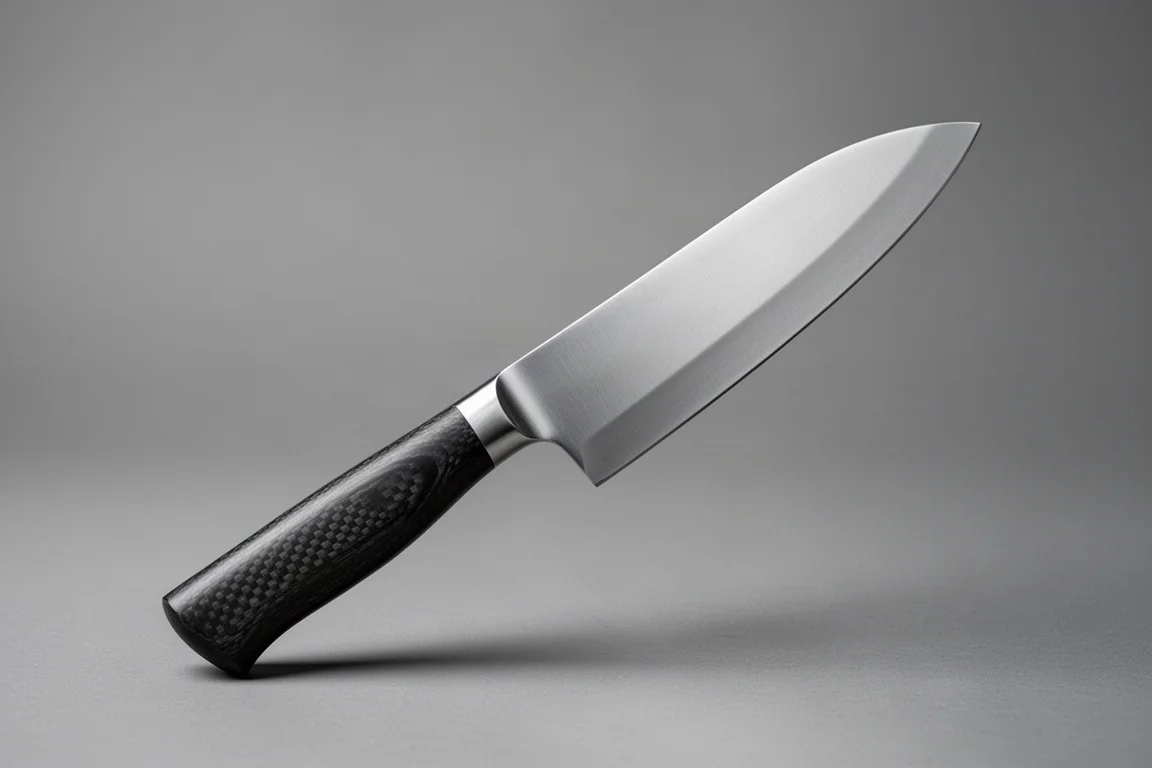
The Bradford, which we picked up from a specialty retailer in Seattle, was one of the surprises of the whole test. It has an unfinished carbon fiber handle that is heavily textured. Honestly, we do not love the look of it, and the handle feel is not luxurious. But in a pinch grip you barely touch the handle anyway, and in use this knife feels incredible.
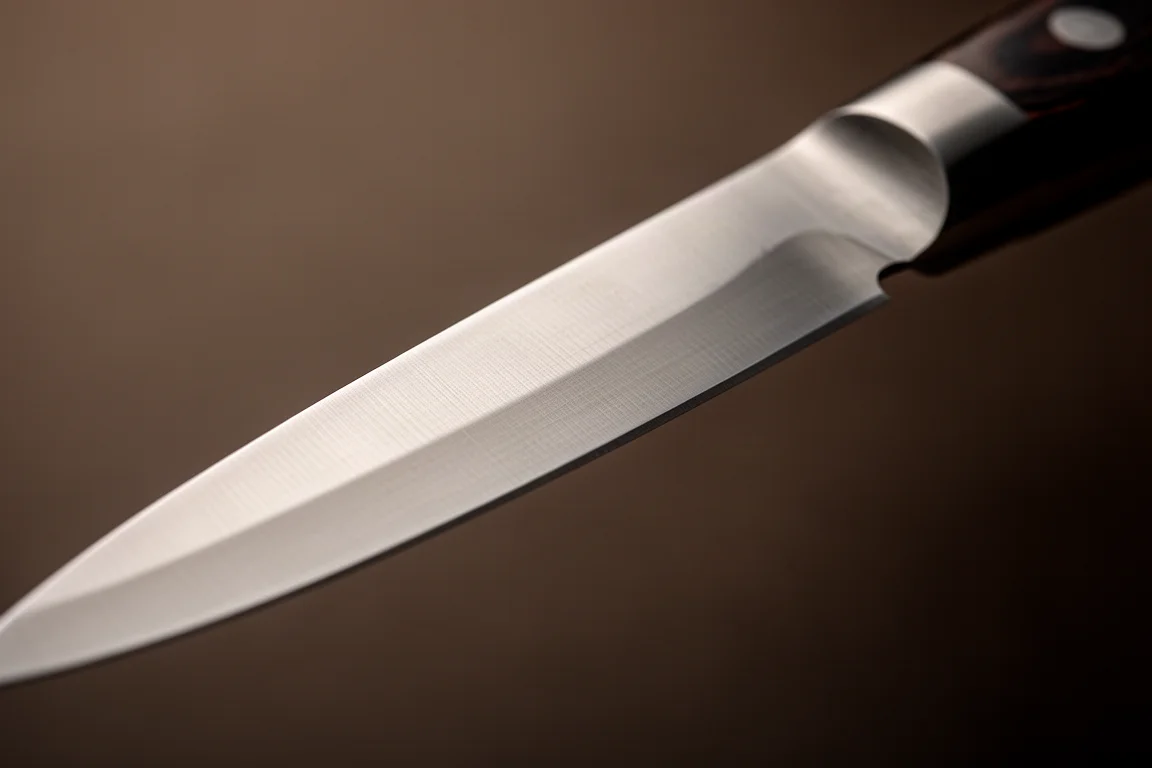
It is made with Aegis steel, which has properties similar to MagnaCut but slightly lower corrosion resistance and edge retention, while being much more available. Performance-wise it sits close to 52100 carbon steel, the steel used by Steelport, but with significantly better corrosion behavior. It is not fully stainless; we noticed a couple of small spots after leaving it to air dry, but nothing serious, and it will always fare better than plain carbon steel. At around $200 it also shows that price and enjoyment do not always correlate.
Acre Forge Makrum: The Runaway Favorite
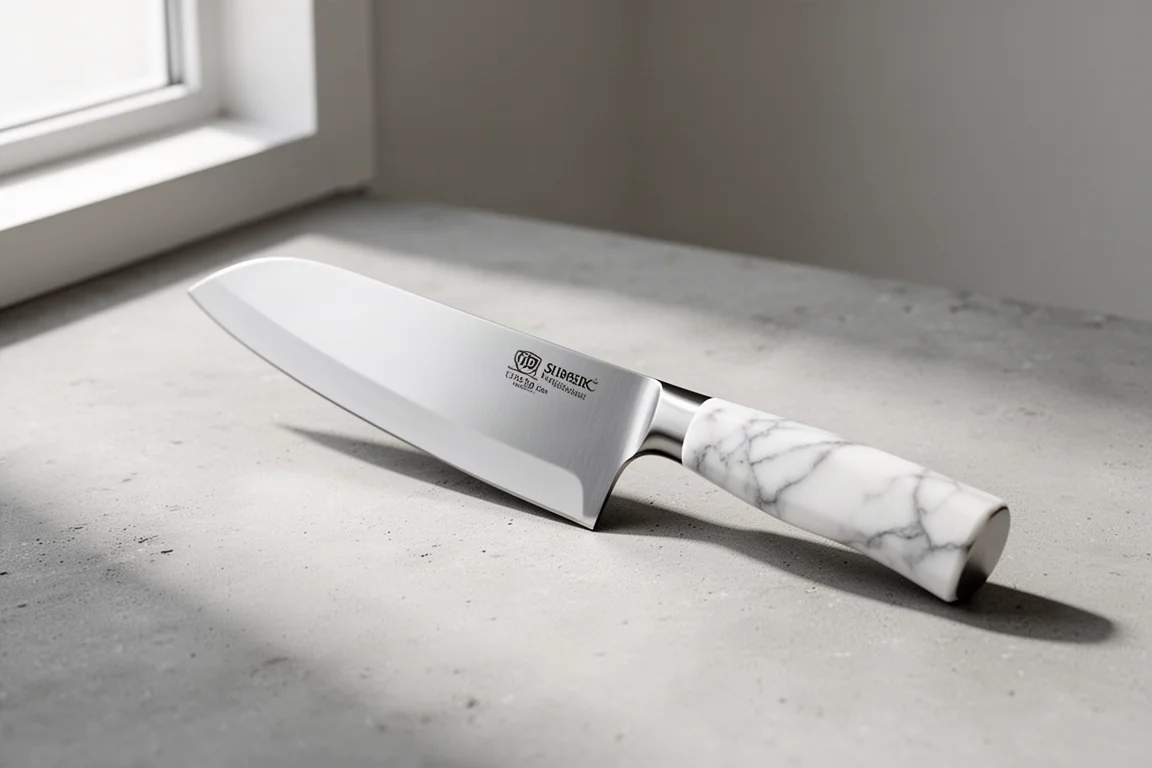
The Acre Forge Makrum has been the runaway success of this whole project. It uses RWL-34, a Danish stainless steel, and the maker’s junior version, the Makrum Light, uses Aegis steel. The Makrum is a little weighted toward the back and it has a fairly thick spine, but the geometry feels excellent. It bites confidently and does the job you want without fighting you.
One thing to know: this knife rusts a bit more easily than some others we tested, so dry it right away after washing. The white marble nylon handle on ours also gets slippery when sudsy, which made us less confident in our grip during washing. That handle is the one weak spot; in use with a pinch grip you barely notice it, but if the knife lives in your kitchen long term, Acre Forge also makes one-off versions with nicer hardwood handles, each signed by the smith who made it.
Acre Forge Makrum Light: The Same Feel, Slightly Less Steel
The Makrum Light is the junior version of the Makrum, made with Aegis steel instead of RWL-34, and priced at $300 versus the Makrum’s $325. We tested it because we already had enough Aegis knives and still wanted to feel the same profile and geometry in a slightly different package.
The core appeal is identical: a 7.25-inch blade rather than a full 8 inches, a shape weighted forward, and geometry that inspires confidence in the cut. If you prefer shorter knives or have smaller hands, this length is worth serious consideration. It leans more utilitarian than artistic compared with many custom makers, which is exactly why it works as a daily driver.
Steelport: Good Geometry, Now Even Better
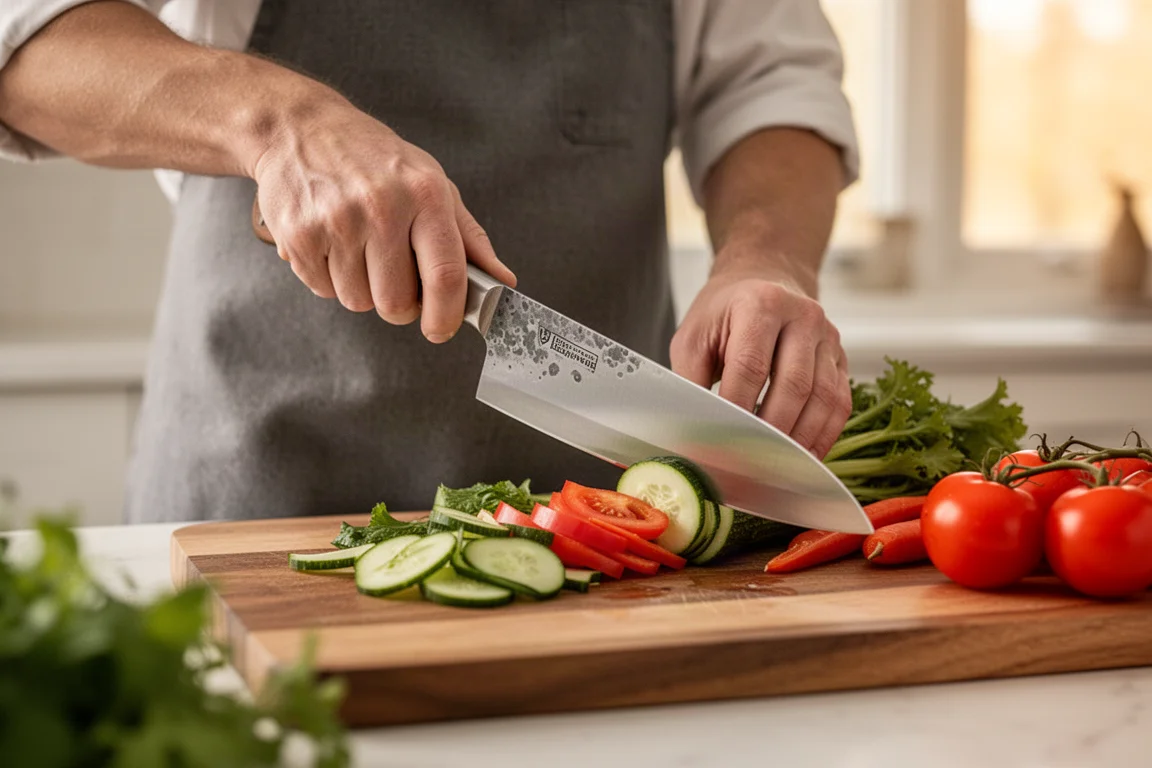
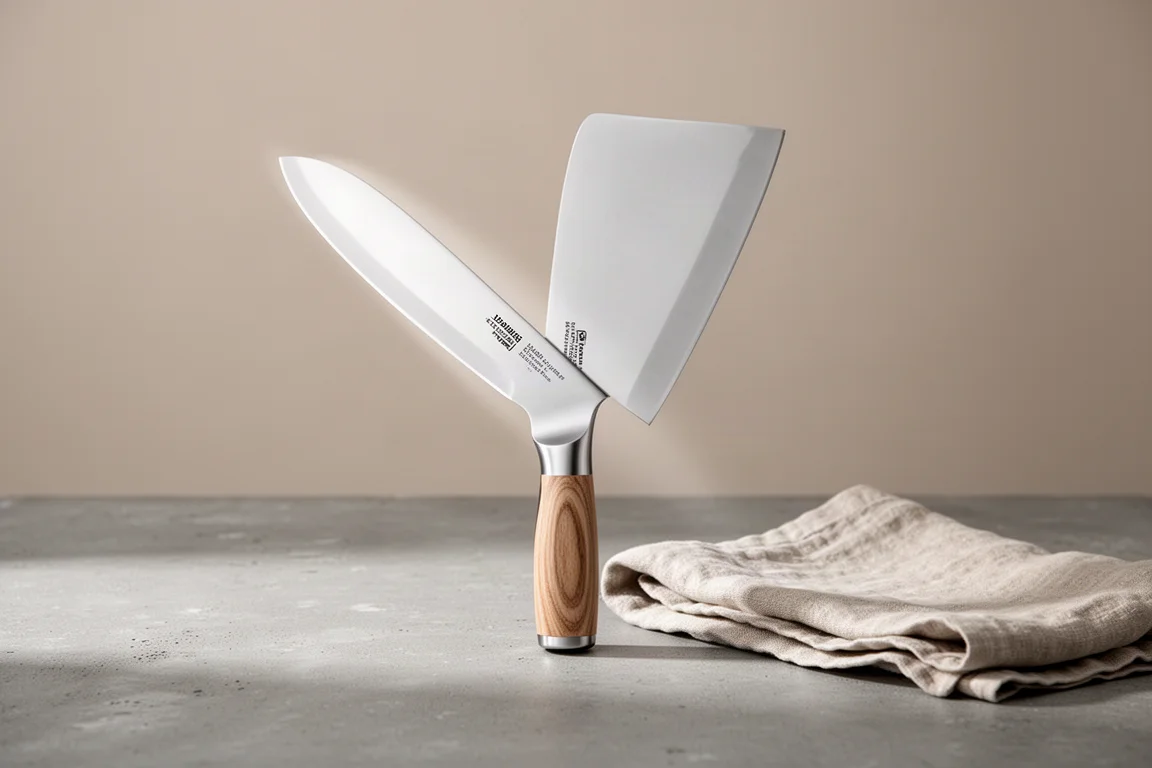
The Steelport chef’s knife has been one of our daily drivers from the earliest generations. The first version needed a geometry rework: thinning the flats and reducing the thickness along the spine and body. Once that was done, it went from good to genuinely great, because it nailed the thing that matters most, how the blade moves through food.
Steelport uses 52100 carbon steel, which is our favorite carbon steel and behaves similarly to Aegis but with less corrosion resistance, so it needs prompt drying. What makes the brand interesting is that later generations incorporated fixes for earlier issues, and the company offers lifetime free sharpening, including on their serrated bread knife, using a machine they built in-house to restore a factory edge. Their blades are also ground without a full bolster, so the edge can make proper contact with the cutting board, a detail most home cooks never think about until it is missing.
The Mainstream Picks That Still Win
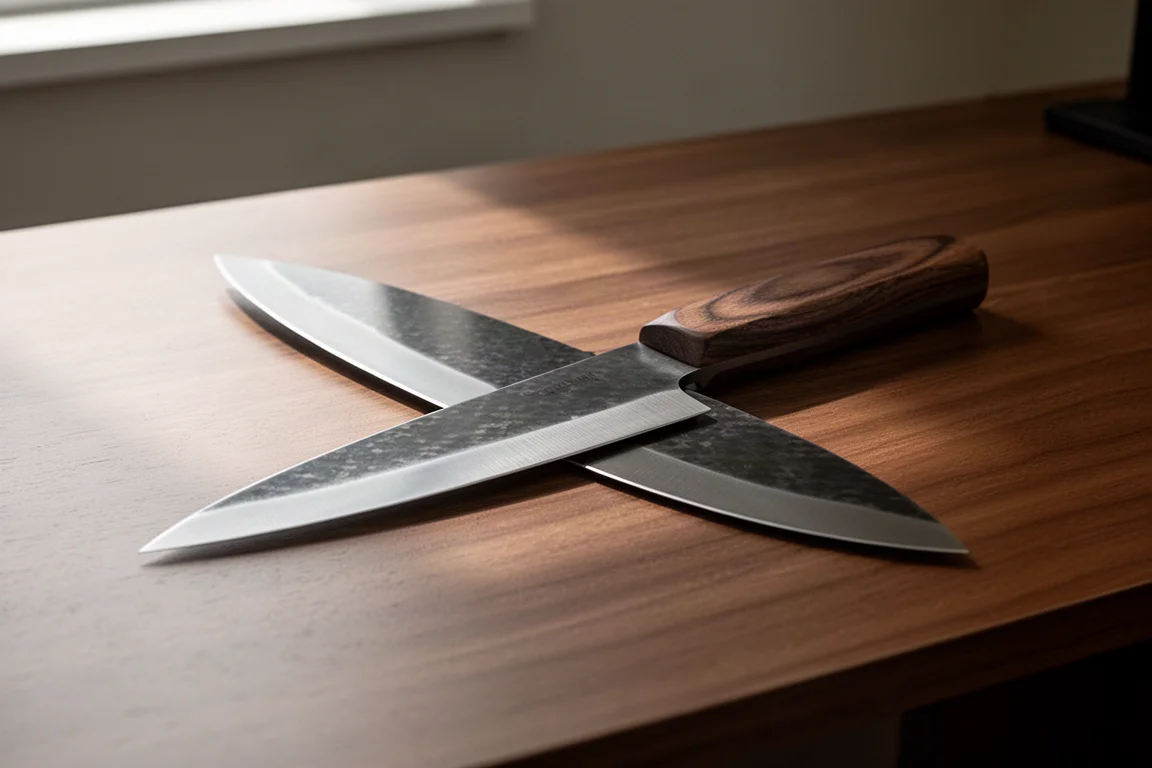
After all the travel and testing, our core recommendation for most people has not changed. The Hedley & Bennett chef’s knife remains a great intermediate option: a good middle shape, a good middle weight, and performance characteristics in line with the small-run blades, minus some edge retention. Importantly, it has much better corrosion resistance than the carbon and semi-stainless options here, which matters a lot for real households.
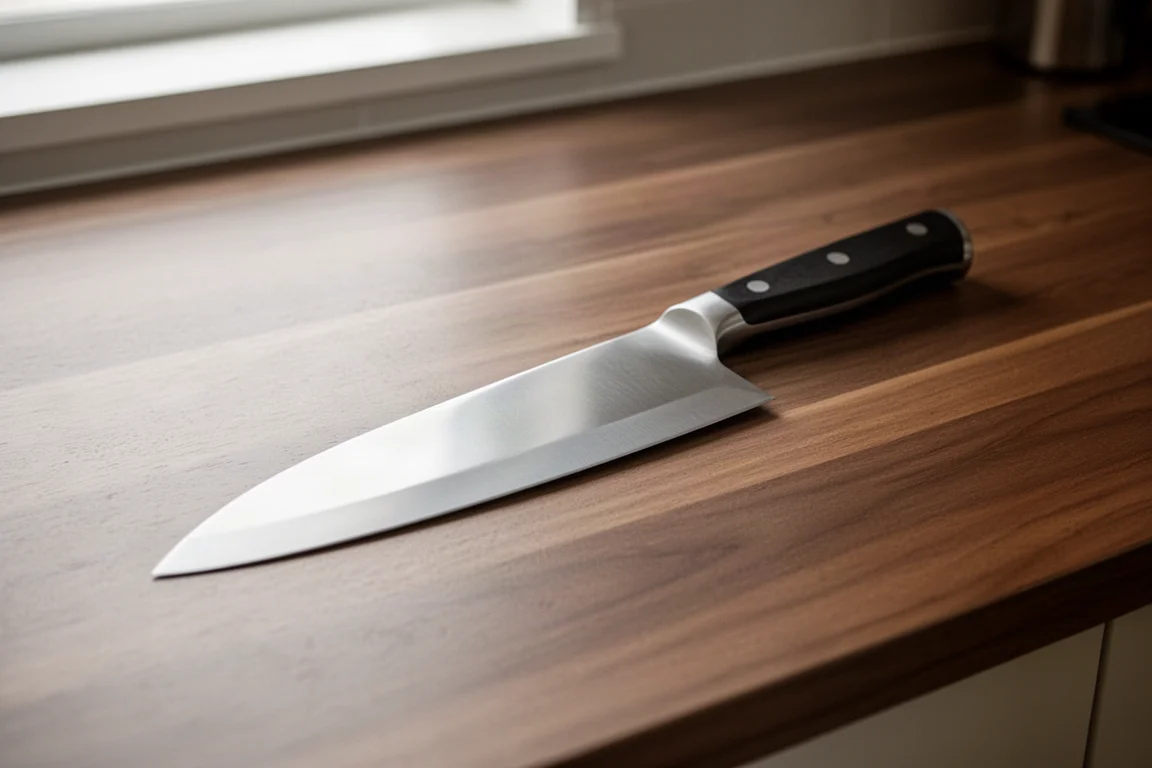
On the budget side, the Mac Chef series santoku is still the affordable pick we suggest, typically around $115. Interestingly, the Acre Forge Makrum feels like a high-end, stainless version of that same santoku profile, which is part of why it clicked for us so quickly. If you want the santoku experience without the small-run price, the Mac remains a genuinely strong choice.
The $55,000 Question
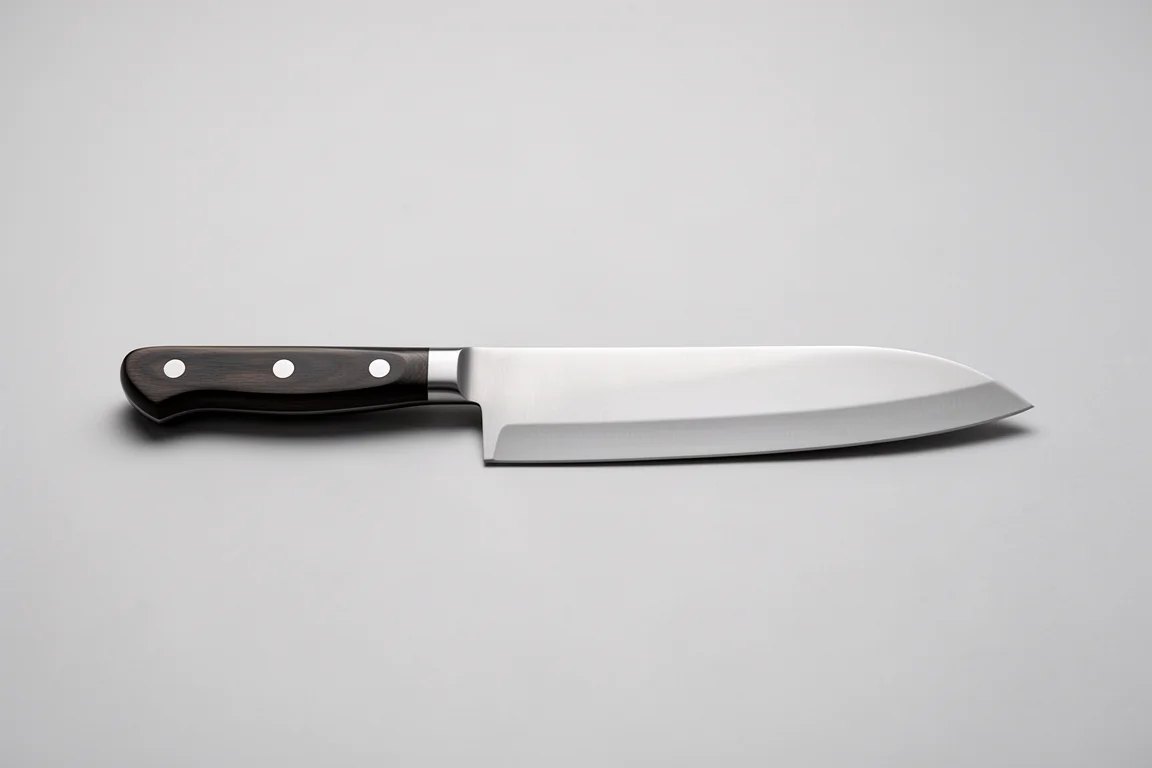
A listener asked us about a custom knife they found listed at roughly $55,000, the Gelande Gold Vim. It is a striking object, with a gold vein running through the blade, and we would call it the quintessential kitchen jewelry. If you have that kind of money to spend on a knife you love looking at, that is your call, but it is not a performance purchase, and it was not to our taste.
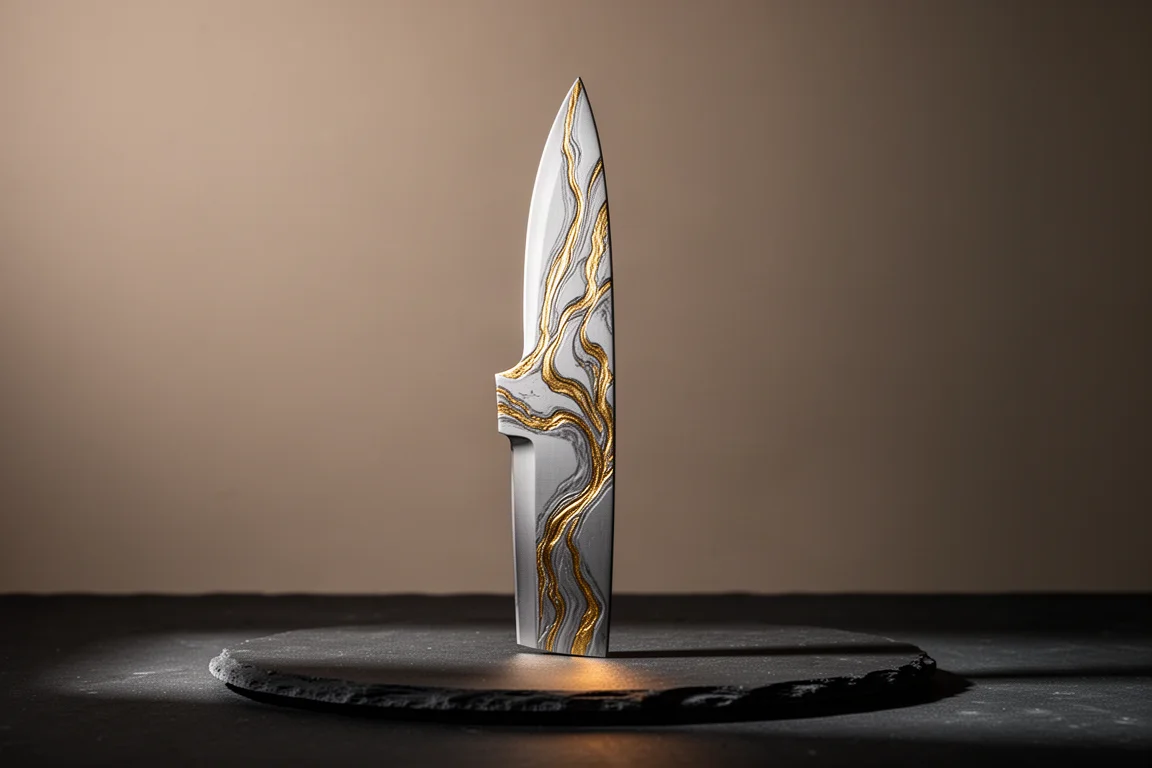
It does raise a fun thought experiment, though. If we commissioned our own custom knife, we would want a light hardwood handle that stops the pinch grip at the wrist, a fairly sharp geometric profile with a low tip similar to the Steelport and Acre Forge, a medium-thick spine so the knife leans forward, more weight in the blade than the handle, stainless steel for convenience, and a length right around 7.25 inches. In other words, something small, utilitarian, and boring, not fancy.
Buying Advice: How to Choose Without Handling It First
Traditional advice says hold a knife before you buy it, but online shopping makes that hard, and even in-store demos are misleading because display knives are usually dull. What actually tells you the most is the first bite: does the blade grab the food and slice cleanly, or does it wedge partway through?
Three things to check, in order. First, geometry: how it bites and whether it pushes all the way through a cut. Second, weight distribution: hold the knife loosely and see if the weight sits toward the front of the blade rather than the handle, because a forward balance takes less work and builds confidence. Third, the handle: if you do not enjoy even picking the knife up, you will not reach for it, so handle material matters more than most people expect.
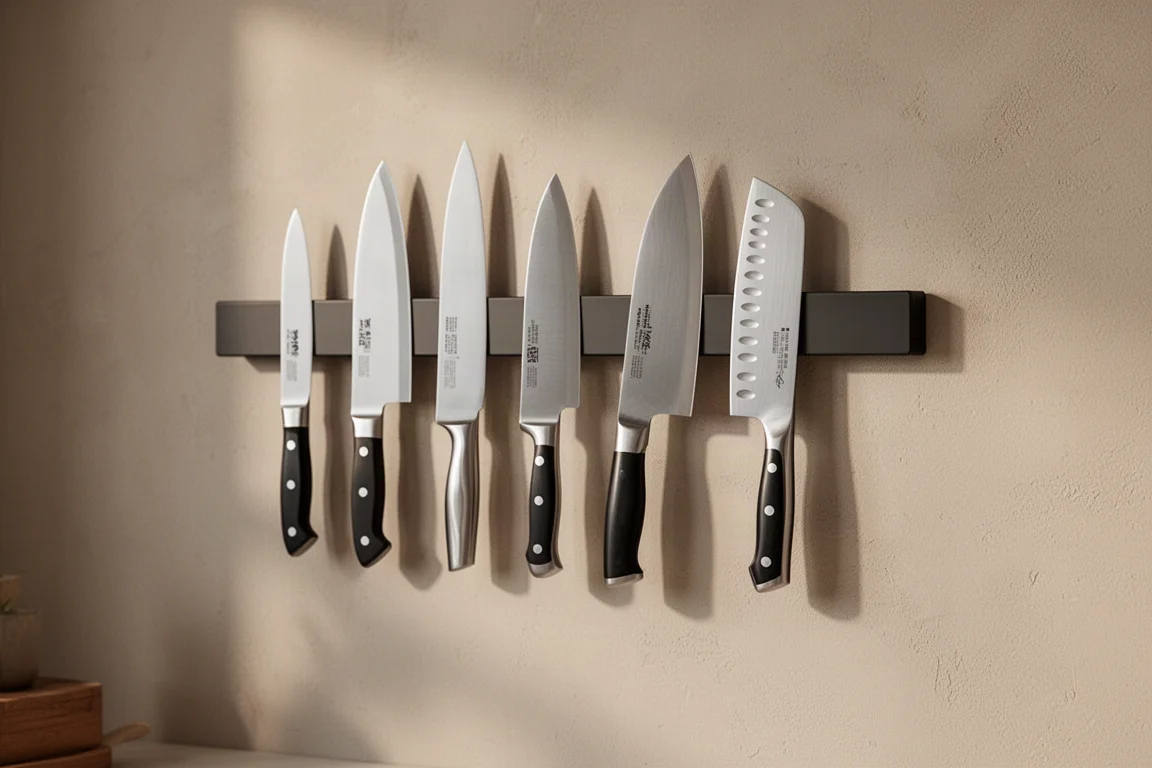
On price, our experience points to a clear sweet spot. In mass-market knives, returns start diminishing around $150 to $200. In the small-run world, that threshold roughly doubles: we saw the best outcomes in the $300 to $400 range, with the Acre Forge knives and the Steelport sitting comfortably in it. Above $400, quality dropped off quickly in our testing. The two cheapest customs we tried ended up being our favorites, while the most expensive ones fell away hard.
Conclusion
The overall takeaway is simple: geometry beats steel, price does not predict enjoyment, and the two cheapest small-run knives we tested outperformed the two most expensive. If you want a small-run knife because it speaks to you as an object, that is a perfectly good reason. If you are buying purely for performance, the mainstream picks like the Hedley & Bennett and the Mac Chef santoku still deliver most of the experience for a fraction of the cost. And if you do go custom, aim for that $300 to $400 window, check the return policy, and pay attention to how the blade bites before anything else.
Further reading
Related Reviews

Kitchen Knives
Best Chef's Knives 2026: 27 Popular Options Tested and Ranked
A comprehensive review of 27 chef's knives ranging from $18 to $380, with honest assessments of handle comfort, blade balance, and real-world performance.

Kitchen Knives
Best Chef's Knives Under $75: Two Tested Recommendations
Two practical 8-inch chef's knives that balance sharpness, comfort, and durability without premium pricing.

Kitchen Knives
Best Chef's Knives 2026: 27 Options Tested and Ranked
A comprehensive review of 27 chef's knives ranging from $18 to $380, with honest assessments of handle design, balance, blade profile, and real-world performance.