Kitchen Knives
Best Santoku Knives: Four Japanese Kitchen Knives Worth a Look
The Santoku is Japan's most popular home kitchen knife shape. Here are four standout options, from fully stainless to traditional carbon steel.
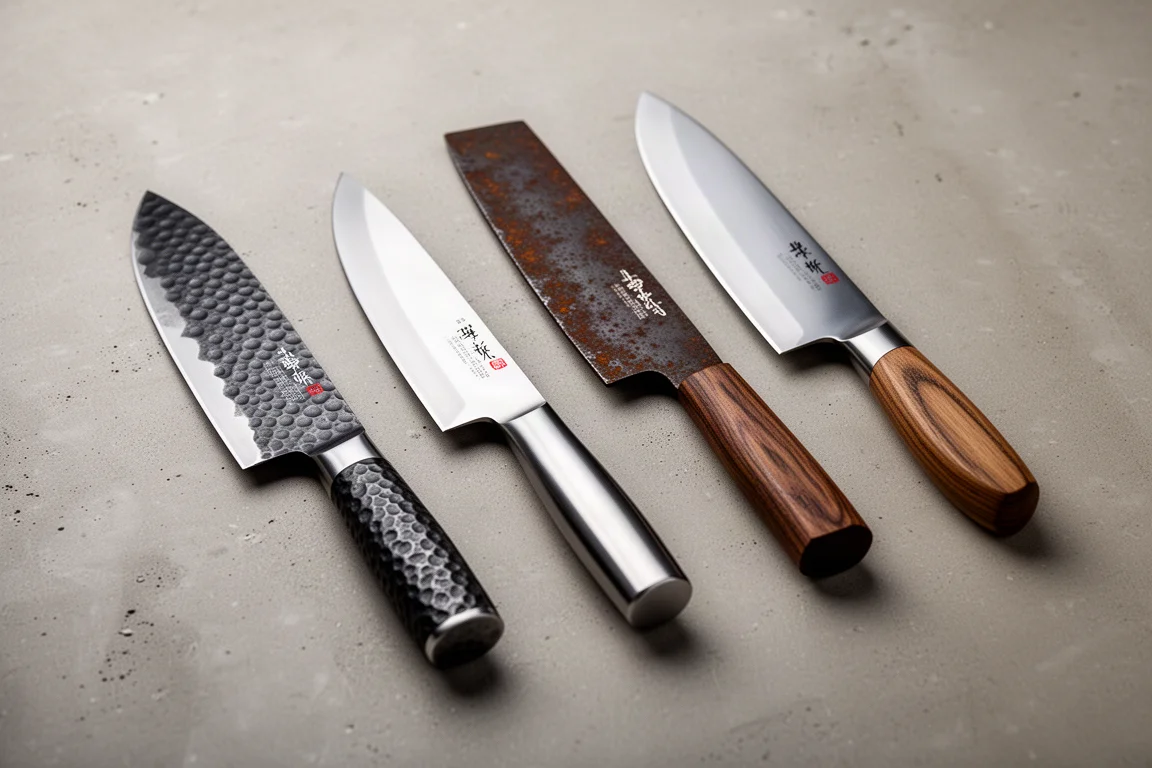
Introduction
If you have heard anything about Japanese kitchen knives, you have probably heard the word Santoku. The name translates roughly to “three virtues,” which most people read as slicing, dicing, and mincing, or meat, fish, and vegetables, depending on who you ask. In practice, it simply points to one thing: this is a knife shape that can do almost any job in the kitchen.
Today the Santoku is the most popular knife shape in Japanese home kitchens, and it keeps gaining ground in the West for both home and professional use. Below we break down what makes the shape special and highlight four Santoku knives that cover very different priorities.
Why the Santoku Shape Works
The Santoku evolved from Japanese kitchen history. In the fifties and sixties, the most popular knife in Japanese home kitchens was the Nakiri, a flatter blade that makes great board contact for vegetables. Knife makers eventually cut off the tip to create the Bunka, which added a more precise tip for scoring work. That design kept evolving into the Santoku we know today.
At a usual length of 165 to 180 millimeters, the Santoku sits in a genuinely useful middle ground. It is big enough to handle larger vegetables and cuts of meat, and you can still get through a cabbage, but small enough to stay nimble and precise. For many people, a smaller knife also feels less intimidating to start with, which is exactly why it works so well as a first Japanese knife.
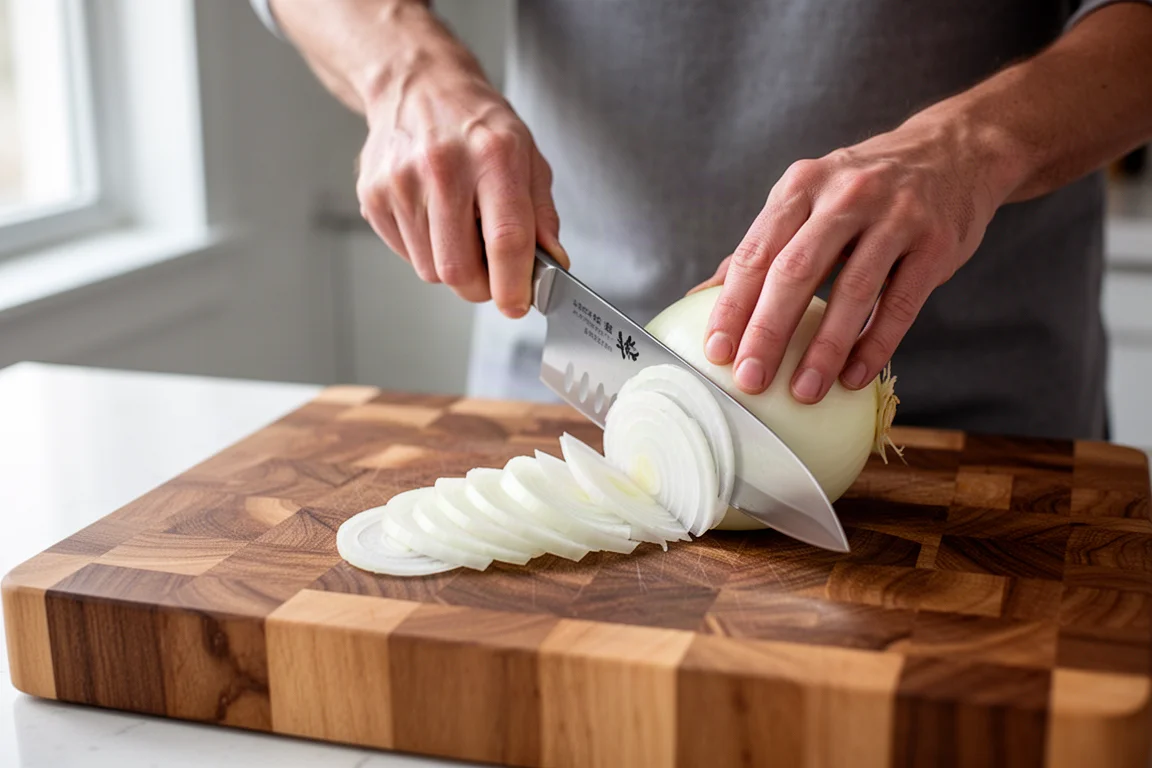
So what defines the shape? A snub-nosed drop tip, extra blade height that gives generous knuckle clearance on the board, a mostly flat back section like a Nakiri, and a gentle belly curve with a slight upsweep toward the tip, similar to a gyuto but shorter and easier to manage. Santoku come in wa handles and Western handles, stainless and carbon steels, and everything from hand-forged to machine-forged finishes, so there is usually a version that fits your preferences.
Best Easy-Care Pick: Haruyuki Kokuto
The Haruyuki Kokuto is fully stainless, which makes it one of the easiest Santoku to live with. You never have to worry about rust creeping in, though as with any stainless steel, stainless means stain-resistant rather than stain-proof, so avoid leaving it in the sink for days.
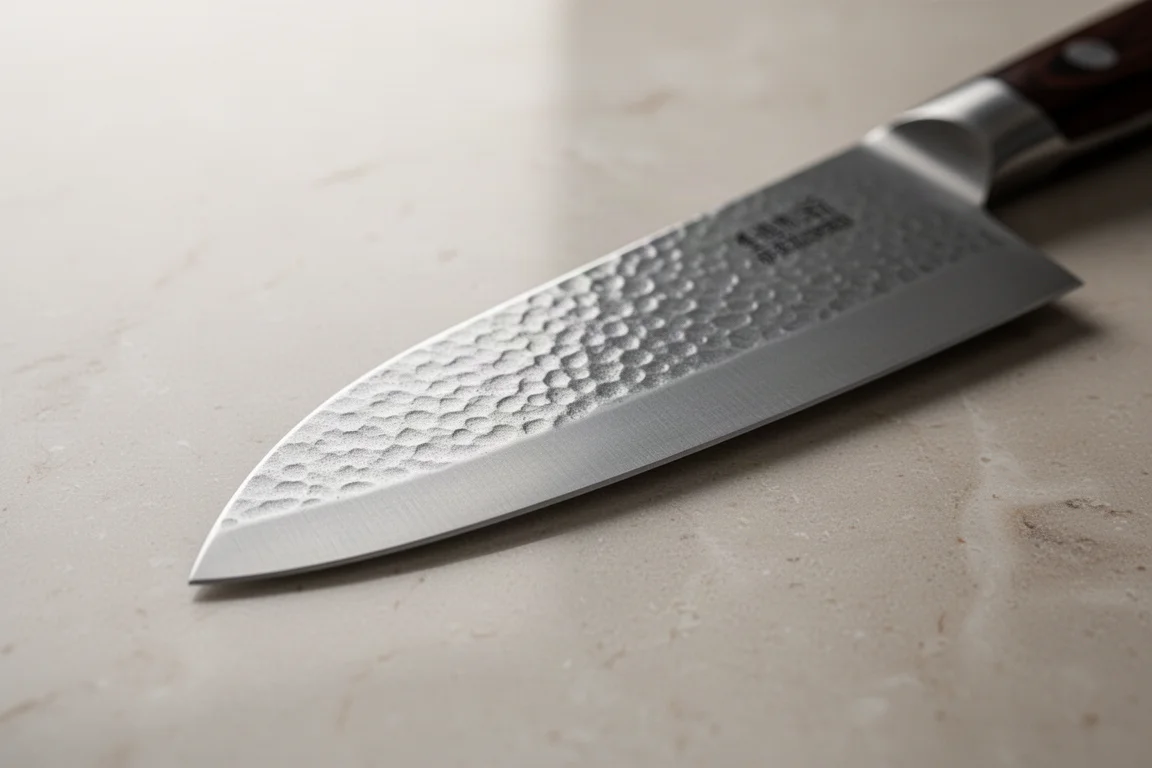
It also carries a nashiji finish, a term that literally means pear skin and describes that lightly roughened surface texture on the blade. If you want a low-maintenance Santoku that still looks and feels distinctly Japanese, this is a strong starting point.
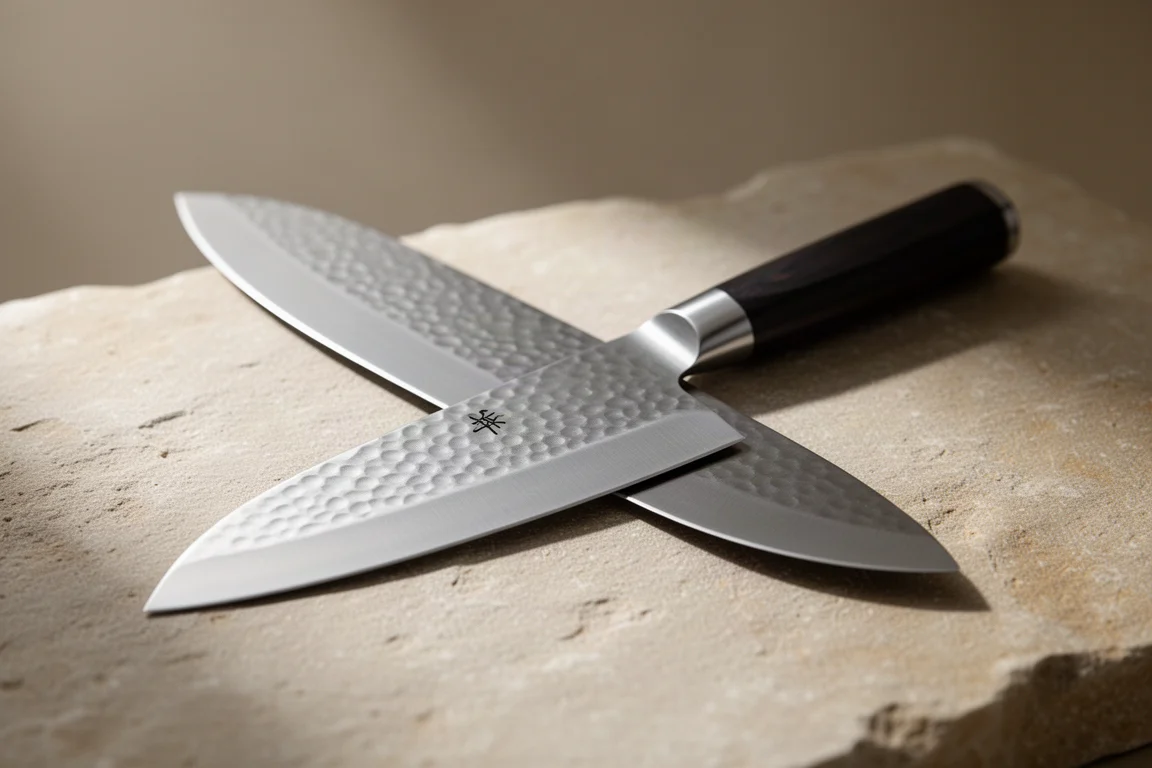
Best Laser-Style Blade: Takamura Kurogouchan
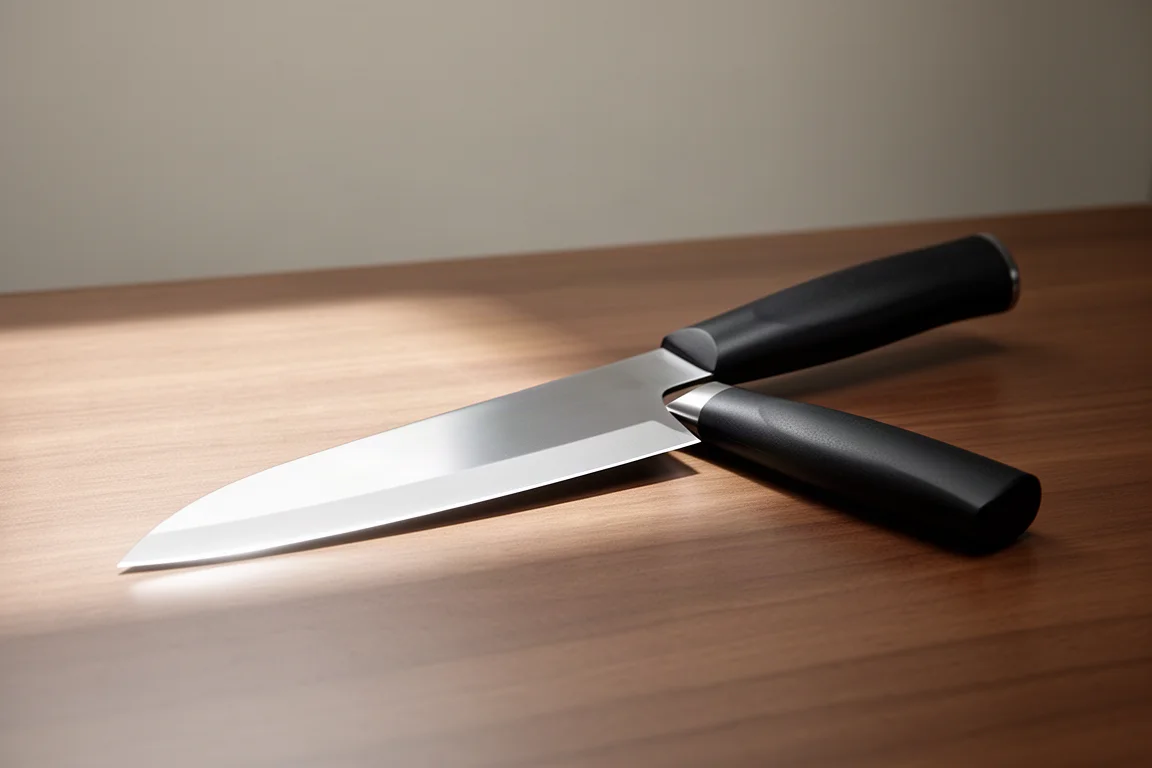
If you would rather have a Western handle that puts a little more weight back in your hand, the Takamura Kurogouchan is the one to try. Its defining trait is an ultra-thin blade, so thin you can barely see down the edge.
That geometry translates to laser-like cutting performance. A blade this thin slices with far less resistance, cutting more like a laser than a workhorse. You can still use it for nearly everything, just be aware that the thin edge is a bit more delicate than thicker blades.
Best Traditional Carbon Steel: Fujimoto Kurouchi Forged
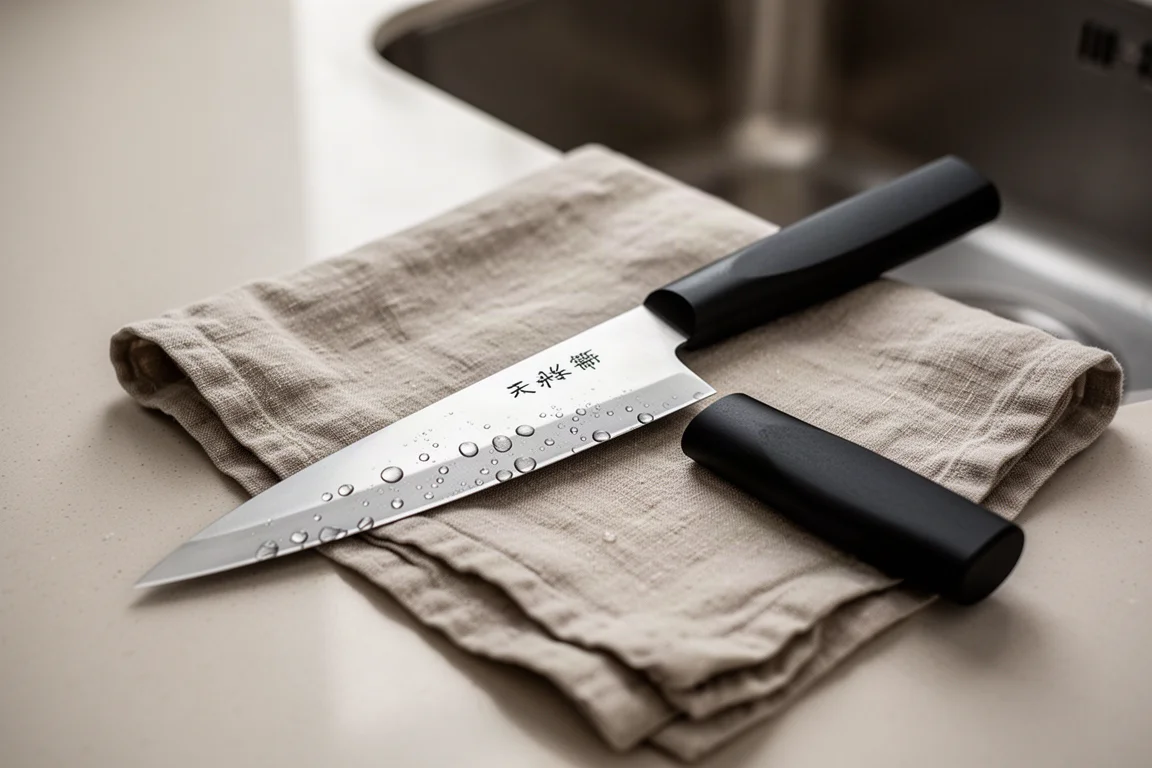
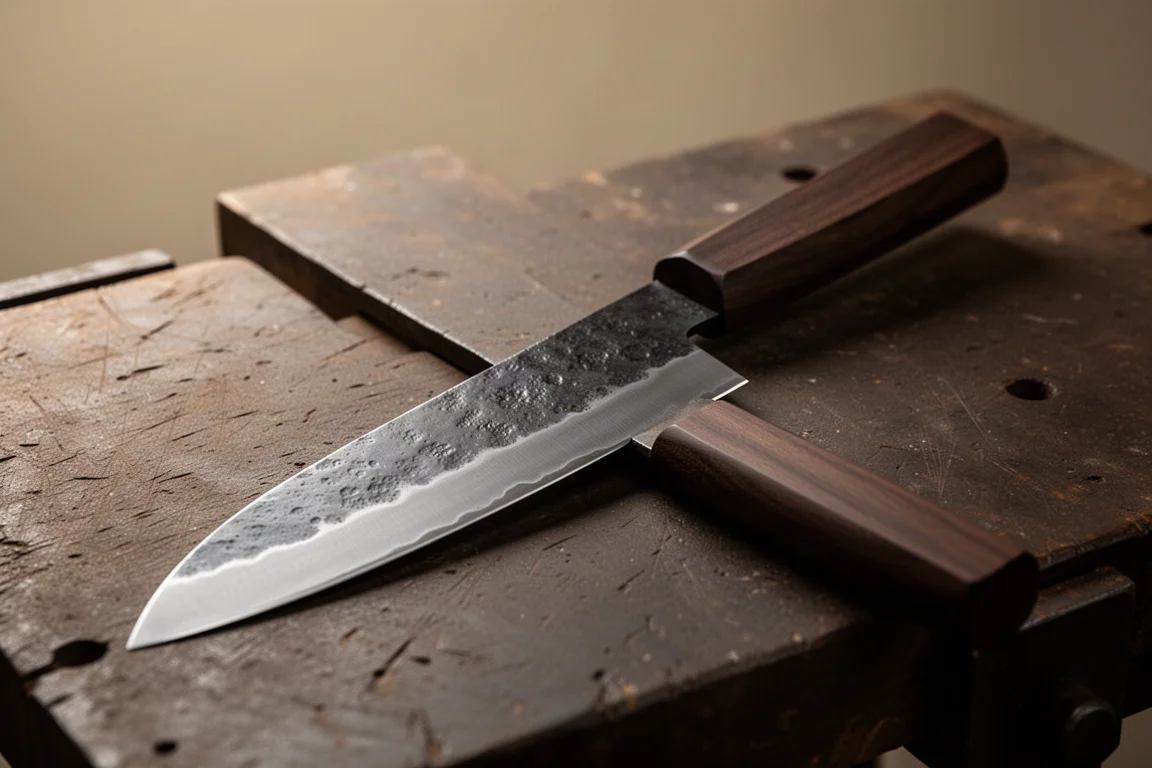
For something genuinely traditional, the Fujimoto Kurouchi Forged is a favorite. This one is fully carbon steel, so it needs extra care: wipe it dry before putting it away, or it will rust on you.
The payoff is a white carbon steel core that takes a remarkably sharp edge, and the blade stays just as manageable as the smaller stainless options. It is a great fit for anyone who wants the classic carbon steel cutting feel and is willing to look after it.
Best of Both Worlds: Masakage Yuki
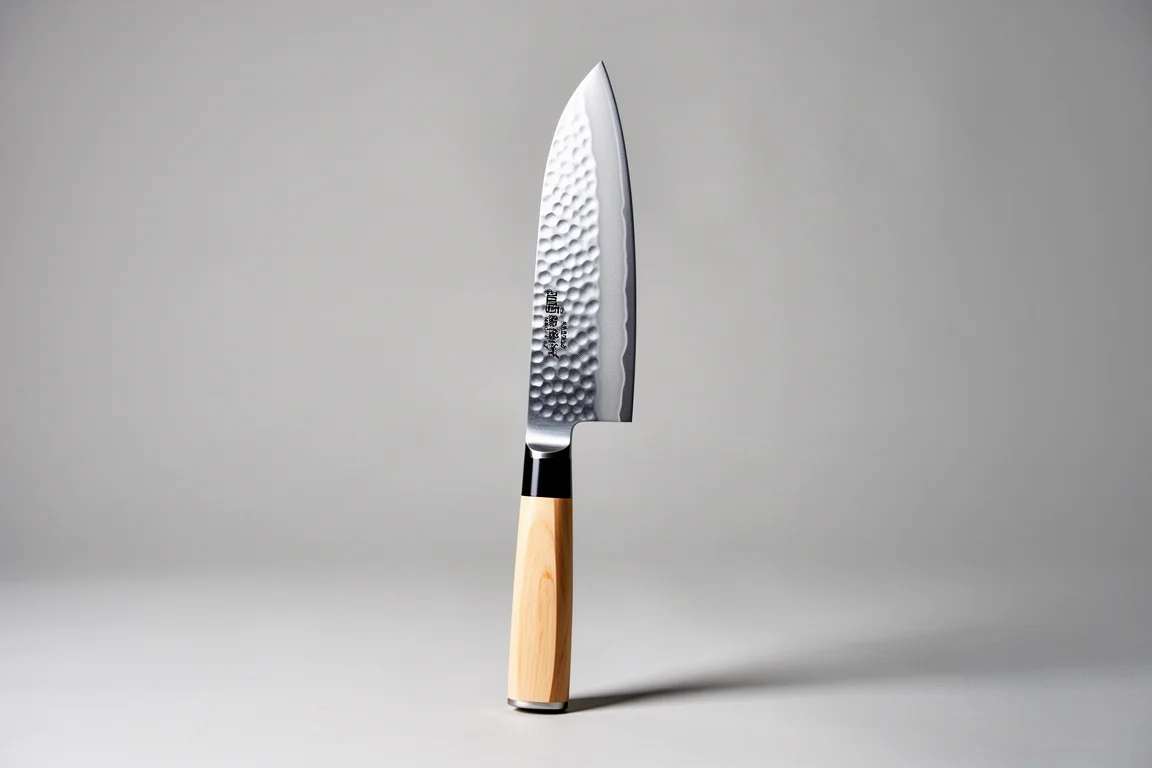
If you like the edge retention of carbon steel but are not ready for a fully carbon knife, the Masakage Yuki sits right in the middle. It uses a smart construction: the harder, more reactive core steel sits in the center and is sandwiched between two pieces of stainless steel. You get a hard edge that stays sharp for a long time, and only that inner core needs rust attention while the rest of the blade stays strong and stainless.
The Yuki is also completely hand-forged by Yoshimi Kato-san, whose work is what most people picture when they think of a hand-forged Japanese kitchen knife. It is one of the most popular knife lines around, and it is easy to see why.
A Note on Handles and Technique
If the traditional wa handle is new to you, there is a common misconception that it is less durable than a Western handle. In reality, it balances the knife right around where you naturally want to hold it, and it can be replaced if anything happens to it.
Grip also matters more than people expect. Rather than holding the knife far back on the handle, pinch the blade just ahead of the handle and wrap your fingers around. Gripping high gives you maximum control, which is exactly what the Santoku’s compact shape rewards.
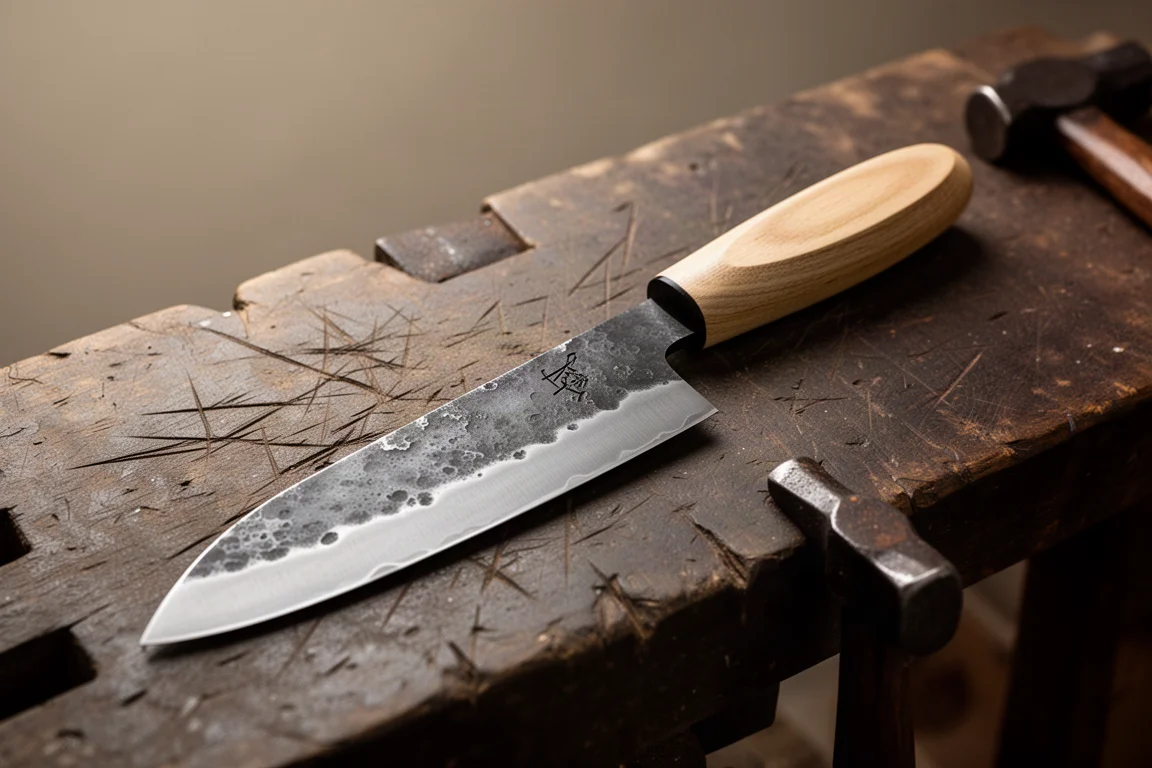
In use, the shape shows its logic quickly. The precise tip is great for scoring, the blade height keeps the knife from getting lost in large vegetables, the flat back lets you follow through a cut cleanly, and the gentle curve allows a light rocking motion if you want one.
Which Santoku Should You Choose?
Every knife here is a real Japanese Santoku in the 165 to 180 millimeter range, but they suit different buyers. The Haruyuki Kokuto is the easy-care stainless option for anyone who wants minimal fuss. The Takamura Kurogouchan suits cooks who value effortless thin-blade slicing and prefer a Western handle. The Fujimoto Kurouchi Forged is for the traditionalist who will maintain carbon steel in exchange for its edge quality. The Masakage Yuki blends a hard carbon edge with stainless outer cladding and hand-forged craftsmanship, making it a middle path with serious appeal.
Whether this would be your first Japanese knife or you are stepping down from something bigger and want a more manageable shape, the Santoku earns its reputation as one of the most versatile knife shapes ever made.
Conclusion
The Santoku is popular for good reason: a compact, versatile blade that handles nearly every task in a home kitchen without feeling unwieldy. Pick the Haruyuki Kokuto for easy stainless care, the Takamura Kurogouchan for laser-like thin-blade cutting, the Fujimoto Kurouchi Forged for traditional carbon steel character, or the Masakage Yuki for hand-forged quality with a hard carbon edge protected by stainless cladding. Any of the four is a confident way to bring this shape into your kitchen.
Further reading
Related Reviews

Kitchen Knives
Best Chef's Knives 2026: 27 Popular Options Tested and Ranked
A comprehensive review of 27 chef's knives ranging from $18 to $380, with honest assessments of handle comfort, blade balance, and real-world performance.

Kitchen Knives
Best Chef's Knives Under $75: Two Tested Recommendations
Two practical 8-inch chef's knives that balance sharpness, comfort, and durability without premium pricing.

Kitchen Knives
Best Chef's Knives 2026: 27 Options Tested and Ranked
A comprehensive review of 27 chef's knives ranging from $18 to $380, with honest assessments of handle design, balance, blade profile, and real-world performance.